• Skip to primary navigation
  • Skip to main content
  • Skip to footer
Shady Grove Fertility
  • Become an Egg Donor
  • Referring Physicians
  • 1-888-761-1967
  • Schedule Appointment
  • Get Started
        • Get Started
          • Causes of Infertility
          • Fertility Tests
          • When to Seek Help
          • Find a Doctor
          • Preconception and prenatal vitamins 
          • Schedule an Appointment
        • Personalized Care For
          • Single Parents
          • LGBTQIA+ Family Building
          • People with Cancer
          • Known Genetic Diseases
          • Egg Donors
  • Treatments
        • Fertility
          • Timed Intercourse
          • Ovulation Induction
          • Intrauterine Insemination (IUI)
          • In Vitro Fertilization (IVF)
          • Frozen Embryo Transfer (FET)
        • Donation & Surrogacy
          • Donor Sperm
          • Donor Egg
          • Donor Embryo
          • Gestational Carrier
          • LGBTQIA+ Family Building
          • Single Parents
          • Find a Donor
        • More Treatments
          • Center for Male Fertility
          • Egg Freezing
          • OncoFertility
          • Preimplantation Genetic Testing
          • MIGS
          • All Fertility Treatments
  • Resources
    • Resource Library
    • Events Calendar
    • Patient Stories
    • Mental Health
    • Wellness Center
  • Insurance & Savings
    • Insurance & Benefits
    • Shared Risk 100% Refund Program
    • 100% Refund for Donor Egg
    • Discounts
    • Egg Freezing Costs
    • Financing & Grants
    • Clinical Trials
  • About
    • Find a Doctor
    • About SGF
    • Our Care Team
    • Advanced Practice Providers
    • Fertility Equity
    • Philanthropy
    • Newsroom
    • Careers
    • Contact Us
    • Voice Your Feedback
  • Locations
        • Find a Location
        • California
        • Colorado
        • Delaware
        • Florida
        • Georgia
        • Maryland
        • North Carolina
        • Pennsylvania
        • Texas
        • Virginia
        • Washington, D.C.
        • Chile
        • International & Out of State
        • SGF at Walter Reed National Military Medical Center
  • Patient Hub
    • Online Bill Pay
    • Patient Forms
    • Patient Portal
  • Call your care team
  • Become an egg donor
  • Referring physicians
  • search-icon
  • Schedule appointment 1-888-761-1967

Home / General / Page 11

General

September 26, 2019 by Shady Grove Fertility

We are excited to offer the most highly advanced fertility care in Westminster with the opening of our newest satellite location. The Westminster office now joins the 5 full-service Maryland locations and 2 satellite locations throughout the Baltimore metropolitan area.

Fertility Care in Westminster

The Westminster location will offer new patient and follow-up appointments, egg freezing consultations, and oncofertility consultations. For high and low-tech fertility treatment monitoring, diagnostic evaluation, and other appointments, patients will visit the full-service Towson, MD location.

The Westminster office is centrally located in Carroll County with convenient access to route 70 and offers patients free parking.

Double board-certified reproductive endocrinologist, Stephanie Beall, M.D., Ph.D. will lead the medical team at this location.

“I see so many patients that travel from Carroll County to the Towson office for their fertility care. I am so proud to be able to bring our fertility care closer to them where they live and work” explains Dr Beall. “Expanding our services is going to offer more patient access to the care they need while hopefully decreasing the stress and time it can take for patients to access their care” adds Beall.

About Dr. Stephanie Beall

“Dr. Beall was professional and knowledgeable, has outstanding bedside manners! Statistics don’t faze me so I very much appreciated when she showed us our chances using graphs. The nurses in the office are also outstanding– made me feel like I wasn’t alone in this journey. My husband and I just welcomed a healthy baby boy 3 weeks ago, thanks to Dr. Beall and the nurses in this office.”,” remarked one recent Dr. Beall patient.

“Shady Grove Fertility was the third reproductive clinic my husband and I went to, and we desperately wish it had been the first! Dr. Beall was fantastic – always made herself available for questions and concerns and never hesitated to give us her honest opinion. She gave us all the available options, the likely success of each, and allowed my husband me time to process and decide. We never felt pressured and always felt as though we were in great hands. We would recommend Dr. Beall again again.” shared another Dr. Beall patient.

Many Marylanders have an advantage over residents of other states when it comes to infertility insurance legislation as Maryland was the first state in the nation to enact infertility insurance legislation and is now the third state that also covers fertility preservation prior to cancer treatment. For those without adequate insurance coverage, SGF offers unique financial programs such as its Shared Risk 100% Refund Program and income-based Shared Help Program that aim to make treatment affordable to all.
Schedule Today

Filed Under: General

August 29, 2019 by Shady Grove Fertility

Stephanie Beall, M.D., Ph.D.

Medical contribution by Stephanie Beall, M.D., Ph.D. of Shady Grove Fertility’s Towson, MD office.

How honest are you with your doctor? With your partner? With yourself?
You probably wouldn’t mislead someone in a serious way…but a little white lie wouldn’t hurt, would it?

Well, it might.

When you’re working to uncover the cause(s) of infertility, both partners must be honest with each other and the doctor, otherwise, creating a path to pregnancy can be more difficult.

We turned to SGF’s Dr. Stephanie Beall to discuss the nine questions asked by a doctor that patients most commonly answer with white lies—and why telling the truth matters.
Are you guilty of fibbing (even just a little)?

1. How is your diet?

Both eating too much and eating too little can negatively impact your fertility. Body mass index (BMI) is a measure of our body fat and can be used to screen for weight categories that may lead to health problems. A BMI outside of the desired range has been tied to ovulation and pregnancy in women and sperm deficiencies in men. An excessively high or excessively low BMI can also reduce the effectiveness of fertility treatment.

“We understand that many of our patients aren’t intentionally dishonest about what and how much (or little) they eat. Instead, they’re simply unaware. To help develop an accurate idea about their diets, I commonly recommend patients keep a food diary or work with a structured weight-maintenance program,” advises Dr. Beall.

“Not only can you improve your overall health by monitoring and adjusting your diet, but you may also uncover an excessive intake of substances like added sugar, which could lead to fertility-impacting challenges, such as ovulatory dysfunction. Additionally, we can better determine if your weight gain is correlated to your diet (or lack of exercise) or if there’s a deeper underlying issue that needs to be addressed,” adds Dr. Beall.

2. How much do you exercise? 

“Speaking of exercise, it’s common knowledge that there is a direct correlation between inactivity and weight gain, which negatively impacts fertility. But did you know that excessive exercise can also cause problems in both male and female fertility?” says Dr. Beall.

“In women, specifically, exercising in excess can cause an energy imbalance, which occurs when there is a difference between calories consumed and calories burned. An energy imbalance can create a state of physical stress, which, over time, may alter your hormones and ultimately prevent you from becoming pregnant,” Dr. Beall adds.

[WATCH: SGF’s Weight and Fertility On-Demand Webinar]

3. Do you smoke, or have you ever smoked?

“Smoking can have a negative impact on both an unborn child and, thanks to secondhand smoke, families as a whole. Many people aren’t aware, however, that smoking can also damage fertility for both men and women. Men and women who smoke take longer to conceive naturally and have lower success rates with treatments like IVF. Consequently, we require that families have a nonsmoking environment while under our care. Even if you’ve quit, a history of smoking remains an influencing factor in your fertility. You may think, ‘It’s been 12 full months since I had a cigarette. So, it doesn’t count.’ Unfortunately, when it comes to getting pregnant, it might,” reminds Dr. Beall.

More and more people are turning to alternative remedies like marijuana and CBD oils to alleviate pain, stress, anxiety, insomnia, and inflammation, but how could this be affecting your fertility?
“The data on marijuana and fertility is inconclusive. However, some studies do show a negative impact on gamete quality and negative effects on neurosignalling that could impact neurodevelopment of the fetus,” says Dr. Beall.

4. Do you drink alcohol?

Of surveyed Americans, more than half report drinking alcohol within the last month.

So, if you’re a social drinker, you’re not alone.

While consuming alcohol won’t necessarily make it harder for you to conceive, there is evidence to suggest that drinking—particularly in excess—could make conception more difficult. Alcoholism can result in hormonal imbalances, which in women, can hinder regular ovulation and in men can result in reduced sperm count and erectile dysfunction.

Dr. Beall reminds, “Put simply, alcohol creates a slew of challenges in your efforts to conceive as well as in your ability to receive fertility treatment. For these reasons, we urge you to realistically account for your alcohol consumption and be honest when you share that information with your doctor.”

5. Have you ever had a sexually transmitted infection?

It’s a conversation no one likes to have, but it’s critical to inform your doctor about any sexually transmitted infections (STIs), even those that are treatable or have been cured.

While your doctor needs to know about STI history in either partner, this information is particularly important if the female partner has had gonorrhea or chlamydia. These STIs can result in Fallopian tube damage, which could make conception more difficult.

“The faster we can identify any such damage, the sooner we can work together to address it,” says Dr. Beall.

6. Have you conceived before?

If you—or your partner—have conceived in the past, it indicates that you have (or have had) reproductive potential. Your doctor needs to know this.

“For women, it’s essential for us to know about any previous pregnancies and their outcomes. This includes any problems encountered during the pregnancy, how you delivered, or if you terminated the pregnancy. Prior pregnancies can have a definite impact on your future pregnancies,” says Dr. Beall.

7. Have you had your tubes tied—or has your partner had a vasectomy?

Even though you were in a different place when you decided to have your tubes tied—or perhaps you were with a different partner when you had a vasectomy—it’s still critical that you’re forthcoming about these procedures with your current partner and doctor.

“It’s best that your partner hears these revelations from you prior to your treatment,” adds Dr. Beall.

8. How long have you been trying?

Many couples aren’t clear on the difference between “trying to conceive” (TTC) and “having unprotected intercourse.

“By only telling us how long you’ve been using ovulation predictor kits, timing intercourse, or otherwise monitoring your fertility, you’re not giving a true picture of how long you’ve been trying to start or grow your family. Instead, share how long you’ve been having intercourse without protection—that’s the information we, as physicians, are really looking for in order to best treat you,” reminds Dr. Beall.

9. Are you experiencing stress?

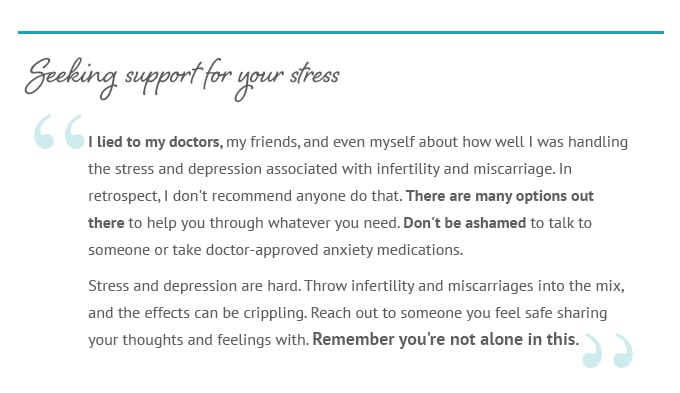
Dealing with infertility can be quite stressful. While failing to acknowledge or otherwise deal with your stress won’t likely impact the severity of your infertility, it’s not helpful to keep your feelings bottled up inside. Not only will trying to handle this stress without support be emotionally difficult, it could also impact your physical health and your relationships. Some people elect to engage in unhealthy behaviors —like failing to exercise or eating the wrong foods—in periods of extreme stress.

“It’s not uncommon for a woman (or man) facing infertility to hide from her doctors, her partner, her friends or even herself about the amount of stress she is experiencing. Infertility-related stress isn’t an inevitability. We encourage our patients to work with us to identify ways you can actively reduce anxiety and stress,” says Dr. Beall.

10. Supplements and Alternative Medicine

Many couples struggling with infertility have chosen alternative approaches in an attempt to boost their fertility. Complementary approaches include acupuncture, herbal supplements, meditation and massage. Scientific research on these therapies is currently underway. While some approaches may be beneficial, others may not. Therefore, it is important to discuss everything you are trying or have tried in the past. We work closely with practitioners of complementary and holistic approaches at our Wellness Center. Learn about our Wellness Center and the services that are available at select offices.

Schedule an Appointment

If you are struggling to conceive, it might be time to see a fertility specialist. Please call our New Patient Center at 1-877-971-7755 to schedule an appointment or complete this simple form.

Editor’s Note: This blog post was originally published in March 2017, but was reviewed and updated for accuracy in August 2019. 

Filed Under: General

August 13, 2019 by Shady Grove Fertility

Watch Isaac Sasson, M.D., Ph.D., from Shady Grove Fertility’s Chesterbrook, PA, office, as he discusses the difference between egg quality and egg quantity.

Age is always the best indicator of a woman’s egg quality as there is no medical test for egg quality. Age is also an indicator for egg quantity. As a woman ages, the number of eggs in her ovarian reserve slowly declines, with a steeper decline beginning around age 35. Around this time, the quality of the eggs also becomes affected at a greater rate of chromosomal abnormalities.

There is no one perfect test for ovarian reserve, or one that can tell a woman how many eggs she has left, or if the egg she is releasing any given month is a healthy one. Several tests are used routinely as indirect measures of ovarian reserve, but these tests do not tell us the actual quantity of eggs available. If you’re considering egg freezing to preserve your family building options, some common tests that your doctor may order include baseline follicle-stimulating hormone (FSH) and estradiol levels, anti-Müllerian hormone (AMH), and antral follicle counts.

For women who are not looking to conceive right away, because birth rates decline as women age due to the changes in egg quantity and quality that naturally occur, egg freezing offers women an opportunity to preserve their eggs when they are of better quality and are more numerous, in the event they have trouble conceiving later in life and their egg supply and/or egg quality are found to be the cause.

Schedule An Egg Freezing Appointment 
Schedule A New Patient Appointment

You can schedule an appointment directly with a Shady Grove Fertility specialist without a referral by calling 1-877-971-7755 or click here to complete our brief online form. In fact, 50 percent of our patients are self-referred and more than 90 percent have insurance for their physician consultation. When deciding what action to take, we encourage women to be proactive.

Filed Under: General Tagged With: Egg freezing

August 1, 2019 by Shady Grove Fertility

Sleep, or more importantly, a lack thereof can affect fertility both directly and indirectly. Poor sleep and an altered sleep schedule can impact weight, stress, and sleep regulation all of which can affect fertility levels. This is because several hormones are influenced by sleep, including insulin, ghrelin, leptin, and cortisol. Cortisol can trigger the release of reproductive hormones, and a long-term lack of sleep can affect the hormone in charge of regulating a person’s menstrual cycle. It’s not just how much sleep you get but when you get that sleep that can impact your chances of conception.

Sleep and Weight

The relationship between sleep and obesity is rather complex. Poor sleep contributes to obesity, but obesity can further limit the body’s ability to sleep. It’s a cycle that can be hard to break.

Obese women may have irregular menstrual cycles, an excess of the hormone androgen, and a higher risk of miscarriage. Excess androgen also increases the risk of polycystic ovarian syndrome (PCOS) and its accompanying fertility issues, and nearly one-third of women with this condition are obese. Obese men face fertility issues due to changes in estrogen and androgen levels, scrotal temperatures, and an increased risk of sleep apnea.

At the same time, sleep deprivation is often associated with obesity because lack of sleep changes how the body releases hunger and satiety hormones. Whenever you get less than 7 hours of sleep, the body releases more hunger hormone and less satiety hormone. Consequently, you’re more likely to overeat and experience weight gain.

Lack of sleep also affects food cravings. Your brain gets a reward when you eat food. However, when you’re sleep deprived, the reward center takes a bigger hit than normal from foods loaded with fat and sugar. One study found that sleep-deprived participants choose snack foods with 50 percent more calories and twice the fat in comparison to when they were well rested.

[WATCH: SGF’s Weight and Fertility On-Demand Webinar]

Stress and Sleep

Stress can get in the way of sleep, which sets the body up for a variety of issues that aren’t conducive to fertility. Stress can change how key factors like the HPA axis function. The HPA axis exerts a portion of control over reproduction hormones, follicle development, and menstruation. Stress can cause it to reduce uterine receptivity and/or suppress reproductive hormones.

The HPA axis can also influence melatonin levels, further affecting the sleep cycle and, without enough sleep, stress can rise due to changes in the way the brain processes emotions during sleep deprivation. It’s another cycle that can stand in the way of fertility.

For many women, their stress levels may already be high when they are trying to conceive or begin treatment. When you begin fertility treatment, we strongly recommend patients to join a support group. Some even find services such as acupuncture or massage offered at the Wellness Center at SGF to be helpful. While these alternative therapies have not been proven to increase conception rates, these activities have helped many patients better manage the emotional stress of infertility and support them before and during treatment.

The Timing of Your Sleep Cycle

Altered timing of your sleep cycle can significantly impact fertility. A study published in Occupational and Environmental Medicine found that women who work longer hours or overnight shifts have lower fertility rates as do those who have jobs where heavy lifting and physical labor is involved. Shift work puts the body at odds with the natural timing of the circadian rhythms, which rely on exposure to sunlight to time the sleep cycle. Problems with circadian rhythms can cause issues with melatonin levels, inflammatory responses, and lower fertility due to changes in reproductive hormones.

Better Sleep through Healthy Habits

Better sleep can have a positive impact on your overall health and fertility. You can start by:

  • Creating Ideal Sleep Conditions: Complete darkness, cool temperatures, and a quiet room give the body what it needs for restful sleep. Add a supportive mattress and pillow, and you’ve set the stage for sleep success.
  • Being Consistent in Your Sleep Habits: Let your body adapt to your schedule. Go to bed at the same time every night and lead into sleep with a relaxing bedtime routine.
  • Avoiding Stimulants: Stimulants like caffeine block sleep hormones for several hours. Give yourself the best chance at sleep by avoiding them in the afternoon and evening.

The factors that contribute to fertility, like sleep, can be many and complex. It may take time to build and strengthen healthy sleep habits, but as you do, you’re improving overall health and your chances of successful conception.

Disclaimer: This guest blog was provided as in-kind educational service by Sleep Help. Shady Grove Fertility (SGF) does not control or endorse products offered by Sleep Help.

Medical contribution by Eric A. Widra, M.D.

Eric A. Widra, M.D., is the Executive Senior Medical Officer for Shady Grove Fertility and the associate director of the Combined Federal Fellowship in Reproductive Endocrinology and Infertility—a post-graduate training program for future leaders in this subspecialty, operated through the National Institutes of Health, Walter Reed National Military Medical Center, and Shady Grove Fertility.

Schedule an Appointment

To learn more or to schedule an appointment with an SGF physician, please contact our New Patient Center at 877-971-7755 or fill out this brief form.

Filed Under: General

July 31, 2019 by Shady Grove Fertility

More and more people are turning to alternative remedies like marijuana and CBD oils to alleviate pain, stress, anxiety, insomnia, and inflammation, but how could this be affecting your fertility?

It’s certainly a controversial and understudied topic. Many studies rely on self-reported use and data suggests dose-dependent effects on human health and fertility. For example, one study found “the effects of Cannabis and THC on the human ovary consist in suppression of ovulation and other studies have indicated increased anovulatory cycles and short luteal phases in chronic women smokers.” (1)  Data also suggests women who smoke marijuana and undergo in vitro fertilization (IVF) treatment produce poor quality oocytes and have lower pregnancy rates compared to non-users. (1)

In regard to marijuana use during pregnancy, one study concluded that “maternal marijuana use does not increase the risk of adverse obstetrical outcomes or fetal anomalies but does increase the risk for small for gestational age and neonatal intensive care unit admission.” (2)

Studies on how marijuana use may affect male fertility are conflicting, but several studies have found that routine usage of cannabis, more than once per week, was associated with a nearly 30 percent reduction in median sperm concentration and total sperm count as well as increased incidence of erectile dysfunction. (3) Interestingly, while some research suggests higher risk for testicular cancers among marijuana users, other data supports anti-neoplastic effects of cannabinoids on prostate cancer. (3)

You don’t have to look far to find positive testimonials supporting the benefits of CBD for a plethora of ailments. But there is actually only one FDA-approved prescription CBD oil called Epixiolex, which effectively treats two types of epilepsy. Many legitimate studies are currently underway to assess CBD as a feasible treatment option for Parkinson’s disease, schizophrenia, diabetes, multiple sclerosis, and anxiety although there remains to be a lack of conclusive evidence supporting its use.
While some CBD dispensaries tout the safety and efficacy of its use to promote fertility in men and woman and alleviate the pains of pregnancy, there is inadequate data supporting CBD use during pregnancy or while undergoing fertility treatment.

CBD does not have the same psychoactive properties as marijuana and most users report good tolerance but there is still a risk of side effects such as dry mouth, diarrhea, reduced appetite, drowsiness, and fatigue. (4)

A major concern over the use of CBD oil is that there are no regulations or oversight laws for its production. For this reason, the purity and dosage of CBD in products can differ greatly from what is marketed on the label. A recent study of 84 CBD products bought online showed that nearly 43 percent were under-labeled (more CBD existed in the product than what the label indicated), while 26 percent were over-labeled (less CBD existed in the product than what the label indicated). In addition, THC was found in 18 products. (5)

CBD can also interact with other medications, such as blood thinners.
When it comes to fertility, these are two major reasons to consult with your physician and think twice before using CBD products while trying to conceive.

The Wellness Center at Shady Grove Fertility offers non-medicinal alternative and integrative health services—acupuncture, massage and nutrition—that may also help alleviate pain, stress, anxiety, insomnia, and inflammation while safely promoting and supporting fertility and pregnancy too.

  • Acupuncture has been used for centuries and its key principles are based around the concept of balance so that our bodies can function optimally. Acupuncture aims to correct imbalances and eliminate symptoms that the imbalance may have caused. Acupuncture has been used to help with all stages of the fertility journey—from conception, to delivery, to postpartum healing.
  • Massage is another form of physical medicine that can support patients through fertility. Our massage therapists use research-informed and results-oriented techniques that have benefitted thousands of fertility clients for over 15 years. Our Fertility Enhancing Massage (FEM) Protocol is a five-part series using massage and related techniques to enhance the health and functioning of the pelvic and abdominal organs, and to promote the client’s mental, emotional, and physical well-being. The five parts of the protocol focus on cleansing and detoxification, enhancing reproductive circulation, oxygenating the pelvic organs, encouraging pelvic alignment, and combating stress.
  • Good nutrition is the foundation of overall health. We are what we eat and food can either be quite healing or detrimentally toxic to our bodies. Learning to eat a healthy balanced diet can reduce systemic inflammation, improve gastrointestinal health, and correct nutrient deficiencies that are often linked to chronic disease and many complicating symptoms. Whether seeking nutritional guidance for weight loss, polycystic ovarian syndrome (PCOS), irritable bowel syndrome (IBS), general fertility guidelines, or prenatal nutrition, our registered nutritionist works with each patient to create an individualized plan that supports health and wellness goals. We work with most major insurance companies.

To learn more or to schedule an appointment, please call our New Patient Center at 1-877-971-7755 or click here to complete our online form. 

1. Cannabinoids and Reproduction: A Lasting and Intriguing History. Pharmaceuticals (Basel). 2010 Oct; 3(10): 3275–3323.

https://www.ncbi.nlm.nih.gov/pmc/articles/PMC4034092/

2. Association between marijuana use and adverse obstetrical and neonatal outcomes. J Perinatol. 2015 Dec;35(12):991-5. doi: 10.1038/jp.2015.120. Epub 2015 Sep 24.

https://www.ncbi.nlm.nih.gov/pubmed/26401751

3. The relationship between cannabis and male infertility, sexual health, and neoplasm: a systematic review. 2019 Mar;7(2):139-147. doi: 10.1111/andr.12585. Epub 2019 Feb 15.

4. Cannabidiol (CBD) — what we know and what we don’t.

https://www.health.harvard.edu/blog/cannabidiol-cbd-what-we-know-and-what-we-dont-2018082414476

5. Labeling Accuracy of Cannabidiol Extracts Sold Online.  JAMA. 2017 Nov 7; 318(17): 1708–1709.

Written by: Meghan Sylvester, RDN, LDN, The Wellness Center at SGF 

Medical contribution by Eric A. Widra, M.D.

Eric A. Widra, M.D., is the Executive Senior Medical Officer for Shady Grove Fertility and the associate director of the Combined Federal Fellowship in Reproductive Endocrinology and Infertility—a post-graduate training program for future leaders in this subspecialty, operated through the National Institutes of Health, Walter Reed National Military Medical Center, and Shady Grove Fertility.

Schedule an Appointment

Filed Under: General

July 31, 2019 by Shady Grove Fertility

Shady Grove Fertility recently announced the grand opening of its newest full-service fertility and in vitro fertilization (IVF) program in the heart of New York City in early September 2019. The new full-service location offers access to two leading, board certified reproductive endocrinologists, a state-of-the-art laboratory, and an indisputable track record of success.

The new 15,300 square foot space in New York City is conveniently located at 110 East 60th Street—minutes from nine NY subway stations providing easy access from all boroughs as well as Westchester, Long Island, and Connecticut, and steps from Bloomingdales, Rockefeller Center, Central Park, and The Plaza Hotel. The new practice will be home to physician offices for patient consultations, SGF’s ninth embryology lab, a spacious operating room, embryo transfer room, and recovery bays. Patients will also benefit from having an onsite dedicated andrology laboratory for sperm preparation and an onsite endocrinology lab for processing bloodwork.

Services available include fertility testing and diagnosis, including semen analysis; non-invasive fertility options such as ovulation induction and intrauterine insemination (IUI); in vitro fertilization (IVF); donor egg treatment; preimplantation genetic testing; fertility preservation through egg freezing; and LGBTQ family building.

One significant advantage SGF brings to New York City is its internationally renowned Donor Egg Program, the largest in the nation, and home to more than 8,000 babies born from donor egg treatment. SGF is one of only a few centers in the nation that recruits, selects, and prescreens (medically, psychologically, and genetically) its own ready-to-cycle egg donors prior to making them available on their donor registry. Much more commonly, fertility centers rely on an agency to select donors, which adds significantly to the cost passed on to the donor egg recipient, also known as the intended parent. Further, SGF offers exclusive 100% refund guarantee programs not only for IVF but donor egg treatment—a significant differentiator among other programs in the area.

Another advantage for New York City is SGF’s track record with egg freezing, a fertility-preserving option that’s growing in popularity at an unprecedented 20 percent per year, nationally, with women who live and work near New York City comprising a large percentage. SGF holds the spot as one of the top five egg freezing programs in the U.S., and the number of women choosing egg freezing at SGF continues to rise.

“The success of SGF’s egg freezing program is multi-faceted and relies not only on very effective vitrification technology to properly freeze the eggs but also on the skillfulness and expertise of our embryologists during the thaw. Patients trust SGF because we are one of only a few centers in the nation with published success rates for women who return to use their frozen eggs. In addition, we have more experience than most centers with egg freezing and thawing, having completed 720 egg freezing cycles in 2018, and nearly 400 egg thaw cycles since 2009. Not every lab has the expertise and experience to vitrify, or flash freeze, eggs and then have them survive the thaw, fertilize, and develop into an embryo that leads to pregnancy and delivery,” adds Eric A. Widra, M.D., Medical Director.

“Expanding the SGF practice into New York City is especially significant for two reasons. It’s in response to tremendous patient need in the region for more affordable, convenient fertility care, and it represents SGF’s continued commitment to provide the highest quality, personalized patient care, evidenced by 96 percent of our patients saying they would recommend SGF based on their experience,” says SGF Chief Executive Officer, Mark Segal.

Schedule an Appointment

To learn more or to schedule an appointment in New York City, call 212-203-4826 or submit this brief form.

Filed Under: General

  • « Go to Previous Page
  • Page 1
  • Interim pages omitted …
  • Page 9
  • Page 10
  • Page 11
  • Page 12
  • Page 13
  • Interim pages omitted …
  • Page 46
  • Go to Next Page »

Company

  • About SGF
  • About US Fertility
  • Our Doctors
  • Fertility Equity
  • Careers
  • Newsroom
  • SGF College Scholarship
  • Contact Us
  • Voice Your Feedback

Treatments

  • Egg Freezing
  • Intrauterine Insemination (IUI)
  • In Vitro Fertilization (IVF)
  • Frozen Embryo Transfer (FET)
  • LGBTQIA+ Family Building
  • Shared Risk 100% Refund Program
  • All Treatments

Resources

  • Patient Portal
  • Online Bill Pay
  • Library
  • Support Groups & Events

Locations

  • California
  • Colorado
  • Delaware
  • Florida
  • Georgia
  • Maryland
  • North Carolina
  • Pennsylvania
  • Texas
  • Virginia
  • Washington, D.C.

2026 Shady Grove Fertility

  • Policies & Notices
Also of interest
  • In Vitro Fertilization IVF
  • Fertility Tests
  • Research Publications