• Skip to primary navigation
  • Skip to main content
  • Skip to footer
Shady Grove Fertility
  • Become an Egg Donor
  • Referring Physicians
  • 1-888-761-1967
  • Schedule Appointment
  • Get Started
        • Get Started
          • Causes of Infertility
          • Fertility Tests
          • When to Seek Help
          • Find a Doctor
          • Preconception and prenatal vitamins 
          • Schedule an Appointment
        • Personalized Care For
          • Single Parents
          • LGBTQIA+ Family Building
          • People with Cancer
          • Known Genetic Diseases
          • Egg Donors
  • Treatments
        • Fertility
          • Timed Intercourse
          • Ovulation Induction
          • Intrauterine Insemination (IUI)
          • In Vitro Fertilization (IVF)
          • Frozen Embryo Transfer (FET)
        • Donation & Surrogacy
          • Donor Sperm
          • Donor Egg
          • Donor Embryo
          • Gestational Carrier
          • LGBTQIA+ Family Building
          • Single Parents
          • Find a Donor
        • More Treatments
          • Center for Male Fertility
          • Egg Freezing
          • OncoFertility
          • Preimplantation Genetic Testing
          • MIGS
          • All Fertility Treatments
  • Resources
    • Resource Library
    • Events Calendar
    • Patient Stories
    • Mental Health
    • Wellness Center
  • Insurance & Savings
    • Insurance & Benefits
    • Shared Risk 100% Refund Program
    • 100% Refund for Donor Egg
    • Discounts
    • Egg Freezing Costs
    • Financing & Grants
    • Clinical Trials
  • About
    • Find a Doctor
    • About SGF
    • Our Care Team
    • Advanced Practice Providers
    • Fertility Equity
    • Philanthropy
    • Newsroom
    • Careers
    • Contact Us
    • Voice Your Feedback
  • Locations
        • Find a Location
        • California
        • Colorado
        • Delaware
        • Florida
        • Georgia
        • Maryland
        • North Carolina
        • Pennsylvania
        • Texas
        • Virginia
        • Washington, D.C.
        • Chile
        • International & Out of State
        • SGF at Walter Reed National Military Medical Center
  • Patient Hub
    • Online Bill Pay
    • Patient Forms
    • Patient Portal
  • Call your care team
  • Become an egg donor
  • Referring physicians
  • search-icon
  • Schedule appointment 1-888-761-1967

Home / Diagnosing Infertility / Page 7

Diagnosing Infertility

June 23, 2017 by Shady Grove Fertility

What is Anti-Müllerian Hormone (AMH)?
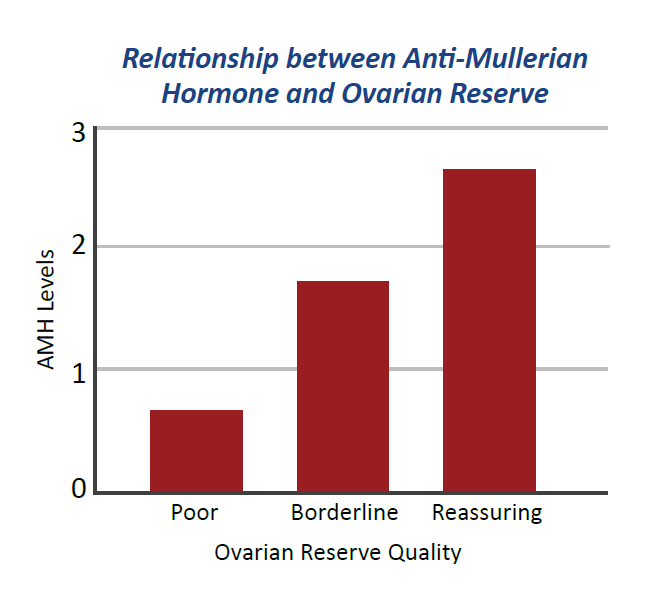
Anti-Müllerian hormone (AMH) is a hormone produced by the cells that support the dormant pool of eggs in the ovaries. Therefore, a higher level of AMH suggests a larger pool of eggs (or a greater ovarian reserve). “This is a very useful test for us because it doesn’t tend to fluctuate as much as follicle-stimulating hormone (FSH) levels and it gives us another angle to assess the ovarian reserve. As it pertains to an individual’s fertility, the higher the level, the better,” says Dr. Joseph Doyle, of Shady Grove Fertility’s Rockville, MD office.

Did you know: an AMH level greater than 1 suggests a good ovarian reserve? 

AMH levels are determined through a blood test and unlike other hormones, levels do not vary significantly through the menstrual cycle. This means that you can check it on any day of the cycle and it doesn’t tend to vary from cycle to cycle like FSH levels can. Another benefit of AMH is that it provides insight into the estimated number of eggs that could be retrieved during an IVF or egg freezing cycle as well as how much medication will be required for ovarian stimulation during a treatment cycle.

The anti-Müllerian Hormone (AMH): Part of the Initial Fertility Evaluation

Measuring the anti-Müllerian hormone level is now a part of the initial fertility evaluation along with:

  • Ultrasound of ovaries to determine antral follicle count (AFC)
  • Bloodwork to evaluate reproductive hormones: FSH, estradiol, and luteinizing hormone (LH)
  • Hysterosalpingogram (HSG) to check for any blockages of the Fallopian tubes
  • Semen analysis to test quality and quantity of sperm in the male partner

These tests, along with your medical, reproductive, and family histories will help your fertility specialist determine the treatment best suited for you. Patients who wish to preserve their current fertility and freeze eggs would not complete the HSG or semen analysis

What is good ovarian reserve vs. decreased ovarian reserve?

The ovarian reserve is the quality and number of oocytes (female eggs) a woman has. A good ovarian reserve means you have a high number of oocytes of good quality, while a poor ovarian reserve would mean you have a lower number of oocytes with decreased quality. The quantity of eggs can be measured through ovarian reserve testing, which evaluates your reproductive hormone levels, including AMH, as well as an ultrasound to evaluate your AFC.

The ovarian reserve steadily and naturally decreases as a woman ages until around the age of 35 when the decline begins to increase until finally reaching menopause. Each woman’s fertility is unique and the quantity of eggs at the time of puberty and the rate of change from puberty to time of menopause varies from woman to woman. This rate of change is partially predetermined by your genetics. Women with a family medical history of early menopause have a higher chance to begin the fertility decline at a younger age.

Age Matters Most

While family medical history is important, the most important modifying factor of a good ovarian reserve is age. Decreased ovarian reserve in a younger patient (<35 years of age) is not necessarily the same as decreased ovarian reserve in an older patient. A younger woman may have decreased ovarian reserve and though the number of eggs present may be decreased, because of her age, the egg quality may still be high. Age, in conjunction with an assessment of ovarian reserve and the other elements of your fertility evaluation and family building goals, will determine your treatment path.

Editors Note: This post was originally published in December 2012 and has been updated for comprehensiveness as of January 2018.

Schedule An Egg Freezing Appointment 
Schedule an Appointment

SCHEDULE AN APPOINTMENT 

For more information or to schedule an appointment with one of our physicians, please speak with one of our New Patient Liaisons by calling 877-971-7755.


Filed Under: Diagnosing Infertility Tagged With: Egg freezing

June 20, 2017 by Shady Grove Fertility

Most patients in a fertility expert’s office are there because they have problems getting pregnant. For some, the problem isn’t so much getting pregnant as staying pregnant. Embryologists and reproductive specialists are well-versed in diagnosing and treating the causes of recurrent miscarriage.

“Depending on your criteria for recurrent miscarriage,” says Dr. Jeff McKeeby of Shady Grove Fertility’s Annapolis, MD office, “I would estimate that at least 3 percent of couples are going through this experience. Because we’re following our patients from such an early point in their pregnancy, it’s likely that we see a greater percentage of miscarriage than in the general population.”

Until recently, miscarriage was referred to as “recurrent” if a woman experienced pregnancy loss three times or more. Now, partly due to advanced knowledge among reproductive medicine practitioners, women are typically advised to be seen for recurrent miscarriage (also called recurrent pregnancy loss, or RPL) after only two such events.

The term “miscarriage” is generally used to describe loss of a pregnancy up to 20 weeks gestation, most often in the initial 12 weeks or first trimester. Such spontaneous losses usually occur either because the embryo or fetus is not developing normally and/or other processes, such as failure of implantation of the pregnancy within the wall of the uterus.

“About half the time, recurrent pregnancy loss is unexplained,” McKeeby says regarding the diagnosis of miscarriage causes.

Finding the cause of recurrent miscarriage

Dr. McKeeby says that the causes with which his patients present initially are somewhat dependent on the referring practice. “There are some causes that are generally accepted, and there are some that are believed may be causes but are hard to prove,” he explains. The most agreed-upon causes of recurrent loss are:

  • chromosomal abnormalities in the parents
  • autoimmune conditions, such as having anti-phospholipid antibodies
  • anatomic abnormalities such as uterine malformations, for example, uterine septum
  • cervical incompetence (a factor in miscarriages occurring in second trimester or later)

More debatable causes include:

  • endocrine disorders, like polycystic ovary syndrome (PCOS) or luteal phase deficiency
  • autoimmune problems besides anti-phospholipid antibodies
  • sperm quality problems
  • infections
  • stress and environmental factors

Maternal age should be considered in the list of potential causes simply because statistically, women in their 40s and older are documented as a group that experiences miscarriages more often.

“Most miscarriages, regardless of whether they recur or not, are due to chromosomal abnormalities, and the vast majority of those are due to either random chance (in the embryonic development process) or advancing maternal age,” McKeeby states.

Watch: SGF’s New On-Demand Webinar, Getting Pregnant with Endometriosis

Treating recurrent miscarriage

The cause of any individual miscarriage may be hard to determine in many cases, but women who’ve experienced such loss can do more than simply shrug their shoulders and hope for the best the next time.

“Many of these problems can indeed be treated either prior to or very early in subsequent pregnancies,” assures Dr. McKeeby.

For example, if testing on the woman has indicated an antiphospholipid antibody syndrome, injections of a drug called Lovenox (a low molecular-weight heparin, or blood thinner) could be started at the first signs of pregnancy. If an anatomical condition existed, surgical correction could be performed prior to getting pregnant again.

McKeeby says, that while miscarriage is common, it’s still recommended for a patient or her OB to wait until a second loss before seeking possible causes. It’s appropriate to avoid over-testing and possibly rendering false test results, which can lead to unnecessary treatment.

“We recommend a fertility evaluation after a second miscarriage,” he says, “because after two losses, your chances of another miscarriage are about 25 percent. After three losses, the chance is 30 percent. So since we’re not talking about a significant difference between those numbers, it makes sense to start looking for things that may be correctable before a subsequent conception.”

Prepregnancy Genetic Screening (PGS) 

One situation that requires a higher-tech approach to answering the needs of women with recurrent pregnancy loss is in the case of what is called “balanced translocation,” a term referring to parents in which their chromosomes have missing or incorrectly located pieces. Men and women with such genetic occurrences almost never have any resulting conditions or symptoms that would clue them in on their chromosomal structure. Usually, they learn about it after having a simple blood test called a karyotype — a picture of how one’s chromosomes are arranged.

“In these cases, the risk of recurrence is somewhere between 2 and 10 percent, depending on random chance and on the gender of the parent who has the balanced translocation.” Dr. McKeeby explains that prepregnancy genetic testing, can provide the solution that these patients need to have a healthy pregnancy and baby. A more advanced option is genetic testing of embryos known as preimplantation genetic diagnosis (PGD). PGD is a cellular biopsy and DNA analysis of an embryo created through in vitro fertilization, or IVF. In fact, the two main reasons for utilizing PGD is recurrent pregnancy loss and recurrent IVF failure.

“The most important thing in genetic testing is to perform a karyotype on the pregnancy that is lost,” McKeeby says, “not only on the parents.”

Diagnosing recurrent miscarriage

As disheartening as it is to experience even one miscarriage, and certainly more than that, the best news is that most patients are able to achieve a successful pregnancy. Chance of success is almost greater than risk of failure.
“If you find something that’s significant and you treat it,” explains McKeeby, “or you don’t find anything wrong, you have about a 70 to 75 percent chance of a successful pregnancy after that. Even if you’ve had four or five miscarriages, your odds with either a treated condition or no cause found are still over 65 percent for successful subsequent pregnancies.”

Another role of a reproductive endocrinologist is reassuring patients—referred to as a “tender loving care” approach—that their chances for having a healthy baby are very good. Recurrent miscarriage patients in the Shady Grove Fertility practice receive the attention from staff and access to treatment and technology to feel confident that they will go on to have a healthy pregnancy.

Getting pregnant after miscarriage

Dr. McKeeby stresses that women who read about the details of miscarriage, and its diagnosis and treatment, should not be concerned about a specific cause until the evaluation is complete. While women in their 40s do have higher chances of miscarriage, even they should not approach conception feeling initially worried. Younger women, in particular, have less statistical cause for concern. All women who are hoping to conceive should focus on important lifestyle factors— nutrition, folic acid intake, weight control and maintaining optimal health—that can have a greater impact on their pregnancy chances.

“Patients should feel reassured overall that it’s far more likely they’ll have a successful pregnancy and healthy baby.”

Medical Contribution by: Jeffrey McKeeby, M.D., of Shady Grove Fertility’s Annapolis, MD office

Schedule an Appointment

To learn more about recurrent miscarriage or to schedule an appointment, please call our New Patient Center at 1-877-971-7755 or click here to complete this brief online form. 

Editors Note: This post was originally published in October 2014 and has been updated for accuracy and comprehensiveness as of June 2017.

Filed Under: Diagnosing Infertility Tagged With: Causes of infertility

June 5, 2017 by Shady Grove Fertility

Your doctor may have diagnosed you with polycystic ovary syndrome, otherwise known as PCOS. PCOS is the most common ovulatory disorder in women of reproductive age, with one in 10 women diagnosed with this condition. There are many misconceptions about this diagnosis that can lead to unwarranted fears or different ideas of what PCOS means for your health and for getting pregnant. Dr. Kara Nguyen of SGF’s Reading, PA office discusses five important things to know about PCOS.

1. It doesn’t necessarily mean that you have ovarian cysts. 

Many women think that having PCOS means that they have cysts on their ovaries. Fortunately, PCOS is a misnomer and does not mean that there are ovarian cysts and it does not mean that surgery is required to treat cysts if they do form. “Polycystic ovaries” is the ultrasound appearance of many small follicles in the early stages of egg development. These follicles give the ultrasound appearance of a black “string of pearls.” The majority of these early follicles do not grow, mature, or ovulate. For that reason, most women with PCOS do not have regular menstrual cycles and may have difficulty getting pregnant without medication.

2. PCOS has variable early warning signs and symptoms.

Not all patients with PCOS have the same symptoms, which can make the diagnosis tricky. A very common sign is irregular menstrual cycles or the absence of a menstrual cycle. It is important to remember that many things other than PCOS can cause menstrual irregularity so it is important to be evaluated for alternative conditions in order to confirm the diagnosis of PCOS. Some patients with PCOS have elevated testosterone levels in their blood while others may have unwanted hair growth or persistent acne. Patients can be thin or obese. The ovaries may have the classic “string of pearls” appearance or not. A fertility specialist is trained to determine whether your individual signs and symptoms are consistent with the diagnosis of PCOS.

3. PCOS can increase your risk of uterine cancer. 

When there is no regular menstrual bleeding because of lack of ovulation, the lining of the uterus does not get a chance to shed and start over. In PCOS, the lining continues to thicken over weeks or months. This can increase the risk of uterine cancer. We recommend that patients with PCOS, when not attempting to become pregnant, receive medical therapy to evaluate the endometrial lining helping to minimize the risk of cancer.

4. There is an increased risk of metabolic syndrome.

Metabolic syndrome involves elevated blood pressure, low HDL (good cholesterol), high triglycerides (increases risk of heart disease), obesity, and diabetes. Because patients with PCOS have a higher risk of developing this condition, the American College of Obstetricians and Gynecologists and the American Society for Reproductive Medicine recommend that patients with PCOS have annual screening for these conditions. Earlier detection means more effective treatment and a long and healthy life.

5. Being diagnosed with PCOS doesn’t mean that you can’t get pregnant.

It is true that many patients with PCOS have difficulty getting pregnant on their own. Unlike women who ovulate and have a period every month, women with PCOS don’t ovulate in a predictable fashion (or at all) and therefore may have fewer opportunities to become pregnant each year. However, there are very effective lifestyle changes, medications, and basic, low-tech treatments for PCOS that increase your chances of ovulation each cycle. In fact, of all conditions known to contribute to infertility, PCOS is one of the easiest to fix.

To watch our On-Demand Webinar on PCOS, click here. During this free, on-demand event, viewers will learn about the symptoms of PCOS, the role they play when trying to conceive, and treatment options that are available to help women overcome their infertility caused by this condition.

Schedule an Appointment

Medical contribution by: Kara Nguyen, M.D., M.P.H. of Shady Grove Fertility’s Reading, PA and Harrisburg, PA offices.

Have you been diagnosed with PCOS? Please call 1-877-971-7755 and speak with a Patient Liaison in our New Patient Center to schedule an appointment or fill out this brief online form.

At Shady Grove Fertility, we’re here to give you the caring support you deserve as you start or grow your family. As a leading fertility and IVF center of excellence, we offer patients individualized care, innovative financial options, over 30 accepted insurance plans, and pregnancy rates among the highest of all national centers. We offer patients the convenience of 19 full-service and 6 satellite locations across Maryland, Pennsylvania, Virginia, and Washington, D.C. More than 1,700 physicians choose Shady Grove Fertility to refer their patients, and more than 96 percent of our patients say they would recommend Shady Grove Fertility’s 35+ physicians to a friend. With 10 Shady Grove Fertility babies born each day, your dream of starting or growing your family is within reach.

Filed Under: Diagnosing Infertility

April 10, 2017 by Shady Grove Fertility

If you are feeling nervous or stressed about your upcoming first fertility appointment, these simple tips will help ensure you have a straightforward and informational visit. By preparing necessary forms, documenting important material, and coming with questions you will be able to make the most out of the first meeting with your physician.

1. Come Prepared

Fill out and bring with you the extensive forms that were sent to you in the mail after you scheduled your appointment. This paperwork does take about 30 minutes to complete and could cut into the time allotted for you to meet with your physician if you do not fill them out ahead of time. Other documents/items you should bring include:

  • any personal or family medical records related to infertility
  • any testing results you have completed to date (prior testing is not required)
  • an insurance referral or authorizations (if applicable)
  • insurance cards and government issued identification cards

Double check you have all the forms you need by visiting our appointment checklist!

2. Bring a Notebook

At your first fertility specialist appointment you will meet with your physician, your primary nurse, a financial counselor, and a Patient Services Representative (PSR) who will all be presenting you with a great deal of information. It can be a lot. Bring a notebook and take notes throughout your appointment to help you remember all of the medical, financial, and contact information as well as any future course of action. Having this information at hand can make it easier for you to discuss and digest the happenings of your appointment. You can always call us and speak to either a PSR or your nurse to receive any additional information or have us refresh your memory.

3. Ask Questions

Your doctor will want to discuss with you your family building goals and answer any questions you may have, no question is too small. There is no “one-size-fits-all” approach to fertility treatment, so any questions you may have that are specific to your needs or in general, your physician will be happy to answer as many as possible. Some frequently asked questions at the first consult are:

  • Why haven’t we been able to conceive?
  • What kinds of tests do we need?
  • What treatment do you recommend trying first?
  • Are there any long-term complications associated with fertility treatments?
  • What are your pregnancy success rates?
  • Can I do all of the necessary testing and procedures in your offices?

At Shady Grove Fertility, we are here to help make parenthood possible for you by offering the information, care, and support you need. The first appointment will provide you with the tools and team you need to begin your journey; we look forward to meeting you soon!

Schedule an Appointment

If you have questions regarding infertility treatment or would like to schedule a new patient appointment, please call our New Patient Center at 877-971-7755 or click to schedule an appointment.

Filed Under: Diagnosing Infertility

March 27, 2017 by Shady Grove Fertility

“In retrospect, I wish I wouldn’t have waited,” says Sarah, a current Shady Grove Fertility patient of Joseph Doyle, M.D. of our Rockville, MD office.

Sarah is not alone.

In a recent survey, 65 percent of 1,000+ patients surveyed said they wish they hadn’t waited as long as they did to seek fertility treatment.

From the age at which you start trying to conceive to the days on which you have sex with your partner, timing is one of the most crucial factors when it comes to how easily you will become pregnant.

Because timing is so critical, Dr. Doyle advises individuals who suspect they may be experiencing infertility against waiting to seek treatment. Sarah, who is in the process of conceiving her first child, received this advice.

Together, Dr. Doyle and Sarah have tackled the answers to some common questions about seeking fertility treatment. From timelines to costs, doctor and patient openly discuss why some patients wait and, more importantly, why they shouldn’t wait to start fertility treatment. After all, timing is everything …

Q: What’s so special about trying for 1 year?

Dr. Doyle: The general guidelines are, if you’re under 35 and have been having unprotected intercourse for a year, but haven’t gotten pregnant, you should seek a fertility evaluation. However, if you’re over 35, a 6 month-period of trying is sufficient before seeking help. These terms are based on analysis of statistics that span decades.

Statistically, women in their early 30s have a 15 percent chance of getting pregnant during each of the first 3 months of having unprotected intercourse—or a 45 percent chance of getting pregnant total during the 3 months combined. The most fertile women become pregnant during these first 3 months, and rates of pregnancy start to decrease in month 4, moving from 15 to 13 percent, and then exponentially thereafter.

Once a year has passed, approximately 15 percent of women will not have successfully conceived. These women are the ones who likely will benefit from help.

For women over 35, natural conception rates drop to 10 percent—or less—each of the first 3 months and then decline more precipitously from there. For these women, time is even more essential, so they are only encouraged to have unprotected sex for 6 months before seeking fertility support.

Q: Why do people wait to seek fertility treatment?

Dr. Doyle: Many are reluctant to seek fertility support because reproduction is such a personal process. Struggling couples aren’t inclined to invite someone else into such a private experience—even a doctor.

Others may be worried about what their tests will show. For couples eager to have a baby, the possibility of discovering a serious issue can be too formidable to face.

Another major factor stopping would-be patients from seeking help is their lack of fertility-related knowledge. Patients delay because they aren’t clear on what the treatment will involve. Often, they don’t fully understand the science behind reproduction, let alone infertility.

Current SGF Patient, Sarah: Before beginning fertility treatments, I didn’t have a strong base of reproductive knowledge—even though my mother worked in the field.
And then there was my fear of needles. I was scared that I would end up needing lots of injections—and that’s definitely not something I wanted.

Q: What causes people to wait once they receive a diagnosis?

Sarah: I began exploring fertility treatment in Michigan with a different doctor. Once I received my diagnosis of polycystic ovary syndrome (PCOS), my Michigan doctor provided me with a  potential treatment plan.

But I didn’t proceed.

I decided to wait because I thought that I would still be able to get pregnant without intervention. Even though I had issues with irregular periods my whole life, I assumed pregnancy would just happen, and I wouldn’t end up needing treatment.

I was wrong.

Dr. Doyle: Some patients elect to wait because they want to continue to try on their own. If the patient is young, and the tests come back within normal ranges, waiting a few months won’t hurt her chances of becoming pregnant. We always discuss the risks and benefits of waiting early on in the process.

Others, like Sarah, are worried that treatments will be invasive. In truth, 50 percent of fertility treatments are low-tech. Treatment is always customized to a patient’s needs. After diagnosis, patients are presented with an array of options and given the probability of success with each.

Q: Are couples experiencing secondary infertility more likely to delay treatment?

Dr. Doyle: Yes. For parents experiencing secondary infertility, intervention can feel unnecessary. Parents with one or more kiddos already commonly think that if they’ve been pregnant before, they will be able to get pregnant again.

Delay for these parents can be just as damaging as for first-time parents. In fact, delaying treatment may be even more problematic for these couples because second-time parents are older than when they conceived their first child.

Q: Is timing still important once you start treatment?

Sarah: Because fertility is all about timing, you can’t necessarily dive right into the treatment process. The course of treatment is based on your menstrual cycle, so you might have to wait a bit, even if you’re ready to go after your first appointment.

Once you do start the fertility treatment process, it’s important that you stick to the timeline your fertility specialist suggests.

I keep close track of my appointments. And, surprisingly, I look forward to each and every one— even those that involve a needle—as each one lets me know how the process is going and keeps my pursuit of having a baby moving forward.

Q: How much will delaying fertility treatment affect someone’s likelihood to conceive?

Dr. Doyle: Honestly, it depends. Your age and your test results will determine how significantly a delay will impact your likelihood of a successful pregnancy.

Delaying treatment may also mean that you may have to use more advanced techniques to achieve a pregnancy, which will increase your costs.

“There can be options in patients who are older, as long as we move more aggressively in terms of their treatment,” reminds Arthur W. Sagoskin, M.D., Co-founder of Shady Grove Fertility.
Testing is easy and will give you the information you and your doctor need to make an informed decision.

Start the conversation with your physician about the testing process. A series of simple tests (three for the female and one for the male) will pinpoint your fertility challenges and help determine the course of treatment.

Delaying an appointment means allowing doors to close that may have otherwise been open to you. Because age plays such a critical role in fertility, you will never be more fertile than you are today. Seize the day and get on the road to parenthood.

Schedule an Appointment

Joseph Doyle, M.D.
Arthur Sagoskin, M.D.

Medical Contribution by Joseph Doyle, M.D., and Arthur Sagoskin, M.D., of Shady Grove Fertility’s Rockville, MD location

Shady Grove Fertility is ready to help you learn how to put time on your side. Call 1-877-971-7755 or click here to schedule an appointment with Dr. Doyle, Dr. Sagoskin, or one of our other 37 fertility specialists.

At Shady Grove Fertility, we’re here to give you the caring support you deserve as you start or grow your family. As a leading fertility and IVF center of excellence, we offer patients individualized care, innovative financial options, over 30 accepted insurance plans, and pregnancy rates among the highest of all national centers. We offer patients the convenience of 19 full-service and 6 satellite locations across Maryland, Pennsylvania, Virginia, and Washington, D.C. More than 1,700 physicians choose Shady Grove Fertility to refer their patients, and more than 96 percent of our patients say they would recommend Shady Grove Fertility’s 35+ physicians to a friend. With 10 Shady Grove Fertility babies born each day, your dream of starting or growing your family is within reach.

Filed Under: Diagnosing Infertility

February 6, 2017 by Shady Grove Fertility

It is estimated that one in 10 women suffer from PCOS (polycystic ovay syndrome). This disorder is one of the most common causes of infertility in women. The effects of PCOS are particularly wide-ranging with a host of hormonal symptoms like irregular or absent periods, acne, and facial and body hair. While an astoundingly large percentage of the female population is believed to have PCOS, many women are not diagnosed for years and there is a considerable amount of misdiagnosis because of the disease’s many effects. Additionally, the causes of PCOS are not completely understood. Shining a light on PCOS, the popular website Refinery29, set out to find the important facts every woman should know about getting pregnant with PCOS and enlisted the help of board certified reproductive endocrinologist Isaac E. Sasson, M.D., Ph.D. from our Chesterbrook office to provide his expertise and insight.

“The disease is polygenetic,” explains Dr. Sasson. “It’s not a single-gene disorder. It’s not like cystic fibrosis or sickle cell disease, where there’s one bad gene. Rather, it involves a number of genes we all have, which, for some unknown reason, “aren’t working well together,” Sasson adds.

Relationship between PCOS and fertility

While PCOS is most commonly associated with fertility, the Refinery29 author explains that, “part of the reason fertility issues have become such a focal point is simply because the first doctors to identify PCOS just happened to be gynecologists, so historically, the related gynecological and reproductive issues have gotten the most attention.” Because of the many different effects the disorder can have on many parts of the body, Dr. Sasson says, “PCOS is a terrible name.” To illustrate this point, the author uses the disorder’s effect on insulin levels, which can lead to weight gain, as an element of PCOS that is not directly related to gynecology or fertility. Some women may just have the metabolic-related parts while others might only have the reproductive symptoms like ovarian cysts, therefore two names for the disorder would likely make explanation easier.

For fertility, PCOS is such a strong factor because, as Dr. Sasson explains, the disorder prohibits the ovarian follicles (or egg sac) from developing one large (approximately 20 millimeter) follicle, which holds the egg that will be available for fertilization in normal ovulatory function. Typically, a woman in her 20s and early 30s will produce about 18 to 20 follicles and one will grow to release a single egg. Dr. Sasson told Refinery29 that when examining certain women with PCOS who have many small follicles, “that never developed fully, thanks to disrupted ovulation and menstruation. They don’t have a big one that grows.” It’s these small (or undeveloped) follicles that are mistaken as cysts. These follicles don’t develop into mature eggs so they can’t be fertilized. As Dr. Sasson says, “they’re stuck at the starting line.”

Getting Pregnant with PCOS

Although PCOS is one of the leading causes of infertility, the good news is, with treatment, success is very common. At Shady Grove Fertility, our stepped approach to care starts with low-tech treatments. Beginning with a prescription drug like Clomid or Letrozole, these oral medications will, “boost the follicle stimulating hormone,” or, move the egg from the starting line, as Dr. Sasson says. If the oral medications don’t work, a patient may move on to injectable gonadotrophins that also stimulate the follicle growth. Combined with timed intercourse, these non-invasive protocols have good records of success.

If Clomid or gonatrophin injections do not work, the next step of treatment is the more advanced intrauterine insemination (IUI). For healthy women age 35 and younger, Shady Grove Fertility found that these women with PCOS had the most successful outcomes.

Many studies have shown that overweight women have higher risks of infertility and miscarriage. For women with PCOS, weight gain is often associated with the disorder, which can add to difficulties with fertility. Weight is one of the toughest symptoms of PCOS to treat and it’s often harder for women with PCOS to keep weight off. Plus, metformin, a medication prescribed to treat PCOS sufferers’ sensitivity to insulin, can also lead to weight gain. The solution, per studies cited in the article, is exercise. “The most recent study on this topic concluded that weight-loss and exercise—not simply weight-loss due to exercise—can improve fertility in women with PCOS,” the article states.

Finally, the emotional toll of PCOS is addressed, providing some useful advice. Creating environments to openly discuss PCOS can ease the anxiety and stress that the symptoms bring on. Most importantly, women are not alone in this struggle.

Medical Contribution by: Isaac Sasson, M.D., Ph.D., of Shady Grove Fertility’s Chesterbook, PA office.

Schedule an Appointment

To learn more about getting pregnant with PCOS or to schedule an appointment with Dr. Sasson or one of our other physicians, please call our New Patient Center at 1-877-971-7755 or click here to complete this simple form.

At Shady Grove Fertility, we’re here to give you the caring support you deserve as you start or grow your family. As a leading fertility and IVF center of excellence, we offer patients individualized care, innovative financial options, over 30 accepted insurance plans, and pregnancy rates among the highest of all national centers. We offer patients the convenience of 19 full-service and 6 satellite locations across Maryland, Pennsylvania, Virginia, and Washington, D.C. More than 1,700 physicians choose Shady Grove Fertility to refer their patients, and more than 96 percent of our patients say they would recommend Shady Grove Fertility’s 35+ physicians to a friend. With 10 Shady Grove Fertility babies born each day, your dream of starting or growing your family is within reach.

Filed Under: Diagnosing Infertility

  • « Go to Previous Page
  • Page 1
  • Interim pages omitted …
  • Page 5
  • Page 6
  • Page 7
  • Page 8
  • Page 9
  • Interim pages omitted …
  • Page 21
  • Go to Next Page »

Company

  • About SGF
  • About US Fertility
  • Our Doctors
  • Fertility Equity
  • Careers
  • Newsroom
  • SGF College Scholarship
  • Contact Us
  • Voice Your Feedback

Treatments

  • Egg Freezing
  • Intrauterine Insemination (IUI)
  • In Vitro Fertilization (IVF)
  • Frozen Embryo Transfer (FET)
  • LGBTQIA+ Family Building
  • Shared Risk 100% Refund Program
  • All Treatments

Resources

  • Patient Portal
  • Online Bill Pay
  • Library
  • Support Groups & Events

Locations

  • California
  • Colorado
  • Delaware
  • Florida
  • Georgia
  • Maryland
  • North Carolina
  • Pennsylvania
  • Texas
  • Virginia
  • Washington, D.C.

2026 Shady Grove Fertility

  • Policies & Notices
Also of interest
  • In Vitro Fertilization IVF
  • Fertility Tests
  • Research Publications