• Skip to primary navigation
  • Skip to main content
  • Skip to footer
Shady Grove Fertility
  • Become an Egg Donor
  • Referring Physicians
  • 1-888-761-1967
  • Schedule Appointment
  • Get Started
        • Get Started
          • Causes of Infertility
          • Fertility Tests
          • When to Seek Help
          • Find a Doctor
          • Preconception and prenatal vitamins 
          • Schedule an Appointment
        • Personalized Care For
          • Single Parents
          • LGBTQIA+ Family Building
          • People with Cancer
          • Known Genetic Diseases
          • Egg Donors
  • Treatments
        • Fertility
          • Timed Intercourse
          • Ovulation Induction
          • Intrauterine Insemination (IUI)
          • In Vitro Fertilization (IVF)
          • Frozen Embryo Transfer (FET)
        • Donation & Surrogacy
          • Donor Sperm
          • Donor Egg
          • Donor Embryo
          • Gestational Carrier
          • LGBTQIA+ Family Building
          • Single Parents
          • Find a Donor
        • More Treatments
          • Center for Male Fertility
          • Egg Freezing
          • OncoFertility
          • Preimplantation Genetic Testing
          • MIGS
          • All Fertility Treatments
  • Resources
    • Resource Library
    • Events Calendar
    • Patient Stories
    • Mental Health
    • Wellness Center
  • Insurance & Savings
    • Insurance & Benefits
    • Shared Risk 100% Refund Program
    • 100% Refund for Donor Egg
    • Discounts
    • Egg Freezing Costs
    • Financing & Grants
    • Clinical Trials
  • About
    • Find a Doctor
    • About SGF
    • Our Care Team
    • Advanced Practice Providers
    • Fertility Equity
    • Philanthropy
    • Newsroom
    • Careers
    • Contact Us
    • Voice Your Feedback
  • Locations
        • Find a Location
        • California
        • Colorado
        • Delaware
        • Florida
        • Georgia
        • Maryland
        • North Carolina
        • Pennsylvania
        • Texas
        • Virginia
        • Washington, D.C.
        • Chile
        • International & Out of State
        • SGF at Walter Reed National Military Medical Center
  • Patient Hub
    • Online Bill Pay
    • Patient Forms
    • Patient Portal
  • Call your care team
  • Become an egg donor
  • Referring physicians
  • search-icon
  • Schedule appointment 1-888-761-1967

Home / Diagnosing Infertility / Page 21

Diagnosing Infertility

October 12, 2012 by Shady Grove Fertility

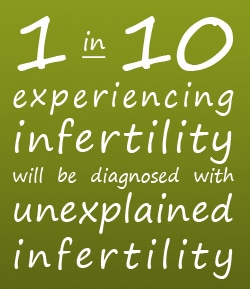
Fertility Fact: 1 in 10 couples experiencing infertility will be diagnosed with unexplained infertility.

What is Unexplained Infertility?
SGF Nurse

When a patient first visits a fertility center, they will have to go through basic fertility testing to deduce the cause of their infertility. The initial fertility workup at Shady Grove Fertility for the female partner is designed to check the health of the ovaries, and see if the fallopian tubes and uterus are normal.  For the male partner, the semen analysis will show if the sperm are normal in number and function. If all the tests come back inconclusive, a diagnosis of unexplained infertility is made. This diagnosis often comes with a mixed bag of emotions because while the specific cause of infertility hasn’t been identified, the fact remains that you are having trouble conceiving.  This leaves patients wondering, so what’s next?

Treating Unexplained Infertility

Most often, because tests did not come back with many clues, patients will start with low-tech treatment options, such as a combination of ovulation inducing medication and intrauterine insemination (IUI).  Depending on how the patient responds to that treatment and other factors, such as age, they may continue with an IUI treatment plan or move on to in vitro fertilization (IVF), which typically yields higher pregnancy rates.  Rockville physician, Dr. Joseph Doyle shares that, “The goal of low-tech treatment options in couples with unexplained infertility is to boost their pregnancy rates back to normal levels.  Fortunately, if this approach isn’t successful, IVF is very effective, with pregnancy rates up to 50%.”

If you have questions regarding unexplained infertility or would like to schedule a consultation with a Shady Grove Fertility physician, please call 1-877-971-7755 or click here.

Filed Under: Diagnosing Infertility Tagged With: In vitro fertilization (IVF), Intrauterine insemination (IUI), Semen analysis

October 5, 2012 by Shady Grove Fertility

Fertility Fact:  Of the 750,000 women who experience pelvic inflammatory disease (PID) each year in the United States, it is estimated that 10-15% will have trouble conceiving.

However, with some help, most women with a history of pelvic inflammatory disease can go on to have a healthy pregnancy and delivery.

What is Pelvic Inflammatory Disease?

SGF Nurse
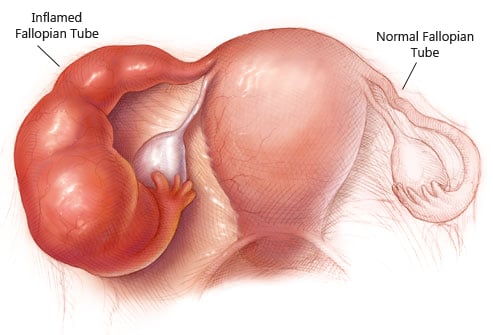
Fallopian Tubes can become enlarged with Pelvic Inflammatory Disease (PID).


Pelvic Inflammatory Disease (PID) is an infection of the uterus, fallopian tubes, and other reproductive organs. The infections can cause symptoms such as lower abdominal pain, fever, vaginal discharge, painful intercourse or urination. However, since many of these symptoms are vague and can be contributed to other causes, PID often goes undiagnosed.
Pelvic inflammatory disease occurs in women when bacteria move upward to her reproductive organs from her vagina or cervix. While many different types of bacteria can cause PID, most often it is associated with bacterial sexually transmitted diseases – primarily chlamydia and gonorrhea.

Complications with Pelvic Inflammatory Disease

PID can cause permanent damage to the female reproductive organs and scarring in the fallopian tubes. Scarring in the fallopian tubes can interfere with the egg traveling to the uterus. This can result in the sperm not being able to reach the egg or the egg fertilizing in the tube causing an ectopic pregnancy. As a result of the damage and complications, the risk of infertility continues to increase with the number of episodes. According to Dr. Joseph Doyle, “After one episode of PID, infertility from blocked fallopian tubes will occur in up to 12% of women.  After two episodes, it will affect more than one third of women.  With three episodes, up to 75% of women will have blocked fallopian tubes.”

Diagnosing and Treating Pelvic Inflammatory Disease

Since the symptoms for PID are often mild and there is no test for PID, a diagnosis for PID is typically based on the clinical findings. Your health care provider may also need to identify the type of organism causing the PID and order a test for chlamydia and/or gonorrhea. An ultrasound might also be used to see if the fallopian tubes show evidence of an infection.

PID is treated with antibiotics; however, the antibiotics will not reverse any damage already occurred, making it important for women to seek care immediately if she is experiencing any symptoms. A woman’s sexual partner(s) should also be treated if a sexually transmitted disease is the cause of infection.

Becoming Pregnant after Pelvic Inflammatory Disease

For women that have had PID and have had damage to their reproductive organs, they will likely have to consult with a fertility specialist to maintain a healthy pregnancy. “The risk of an ectopic pregnancy is increase 6-7 times as a result of pelvic infection,” explains Dr. Doyle.  To address this risk and the inability to conceive due to scarring in their fallopian tubes, in vitro fertilizaition (IVF) is often the advised therapy to help achieve pregnancy because with IVF the tubes are bypassed completely.

Annual gynecological exams with STD testing and practicing safe sex is advised to help prevent pelvic inflammatory disease and limit the damage that can be caused by the disease.

If you have had PID and need to consult with a physician in order to achieve pregnancy, please call 1-877-971-7755 or click here to request an appointment.

Filed Under: Diagnosing Infertility Tagged With: Ectopic pregnancy, Pelvic inflammatory disease

September 21, 2012 by Shady Grove Fertility

Fertility Facts: Secondary Infertility Happens More Often Than You Might Think

Secondary infertility is more common than you might think.

What is Secondary Infertility?

Secondary infertility is defined as the inability to achieve pregnancy following the birth of one or more biological children what were conceived without the assistance of reproductive technology or fertility medication. In other words, you had no trouble conceiving before, but are now suddenly not having any luck.

Secondary infertility is significantly more common than many people might think. With over 7 million people estimated to have infertility, reports suggest as many as half of those cases are due to secondary infertility.

Why would I have Secondary Infertility?

For many couples, the answer is rather simple, you are older. For couples that conceived easily in their twenties and then wait several years may be surprised that they have trouble conceiving. If it has been a few years since you last conceived, the egg or sperm quality may have decreased. In addition, changes in lifestyle may impact chances of conception… either partner gaining weight, smoking, starting a new medication or experiencing a new health issue since the last pregnancy. Furthermore, there could have been complications with the last pregnancy that might have impacted chances of conception.

Who should I talk to if I suspect Secondary Infertility?

The first step would be to discuss with you OB/GYN any problems you might be having trying to conceive. Secondary infertility could be linked to either partner, so each should have initial fertility testing. Like any suspected infertility, if you are under 35 and been trying to conceive for a year or longer, it is time to consult a fertility specialist. For women 35-40, who have been trying for 6 months without any success, it is time to seek help from a fertility specialist. And for women over 40, as soon as you suspect an issue, consult with a fertility specialist.

Unique Problems with Secondary Infertility?

While the diagnosis and treatment for secondary infertility often mirrors that of primary infertility, patients often have a unique set of issues coping with their diagnosis. Starting from the beginning, physicians and friends alike might encourage you to just keep trying rather than suggest that there might be medical reason for why you aren’t conceiving. And like all fertility patients, the emotional roller-coaster can run the range of grief, anger, guilt, jealousy and a sense of lack of control. In addition, you might be concerned with how your children are coping with your struggle and face people who don’t acknowledge your infertility because you already have a child.

It is important with any infertility diagnosis to be able to talk about your experiences, and better yet talk to someone that is in similar circumstances. Shady Grove Fertility offers free support groups for patients who would like to discuss their experiences with others.

If you think you might be suffering from secondary or any type of infertility, please call our New Patient Center at 1-877-971-7755 or visit us online.

Filed Under: Diagnosing Infertility Tagged With: Secondary infertility

July 31, 2012 by Shady Grove Fertility

Dr. Ricardo Yazigi

by Dr. Naveed Khan, MD

The air in the office is filled with sadness.  Two of our patients had miscarriages this morning.  The first patient had conceived after her first cycle of IVF.  The baby started off growing a little slowly and by today stopped growing altogether.  The second lovely patient had conceived twins after multiple failed IVF cycles and this was her last attempt.  Unexpectedly, both the fetuses stopped developing – everything had looked perfect 2 weeks ago.


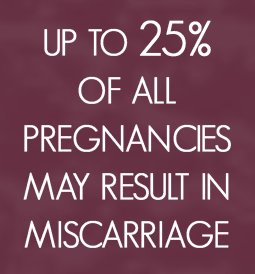
Unfortunately, spontaneous miscarriage is a common complication in early pregnancy.  Miscarriages occur in up to 20% of clinical pregnancies, which are pregnancies where a sac is seen inside the uterus.  If one includes biochemical pregnancies, which are very early miscarriages found by positive hormone levels but before any structures are seen inside the uterus, 25% of all pregnancies are lost.  Generally, the frequency of miscarriages decreases with increasing gestational age.

Why Does Miscarriage Happen?

The natural question to ask and wonder is “Why did this happen?”  Frequently, there is no exact explanation as to why pregnancy loss occurs.  Most often the miscarriage did not result from anything that the couple did or did not do.  The few risk factors for miscarriage that a person can control are smoking, alcohol consumption, cocaine use, morbid obesity, high levels of caffeine intake and possibly the use of non-steroidal anti-inflammatory drugs if used around the time of conception.  There are many other risk factors that can increase the risk of miscarriage that can’t be controlled such as advanced maternal age, previous history of miscarriage, Celiac disease, anatomic issues, trauma, and genetic or developmental abnormalities of the fetus.

> Recurrent Pregnancy Loss can often be helped with genetic screening. Learn More.

Unfortunately, there are no medical treatments that can prevent a first trimester pregnancy loss.  Early in pregnancy one can follow the blood levels of the pregnancy hormone BhCG to see if the hormone levels are rising appropriately.  Later in pregnancy, one can check a vaginal ultrasound for reassurance that the fetus is growing adequately.  Fortunately, after a single miscarriage there is a greater than 80% chance that the next pregnancy will not result in a miscarriage and will go on to delivery.

> Learn more about pregnancy loss from the America Pregnancy Association.
> Request an New Patient Appointment with Shady Grove Fertility.

Filed Under: Diagnosing Infertility Tagged With: Dr. Naveed Khan, In vitro fertilization (IVF), Miscarriage

July 30, 2012 by Shady Grove Fertility

Getting Pregnant with PCOS (Polycystic Ovary Syndrome)

SGF Nurse

Dr. Jeanne O’Brien was recently a guest on Creating a Family’s Radio Show. Dr. O’Brien discussed getting pregnant when you have PCOS. Listen to the radio show now!

> Learn more about Polycystic Ovary Syndrome
> Request a New Patient Appointment with Dr. O’Brien at Shady Grove Fertility’s office in Rockville, MD

Filed Under: Diagnosing Infertility Tagged With: Polycystic ovary syndrome (PCOS)

  • « Go to Previous Page
  • Page 1
  • Interim pages omitted …
  • Page 19
  • Page 20
  • Page 21

Company

  • About SGF
  • About US Fertility
  • Our Doctors
  • Fertility Equity
  • Careers
  • Newsroom
  • SGF College Scholarship
  • Contact Us
  • Voice Your Feedback

Treatments

  • Egg Freezing
  • Intrauterine Insemination (IUI)
  • In Vitro Fertilization (IVF)
  • Frozen Embryo Transfer (FET)
  • LGBTQIA+ Family Building
  • Shared Risk 100% Refund Program
  • All Treatments

Resources

  • Patient Portal
  • Online Bill Pay
  • Library
  • Support Groups & Events

Locations

  • California
  • Colorado
  • Delaware
  • Florida
  • Georgia
  • Maryland
  • North Carolina
  • Pennsylvania
  • Texas
  • Virginia
  • Washington, D.C.

2026 Shady Grove Fertility

  • Policies & Notices
Also of interest
  • In Vitro Fertilization IVF
  • Fertility Tests
  • Research Publications