
• Skip to primary navigation
  • Skip to main content
  • Skip to footer
Shady Grove Fertility
  • Become an Egg Donor
  • Referring Physicians
  • 1-888-761-1967
  • Schedule Appointment
  • Get Started
        • Get Started
          • Causes of Infertility
          • Fertility Tests
          • When to Seek Help
          • Find a Doctor
          • Preconception and prenatal vitamins 
          • Schedule an Appointment
        • Personalized Care For
          • Single Parents
          • LGBTQIA+ Family Building
          • People with Cancer
          • Known Genetic Diseases
          • Egg Donors
  • Treatments
        • Fertility
          • Timed Intercourse
          • Ovulation Induction
          • Intrauterine Insemination (IUI)
          • In Vitro Fertilization (IVF)
          • Frozen Embryo Transfer (FET)
        • Donation & Surrogacy
          • Donor Sperm
          • Donor Egg
          • Donor Embryo
          • Gestational Carrier
          • LGBTQIA+ Family Building
          • Single Parents
          • Find a Donor
        • More Treatments
          • Center for Male Fertility
          • Egg Freezing
          • OncoFertility
          • Preimplantation Genetic Testing
          • MIGS
          • All Fertility Treatments
  • Resources
    • Resource Library
    • Events Calendar
    • Patient Stories
    • Mental Health
    • Wellness Center
  • Insurance & Savings
    • Insurance & Benefits
    • Shared Risk 100% Refund Program
    • 100% Refund for Donor Egg
    • Discounts
    • Egg Freezing Costs
    • Financing & Grants
    • Clinical Trials
  • About
    • Find a Doctor
    • About SGF
    • Our Care Team
    • Advanced Practice Providers
    • Fertility Equity
    • Philanthropy
    • Newsroom
    • Careers
    • Contact Us
    • Voice Your Feedback
  • Locations
        • Find a Location
        • California
        • Colorado
        • Delaware
        • Florida
        • Georgia
        • Maryland
        • North Carolina
        • Pennsylvania
        • Texas
        • Virginia
        • Washington, D.C.
        • Chile
        • International & Out of State
        • SGF at Walter Reed National Military Medical Center
  • Patient Hub
    • Online Bill Pay
    • Patient Forms
    • Patient Portal
  • Call your care team
  • Become an egg donor
  • Referring physicians
  • search-icon
  • Schedule appointment 1-888-761-1967

Home / Get Started / Page 11

Get Started

August 2, 2017 by Shady Grove Fertility

Preparing for fertility treatment can be both an exciting and stressful time. It is exciting to embark on the journey of building a family, but we understand it can also be a stressful time because of the inherent unknowns about the outcome. As you begin preparing for fertility treatment, it’s important to be in a ready-state: mind, body, and spirit. While it’s very easy to become inundated with the to-do list associated with fertility treatment, we encourage you to take each day one at a time and take care of yourself along the way.

10 Tips for Preparing for Fertility Treatment

1. Look for healthy ways to relieve stress.
We aren’t suggesting you need to plan an expensive vacation or trip to the spa, but get creative about what helps you to relieve stress. Perhaps it’s asking your partner to give you a massage, watch a funny movie or television show, play with your pets, or have a night in with close friends. Laughing can help you reduce your stress hormones and it can actually make you feel pretty good from the inside out.

2. Join a support group
It can be difficult to share with family and friends the emotional aspects of this journey, especially with people who are unfamiliar with infertility. However, without being able to talk to loved one about the process, it can feel very isolating. At SGF, our support groups are a community of men and women who are in your same shoes. The group comes together to listen, connect, share advice and experiences, and remind you that you are not alone in this process. Whether you are just now preparing for fertility treatment or have been through a cycle or two, it is never too early or late to find support.

3. Modify Your Diet
While you are mentally preparing for fertility treatment, use this time to also prepare your body. Treat food as fuel and opt for healthier alternatives when possible. Reach for an apple or handful of almonds when that mid-day hunger strikes and trade a side of french fries for seasonal veggies or a salad. Scheduling a consultation with a nutritionist at Shady Grove Fertility’s Wellness Center can help get and keep you on track with your diet and ensure that you’re eating plan is balanced and provides adequate caloric and nutrient intake. Our nutritionist can also provide tips for meal ideas and snacks to make it easier to stick with a plan.

4. Stay informed and ask questions
We know there is a lot going on physically and emotionally during this time. SGF’s entire staff is here to help. We offer a multitude of resources that provide you with information about your treatment, support you during your journey, and much more.

Take a look at some of our online tools that we offer to help you as you are preparing for fertility treatment:

  • Attend one of free local seminars or online webinars.
  • Connect with our patients through the SGF Facebook page.
  • Watch our videos.
  • Be inspired by our patient stories.
  • Read our fertility eBooks.
  • Read our educational and informative.

5. Try a relaxation technique
The Wellness Center at Shady Grove Fertility provides complementary therapies such as, acupuncture, massage therapy, and nutrition counseling that support our patients during and while they are preparing for fertility treatment. Many people have found these therapies to reduce stress and keep them healthy: mentally, physically, and spiritually.

6. Drop the extras
Whether it’s clutter or pounds, neither one helps when it comes to preparing for fertility treatment. Excess clutter in your life can cause anxiety and unwanted stress. Tackle tasks around your home or office one thing at a time. Whether it’s the desk in your office, or the boxes in the attic, staying organized can give you more focus and can be a great stress reliever and weight loss activity, too! Losing any excess weight will set you up for greater success when you begin treatment.

7. Start a gratitude journal
One of the greatest things you can do for yourself is keep a gratitude journal. It’s pretty simple and can be done in just 5 minutes each day. Describe some of the things you are most grateful for. It can be something as little as when someone holds the door for you or gives you a seat on the metro. Whatever it is—small or large—if it makes you feel good, write about it! Get the Five Minute Journal App (for iPhone).

8. Get in shape
You don’t have to be at the gym every morning at 5 a.m., but it’s always good for your mind, body, and spirit to incorporate some form of cardiovascular exercise into your daily routine. Even if your schedule makes it difficult to get to the gym, try taking the stairs at work instead of the elevator, and walk instead of drive to pickup lunch during the day. Even a small weight loss can have a big gain when it comes to your fertility.

9. Pay it forward
Feed your soul by giving back to the community. Nothing makes us feel better about ourselves than knowing we really helped someone else in need. Let someone with only a few items go in front of you in the grocery line, offer to help an elderly neighbor, or volunteer at a local community shelter. What you give out, you will receive back.

10. Focus on today
Realize that not every day is going to be a good day, and that’s ok. Try and focus on the things you can control and let go of the things you can’t. When you get to the finish line and look back on your journey, you will hopefully agree that it was all worth the ride.
Editors Note: Article updates August 2017.

Schedule an Appointment

To learn more about preparing for fertility treatment or to schedule an appointment, please call our New Patient Center at 1-877-971-7755 or complete our online form.

Filed Under: Get Started

April 20, 2017 by Shady Grove Fertility

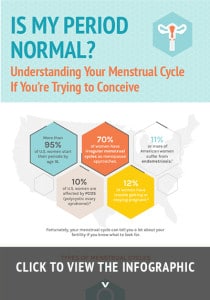
Ovulation is essential when it comes to having a baby. But do you know if you’re even ovulating —or ovulating regularly? Recently, Dr. Rachana Garde from Shady Grove Fertility’s Annandale, VA and Woodbridge, VA offices sat down with Good Morning Washington to discuss the topic of ovulation—the actual release of an egg from an ovary—and how it can be an indicator of your fertility.


Click to Watch the Full Interview: 

Below are the main points of conversation from Dr. Garde’s interview:

Myth: If you wait until the age of 35 or later, your chances of conceiving are basically zero.

Dr. Garde explains, “It is true that the older we get as females, the egg quality does go down because women have all of their eggs at birth so age is a big deal when it comes to fertility. Over time, the number of eggs goes down, and the quality goes down. 35 is not some set number that after which you cannot conceive. But if you’re trying, earlier is better than later.”


There are also other ways women can have a baby later in life. One option is through the use of donated eggs, which is a very reliable option. Or proactively, women who are younger now and want to have a baby in the future can freeze their eggs for later use.

Myth: If you are having a period, you are ovulating.

According to Dr. Garde, this depends on the length of a women’s cycle. Women who have really long cycles are probably not ovulating, at least not regularly. Although, if your cycles are regular, meaning 28 days (plus or minus a week on either side) once every month, then you are most likely ovulating.

What does ovulation tell us about our bodies?

Simply put, every month, an egg is released. At the beginning of the menstrual cycle, the reproductive hormone, estrogen, increases as the ovary makes an egg out of the pool of resting follicles, or undeveloped eggs. Then, in the middle of the cycle, the developed egg is released from the ovary and, when it does not fertilize, the estrogen and other reproductive hormones stop working and you have a period to signify the end of your cycle.

When in your ovulation cycle should you try to conceive?

Mid-cycle is when the egg is likely to ovulate, so in a normal 28 day cycle, the ovulation window would be on day 14. However, timing is everything during the ovulation window because “when the egg actually releases, there’s only about 24 hours to actually fertilize, so it’s really not that easy to conceive,” says Dr. Garde.

How do you know when your 24 hour ovulation window begins?

When you ovulate, the egg is released under the control of a hormone called LH (luteinizing hormone), which is produced in the pituitary gland in your brain. A surge of the LH hormone indicates ovulation is about to occur. The increased levels of LH provide final maturation to the egg within the follicle and set ovulation in motion by releasing a mature egg. “LH surges in the body, it gets into the bloodstream, and into the urine, so when women are checking an ovulation kit, they’re actually checking an LH surge. That surge happens about 24 hours prior to an egg releasing, so when the LH surges, that is the optimal time to conceive,” says Dr. Garde. There are multiple brands of ovulation kits out on the market that can be purchased to check your LH level.

When should you seek help if it’s taking longer than expected to conceive?

If you are trying to conceive but are not having a normal period or know you are not ovulating there could be multiple reasons why, and you should get evaluated by a fertility specialist. Additionally, any woman under the age of 35 who has not become pregnant after having unprotected intercourse for 1 year and has normal cycles should see a fertility specialist as well. If you are 35 to 39 and have been having unprotected intercourse for 6 months with normal periods and no success, you should also seek an evaluation. If you are 40 or older, we recommend an immediate fertility evaluation.


If you have a normal menstrual cycle then you most likely are ovulating and there may be other reasons to why you are having trouble conceiving, and these reasons should also be evaluated.

Learn More At A Menstrual Cycle Webinar

If you want to learn more about what your menstrual cycle says about your fertility, Shady Grove Fertility physician, Dr. Yazigi, will be hosting a webinar on May 16, at 12 p.m. To be able to join and ask questions from the comfort of your home, please click here to register.

Schedule an Appointment

If you do not have a normal menstrual cycle and/or are having trouble conceiving, a very simple fertility evaluation may help determine if you are ovulating or if there are other factors. Shady Grove Fertility’s team of dedicated New Patient Liaisons is available to answer your questions and schedule a consultation with a physician. Call 877-971-7755 or click to schedule an appointment.


At Shady Grove Fertility, we’re here to give you the caring support you deserve as you start or grow your family. As a leading fertility and IVF center of excellence, we offer patients individualized care, innovative financial options, over 30 accepted insurance plans, and pregnancy rates among the highest of all national centers. We offer patients the convenience of 19 full-service and 6 satellite locations across Maryland, Pennsylvania, Virginia, and Washington, D.C. More than 1,700 physicians choose Shady Grove Fertility to refer their patients, and more than 96 percent of our patients say they would recommend Shady Grove Fertility’s 39 physicians to a friend. With 10 Shady Grove Fertility babies born each day, your dream of starting or growing your family is within reach.

Filed Under: Get Started

March 28, 2017 by Shady Grove Fertility

In the spring issue of Sass magazine, the editors of the magazine for women of Frederick, Maryland, talked to Lauren Roth, M.D., of Shady Grove Fertility’s Frederick office to get her advice and tips for the article “Powerful Planning or Preventing” (pg. 56). The tip sheet lays out what women need to do during pre-conception and how to prevent pregnancy.

Pre-conception Advice from Dr. Roth

During pre-conception Dr. Roth advises women ensure they are in healthy physical condition. This includes beginning a daily prenatal vitamin, making sure medical records including Pap smear and immunizations are up to date, and ceasing activities like smoking and excess drinking that can harm a fetus. Dr. Roth suggests tracking your menstrual cycle to find the optimal time to conceive during your fertile window. She also provides guidance about when to see a fertility specialist based on age, medical history, and menstrual cycle length.

Preventing Pregnancy?

To prevent pregnancy, Dr. Roth describes a range of birth control options based on personal preference and medical history. There are two types of contraceptives: reversible and permanent. Reversible contraceptives include barriers such as condoms, hormonal methods like the birth control pill, and long-acting options like the intrauterine device. Permanent options for those who know they no longer want to have children include tubal sterilization for women and vasectomy for men.

Schedule an Appointment

If you are trying to conceive and would like to schedule an appointment with Dr. Roth or any of our other 38 physicians, call 1-877-971-7755.
 
At Shady Grove Fertility, we’re here to give you the caring support you deserve as you start or grow your family. As a leading fertility and IVF center of excellence, we offer patients individualized care, innovative financial options, over 30 accepted insurance plans, and pregnancy rates among the highest of all national centers. We offer patients the convenience of 19 full-service and 6 satellite locations across Maryland, Pennsylvania, Virginia, and Washington, D.C. More than 1,700 physicians choose Shady Grove Fertility to refer their patients, and more than 96 percent of our patients say they would recommend Shady Grove Fertility’s 35+ physicians to a friend. With 10 Shady Grove Fertility babies born each day, your dream of starting or growing your family is within reach.

Filed Under: Get Started

March 24, 2017 by Shady Grove Fertility

Receiving a cancer diagnosis at any age is excruciating, but for young men and women in their 20s, 30s, and younger there are additional concerns that need to be addressed fairly quickly as some effective cancer treatments can permanently damage fertility. The additional stress and costs leave many patients with a very difficult choice: pay for cancer treatment or risk losing the ability to have a baby in the future.

To address this issue, last week the Maryland House of Delegates heard testimony about a bill that would require insurance companies to cover sperm and egg freezing for these young people with cancer, and our very own Drs. Gilbert Mottla, from the Shady Grove Fertility Annapolis office, and Stephanie Beall, from the SGF Columbia, and Towson offices, testified on behalf of cancer patients.

What is oncofertility?

Oncofertility bridges medical experts who diagnose and treat cancer, called oncologists, with medical experts who assist individuals and couples with reproduction, called reproductive endocrinologists, in order to create future family building options prior to cancer treatment. For many oncofertility patients, this involves a male who is diagnosed with cancer freezing his sperm and a female diagnosed with cancer freezing her eggs prior to cancer treatment.

Why freeze prior to cancer treatment?

Some chemotherapy and radiation treatments used to eradicate certain cancers also have the potential to permanently damage both male and female fertility.

SGF Physicians Take Action

Over the last 25 years, Shady Grove Fertility’s physicians and staff have continued to be motivated advocates for a variety of legislation, both on the state and federal level, which would ease the cost burden and increase access to fertility treatment. Recently representing Shady Grove Fertility at the Maryland House of Delegates was Gilbert L. Mottla, M.D., from our Annapolis and Rockville, MD offices. In his prepared testimony, Dr. Mottla told the delegates, “Research has shown that a powerful motivator enabling these young individuals to fight their disease has been the promise of motherhood and fatherhood, only made possible by egg and sperm freezing, performed before their chemotherapy or surgery.”

Shady Grove Fertility Will Continue to Advocate for Sperm and Egg Freezing Coverage prior to Cancer Treatment

While the proposed mandate did not pass during this legislative session, Shady Grove Fertility and our partners RESOLVE: The National Infertility Association, together with the American Society for Reproductive Medicine, will continue to advocate and raise awareness about oncofertility, a topic that remains very much in the shadows.

Your Story Matters

One important way we work to raise awareness is by helping our patients tell their stories. Most recently, Self profiled two SGF patients: a young college student in Virginia who is grateful for the peace of mind she received by proactively freezing her eggs before cancer treatment, and a woman in Pennsylvania who was able to return to Shady Grove Fertility after treatment and use the frozen embryos created via in vitro fertilization (IVF) with intracytoplasmic sperm injection (ICSI) prior to her cancer treatment. She and her husband are now the proud parents of twins—a boy and a girl.

Schedule an Appointment

While oncologists move swiftly to initiate a cancer treatment protocol, it is essential that young women and men during their reproductive years, or even younger, explore the option to freeze their eggs or sperm first, before cancer treatment begins. Shady Grove Fertility’s physicians are well versed with working closely and quickly with oncologists to expedite the fertility preservation process, so as not to delay cancer treatment. If you would like to schedule an appointment, call 1-877-971-7755 to schedule an appointment or complete this simple form online.

Filed Under: Get Started

March 1, 2017 by Shady Grove Fertility

In January, Dr. Andrea Reh from Shady Grove Fertility’s Arlington, VA and Fredericksburg, VA offices talked to lifestyle website Brit+ CO about important topics to address before getting pregnant. Picking up on the theme, Good Morning Washington interviewed Dr. Reh for more information. Below are the main key points of what to consider and what to discuss depending on your family building plan, and what your individual needs might be both as an individual or couple.

Have a Plan before You Prepare for Pregnancy

Fertility is something many couples don’t talk about until it becomes a problem, but because of the emotional and financial implications, it’s best to have at least a rough plan for how you would deal with it. It is also easier to have the conversation prior to having issues because you are under less emotional stress and pressure.

If a known condition is present, such as endometriosis, PCOS, family history of early menopause or premature ovarian insufficiency, or known male issues, you may want to discuss options with your OB/GYN at a younger age. Or, if you have been trying to have a baby without success, it may be time to see a fertility specialist.

The Ticking Biological Clock

Dr. Reh acknowledges that, for many couples, there may never be a perfect time to start a family but because of that persistent biological clock, it is important to discuss when the right time to get pregnant with your partner is. With a woman’s age being the #1 factor that impacts fertility potential, Dr. Reh advises women who 35 years old and younger to seek a specialist after 1 year of actively trying to get pregnant, women who are 35 to 39 years old, after 6 months, and within 3 months for women 40 or older.

However, women who have a history of gynecologic problems such as PCOS, irregular menstrual cycles, or other warning signs should seek help sooner.

Research is Key

If you aren’t ready for kids immediately but see a family in your future, look at options like egg freezing. By freezing eggs a woman can preserve her fertility potential and stop the biological clock at that point in time, thus creating options for long-term family planning. If a couple knows they want a family but aren’t ready, more and more are also looking at embryo freezing at the point egg quality is still near its peak.

When researching, be sure to investigate success rates, financial options, and the fertility center’s experience.

Eliminate the Blame Game

Infertility is not a “woman’s problem” or a “man’s problem:” in fact, 40 percent of infertility cases are female-related issues, 40 percent are male, and the remaining 20 percent are unexplained or a combo of both male and female. Because fertility issues can be related to both partners, it’s critical that both partners undergo fertility testing early in the process.

The basic fertility workup provides insight into any existing barriers that might be impeding your ability to conceive. Men will need a semen analysis to determine sperm count and motility (how fast the sperm move) while women will have their reproductive hormone levels tested and to see if their tubes are open to make sure it’s possible for the sperm to get to the egg.

Donor Egg and Donor Sperm

There are various reasons a couple may need to use donor egg and/or donor sperm. Both couples struggling with severe male factor as well as lesbian couples may require a sperm donor, either known or anonymous. Should they use a known or anonymous sperm donor, the lesbian couple would then proceed with basic intrauterine insemination (IUI) fertility treatment.

Donated eggs or known egg donors are used by both heterosexual couples and gay couples. Gay couples will need to use donated eggs as well as a gestational carrier to carry the baby through pregnancy. Heterosexual couples often use donor egg treatment when the woman is unable to use her own eggs for conception; it is often caused by decreased ovarian function, premature ovarian failure, or genetic abnormalities. However, she can still carry a child in her uterus.

Donor egg treatment at SGF offers one of the highest chances of pregnancy even if other infertility treatments were unsuccessful. When paired with our Shared Risk 100% Guarantee Program, patients have an 82% chance of taking home a baby.

Schedule an Appointment

If you and your partner would like the opinion of a fertility specialist, or if you are considering freezing your eggs, call 1-877-971-7755 to schedule an appointment with Dr. Reh or any of our other 38 physicians located throughout MD, PA, VA, and D.C.

At Shady Grove Fertility, we’re here to give you the caring support you deserve as you start or grow your family. As a leading fertility and IVF center of excellence, we offer patients individualized care, innovative financial options, over 30 accepted insurance plans, and pregnancy rates among the highest of all national centers. We offer patients the convenience of 19 full-service and 6 satellite locations across Maryland, Pennsylvania, Virginia, and Washington, D.C. More than 1,700 physicians choose Shady Grove Fertility to refer their patients, and more than 96 percent of our patients say they would recommend Shady Grove Fertility’s 35+ physicians to a friend. With 10 Shady Grove Fertility babies born each day, your dream of starting or growing your family is within reach.

Filed Under: Get Started

February 8, 2017 by Shady Grove Fertility

Deciding it’s time to start a family is an exciting, but sometimes difficult decision. There are many topics you should discuss with your partner before trying to conceive. Board certified reproductive endocrinologist, Dr. Andrea Reh from SGF’s Arlington and Fredericksburg, VA offices talks with Brit & Co about the Convos You *Need* to Have With Your Partner Before You Have a Baby.

Trying to Conceive: When is the right time?

There is no perfect time to start trying to conceive. Life will always be busy and often hectic, but discussing future goals and personal career objections is important. Dr. Reh understands this and says, “As a full-time doctor and mom of three, I know personally that when it comes to contemplating pregnancy, there’s never a convenient time for your career or your finances, nor a time that you ever truly feel psychologically prepared for parenthood.”

It is key for both partners to agree upon the time to begin trying for a family. If the time is further down the road, Dr. Reh recommends looking into fertility preservation, especially for women over the age of 35. “By freezing eggs or embryos, a woman can preserve her fertility potential and stop the biological clock at that point in time, thus creating options for long-term family planning,” she explains.

What if getting pregnant is taking longer than you expected?

Most couples don’t anticipate that it could be difficult to conceive. Talking about fertility is a great way to create a game plan before it becomes an issue. “Most couples will conceive in the first 6 to 12 months of unprotected intercourse,” says Reh. Women under the age of 35 with regular menstrual cycles should wait about a year before seeing a fertility specialist. “For women over 35 or with a history of certain gynecologic conditions such as endometriosis, we advise seeking an evaluation sooner, as early as 6 months after starting to try to conceive,” Reh says. “And let’s not forget the guys!” she adds. “Men should have a semen analysis as part of any first-time basic fertility evaluation, as male infertility accounts for up to half of all known causes of infertility.”

If trying to conceive is taking longer than you expected, we recommend scheduling an appointment with a fertility specialist. At your initial consultation you’ll discuss your medical history with your physician and learn about what’s involved in a basic fertility evaluation, which is a basic series of tests that can yield answers.

What if you need a sperm or egg donor?

For same sex couples, the discussion of donor egg and donor sperm is essential. “Because of the inherent need for reproductive assistance, same-sex couples will also need to approach childbearing together with a reproductive specialist,” says Reh. Shady Grove Fertility can help same sex female couples find donor sperm through several national certified sperm banks where donors are appropriately screened and the sperm is quarantined.

For same sex male couples, Shady Grove Fertility has become the leading provider of donor egg treatment in the United States, performing more than 1,000 cycles last year alone. SGF can also assist couples in arranging the right gestational carrier to carry the baby. “These arrangements are financially, legally, and logistically complex and can take several months to coordinate,” Reh explains.

Same sex couples will need the help of a fertility specialist right away. Knowing what their options are will help couples decide the best place of action.

We asked our Facebook community what conversations they had with their partner before trying to conceive. Read the responses.

Schedule an Appointment

Early intervention offers the best chances of success, so let us help you get started. To learn more about our simple fertility evaluation or to schedule an appointment, please call our New Patient Center and one of our New Patient Liaisons will happily assist you. Please call 1-877-971-7755 or click to complete this simple form.

At Shady Grove Fertility, we’re here to give you the caring support you deserve as you start or grow your family. As a leading fertility and IVF center of excellence, we offer patients individualized care, innovative financial options, over 30 accepted insurance plans, and pregnancy rates among the highest of all national centers. We offer patients the convenience of 19 full-service and 6 satellite locations across Maryland, Pennsylvania, Virginia, and Washington, D.C. More than 1,700 physicians choose Shady Grove Fertility to refer their patients, and more than 96 percent of our patients say they would recommend Shady Grove Fertility’s 35+ physicians to a friend. With 10 Shady Grove Fertility babies born each day, your dream of starting or growing your family is within reach.

Filed Under: Get Started

  • « Go to Previous Page
  • Page 1
  • Interim pages omitted …
  • Page 9
  • Page 10
  • Page 11
  • Page 12
  • Page 13
  • Interim pages omitted …
  • Page 16
  • Go to Next Page »

Company

  • About SGF
  • About US Fertility
  • Our Doctors
  • Fertility Equity
  • Careers
  • Newsroom
  • SGF College Scholarship
  • Contact Us
  • Voice Your Feedback

Treatments

  • Egg Freezing
  • Intrauterine Insemination (IUI)
  • In Vitro Fertilization (IVF)
  • Frozen Embryo Transfer (FET)
  • LGBTQIA+ Family Building
  • Shared Risk 100% Refund Program
  • All Treatments

Resources

  • Patient Portal
  • Online Bill Pay
  • Library
  • Support Groups & Events

Locations

  • California
  • Colorado
  • Delaware
  • Florida
  • Georgia
  • Maryland
  • North Carolina
  • Pennsylvania
  • Texas
  • Virginia
  • Washington, D.C.

2026 Shady Grove Fertility

  • Policies & Notices
Also of interest
  • In Vitro Fertilization IVF
  • Fertility Tests
  • Research Publications