
• Skip to primary navigation
  • Skip to main content
  • Skip to footer
Shady Grove Fertility
  • Become an Egg Donor
  • Referring Physicians
  • 1-888-761-1967
  • Schedule Appointment
  • Get Started
        • Get Started
          • Causes of Infertility
          • Fertility Tests
          • When to Seek Help
          • Find a Doctor
          • Preconception and prenatal vitamins 
          • Schedule an Appointment
        • Personalized Care For
          • Single Parents
          • LGBTQIA+ Family Building
          • People with Cancer
          • Known Genetic Diseases
          • Egg Donors
  • Treatments
        • Fertility
          • Timed Intercourse
          • Ovulation Induction
          • Intrauterine Insemination (IUI)
          • In Vitro Fertilization (IVF)
          • Frozen Embryo Transfer (FET)
        • Donation & Surrogacy
          • Donor Sperm
          • Donor Egg
          • Donor Embryo
          • Gestational Carrier
          • LGBTQIA+ Family Building
          • Single Parents
          • Find a Donor
        • More Treatments
          • Center for Male Fertility
          • Egg Freezing
          • OncoFertility
          • Preimplantation Genetic Testing
          • MIGS
          • All Fertility Treatments
  • Resources
    • Resource Library
    • Events Calendar
    • Patient Stories
    • Mental Health
    • Wellness Center
  • Insurance & Savings
    • Insurance & Benefits
    • Shared Risk 100% Refund Program
    • 100% Refund for Donor Egg
    • Discounts
    • Egg Freezing Costs
    • Financing & Grants
    • Clinical Trials
  • About
    • Find a Doctor
    • About SGF
    • Our Care Team
    • Advanced Practice Providers
    • Fertility Equity
    • Philanthropy
    • Newsroom
    • Careers
    • Contact Us
    • Voice Your Feedback
  • Locations
        • Find a Location
        • California
        • Colorado
        • Delaware
        • Florida
        • Georgia
        • Maryland
        • North Carolina
        • Pennsylvania
        • Texas
        • Virginia
        • Washington, D.C.
        • Chile
        • International & Out of State
        • SGF at Walter Reed National Military Medical Center
  • Patient Hub
    • Online Bill Pay
    • Patient Forms
    • Patient Portal
  • Call your care team
  • Become an egg donor
  • Referring physicians
  • search-icon
  • Schedule appointment 1-888-761-1967

Home / General / Page 18

General

May 12, 2017 by Shady Grove Fertility

To the mother who lives in your heart, and can’t wait to get out.

I’m not an infertility patient and I don’t have children, so I realize I’m a third party when it comes to talking about infertility. But having children is absolutely a dream of mine—it’s a dream because I can visualize it and I daydream about it. I can see myself with my children. I can imagine myself pregnant. I even imagine how one day I will surprise my husband with the news and together we have discussed how we will one day tell our parents. I can visualize my husband loving, spending time with, reading to, and playing with our future children. I truly can’t wait for my husband to become a dad.

I imagine this is similar if not exactly the same as what all infertility patients have done. When I try to imagine what it must feel like to want this dream to become a reality so badly after you have decided to start trying to have a baby and then it not coming true, it breaks my heart and it’s hard to comprehend. I work at Shady Grove Fertility and it is literally my job to help more couples know that there are options and, quite honestly, very good options, to help them have a baby. But this message has never before been more real for me personally.

Unexplainable Love

I knew love as a child. My parents loved me and cared for me, and I loved them. I also loved my sisters, I loved my dog and my cat. As you grow and get older you are privileged to learn and experience new types of love. I was lucky to find my husband with whom I learned it was possible to love so much it could hurt. And last year, I experienced an entirely new type of love—I learned the love of being an aunt.

After she was born, I experienced this amazing, unexplainable love for a tiny human who did nothing to deserve love other than simply exist.

Lives Forever Changed

To emphasize how much her little life meant to me, let me share a bit about myself. I live in a different state from my entire family. But luckily just living a few hours apart, my husband and I have made the trip home so often that goodbyes were sometimes only for the week. I share this because leaving has rarely, if ever, been emotional. But leaving the hospital the day after she was born, I cried. I cried a lot. I was overwhelmed by emotion and so incredibly full of love. It was new, it was important. I wondered if this is what it would feel like being a mom, or if this is how my aunt felt when I was born. I understood a little more about how much my parents loved me, and I knew my sister’s life would be forever changed.

Since becoming a new aunt, I have been privileged to observe the intimate love between a new mother and her child. I’ve learned that this deep connection and appreciation is different when it’s your own sibling (or someone who you love deeply like a sibling) who has a child. Watching your sibling change from teenager, to college student, to fiancé then a wife, and finally a mother, I can appreciate motherhood in a new way. Because I’ve been a part of my sister’s life for so long, witnessing this change is wonderful. Seeing how much she loves her little girl makes me love her even more. It changed her. By simply observing, you can see a new full and completeness to her heart and life. She is a mom.

Already Mothers in Their Heart

I have a new, and better, understanding of what women want when they say they want to be a mom, or a mom again. I have dreamed it myself, but feeling it and witnessing it is entirely new. So when I see friends struggle and want and try to have a baby, it hurts and I so badly want motherhood for them.

I have friends and co-workers who are facing miscarriages, infertility, and fertility treatments right now, and I just know they will be such amazing mothers. One shot and test at a time, they have overcome obstacles they never imagined they would have to face. I honestly don’t know how they do it, but they do, they just keep going. One friend even does it mostly in silence. They are some of the strongest women I know. I cannot emphasize that enough.

Every time they have a negative beta or bad news, my heart truly breaks for them—I so badly want them to have their baby.

After witnessing their resilience, I believe motherhood is in us before we ever become a mom. The same “mama bear” mentality, the heart and strength of a lion, is what I see my friends tap into as they undergo fertility treatment and overcome that miscarriage. They don’t stop because of the needle they hate or their third miscarriage that just doesn’t make any sense, they keep going. Nothing will stop them because they are already mothers in their heart.

What to Say and What NOT to Say

Now, after personally seeing and feeling the love and bond between a mother and her child, I couldn’t want this anymore for our patients or for anyone who is trying to have a baby. I couldn’t want it anymore for my friends. But as a third party, I don’t always know what to say when you share bad news with me—or what to say as you go through fertility treatment.

I don’t always know if I should ask how things are going—because what if you don’t want to talk about it? I want to be supportive, give you strength, be empathetic, help you know it’s not your fault, alleviate any feeling of self-blame, give you courage, and help you understand it’s normal (whatever you’re feeling) and that you aren’t alone (if it’s after a first miscarriage). I know not everyone works at a fertility center, but is it OK to share resources that might be helpful? I want to do what’s right, but don’t always know how. Help us, the third parties, know what to and what not to say.

Perspective from the Outside

Motherhood and parenthood comes so easily and quickly for some, which is amazing and absolutely beautiful. For most, including myself, this is what you plan to happen. But 1 in 8 couples have to work, overcome a fear of needles, schedule appointments, and make tough decisions. They cry and they plan and pause plans, which can often feel like pausing life. All of this just to get pregnant. Sometimes, those pregnancies don’t last and they have to start all over again after grieving a miscarriage. And they don’t stop until they have a baby.

It takes so much courage, patience, determination, and fight for some to have a baby—to make that dream of sharing a pregnancy test and going from husband to father or wife to mother into a reality. As a third party watching from the outside, I commend each mother at heart, every mother to-be, and each mother who fought and fights to have a baby. You are strong and you are amazing.

It’s my job to make sure there is awareness—awareness that waiting longer to seek help when you are trying to have a baby and it just doesn’t seem to be working on your own isn’t the best option. Or even, awareness that if you’re not with fertility center or physician who is listening to your concerns and helping you achieve your dream, isn’t the best option. And please don’t wait.
Filed Under: About SGF, General

May 9, 2017 by Shady Grove Fertility

Shady Grove Fertility announced that Sunita Kulshrestha, M.D., FACOG will be joining the Shady Grove Fertility team in Waldorf, MD. Dr. Kulshrestha offers patients more than 17 years of experience successfully treating patients with infertility. For the past several years she has been part of the Shady Grove Fertility practice outside of Philadelphia, PA.

“This is such a fulfilling and exciting time to be in the field of reproductive endocrinology and infertility with the tremendous scientific advances and high treatment success rates. I feel privileged to be a Shady Grove Fertility physician and be able to help individuals and couples create life and build their families. I enjoy developing close relationships with my patients and my favorite moment is sharing in their joy when they first see their baby’s heartbeat on a pregnancy ultrasound.”

About Dr. Sunita Kulshrestha

Dr. Kulshrestha graduated with honors from both the Massachusetts Institute of Technology and the University of Pennsylvania School of Medicine. She then completed her residency in Obstetrics and Gynecology at the University of Virginia and her fellowship in Reproductive Endocrinology and Infertility at the Hospital of the University of Pennsylvania. Dr. Kulshrestha is board certified in Obstetrics and Gynecology and subspecialty board certified in Reproductive Endocrinology and Infertility. Her expertise is in diagnosis and treatment of infertility, including in vitro fertilization (IVF), donor egg treatment, and pre-implantation genetic diagnosis (PGD).

Dr. Kulshrestha has earned numerous awards and repeated honors including being a Main Line Today ‘Top Doctor’, Northern Virginia Magazine Top Doctor, America’s Top Obstetricians and Gynecologists, and a Washington Post Superdoctor.

Scheduling with Dr. Sunita Kulshrestha

Dr. Kulshrestha will be providing patients in Waldorf, MD with a full range of state-of-the-art diagnostic and treatment options for female and male infertility, as well as fertility preservation and elective egg freezing.

Schedule an Appointment

To schedule an appointment with Dr. Sunita Kulshrestha or any other SGF physician, call 1-877-971-7755 or click here.

At Shady Grove Fertility, we’re here to give you the caring support you deserve as you start or grow your family. As a leading fertility and IVF center of excellence, we offer patients individualized care, innovative financial options, over 30 accepted insurance plans, and pregnancy rates among the highest of all national centers. We offer patients the convenience of 19 full-service and 6 satellite locations across Maryland, Pennsylvania, Virginia, and Washington, D.C. More than 1,700 physicians choose Shady Grove Fertility to refer their patients, and more than 96 percent of our patients say they would recommend Shady Grove Fertility’s 35+ physicians to a friend. With 10 Shady Grove Fertility babies born each day, your dream of starting or growing your family is within reach.

Filed Under: General, Your Care Team

April 25, 2017 by Shady Grove Fertility

For many patients, time with their OB/GYN is limited to an annual appointment where the physician is only in the room for a matter of minutes. Bringing up the topic of infertility can be daunting when you are unsure of what questions to even ask, especially while you’re in the stirrups.

Since many OB/GYNs are not necessarily focused on infertility, it is crucial for you to be your own advocate and get them to listen up to your concerns and questions. Here is a guide to help you take control of your health and make the most of your time with your OB/GYN.


6 Tips for Talking to Your OB/GYN about Infertility

1. Know what topics you’d like to discuss.

For any topic that you wish to discuss with your OB/GYN, be sure to write down your questions and take notes on any concerns or health issues you may have that could affect getting pregnant. Being prepared for your appointment is important.

2. Know what you want when it comes to trying to conceive.

The first question that you should ask yourself is “how old do you want to be when you have your LAST baby?” Then work backward from there to decide when the best time to start trying to conceive your first baby. “There is no such thing as ‘actively trying’ to conceive.  That is because regular sexual activity without contraception has similar chances of pregnancy than timing intercourse by ovulation predictor kits or the like. Thus, if a woman under the age of 35 has been having unprotected intercourse for a year and has not become pregnant then it is time to see a fertility specialist. If a woman is over the age of 35, generally we recommend seeking help after 6 months,” states Dr. Ricardo A. Yazigi, of our Bel Air and Towson offices.

3. Ask the tough questions.

If you’d like to begin trying for your family, now is the time to ask your OB/GYN if there is anything in your medical history that could impact your chances of a successful pregnancy. Pelvic surgeries, irregular cycles, and painful or heavy periods could all be early warning signs to see a fertility specialist sooner.

4. Keep track of your menstrual cycles, which provides helpful information about your fertility potential.

Though female age is a the number one indictor of fertility health, women of any age should not wait to see a fertility specialist if they have irregular menstrual cycles as that could be a sign of polycystic ovary syndrome, or PCOS, among other conditions. The absence of a menstrual period on a regular basis is typically the number one indicator that a problem may be present. If a menstrual cycle is heavy and painful then this could be a sign of endometriosis. Your OB/GYN should be able to help you understand if your cycle is irregular and order the appropriate blood test and ultrasound to confirm.

5. Know that simple fertility testing can provide helpful answers as to why you are not conceiving.

Four simple tests will give you many answers to your fertility. Some OB/GYNs can perform these diagnostic tests; we recommend seeing a reproductive endocrinologist for testing.

An evaluation typically includes:

  • A detailed medical history
  • Ovarian reserve testing with blood test to check follicle-stimulating hormone (FSH), estradiol, and anti-Müllerian hormone (AMH) levels.
  • A transvaginal ultrasound performed on the second, third, or fourth day of the menstrual cycle to count the number of follicles (egg sacs) in each ovary
  • A hysterosalpingogram (HSG), a dye test to evaluate if the Fallopian tubes are open
  • Semen analysis

Testing at Shady Grove Fertility, depending on the timing of the menstrual cycle, can be completed quickly, frequently in as little as a month. In addition to a faster turnaround time, patients often find that completing all of their testing at a fertility center is easier. In the majority of cases, all testing from blood work and ultrasounds to HSGs and the semen analysis can be completed in one of our 25 locations.

6. Know your options to preserve your fertility for the future.

If you’re not ready to begin a family in the near future, talk to your OB/GYN about preserving your fertility through egg freezing. Egg freezing represents a way to suspend your fertility in time, preventing the decrease in quality and quantity that inevitably comes with age. You will, of course, still continue to age. But the eggs that you freeze will stay suspended in time at the quality present at the time of the freeze. Your OB/GYN will be able to guide you on if this is the right decision for your family planning.

Your OBGYN is there for YOU. By being prepared for your next appointment you will be able to advocate for your own fertility health and get your physician to listen up.

Schedule an Appointment

If you have questions regarding infertility testing or would like to schedule a new patient appointment, please call our New Patient Center at 877-971-7755 or click to schedule an appointment.

At Shady Grove Fertility, we’re here to give you the caring support you deserve as you start or grow your family. As a leading fertility and IVF center of excellence, we offer patients individualized care, innovative financial options, over 30 accepted insurance plans, and pregnancy rates among the highest of all national centers. We offer patients the convenience of 19 full-service and 6 satellite locations across Maryland, Pennsylvania, Virginia, and Washington, D.C. More than 1,700 physicians choose Shady Grove Fertility to refer their patients, and more than 96 percent of our patients say they would recommend Shady Grove Fertility’s 39 physicians to a friend. With 10 Shady Grove Fertility babies born each day, your dream of starting or growing your family is within reach.

Filed Under: General

April 18, 2017 by Shady Grove Fertility

Constant chatter about superfoods, vitamins, nutrients, and things like chia seed and flax seed make it difficult for the average busy person to figure out what’s really healthy to incorporate into your daily diet and what’s just a trendy fad. The List set out to find what nutrition tips are truly myths and Meghan Sylvester, RDN, LDN, based in Rockville at Shady Grove Fertility’s recently opened Wellness Center, immediately named her top nutrition trend, Agave, telling the site that it’s really not, “a guilt-free sweetener.”

For the past couple of years, health food blogs have encouraged readers to substitute sugar and other artificial sweeteners for Agave, but Sylvester sets the record straight. “Agave nectar is a highly processed syrup that is 1.5 times sweeter and actually more calorically dense than regular table sugar. It is primarily made up of fructose (similar to high fructose corn syrup).”

Sylvester explains that humans can’t use the energy from fructose so it is stored in the liver. When too much fructose is consumed, “the liver cannot store anymore, it converts the excess fructose into fat, triglycerides, and very low-density lipoproteins (VLDL), which can lead to fatty liver, hyperlipidemia, and insulin resistance, all increasing the risk of heart disease and diabetes.”

Instead of sugar or Agave, Sylvester suggests substituting more natural sweeteners like, “raw honey, stevia, and pureed dates,” as healthier alternatives.

Learn more about How Sugar Impacts Your Fertility.

Schedule A Wellness Center Appointment

The Shady Grove Fertility Wellness Center, headquartered at our Rockville office, provides holistic support to patients including nutrition services, acupuncture treatment, and fertility-stimulating massage. As the practice’s nutritionist, Meghan Sylvester is available to work with patients in our Rockville,  K Street, Fair Oaks, VA offices. She is also available for phone consultations throughout our 4-state region.

If you have questions regarding infertility treatment or would like to schedule a new patient appointment, please call our New Patient Center at 877-971-7755 or click to schedule an appointment.

Filed Under: General

March 30, 2017 by Shady Grove Fertility

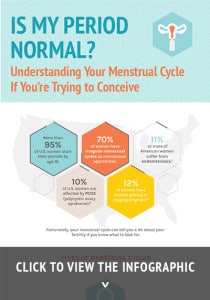
Your Menstrual Cycle May Reveal the Culprit to Your Trouble Conceiving

One in eight couples will experience infertility, defined as the inability to conceive after 6 months to a year of unprotected intercourse, depending on the female partner’s age. Many of the causes behind infertility are unknown until testing has been completed. However there is one sign that women can look for in regards to their fertility: the regularity of her menstrual cycle.

The menstrual cycle is directly related to ovulation (the release of an egg). But what if ovulation isn’t occurring, how do you know and what can be done to help? Understanding your menstrual cycle could offer important insights into your fertility.

Understanding Your Menstrual Cycle: It’s More than Just Your Period

The menstrual cycle is a series of changes a woman’s body goes through each month whereby the ovary releases an egg and the uterus prepares for pregnancy. The menstrual cycle includes two phases: the follicular phase and the luteal phase.


Phase One: The Follicular Phase

The first day of your menses—or period—is day 1 of your cycle and the start of the follicular phase. During the follicular phase, the hypothalamus and pituitary glands in the brain release a hormone known as follicle-stimulating hormone (FSH). FSH stimulates the development of a follicle, which is a tiny fluid-filled sac within the ovary containing a maturing egg. The follicle also secretes estrogen, which produces mid-cycle changes in the cervical mucus and stimulates the lining of the uterus to thicken. These changes help prepare the uterus to receive the embryo. The follicular phase starts on day 1 of your menstrual cycle, the first day of day of your period, and concludes with a mature egg ready for release around 13 days later.


Phase Two: The Luteal Phase

The start of the second phase, or luteal phase, begins with ovulation. There is a drastic surge in luteinizing hormone (LH), also released by the pituitary gland, causing the follicle to break open and release the mature egg into the Fallopian tube. During a woman’s reproductive years, a woman usually releases a single mature egg each month, in a process known as ovulation.

Cervical mucus is most receptive to sperm around this point in the cycle and a woman has the best chances of conceiving leading up to and during ovulation. When a couple has intercourse around the time of ovulation, sperm swim through the cervical mucus, into the uterus and along the Fallopian tube, where they meet the egg. The egg has the capacity to be fertilized for about 24 hours after it is released from the follicle.

Once ovulation occurs, the follicle that produced the egg becomes a functioning cyst called the corpus luteum. The corpus luteum produces progesterone, which prepares the lining of the uterus for implantation of the fertilized egg resulting in pregnancy.

If fertilization does not occur, the egg passes through the uterus, and the corpus luteum ceases to function on about 14 days after ovulation. The uterine lining then breaks down and is shed several days later as the next menstrual cycle begins.

What is considered a “normal” menstrual cycle?

There is such thing as a normal cycle. The menstrual cycle is essential for the maturation and ovulation of an egg in addition to the preparation of the uterus for implantation. A normal menstrual interval ranges from 21 to 35 days and indicates that a woman is likely ovulating regularly. The portion of the cycle where the uterine lining is shed, also known as the period, in a normal cycle lasts between 2 and 7 days. If there is very little bleeding during the period (less than 2 days or very scant amount) or the bleeding lasts for greater than 7 days then it may indicate an abnormality within the cavity such as polyps, fibroids, cancer, or an infection of the uterus, or irregular ovulation. Cycles of a normal length suggest regular ovulation and that all of the sex hormones are balanced to support natural conception.

What does it mean if the number of days in my menstrual cycle or between periods has increased all of a sudden?

If the cycle length is still in the normal range described above (between 21 to 35 days) then the change is likely normal variation. However, if the cycle extends beyond 35 days, the cycle might be considered irregular raising concerns as to whether or not ovulation is occurring since longer cycles are caused by a lack of regular ovulation.

During a normal cycle, it is the fall of progesterone that brings upon bleeding. If a follicle does not mature and ovulate, progesterone is never released and the lining of the uterus continues to build in response to estrogen. Eventually, the lining gets so thick that it becomes unstable and, like a tower of blocks, eventually falls and bleeding occurs. This bleeding can be unpredictable, and oftentimes very heavy and lasting a prolonged period of time.

How can I time my ovulation to get pregnant?

It is a common misconception that the luteal phase begins around day 14 of your cycle; in fact, it can more easily be determined by counting 14 days prior to the start of your cycle. The length of a normal cycle is anywhere between 21 and 35 days, so if you are counting from the start of the cycle you may be missing the time of ovulation by as much as a week. To calculate when ovulation is likely to occur determine how long your cycle lasts and subtract 14 days from the predicted end of the next cycle. Another option is to use an at-home urine-based ovulation predictor kit. These at-home fertility tests look for the surge of luteinizing hormone (LH) that occurs 1 to 2 days prior to ovulation. It’s important to note that the ovulation predictor kits are not 100% accurate. These can be useful for women who have regular cycles, however, if you’re having irregular cycles, your levels of luteinizing hormone (LH)—the hormone such tests attempt to detect—could be outside of the normal ranges, making this test potentially unreliable for you. Learn more about how to determine your fertile window.

If I am not ovulating, what might be the cause? 

There are many causes of anovulation, the medical term used to describe when ovaries do not release mature eggs on a regular basis. Irregularities with the thyroid gland or elevations of the hormone prolactin can disrupt the brain’s ability to communicate with the ovary and result in anovulation. In addition, polycystic ovary syndrome (PCOS), a syndrome caused by imbalanced sex hormones, can also cause failed ovulation. Not only do these hormonal imbalances lead to problems with ovulation and therefore fertility, but they may also increase the risk of miscarriage.

Can I still get pregnant if my menstrual cycle is not normal? 

Yes, even if your menstrual cycle is abnormal, you may still conceive on your own. However, it may be a little more challenging, especially if you’re trying to determine your most fertile window based on your menstrual cycle. However, it’s important to realize that there are many situations in which ovulation does not occur, and thus, conception cannot occur naturally. There are also instances in which scar tissue in the uterine cavity or premature menopause can be factors limiting conception. Despite these factors though, there are a range of fertility treatment options that can help almost everyone conceive.

When should I seek help? 

Irregular or no ovulation makes conception very difficult without intervention. If you do not have a normal monthly menses, no matter the amount how long you have been trying to conceive, you should be evaluated by a fertility specialist. Any woman under 35 years of age with normal cycles who has not become pregnant after 1 year of trying should see fertility specialist. If you are 35 or older with a normal menstrual cycle and have been trying for 6 months without success, you should seek an evaluation as well. Normal menstruation indicates that you are ovulating; however, there are other reasons why you may not be able to get pregnant, and these should also be evaluated.

Medical contribution by: Stephanie Beall, M.D., Ph.D., of Shady Grove Fertility’s Towson, MD and Columbia, MD offices and Kara Nguyen, M.D., MPH of Shady Grove Fertility’s Reading, PA office and Harrisburg, MD offices.

Schedule an Appointment

Editors Note: This post was originally published in July 2014 and has been updated for accuracy and comprehensiveness as of March 30, 2017. 

If you do not have a normal menstrual cycle and are having trouble conceiving, a fertility work-up may help determine if you are ovulating or if there are other factors. Shady Grove Fertility’s team of dedicated New Patient Liaisons is available to answer your questions and schedule a consultation with a physician. Call 877-971-7755 or click to schedule an appointment.

At Shady Grove Fertility, we’re here to give you the caring support you deserve as you start or grow your family. As a leading fertility and IVF center of excellence, we offer patients individualized care, innovative financial options, over 30 accepted insurance plans, and pregnancy rates among the highest of all national centers. We offer patients the convenience of 19 full-service and 6 satellite locations across Maryland, Pennsylvania, Virginia, and Washington, D.C. More than 1,700 physicians choose Shady Grove Fertility to refer their patients, and more than 96 percent of our patients say they would recommend Shady Grove Fertility’s 39 physicians to a friend. With 10 Shady Grove Fertility babies born each day, your dream of starting or growing your family is within reach. 

Filed Under: General

March 8, 2017 by Shady Grove Fertility

Being proactive about your reproductive health is a solid first step toward preparing for that family you’re looking forward to having one day. After all, 40 to 50 percent of infertility cases are attributed to male fertility issues.

Whether you’re looking to start a family next month or next year, you’ve likely put some thought into how you can promote healthy sperm development. If you’re actively trying, you might have even attempted some of the “tricks,” such as switching from briefs to boxers—an idea often touted in glossy magazines.

But do these strategies truly improve your fertility? We turned to Dr. Eric Levens of our Annandale, VA office to shed some important light and actionable steps that could help you increase your knowledge and potentially enhance your fertility.

Q: What are the primary causes of male infertility?

Dr. Levens: While there are many different causes of male infertility, each falls into one of three categories.

     1. Sperm production disorders

Your brain sends signals to your testicles, telling them to produce sperm. These signals are sent through hormones—primarily follicle-stimulating hormone (FSH) and luteinizing hormone (LH).
In some cases, however, your testicles are unable to produce sperm, even though they’re receiving the signals from your brain.

In other cases, the signal isn’t strong enough. Though your testicles can produce the sperm, you may lack sufficient FSH or LH hormones to kick them into sperm production mode.
As specialists, the way we handle a sperm production disorder depends on what exactly the problem is. In some cases, we can use medicine to create the ideal hormonal balance. In others, we retrieve sperm from the testicle.

  2. Obstructive issues

Obstructive issues, which result in reduced sperm count and often lower seminal volume, occur when sperm is prevented from being ejaculated.

While there can be many causes, obstructive issues are often congenital (present at birth), such as the congenital absence of the vas deferens. Problems of this nature can also result from a failed vasectomy reversal.

Some men, particularly those with diabetes, experience outflow obstruction—also known as retrograde ejaculation. When men have this issue, their semen will flow into the bladder instead of out the urethra during ejaculation.

When a man has an obstruction issue, fertility specialists are commonly able to extract sperm cells from the epididymis. In the case of retrograde ejaculation, we can usually reduce urine acidity using medication, then extract sperm from the urine.

 3. Immune system dysfunction

In some cases, your immune system may be fighting against your fertility. Because sperm is naturally antigenic, your body can form antibodies against them. In some cases, a man’s body forms antibodies that attach to sperm, making it more difficult for sperm to move.
When a problem pertaining to your immune system is hindering conception, we are often able to “wash” the sperm, remove the antibodies, and proceed with more advanced reproductive care—like an IVF cycle.

Q: What’s a semen analysis, and when should I have one?

Dr. Levens: A semen analysis is a non-invasive, low-cost test in which we assess your sperm. In a semen analysis, we examine three main things:

  • Count – How many sperm you have
  • Motility – How well your sperm move
  • Morphology – How your sperm are shaped

Because a semen analysis is such a simple test that yields a substantial amount of information, we suggest that couples have this test as part of their primary fertility work-up. In many cases, where patients initiated low-tech treatment such as timed intercourse with Clomid under the care of their OB/GYN or primary care physician—only to have an unsuccessful result—the answer was only revealed after a simple semen analysis. Had that couple started with an early semen analysis they could have saved precious time with other treatment strategies.

The bottom line, if you’ve been having unprotected sex for 1 year with a female partner under 35 or 6 months with a female partner over 35 and she hasn’t yet conceived, it is time to see a fertility specialist for testing of both the male and female.

If you have reason to suspect you may have an issue with your sperm—like if you’ve ever had testicular trauma, erectile dysfunction, or problems ejaculating—consider skipping the wait, regardless of your partner’s age or how long you’ve been trying, and get tested immediately.

When it comes to conception, knowledge is power. And a semen analysis can offer a quick, easy snapshot of your sperm health, providing knowledge that can be crucial to your starting a family.

Q: What can I do to promote healthy sperm development?

Dr. Levens: To have the maximum possible impact on sperm quality, you need to do more than simply eat the “right foods” or add a fertility supplement to your diet.

Whether you’re hoping to become a father soon or planning for future parenthood, here are a few actionable items to help you improve your sperm health.

     1. Maintain a healthy weight.

Carrying extra weight can increase testicle temperature and ultimately hinder sperm health. Not to mention, our body’s fat cells produce estrogen, which, when present in abundance, can decrease sperm production.

Since a direct correlation exists between obesity and having fertility issues, weight loss may help men improve sperm quality.

To maintain a weight within the ideal range, we encourage our patients to focus both on maintaining a healthy diet and engaging in moderate physical activity.

     2. Stop smoking.

Smoking increases oxidative stress on all body tissue, including sperm. Oxidative stress impacts both sperm motility and sperm morphology.

     3. Avoid excessive alcohol consumption.

Drinking excessive alcohol not only impacts your physical health—which can result in sperm issues—but it also commonly causes sexual dysfunction. This dysfunction may impact the frequency with which you are able, or choose, to have sex, therefore making conception harder.

     4. Avoid excessive heat.

Your testicles need to be at a lower temperature than the rest of your body—which is why they form outside of your body. Like smoking, excessive heat exposure puts oxidative stress on your sperm.
Further research is needed to know how much heat is truly damaging, however. Though we often hear it, there is no guarantee that switching from briefs to boxers will positively impact sperm count. At the same time, however, making the switch likely won’t hurt.

     5. Don’t take testosterone-containing medicines.

Some men who struggle to maintain a healthy libido often receive a testosterone (Low T) prescription from their general physicians as a remedy. While it may seem that increasing your testosterone level will help your sperm, many of the medicines used to do this actually suppress sperm function.

     6. Take a vitamin.

Maintaining an ideal vitamin and mineral balance is critical for sperm production. Some research indicates that zinc and folate supplements help promote sperm health.

Shady Grove Fertility is proud to recommend Luminary Vitamins and Theralogix to offer high-quality, evidence-based nutritional supplements patients can trust. 

Medical contribution by Eric D. Levens, M.D.

Eric D. Levens, M.D., FACOG, board certified in obstetrics and gynecology and subspecialty board certified in reproductive endocrinology and infertility. Dr. Levens is committed to improving the success of fertility care through active research and national advocacy. He sees SGF patients at the Fairfax, Virginia, office.

Filed Under: General

  • « Go to Previous Page
  • Page 1
  • Interim pages omitted …
  • Page 16
  • Page 17
  • Page 18
  • Page 19
  • Page 20
  • Interim pages omitted …
  • Page 46
  • Go to Next Page »

Company

  • About SGF
  • About US Fertility
  • Our Doctors
  • Fertility Equity
  • Careers
  • Newsroom
  • SGF College Scholarship
  • Contact Us
  • Voice Your Feedback

Treatments

  • Egg Freezing
  • Intrauterine Insemination (IUI)
  • In Vitro Fertilization (IVF)
  • Frozen Embryo Transfer (FET)
  • LGBTQIA+ Family Building
  • Shared Risk 100% Refund Program
  • All Treatments

Resources

  • Patient Portal
  • Online Bill Pay
  • Library
  • Support Groups & Events

Locations

  • California
  • Colorado
  • Delaware
  • Florida
  • Georgia
  • Maryland
  • North Carolina
  • Pennsylvania
  • Texas
  • Virginia
  • Washington, D.C.

2026 Shady Grove Fertility

  • Policies & Notices