
• Skip to primary navigation
  • Skip to main content
  • Skip to footer
Shady Grove Fertility
  • Become an Egg Donor
  • Referring Physicians
  • 1-888-761-1967
  • Schedule Appointment
  • Get Started
        • Get Started
          • Causes of Infertility
          • Fertility Tests
          • When to Seek Help
          • Find a Doctor
          • Preconception and prenatal vitamins 
          • Schedule an Appointment
        • Personalized Care For
          • Single Parents
          • LGBTQIA+ Family Building
          • People with Cancer
          • Known Genetic Diseases
          • Egg Donors
  • Treatments
        • Fertility
          • Timed Intercourse
          • Ovulation Induction
          • Intrauterine Insemination (IUI)
          • In Vitro Fertilization (IVF)
          • Frozen Embryo Transfer (FET)
        • Donation & Surrogacy
          • Donor Sperm
          • Donor Egg
          • Donor Embryo
          • Gestational Carrier
          • LGBTQIA+ Family Building
          • Single Parents
          • Find a Donor
        • More Treatments
          • Center for Male Fertility
          • Egg Freezing
          • OncoFertility
          • Preimplantation Genetic Testing
          • MIGS
          • All Fertility Treatments
  • Resources
    • Resource Library
    • Events Calendar
    • Patient Stories
    • Mental Health
    • Wellness Center
  • Insurance & Savings
    • Insurance & Benefits
    • Shared Risk 100% Refund Program
    • 100% Refund for Donor Egg
    • Discounts
    • Egg Freezing Costs
    • Financing & Grants
    • Clinical Trials
  • About
    • Find a Doctor
    • About SGF
    • Our Care Team
    • Advanced Practice Providers
    • Fertility Equity
    • Philanthropy
    • Newsroom
    • Careers
    • Contact Us
    • Voice Your Feedback
  • Locations
        • Find a Location
        • California
        • Colorado
        • Delaware
        • Florida
        • Georgia
        • Maryland
        • North Carolina
        • Pennsylvania
        • Texas
        • Virginia
        • Washington, D.C.
        • Chile
        • International & Out of State
        • SGF at Walter Reed National Military Medical Center
  • Patient Hub
    • Online Bill Pay
    • Patient Forms
    • Patient Portal
  • Call your care team
  • Become an egg donor
  • Referring physicians
  • search-icon
  • Schedule appointment 1-888-761-1967

Home / Gestational carrier & surrogacy

Gestational carrier & surrogacy

May 23, 2026 by Shady Grove Fertility

Building a family looks different for everyone—and for LGBTQIA+ individuals and couples, the path often involves more planning, more questions, and more decisions than a standard fertility workup. The good news: the options are real, the paths are well-established, and our care teams have been navigating all of them for years. Here’s what you need to know about LGBTQIA+ family building at Shady Grove Fertility. 

“Every family looks different, and that’s exactly what we plan for,” shares Jaimin S. Shah, M.D.  “LGBTQIA+ patients come to us at every stage. Some with a clear plan, some with a lot of questions, and some who just want to understand what’s possible before they decide anything. All of those conversations are welcome and encouraged.” 

What treatment options are available for LGBTQIA+ family building?

LGBTQIA+ patients at SGF have access to the full range of fertility treatments, personalized to your specific situation, goals, and biology. Options include: 

  • Intrauterine insemination (IUI) with donor sperm — typically the first-line option for those planning to carry using donor sperm. 
  • In vitro fertilization (IVF) — used when IUI isn’t the right fit, or when additional steps like genetic testing are part of the plan. 
  • Reciprocal IVF (also called co-IVF) — one partner provides the eggs; the other carries the pregnancy. Both partners participate biologically in the process. 
  • Donor egg and donor embryo — for those who need eggs or embryos from a third-party donor. 
  • Working with a gestational carrier — for those who are not able to carry a pregnancy. Our team can help connect you with a gestational carrier through a reputable agency  
  • Fertility preservation for transgender individuals — including egg freezing or sperm banking before gender-affirming hormone therapy or surgery. 
  • Intended father treatment (dual insemination) — sperm from both partners can be used to create embryos, with one transferred to a gestational carrier. 

What is reciprocal IVF?

Reciprocal IVF—sometimes called co-IVF—is a treatment option for couples where one partner provides eggs and the other carries the pregnancy. The egg provider goes through an IVF stimulation cycle; the eggs are fertilized with donor sperm to create embryos; one embryo is then transferred to the carrying partner’s uterus. It’s one of the most meaningful ways both partners can be biologically involved in the pregnancy. 

What will my treatment plan look like?

Your treatment plan starts with an initial consultation with one of our reproductive endocrinologists, where your physician will review your medical history, discuss your goals, and recommend a diagnostic workup tailored to your situation. 

A few things worth thinking about before that first appointment: 

  • If you’re planning to carry: Who will provide the eggs—you, your partner, or a donor? Will you use a known donor or an anonymous sperm donor? 
  • If you’re planning to work with a gestational carrier: Do you have someone in mind, or will you work with an agency? Who will provide the sperm and/or eggs? 
  • If you’re pursuing treatment as a solo parent: What donor options—sperm, egg, or embryo—fit your plan? 

There’s no single right answer to any of these questions. The consultation is the place to think through them with someone who knows the clinical and practical landscape inside and out. 

Does insurance cover LGBTQIA+ fertility treatment?

Coverage depends on your specific plan, but we work with most major insurance carriers—and the numbers are encouraging. About 90 percent of our patients have their initial consultation covered by insurance, and approximately 70 percent have some coverage for testing and treatment. 

A Financial Educator on our team will review your benefits before you begin, walk you through exactly what’s covered, and help you understand your options if coverage is limited. That conversation is part of care—not an add-on. 

What financial programs are available for LGBTQIA+ patients?

Our financial programs are available to all eligible patients, including LGBTQIA+ families. The Shared Risk 100% Refund Program for IVF offers up to six IVF cycles for a fixed fee—with a full refund if treatment is unsuccessful or if you decide to step away. It applies to IVF, donor egg treatment, frozen embryo transfer, and returning egg freezing patients. Some exclusions apply. 

Additional options include zero percent financing through CapexMD, income-based discounts through the Shared Help program, and grants through the Tinina Q. Cade Foundation. A Financial Educator can walk you through what’s available for your specific situation. 

Fertility Equity™ care—what it means for you

Our care teams are Fertility Equity™ certified, which means our team is trained to provide culturally competent, inclusive care for all communities—including those who have historically faced barriers to reproductive healthcare. That shows up in how we communicate, how we build treatment plans, and how we show up for every patient who walks through our doors. 

What legal considerations should LGBTQIA+ families know about?

Family-building law varies by state and by treatment type, and we recommend working with a reproductive attorney as early in the process as possible. Our team can provide referrals. 

A few things to know going in: for reciprocal IVF, the birth certificate will typically name the carrying partner, and the non-carrying partner may need to complete a second-parent adoption depending on the state. For same-sex male couples working with a gestational carrier, a legal contract establishing parental rights should be in place before the transfer. Your attorney will guide you through the specifics. 

Additional frequently asked questions

Yes. Fertility preservation before gender-affirming treatment is something our care teams navigate regularly. Egg freezing and sperm banking are both available, and the earlier you come in for a consultation, the more options you’ll have. There’s no waiting period and no referral required to schedule. 

Yes. LGBTQIA+ family building is a core part of our practice, not a specialty add-on. Our clinical team has experience across all treatment paths—IUI with donor sperm, reciprocal IVF, working with a gestational carrier, and fertility preservation for transgender individuals. You won’t need to explain the basics at your consultation. 

It depends on the treatment plan. For IUI with donor sperm, the evaluation focuses on the person planning to carry. For reciprocal IVF, both partners undergo evaluations—one for ovarian reserve and egg retrieval, one for uterine readiness. Your physician will outline exactly what testing is needed at your first appointment. 

Whether you’re just starting to explore your options or ready to schedule your first appointment, our team is here. Ready to talk with a specialist? Schedule a consultation with Shady Grove Fertility today. 
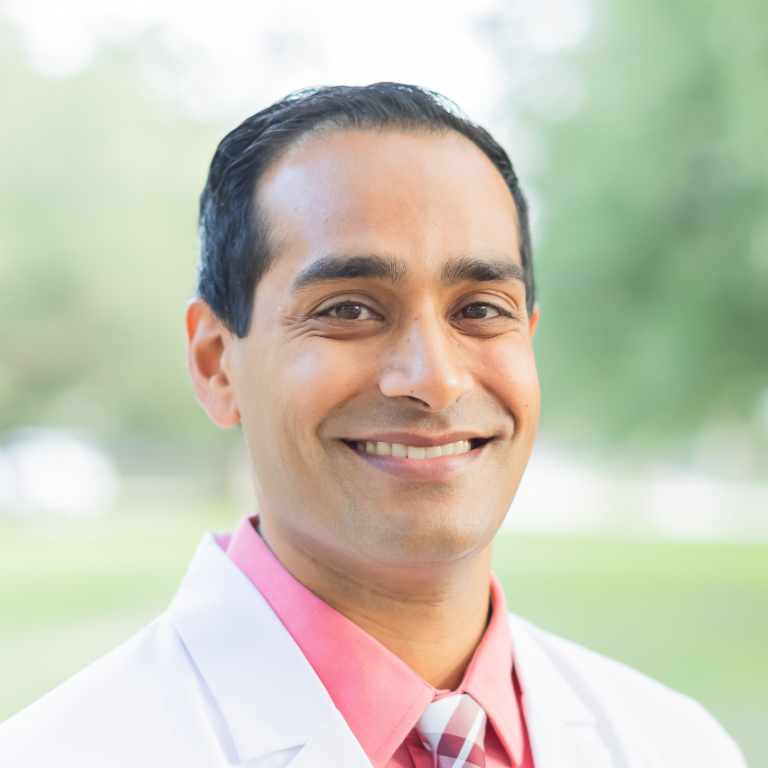
Medical contribution by Jaimin S. Shah, M.D.

Jaimin S. Shah, M.D., is board certified in obstetrics and gynecology (OB/GYN) and reproductive endocrinology and infertility (REI). He completed his residency training in OB/GYN at the McGovern Medical School in Houston, Texas. During this time, Dr. Shah was inspired by a patient diagnosed with breast cancer and found working with a reproductive endocrinologist (REI) to help preserve the patient’s future fertility a fulfilling experience.

Schedule an Appointment

LGBTQIA+ patient stories

Patient Story

Quinton & Jamin

Patient Story

Lindsey & Gracie
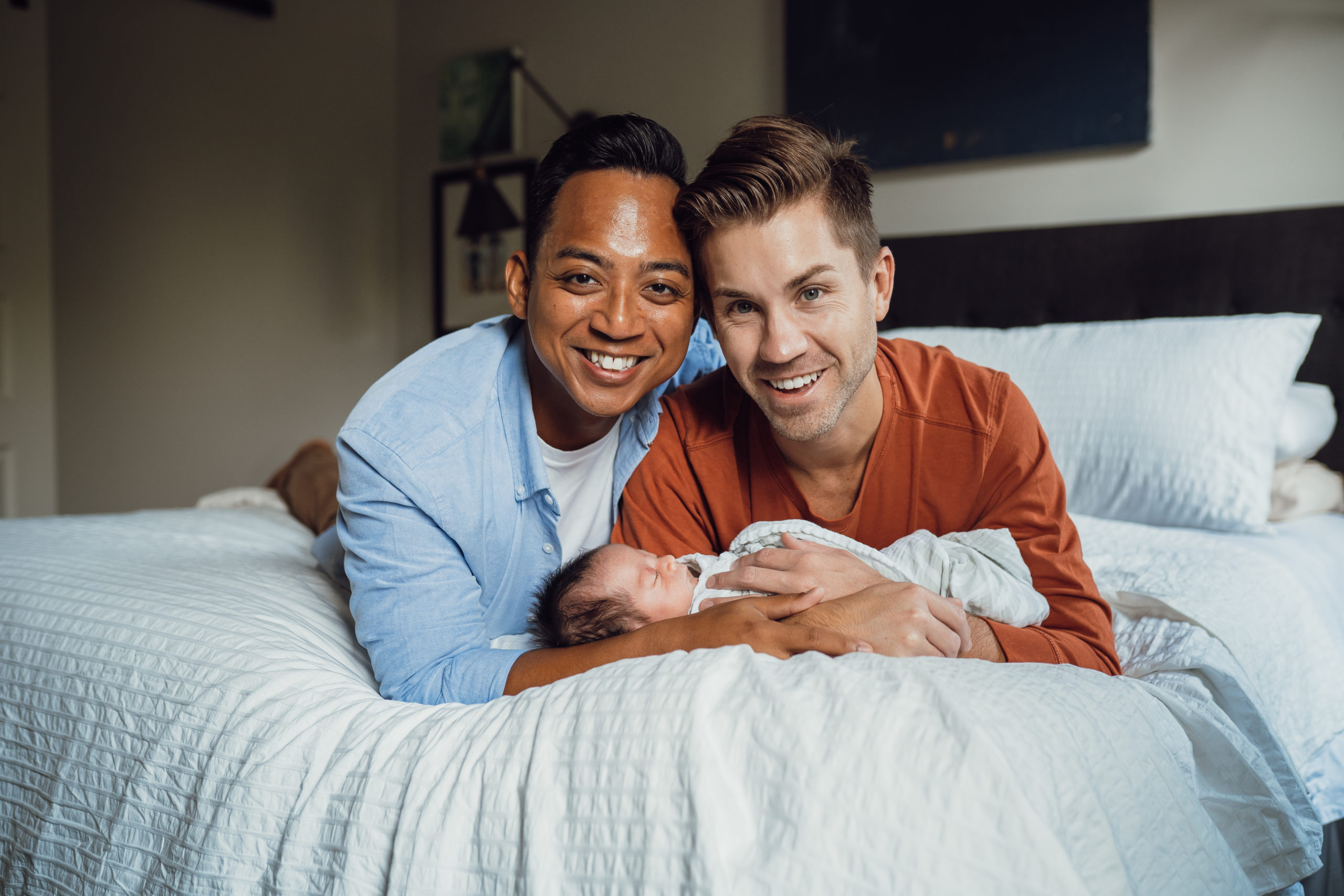
Patient Story

Chad & Michael

Patient Story
Elle & Marquitta

Filed Under: Get Started Tagged With: Dr. Jaimin Shah, Gestational carrier & surrogacy, LGBTQIA+ family building

October 19, 2021 by melaniedouez

May 10, 2023 @ 5:30 pm – 7:30 pm

We are excited to invite you to a special event for intended parents in the United Kingdom who want to learn more about family building options via U.S. surrogacy and IVF!

Join Circle Surrogacy & Egg Donation and special guests Shady Grove Fertility Center MD and UK Solicitor Colin Rogerson at our complimentary event, “U.S. Surrogacy and IVF for the UK: Drinks and Conversations” at Circle’s office in London!

It’s a very casual night – stop by whenever you can for hors d’oeuvres and a drink, and chat with us about surrogacy and IVF!

Reserve your free tickets today! Space is limited.

During this event, you’ll have the opportunity to:

  • Talk with Dr. Gilbert Mottla, IVF physician at Shady Grove Fertility Center
  • Talk with UK Solicitor Colin Rogerson
  • Talk with team members from Circle Surrogacy
  • Have the opportunity to see Circle Surrogacy’s London location
  • Obtain information about family building options for hetero and LGBTQ+ couples and individuals through surrogacy, IVF, and/or egg donation in the USA

Circle and Shady Grove will also be offering in-person consultations the next day, May 11th at our office in London. If you’re interested in booking a consultation or learning more, you can email Lauren Davitt, Parent Intake Senior Manager, at ldavitt@circlesurrogacy.com.

REGISTER HERE

Medical contribution by Gilbert L. Mottla, M.D.

Gilbert L. Mottla, M.D., is board certified in obstetrics and gynecology and reproductive endocrinology. Dr. Mottla is presently a clinical assistant professor of obstetrics and gynecology at Georgetown University. He primarily see patients at SGF’s Annapolis, Maryland office. He is also available for new patient egg donation and gestational carrier consultations in the Rockville, Maryland office.

Filed Under: For Patients Tagged With: Gestational carrier & surrogacy

September 7, 2021 by grafikdev1

The decision to create your family with the assistance of third-party reproduction i.e., donor egg, donor sperm, or gestational surrogacy is a difficult one. Choosing this family building option ultimately involves grieving the loss of having a child who is genetically related to both or either of you, and/or grieving the loss of the experience of pregnancy and carrying your child. Once an individual or couple feels comfortable moving forward with third-party reproduction, the next decision involves whether to use a known or unidentified/previously unknown gamete donor or gestational carrier (GC). A known gamete donor or GC is a family member, friend, or acquaintance with whom the recipients or intended parents have a preexisting relationship.
Why Choose to Work With a Known Gamete Donor or GC?
There are numerous reasons why an individual or couple may consider building their family with the assistance of a known gamete donor or GC. First, in the case of egg and sperm donation, if the donor is a relative, there may be a sense of comfort in using gametes with some type of genetic link. A strong familial resemblance between the donor and recipient may also be an important factor in the decision. In a same-sex couple, the assistance of a family member as an egg or sperm donor can also allow for a genetic connection to both members of the couple. Other individuals find solace in maintaining a broad family connection and may wish to work with a brother-in-law as a sperm donor, or a sister-in-law as an egg donor or GC. When we include friends, as well as family members, the preference for a known arrangement may be a matter of trust; there is a perception that the donor or GC will provide greater and more accurate medical, educational and social history. It also creates an opportunity for the donor or GC to be known to the child, develop some form of a relationship with the child, and in the case of gamete donation, for the child to have access to updated health information. Finally, in some situations, the use of a known gamete donor or GC may decrease the cost of and/or the waiting time to receive treatment.
Who is an Appropriate Candidate to Be a Known Gamete Donor or GC? 
First, check with your treating physician to identify basic requirements for a known donor or GC. For example, your medical practice may have established a minimum and maximum age range for gamete donors and GCs. Likewise, most practices require that a GC has previously carried a pregnancy to term and delivered a child. This is related to important medical information obtained when a woman has experienced pregnancy, childbirth, and the postpartum adjustment period, as well as the ability to provide full informed consent since a potential GC cannot anticipate how it would feel to relinquish a child unless she has previously given birth. Before you ask or accept the offer of a family member or friend to help you create your family, you should have an idea of minimum qualifications.
Second, gamete donation and gestational surrogacy requires a significant commitment of time and often, emotional energy, on the part of the donor or GC. Prior to the initiation of treatment, there is usually a medical and psychosocial evaluation process. Speak with your doctor and the practice’s mental health professional to find out exactly what will be required of the donor or GC during the work-up and treatment process. Also be aware of the potential medical and psychological risks (e.g., perceiving the resulting offspring as their own (for donors); difficulty relinquishing the baby (for GCs) of treatment for a donor or GC. Before you decide to ask or accept the offer of a family member or friend to be a donor or GC, carefully consider whether it is realistic for that individual to commit to the process at the current time.
How Do I Ask?  
Obviously, it is far more comfortable for everyone when the friend or family member comes forward and offers to be a gamete donor or GC. Sometimes someone has made an offer in the past or even expressed a general statement such as, “if there is anything I can do to help you…” and thus, they have paved the way for you to now ask for their assistance. However, often there has been no such offer, or you may not even have been open with others about your family building plans or your struggles with infertility. The prospect of asking for such an important gift and the potential that the person will say “no”, can be anxiety-provoking and heighten feelings of vulnerability. What may work best for all parties is to write the proposed donor or GC a letter or email, allowing them and their spouse/partner the time and space to think about the request without feeling the pressure of an immediate response. The letter should make it easy for the potential donor or GC to decline the request. For example, you may include statements such as, “you don’t even need to respond to this if you don’t want to,” or “we understand if this is not something you are interested in pursuing and we just appreciate you taking the time to think about it.” You may wish to let them know other options you are considering e.g., an unidentified gamete donor or identifying a GC through an agency. The letter might also mention that the potential donor or GC could speak with a physician, a member of the donor team, or the practice’s mental health professional to obtain more information prior to making a decision.
It is important to prepare yourself for the possibility that the person you ask, or that person’s spouse/partner, may say “no”, either initially, or after they have had the chance to ask questions of medical or mental health personnel, or even after they have had a number of conversations with you. As mentioned previously, being a gamete donor or GC involves a commitment of time and emotional resources for both the collaborator and his/her spouse/partner and their family. There are also lifelong issues to consider. You only have one family, and good friends are not easily made; you do not want to do anything to harm those relationships. Try to keep in mind that whether the person you asked thought about the possibility briefly or for weeks, the fact is that they care enough about you to have even considered helping you on your journey. 
What Issues Should We Discuss?  
Most clinics require known donors, recipients, GCs and intended parents to participate in a psychosocial counseling and evaluation process with a mental health professional who has an expertise in the area of third-party reproduction. However, it can be helpful for you and your spouse/partner to discuss various treatment and lifelong issues with one another, as well as, with the gamete donor or GC and their spouse/partner, to determine whether this arrangement is the best way for you to create your family. Below are some questions for all parties to consider separately and with one another, regardless of whether the donor or GC volunteered or you asked for their assistance:
  • How might this arrangement affect the relationship between all parties? How may other family members or friends respond to this collaboration?
  • What are everyone’s expectations for treatment? For example, expectations each party has regarding the number of treatment cycles, the disposition of embryos for known gamete donation, and number of embryos transferred for a known GC arrangement, etc.
  • What are all participants’ feelings about whether, when, and how to disclose to a child born from the process? Also, to the children of the gamete donor or GC?
  • What are everyone’s expectations about the future role of the donor or GC in the child’s life (e.g. does the donor or GC desire to have a greater or lesser level of involvement in the child’s life than that with which you are comfortable?)
There needs to be an understanding and consensus on these, as well as other issues, for a known collaboration to be a positive experience for all of the parties, including any children born from the process or existing children.
How Do I Even Begin to Thank My Family Member or Friend for Such a Precious Gift?  
This is a common question and concern among individuals and couples who work with a known gamete donor or GC. Research tells us that friends and family members are usually motivated to help because of their relationship with you and their empathy for the difficulties you have had in achieving parenthood i.e., their motivation is altruistic. We have found that in general, donors and GCs appreciate being thanked. However, planning some type of thank you can also be integral to achieving a sense of closure for all parties. People often think about a “gift” as a means to thank a donor or GC. However, depending on the person and your relationship with them, a thoughtful note, or some type of thank you ritual (e.g., making a donation to a charity of their choice in their honor; an outing, spa day, or special trip) may be a more appropriate gesture.
In summary, building your family with the assistance of a known egg or sperm donor, or gestational carrier has implications for you, the donor or GC, their spouse/partner, and any resulting or existing children in each of the respective families. Taking the time to carefully consider the treatment and lifelong issues better prepares all parties for what can be an emotionally challenging, but rewarding process.
Contributed by: 
Erica Mindes, Ph.D.

Filed Under: Treatment Tagged With: Donor egg, Donor sperm, Gestational carrier & surrogacy

October 30, 2019 by Shady Grove Fertility

Last year, ABC News featured an article on Shady Grove Fertility patient, Randi Fishman, and her unique story of surrogacy after a devastating re-occurrence of breast cancer.

Fishman’s own sister, Erin Silverman, stepped in and elected to carry her child once she was finished having children of her own. After Fishman’s first breast cancer diagnosis, she decided to freeze her embryos, which were tested for the BRCA1 gene. Thanks to the amazing technology offered through genetic testing of the embryos before the embryo transfer to Silverman, only the embryos that tested negative for the mutation were used.

Shady Grove Fertility physician Dr. Jeanne O’Brien from SGF’s Rockville, MD location spoke about her experience caring for both Fishman and Silverman:

“This was an amazing experience to help a couple facing a devastating diagnosis preserve their ability to not only have children but children that would not face the genetic cancer risk of the BRCA gene,” Dr. O’Brien told ABC News. “The involvement of Randi’s sister strengthened the shared commitment to achieving another successful pregnancy. I’m grateful to have been their physician.”

Planning for Pregnancy Prior to Cancer Treatment

Receiving a cancer diagnosis at any age is excruciating, but for young women in their 20s, 30s, and younger, there are additional concerns that need to be addressed fairly quickly as some effective cancer treatments can permanently damage fertility. Fortunately, advances in fertility preservation have made it possible for patients with cancer to preserve their options but these options must be considered before cancer treatment can begin.

At SGF, we have a specially trained team that works specifically with people with cancer. We will work directly with the oncology team to ensure we expedite fertility preservation so that cancer treatment can quickly begin. The oncofertility team at SGF helps to guide patients through each step of the treatment process, from finding ways to afford treatment to the actual medical procedure. Due to the time sensitivity with treatment, patients can expect an expedited treatment plan and to see a physician for consultation as soon as possible.

Prior to cancer treatment, patients have the opportunity to freeze eggs, embryos, or sperm.

If you would like to learn more about our oncofertility treatment options or to schedule an appointment, please call our New Patient Center at 1-877-971-7755 or complete this brief online form.

Schedule an Appointment

If you would like to learn more about our oncofertility treatment options or to schedule an appointment, please call our New Patient Center at 1-877-971-7755 or complete this brief online form.

Filed Under: Get Started Tagged With: Cancer, Dr. Jeanne O'Brien, Egg freezing, Gestational carrier & surrogacy

July 23, 2018 by Shady Grove Fertility

Medical Contribution by Paulette Browne, M.D., Ph.D.

Dr. Paulette Browne, from our Fair Oaks, VA office responded to questions asked live during a recent Getting Started Webinar. From finding gestational carriers to boosting your fertility with natural methods, Dr. Browne provided answers to common fertility questions and important insight across many different forms of treatment at SGF.


Q: What can my partner and I do at home to boost our fertility naturally?

Dr. Browne: “Being healthy is always great! You want to make sure you’re not eating too many soy products, stay away from herbal therapy, reduce your caffeine intake, and avoid high mercury fish like tuna, shark, and swordfish. You can also track your fertility with ovulation predictor kits that you can get at the drugstore. These predict when you release the egg and when your (luteinizing hormone) LH levels begin to rise. The egg is released 2 days later so your most fertile time is after that LH surge. I’d recommend intercourse every other day at that time.”

Q: Is your practice LGBTQIA+-friendly?

Dr. Browne: “We certainly are! We offer treatment for all couples, as well as singles. We help our male couples find a gestational carrier and a donor egg, and for female couples we have a treatment plan called co-IVF. With co-IVF, one partner undergoes the egg retrieval and the other partner has the egg that we fertilize in her uterus.”

Visit the LGBTQIA+ Family Building page on our website to learn more about treatment options for all types of partnerships.

Q: Can multiple miscarriages be used as an appeal to IVF for an insurance company?

Dr. Browne: “We can always try. If we do an evaluation and we find a reason behind the miscarriages that could be fixed with IVF, such as chromosomal abnormalities or tubal factors, we can sometimes use that to appeal to an insurance company. With that said, some insurance companies are more flexible than others, but we are always willing to try, so coming in to meet with us and giving us the tools to create that appeal is worth it.”

Q: Do you help couples find a gestational carrier?

Dr. Browne: “We do! We work with attorneys and centers that recruit gestational carrier. The individuals and centers that we work with complete the actual recruiting, but we are very careful with reviewing the carriers’ medical records to ensure the carrier is suitable. We examine their pregnancy histories, social histories, and are very involved in terms of getting that carrier past the finish line.”

Q: My partner and I have already found an egg donor in California. Is it possible to ship her frozen eggs to your center in Atlanta?

Dr. Browne: “Yes, eggs can be shipped across the country. We have centers in California that we ship eggs between since they’re a part of our egg bank, so it’s even a possibility for you to use one of the centers we already have when it comes time to ship the frozen eggs.”

Q: What does a typical timeline look like for IVF treatment?

Dr. Browne: “Typically we put the patient on birth control pills for 18-21 days after day three of her period. The IVF cycle stimulation is about 9-14 days. Retrieval takes place 2 days later, and transfer is 5 days later. The pregnancy test is done about 2 weeks later. Overall it’s about a 2 month process. Three of the weeks don’t require much for the patient, and then 3 other weeks require you to be more active in the process. The last 2 weeks are just a matter of waiting for the pregnancy results. We can start treatment as soon as you get your menstrual cycle after all the blood tests have been conducted and you’ve made a treatment plan with your doctor.”

Schedule an Appointment

Q: How important is it to have your AMH and FSH tested on the third day of your cycle?

Dr. Browne: “AMH can be tested on any day of your cycle, but FSH needs to be tested on day 2, 3, or 4to be accurate. On day 10 of your cycle, the FSH is supposed to be a little higher because it’s actively trying to get the eggs going. In order to evaluate reserve, FSH does have to be tested within that window of time.”

Q: Are any of the common processes like IVF and IUI similar to what I’d expect for egg freezing?

Dr. Browne: “Yes, they’re actually very similar. For egg freezing, we forego the evaluation of the uterus until someone comes back to use their eggs. We do the evaluation of ovarian reserve, bloodwork, ultrasound, AMH level, and then you go through the IVF treatment with injections. After that, we retrieve the eggs and see how many we can use.

Shady Grove Fertility has a great deal of experience freezing and thawing eggs. We offer some great financial programs that ensure you have a certain amount of eggs frozen, and we also have the only published egg freezing success rates in the country.”

Q: How do I decide between choosing an SGF center near my home or one near my work?

Dr. Browne: “It’s really your choice! SGF allows you to pick a doctor in any one of the offices and see him/her for your initial consultation, and then do your monitoring at another Shady Grove Fertility office that offers full-service monitoring. Let’s say you came to see me at my office in Fairfax, VA, but you work downtown. You can still be close to work and visit our K Street office in D.C. to do your monitoring there. If you had an IUI monitoring appointment that needed to be done, but you had a trip to Atlanta already planned – you can still be my patient and have that appointment in Atlanta. I’d get the results back just the same. Definitely pick a doctor you’re comfortable with, but you’ll make more of a connection if you see him/her at each of your appointments.”

Q: What’s the correlation between the hormone to ovulate and the trigger injection?

Dr. Browne: “The trigger injection acts on the same receptors as the hormone you sent to ovulate. That hormone is LH, it comes from the pituitary gland and the trigger injection is usually HCG, which strongly binds to the LH receptors. The HCG is a pregnancy hormone but it works just the same as LH.”

Q: Is there any type of genetic testing before treatment?

Dr. Browne: “We offer all our patients genetic testing for recessive mutations. Recessive mutations are ones in which you carry a gene but no disease is present because you only have one of the genes. If you and your partner, or the sperm donor, or the egg donor carry the gene for the same thing, there’s a 25% chance that you give the baby the gene and the disease could be significant. If two people don’t carry the same gene it’s not a problem. If both do carry the same gene, we can still monitor the embryo during IVF and test the cells to see if both genes are present. We currently test for 175 recessive mutations.”

Schedule an Appointment

To schedule an appointment with Dr. Browne or any of our SGF physicians, please call our New Patient Center at 888-761-1967 or fill out this brief form.

Filed Under: Treatment Tagged With: Gestational carrier & surrogacy

February 25, 2016 by Shady Grove Fertility

News that supermodel Tyra Banks and her boyfriend welcomed a baby boy into the world a few weeks ago sparked conversation and questions about what is a gestational carrier. Health.com reached out to reproductive endocrinologist Naveed Kahn, M.D. from Shady Grove Fertility’s Leesburg, VA, office in the article, “7 Facts about Having a Baby with a Gestational Surrogate.”

Dr. Naveed Khan

What is a gestational carrier?

A gestational carrier (GC) is a woman who carry’s someone else’s child to term. Many times the gestational carrier is described incorrectly as the gestational surrogate. Dr. Kahn points out that a gestational carrier is not a traditional “surrogate,” as a surrogate is someone who donates her egg and then subsequently carries the child. But this arrangement isn’t very common anymore, says Dr. Khan. “Most parents want their child to have their genes, so they use a gestational carrier,” Kahn adds.

A gestational carrier allows a couple to use their own genetics to conceive and is necessary for a couple when the woman is unable to carry her child to term for medical reasons. “When word gets out there, people start thinking ‘oh I should do it,’ because they don’t want stretch marks or they’re too busy. But those aren’t medical reasons,” explains Dr. Khan. There are a variety of medical conditions in which a woman may require a gestational carrier such as fibroids, severe endometriosis, cervical uterine cancer, and conditions that require a hysterectomy. If the mother has suffered recurring miscarriages and has not been successful with IVF, those are also reasons to look into using a gestational carrier.

Same-sex male couples will also work with a gestational carrier, egg donor, and most often one of the partner’s sperm to conceive.

At Shady Grove Fertility, in all autologous cases—where the intended mother plans to use her own eggs—the recipient couple will undergo screening via the standard infertility work-up, in addition to the requirements of the U.S. Food and Drug Administration (FDA). We will treat the female partner as a traditional IVF patient, with her cycle culminating in an egg retrieval. The GC will undergo IVF treatment with the couple’s embryo. Therefore, the gestational carrier does not have any genetic link to the baby and once the baby is born the parents will raise their child accordingly.

Who can be a gestational carrier?

Gestational carriers can be friends, family members, or found through an agency. At Shady Grove Fertility, a donor nurse will facilitate introductions for the intended parents and the agency and the treatment process will be clearly outlined for all parties. One crucial element is for prospective parents to consult an attorney who specializes in reproductive law to write a contract for the couple and the gestational carrier. Dr. Kahn told Health that since laws vary by state, with some states not even recognizing gestational carriers, legal protection is even more important.

At Shady Grove Fertility a special team works with all parties and requires necessary screening and legal certification prior to the start of a cycle. We believe that every patient deserves to build their family and applaud gestational carriers who help future parents in such a tremendous way.

If you’re interested in learning more about what is a gestational carrier, visit our website to learn how to get started, or to schedule an appointment and speak with one of our New Patient Liaisons call 1-877-971-7755 or click to schedule an appointment.

Filed Under: Treatment Tagged With: Gestational carrier & surrogacy

  • Page 1
  • Page 2
  • Go to Next Page »

Company

  • About SGF
  • About US Fertility
  • Our Doctors
  • Fertility Equity
  • Careers
  • Newsroom
  • SGF College Scholarship
  • Contact Us
  • Voice Your Feedback

Treatments

  • Egg Freezing
  • Intrauterine Insemination (IUI)
  • In Vitro Fertilization (IVF)
  • Frozen Embryo Transfer (FET)
  • LGBTQIA+ Family Building
  • Shared Risk 100% Refund Program
  • All Treatments

Resources

  • Patient Portal
  • Online Bill Pay
  • Library
  • Support Groups & Events

Locations

  • California
  • Colorado
  • Delaware
  • Florida
  • Georgia
  • Maryland
  • North Carolina
  • Pennsylvania
  • Texas
  • Virginia
  • Washington, D.C.

2026 Shady Grove Fertility

  • Policies & Notices
Also of interest
  • In Vitro Fertilization IVF
  • Fertility Tests
  • Research Publications