• Skip to primary navigation
  • Skip to main content
  • Skip to footer
Shady Grove Fertility
  • Become an Egg Donor
  • Referring Physicians
  • 1-888-761-1967
  • Schedule Appointment
  • Get Started
        • Get Started
          • Causes of Infertility
          • Fertility Tests
          • When to Seek Help
          • Find a Doctor
          • Preconception and prenatal vitamins 
          • Schedule an Appointment
        • Personalized Care For
          • Single Parents
          • LGBTQIA+ Family Building
          • People with Cancer
          • Known Genetic Diseases
          • Egg Donors
  • Treatments
        • Fertility
          • Timed Intercourse
          • Ovulation Induction
          • Intrauterine Insemination (IUI)
          • In Vitro Fertilization (IVF)
          • Frozen Embryo Transfer (FET)
        • Donation & Surrogacy
          • Donor Sperm
          • Donor Egg
          • Donor Embryo
          • Gestational Carrier
          • LGBTQIA+ Family Building
          • Single Parents
          • Find a Donor
        • More Treatments
          • Center for Male Fertility
          • Egg Freezing
          • OncoFertility
          • Preimplantation Genetic Testing
          • MIGS
          • All Fertility Treatments
  • Resources
    • Resource Library
    • Events Calendar
    • Patient Stories
    • Mental Health
    • Wellness Center
  • Insurance & Savings
    • Insurance & Benefits
    • Shared Risk 100% Refund Program
    • 100% Refund for Donor Egg
    • Discounts
    • Egg Freezing Costs
    • Financing & Grants
    • Clinical Trials
  • About
    • Find a Doctor
    • About SGF
    • Our Care Team
    • Advanced Practice Providers
    • Fertility Equity
    • Philanthropy
    • Newsroom
    • Careers
    • Contact Us
    • Voice Your Feedback
  • Locations
        • Find a Location
        • California
        • Colorado
        • Delaware
        • Florida
        • Georgia
        • Maryland
        • North Carolina
        • Pennsylvania
        • Texas
        • Virginia
        • Washington, D.C.
        • Chile
        • International & Out of State
        • SGF at Walter Reed National Military Medical Center
  • Patient Hub
    • Online Bill Pay
    • Patient Forms
    • Patient Portal
  • Call your care team
  • Become an egg donor
  • Referring physicians
  • search-icon
  • Schedule appointment 1-888-761-1967

Home / Semen analysis

Semen analysis

April 14, 2022 by Shady Grove Fertility

Determining whether it is time to see a fertility specialist can feel like a big decision to make on your own. Dr. Jason Bromer helps ease the “what ifs” that could be making you second-guess your next steps by outlining five sure signs you need to seek help from a fertility specialist.

It is also important to understand the red flags for when to see a fertility specialist sooner. Unfortunately, time is not on everyone’s side, as female infertility increases with age. If any of the following conditions apply to you, it is a good idea to make an appointment with a fertility specialist sooner rather than later.

1. Treatment with your primary care or OB/GYN is not working

To better understand the cause of infertility, your primary care physician, OB/GYN, or an SGF fertility specialist will review your medical history and initiate fertility testing for both partners (if applicable). It is especially important that each of the following tests is performed prior to initiating fertility treatment because each one evaluates specific reproductive functions that are required to conceive.

“Based on the information learned through testing, reproductive specialists can create individualized treatment plans ranging from low-tech treatment options like intrauterine insemination (IUI) in addition to the widely known in vitro fertilization (IVF),” explains Dr. Bromer.

These basic tests include:

  • Blood work: Are your reproductive hormones functioning normally?
  • Anti-Müllerian hormone (AMH): How many eggs do you have?
  • Hysterosalpingogram (HSG): Is your uterus shaped normally and are your tubes unobstructed?
  • Semen analysis: Does your partner have enough sperm and are they healthy?

While LGBTQIA+ individuals in a same-sex relationship may not necessarily be infertile, the couple should still have an evaluation and will often need assistance building their families.

2. You have been having unprotected intercourse without success

“It’s not uncommon to hear patients during our initial consultation say, ‘We haven’t used any forms of contraception for at least a year, but we have only really been trying to conceive for about six months,’” explains Dr. Bromer. “This begs the question: What does ‘trying’ really mean?”

No matter if you have been actively trying or not, couples having unprotected sexual intercourse for more than 6 or 12 months, depending on age, without conceiving should seek a fertility evaluation.

Shady Grove Fertility assumes infertility is present and recommends seeking help from a fertility specialist when a woman is:

  • Under age 35 with regular cycles, unprotected intercourse, and no pregnancy after 1 year
  • Age 35 to 39 with regular cycles, unprotected intercourse, and no pregnancy after 6 months
  • Age 40 or over with regular cycles, unprotected intercourse, and no pregnancy, more immediate evaluation and treatment are warranted

3. Your period is here, there, or nowhere

Irregular periods or no periods at all can indicate ovulatory challenges, making conception feel like an uphill battle. No matter your age, if ovulation is random or absent, seeking help from a specialist can help you get back on track to enhance your chances of conception.

“Ovulatory disorders broadly break down into two groups: no ovulation at all or oligo-ovulation, which is when ovulation occurs infrequently or irregularly and is frequently due to polycystic ovary syndrome (PCOS),” explains Dr. Bromer.

About 50 percent of treatment cycles performed at SGF, like ovulation induction with Clomid or intrauterine insemination, are considered basic forms of treatment. These options require less medication and fewer monitoring appointments but are still effective in helping patients conceive faster.

4. The semen analysis came back abnormal

When the male partner’s sperm count is low or of poor quality, it can make conception significantly more difficult. If you have reason to suspect you may have an issue with your sperm, such as testicular trauma, erectile dysfunction, or problems ejaculating, it is time to see a fertility specialist for testing of both partners. Seeing a reproductive specialist can help to determine the severity of a potential male factor diagnosis and offer simple to advanced solutions to help you conceive.

“The good news is if you have a low sperm count, it only takes one egg and one sperm to make a great embryo,” shares Dr. Bromer. “Intracytoplasmic Sperm Injection (ICSI), which is when a single sperm is directly inserted into an oocyte (or egg cell), and IVF can help patients with even the lowest sperm counts overcome infertility.”

5. You have experienced two or more miscarriages

“It is a common misconception that women who experience miscarriages do not experience infertility because they can get pregnant,” explains Dr. Bromer. “In fact, having multiple miscarriages is a very specific type of fertility problem that affects 1-3% of all couples.”

Recurrent miscarriages are defined as two or more consecutive, spontaneous pregnancy losses before 20-weeks gestation. The majority of miscarriages can be attributed to:

  • genetic abnormalities in the embryo
  • hormonal problems like diabetes, thyroid disease, and/or undetected structural problems in the uterus
  • advanced reproductive age

Anyone who has experienced two or more miscarriages should see a reproductive specialist.

It is time to see a fertility specialist

Making the move to see a fertility specialist is a big, but enlightening step. Patients often second-guess themselves about the need to see a specialist or may find themselves worrying about the success rates or how much treatment will cost. It is best to take it one step at a time. The first step is to schedule an appointment with a fertility specialist.

Approximately 70% of our patients have some coverage for infertility treatment and 90% have coverage for their initial consultation. By scheduling a new patient consultation, you will get the answers you need to continue moving your family-building goals forward.
Schedule Appointment
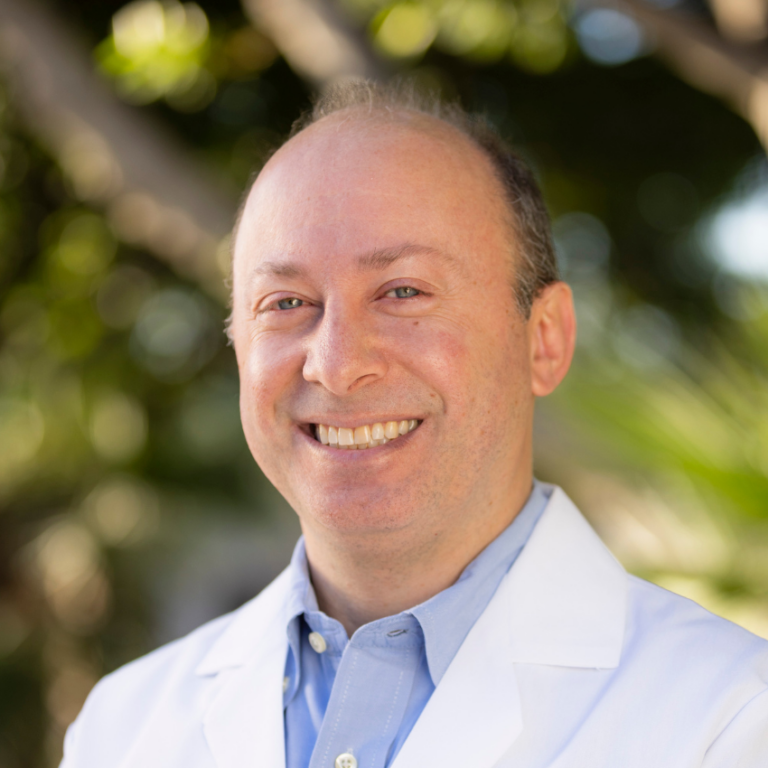
Medical contribution by Jason G. Bromer, M.D.

Jason G. Bromer, M.D., is board certified in obstetrics and gynecology and reproductive endocrinology and infertility. He has been involved in cutting-edge research in fertility preservation for cancer patients, pregnancy implantation, and methods of embryo selection for in vitro fertilization. 

Filed Under: Get Started Tagged With: Causes of infertility, Dr. Jason Bromer, Fertility testing, Menstrual cycle, Recurrent pregnancy loss, Semen analysis

July 15, 2014 by Shady Grove Fertility

“One in eight American couples will experience infertility. And did you know that in over 40 percent of all cases the problem is actually with the man.”

Dave & Sarah: Trying to Conceive with Male Factor Infertility

Childhood sweethearts, Dave and Sarah, knew they wanted to build a family of their own. After eleven months of trying to conceive, Sarah spoke with her gynecologist who suggested starting with a semen analysis for Dave to rule out any male factor infertility issues.

When the test results came back showing that Dave had very few sperm and the quality of the sperm came back inconclusive. “I just felt like there was something wrong with me – I felt like a failure,” says Dave. The next step was to see a urologist for more testing. After several semen analysis, which in a normal sample would have several million, Dave’s samples came back with just 12 sperm.

Click here to schedule a Semen Analysis>

Treating Male Factor Infertility

As a couple they ruled out the use of donor sperm to conceive, so sought out the experts at Shady Grove Fertility, where they learned about in vitro fertilization with intracytoplasmic sperm injection – otherwise known as IVF with ICSI.


IVF with ICSI, you need just one viable sperm which will be injected into the egg to create an embryo. Reproductive Endocrinologist, Isaac E. Sasson, M.D., Ph.D of Shady Grove Fertility’s Chesterbrook, PA office explains, “The embryologist is able to find just a very few sperm, so when we would get eggs from Sarah and we get ten eggs from Sarah, I just need ten sperm from Dave.”

Dr. Sasson goes on to explain that the embryologist will then select individual sperm from Dave’s sample and inject it directly into each of Sarah’s eggs.

Watch Dave & Sarah share their male factor infertility story on the Katie Couric Show.

  • Washington Post: “Former Capital Dave Steckel opens up about fertility struggles”
  • 5 Signs You May Need to See a Reproductive Endocrinologist

If you suspect male factor infertility or have been having trouble conceiving for six months to a year, it may be time to speak with a reproductive endocrinologist. Shady Grove Fertility’s team of dedicated New Patient Liaisons are available to answer your questions and schedule a consultation with a physician. Call 877-971-7755 or click to schedule an appointment.

Filed Under: Diagnosing Infertility Tagged With: Semen analysis

March 18, 2013 by Shady Grove Fertility

At Shady Grove Fertility, while each patient is on their own unique fertility journey, they all have to make a stop to do diagnostic tests for fertility. Isaac E. Sasson, MD, PhD, of Shady Grove Fertility in Chesterbrook, PA, shares what goes into this testing.

Video: Diagnostic Tests for Fertility

  • Day Three Blood Work
    This blood work focuses at the level of your Follicle Stimulating Hormone (FSH), Estrogen (E2), Luteinizing Hormone (LH), and Anti-Mullerian Hormone (AMH). These tests are the window to your egg quantity and will help to guide your diagnosis and treatment options.- Fertility Facts: Anti-Mullerian Hormone can help predict ovarian reserve.
  • Ultrasound
    An ultrasound of the ovaries is preformed between days 2-4 of your cycle. This test is used to define the Antral Follicle Count or the number of eggs available for pregnancy this month.
  • HSG
    Hysterosalpingogramis an x-ray test that can be performed in our Rockville, GBMC, or Philadelphia area offices. This test gives your physician a picture of your uterus and fallopian tubes. Blockages to the tubes, uterine fibroids, polyps, and adhesions are identified during this test.- Dispelling the HSG Myths.
  • Semen Analysis
    This simple test looks at four unique factors in your partner’s sperm. The first is the volume of ejaculate, then concentration or number of sperm within the sample, motility which is the ability for sperm to move in a forward progression, and morphology which looks at the shape of the sperm. Any aspect of your partner’s sperm that is found to be outside the suggested parameters can point to a male factor infertility diagnosis.

The work-up preformed by SGFC can take as little as 2-3 weeks to complete following the start of your next cycle. The pace of testing is largely set based on the patient’s comfort level. All of the testing at Shady Grove Fertility is preformed on site at your local office with the exception of the HSG which is completed at one of our regional ambulatory surgical centers in Rockville, Towson, or the Philadelphia area.

If you are having trouble conceiving, please schedule an appointment, or speak with one of our New Patient Liaisons at 877-971-7755.

Filed Under: Diagnosing Infertility Tagged With: Hysterosalpingogram (HSG), Semen analysis

October 12, 2012 by Shady Grove Fertility

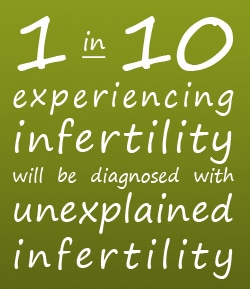
Fertility Fact: 1 in 10 couples experiencing infertility will be diagnosed with unexplained infertility.

What is Unexplained Infertility?

SGF Nurse

When a patient first visits a fertility center, they will have to go through basic fertility testing to deduce the cause of their infertility. The initial fertility workup at Shady Grove Fertility for the female partner is designed to check the health of the ovaries, and see if the fallopian tubes and uterus are normal.  For the male partner, the semen analysis will show if the sperm are normal in number and function. If all the tests come back inconclusive, a diagnosis of unexplained infertility is made. This diagnosis often comes with a mixed bag of emotions because while the specific cause of infertility hasn’t been identified, the fact remains that you are having trouble conceiving.  This leaves patients wondering, so what’s next?

Treating Unexplained Infertility

Most often, because tests did not come back with many clues, patients will start with low-tech treatment options, such as a combination of ovulation inducing medication and intrauterine insemination (IUI).  Depending on how the patient responds to that treatment and other factors, such as age, they may continue with an IUI treatment plan or move on to in vitro fertilization (IVF), which typically yields higher pregnancy rates.  Rockville physician, Dr. Joseph Doyle shares that, “The goal of low-tech treatment options in couples with unexplained infertility is to boost their pregnancy rates back to normal levels.  Fortunately, if this approach isn’t successful, IVF is very effective, with pregnancy rates up to 50%.”

If you have questions regarding unexplained infertility or would like to schedule a consultation with a Shady Grove Fertility physician, please call 1-877-971-7755 or click here.

Filed Under: Diagnosing Infertility Tagged With: In vitro fertilization (IVF), Intrauterine insemination (IUI), Semen analysis

March 22, 2011 by Shady Grove Fertility

Dr. Ricardo Yazigi

by Dr. Naveed Khan, MD

Men often ask me this question when they visit for their initial consultation.  “But I feel fine”, “There is nothing wrong with me!” or “I’ve had a child before, so I don’t need one”- these are also common responses when men are asked to have their sperm tested. And they may be correct, but it is important to check. It is sometimes surprising to couples that roughly 40% of the time, infertility lies with the male.

SGF Nurse

During basic fertility testing, men are required to submit a sperm sample for analysis. By comparison, women must undergo blood work, ultrasounds, and radiology tests. So gents, how bad can one test be?

The semen analysis is used to check for any male factor fertility issues that can contribute to a couples’ infertility.  Regardless of whether a man has previously fathered a child, the semen analysis still needs to be performed since we all age and our bodies change.  A man may not display any clinical symptoms of infertility, so measures must be taken to assure that all bases are covered. After all, we do treat patients as couples.

Some of the parameters that are checked in a semen analysis include:  volume, sperm count, motility (movement), and morphology (shape) of the sperm.  It can detect abnormalities or the existence of infection that is producing white blood cells in the semen. It can also determine the maturity of the sperm being produced.  Most men collect the semen via ejaculation into a clean sample cup which can either be obtained from any one of our office locations or at most pharmacies.  Additionally, sterile latex free condoms can also be used. Following ejaculation, the entire condom is placed into the collection container.

Prior to producing a sample, a man should ideally abstain from ejaculation 2-3 days prior to collection for the actual test, but never more than 5 days.  From the time of collection, the patient has about 60-90 minutes to get the specimen to the office for analysis. It is best not to expose the sample to extreme temperatures, which is often achieved by transporting the specimen container in close contact with the body to maintain a stable temperature.

Once a specimen is delivered for analysis to our andrology lab, results are often available for the physician within 3-5 business days. It is imperative to understand that the individual parameters of a semen analysis can vary significantly, so it is not uncommon to have more than one test performed. If the results of the analysis show abnormal levels, it may indicate the need for further testing of hormones and genetics. Sometimes it warrants a visit to a fertility urologist who specializes in assisting with male infertility.

The silver lining is that today there are very effective treatments for male factor infertility, many of which we offer at Shady Grove Fertility.  Some of these treatment options include intrauterine insemination (IUI) and in vitro fertilization with intracytoplasmic sperm injection (ICSI). ICSI is achieved by infusing a single sperm with a woman’s egg to ensure fertilization.

> Learn more about ICSI

It often comes as a shock to many men that the prevalence of male infertility is so frequent; probably because it isn’t a topic eagerly discussed amongst men, or couples even. But in keeping with our goals to treat patients as couples, it is very important to know exactly what a couple is dealing with in order to make the most effective and optimal treatment plan possible, so men – have no fear. By contributing in this small fashion, we can help both you and your partner have the family you both desire.

Filed Under: General Tagged With: In vitro fertilization (IVF), Intracytoplasmic sperm injection (ICSI), Intrauterine insemination (IUI), Semen analysis

November 18, 2010 by Shady Grove Fertility

by Dr. Eric Levens

So let’s get started at the beginning! Many people are surprised to learn that infertility is a medical disease, defined as the inability to conceive after 12 months of unprotected intercourse (after 6 months for women ≥35 years of age).

For many having difficulties conceiving, one of the greatest hurdles is making the first step: Scheduling an appointment to see an infertility specialist. This is understandable, given so few other events in life are so deeply personal and, no-doubt, fundamental to our sense of self as our ability to reproduce.

As a result, making that first appointment to see an infertility doctor often seems like a gigantic leap. If you’re contemplating taking this step, it might be comforting to know the things that would likely occur at your first visit.

Your First Visit: What Happens?

Infertility may be the result of many different conditions, all ending up in that same frustrating situation: no pregnancy. To get a better understanding of your individual condition, some initial testing may be required.

For some women, it may be that ovulation (producing an egg) isn’t occurring on a regular basis. This may be the result of several conditions such as polycystic ovary syndrome (PCOS) or be due to an accelerated or age-related depletion of the eggs in the ovary. For others, ovulation may be occurring regularly, but the Fallopian tubes are blocked which means the ovulated egg isn’t getting fertilized by sperm in the tube. Another very common cause of infertility is that there are insufficient numbers of normal sperm to achieve a pregnancy.

At your initial visit, your physician wants to determine whether there are things in your or your partner’s history that may herald an underlying medical condition that is presenting as infertility that may require further evaluation. The next steps can be largely broken down into evaluating the following: 1) the ovaries; 2) the Fallopian tubes; 3) the sperm count.

Checking Your Ovaries

Without bogging you down with too many details, ovarian function is controlled by an area of the brain called the pituitary. The pituitary produces several hormones, but the one most critical to fertility is follicle stimulating hormone (FSH). This hormone stimulates the ovary to develop a follicle that contains an egg. If FSH is elevated too early in the menstrual cycle, it may indicate that the ovary is having a hard time responding to this signal. One way to test the function of the ovary is to determine the FSH hormone on day 3 of the menstrual cycle along with assessing the amount of estrogen (produced by the ovary) in the blood.

These hormones give an indication of how the ovaries are functioning, something we refer to as the “ovarian reserve” which is the quality of the pool of eggs within the ovary.

Checking Your Fallopian Tubes

Another important test is called a hysterosalpingogram. While this test may sound intimidating, it is simply an x-ray of the outline of the uterine cavity (where implantation of an embryo occurs) and the Fallopian tubes to determine if the tubes are open. If the Fallopian tubes are blocked, then in vitro fertilization (IVF) would likely be the most successful option for achieving pregnancy.

Checking His Semen

A semen analysis is another important component of the initial evaluation to determine whether there is a male partner component resulting in infertility and if so, whether it is treatable. Fortunately, with the development of techniques in the last two decades, the sperm from men with some of the most severe sperm abnormalities can be used to achieve a pregnancy. Once the results of these tests are available, an Infertility specialist can recommend an appropriate treatment for you.

Filed Under: General Tagged With: Dr. Eric Levens, In vitro fertilization (IVF), Semen analysis

Company

  • About SGF
  • About US Fertility
  • Our Doctors
  • Fertility Equity
  • Careers
  • Newsroom
  • SGF College Scholarship
  • Contact Us
  • Voice Your Feedback

Treatments

  • Egg Freezing
  • Intrauterine Insemination (IUI)
  • In Vitro Fertilization (IVF)
  • Frozen Embryo Transfer (FET)
  • LGBTQIA+ Family Building
  • Shared Risk 100% Refund Program
  • All Treatments

Resources

  • Patient Portal
  • Online Bill Pay
  • Library
  • Support Groups & Events

Locations

  • California
  • Colorado
  • Delaware
  • Florida
  • Georgia
  • Maryland
  • North Carolina
  • Pennsylvania
  • Texas
  • Virginia
  • Washington, D.C.

2026 Shady Grove Fertility

  • Policies & Notices
Also of interest
  • In Vitro Fertilization IVF
  • Fertility Tests
  • Research Publications