• Skip to primary navigation
  • Skip to main content
  • Skip to footer
Shady Grove Fertility
  • Become an Egg Donor
  • Referring Physicians
  • 1-888-761-1967
  • Schedule Appointment
  • Get Started
        • Get Started
          • Causes of Infertility
          • Fertility Tests
          • When to Seek Help
          • Find a Doctor
          • Preconception and prenatal vitamins 
          • Schedule an Appointment
        • Personalized Care For
          • Single Parents
          • LGBTQIA+ Family Building
          • People with Cancer
          • Known Genetic Diseases
          • Egg Donors
  • Treatments
        • Fertility
          • Timed Intercourse
          • Ovulation Induction
          • Intrauterine Insemination (IUI)
          • In Vitro Fertilization (IVF)
          • Frozen Embryo Transfer (FET)
        • Donation & Surrogacy
          • Donor Sperm
          • Donor Egg
          • Donor Embryo
          • Gestational Carrier
          • LGBTQIA+ Family Building
          • Single Parents
          • Find a Donor
        • More Treatments
          • Center for Male Fertility
          • Egg Freezing
          • OncoFertility
          • Preimplantation Genetic Testing
          • MIGS
          • All Fertility Treatments
  • Resources
    • Resource Library
    • Events Calendar
    • Patient Stories
    • Mental Health
    • Wellness Center
  • Insurance & Savings
    • Insurance & Benefits
    • Shared Risk 100% Refund Program
    • 100% Refund for Donor Egg
    • Discounts
    • Egg Freezing Costs
    • Financing & Grants
    • Clinical Trials
  • About
    • Find a Doctor
    • About SGF
    • Our Care Team
    • Advanced Practice Providers
    • Fertility Equity
    • Philanthropy
    • Newsroom
    • Careers
    • Contact Us
    • Voice Your Feedback
  • Locations
        • Find a Location
        • California
        • Colorado
        • Delaware
        • Florida
        • Georgia
        • Maryland
        • North Carolina
        • Pennsylvania
        • Texas
        • Virginia
        • Washington, D.C.
        • Chile
        • International & Out of State
        • SGF at Walter Reed National Military Medical Center
  • Patient Hub
    • Online Bill Pay
    • Patient Forms
    • Patient Portal
  • Call your care team
  • Become an egg donor
  • Referring physicians
  • search-icon
  • Schedule appointment 1-888-761-1967

Home / Hysterosalpingogram (HSG)

Hysterosalpingogram (HSG)

December 14, 2020 by Shady Grove Fertility

Medical contribution by Jason G. Bromer, M.D.

Jason G. Bromer, M.D., is board certified in obstetrics and gynecology and reproductive endocrinology and infertility. He has been involved in cutting-edge research in fertility preservation for cancer patients, pregnancy implantation, and methods of embryo selection for in vitro fertilization. 

When beginning the infertility treatment process, diagnostic testing will be the first step you take before your clinical plan can be created. Infertility is diagnosed based on the results of three main tests: day 3 hormone bloodwork and a hysterosalpingogram (HSG) for the female partner, and a semen analysis for the male partner. Each test looks at a different component significant to conception:

  • Day 3 hormone bloodwork: FSH (Follicle-Stimulating Hormone) and AMH (Anti-Müllerian Hormone) provide insight about egg quantity, while estrogen and LH (Luteinizing Hormone) levels can indicate information about the maturation of follicles.
  • Hysterosalpingogram (HSG): Determines the condition of the fallopian tubes and uterus.
  • Semen analysis: Evaluates the quantity and quality of the male partner’s sperm, specifically looking at parameters such as sperm count, morphology (size and shape), and motility (the number moving in a forward progression).


Prior to starting diagnostic testing, many patients have already had their blood drawn and know what to expect regarding hormone evaluation. Most patients, though, have not experienced a hysterosalpingogram (HSG).

Fear of the unknown can make many patients nervous or apprehensive about this aspect of their diagnostic work-up. However, learning all that SGF does to make the test more manageable is hopefully reassuring.

Why do I need a hysterosalpingogram (HSG)?

After ovulation, a current in the body pushes the egg into the fallopian tubes where the sperm and egg will meet and fertilization can occur. Once an egg is fertilized, an embryo will develop and continue through the fallopian tubes until it reaches the uterus, where it will implant into the uterine lining. The hysterosalpingogram is performed routinely for patients having difficulty conceiving because it is an excellent test that not only can confirm that a woman’s fallopian tubes are open, but can also assess whether the uterus has a normal shape. It can also make sure the cavity is not affected by fibroids, polyps or scar tissue.

The HSG procedure
Prior to starting the HSG, the patient must produce a urine sample. This is an important step as it allows the practitioner to be sure that the patient is not unknowingly pregnant prior to starting the HSG. Should a patient be pregnant, the contrast used to fill the uterus can harm or displace the growing fetus, resulting in an increased risk of miscarriage.

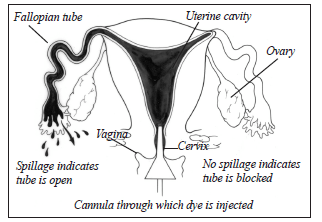
At the start of the procedure, a speculum is inserted into the vagina in order to view the cervix, similar to a Pap smear. The cervix is cleaned with an antiseptic solution; then, a thin, plastic catheter, generally about the size of the tip of a pen, is placed inside the cervix. Once placed, a small amount of contrast, usually two to three teaspoons, is passed through the catheter into the cervix, filling the uterus and fallopian tubes. Contrast is used, as opposed to dye, which is a colored substance that cannot be seen on an x-ray, whereas contrast can.

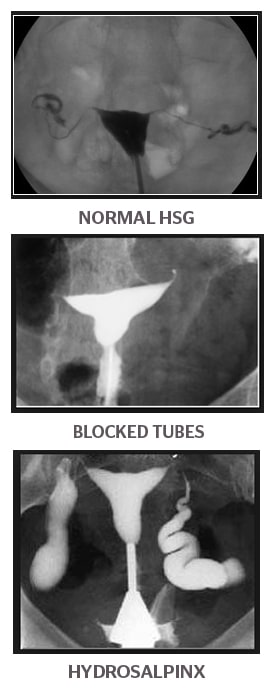
While lying flat on the table, a special type of X-ray imaging technology called fluoroscopy is used to provide a “live” X-ray that allows the practitioner to watch as the contrast fills the uterus and travels into the tubes. The tubes are considered open when the contrast is able to move completely through the length of the tube, spilling the contrast out on the other side. This indicates that the tubes are open and available to “pick up” an egg post-ovulation. Immediately following the HSG test, patients will receive preliminary results from their practitioner. The images taken throughout the procedure are then sent to the ordering physician, along with the practitioner’s findings.

Side effects and risks

There are several fairly common side effects associated with HSG tests: abdominal pain and/or discomfort, feeling crampy or achy, and vaginal spotting and/or watery discharge. When spotting or discharge occurs, we encourage patients to use sanitary napkins or pads as opposed to tampons. We also encourage our patients to speak with their physician about taking some over-the-counter pain reliever following the test to reducing any cramps or discomfort.

While uncommon, a risk associated with HSG is infection. Patients that have a diagnosed or suspected problem with their fallopian tubes – such as a history of ectopic pregnancies or a hydrosalpinx – will likely be prescribed an antibiotic to be taken in advance. An HSG will not bring on menses, so if you experience a full menstrual flow, develop a fever, or continue to feel pain for more than a few days, you should speak with your physician. If it is after hours, you should call Shady Grove Fertility’s answering service.

Why choose SGF for your HSG?

Shady Grove Fertility places high value on patient safety and comfort and goes out of our way to minimize discomfort. Here’s how:

We encourage taking a pain reliever 30 to 60 minutes prior. Many women feel some cramping for about 2 minutes when the contrast is filling the uterus. Therefore, we strongly encourage taking an over-the-counter pain reliever (such as ibuprofen) 30 to 60 minutes before the test to reduce feelings of pain or discomfort. This will help tremendously.

Also, speak with your doctor about taking pain medicine 30 to 60 minutes before the procedure especially if you have a history of ectopic pregnancies or a hydrosalpinx.

We have very experienced clinicians who perform HSGs. The clinicians at our practice who perform HSGs perform thousands each year and have the experience and expertise to help make your experience as comfortable as possible.

We encourage communication. We encourage you, if you are feeling any discomfort during the test, to communicate with your clinician performing the test, let us know if it hurts, and we may be able to make some adjustments to make you more comfortable.

We are selective about contrast and instrument type. We select a contrast that is known to cause the least amount of cramping and an instrument that is known to cause the least amount of discomfort.

We care about your comfort. We perform this procedure on a GYN table, which makes patients more comfortable, compared with a hospital table common in other locations.

We don’t tell our patients the procedure will be 100% painless but we reassure that we will do everything in our power to make the test more comfortable.

Here’s what our patients are saying:

  • “After reading all that horror stories on internet, I was so nervous! It was nothing at all. Like a regular OB exam, but a little bit longer.” – Tanya
  • “I had my HSG done a few months ago and I did have some pretty intense cramping during mine. I have endometriosis, so I’m used to intense cramps, but I was pretty uncomfortable through the procedure, but it was quick, and it wasn’t anything that I couldn’t bare.” – Stacy
  • “It was not at all painfully except for 2-4 seconds of our very known menstrual pain which occurred when they filled with the contrast dye.” – Ranuak
  • “My HSG went very smoothly. I only felt a little pinch when they inserted and inflated the catheter. When they injected the dye it just felt like a very dull menstrual cramp and then it was over before I knew it!” – Jennifer

Common patient questions about HSGs

How long does an HSG take? While the actual procedure takes about 5 minutes, you should plan to arrive for your HSG 30 minutes prior to your scheduled appointment. You can also expect to be with us for 30-45 minutes after the scheduled HSG start time.

Is it okay to drive home by myself after the test? The standard operating procedure for an HSG does not call for sedation. You are unlikely to have pain following the procedure, but you may feel crampy or achy. The majority of our patients are able to drive after an HSG and even immediately return to work.

When is the best time during my cycle to schedule the HSG? The test should be scheduled after your period ends, but before you expect to ovulate – usually between days 5 to 12 of your menstrual cycle. To figure out the days of your cycle, count day 1 as the day your period begins.

Where can HSGs be performed? HSGs can be completed in many healthcare environments, including hospitals, radiology labs, or other free-standing centers. Shady Grove Fertility has two free-standing HSG suites located in Rockville, MD and Towson, MD.

Do I have to complete my HSG at a Shady Grove Fertility facility? No, Shady Grove Fertility physicians routinely make diagnostic and treatment decisions based on HSGs performed at facilities other than our own. Occasionally, however, the information on an HSG done at an outside facility may be inconclusive or not provide all of the information needed for the best medical recommendation. In these situations, your Shady Grove Fertility physician may recommend repeating the HSG to obtain necessary information.

Because we take great pride in the lengths to which we are able to go to make sure women are as comfortable as possible during an HSG, many physicians refer their patients to SGF for an HSG.

Who can administer an HSG? HSGs can be performed by infertility specialists, obstetrician-gynecologists, radiologists, physician assistants and other health care providers. Health care providers performing HSGs should be trained in performing pelvic exams and be technically proficient with the HSG technique. They should also be able to evaluate its findings and report them comprehensively.

Will I have insurance coverage for my HSG? Most – but not all – insurance policies will cover the expense of an HSG completed at Shady Grove Fertility. The choice to have the HSG performed at Shady Grove Fertility versus another facility is ultimately up to you. Patients whose insurance policy does not extend HSG benefits at Shady Grove Fertility will incur a charge for the procedure and will be responsible for its payment. The cost versus the benefits can be discussed with your primary Shady Grove Fertility physician, as well as other questions you may have about the HSG.

How soon after the HSG can I resume intercourse? Generally, we want patients to abstain from intercourse until after vaginal spotting or discharge stops, usually 1 to 2 days after the HSG.

So much of the infertility treatment process is about narrowing down the cause(s) of an individual’s infertility. The HSG, though not commonly known, is a beneficial way that your physician can determine the best path to help you on your journey to reproductive success.

Schedule an Appointment


To schedule a virtual consultation with an SGF physician, please call our New Patient Center at 1-888-761-1967 or submit this brief form.


Editor’s Note: This post was originally published in August 2014 and has been updated for accuracy and comprehensiveness as of December 2020.

Filed Under: Diagnosing Infertility Tagged With: Hysterosalpingogram (HSG)

September 27, 2018 by Shady Grove Fertility

Medical Contribution by: Naveed Khan, M.D.

For couples considering fertility treatment, Dr. Naveed Khan discusses the beginning of the process, starting with the male and female partners both completing fertility testing. Since roughly half the time infertility is male factor, men should have a sperm analysis performed. For women, a hysterosalpingogram (HSG) is required to examine the tubes and uterus, and their hormones are looked at as well. All of these diagnostic tests are necessary for determining the cause of infertility.

Many women may start there fertility testing with her OB/GYN. If she was tested in the past six months, then she probably she does not need to get tested again by her fertility center. However, if it has been a year or two since she’s been tested, at least some of the tests may need repeating. For some women, an OB/GYN or fertility specialist may recommend using Clomid, which is a fertility pill that helps produce more eggs. Clomid provides up to a 20% pregnancy rate per month depending on the female partners age. Clomid and similar medications should only be used for a few months prior to moving on the next course of treatment.

At Shady Grove Fertility, a financial counselor will discuss all the costs for testing and treatment with each patient.

Schedule an Appointment

Filed Under: Diagnosing Infertility Tagged With: Dr. Naveed Khan, Hysterosalpingogram (HSG)

July 2, 2014 by Shady Grove Fertility

In case you missed it, last week Simon Kipersztok, M.D. of our Waldorf, MD office hosted an online Getting Started with Infertility Treatment Webcast for current and prospective patients interested in learning more about infertility treatment and the financial options available at Shady Grove Fertility. In addition to the presentation, Dr. Kipersztok took questions from the audience on topics ranging from diagnostic testing and treatment to insurance coverage and financial programs. Here are some of the questions from the audience.

Q: What will happen during the initial appointment if I don’t have any baseline tests completed at the time of the appointment?

A: Patients that come to see me have varying levels of the initial work-up completed prior to their initial appointment. At the consultation, we will review the tests that have been completed and what is still needed to help us determine an accurate diagnosis and ultimately the right infertility treatment plan. Once we know what is needed your nurse will be will be able to coordinate the remaining tests. It is important to bring paperwork, such as the new patient packet our New Patient Center mailed after scheduling the consultation and a copy of any fertility related medical records from other physicians. Learn more about fertility testing.

Q: Will my spouse have to complete a semen analysis? Do you treat male factor infertility? How?

Male infertility occurs with 40 to 50 percent of couples experiencing infertility, making a semen analysis a vital part of a fertility assessment. As far as scheduling the semen analysis, your nurse can help to arrange the appointment for your partner. Collection can be completed at home; it is requested to abstain from ejaculation for 3 to 5 days prior to the analysis to obtain accurate results.

If male factor infertility is present, depending on the severity, the treatment options vary from IUI to IVF or the use of donor sperm. We also co-manage patient care with fertility focused urologists to help with procedures such as aspirations.

Normal Semen Analysis

Abnormal Semen Analysis

Q: I am scheduled to have an HSG. I hear it is painful and uncomfortable. What can I expect?

A: The majority of the time, if a hysterosalpingogram (HSG) is painful it is due to a blockage in the fallopian  tubes. When no blockage is present, the discomfort is minimal. Speak to your doctor about taking a over-the-counter pain medicine, such as ibuprofen, 30 to 60 minutes before the procedure to prevent or reduce pain during the test. We encourage you to complete the HSG at one of Shady Grove Fertility’s certified radiologic facilities. While on site, our team of infertility specialists will perform the exam and interpret the results. Read more about Dispelling the HSG Myths.

Q: I don’t have insurance, what options are available for me?

A: Shady Grove Fertility offers a variety of cost savings programs when insurance is not available. Financial options such as Shared Risk, Shared Help, and the Multi-Cycle program can help make treatment more affordable for patients. There are also financing options that allow patients to make monthly payments towards the cost of fertility treatment. Lean how you can save on infertility treatment.

Q: Are IVF and IUI the same thing?

A: No, IUI (intrauterine insemination) is a low-tech in-office procedure whereby a concentrated specimen of washed sperm is placed in the uterus through a catheter. The procedure is done at your local Shady Grove Fertility office and takes one to two minutes. It is not painful and does not require anesthesia. Success rates for IUI treatment are dependent on the age of the woman and diagnosis.

IVF (in vitro fertilization) is a process where the ovaries are stimulated to grow multiple follicles which are removed directly from the ovary once they are of a certain size and maturity. Once in the embryology laboratory, fertilization occurs with the partner’s sperm to produce embryos. Three to five days later an embryo is transferred back to the uterus. Similar to IUI treatment, the success rates associated with IVF are dependent on the age of the female partner. Find our more about infertility treatment options.

Q: What are the side effects associated with infertility treatment for women? On average, how long will the whole process take?

A: The majority of side effects from infertility treatment are a result of stimulation medication that can even occur in the most basic treatment options. Common side effects include bloating, minor cramping, and hormonal changes. The intensity and type of side effects that present themselves, if any, will vary patient to patient.

Treatment time varies from patient to patient, but the average cycle takes six to eight weeks.

Q: Have you had many patients that have had a previous tubal ligation? What are the options for these patients?

A: Yes, we have many patients that come to us after having their ‘tubes tied’ – or medically referred to as a tubal  ligation – that want another child. If she had a tubal reversal and the tubes are still open, it may recommend to start with IUI treatment, but if a reversal hasn’t been performed, IVF will most likely be recommended.

When treating women with a previous tubal ligation, most specialists will recommend IVF depending on the age of the women and the number of children desired. Furthermore, if there are other factors present that might impact her ability to conceive – such as male factor – IVF will more than likely be recommended. We advise all patients considering a reversal or IVF to research the cost and success rates for tubal reversal compared to the cost and success rates of IVF.

Q: How likely is it to have multiple births when undergoing IVF or donor egg treatment?

A: When undergoing IVF treatment – either with your own eggs or donated eggs – the risk of multiples increases with the number of embryos transferred. Shady Grove Fertility continues to be a national pioneer in electing to transfer a single embryo, known as eSET. The sole purpose of eSET is to reduce the risk of multiples without reducing the chances of success. The risk of twins with eSET is less than two percent, no different than the chances of multiples during unassisted conception. In the case of donor egg treatment, transferring two embryos increases the chances of multiples significantly – to approximately 50 percent.

Watch the Getting Started with Infertility Treatment Webcast with Dr. Simon Kipersztok.

If you have questions regarding infertility treatment or would like to schedule a new patient appointment, please call our New Patient Center at 877-971-7755 or click to schedule an appointment.

Filed Under: Diagnosing Infertility Tagged With: Donor egg, Hysterosalpingogram (HSG), In vitro fertilization (IVF), Intrauterine insemination (IUI)

April 3, 2014 by Shady Grove Fertility

By Jessica, former patient and current SGF employee.

“The majority of 25 year olds are worrying about what to wear to the bar on the weekend, or what kind of date night they should have, or even who they would want to hang out with. My story, on the other hand, was a little different – I was a newlywed with severe baby fever.

My friends just thought I was obsessed with getting pregnant and if I relaxed, had a glass of wine, I would get pregnant. What they didn’t understand was that I was struggling with infertility at 25. My husband knew much more about my menstrual cycle than any man should know.”  Read her story “Infertility at 25.”

Now, as a Patient Service Representative, I see new patients day in and day out. I answer numerous questions from anxious and nervous couples on what they should expect as they start their journey with Shady Grove Fertility. I have compiled the top five patient questions that I have been asked and answered them here for you.

Top 5 New Patient Questions

1) How do I make an appointment and what kind of information do I need to have before calling Shady Grove Fertility?

When you call the New Patient Center, a New Patient Liaison will ask you how long you’ve been trying to conceive. They will also inquire if you have insurance coverage and collect that information to be verified. If you have talked to your insurance beforehand and were given an authorization number or a referral for the New Patient Visit, please provide that information to the New Patient Liaison.

They will also gather the following information:

  • your name
  • date of birth
  • address
  • phone number
  • an email address to send a confirmation email and attached documents for the initial visit
  • and your partner’s information, if you have one.

The New Patient Center will set you up for a new patient appointment at the location and with the physician of your choice, if they’re available. They will also ask and see how you were referred or how you heard about Shady Grove Fertility.

  • Contact the SGF New Patient Center at 1.877.971.7755 or contact us online.

2) What is the role of my clinical team?

In addition to your physician, your clinical team is made up of three team members: your fertility nurse coordinator, your clinical administrative assistant, and your financial counselor.

Fertility Nurse Coordinator: As you move forward with testing and treatment, your nurse will often be your main point of contact. You should notify her on day 1 of your period as well as any clinical questions such as your protocol, medicine, or if you have a medical concern.

Clinical Administrative Assistant: If you have a question about your prior authorizations or approvals for prescriptions, scheduling emergency appointments, and collecting outside medical records, contact your Clinical Administrative Assistant.

Financial Counselor: A financial counselor can be very helpful to be in contact with during your journey with Shady Grove Fertility. If you have questions about pricing, insurance authorizations for procedures and visits, referrals, or insurance coverage, you would need to speak with your Financial Counselor in your home office.

3) What do I talk to my insurance company about?

If you have insurance, it is best if you contact your insurance company prior to coming in and determine what your infertility benefits may be. Specifically ask if you have any diagnostic, IUI, and IVF coverage. And then ask if you need any referrals or authorizations in order to be seen for the first time or any other follow-up visits. Check and see if you have deductibles or co-insurance and see what your limits are before you are covered.

  • List of participating insurance providers

4) What can I do to make the New Patient Visit go smoothly?

We always ask our patients to arrive 15 minutes early so that we have ample time to complete the registration process.

When you check in, you will be asked to provide the following:

  • Government Issued Identification Card
  • Insurance Card (if applicable)
  • Completed Registration Form
  • Completed Genetic Questionnaire
  • Completed Male/Female Questionnaire

We will then ask you to fill out three consent forms:

  • Financial Policy
  • Pharmacy Verification Form (if applicable)
  • HIPAA

We will then take a photo image of you for identification purposes and have you take a seat in the waiting room to be called.

3) There are so many different types of appointments; what should I expect at each one? 

New Patient Visit and Follow-ups: The first visit with a physician and the follow-up visit to discuss testing and treatment options are scheduled Monday through Friday. Offices hours vary.

  • Read Jessica’s post on “What to Expect at Your First Appointment”

Monitoring (ultrasound and bloodwork): These are scheduled seven days a week.  Monday through Friday, we schedule these between 7:00 a.m. and 11:45 a.m. The busiest time during the day is between 7:00 a.m. and 8:30 a.m. If you have to come in on the weekend or holidays, we strictly schedule these in time order, starting from 7:00 a.m. and going up until 12:00 p.m., only if all earlier slots are booked. The busiest time is between 8:30 a.m. and 12:00 p.m.

Mock Embryo Transfer and Saline Sonogram: These are scheduled during monitoring hours. However, if it is a Monday or Friday, we strictly schedule these appointments between 10:00 a.m. and 11:45 a.m.

HSG: The schedule for the HSG varies greatly. We offer Monday through Friday as early as 7:10 a.m. and depending on the day, as late as 4:10 p.m. We also offer HSGs on some Saturdays, however these are strictly scheduled in time order starting earliest to latest.

Filed Under: General Tagged With: Hysterosalpingogram (HSG)

November 18, 2013 by Shady Grove Fertility

by Eugene Katz, MD

Hysterosalpingogram (HSG) is a test that uses x-rays to examine both the uterine cavity and the fallopian tubes.

Why Fallopian Tubes Matter

The fallopian tubes are responsible capturing an egg after it is released from the ovary (ovulation), serving as a meeting point for sperm and eggs. Sperm fertilize the egg creating and embryo and the fallopian tube will transport the embryo towards the uterine cavity where the embryo will subsequently implant and develop.

The hysterosalpingogram, or HSG, will detect blockages in the fallopian tubes and abnormalities of the uterine cavity such as polyps, fibroids, and scar tissue that may prevent proper implantation and growth of the embryo. It will also detect congenital uterine malformations that result from incomplete or abnormal development of the uterus before birth.

Having a Hysterosalpingogram

The HSG is usually done in a radiology facility. After being greeted, you will be asked for a small urine sample to run a pregnancy test and to read and sign a consent form.

The best time to do the test is between the 5th and 12th day after the menstrual cycle started to avoid doing the test during menses or after the eggs is released (ovulation) thus avoiding doing the test during early pregnancy.

Your health care provider may or may not have recommend that you take over-the-counter pain relievers such as ibuprofen an hour before the procedure. In some cases, your provider may recommend that antibiotics be taken an hour before the procedure as well.

  • Dispelling the HSG Myths

Hysterosalpingogram Procedure (HSG Procedure)

During the HSG, a speculum will be inserted into the vagina (similar to a pap smear), the cervix will be cleaned using a swab with disinfectant and then a thin plastic tube (catheter) will be inserted into the cervix that will lead to your uterus and fallopian tubes. A special clear solution that shows up on x-rays (commonly known as a dye) will be injected through the plastic tube. The dye should fill the uterus and fallopian tubes and spill out of each fallopian tube while images are being saved. The actual procedure will take not more than 3-5 minutes and a preliminary verbal report will be shared with you. The final report will be reported to your physician.

While most women experience no pain during a HSG, some women feel some cramping, especially when the dye is injected. Women who have a blocked fallopian tube may feel more intense pain. Over-the-counter pain medicines such as ibuprofen, 2 -3 tablets taken 30-60 minutes before the procedure can help relieve this pain or discomfort but is often not necessary. Patients experiencing unusual pain, especially fever after the procedure, require immediate attention. A small amount of bleeding after the procedure is uncommon and should not last more than a few hours.

If one or both the fallopian tubes are abnormal, the doctors performing the procedure will advise you to take antibiotics for 3-5 days and will be happy to give you a prescription.

Shady Grove Fertility is able to perform HSGs in both of our certified radiologic facilities in Towson, MD and Rockville, MD.

If you have questions about your fertility options or are ready to schedule an appointment with Dr. Eugene Katz or another physician at Shady Grove Fertility, please speak with one of our New Patient Liaisons at 877-971-7755.

Filed Under: Diagnosing Infertility Tagged With: Dr. Eugene Katz, Hysterosalpingogram (HSG)

May 15, 2013 by Shady Grove Fertility

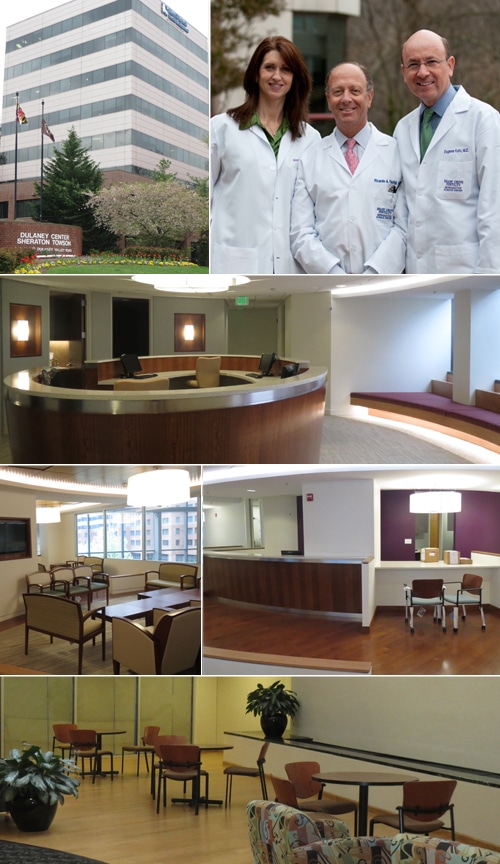
Shady Grove Fertility is pleased to announce the relocation of our Fertility & IVF Program from the Greater Baltimore Medical Center campus to a new fully integrated facility in Towson, MD.

901 Dulaney Valley Road, Ste. 616
Towson, MD 21204 (view on a map)
For New Patient Appointments, please call: 1-877-971-7755
For Other Questions and Follow-Up Visits, please call: 410-512-8300

The new office will be open for fertility consultations, follow-up visits, monitoring, IUIs and other appointments on Wednesday, May 22nd. The Ambulatory Surgical Center will be opening in June for HSGs, IVF and donor egg treatment.

The team couldn’t be more excited for the new facility to open and to be able to offer a new and more comfortable environment for patients to visit when they have appointments. “The new office will allow us to provide the same quality care SGF is known for but in a more private, comfortable, relaxing, and patient-friendly space conveniently located adjacent to the Sheraton North Hotel across from Towson Town Center,” says Dr. Eugene Katz.

Check out some photos of the new Fertility & IVF Center in Towson, MD.

Shady Grove Fertility Opens New Fertility & IVF Center in Towson, MD


If you are interested in building a family through fertility treatment, please schedule an appointment, or speak with one of our New Patient Liaisons at 877-971-7755.

Filed Under: General Tagged With: Dr. Eugene Katz, Dr. Ricardo Yazigi, Hysterosalpingogram (HSG), In vitro fertilization (IVF)

  • Page 1
  • Page 2
  • Go to Next Page »

Company

  • About SGF
  • About US Fertility
  • Our Doctors
  • Fertility Equity
  • Careers
  • Newsroom
  • SGF College Scholarship
  • Contact Us
  • Voice Your Feedback

Treatments

  • Egg Freezing
  • Intrauterine Insemination (IUI)
  • In Vitro Fertilization (IVF)
  • Frozen Embryo Transfer (FET)
  • LGBTQIA+ Family Building
  • Shared Risk 100% Refund Program
  • All Treatments

Resources

  • Patient Portal
  • Online Bill Pay
  • Library
  • Support Groups & Events

Locations

  • California
  • Colorado
  • Delaware
  • Florida
  • Georgia
  • Maryland
  • North Carolina
  • Pennsylvania
  • Texas
  • Virginia
  • Washington, D.C.

2026 Shady Grove Fertility

  • Policies & Notices
Also of interest
  • In Vitro Fertilization IVF
  • Fertility Tests
  • Research Publications