

• Skip to primary navigation
  • Skip to main content
  • Skip to footer
Shady Grove Fertility
  • Become an Egg Donor
  • Referring Physicians
  • 1-888-761-1967
  • Schedule Appointment
  • Get Started
        • Get Started
          • Causes of Infertility
          • Fertility Tests
          • When to Seek Help
          • Find a Doctor
          • Preconception and prenatal vitamins 
          • Schedule an Appointment
        • Personalized Care For
          • Single Parents
          • LGBTQIA+ Family Building
          • People with Cancer
          • Known Genetic Diseases
          • Egg Donors
  • Treatments
        • Fertility
          • Timed Intercourse
          • Ovulation Induction
          • Intrauterine Insemination (IUI)
          • In Vitro Fertilization (IVF)
          • Frozen Embryo Transfer (FET)
        • Donation & Surrogacy
          • Donor Sperm
          • Donor Egg
          • Donor Embryo
          • Gestational Carrier
          • LGBTQIA+ Family Building
          • Single Parents
          • Find a Donor
        • More Treatments
          • Center for Male Fertility
          • Egg Freezing
          • OncoFertility
          • Preimplantation Genetic Testing
          • MIGS
          • All Fertility Treatments
  • Resources
    • Resource Library
    • Events Calendar
    • Patient Stories
    • Mental Health
    • Wellness Center
  • Insurance & Savings
    • Insurance & Benefits
    • Shared Risk 100% Refund Program
    • 100% Refund for Donor Egg
    • Discounts
    • Egg Freezing Costs
    • Financing & Grants
    • Clinical Trials
  • About
    • Find a Doctor
    • About SGF
    • Our Care Team
    • Advanced Practice Providers
    • Fertility Equity
    • Philanthropy
    • Newsroom
    • Careers
    • Contact Us
    • Voice Your Feedback
  • Locations
        • Find a Location
        • California
        • Colorado
        • Delaware
        • Florida
        • Georgia
        • Maryland
        • North Carolina
        • Pennsylvania
        • Texas
        • Virginia
        • Washington, D.C.
        • Chile
        • International & Out of State
        • SGF at Walter Reed National Military Medical Center
  • Patient Hub
    • Online Bill Pay
    • Patient Forms
    • Patient Portal
  • Call your care team
  • Become an egg donor
  • Referring physicians
  • search-icon
  • Schedule appointment 1-888-761-1967

Home / In vitro fertilization (IVF) / Page 6

In vitro fertilization (IVF)

August 18, 2014 by Shady Grove Fertility

On August 14, 2014, U.S. News & World Report published the results of a small study suggesting that vitamin D deficiency could lower a woman’s chances of getting pregnant through in vitro fertilization (IVF).

In this study, researchers in Italy compared the success of IVF in two groups of women: those with vitamin D deficiency and those with sufficient levels of vitamin D. The study’s results, first published in the Journal of Clinical Endocrinology & Metabolism, found that women with sufficient levels of vitamin D were twice as likely to get pregnant compared to those with vitamin D deficiency. In addition, women with sufficient levels of vitamin D were more likely to have higher-quality embryos and their embryos were more likely to implant in the uterus.

The study’s co-author, Alessio Paffoni of the Ospedale Maggiore Policlinico in Milan, warned that the study did not conclusively prove cause-and-effect. While the relationship between vitamin D status and pregnancy has long been suspected, studies have been inconclusive and inconsistent. Some studies have suggested that low vitamin D levels may increase the risk of gestational diabetes, pre-eclampsia, preterm labor, caesarean section, and low birth weight. Other studies though failed to show this increased risk.

Vitamin D, known as the “sunshine” vitamin, enhances and helps to regulate the intestinal absorption of essential minerals including calcium, magnesium, phosphate, and zinc. These levels are maintained through either dietary ingestion or through the skin’s exposure to sunlight.  Though vitamin D’s connection to fertility is still inconclusive, there is no question that it is beneficial to overall health. For that reason, Shady Grove Fertility suggests that women with a low vitamin D level take a supplement and ultimately maintain a normal level.

The effect that vitamins have varies from person to person. Whether you are trying to conceive or looking for ways to promote a healthy pregnancy, it is important to speak with your physician before starting any vitamin or supplemental regimen. More on vitamins for fertility and healthy pregnancy.

If you are ready to schedule an appointment at Shady Grove Fertility, please speak with one of our New Patient Liaisons at 877-971-7755.

Filed Under: General Tagged With: In vitro fertilization (IVF)

July 2, 2014 by Shady Grove Fertility

In case you missed it, last week Simon Kipersztok, M.D. of our Waldorf, MD office hosted an online Getting Started with Infertility Treatment Webcast for current and prospective patients interested in learning more about infertility treatment and the financial options available at Shady Grove Fertility. In addition to the presentation, Dr. Kipersztok took questions from the audience on topics ranging from diagnostic testing and treatment to insurance coverage and financial programs. Here are some of the questions from the audience.

Q: What will happen during the initial appointment if I don’t have any baseline tests completed at the time of the appointment?

A: Patients that come to see me have varying levels of the initial work-up completed prior to their initial appointment. At the consultation, we will review the tests that have been completed and what is still needed to help us determine an accurate diagnosis and ultimately the right infertility treatment plan. Once we know what is needed your nurse will be will be able to coordinate the remaining tests. It is important to bring paperwork, such as the new patient packet our New Patient Center mailed after scheduling the consultation and a copy of any fertility related medical records from other physicians. Learn more about fertility testing.

Q: Will my spouse have to complete a semen analysis? Do you treat male factor infertility? How?

Male infertility occurs with 40 to 50 percent of couples experiencing infertility, making a semen analysis a vital part of a fertility assessment. As far as scheduling the semen analysis, your nurse can help to arrange the appointment for your partner. Collection can be completed at home; it is requested to abstain from ejaculation for 3 to 5 days prior to the analysis to obtain accurate results.

If male factor infertility is present, depending on the severity, the treatment options vary from IUI to IVF or the use of donor sperm. We also co-manage patient care with fertility focused urologists to help with procedures such as aspirations.

Normal Semen Analysis

Abnormal Semen Analysis

Q: I am scheduled to have an HSG. I hear it is painful and uncomfortable. What can I expect?

A: The majority of the time, if a hysterosalpingogram (HSG) is painful it is due to a blockage in the fallopian  tubes. When no blockage is present, the discomfort is minimal. Speak to your doctor about taking a over-the-counter pain medicine, such as ibuprofen, 30 to 60 minutes before the procedure to prevent or reduce pain during the test. We encourage you to complete the HSG at one of Shady Grove Fertility’s certified radiologic facilities. While on site, our team of infertility specialists will perform the exam and interpret the results. Read more about Dispelling the HSG Myths.

Q: I don’t have insurance, what options are available for me?

A: Shady Grove Fertility offers a variety of cost savings programs when insurance is not available. Financial options such as Shared Risk, Shared Help, and the Multi-Cycle program can help make treatment more affordable for patients. There are also financing options that allow patients to make monthly payments towards the cost of fertility treatment. Lean how you can save on infertility treatment.

Q: Are IVF and IUI the same thing?

A: No, IUI (intrauterine insemination) is a low-tech in-office procedure whereby a concentrated specimen of washed sperm is placed in the uterus through a catheter. The procedure is done at your local Shady Grove Fertility office and takes one to two minutes. It is not painful and does not require anesthesia. Success rates for IUI treatment are dependent on the age of the woman and diagnosis.

IVF (in vitro fertilization) is a process where the ovaries are stimulated to grow multiple follicles which are removed directly from the ovary once they are of a certain size and maturity. Once in the embryology laboratory, fertilization occurs with the partner’s sperm to produce embryos. Three to five days later an embryo is transferred back to the uterus. Similar to IUI treatment, the success rates associated with IVF are dependent on the age of the female partner. Find our more about infertility treatment options.

Q: What are the side effects associated with infertility treatment for women? On average, how long will the whole process take?

A: The majority of side effects from infertility treatment are a result of stimulation medication that can even occur in the most basic treatment options. Common side effects include bloating, minor cramping, and hormonal changes. The intensity and type of side effects that present themselves, if any, will vary patient to patient.

Treatment time varies from patient to patient, but the average cycle takes six to eight weeks.

Q: Have you had many patients that have had a previous tubal ligation? What are the options for these patients?

A: Yes, we have many patients that come to us after having their ‘tubes tied’ – or medically referred to as a tubal  ligation – that want another child. If she had a tubal reversal and the tubes are still open, it may recommend to start with IUI treatment, but if a reversal hasn’t been performed, IVF will most likely be recommended.

When treating women with a previous tubal ligation, most specialists will recommend IVF depending on the age of the women and the number of children desired. Furthermore, if there are other factors present that might impact her ability to conceive – such as male factor – IVF will more than likely be recommended. We advise all patients considering a reversal or IVF to research the cost and success rates for tubal reversal compared to the cost and success rates of IVF.

Q: How likely is it to have multiple births when undergoing IVF or donor egg treatment?

A: When undergoing IVF treatment – either with your own eggs or donated eggs – the risk of multiples increases with the number of embryos transferred. Shady Grove Fertility continues to be a national pioneer in electing to transfer a single embryo, known as eSET. The sole purpose of eSET is to reduce the risk of multiples without reducing the chances of success. The risk of twins with eSET is less than two percent, no different than the chances of multiples during unassisted conception. In the case of donor egg treatment, transferring two embryos increases the chances of multiples significantly – to approximately 50 percent.

Watch the Getting Started with Infertility Treatment Webcast with Dr. Simon Kipersztok.

If you have questions regarding infertility treatment or would like to schedule a new patient appointment, please call our New Patient Center at 877-971-7755 or click to schedule an appointment.

Filed Under: Diagnosing Infertility Tagged With: Donor egg, Hysterosalpingogram (HSG), In vitro fertilization (IVF), Intrauterine insemination (IUI)

May 29, 2014 by Shady Grove Fertility

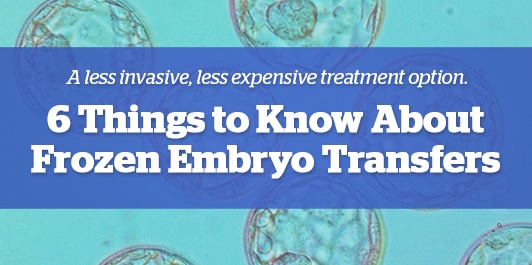
1. Extending the Pregnancy Potential from One Fresh IVF Cycle

Patients that have high-quality blastocyst stage embryos that are not transferred during a fresh (or stimulated) IVF or donor egg cycle have the option of freezing the embryos for use in subsequent cycles. These cycles are known as frozen embryo transfers or more commonly referred to as FET cycles.

During a FET cycle, previously frozen embryos will be thawed and then transferred into the woman’s uterus.

2. FROZEN EMBRYO TRANSFERS ARE EASIER TO UNDERGO THAN FRESH IVF CYCLES

Patients starting a frozen embryo transfer cycle will instantly notice the differences between this cycle and a previous fresh IVF cycle.

Less time commitment – Unlike a fresh IVF cycle, there is no stimulation of the ovaries to produce multiple eggs during a FET cycle and there are less appointments needed. In fact, there are only three appointments associated with a FET cycle.

  1. Baseline Check – At the first appointment, there is a intravaginal ultrasound to to measure the uterine lining at the start of the cycle.
  2. Lining Check – A few days prior to the scheduled transfer the uterine lining is checked again. The physician will be looking for a thick “fluffy” lining, the perfect place for an embryo to implant and develop into a pregnancy.
  3. Embryo Transfer – On the day of the transfer, the frozen embryos will be thawed at one of our three IVF Laboratories. This is the same procedure a patient would have with a fresh IVF or donor egg cycle which does not require sedation or medication.

More predictable – A nice benefit with frozen embryo transfers is that they are easily planned and rarely deviate from the original protocol. Most of the changes associated with a fresh IVF cycle center around the stimulation phase. Is there over or under stimulation of the ovaries? Should medications be adjusted? Since stimulation is not required in a FET cycle, timing is very predictable and easily planned from start to finish.

Prior to the the embryo transfer, the medication given, usually estrogen and progesterone in oil, is used to help prepare and thicken the uterine lining. The medication dosage remains the same throughout the cycle.

3. FET Cycles are a Fraction of the Cost of a Fresh IVF Cycle

Arguably, one of the best benefits of a FET cycles is the cost. Frozen embryo transfers are all around a less invasive option and require far fewer appointments reducing the cost of treatment. FET cycle fees are about a third of the cost of a stimulated IVF cycle, and the medications are as little as 10% of the cost of a stimulated IVF cycle, ranging from $400-$800 dollars. Often times, patients with insurance coverage for fertility treatment will also have some level of coverage from medications.

Shady Grove Fertility has several financial programs to help reduce the cost of FET cycles even further, including Shared Risk 100% Refund and Multi-Cycle Treatment Discount; both programs include the costs associated with an FET cycle in the program fee.

SGF now offers Shared Risk 100% Refund Guarantee for FETs. This program offers the same piece of mind thousands of patients have had with the traditional Shared Risk 100% Refund for IVF or Donor Egg Program – a baby born or a 100% refund. Patients with remaining embryos from a previous treatment cycle, that meet the eligibility criteria; now have the option to guarantee their success with subsequent FET cycles.

Current patients should contact their financial counselor to learn more about this program.

4. Frozen Embryo Transfers Offer Nearly Identical Success Rates to a Fresh IVF Cycle

Recent advances in embryo freezing technology, primarily using the vitrication, have vastly improved the success rates of FET cycles in recent years. Neither patients nor physicians want to undergo unnecessary treatment, so only high-quality bastocyst stage embryos are selected to freeze, which contributes to the significant improvement in the success rates. FET cycles completed with the vitrification freezing technique have pregnancy rates nearly identical to that experienced with a fresh in vitro fertilization (IVF) cycle.

5. Freeze All Cycles May Improve Your Chances of Pregnancy

In 2012, a meta analysis study was published suggesting a correlation between increased hormone levels, such as progesterone, in a woman’s body and a decrease in resulting implantation and pregnancy rates. The physicians at Shady Grove Fertility took a retrospective look at our own patients’ results which confirmed this phenomenon.
In simple terms, if hormone levels are too far above what is expected during a natural (unstimulated) menstrual cycle, freezing all resulting embryos and transferring them after hormone levels are allowed to return to normal, will give the embryos the best chances of resulting in a pregnancy.

If at the end of an IVF cycle, your hormone levels are high, your physician may recommend this freeze all approach. Eggs will be harvested, embryos formed and then frozen. In most cases, the transfer occurs in the following menstrual cycle the next month.
The final decision to move forward with a fresh transfer or freeze all of the embryos is ultimately made by the patients in consultation with their physician.

  • Read more about the study.

6. FROZEN EMBRYOS DON’T HAVE AN EXPIRATION DATE

Whether waiting a few months before starting the next cycle or a couple years between baby number one and number two, you can feel confident that the embryos will remain as strong as the day they were frozen. With vitrification, frozen embryos and eggs are suspended in time allowing patients to take the time they need between cycles.
No aging occurs while eggs or embryos are in a vitrified state and are believed to remain the same quality indefinitely. This is an added benefit for patients waiting multiple years between their freeze and transfer – the success rate associated with the embryos frozen when a women is 35 will remain the same even if her transfer doesn’t occur for several years.

With that said, it is not suggested that patients in their late 30s or 40s wait too long. Should the FET cycles not be successful, patients will need to complete another stimulated cycle to obtain additional eggs. While the previously retrieved and frozen eggs are not aging, those still in the ovaries that are yet to be retrieved are. It is important to note, Shady Grove Fertility’s cut off age for treatment is 50 years and 11 months.

If you would like to schedule an appointment with a fertility specialist, please speak with one of our New Patient Liaisons at 877-971-7755.

Filed Under: Treatment Tagged With: In vitro fertilization (IVF)

May 23, 2014 by Shady Grove Fertility

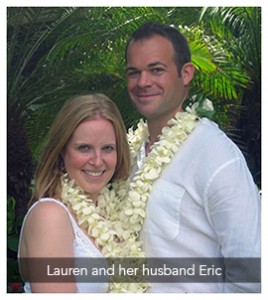
Eric and I were married in 2003 when I was 26. For many reasons, we wanted to wait on having kids – I had just finished my MBA and he had joined the military, spending 14 months in Iraq. We were moving all over the place and very focused on our careers. I could safely have been classified as a workaholic – long hours at work punctuated by lots of Starbucks, sometimes five Grandes a day, and wine-fueled dinners to help “relax”.
In early 2009, Eric had left the military and gone to graduate school, and we settled in DC. I was 33 and we decided we’d better get on with having kids. I was pregnant within the first two months of trying. Still working and stressed as ever, I cut down to one grande a day and stopped drinking alcohol.

My eight-week ultrasound went well – we saw the heartbeat and everything seemed on track. At my eleven-week ultrasound though, the radiologist looked funny. I didn’t really know what I was seeing, so I was shocked when we were told there was no longer a heartbeat. Just one day later, I woke up writhing in pain and miscarried that night in one of the most painful experiences of my life.

Though we were sad, we were determined to try again. For the remainder of 2009, we “tried,” doing our best with Eric’s crazy travel schedule as a consultant and my new job. Nothing happened.

Getting Serious

In early 2010, we decided to get serious, and I began to research fertility. I bought all the books and joined Fertility Friend online, began timing my cycles by tracking my temperature religiously every morning and using ovulation predictor kits. Still nothing happened. By November, my OB suggested referring me to an infertility clinic. Though I had told myself I would not do “those crazy shots,” I was so frustrated at that point that I made an appointment immediately at Shady Grove Fertility. Thankfully, we have good insurance that covered multiple treatments.

After a couple of months of testing it was determined that nothing seemed broken: it was unexplained infertility, a frustrating diagnosis. In January 2011, we were underway with our first intrauterine insemination (IUI) cycle. I was convinced that this would do it. Not only did it not work, but Clomid made me a crazy person. We switched to injectable medication for the second IUI, which also didn’t work. Again I was frustrated and growing more impatient – why was it taking so long?

We sat down with Dr. O’Brien, who explained calmly that we could either continue with IUIs since our insurance covered up to seven IUI cycles, or switch to IVF. I decided that the odds of IUI success were too low, and we were moving to IVF. We were now into “those crazy shots” big time.

Starting IVF

Our first egg retrieval was disappointing – only five eggs. Although my infertility knowledge at the time was nowhere near where it is now, I knew that more eggs was better than less. Dr. O’Brien assured me that five eggs was good – we would surely get some embryos and maybe even have some to freeze. We waited nervously, and then… success! There was a viable embryo at day 5, which was transferred. Two weeks later we learned I was pregnant, thank goodness.

The joy, however, was short lived. From the start, Dr. O’Brien was unhappy with the growth of the embryo, and at week 8, we knew that the pregnancy wasn’t viable. For the first time in the journey, I began to doubt that we might succeed. Nonetheless, the workaholic in me pushed forward. We just needed multiple tries, I told myself. Following a D&C, I began another IVF regimen the very next cycle.

IVF Cycle 2 was even worse. This time, my body violently resisted even the high doses of drugs, with barely any follicle growth. We abandoned the cycle for an IUI. Nothing. Defeated and nearing the end of 2011, I decided at this point to take a break. Clearly something was not working, and I had spent a whole year on this “project” with nothing to show for it.

Finding Alternative Medicine

After some major soul searching, I decided to make some major changes. I poured myself into fertility research, focusing on both traditional and alternative medicine. Thankfully, I was already at a top notch fertility clinic, but the “alternative” side of my treatment plan was sorely lacking. I was still an exhausted workaholic who drank too much coffee and wine, and chose my meals mostly for efficiency and convenience.

I decided to finally walk into the Wellness Center, and began acupuncture. She recommended some pretty major changes to my diet and lifestyle. I also saw my primary care physician, who ran some basic blood work and discovered deficiencies in both Vitamin D and B12. I began daily yoga for fertility, stopped drinking caffeine and alcohol (with surprisingly little pain), overhauled my diet, and requested a two month leave of absence from my job, which my boss thankfully granted with minimal resistance.

Somewhat rejuvenated, I began my third IVF cycle in the spring of 2012. I felt much calmer and saner, not getting up at the crack of dawn to do monitoring before an 8:00 a.m. work meeting. The follicles grew well and we ended up with 7 eggs and 5 growing embryos. Things were really looking up… until we got bad news again. At Day 2, only two embryos were left, and we would be doing a Day 3 transfer. Well researched at this point, I knew I would prefer Day 5. I held onto hope, but neither embryo took.

Reprioritizing Life

This time, though, I handled the news in stride. I returned to work the following week, still not pregnant, but remarkably calmer. I began to cut the hours I worked, and surprisingly performed better on the job. I stopped sweating the small stuff. I calmly began working on a new plan, scheduling a consultation/second opinion with a fertility doctor in Colorado, who had written one of the books I had read. My doctor’s team graciously agreed to continue to do the monitoring locally if I choose to see this out-of-state doctor.

Then – as I made preparations to continue treatment – I realized I was feeling nauseous. The following Sunday morning, I dared to take a pregnancy test, which confirmed what I already knew. We were pregnant. I immediately emailed my nurse at Shady Grove Fertility – could they please do the early monitoring and blood work for this “spontaneous” pregnancy? Yes, they could, and this time, the news was much better. After several rounds of monitoring, I finally “graduated” from Shady Grove Fertility!

My Happily Ever After

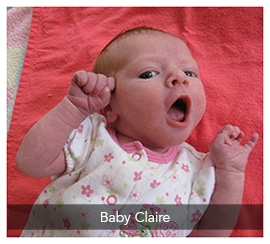
I am writing this as I watch my beautiful daughter’s little red head on the baby monitor. Despite all the challenges getting there, I had an easy pregnancy and delivery. I cannot imagine a different end to my journey, nor would I want one. She is eight weeks old now, and I cannot imagine loving anything more.

I can honestly say that I am grateful for my journey – I learned a lot about myself and am a calmer, more balanced person than I would be if I hadn’t gone through it. Our marriage is stronger, and we were truly “ready” to welcome our beautiful child into the world.

My Advice to Other Patients

Although it sounds silly, I always use the “Lord of the Rings” analogy. I tell them – you are Frodo. You will get to that big mountain with your little ring – you may have to encounter the giant spider, the big swamp, the crazy gremlin and a whole host of other challenges, and you will feel very alone at times – but you will get there. Know that the journey might be long, but don’t give up. If you want to have a child and you are willing to do whatever it takes, you will have one, and it will all be worth it.

For more information or to schedule an appointment with one of our physicians, please speak with one of our friendly New Patient Liaisons by calling 888-761-1967.

Filed Under: General Tagged With: Holistic care, In vitro fertilization (IVF), Intrauterine insemination (IUI), Unexplained infertility

May 22, 2014 by Shady Grove Fertility

Isaac Sasson, MD

When couples are having trouble conceiving, the first instinct for many is to look to the woman for a cause. “The reality is that 40 to 50 percent of all infertility can be contributed to the male partner, making it important to complete a comprehensive semen analysis in addition to testing the female partner.” explains Isaac Sasson, M.D., Ph.D., of the Chesterbrook, PA office. Luckily, advances in fertility treatment over the past two decades have made male factor infertility one of the most treatable forms of infertility.

Simple Test to Determine Male Factor Infertility
A simple semen analysis can provide insight to the overall quality of a male’s sperm. The results can identify infertility and point physicians in the direction of the cause. At Shady Grove Fertility, a specially trained andrologist, using the most recent World Health Organization (WHO) standards for semen analysis, reviews each sample paying close attention to four parameters:

  • Volume: “Semen is made up of sperm, amino acids, sugars,enzymes, and several other secretions made by the male reproductive system.” says Dr Sasson. Ideally there should be at least 1.5 milliliter. If the volume of ejaculate is low, the sample may be lacking in these important components that are critical in reproduction. It may also signal a blockage in the ejaculatory system that can obstruction semen transport.
  • Count: Concentration – commonly referred to as “sperm count” – tells physicians the number of sperm within the semen. A healthy concentration will contain more than 20 million sperm per milliliter. A low sperm count can signal a problem with sperm production. This can arise from a problem in the testicle, the hormones that regulate sperm production, an underlying genetic disorder, or exposure to medication or environmental factors.
  • Motility: Motility refers to the sperm’s ability to move. In a healthy sperm sample, at least 40 percent of sperm are moving. Should the motility fall below this threshold, the ability for the sperm to reach the female reproductive tract and find the egg can be compromised.
  • Morphology: Sperm morphology pertains to the percentage of sperm that are of a normal size and shape. Sperm shape reflects DNA content within the sperm. Abnormally shaped sperm are unable to fertilize an egg or produce a viable embryo. Ideally, more than 4% of sperm should be normal in shape.

Click here to schedule a Semen Analysis>

Read Jeremy’s Story: Infertility from a man’s point of view

Treating Male Factor Infertility

Once male factor infertility is identified, depending on the severity, there are several treatment options available to overcome male factor infertility.

  • Intrauterine Insemination (IUI): This low tech treatment option is used for mild forms of male factor infertility or when using donor sperm. This affordable option can be performed in any  of our full service offices and does not require sedation or anesthesia. Prior to the procedure, an andrologist will wash and concentrate the semen sample keeping only the strongest swimming sperm, which will then be placed directly into the uterus.  The procedure is painless and takes less than 5 minutes to perform. Men can collect at home and women can return their daily routine after the procedure.
  • In Vitro Fertilization with Intracytoplasmic Sperm Injection (ICSI): “When lower tech options are not successful or the male factor is severe the next option to consider is IVF with ICSI which allows a single sperm to be injected directly into the female partner’s eggs inside the embryology laboratory.” explains Dr. Sasson. Depending on the age of the female patient this option can more than double the changes of success seen with IUI resulting in up to a 53 percent delivery rate.

In some rare cases, there will be no sperm in the ejaculate. There are several options to consider when that is the case:

  • Surgical Sperm Retrieval: These are procedure include PESA, TESE, or testicular biopsy. These procedures are done under local or general anesthesia, are not painful, and have a quick recovery. During a PESA/ TESE, a needle is inserted into the testicle and fluid is withdrawn. The fluid is then inspected under a microscope and healthy sperm are extracted from it and used to in the embryology lab to fertilize the retrieved eggs. In rare cases, a testicular biopsy can be performed in which a small sample of tissue is extracted from the testes. The tissue is then inspected under a microscope and any healthy sperm are isolated and used during IVF with ICSI. The surgically retrieved sperm can be frozen and used in subsequent treatment cycles if needed.  These options have proven very successful at helping men with a severe male factor build their family.
Read Jennifer & Mike’s donor sperm treatment story on page 8

Donor Sperm: Donor sperm is also the only option for many single women, women in same sex relationship, and women whose male partner is experiencing severe male factor infertility with no available sperm. Use of donor sperm it is more common that you might have thought. In 2013, at Shady Grove Fertility, approximately  20 percent of all IUI treatment cycles used donor sperm.

“For patients seeking an anonymous donation there are several national certified sperm banks we recommend.” says Dr. Sasson.  When considering donor sperm, the educated consumer should be wary that not all sperm banks are equal. It is recommended that the following screening and protocols have been performed by the sperm bank:

  • Testing for infectious diseases, such as HIV and Hepatitis, prior to collection and again after a 6 month quarantine of the semen.
  • Genetic disease for conditions such as cystic fibrosis and sickle cell anemia.
  • Sperm quality determined by a semen analysis.

At Shady Grove Fertility, we recommend the following certified sperm banks:

  • Xytex Cryo
  • California Cryobank
  • European Sperm Bank USA
  • Fairfax Cryobrank

When using the sperm of a known donor FDA regulations call for the same screening and quarantine of the semen prior to use.

To learn more about male factor infertility and the available treatment options call one of our knowledgeable new patient center liaisons to schedule a consultation with one of Shady Grove Fertility’s physicians, please call 877-971-7755 or click here to schedule an appointment.

Filed Under: Diagnosing Infertility Tagged With: Donor sperm, In vitro fertilization (IVF), Intracytoplasmic sperm injection (ICSI), Intrauterine insemination (IUI)

May 7, 2014 by Shady Grove Fertility

When you have to pay out of pocket for a child via fertility treatment – doesn’t it make sense to hope for multiple births (twins or triplets)? It will save your body and wallet some pain… right?

Hoping for Multiple Births

Recently in the Wall Street Journal, two women who had delivered twins and fertility specialists shared their experiences about multiple births. Women like Nikki David and Jackie Hazlett both had in vitro fertilization (IVF) to conceive.

At 33, Nikki knew that chances of conception decreased as she go older which was one of the reasons she was hoping for twins, “We can’t necessarily afford to do this again. I would be older the next time around… There were so may reasons why we’re like, ‘Please let it be twins, please let it be twins.'”

Jackie had been required to complete multiple rounds of fertility treatment as required by her insurance, prior to moving on to advanced treatment, like IVF. She wanted to have twins to boost the chance of conception simply to not have to put her body through more treatment. Jackie ended up conceiving twins after transferring two embryos. Her twins were born five weeks early and spent ten days in intensive care.

  • Read the complete Wall Street Journal article “Fertility Study Warns of Risks From Multiple Births.”

Educating Against Multiple Births

While twins may often feel like a blessing, the reality is that there can be lots of complications including premature birth – as Jackie experienced – as well as, cerebral palsy, blindness, retardation and congenital malformations.

For fertility specialists, like Shady Grove Fertility’s Eric A. Widra, M.D., it comes down to educating the patient on the best option for them. With the advancements in freezing embryos, “I can tell a 37-year-old if two of these embryos are going to be babies, they’ll be babies one at a time or two at a time.”

Elective single embryo transfer (eSET) is often recommended for women younger and have strong embryos. At SGF, women under 37 opted to transfer only one embryo in 34 percent of cycles. This number decreases dramatically after the age of 40, with only 1.3 percent of fresh IVF cycles in women 41-42 opting for single embryo transfer, due to lowered pregnancy rates.

Balancing Multiple Births and Pregnancy Rates – Financial Options

Patients should be educated on their options, as the choice is ultimately theirs on how many embryos to transfer.

Balancing the risk of multiple births with chances of pregnancy for any given cycle is not an easy option. Which is why programs like SGF’s Shared Risk 100% Refund Gaurantee for IVF and Donor Egg can help. For one upfront fee, patients receive up to six fresh cycles of IVF or donor egg treatment, as well as any resulting frozen embryo transfers. Not having the financial pressure helps many women make the best choice for their body and family, not just what they can afford.

Like Jackie, many women have to follow guidelines based on their insurance providers. Helping get improved regulation and insurance mandates for fertility care is a large initiative for organizations like RESOLVE. There are continued efforts to reach out to lawmakers, educate them on fertility care, and pass legislation that improves coverage. You can reach out to your Senator or Representatives by making a call or sending a letter. Click here to learn more about the Family Act.

  • Read the complete Wall Street Journal article “Fertility Study Warns of Risks From Multiple Births.”

If you have questions about fertility or are ready to schedule an appointment at Shady Grove Fertility, please speak with one of our New Patient Liaisons at 877-971-7755.

Filed Under: General Tagged With: In vitro fertilization (IVF), Shared Risk 100% IVF Refund Program

  • « Go to Previous Page
  • Page 1
  • Interim pages omitted …
  • Page 4
  • Page 5
  • Page 6
  • Page 7
  • Page 8
  • Interim pages omitted …
  • Page 12
  • Go to Next Page »

Company

  • About SGF
  • About US Fertility
  • Our Doctors
  • Fertility Equity
  • Careers
  • Newsroom
  • SGF College Scholarship
  • Contact Us
  • Voice Your Feedback

Treatments

  • Egg Freezing
  • Intrauterine Insemination (IUI)
  • In Vitro Fertilization (IVF)
  • Frozen Embryo Transfer (FET)
  • LGBTQIA+ Family Building
  • Shared Risk 100% Refund Program
  • All Treatments

Resources

  • Patient Portal
  • Online Bill Pay
  • Library
  • Support Groups & Events

Locations

  • California
  • Colorado
  • Delaware
  • Florida
  • Georgia
  • Maryland
  • North Carolina
  • Pennsylvania
  • Texas
  • Virginia
  • Washington, D.C.

2026 Shady Grove Fertility

  • Policies & Notices
Also of interest
  • In Vitro Fertilization IVF
  • Fertility Tests
  • Research Publications