

• Skip to primary navigation
  • Skip to main content
  • Skip to footer
Shady Grove Fertility
  • Become an Egg Donor
  • Referring Physicians
  • 1-888-761-1967
  • Schedule Appointment
  • Get Started
        • Get Started
          • Causes of Infertility
          • Fertility Tests
          • When to Seek Help
          • Find a Doctor
          • Preconception and prenatal vitamins 
          • Schedule an Appointment
        • Personalized Care For
          • Single Parents
          • LGBTQIA+ Family Building
          • People with Cancer
          • Known Genetic Diseases
          • Egg Donors
  • Treatments
        • Fertility
          • Timed Intercourse
          • Ovulation Induction
          • Intrauterine Insemination (IUI)
          • In Vitro Fertilization (IVF)
          • Frozen Embryo Transfer (FET)
        • Donation & Surrogacy
          • Donor Sperm
          • Donor Egg
          • Donor Embryo
          • Gestational Carrier
          • LGBTQIA+ Family Building
          • Single Parents
          • Find a Donor
        • More Treatments
          • Center for Male Fertility
          • Egg Freezing
          • OncoFertility
          • Preimplantation Genetic Testing
          • MIGS
          • All Fertility Treatments
  • Resources
    • Resource Library
    • Events Calendar
    • Patient Stories
    • Mental Health
    • Wellness Center
  • Insurance & Savings
    • Insurance & Benefits
    • Shared Risk 100% Refund Program
    • 100% Refund for Donor Egg
    • Discounts
    • Egg Freezing Costs
    • Financing & Grants
    • Clinical Trials
  • About
    • Find a Doctor
    • About SGF
    • Our Care Team
    • Advanced Practice Providers
    • Fertility Equity
    • Philanthropy
    • Newsroom
    • Careers
    • Contact Us
    • Voice Your Feedback
  • Locations
        • Find a Location
        • California
        • Colorado
        • Delaware
        • Florida
        • Georgia
        • Maryland
        • North Carolina
        • Pennsylvania
        • Texas
        • Virginia
        • Washington, D.C.
        • Chile
        • International & Out of State
        • SGF at Walter Reed National Military Medical Center
  • Patient Hub
    • Online Bill Pay
    • Patient Forms
    • Patient Portal
  • Call your care team
  • Become an egg donor
  • Referring physicians
  • search-icon
  • Schedule appointment 1-888-761-1967

Home / In vitro fertilization (IVF) / Page 12

In vitro fertilization (IVF)

December 7, 2010 by Shady Grove Fertility

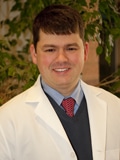
Dr. Ricardo Yazigi

by Dr. Ricardo Yazigi, MD

Every so often I get calls or see women who have had their tubes tied in the past and are now interested in pursuing pregnancy. Many of these patients request a tubal reversal, but although some of them can be good candidates for surgery, there are many variables that need to be evaluated before moving forward.

Tubal Reversal Process

First, while a tubal ligation is frequently performed in a matter of minutes through an outpatient laparoscopy (by a small cut at the level of the navel), a tubal reversal may require a larger “bikini” cut, which may mean a longer operative time and a hospital stay. While recovery from the tubal ligation is quick, the recovery time for the reversal is generally longer. In an effort to simplify the surgery, a tubal reversal may also be performed by laparoscopy or by the newer “Da Vinci” robotic surgery. Some limitations to these seemingly simpler procedures may be: an even longer operative time, somewhat lower success rates, and costs that may not be significantly different from the traditional “bikini-cut” technique.

Secondly, whether the tubes were cut, tied, clipped or burned, and whether this was done in one or more areas of the tubes has an impact on success. If the sterilization shortened the tube significantly, the repair may not be successful.

Evaluating your Chances of Success

Following tubal reversal, it may take a young healthy couple a few months to up to a year to conceive. However, sometimes the tubes can close again. In other cases, a tubal (ectopic) pregnancy may occur. This is a condition in which the fertilized egg implants itself in the tube. In some tubal pregnancies, the tube may rupture and there is a chance of internal bleeding.

For women in their 20s or early 30s, a tubal reversal may be appropriate, as the time it may take them to conceive is unlikely to take a toll on her reproductive capabilities.  However in women over 35, waiting may not be appropriate and should be discouraged. In that case, in vitro fertilization (IVF) is a much better alternative. IVF is a faster, outpatient procedure, and the success rates per attempt are higher than those achieved monthly after a tubal reversal. Very importantly, and contrary to people’s perception, multiple pregnancies can be kept down to a minimum with IVF.

IVF is also a better alternative for young women desiring only one more child because after delivery there are no concerns about birth control.

When it comes to making a choice, every couple deserves individual evaluation according to their personal needs and desires. For that reason, a thorough consultation with a fertility specialist is best when a tubal reversal is being considered.
Filed Under: General Tagged With: In vitro fertilization (IVF)

November 19, 2010 by Shady Grove Fertility

As Shady Grove Fertility approaches our 20th anniversary, we have been reflecting on our past and what brought us to where we are today. Currently, with 23 physicians and over 300 staffers, we have far exceeded the expectations of our founders, Dr. Michael Levy and Dr. Arthur Sagoskin, but have held strong to the belief that fertility treatment is more than just injections and IVF, it is about treating the patient as a whole person. We have long offered a multitude of services for our patients including support groups, financial programs, events and much more. Whether you are dealing with PCOS, coping with a pregnancy loss, or considering donor egg, there is someone, not so far away, that is going through the same struggle.

In 2008, we launched our updated website, ShadyGroveFertility.com, designed to make your online experience as informative and helpful as possible. Soon after we began to share with you on Twitter and Facebook. Today, our online community, over 6,000 people strong, continues to grow as patients share their journeys and our expert physicians provide you with the answers to all your pressing questions.

The next step in keeping connected with you, is this “Insider’s Guide to Fertility”. Our physicians, staff, and patients will be sharing their experiences with you. Answering your questions outside the walls of a doctor’s office, and explaining what infertility is without a slew of clinical words that require a search on Wikipedia to understand.

So let’s make this official – Welcome to the Insider’s Guide to Fertility! You can read our current posts covering topics such as ‘Fertility & Weight Loss’, ‘Your First Doctor’s Visit’, and ‘Does Everyone Have Infertility?’

Thank you for coming and we look forward to sharing more with you. (And share with us, please let us know if you like this site and what is on your mind in the comments section below!)

Filed Under: General Tagged With: Donor egg, In vitro fertilization (IVF)

November 18, 2010 by Shady Grove Fertility

by Dr. Eric Levens

So let’s get started at the beginning! Many people are surprised to learn that infertility is a medical disease, defined as the inability to conceive after 12 months of unprotected intercourse (after 6 months for women ≥35 years of age).

For many having difficulties conceiving, one of the greatest hurdles is making the first step: Scheduling an appointment to see an infertility specialist. This is understandable, given so few other events in life are so deeply personal and, no-doubt, fundamental to our sense of self as our ability to reproduce.

As a result, making that first appointment to see an infertility doctor often seems like a gigantic leap. If you’re contemplating taking this step, it might be comforting to know the things that would likely occur at your first visit.

Your First Visit: What Happens?

Infertility may be the result of many different conditions, all ending up in that same frustrating situation: no pregnancy. To get a better understanding of your individual condition, some initial testing may be required.

For some women, it may be that ovulation (producing an egg) isn’t occurring on a regular basis. This may be the result of several conditions such as polycystic ovary syndrome (PCOS) or be due to an accelerated or age-related depletion of the eggs in the ovary. For others, ovulation may be occurring regularly, but the Fallopian tubes are blocked which means the ovulated egg isn’t getting fertilized by sperm in the tube. Another very common cause of infertility is that there are insufficient numbers of normal sperm to achieve a pregnancy.

At your initial visit, your physician wants to determine whether there are things in your or your partner’s history that may herald an underlying medical condition that is presenting as infertility that may require further evaluation. The next steps can be largely broken down into evaluating the following: 1) the ovaries; 2) the Fallopian tubes; 3) the sperm count.

Checking Your Ovaries

Without bogging you down with too many details, ovarian function is controlled by an area of the brain called the pituitary. The pituitary produces several hormones, but the one most critical to fertility is follicle stimulating hormone (FSH). This hormone stimulates the ovary to develop a follicle that contains an egg. If FSH is elevated too early in the menstrual cycle, it may indicate that the ovary is having a hard time responding to this signal. One way to test the function of the ovary is to determine the FSH hormone on day 3 of the menstrual cycle along with assessing the amount of estrogen (produced by the ovary) in the blood.

These hormones give an indication of how the ovaries are functioning, something we refer to as the “ovarian reserve” which is the quality of the pool of eggs within the ovary.

Checking Your Fallopian Tubes

Another important test is called a hysterosalpingogram. While this test may sound intimidating, it is simply an x-ray of the outline of the uterine cavity (where implantation of an embryo occurs) and the Fallopian tubes to determine if the tubes are open. If the Fallopian tubes are blocked, then in vitro fertilization (IVF) would likely be the most successful option for achieving pregnancy.

Checking His Semen

A semen analysis is another important component of the initial evaluation to determine whether there is a male partner component resulting in infertility and if so, whether it is treatable. Fortunately, with the development of techniques in the last two decades, the sperm from men with some of the most severe sperm abnormalities can be used to achieve a pregnancy. Once the results of these tests are available, an Infertility specialist can recommend an appropriate treatment for you.

Filed Under: General Tagged With: Dr. Eric Levens, In vitro fertilization (IVF), Semen analysis

  • « Go to Previous Page
  • Page 1
  • Interim pages omitted …
  • Page 10
  • Page 11
  • Page 12

Company

  • About SGF
  • About US Fertility
  • Our Doctors
  • Fertility Equity
  • Careers
  • Newsroom
  • SGF College Scholarship
  • Contact Us
  • Voice Your Feedback

Treatments

  • Egg Freezing
  • Intrauterine Insemination (IUI)
  • In Vitro Fertilization (IVF)
  • Frozen Embryo Transfer (FET)
  • LGBTQIA+ Family Building
  • Shared Risk 100% Refund Program
  • All Treatments

Resources

  • Patient Portal
  • Online Bill Pay
  • Library
  • Support Groups & Events

Locations

  • California
  • Colorado
  • Delaware
  • Florida
  • Georgia
  • Maryland
  • North Carolina
  • Pennsylvania
  • Texas
  • Virginia
  • Washington, D.C.

2026 Shady Grove Fertility

  • Policies & Notices
Also of interest
  • In Vitro Fertilization IVF
  • Fertility Tests
  • Research Publications