• Skip to primary navigation
  • Skip to main content
  • Skip to footer
Shady Grove Fertility
  • Become an Egg Donor
  • Referring Physicians
  • 1-888-761-1967
  • Schedule Appointment
  • Get Started
        • Get Started
          • Causes of Infertility
          • Fertility Tests
          • When to Seek Help
          • Find a Doctor
          • Preconception and prenatal vitamins 
          • Schedule an Appointment
        • Personalized Care For
          • Single Parents
          • LGBTQIA+ Family Building
          • People with Cancer
          • Known Genetic Diseases
          • Egg Donors
  • Treatments
        • Fertility
          • Timed Intercourse
          • Ovulation Induction
          • Intrauterine Insemination (IUI)
          • In Vitro Fertilization (IVF)
          • Frozen Embryo Transfer (FET)
        • Donation & Surrogacy
          • Donor Sperm
          • Donor Egg
          • Donor Embryo
          • Gestational Carrier
          • LGBTQIA+ Family Building
          • Single Parents
          • Find a Donor
        • More Treatments
          • Center for Male Fertility
          • Egg Freezing
          • OncoFertility
          • Preimplantation Genetic Testing
          • MIGS
          • All Fertility Treatments
  • Resources
    • Resource Library
    • Events Calendar
    • Patient Stories
    • Mental Health
    • Wellness Center
  • Insurance & Savings
    • Insurance & Benefits
    • Shared Risk 100% Refund Program
    • 100% Refund for Donor Egg
    • Discounts
    • Egg Freezing Costs
    • Financing & Grants
    • Clinical Trials
  • About
    • Find a Doctor
    • About SGF
    • Our Care Team
    • Advanced Practice Providers
    • Fertility Equity
    • Philanthropy
    • Newsroom
    • Careers
    • Contact Us
    • Voice Your Feedback
  • Locations
        • Find a Location
        • California
        • Colorado
        • Delaware
        • Florida
        • Georgia
        • Maryland
        • North Carolina
        • Pennsylvania
        • Texas
        • Virginia
        • Washington, D.C.
        • Chile
        • International & Out of State
        • SGF at Walter Reed National Military Medical Center
  • Patient Hub
    • Online Bill Pay
    • Patient Forms
    • Patient Portal
  • Call your care team
  • Become an egg donor
  • Referring physicians
  • search-icon
  • Schedule appointment 1-888-761-1967

Home / Unexplained infertility

Unexplained infertility

May 14, 2015 by Shady Grove Fertility

By Simon Kipersztok, M.D.

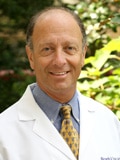
Simon Kipersztok, M.D.

One of the most common questions infertile patients and couples ask is: will the treatment my physician recommends work? It is perhaps little known to many that the majority of infertility sub-specialists ask themselves a very similar question: what will the fertility treatment success rates be if I use different treatment options available to a specific patient or couple?

The Patient Predictor Using National Data

The Society for Assisted Reproductive Technology, or SART, recently published a Patient Predictor on their website. They base their predictions on information gathered from close to half a million assisted reproductive technology (ART) cycles (i.e., in vitro fertilization [IVF] and donor egg) from more than 320,000 women performed in the United States since 2006. To obtain a result, the patient must provide specific information, including:

  • age, height, weight
  • number of pregnancies and deliveries
  • diagnosis of their infertility
  • if she is seeking to conceive with her own eggs or with donated eggs

For patients interested in conceiving with their own eggs, the Patient Predictor produces the probability of achieving a live birth after one, two, or three ART treatment cycles. For those considering conceiving with donated eggs, the predictor will produce the probability of a live birth and compare it with the one that the patient would have if she were to use her own eggs.

Much like when predicting weather, the results from the Patient Predictor cannot be 100 percent accurate since such a perfect prediction must be based on many more parameters than the ones the patient is asked to provide. The resulting predictions are based on data from many patients with varying medical circumstances, not to mention varying protocols, laboratory techniques, and fertility treatment success rates that come with different infertility centers. Yet, in spite of the differences, the Patient Predictor gives a very good probability of live births within a relatively narrow scale of probabilities—for the majority of patients who fit the parameters required to make the calculations.

Shady Grove Fertility’s Unique Prediction Instrument

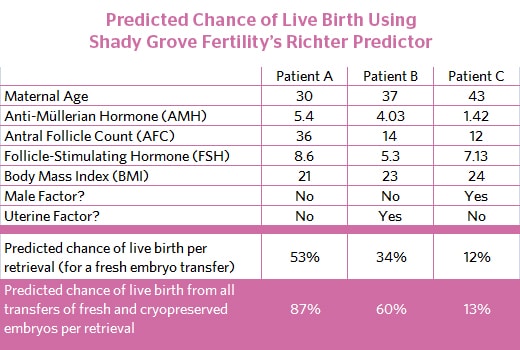
Many years ago, Shady Grove Fertility created its own predictor instrument, which is commonly known as the “Richter Predictor.” Named after Dr. Kevin Richter, Shady Grove Fertility’s Chief Statistician and Director of Research, the Richter Predictor is a more accurate predictor of success for SGF patients, specifically, not only because it leverages our own outcomes to determine probability, it also incorporates more clinically relevant parameters, such as:

  • antral follicle count
  • levels of anti-Müllerian hormone (AMH) and follicle-stimulating hormone (FSH)
  • the presence or absence of uterine and sperm abnormalities

Shady Grove Fertility’s research team used a few different patient populations for various components of our prediction models. Altogether, we based our modeling on analysis of nearly 15,000 treatment cycles from nearly 10,000 patients since 2009. Unlike the SART Patient Predictor, Shady Grove Fertility’s model also includes predictions of the likelihood of having good quality surplus embryos available for vitrification and subsequent frozen embryo transfer (FET), and the potential increase in live birth rates per egg retrieval that could be achieved by using these vitrified embryos.

For many patients seeking infertility therapy, it is now possible to predict with a high degree of probability a live birth after treatment with ART. When using other low-tech treatments such as ovulation induction or intrauterine insemination (IUI), it is reasonable to estimate that the probability of a live birth after one treatment cycle is between a fourth to a fifth of that of an ART treatment cycle.

Richter Predictor Offers Tremendous Value and Insight to Patients Faced with Difficult Decisions

This tool provides outstanding value to our patients. Navigating through the many decisions patients have to make along their journey can be challenging. It’s our philosophy to not only inform our patients but to also take an active role and strong, encouraging voice to help them navigate better in a pretty uncertain place.

We’ve invested tremendous resources to help patients feel more confident in their decision making and increase their baseline knowledge. In fact, Shady Grove Fertility is one of the few fertility centers in the country to employ a full-time dedicated research staff, under the leadership of Dr. Richter. As part of our ongoing commitment to excellence in patient care, we continuously analyze our statistics and devote significant resources in order to stay at the forefront on research to make sure our success rates are the best they can be.
  • Learn why SGF invests in research and how this benefits patients
  • SGF gives back to the research community through its published works

We encourage our patients to have a conversation with their physician about their own success probability. No prediction method can offer a guarantee, and conditions—especially female age if she’s using her own eggs—affect outcomes significantly. The advantage to patients at Shady Grove Fertility is, because of our vast experience having performed more than 65,000 ART treatment cycles (fresh autologous IVF, donor egg, FET) since our practice began in 1991, we can fine tune and personalize the treatment protocol with amazing precision to maximize effectiveness. It is advisable for each fertility center to assess their success rates the way that Dr. Richter has done to more accurately estimate the probability of success.

If you would like to learn more about Shady Grove Fertility or are ready to schedule an appointment, please speak with one of our New Patient Liaisons at 877-971-7755.
Filed Under: Diagnosing Infertility Tagged With: Causes of infertility, Unexplained infertility

May 7, 2015 by Shady Grove Fertility

Medical contribution by Stephanie Beall, M.D., Ph.D.

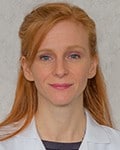
Stephanie Beall, M.D., Ph.D.

Many people have heard of in vitro fertilization (IVF), a commonly used fertility treatment. Some people erroneously assume that IVF is the only form of fertility treatment, without realizing that most patients do not begin their treatment journey with this approach. Most patients actually start with a low-tech treatment option, such as timed intercourse or intrauterine insemination (IUI). Regardless of where you start your journey, if it involves IVF, let the information in this fact sheet be your guide.

What is IVF?

In the simplest terms, IVF is a procedure in which a physician will remove one or more eggs from the ovaries that are then fertilized by sperm inside the embryology lab. IVF is the most successful treatment a couple can do using their own eggs and sperm (or donor sperm). IVF has become mainstream, widely accepted, and continues to grow, due to significant technological advances.

  • Read Shady Grove Fertility’s IVF Success Rates
  • Understanding Success Rates

Who Needs IVF?

There are many types of diagnoses that may lead to patients undergoing IVF. Here are some of the most common indications for IVF treatment:

  • Fallopian tube damage/tubal factor: In order to treat significant tubal damage, surgical repair or IVF (which bypasses the fallopian tubes) are the available treatment options. Your physician and your individual medical history can help determine the best course of action for your diagnosis.
  • Male factor infertility: In nearly 40 percent of infertility cases, the diagnosis is male factor infertility. The cause of male factor is often unknown, but some problems have been identified, including sperm production disorders, abnormalities of the reproductive tract, difficulty with erections or ejaculation, endocrine and immune disorders. Intracytoplasmic sperm injection (ICSI) has made significant strides for patients with male factor infertility. Learn more below.
  • Endometriosis: Endometriosis may be effectively treated with either surgery or IVF depending on the severity of endometriosis and other factors that could impact the chance of pregnancy.
  • Age-related infertility: As a woman ages, her ovarian reserve (egg supply) will decrease, with egg quality also negatively impacted. In many cases, this reduced ovarian function can be overcome through the use of IVF.
  • Unexplained infertility: Approximately 10 percent of couples will have no identifiable cause of infertility after completing a comprehensive evaluation. IVF is often successful, even if more conservative low-tech treatments have previously failed.
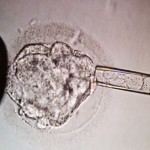
Embryo biopsy

Genetic abnormalities: For patients who are at risk for passing to their children a genetic disorder, preimplantation genetic diagnosis (PGD)—in which a few cells are removed from an embryo and tested for genetic disorders—can provide information about which embryo(s) the physician should transfer back to the female partner. IVF has created the ability to perform PGD, as fertilization of the embryos occurs in the lab. Additionally, for patients who experience recurrent pregnancy loss or have repeated unsuccessful IVF cycles, preconception genetic screening (PGS) provides the opportunity to discover if the underlying cause may exist on the genetic level.

What is the Timeline for an Average IVF Cycle?

In a normal ovulation cycle, one egg matures per month. The goal of an IVF cycle is to have many mature eggs available, as this will increase the chances of success with treatment. In order for there to be more than one egg available, stimulation of the ovaries needs to occur.

Part I: Stimulation of the Ovaries

In the stimulation phase of an IVF cycle, a patient will use injectible medications for approximately 8 to 14 days to stimulate the ovaries to produce eggs. Follicle-stimulating hormone (FSH) and luteinizing hormone (LH), both produced naturally within the body, comprise the medications. During the stimulation phase, patients will come into the office roughly 7 to 8 times for morning monitoring. Monitoring allows the physician to track the progress of the cycle and adjust medication dosages as needed. During a monitoring appointment, the patient will undergo an ultrasound and bloodwork:

  • The transvaginal ultrasound measures the growth of the egg-containing follicles and the thickness of the uterine lining, both of which should be increasing throughout the stimulation phase.
  • A nurse or clinical assistant will draw blood at each appointment to measure estrogen and progesterone levels. This level is another indicator of the growth and maturation of the eggs, and it rises as the follicles grow.

On the afternoon of a monitoring appointment, the patient can expect a phone call from her nurse with updates, including any changes in medication dosing and to coordinate the next monitoring appointment.
The Trigger Shot
The trigger shot is the final step in the stimulation phase of treatment. Depending on the patient’s individual protocol, she will either have a human chorionic gonadotropin (hCG) or Lupron trigger shot. This shot helps the developing eggs to complete the maturation process and sets ovulation in motion. Timing is very important here, as the physician must perform the egg retrieval prior to the expected time of ovulation.

Part II: Egg Retrieval

Eggs under the microscope.

A physician will perform your egg retrieval procedure at one of Shady Grove Fertility’s ambulatory surgery centers (ASC) in Rockville, MD, Towson, MD, or Chesterbrook, PA. On the morning of your egg retrieval, a physician will meet with you before the procedure to review your protocol. You will also meet with an anesthetist, who will review your medical history and will administer the IV fluid you will receive prior to the start of the procedure to induce sleep.

  • Obtaining the sperm: If patients are using a fresh sperm sample, a lab technician will come to accept the sample. If you are using a frozen sperm sample or donor sperm collected at a previous date, the technician will verify those details with you. Our andrology lab will clean and prepare the sperm, so that the healthiest sperm are brought together with the eggs for fertilization (after the physician performs the egg retrieval).
  • Obtaining the eggs: The egg retrieval itself takes about 20 to 30 minutes. During the procedure, the physician will guide a needle into each ovary to remove the egg-containing fluid in each follicle. The physician utilizes an ultrasound during the procedure to see where to guide the needle. Recovery will take about 30 minutes and patients are able to walk out on their own, though someone will need to drive them home since they had been under anesthesia.
  • What to Expect the Day of Your Egg Retrieval (Video)

Part III: Fertilization

After the egg retrieval, the embryologist will sort and prepare the eggs and sperm. There are two ways that fertilization can take place: conventional insemination or ICSI. The physician and patient will discuss which method to use based on sperm quality; this is traditionally planned in advance. In some cases, the embryologist may see that semen parameters for conventional insemination are not being met, so she/he will recommend the switch to ICSI to produce the greatest chance of success. Your clinical team will let you know if they recommend an unanticipated ICSI procedure.

  • Conventional insemination: For conventional insemination, the embryologist takes the prepared sperm sample and isolates the healthiest sperm. He/she will then incubate this sperm with the eggs in a Petri dish. This gives the egg and sperm the opportunity to find one another and fertilize.
ICSI
  • ICSI: There are many reasons why an embryologist might use ICSI, but the predominant cause is severe male factor infertility. ICSI provides patients the ability to isolate one healthy sperm for insemination. During ICSI, the egg and sperm don’t find one another as in conventional insemination; instead, an embryologist injects a single healthy sperm into the cytoplasm, or center, of each egg. ICSI has become one of the most incredible advances in fertility treatment, as it makes fertilization possible in even the most severe male factor infertility cases.
  • Part IV: Embryo Development

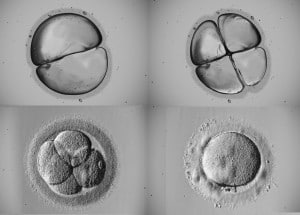
    Embryo development

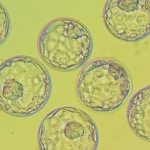
    Embryo development begins after fertilization. An embryologist examines each developing embryo every morning for the following 5 to 6 days. The goal is to see progressive development, with a four-cell embryo on day 2 and an eight-cell embryo on day 3. After the eight-cell stage, rapid cell division continues and the embryo enters into what is called the blastocyst stage at day 5 or 6. It is your physician’s goal to transfer the highest-quality embryo or embryos to give patients the greatest chance of reproductive success.

    • Why SGF recommends elective single embryo transfer (eSET)

    Part V: Embryo Transfer

    Blastocysts

    The embryo transfer is a simple procedure that only takes about 5 minutes to complete. There is no anesthesia or recovery time needed. When your nurse schedules your transfer, she will notify you and provide instructions on when to arrive and how to prepare. You need to have a full bladder for the procedure. It’s important to drink the specific amount of liquid recommended 30 to 40 minutes ahead of time.

    You will review your cycle with the physician and the number of embryos recommended for transfer. The embryologist will load the transfer catheter in the embryology lab with the embryo; upon entering the patient’s room, the embryologist will again confirm the patient’s last name and the number of embryos in the catheter. The physician will insert the catheter into the uterus and push the embryo through with a small amount of fluid. An external abdominal ultrasound provides visual guidance to the physician throughout the procedure via a monitor.

    Once the physician transfers the embryo, he/she will slowly remove the catheter. Since the embryo is invisible to the naked eye, the embryologist will then examine the catheter under a microscope in the lab to ensure that the embryo was released. The nurse will give you instructions for the following two weeks until it’s time for the beta pregnancy test.

    • Navigating the two week wait (TWW)

    Part VI: The Beta Pregnancy Test

    Two weeks after the embryo transfer, a nurse or clinical assistant will perform a blood pregnancy test. This test is frequently called a “beta” because it measures the beta chain portion of the hCG hormone emitted by the developing embryo.

    Though many patients are tempted to take an at-home pregnancy test, we caution against it, as these tests can render false positives or negatives. There is nothing inherently wrong with at-home pregnancy tests, but in the instance of IVF, the blood test is more accurate and reliable. Earlier, we spoke about the trigger shot, which can either be Lupron or hCG. If you have an hCG trigger shot, it may remain in the blood and show up on an at-home pregnancy test, possibly rendering a false positive. The urine test cannot discern the difference between the hCG in the trigger shot or the hCG seen elevated during a pregnancy. It’s better to wait the two weeks (though we definitely know how hard it is) and have the beta pregnancy test.

    Affording IVF Treatment with the Shared Risk 100% Refund Guarantee Program
    Our Shared Risk 100% Refund Guarantee Program financially insures you against the risk of not being successful. In this program, you elect to pay a flat fee that covers up to six cycles of IVF treatment. If you do not take home a baby as a result of those cycles (and the transfer of any frozen embryos), 100 percent of the fee is refunded, preserving your resources for other family building options (some exclusions may apply).

    • 100% Shared Risk Refund Guarantee for IVF and Donor Egg [Video]
    • Read Sara and Kevin’s Patient Journey

    At Shady Grove Fertility, we understand the financial considerations that go into the decision to begin—or continue—fertility treatment. As part of our efforts to make treatment more affordable, we participate with more than 30 insurance providers. While many patients have some form of insurance coverage for treatment, or live in a location that has coverage provided by mandate, we recognize that there are many without sufficient coverage or insurance benefits. With that in mind, SGF developed additional financial programs to help ease the cost of treatment.

    If you would like to learn more about IVF or to schedule an appointment, please speak with one of our New Patient Liaisons at 877-971-7755.
    Filed Under: Diagnosing Infertility Tagged With: Advanced maternal age, Endometriosis, Unexplained infertility

    April 2, 2015 by Shady Grove Fertility

    By Tara Simpson, Psy.D.

    Tara Simpson, Psy.D.

    Every person follows their own process in working through fertility struggles. Each individual and each couple has a unique journey in getting “through” it. Thankfully, we can feel united with others who also have dealt with–or are dealing with–infertility diagnoses. The experience of infertility can make you want to seek out other people who understand the emotional, medical, and physical aspects of it.

    While there are commonalities in relating to others who have struggled with fertility, there are also differences that can make even the shared experience seem isolating. Approximately one in five couples who are struggling to conceive will experience unexplained infertility, despite completing a full infertility work-up. It is hard enough to have a reason to attribute to having trouble conceiving, but NOT having a reason has inherent liabilities and difficulties. You may feel different from other couples with infertility who know the cause of their problem and are concentrating their efforts and energy on finding the best treatment for that identifiable issue.

    The Quest to Know Why

    The following statements are often made by women and men coping with an unexplained infertility diagnosis:  “I am so healthy yet feel so defective.” “I have beautiful eggs/embryos, my fallopian tubes are clear, the hormone levels are fine, and/or my sperm count is good, yet pregnancy is still not happening.” “So many tests and exams, but there is still no answer.” “If I/we could just find an answer then it could be fixed.”

    It starts to become essential to know WHY and the belief becomes that if you just knew why then it would be better. This leaves a never-ending quest for “the” reason, which demands a great deal of mental and physical energy.  Finding THE answer becomes the focus and we can often lose ourselves in that quest.

    The common belief in society is that if you work hard enough, you can get what you want. Yet fertility difficulties, despite your best effort, time, and attempts at treatment, sometimes don’t always yield overt answers to the question of “why?” Trying to find a reason can be time-consuming, financially draining, and emotionally exhausting. The emotional response to hearing “there is no apparent reason for your infertility” is often one of hopelessness and frustration.
    Well-meaning friends and family members may start sending you articles about some cutting-edge treatment or state-of-the-art fertility clinics. The underlying message is that if you go to the “right” clinic or the “right” doctors, they will find out what is wrong and fix it. Or you may be told you are too “stressed” or too “uptight,” which only makes you feel more uptight and stressed.

    “You may feel you are entering a state of limbo.”

    Facing an unexplained reason for not conceiving a pregnancy can often result in feelings of sadness, helplessness, and anger. The realization that one has had to struggle to get pregnant can result in a sense of a loss of innocence. More specifically, most people assume that when they decide to have a baby that they just will. It is believed that wanting to get pregnant is a conscious choice and when it doesn’t happen we can feel bewildered, cynical, and/or confused.

    Guilt can also become a pervading feeling. Some of these guilt feelings may go unspoken because of previous reproductive health choices, because you believe you took so long to even begin trying to have children, or because you are convinced that your anxiety and obsession with your infertility may be complicating it further. People often feel as if they have failed as a man/woman and/or husband/wife. The difficulties can be generalized to the individual or couple as “I/we are a failure.”

    You may feel you are entering a state of limbo. One of the most challenging aspects of struggling with infertility is the ambiguity. It is difficult to be in a situation in which we have no control and have no idea how long that out of control feeling will even last. You may feel stuck–unable to grieve and get on with other options because you hold onto the hope that the cause of your infertility will be revealed in the next test or treatment. Your sadness may intensify as time passes and you find no medical or emotional resolution.

    It can be essential to figure out what we CAN control. No one likes to feel as if they are in a never-ending state of medical free fall. We can control our body in how we treat it while going through infertility treatment. Acupuncture, massage, yoga, meditation, exercise, and an overall healthy lifestyle makes our body, and the mind, its most optimal, in order to tolerate that small aspect of our bodies that we seemingly don’t feel like we can control.

    We can also control our mood by talking with others who understand, or at the very least those who will validate or support our thoughts and feelings. Support groups and counseling can help you process your thoughts and feelings to make you feel more in control of your emotions as you proceed forward or take a break.

    You are not a failure—there just fails to be an answer as to why you are having difficulty conceiving. There is a big difference between the two.

    Dr. Tara Simpson is a licensed psychologist in Maryland. Her special interests include providing counseling to individuals with issues related to reproductive health, including infertility and pregnancy loss/miscarriage. Dr. Simpson sees clients in her Towson, MD and Columbia, MD private practice offices.

    If you would like to learn more about Shady Grove Fertility’s support groups or to schedule an appointment, please speak with one of our New Patient Liaisons at 877-971-7755.

    Filed Under: Diagnosing Infertility Tagged With: Causes of infertility, Unexplained infertility

    May 23, 2014 by Shady Grove Fertility

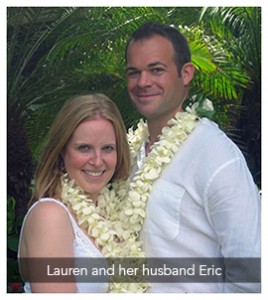
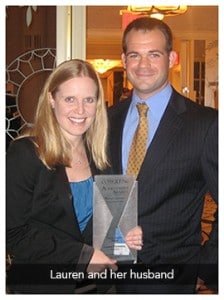
    Eric and I were married in 2003 when I was 26. For many reasons, we wanted to wait on having kids – I had just finished my MBA and he had joined the military, spending 14 months in Iraq. We were moving all over the place and very focused on our careers. I could safely have been classified as a workaholic – long hours at work punctuated by lots of Starbucks, sometimes five Grandes a day, and wine-fueled dinners to help “relax”.
    In early 2009, Eric had left the military and gone to graduate school, and we settled in DC. I was 33 and we decided we’d better get on with having kids. I was pregnant within the first two months of trying. Still working and stressed as ever, I cut down to one grande a day and stopped drinking alcohol.

    My eight-week ultrasound went well – we saw the heartbeat and everything seemed on track. At my eleven-week ultrasound though, the radiologist looked funny. I didn’t really know what I was seeing, so I was shocked when we were told there was no longer a heartbeat. Just one day later, I woke up writhing in pain and miscarried that night in one of the most painful experiences of my life.

    Though we were sad, we were determined to try again. For the remainder of 2009, we “tried,” doing our best with Eric’s crazy travel schedule as a consultant and my new job. Nothing happened.

    Getting Serious

    In early 2010, we decided to get serious, and I began to research fertility. I bought all the books and joined Fertility Friend online, began timing my cycles by tracking my temperature religiously every morning and using ovulation predictor kits. Still nothing happened. By November, my OB suggested referring me to an infertility clinic. Though I had told myself I would not do “those crazy shots,” I was so frustrated at that point that I made an appointment immediately at Shady Grove Fertility. Thankfully, we have good insurance that covered multiple treatments.

    After a couple of months of testing it was determined that nothing seemed broken: it was unexplained infertility, a frustrating diagnosis. In January 2011, we were underway with our first intrauterine insemination (IUI) cycle. I was convinced that this would do it. Not only did it not work, but Clomid made me a crazy person. We switched to injectable medication for the second IUI, which also didn’t work. Again I was frustrated and growing more impatient – why was it taking so long?

    We sat down with Dr. O’Brien, who explained calmly that we could either continue with IUIs since our insurance covered up to seven IUI cycles, or switch to IVF. I decided that the odds of IUI success were too low, and we were moving to IVF. We were now into “those crazy shots” big time.

    Starting IVF

    Our first egg retrieval was disappointing – only five eggs. Although my infertility knowledge at the time was nowhere near where it is now, I knew that more eggs was better than less. Dr. O’Brien assured me that five eggs was good – we would surely get some embryos and maybe even have some to freeze. We waited nervously, and then… success! There was a viable embryo at day 5, which was transferred. Two weeks later we learned I was pregnant, thank goodness.

    The joy, however, was short lived. From the start, Dr. O’Brien was unhappy with the growth of the embryo, and at week 8, we knew that the pregnancy wasn’t viable. For the first time in the journey, I began to doubt that we might succeed. Nonetheless, the workaholic in me pushed forward. We just needed multiple tries, I told myself. Following a D&C, I began another IVF regimen the very next cycle.

    IVF Cycle 2 was even worse. This time, my body violently resisted even the high doses of drugs, with barely any follicle growth. We abandoned the cycle for an IUI. Nothing. Defeated and nearing the end of 2011, I decided at this point to take a break. Clearly something was not working, and I had spent a whole year on this “project” with nothing to show for it.

    Finding Alternative Medicine

    After some major soul searching, I decided to make some major changes. I poured myself into fertility research, focusing on both traditional and alternative medicine. Thankfully, I was already at a top notch fertility clinic, but the “alternative” side of my treatment plan was sorely lacking. I was still an exhausted workaholic who drank too much coffee and wine, and chose my meals mostly for efficiency and convenience.

    I decided to finally walk into the Wellness Center, and began acupuncture. She recommended some pretty major changes to my diet and lifestyle. I also saw my primary care physician, who ran some basic blood work and discovered deficiencies in both Vitamin D and B12. I began daily yoga for fertility, stopped drinking caffeine and alcohol (with surprisingly little pain), overhauled my diet, and requested a two month leave of absence from my job, which my boss thankfully granted with minimal resistance.

    Somewhat rejuvenated, I began my third IVF cycle in the spring of 2012. I felt much calmer and saner, not getting up at the crack of dawn to do monitoring before an 8:00 a.m. work meeting. The follicles grew well and we ended up with 7 eggs and 5 growing embryos. Things were really looking up… until we got bad news again. At Day 2, only two embryos were left, and we would be doing a Day 3 transfer. Well researched at this point, I knew I would prefer Day 5. I held onto hope, but neither embryo took.

    Reprioritizing Life

    This time, though, I handled the news in stride. I returned to work the following week, still not pregnant, but remarkably calmer. I began to cut the hours I worked, and surprisingly performed better on the job. I stopped sweating the small stuff. I calmly began working on a new plan, scheduling a consultation/second opinion with a fertility doctor in Colorado, who had written one of the books I had read. My doctor’s team graciously agreed to continue to do the monitoring locally if I choose to see this out-of-state doctor.

    Then – as I made preparations to continue treatment – I realized I was feeling nauseous. The following Sunday morning, I dared to take a pregnancy test, which confirmed what I already knew. We were pregnant. I immediately emailed my nurse at Shady Grove Fertility – could they please do the early monitoring and blood work for this “spontaneous” pregnancy? Yes, they could, and this time, the news was much better. After several rounds of monitoring, I finally “graduated” from Shady Grove Fertility!

    My Happily Ever After

    I am writing this as I watch my beautiful daughter’s little red head on the baby monitor. Despite all the challenges getting there, I had an easy pregnancy and delivery. I cannot imagine a different end to my journey, nor would I want one. She is eight weeks old now, and I cannot imagine loving anything more.

    I can honestly say that I am grateful for my journey – I learned a lot about myself and am a calmer, more balanced person than I would be if I hadn’t gone through it. Our marriage is stronger, and we were truly “ready” to welcome our beautiful child into the world.

    My Advice to Other Patients

    Although it sounds silly, I always use the “Lord of the Rings” analogy. I tell them – you are Frodo. You will get to that big mountain with your little ring – you may have to encounter the giant spider, the big swamp, the crazy gremlin and a whole host of other challenges, and you will feel very alone at times – but you will get there. Know that the journey might be long, but don’t give up. If you want to have a child and you are willing to do whatever it takes, you will have one, and it will all be worth it.

    For more information or to schedule an appointment with one of our physicians, please speak with one of our friendly New Patient Liaisons by calling 888-761-1967.

    Filed Under: General Tagged With: Holistic care, In vitro fertilization (IVF), Intrauterine insemination (IUI), Unexplained infertility

    January 4, 2011 by Shady Grove Fertility

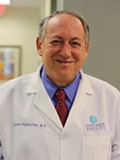
    Dr. Ricardo Yazigi

    by Dr. Ricardo Yazigi, MD

    Clomiphene (Clomid, Serophene) is a medication commonly used for the treatment of infertility. Although its use is widespread, its effectiveness is often limited when it is not properly utilized.

    Indications

    Clomiphene is a pill, taken orally, for 5 to 7 days to induce ovulation. Therefore, the best indication for the use of clomiphene is for women who do not ovulate on their own. Typically those women do not have menstrual periods or do have them but very seldom or irregularly.

    Clomiphene is also appropriately used in conjunction with artificial insemination (AI), also called intrauterine insemination (IUI). Most of the time, this combined treatment is offered to women who have unexplained infertility or endometriosis. In these instances, clomiphene may be capable of facilitating the maturation of more than one egg, most of the time two. Therefore, there is roughly a 5% chance of a multiple pregnancy with the use of this medication. When multiple pregnancies occur, it will most often be twins – triplets are extremely rare.

    Side Effects

    Clomiphene may have short-term as well as long-term side effects. Hot flashes and mood swings are the most common side effects. Long-term side effects are multiple pregnancy, and more rarely ovarian hyperstimulation syndrome (OHHS) and ovarian cancer. OHHS can occur in the rare situation in which the ovary may have a large number of mature follicles, which can produce some swelling and inflammation of the ovary with resulting abdominal discomfort as well as other laboratory abnormalities. The occurrence of ovarian cancer is quite debatable. The standard practice at present is to restrict the use of fertility drugs to less than twelve cycles as the chances of ovarian cancer are thought to increase after that. When a pregnancy is achieved and a baby is delivered, however, the chances of ovarian cancer drop to the levels observed in the general population, suggesting that a term delivery has a protective effect on ovarian cancer. Because of the aforementioned risks of cancer, fertility specialists restrict the number of treatment cycle with clomiphene to the minimum necessary, in order to leave room for more advanced treatments if necessary.

    Success Rates

    Many women conceive with clomiphene. However, if you haven’t gotten pregnant after taking this medication within 3-6 months, it may be time to move on to more aggressive treatment. Generally, three rounds will be enough to determine whether more aggressive treatments are in order.

    Filed Under: General Tagged With: Cancer, Intrauterine insemination (IUI), Unexplained infertility

    Company

    • About SGF
    • About US Fertility
    • Our Doctors
    • Fertility Equity
    • Careers
    • Newsroom
    • SGF College Scholarship
    • Contact Us
    • Voice Your Feedback

    Treatments

    • Egg Freezing
    • Intrauterine Insemination (IUI)
    • In Vitro Fertilization (IVF)
    • Frozen Embryo Transfer (FET)
    • LGBTQIA+ Family Building
    • Shared Risk 100% Refund Program
    • All Treatments

    Resources

    • Patient Portal
    • Online Bill Pay
    • Library
    • Support Groups & Events

    Locations

    • California
    • Colorado
    • Delaware
    • Florida
    • Georgia
    • Maryland
    • North Carolina
    • Pennsylvania
    • Texas
    • Virginia
    • Washington, D.C.

    2026 Shady Grove Fertility

    • Policies & Notices
    Also of interest
    • In Vitro Fertilization IVF
    • Fertility Tests
    • Research Publications