• Skip to primary navigation
  • Skip to main content
  • Skip to footer
Shady Grove Fertility
  • Become an Egg Donor
  • Referring Physicians
  • 1-888-761-1967
  • Schedule Appointment
  • Get Started
        • Get Started
          • Causes of Infertility
          • Fertility Tests
          • When to Seek Help
          • Find a Doctor
          • Preconception and prenatal vitamins 
          • Schedule an Appointment
        • Personalized Care For
          • Single Parents
          • LGBTQIA+ Family Building
          • People with Cancer
          • Known Genetic Diseases
          • Egg Donors
  • Treatments
        • Fertility
          • Timed Intercourse
          • Ovulation Induction
          • Intrauterine Insemination (IUI)
          • In Vitro Fertilization (IVF)
          • Frozen Embryo Transfer (FET)
        • Donation & Surrogacy
          • Donor Sperm
          • Donor Egg
          • Donor Embryo
          • Gestational Carrier
          • LGBTQIA+ Family Building
          • Single Parents
          • Find a Donor
        • More Treatments
          • Center for Male Fertility
          • Egg Freezing
          • OncoFertility
          • Preimplantation Genetic Testing
          • MIGS
          • All Fertility Treatments
  • Resources
    • Resource Library
    • Events Calendar
    • Patient Stories
    • Mental Health
    • Wellness Center
  • Insurance & Savings
    • Insurance & Benefits
    • Shared Risk 100% Refund Program
    • 100% Refund for Donor Egg
    • Discounts
    • Egg Freezing Costs
    • Financing & Grants
    • Clinical Trials
  • About
    • Find a Doctor
    • About SGF
    • Our Care Team
    • Advanced Practice Providers
    • Fertility Equity
    • Philanthropy
    • Newsroom
    • Careers
    • Contact Us
    • Voice Your Feedback
  • Locations
        • Find a Location
        • California
        • Colorado
        • Delaware
        • Florida
        • Georgia
        • Maryland
        • North Carolina
        • Pennsylvania
        • Texas
        • Virginia
        • Washington, D.C.
        • Chile
        • International & Out of State
        • SGF at Walter Reed National Military Medical Center
  • Patient Hub
    • Online Bill Pay
    • Patient Forms
    • Patient Portal
  • Call your care team
  • Become an egg donor
  • Referring physicians
  • search-icon
  • Schedule appointment 1-888-761-1967

Home / In vitro fertilization (IVF) / Page 5

In vitro fertilization (IVF)

July 17, 2018 by Shady Grove Fertility

Medical Contribution by Stephanie Beall, M.D., Ph.D.

Today, July 25th, marks the 40th birthday of the world’s first baby from IVF, Louise Brown. While previously thought impossible, IVF now helps hundreds of thousands of couples every year build the family they have been dreaming of for so long.

Today we take a look back to appreciate all the advances IVF treatment has had in the last 35 years.  From the first success in a town in Great Britain to over 8 million IVF babies born worldwide.

IVF – Improved Pregnancy Rates for More Patients

There have been many advances in fertility treatment since the first IVF success, all resulting in improved pregnancy and delivery rates and a decrease in twin and multiple pregnancy for IVF patients today. In 1993, Shady Grove Fertility had just recently started an IVF program, reporting a 32% delivery rate per embryo transfer for women under the age of 40. Two decades later, women under 35 see a delivery rate of 57%, and women 40 and under have on average a delivery rate of 43% per embryo transfer.

While the early IVF cases were for women with tubal issues, other diagnoses were often excluded.  Today, endometriosis, male factor, advanced reproductive age, ovulatory dysfunctions, and unexplained infertility can be overcome with the help of IVF. In the early 1990s, ICSI, or intracytoplasmic sperm injection, was introduced to provide treatment options for patients with severe male factor and fertilization failure rather than depending on donor sperm.

Schedule an Appointment

Improved Embryology Lab Techniques


Louise Brown and Dr. Robert Edward, a pioneer in IVF treatment who passed away earlier this year

After an egg retrieval, eggs are placed in a culture media which nourishes the embryo as it develops over the next few days. The culture media has been improved over time and originally, embryos didn’t have the assistance of this special culture media. We are now able to keep embryos in culture until they reach the blastocyst stage, the stage of embryo development just prior to implantation. By being able to see which embryos are able to develop to this stage, we have been able to decrease the number of embryos transferred while at the same time improving the overall implantation rate. By decreasing the number of embryos transferred, the multiple pregnancy rate has decreased. At Shady Grove over 70% of good prognosis patients undergo a single embryo transfer.

While patients today have embryos transferred directly into the uterus, that wasn’t always the case. Since early IVF was primarily to treat blocked tubes, embryos would be placed in the fallopian tubes.

One of the greatest recent advances has been in the field of genetic testing. Patients can now find piece of mind with preimplantation-genetic screening or disease testing. This screening process can identify embryos that carry a genetic disease, or aneuploidy, and indicate which embryos should be transferred back to the patient. This technology has improved the implantation rate and decreased the miscarriage rate per embryo transferred. Read our Genetic Screening Q&A.

Frozen Embryo Transfers
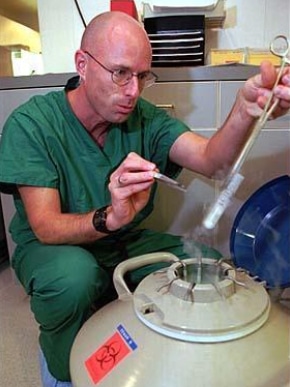
1997: Michael Tucker has first successful birth of child from a frozen egg in the United States.

Probably one of the greatest advances in fertility treatment has been the improved freezing technique of eggs and embryos. Vitrification – a fast freeze technique – has become standard in more fertility centers in the last few years and has helped increase the number of eggs and embryos that survive the freezing and thawing process.

In 1997, SGF’s Lab Director, Michael Tucker, was the first to freeze an egg and deliver a baby in the United States. Since then there has been efforts to improve the freezing and thawing process and the big breakthrough came a few years ago with vitrification.

Shady Grove Fertility began using the improved vitrification technique for embryos and eggs in 2009. As a result, success rates for frozen embryo transfers and utilization of eggs previously frozen have increased to a level that is now equal with fresh IVF cycles.

Schedule an Appointment

 Editor’s Note: This blog was originally published in July 2013 and has been updated for accuracy as of July 2018. 

Filed Under: Treatment Tagged With: In vitro fertilization (IVF)

May 4, 2015 by Shady Grove Fertility

Shady Grove Fertility first introduced the Shared Risk program in 1993 with a simple guarantee: receive up to 6 in vitro fertilization (IVF) cycles for a fixed cost with the goal of welcoming home a baby, or receive a 100% refund. You may withdraw from the program at any time during treatment and receive a refund. (Note: Some exclusions may apply, please talk with your financial counselor to learn more.) In 2015 alone, over 1,300 couples enrolled in the Shared Risk program.

Today, about 82 percent of our Shared Risk 100% Refund Program participants will go on to take home a baby.

We actually created our Shared Risk 100% Refund Program for IVF in response to a patient’s tearful frustration. She told us that, after having paid for an unsuccessful IVF cycle elsewhere, another failed attempt would financially devastate her and her husband and preclude them from then adopting a baby. They could not risk gambling their adoption money on the possibility of another unsuccessful IVF cycle. Therefore, they were not going to try again using the traditional fee-for-service option despite good odds of success. Our response was to develop an innovative refund option for qualifying patients.

Over the years, many patients have thought the program was too good to be true, but with 10,000 new families and counting, the program continues to grow and provide men and women with a financial safety net when considering fertility treatment.

Am I eligible for the Shared Risk 100% Refund Program?
The Shared Risk 100% Refund Program is available for patients either through our autologous program, meaning the female partner will be using her own eggs, or our Donor Egg Program, for those women using donor eggs. Each of these treatment options has its own set of eligibility criteria. We estimate that nearly 70 percent of patients in our practice who are using their own eggs would meet the qualifications for the Shared Risk 100% Refund Program.

If you are an international or out-of-state patient, you may also participate in these programs. Depending on your situation, we can make arrangements to coordinate your care with your local physician or fertility center. Typically, we only require patients to come to our centers at a few critical points during your cycle.

What fees are covered in the Shared Risk 100% Refund Program?
The Shared Risk 100% Refund Program includes:

  • All medical and laboratory services for up to 6 complete IVF cycles — from the start of medications through the first blood pregnancy test — are included. This includes assisted hatching of embryos and ICSI, if clinically needed.
  • If using an egg donor, the costs of monitoring, completed at SGF, and egg retrieval are also included.
  • Cryopreservation of viable embryos not transferred during any fresh Shared Risk cycle as well as the costs of FETs, until you have a baby or choose to withdraw from the program. 

Shared Risk costs do not cover consultations, diagnostic testing, outside services, medications, urologic male sperm retrieval procedure, or costs associated with complications or non-IVF care.

What is ICSI?
Your doctor may recommend ICSI as part of your IVF procedure to treat many causes of infertility, especially when there is a problem with the sperm, such as low motility (movement) or a low sperm count.

ICSI is especially useful in cases where the sperm cannot penetrate the egg, or if the sperm are abnormally shaped. It is a process in which an embryologist (a specialist in egg fertilization) injects a single sperm into the cytoplasm (center) of each egg. ICSI is commonly used in cases of male factor infertility and/or diminished egg quality.

What is pre-implantation genetic testing for aneuploidies (PGT-A)?
Previously known as preimplantation genetic screening (PGS), PGT-A is a state-of-the-art procedure used in conjunction with IVF that looks for chromosomal abnormalities which may lead to miscarriage or genetic disorders. Embryos found to be chromosomally abnormal can interfere with embryo implantation, result in pregnancy loss, or in the birth of a child with physical problems, a developmental delay, or a developmental disability.

PGT-A improves the likelihood of a successful pregnancy and birth for two distinctly different groups of patients: couples with infertility related to recurrent miscarriage or previously unsuccessful IVF cycles and couples who are at risk for chromosomally abnormal embryos. Your physician may recommend PGT-A when there is a possibility, indicated by your medical history or advanced maternal age, that your embryos could be affected by a chromosomal abnormality.

Shared Risk 100% Refund Program for Frozen Embryo Transfers (FETs)

The Shared Risk 100% Refund Program for Frozen Embryo Transfers is open to couples with remaining frozen embryos from a previous fresh treatment cycle. Many of the patients who participate in this program will have frozen embryos as a result of a previous fresh IVF cycle covered by their insurance, that was paid out-of-pocket, or from a completed Shared Risk 100% Refund Program.

For a flat fee, this program, similar to the Shared Risk 100% Refund Program for IVF or Donor Egg, allows approved patients unlimited FET treatment cycles while in the program, for as many frozen embryos as that patient may have available at the time she enters the program.

In terms of program completion, a patient has the following possible outcomes: she will have a successful pregnancy and delivery; she will withdraw from the program at any time and receive a full refund; or she will use all of the embryos that are available without conceiving and receive a full refund as well.

Shared Risk 100% Refund Program vs. the Multi-Cycle Discount Program

Some patients contemplating the Shared Risk 100% Refund Program may also consider our Multi-Cycle Discount Program for IVF. In Shady Grove Fertility’s Multi-Cycle Discount Program, the patient pays one flat fee that includes all cycle monitoring, up to two fresh in vitro fertilization (IVF) cycles, cryopreservation, the first year of embryo storage, and unlimited FETs.

There are two main differences between these two programs. The first difference is when SGF considers the cycle complete. In the Multi-Cycle Discount Program, SGF considers the cycle complete when the patient reaches the egg retrieval. In our Multi-Cycle Discount Program, if no embryos result (due to a lack of fertilization), the patient will not get the opportunity to repeat the cycle; whereas in the Shared Risk 100% Refund Program, we consider the cycle complete at the point of embryo transfer. Should a patient have her eggs retrieved and have nothing to transfer (as a result of poor or no fertilization), she will get to repeat the cycle again.

The second difference is the guarantee. The Multi-Cycle Discount Program may make sense for patients who do not meet the qualifications for the Shared Risk 100% Refund Program; however, it is important to understand that the Multi-Cycle Discount Program does not offer a guarantee of outcome in the form of taking home a baby or a 100 percent refund.

If you have questions regarding the Shared Risk 100% Refund Program or would like to schedule a new patient appointment, please call our New Patient Center at  877-971-7755 or click to schedule an appointment.

Editors Note: This post was originally published in September 2015 and has been updated for accuracy and comprehensiveness as of May 2016.

Filed Under: Insurance & Savings Tagged With: In vitro fertilization (IVF)

February 4, 2015 by Shady Grove Fertility

What is Three-Parent IVF? Three-parent in vitro fertilization (IVF) is a fertility technique that is intended to help women who are carriers of mitochondrial disease. Mitochondria are the energy-producing structures outside of a cell’s nucleus, and defects in them can result in degenerative diseases including muscular dystrophy, problems with the heart, kidneys, severe muscle weakness, epilepsy, and mental retardation. To prevent transmission of mitochondrial disease to a woman’s child, scientists have proposed three-parent IVF. According to Dr. Eric Levens of Shady Grove Fertility’s Annandale, VA office, “Three-parent IVF involves taking the nucleus of one egg and inserting it into another egg that had its nucleus removed, but still contains the mitochondrial DNA. This is followed by fertilization with sperm.” The resulting embryo will have nucleus DNA from its parents, but the mitochondrial DNA from the donor.

Where is Three-Parent IVF Practiced? The United Kingdom will be the first country in the world to allow this technique if the proposed law is passed by the House of Lords, now that the House of Commons passed the law, 382 to 128. In the United States, the Food and Drug Administration held a meeting last year to discuss three-parent IVF, but scientists said it was too soon to use this technique in humans.

How Many People will this Law Affect? According to ABC News, “Experts estimate only about a dozen British women would be considered for these techniques every year…clinics that offer the techniques will have to apply for a special license and any children born afterward will be closely monitored for potential health problems.” It has been estimated that the first baby born from three-parent IVF could be born within the next three years.

Why is Three-Parent IVF Controversial? Three-parent IVF represents ethical concerns for many that have yet to be answered. Questions are raised regarding parentage: will parents tell their child that a third parent was involved? Can the mitochondrial DNA from the third parent affect the child? A Wellcome Trust fact sheet states that “Nuclear DNA is not altered, and so mitochondrial donation will not affect the child’s appearance, personality or any other features that make a person unique…” On the opposing side though, the California-based Center for Genetics and Society sent an open letter to UK lawmakers stating that “the techniques will in fact put women and children at risk for severe complications…and set a policy precedent that experimentation on future generations is an acceptable biomedical/fertility development.”

Even if UK lawmakers officially pass this legislation, it will be several years before the full medical and ethical considerations of three-parent IVF can be determined.

For more information about fertility technology and treatment or to schedule an appointment, please contact a New Patient Liaison at 877-971-7755.

Filed Under: General Tagged With: In vitro fertilization (IVF)

September 30, 2014 by Shady Grove Fertility

Whether you are actively trying to conceive on your own or undergoing fertility treatment, the time between potential conception and finding out if you are pregnant can feel like a lifetime. This period, commonly referred to as the 2 week wait (2ww), can be filled with both hope and anxiety. In order to help make the 2 week wait more manageable, we’ve compiled several important 2ww facts:

What is happening internally during the 2 week wait?

It takes about 2 weeks from the time an embryo implants in the uterine wall to start emitting enough of the hormone hCG (human chorionic gonadotropin) to be detected by a blood pregnancy test known as a beta. After that period of time has passed, we can be reasonably sure that the test results are accurate.

Can I take a home pregnancy test before my beta blood pregnancy test?

At Shady Grove Fertility, we do not recommend taking an at-home urine pregnancy test, as it can render either a false positive or false negative. A false positive result would show that you are pregnant when you are, indeed, not. A false negative result would show that you are not pregnant when you are, indeed, pregnant. Either way, the emotional burden of a false result can be a lot for a patient or couple to bear.

A false positive may occur because the same hormone that is used to trigger ovulation—hCG—is what is measured during a urine pregnancy test. In this case, trace amounts of hCG leftover from fertility treatment may influence the results of the test and render them inaccurate. Similarly, for urine-based pregnancy tests that result in a false negative, it could be that not enough time has passed in order to measure the discrete amounts of hCG common in early pregnancy.

On average, two weeks after intrauterine insemination (IUI) or embryo transfer, patients will come back to our center for a pregnancy test. Unlike a home pregnancy test, the beta test administered in the office is blood-based and measures the hCG levels produced by a developing embryo. The most reliable pregnancy test available is the hCG blood test performed at your local Shady Grove Fertility office.

What is a good result for my first beta test?

We determine a beta test to be “positive” if the hCG hormone level is above 5 mIu/ml, as long as the test is not done too early following an hCG trigger injection. A blood hCG number over 100 is a good first beta result, although many ongoing pregnancies start out with a beta hCG level below that number. Higher numbers are not indicators of a multiple pregnancy; only the ultrasound can determine if you are pregnant with multiples.

What happens if my pregnancy test in the office is positive?

Additional beta tests are typically performed every 48 to 72 hours after the first positive test to confirm that hCG levels are continuing to rise. We look for the level of hCG to rise about 60 percent or more in each of the additional tests. If the number continues to increase, physicians become more confident that there is likely a viable pregnancy, as the rising levels indicate that the embryo is continuing to grow.

After your second or third hCG beta blood test, you may have one or two ultrasounds to verify the presence of a sac and, ultimately, a heartbeat.


Getting through the 2 Week Wait: Tips from Former Patients

Navigating your way through the 2 week wait can be tough, but finding support can help make the wait just a little bit easier. Over 16,000 people have found a network of support in our online community. Recently, a current patient posed this question to the group: “How did other women get through the 2 week wait?”

Christina: Keep busy and don’t obsess over it. Remember that it only takes one. After two failed IUIs, the end of my first IVF 2 week wait brought me the news that I was pregnant!

Julie: I never lost faith that it would happen someday, so I used to think about how we’d announce it and plan our baby registry.

Tarah: I had a wonderful, supportive nurse that I called almost daily to talk about different things I was experiencing. She stayed positive and did her best to calm my fears. I went for long walks and listened to inspirational music during this time as well.

Jaime: Stay busy doing whatever you can! Remember: it only takes ONE!!! Best of luck to you!

Tara: I just finished my first 2ww (unfortunately it was negative). My advice is to not start using at-home tests in the few days before you get the official blood test. I wound up not being able to resist, and then each time I did it there was that brief period of hope while I waited for the stick to change, and then the disappointment when it didn’t. And even if I had been pregnant, it still probably wouldn’t have shown up on the at-home test since it was just too early.

Jen: Stay busy!! Do something fun!! Get your nails done. Have a girls’ night.

Cristen: I think the 2ww is the worst part! Like everyone else said: keep busy! Plan lots of stuff that will keep your mind off of it. Don’t pee on any sticks too! Wishing you the best of luck! We are pregnant with our third Shady Grove IVF baby boy!

Jaime: Stay very busy!!! Do anything you can to take your mind off the wait. My first IUI cycle was a success and I’m now 28 weeks pregnant. Good luck and stay hopeful!

Share your advice on the 2WW with other patients

While the 2 week wait can be a stressful time, we would caution you to avoid at-home testing. It is better to wait and get the most accurate results from your doctor, rather than be disappointed by a false negative or false positive. As our former and current patients recommend, try to stay busy and keep your mind off of the 2 week wait, as difficult as it may be. And always keep in mind that you have an active support team to help you through, whether it’s Shady Grove Fertility staff and support services, or the Shady Grove Fertility Facebook community.

If you are considering infertility treatment at Shady Grove Fertility’s offices throughout Maryland, Pennsylvania, Virginia, and Washington, D.C., please speak with one of our New Patient Liaisons at 877-971-7755 or click here to schedule an appointment.

Filed Under: Treatment Tagged With: In vitro fertilization (IVF), Intrauterine insemination (IUI), Two week wait

September 26, 2014 by Shady Grove Fertility

The publication of Shady Grove Fertility’s 22nd Annual IVF Program Report exemplifies another year in which more patients than ever before came to SGF to overcome infertility. A historic amount of cycles were performed, leading to a record number of babies born.

Since the inception of SGF in 1991, more than 30,000 babies have been born through fertility treatment at our center. We continue to adapt and enhance our IVF Program in order to help even more couples achieve their dream of parenthood. While fresh IVF cycles have always reliably helped our patients conceive, frozen embryo transfers (FETs) have expanded our IVF Program by increasing available treatment options. Due to technological advancements, FET outcomes are now as successful as fresh cycles. Additionally, FET cycles give patients the opportunity to return at a later date to continue building their family in a manner that will have a lower cost with less invasive treatment.

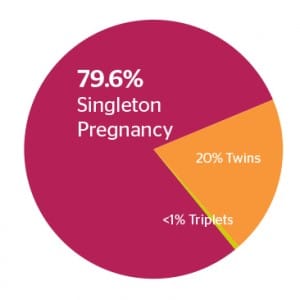
Another way in which SGF has sought to improve a patient’s chance of conception is to educate patients on the risks of multiple births. As part of this education, physicians promote elective single embryo transfer (eSET) when patients have a good prognosis. If eSET is chosen by the patient, the risk of giving birth to twins and triplets is reduced, without impacting successful outcomes. Data has shown that patients have the same clinical pregnancy rate per embryo transfer with one embryo that they would have with multiple – but the rate of twins with a single embryo drops from 43% to a mere 1%. Last year, approximately 80% of patients in the IVF Program achieved a healthy singleton pregnancy, largely due to choosing eSET.

The data that you will find within the 22nd Annual IVF Program Report represents a very successful year for Shady Grove Fertility from a clinical standpoint. But for the physicians and staff at SGF, this report represents the individuals that have been helped and the families that have been built. It represents the joy experienced every time we receive a birth announcement in the mail from one of our patients. 2,800 isn’t just the most significant number in this report because of its size; its significance is that we helped our patients give birth to 2,800 healthy, beautiful babies through our IVF Program.

Read Shady Grove Fertility’s 22nd Annual IVF Program Report

If you have questions about fertility or are ready to schedule an appointment at Shady Grove Fertility, please speak with one of our New Patient Liaisons at 877-971-7755.

Filed Under: Treatment Tagged With: In vitro fertilization (IVF)

September 12, 2014 by Shady Grove Fertility

The Washington Post, NPR and Kaiser Health News explored if sharing the risk can help tame the cost of infertility treatment. “Infertility treatment is a numbers game in some respects: How many treatments will it take to conceive a child? And how much can you afford?”

While some insurance companies are providing more fertility treatment coverage, many patients don’t have sufficient benefits to cover the cost. This article looks at how patients are managing the cost of fertility treatment whether it be through self-pay financial programs, specifically looking at Shady Grove Fertility’s Shared Risk 100% Refund Guarantee for IVF or Donor Egg, or through new options like Glow First.

  • Read the NPR Story
  • Liz & Geoff enrolled in Shared Risk to conceive. Ready their story.

Shared Risk 100% Refund Guarantee for IVF or Donor Egg

First introduced by Shady Grove Fertility in 1993, Shared Risk offers patients undergoing IVF or donor egg treatment a simple guarantee: take home a baby or 100% of your money. When Shared Risk was first introduced many patients thought it was too good to be true but after nearly two decades of success – and over 8,000 new families – the program continues to grow and provide men and women with a financial safety net when considering fertility treatment. In fact, about 82 percent of Shared Risk participants will go on to take home a baby.

The Shared Risk 100% Refund Guarantee Includes:

  • Up to 6 cycles of IVF or donor egg Treatment for a flat fee
  • Embryo cryopreservation
  • Unlimited frozen embryo transfers resulting from the fresh IVF or donor egg cycles
  • Cycle Monitoring: This is defined as bloodwork and ultrasounds completed during the stimulated IVF cycle.  

Glow First

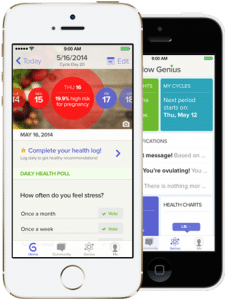
Another other the article reviewed was Glow, a new and innovative app that launched in August 2013. Offers patients two things: first, it is a free mobile application available for iOS users (iPhone, iPad, etc) offering women the ability to track and provide them with insights about their reproductive health. By having women track their ovulation, Glow will be able to inform women and their partners of their fertility window and their changes of conception.

Secondly, along with the app, users can apply to take part in Glow First, a not-for-profit fund for couples just starting their fertility journey. Participants contribute $50 per month over the course of ten months. This money goes into a pool what will be divided equally amongst any participants who did not achieve a natural pregnancy after ten months while using the Glow app. The first group that began contributing in October 2013 has just ended. Roughly 50 people participated, according to the company. The payout to those who didn’t become pregnant was $1,800.

Read the NPR Story

If you are ready to schedule an appointment at Shady Grove Fertility, please speak with one of our New Patient Liaisons at 877-971-7755.
 

Filed Under: Insurance & Savings Tagged With: Donor egg, In vitro fertilization (IVF), Shared Risk 100% IVF Refund Program

  • « Go to Previous Page
  • Page 1
  • Interim pages omitted …
  • Page 3
  • Page 4
  • Page 5
  • Page 6
  • Page 7
  • Interim pages omitted …
  • Page 12
  • Go to Next Page »

Company

  • About SGF
  • About US Fertility
  • Our Doctors
  • Fertility Equity
  • Careers
  • Newsroom
  • SGF College Scholarship
  • Contact Us
  • Voice Your Feedback

Treatments

  • Egg Freezing
  • Intrauterine Insemination (IUI)
  • In Vitro Fertilization (IVF)
  • Frozen Embryo Transfer (FET)
  • LGBTQIA+ Family Building
  • Shared Risk 100% Refund Program
  • All Treatments

Resources

  • Patient Portal
  • Online Bill Pay
  • Library
  • Support Groups & Events

Locations

  • California
  • Colorado
  • Delaware
  • Florida
  • Georgia
  • Maryland
  • North Carolina
  • Pennsylvania
  • Texas
  • Virginia
  • Washington, D.C.

2026 Shady Grove Fertility

  • Policies & Notices
Also of interest
  • In Vitro Fertilization IVF
  • Fertility Tests
  • Research Publications