• Skip to primary navigation
  • Skip to main content
  • Skip to footer
Shady Grove Fertility
  • Become an Egg Donor
  • Referring Physicians
  • 1-888-761-1967
  • Schedule Appointment
  • Get Started
        • Get Started
          • Causes of Infertility
          • Fertility Tests
          • When to Seek Help
          • Find a Doctor
          • Preconception and prenatal vitamins 
          • Schedule an Appointment
        • Personalized Care For
          • Single Parents
          • LGBTQIA+ Family Building
          • People with Cancer
          • Known Genetic Diseases
          • Egg Donors
  • Treatments
        • Fertility
          • Timed Intercourse
          • Ovulation Induction
          • Intrauterine Insemination (IUI)
          • In Vitro Fertilization (IVF)
          • Frozen Embryo Transfer (FET)
        • Donation & Surrogacy
          • Donor Sperm
          • Donor Egg
          • Donor Embryo
          • Gestational Carrier
          • LGBTQIA+ Family Building
          • Single Parents
          • Find a Donor
        • More Treatments
          • Center for Male Fertility
          • Egg Freezing
          • OncoFertility
          • Preimplantation Genetic Testing
          • MIGS
          • All Fertility Treatments
  • Resources
    • Resource Library
    • Events Calendar
    • Patient Stories
    • Mental Health
    • Wellness Center
  • Insurance & Savings
    • Insurance & Benefits
    • Shared Risk 100% Refund Program
    • 100% Refund for Donor Egg
    • Discounts
    • Egg Freezing Costs
    • Financing & Grants
    • Clinical Trials
  • About
    • Find a Doctor
    • About SGF
    • Our Care Team
    • Advanced Practice Providers
    • Fertility Equity
    • Philanthropy
    • Newsroom
    • Careers
    • Contact Us
    • Voice Your Feedback
  • Locations
        • Find a Location
        • California
        • Colorado
        • Delaware
        • Florida
        • Georgia
        • Maryland
        • North Carolina
        • Pennsylvania
        • Texas
        • Virginia
        • Washington, D.C.
        • Chile
        • International & Out of State
        • SGF at Walter Reed National Military Medical Center
  • Patient Hub
    • Online Bill Pay
    • Patient Forms
    • Patient Portal
  • Call your care team
  • Become an egg donor
  • Referring physicians
  • search-icon
  • Schedule appointment 1-888-761-1967

Home / Treatment / Page 13

Treatment

February 21, 2019 by Shady Grove Fertility

Thanks to technological advancements made at SGF in the last decade surrounding in vitro fertilization (IVF), thousands of patients have achieved their dreams of parenthood with increasing efficiency and fewer IVF cycles—good news for the growing number of hopeful parents who are turning to embryo donation to build their families.

SGF’s Embryo Donation Program offers another increasingly accessible and popular option for intended parents. While a relatively new program at SGF, the practice reports a 250% growth in the number of donor embryo transfers from 2017 to 2018, with over 100 donor embryo cycles completed last year alone, and a 43 percent ongoing pregnancy rate per embryo transfer.

“Becoming a recipient of a donated embryo offers a unique and cost-effective alternative for some who are looking to grow their families, and an option that more and more individuals and couples are utilizing. In some cases, a woman or couple might not otherwise be able to experience the joys of carrying a pregnancy, giving birth, or becoming a parent,” shared Program Director, Michele Purcell, MHA, RN.

Former SGF patients, Natalie and Jon, weighed their treatment options before ultimately choosing SGF’s Embryo Donation Program. “We realized that what was important to us in having children was love, not genetics,” Natalie explained. “Also, we felt comfortable investing financially in embryo donation because it honors life and gives embryos a chance to be born.”

Through SGF’s Embryo Donor Registry, each donor profile provides an opportunity for intended parent(s) to learn about those who are donating. Natalie and Jon detail their experience and how they were “blessed with a smooth process.”

“The time from our consultation appointment to transfer day was only 6 weeks. The SGF Donor Embryo Program allows you to choose two embryos from an unidentified couple. When choosing our donors, we didn’t know their identity, but we were still given lots of information such as age, ethnicity, height, eye/hair color, medical history, and even childhood pictures,” added Natalie. “Before we knew it, transfer day was here, and it was so special to receive a picture of our embryo. It was our snowflake baby: tiny, frozen, and unique!” Read Natalie and Jon’s full story: here.

Patients may donate as few as one embryo, or as many frozen embryos that meet the eligibility requirements.

“Embryo donation allows patients who once struggled themselves to conceive to share the joy of parenthood with someone else,” says Purcell. “With donating comes a tremendous sense of pride in being able to help another person or couple achieve their dreams of parenthood.”

To learn more about donating embryos created at SGF, or to inquire about SGF’s Embryo Donation Program, please email SGFDonorEmbryoProgram@SGFertility.com.
Filed Under: Treatment

February 4, 2019 by Shady Grove Fertility

Medical Contribution by Jason Bromer, M.D.

If you’re considering fertility treatment, it’s understandable that you would be naturally curious about in vitro fertilization (IVF) since it’s the most widely discussed form of fertility treatment. For many, IVF treatment can offer the highest chances of success, with a nearly 50 percent live birth rate for women under the age of 35.

While IVF treatment is a more advanced form of treatment, with this step by step beginner’s guide to IVF treatment, it is our goal to provide readers with a glimpse of what to expect with IVF treatment and address many of the common questions patients have about treatment in a comprehensive, understandable way. Think of this as “The Beginner’s Guide to IVF.”

What involved in the basic infertility work-up?

“The first step on the path to parenthood is identifying all the factors that might be contributing to a couple’s infertility,” explains Dr. Jason Bromer. This is done through a basic infertility work-up that includes testing of both the male and female partner.  The work-up includes:

  • Initial consultation: Your physician will take a detailed medical history that includes medical and lifestyle factors that may affect conception.
  • Day 3 testing: This consists of simple bloodwork to determine a women’s hormone levels and a pelvic ultrasound to count the potential eggs in each ovary. These tests will help your doctor select the proper dosing and types of medication for your treatment.
  • Anti-Müllerian hormone (AMH) testing: AMH is the most accurate predictor of a woman’s egg supply. Determined through a blood test, a higher AMH level would indicate a large amount of antral follicles and a strong ovarian reserve where as a lower value would lead your physician to believe there has been a decrease in the ovarian reserve.
  • Hysterosalpingogram (HSG): An x-ray dye test used to assess the uterine cavity and the Fallopian tubes. This allows the doctor to check for abnormalities in the cavity of the uterus and to verify your Fallopian tubes are open.
  • Semen analysis: Because male factor counts for 40 to 50 percent of all infertility cases, it’s critical to have a semen analysis as part of the basic infertility work-up. In this non-invasive test, we will analyze a sample of semen from the male partner under a microscope to evaluate the number and quality of the sperm. The test measures volume, concentration, motility (movement), and morphology (shape).

What diagnoses require IVF treatment?

Once diagnostic testing is complete, your physician will review your treatment options. Many patients are surprised to learn that IVF is not their only treatment option. However, IVF would be the first line of treatment for patients with the following conditions:

  • Tubal disease or tubal ligation: If a patient has a tubal ligation, IVF treatment would be the best treatment option since it bypasses the Fallopian tubes to achieve pregnancy.
  • Severe male factor infertility: If the semen analysis shows there are not enough healthy sperm to be successful with more basic treatment, such as intrauterine insemination (IUI), then IVF treatment can help patients overcome male factor infertility. With IVF treatment, an advanced method of fertilization known as intracytoplasmic sperm injection (ICSI) (pronounced “ick-see”) can be performed in the lab. With ICSI, only one healthy sperm is needed for each egg.

“Patients with other diagnoses may start with basic, ‘low-tech’ treatments like hormone therapies or IUI and then transition to IVF, if needed. However, with most of the more basic treatment options, data shows that after three to four treatment cycles, success rates begin to decline sharply,” says Dr. Bromer. By moving to IVF treatment, a couple increases their chances of success dramatically. Some additional diagnoses for which IVF treatment can improve the chances of success include: advanced age, endometriosis, ovulatory disorder, and unexplained infertility.

Schedule an Appointment


What’s involved in the IVF treatment process?

Step One: Stimulation

In a normal ovulation cycle, one egg matures each month. The goal of an IVF cycle is to have many mature eggs available, as this will increase the chances of success with treatment. In the stimulation phase of the IVF cycle, injectable medications are used  for approximately 8 to 14 days to stimulate the ovaries to produce eggs.

The injectable stimulation medications are derivatives from follicle-stimulating hormones (FSH) and luteinizing hormone (LH), which are both produced naturally within the body throughout the natural cycle.

During the ovarian stimulation phase, patients come into the office approximately 5-7 times for monitoring appointments. Monitoring allows physicians to track the progress of the cycle and adjust medication dosages as needed. Monitoring appointments typically last 15 to 20 minutes, early in the morning to avoid as much disruption to your daily schedule as possible, and consist of a transvaginal ultrasound and bloodwork.

  • The transvaginal ultrasound measures the growth of the egg containing follicles and the thickness of the uterine lining, both of which should be increasing throughout the stimulation phase.
  • Bloodwork is drawn at each appointment to measure the levels of estradiol, or estrogren. This level is another indicator of the growth and maturation of your eggs, and it rises as the follicles grow.

The last step of the stimulation phase before the egg retrieval involves the trigger shot. Depending on the protocol, you will either have a human chorionic gonadotropin (hCG) or Lupron trigger shot. The trigger shot provides final maturation to the developing follicles and sets ovulation in motion.

Timing is very important in this phase because we must perform the egg retrieval prior to the expected time of ovulation. Your designated nurse will give specific instructions on the day of the trigger about the shot, the monitoring appointment on the next day if needed, and the scheduling and preparation for the egg retrieval.

Step Two: Egg Retrieval and Fertilization

The egg retrieval procedure is done at one of Shady Grove Fertility’s fully accredited ambulatory surgery centers (ASC) in Rockville, MD, Towson, MD, or Chesterbrook, PA. Your physician will meet with you before the procedure to review the protocol and what will happen during the fertilization in the lab.

If patients are using a fresh sperm sample, a lab technician will come to collect the sperm sample. (Note: the preference from the lab is to have most patients produce a sample at home and carry it here in a sterile container, vs. producing a sample here.  Allowances are made of course, for those folks living far away (>2 hrs). If you are using a frozen sperm sample collected at a previous date, the technician will verify those details with you.

Prior to the procedure, you will meet with an anesthetist, who will review your medical history and place the IV. The IV fluids will be given prior to the start of the procedure and will deliver the anesthesia medication to induce sleep during the procedure.

The egg retrieval itself takes about 20 to 30 minutes. During the procedure, the physician will guide a needle into each ovary to remove the fluid along with the egg from each follicle. He/she will use an ultrasound to visualize the process on a monitor. Recovery takes about 30 minutes and you will be able to walk out on your own, though you will need someone to drive you home.

Step Three: Inside the IVF Lab

After the retrieval, the eggs and sperm are sorted and prepared. There are two ways that fertilization can take place: conventional insemination and ICSI. The decision about which method to use is based on the quality of the sperm.

What’s the difference between conventional insemination and ICSI?

With conventional insemination, the embryologist takes the prepared sperm sample and isolates the healthiest sperm. That sperm is incubated with the mature eggs in a Petri dish and fertilization. is visualized the next day.  (Fertilization is not ‘automatic.’)

During ICSI, an embryologist injects a single, healthy sperm into the cytoplasm, or center, of each egg. Since fertilization only requires one healthy sperm, ICSI has become one of the most incredible advances in fertility treatment because it allows for fertilization even in cases of severe male factor infertility.

Typically, ICSI is planned in advance, but sometimes it is unanticipated. The embryologist may see that semen parameters for conventional insemination are not being met, in which case, the embryologist will make the decision to switch to ICSI so that the cycle can still produce embryos and increase the chances of success for the patient. Your clinical team will let you know if an unanticipated ICSI procedure is recommended.

When does embryo development begin?

Embryo development begins when the fertilized eggs are placed in an incubator. Our embryologists examine each developing embryo very closely throughout the development process. The embryologist will makes notes about each embryo in your electronic record. At the SGF lab in Chesterbrook, PA, embryos are sometimes placed into an EmbryoScope. The Embryoscope allows for regular monitoring of embryo development without removing embryos from the incubator. The goal is to see the slow and steady development, with a two to four-cell embryo visible on the second day and an four to eight-cell embryo visible on the third day. After the eight-cell stage, cell lines begin to blur and the embryo enters what is called the blastocyst stage most often on day 5 (with day 1 being the day after your egg retrieval).

Preimplantation Genetic Screening (PGS): Your physician will discuss with you if he/she recommends PGS. PGS allows you to know whether your embryos are chromosomally normal or have abnormalities such as an extra chromosome 21, which causes Down syndrome. Missing and extra chromosomes account for the majority of genetic abnormalities seen in embryos and can contribute to failed implantation or miscarriage. The likelihood of having these chromosomal abnormalities increase with age. Risk of a chromosomal abnormality may also be increased in some cases of prior recurrent pregnancy loss.

Step Four: Preparing for the Transfer

Choosing the highest quality embryos to implant is the main goal of the embryologist since these are the ones most likely to result in pregnancy and ultimately a healthy baby. Embryologists  evaluate embryos by appearance and by how they have progressed through the stages of development during the few days spent in the laboratory.

A physician will transfer the embryo(s) into your uterus on day 5 when they have reached the blastocyst stage or are considered to be high-quality.

While embryos are in the laboratory, your nurse will call you regularly with a status report on each embryo. You can be rest assured the embryologists in the laboratory are using all of their skills and experience to choose the embryo that gives patients the best chances of success at transfer.

What happens during an embryo transfer?

The embryo transfer is a simple procedure that takes about 5 minutes to complete. There is no anesthesia or recovery time needed. When your transfer is scheduled, your nurse will notify you and provide you with specific instructions on when to arrive and how to prepare. You will need to have a full bladder for the procedure and will be asked to drink a specific amount of fluid 30 to 40 minutes ahead of time.

You will review your cycle with the physician to determine the appropriate number of embryos to be transferred. The transfer catheter is loaded with the appropriate number of embryos, and upon entering your room, the embryologist will verify your identification,and the number of embryos in the catheter. The doctor will insert the catheter into your uterus and release the embryo(s) through with a small puff of air. The procedure is guided visually on a monitor with an abdominal sonogram.
Once transferred, the doctor will slowly remove the catheter to eliminate or decrease any uterine contractions. Since the embryo is invisible to the naked eye, the embryologist will then check the catheter under a microscope to make sure the embryo was released. You will be asked to lie quietly for 5 minutes after the procedure. Then, you will be given instructions for the following 2 weeks until it’s time for the pregnancy test.

Step Five: The Pregnancy Test

Two weeks after the transfer, we will perform a blood pregnancy test to determine the results of the cycle. The blood pregnancy test is frequently called a “beta” because the test measures a beta chain portion of the hCG hormone emitted by the developing embryo and is officially named a “beta hCG” blood test.

As tempting as it is, we advise patients not to use home pregnancy tests before they have their beta test. Home pregnancy tests can render false results for patients, either negative or positive. A false positive can result because hCG that is usually given to “trigger” ovulation may remain in the blood; a home pregnancy test cannot determine the difference between the two. A false negative might occur because a low level of hCG may be undetectable in a urine test despite a pregnancy starting.

Affording IVF Treatment

Shady Grove Fertility works with over 30+ insurance providers and an average of 90 percent of patients will have coverage for their initial consultation. When insurance is not an option, Shady Grove Fertility offers several exclusive programs such as our Shared Risk 100% Refund Program and a variety of discount programs such as our Shared Help and Multi-Cycle Discount Programs. Click here to learn more about SGF’s unique financial programs.

Schedule an Appointment

 Editors Note: This post was originally published in March 2016 and has been updated for accuracy and comprehensiveness as of February 2019.

For more information about IVF treatment or to schedule an appointment with one of our physicians, please speak with one of our New Patient Liaisons at 1-877-971-7755 or click
here.  

Filed Under: Treatment

January 28, 2019 by Shady Grove Fertility

After Randi Fishman’s first breast cancer diagnosis, she decided to freeze her embryos, which were tested for the BRCA1 gene. Her sister, Erin, stepped in and elected to be her surrogate. Thanks to genetic testing of the embryos before the transfer to her sister, only the embryos that tested negative for the genetic breast cancer mutation were used. Erin gave birth to a beautiful, healthy baby girl in 2018, completing Randi’s family of four. Read more about Randi’s story: here.

Randi wasn’t choosing eye color or trying to boost her child’s SAT score. She was looking out for the health and well-being of her daughter.

What is Genetic Screening?

Genetic screening is the sequencing of human DNA in order to discover genetic differences, anomalies, or mutations that may prove pathological.

Shady Grove Fertility supports pre-pregnancy genetic screening (PGS) and preimplantation genetic diagnosis (PGD)–both of which present patients with the ability to protect their future offspring from serious diseases and syndromes. When it comes to genetic selection based on specific traits (eye color, height, etc.), though, SGF does not participate.

In a previous article, SGF’s Medical Director, Dr. Eric A. Widra, commented on ‘designer babies,’ saying they “take away from the incredible medical benefits that PGS and PGD provide to patients and their future children. Moreover, the ability to find embryos with specific traits that are also chromosomally normal has been dramatically overstated by practitioners and the media. This is a vastly complex field.”

While society will continue to debate the ethical questions related to genetic trait selection for years to come, SGF will continue to advocate for what is best for our patients and their future children. “…There are ethical issues, but we also now have healthy kids running around who might have had a fatal disease,” says Dr. Widra. Patients now have the ability to do something that was never before possible in the history of the human race: protect their future children from mutations that could harm them. Ultimately, it is the patient’s choice as to whether or not they want to undergo PGS or PGD, but we firmly believe that the best decision is a well-informed one.

Patient Success Story

After multiple miscarriages and the tragic death of their newborn child due to kidney disease, an SGF Atlanta couple underwent genetic screening and found out they both carried the same gene mutation. Through PGD, they were able to find two normal embryos and have a healthy baby boy free from kidney disease. Here is a snippet of their raw and inspiring story:

“In the months that followed, some answers we got, Autosomal Recessive Polycystic Kidney Disease (ARPKD) and some will likely never be answered. Everywhere we turned we were faced with grief, emptiness, and longing. The focus on winning in a losing game became an all-consuming obsession, but we held on with all we had to the promise of a family with preimplantation genetic diagnosis (PGD) and in vitro fertilization (IVF). Everything was hurry up and wait, it was months for blood test results, months for genetic counseling, months for building a probe, months for retrieval, until finally nearly one year to the day we were transferring 3 beautiful, unaffected embryos. The pain of the progesterone in oil shots was unbearable, not to be lessened by miscarriage at 9 weeks. We couldn’t start the next round of PGD and IVF fast enough.”

“We sought another provider that could help continue to grow our family and found a stronger connection with the team at Shady Grove Fertility, formerly Georgia Reproductive Specialists. In fact, we travelled in excess of 2 hours one way to work with Shady Grove Fertility. We were taken by the knowledge, care, and commitment of Dr. Perloe and his team. From the front desk to our nurses to the financial counselors to genetic counselors and beyond, we were impressed at every turn. Not only did the process seem to move faster than it had prior and the care was outstanding, but we received insurance coverage for the first time in three rounds of IVF, which ultimately made it possible. All thanks to the hard work and diligence of our friends at SGF. Despite the disappointment of one last miscarriage, we were pregnant shortly after. In May 2017 we welcomed a healthy son, our 3rd child known to this world and 7th known in our hearts.”

Read – More Genetic Testing Patient Success Stories:

Andreia and Thomas

Mackenzie and Michael

Pre-Pregnancy Genetic Screening:

Today, it is customary for OB/GYNs to recommend pre-pregnancy genetic screening (also called carrier screening) to their patients as part of routine pre-pregnancy counseling. Shady Grove Fertility is also an advocate of genetic screening when planning for pregnancy and offers genetic screening for more than 100 different diseases and syndromes. Shady Grove Fertility strongly recommends pre-pregnancy genetic screening due to its benefits to patients and their future children. The insights gained by testing both partners before conception occurs offers the ability to identify possible genetic diseases that may be passed on to future offspring. If a genetic disease is found, the couple has the option to use in vitro fertilization (IVF) with preimplantation genetic diagnosis (PGD) to avoid passing that disease onto their child(ren) by selected unaffected embryos.

In the past genetic screening was very expensive and as a result out-of-reach for most patients. Over the last few years, advances in screening technology have allowed patients the ability to be screened for over 100 genetic diseases at a low out-of-pocket cost to patients. As a result, more are taking advantage of this testing.

Genetic Testing of Embryos

Preimplantation genetic diagnosis (PGD) is a revolutionary medical treatment that reproductive endocrinologists hail as one of the most significant advances in the field of reproductive medicine. Physicians use this technique, which involves the biopsy of a few embryonic cells, in conjunction with IVF. This allows for the differentiation of healthy embryos and genetically-abnormal embryos, without causing any harm to the embryos.
 
Read: Family Planning for People with Known Genetic Diseases

Schedule an Appointment

To learn more about genetic testing or to schedule an appointment with an SGF reproductive endocrinologist, please call our New Patient Center at 1-887-971-7755 or click here to complete this brief online form.

Filed Under: Treatment

December 15, 2018 by Shady Grove Fertility

Sarah Esdaile, an SGF Egg Donor Recipient and U.K. Patient Liaison, was recently interviewed about her decision to seek donor egg treatment in America. Sarah’s story began at age 40, when she was told of her infertility and that she would have to “forget motherhood, adopt, or use donor eggs.” Her story is real and raw, and we hope it brings hope and support to others who are on a similar journey.

“I wanted children more than anyone I knew but didn’t meet the man I wanted them with until I was 38. My husband and I started trying for a baby soon after we were married, but after a failed round of IVF, the doctors told us our options were to forget it, adopt or use donor eggs. I had never heard of anyone using donor eggs – it all felt too much like an episode of Jeremy Kyle.”

“At the time, I was devastated and unable to get past the insurmountable idea of having a child with no genetic connection to me. But, when my sister – who was 37 and had two children of her own – offered to donate her eggs, I accepted with gratitude. Unfortunately, using my sister’s eggs and my husband’s sperm also failed. I was close to despair, although in hindsight, I consider it a blessing in disguise.

My doctor and I discussed plan B, which came in the form of Dr. Michael Levy at Shady Grove Fertility in Rockville, MD, who had seen a high success rate with UK patients using donor eggs. We knew that we wanted to use an anonymous donor, but still get as much information as possible about her and moved forward with egg donor treatment in the US. I gave birth to my daughter in March 2014.”

Read more here about our egg donor database, the largest egg donor program in the nation. For more on our donors, click here.

“I feel strongly about telling my story for two reasons. Firstly, I refuse to be part of the conspiracy of women lying about how they are getting pregnant in their 40s. I was that woman – reading about celebrities having twins at 45 and using these kind of stories to delude myself that it was ok to wait, because I’d have plenty of time to have a baby.”

“Secondly, I want women to be aware of the limitations of their fertility: sex education needs to be about more than not getting pregnant or contracting an STD. It must raise awareness of the brutal decline in fertility with age and how hard it can be to get pregnant at all. People can be very ignorant about infertility unless they encounter problems of their own, especially when it comes to egg donation. Some have asked me how I got my child back into the country and whether I had to adopt her. If I had waited until I was completely sure, I would never have done it, but ultimately, it comes down to how much you want a baby.”

“Being a mother is such a practical thing, there is neither the time nor energy to dwell on anything but keeping your baby clean, fed and thriving. I experienced that feeling of familiarity that all mothers describe. When my daughter came out, she felt like an old friend that I was desperate to see – I was beyond excited to meet her, yet had a strong sense that I knew her well already.”

“It was expensive to go to America for treatment but there were advantages, such as the Shared Risk 100% Refund Program, which means that you bring home a baby or get your money back. At the end, you either end up with a baby – in which case money seems irrelevant – or you just lose the price of flights and hotels. People often ask me whether I wish I had only paid for a single round, given I got pregnant on my first attempt, but I don’t. Having the safety net of further rounds enabled me to relax and trust the process.”

Another feasible option is the Shared Donor Egg Program, which can reduce the cost of donor egg treatment by up to 50 percent or can be combined with our Shared Risk 100% Refund Program for Donor Egg for the same cost as a single traditional donor egg cycle. By sharing donated eggs with one or two other recipients, patients are sharing in the cost of that donor. We will synchronize each recipient’s treatment cycle and share the eggs retrieved from the donor among the recipients.

If you’re looking for extra inspiration, read more of our Egg Donor Patient Success Stories:

Megan and Dan

Liz and Geoff

Catherine and Gavin

Schedule an Appointment

Thank you to Sarah for sharing her inspiring story. To learn more about SGF’s Donor Egg Treatment Program, call our New Patient Center at 1-877-971-7755 or complete this brief online form.

For those interested in donating eggs at Shady Grove Fertility, click here or apply today to see if you are eligible to become an egg donor. For questions, call 1-877-DonateEggs. You can also sign up for our complimentary “Become an Egg Donor” Webinar on December 13th, 2018: Register.

Filed Under: Treatment Tagged With: Donor egg

November 29, 2018 by Shady Grove Fertility

We have all heard more about “genes,” “DNA,” and “chromosomes.” These are terms your doctor may use when explaining tests that may be ordered, problems that may explain a patient’s difficulty getting pregnant or why some patients have miscarriages.  Without any background knowledge genetics can be confusing!  Understanding genetics can be simplified into a library analogy…

We each are made up of a library of bookshelves, books and words that determine our individual characteristics.  In general, we all got 23 bookshelves from our mother and 23 bookshelves from our father so that each of us has a total of 46 bookshelves.  Bookshelves are like chromosomes.  On each bookshelf are a unique set of books, or genes.  These books are made of words, or the genetic code.  Our library is neatly organized in the cells of our body.  When cells grow and divide, this entire library has to be duplicated by a sophisticated typewriter.

When there is a mutation, it means there is a typo, missing sentence, or extra sentence in one of the books. Sometimes those mutations go unnoticed and cause no problems. Sometimes the mutation causes a critical change and the gene or book doesn’t make sense. These mutations cause diseases.  In conditions such as cystic fibrosis, a person can simply have a typo in one book and it causes no problem but if a person inherited 2 typos in the same book from both their mother and father it causes the disease. Mutations in the cystic fibrosis gene are so common (1 in 24 Caucasians) that it is recommended to have pre-pregnancy genetic screening to see if a patient is a carrier of cystic fibrosis mutations before conceiving to determine their risk of having an affected child.

Medical contribution by Kara Khanh-Ha D. Nguyen, M.D., MPH

Kara Nguyen, MD, MPH, FACMG, FACOG, is board certified in obstetrics & gynecology, reproductive endocrinology and infertility, and medical genetics. Her professional areas of expertise include oncofertility, preimplantation genetic diagnosis, polycystic ovary syndrome, in vitro fertilization, donor egg, donor embryo, and fertility preservation.

Shady Grove Fertility is an advocate of genetic screening when planning for pregnancy, and offers genetic screening for more than 100 different diseases and syndromes. We strongly recommend pre-pregnancy genetic screening due to its benefits to patients and their future children. The insights gained by testing both partners offer the ability to identify possible genetic diseases that may be passed on to future offspring. If a genetic disease is found, the couple has the option to use in vitro fertilization (IVF) with preimplantation genetic diagnosis (PGD) to avoid passing that disease onto their child(ren).

The most common genetic disorders are when there are extra or missing bookshelves. This is the cause of the majority of miscarriages. Some however are viable such as Trisomy 21, or Down syndrome. In Down syndrome, the baby inherited an extra copy of the entire “bookshelf 21.” Missing bookshelves are much more severe and don’t generally survive. Chromosomally abnormalities can sometimes be linked to a woman’s age. As women age, so do their eggs. As the eggs age, they become more resistant to fertilization, resulting in lower pregnancy rates and miscarriages. More of the eggs also tend to have chromosomal abnormalities, which can make miscarriage more likely.

If a patient has experienced recurrent pregnancy loss, it is common to do genetic testing to see if the pregnancy was chromosomally imbalanced. The genetic testing usually done is a karyotype, which is a spread of all the chromosomes to make sure there is the right number and right arrangement.  Chromosomal imbalances may mean missing bookshelves, extra bookshelves, or individual shelves that have been rearranged onto the wrong bookshelf. Karyotypes do not determine if there has been a typo in a book for example. Some patients have all the books needed in their library but they are arranged on different bookshelves. It causes few or no problems but when these rearranged bookshelves are shared to a pregnancy, the pregnancy inherits an unequal number of books and becomes imbalanced.

We all have typos, and it is normal to have typos and most don’t cause any problems. There is no genetic test that identifies all the typos a person may have. However, your doctor can determine the genetic tests that are most appropriate given your unique situation. If you prefer to take action based on your genetic testing results, patients now have access to one of the most significant advances in the field: preimplantation genetic diagnosis (PGD) also known as preimplantation genetic testing (PGT-M) for monogenic or single gene diseases. This is a technique utilized with IVF that involves a biopsy of a few embryonic cells in order to differentiate healthy embryos from genetically abnormal embryos. In this way, we can identify embryos destined to express disease, allowing the transfer of only a genetically normal embryo(s) to the uterus. This technique has allowed thousands of couples to successfully carry to term and deliver healthy babies.

Schedule an Appointment

To learn more about genetics and preimplantation genetic diagnosis, or to schedule an appointment, please call our New Patient Center at 1-887-971-7755 or click here to complete this brief online form.

Editor’s Note: This post was originally published in January 2018 and has been updated for accuracy and comprehensiveness as of November 2018. 

Filed Under: Treatment Tagged With: Dr. Kara Nguyen, Genetic testing, Recurrent pregnancy loss

September 24, 2018 by Shady Grove Fertility

When it comes to choosing whether or not to freeze your eggs, there are a lot of things to weigh. Will I need to use them? Will egg freezing work? Can I afford it? Does the fertility center publish their outcome data?

Ultimately, what each woman has to decide: is egg freezing worth it?

Weighing the cost of egg freezing isn’t just about comparing different centers’ egg freezing programs and outcome data but assessing whether you are able to make a fairly significant investment into protecting your future fertility potential.

Bills, Bills, Bills

The Washington Post reporter Nicole Ellis, who is considering freezing, views the decision to freeze her eggs through this lens: with all of her current expenses, her desire to buy a home, and her desire to maintain a comfortable lifestyle, can she afford to freeze her eggs?

Ellis found that the cost of egg freezing can vary significantly depending on:

  1. How many eggs you plan to freeze
  2. How many treatment cycles it may take to get the desired number of eggs
  3. The cost of medication
  4. The fertility center and any package pricing they may offer

Step 1: How many eggs do I need to freeze?
The number of eggs to freeze is largely dependent on a woman’s age at the time of freeze. SGF physicians typically recommend women 37 years or younger freeze 20 eggs, and women 38 years and older freeze 30 eggs.

Step 2: How many treatment cycles does it take to freeze my eggs?
Every woman will respond differently to treatment and produce a different number of eggs. Some women will produce 20 eggs in a single cycle, while others may take 2 or 3 cycles to produce the same amount.

Step 3: What is the cost of medication for egg freezing?
Medications can range significantly based on how well a patient is expected to respond to the medications. In general, medications cost between $3,000 and $6,000 per treatment cycle. Insurance benefits or discounts may apply.

SGF’s Assure Fertility Bundle Pricing Reduces Cost of Egg Freezing

Prices quoted in this article were from 2018 and subject to change. Connect with your SGF financial counselor to get up to date pricing.

Good news for anyone considering freezing their eggs… SGF’s Assure Fertility program offers multiple treatment cycles for one flat rate. This program was designed with egg freezing patients in mind. Sometimes, after the first or second cycle, a patient may have close to the number of desired eggs, but not quite enough. If a patient is paying per cycle, one at a time, facing a hard economic choice—Do I pay the extra money to secure my future fertility or do I risk not having enough eggs later to save money now?—can feel like a lot of pressure.

With Assure 20, the one-time flat fee is paid, guaranteeing up to 20 mature eggs frozen or four treatment cycles. For women wanting to freeze 30 eggs, Assure 30, guarantees 30 mature egg or up to five treatment cycles.

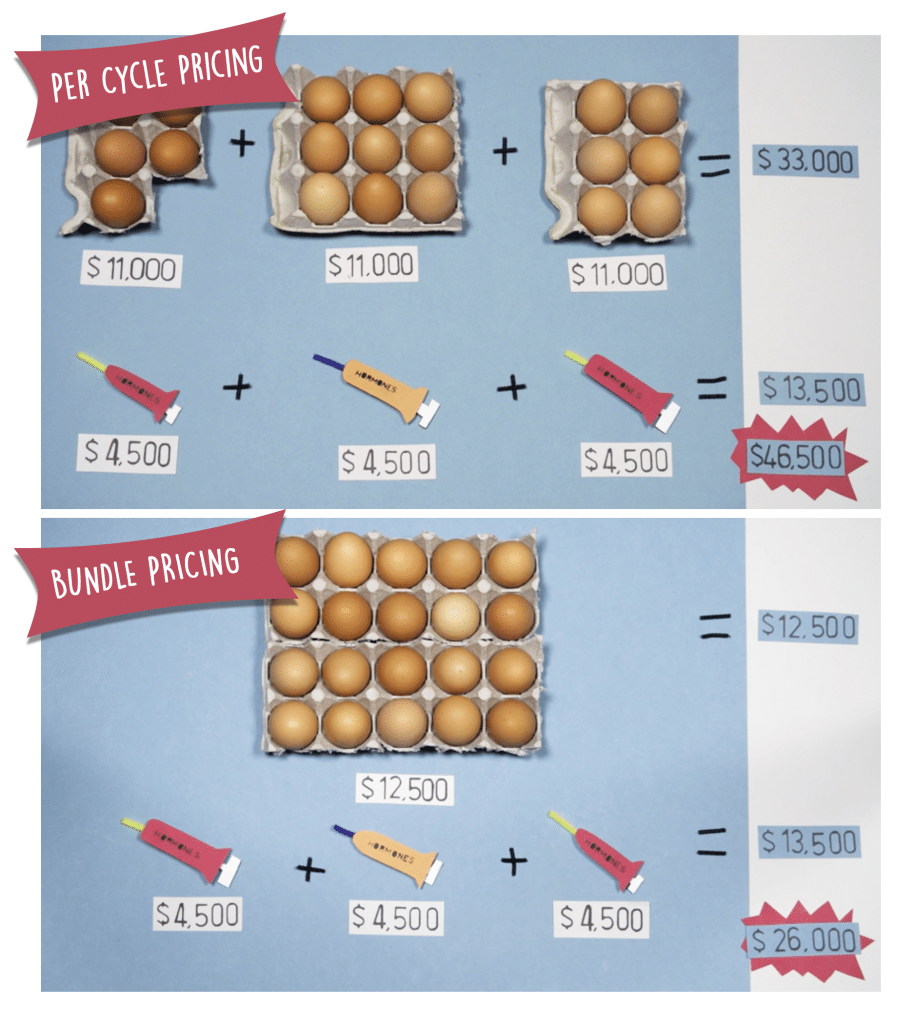
The Washington Post reports that the average cost of an egg freezing cycle in the U.S. is $11,000. At Shady Grove Fertility, the cost of a single egg freezing cycle is $7,500-9,000, depending on program selection.

Reporter Nicole Ellis, who is assessing the potential cost of freezing her own eggs, estimates that she would need three cycles to achieve 20 eggs, and that her medication would cost at $4,500 per cycle.
Ellis estimates that her total cost to freeze her eggs, using per-cycle pricing, would be $46,500. However, with Shady Grove Fertility’s Assure Fertility bundle pricing, she would save $20,500 on the overall cost of treatment and medications.

Prices quoted in this article were from 2018 and subject to change. Connect with your SGF financial counselor to get up to date pricing.

Original image credit: The Washington Post


Shady Grove Fertility encourages women considering egg freezing to come in and get their fertility tested. A physician will review your testing results and provide guidance in the decision making process to determine whether egg freezing make sense. But ultimately, the decision is yours. Take your time. Set your goals. Make a plan.

Schedule Appointment

Filed Under: Treatment Tagged With: Egg freezing

  • « Go to Previous Page
  • Page 1
  • Interim pages omitted …
  • Page 11
  • Page 12
  • Page 13
  • Page 14
  • Page 15
  • Interim pages omitted …
  • Page 46
  • Go to Next Page »

Company

  • About SGF
  • About US Fertility
  • Our Doctors
  • Fertility Equity
  • Careers
  • Newsroom
  • SGF College Scholarship
  • Contact Us
  • Voice Your Feedback

Treatments

  • Egg Freezing
  • Intrauterine Insemination (IUI)
  • In Vitro Fertilization (IVF)
  • Frozen Embryo Transfer (FET)
  • LGBTQIA+ Family Building
  • Shared Risk 100% Refund Program
  • All Treatments

Resources

  • Patient Portal
  • Online Bill Pay
  • Library
  • Support Groups & Events

Locations

  • California
  • Colorado
  • Delaware
  • Florida
  • Georgia
  • Maryland
  • North Carolina
  • Pennsylvania
  • Texas
  • Virginia
  • Washington, D.C.

2026 Shady Grove Fertility

  • Policies & Notices
Also of interest
  • In Vitro Fertilization IVF
  • Fertility Tests
  • Research Publications