• Skip to primary navigation
  • Skip to main content
  • Skip to footer
Shady Grove Fertility
  • Become an Egg Donor
  • Referring Physicians
  • 1-888-761-1967
  • Schedule Appointment
  • Get Started
        • Get Started
          • Causes of Infertility
          • Fertility Tests
          • When to Seek Help
          • Find a Doctor
          • Preconception and prenatal vitamins 
          • Schedule an Appointment
        • Personalized Care For
          • Single Parents
          • LGBTQIA+ Family Building
          • People with Cancer
          • Known Genetic Diseases
          • Egg Donors
  • Treatments
        • Fertility
          • Timed Intercourse
          • Ovulation Induction
          • Intrauterine Insemination (IUI)
          • In Vitro Fertilization (IVF)
          • Frozen Embryo Transfer (FET)
        • Donation & Surrogacy
          • Donor Sperm
          • Donor Egg
          • Donor Embryo
          • Gestational Carrier
          • LGBTQIA+ Family Building
          • Single Parents
          • Find a Donor
        • More Treatments
          • Center for Male Fertility
          • Egg Freezing
          • OncoFertility
          • Preimplantation Genetic Testing
          • MIGS
          • All Fertility Treatments
  • Resources
    • Resource Library
    • Events Calendar
    • Patient Stories
    • Mental Health
    • Wellness Center
  • Insurance & Savings
    • Insurance & Benefits
    • Shared Risk 100% Refund Program
    • 100% Refund for Donor Egg
    • Discounts
    • Egg Freezing Costs
    • Financing & Grants
    • Clinical Trials
  • About
    • Find a Doctor
    • About SGF
    • Our Care Team
    • Advanced Practice Providers
    • Fertility Equity
    • Philanthropy
    • Newsroom
    • Careers
    • Contact Us
    • Voice Your Feedback
  • Locations
        • Find a Location
        • California
        • Colorado
        • Delaware
        • Florida
        • Georgia
        • Maryland
        • North Carolina
        • Pennsylvania
        • Texas
        • Virginia
        • Washington, D.C.
        • Chile
        • International & Out of State
        • SGF at Walter Reed National Military Medical Center
  • Patient Hub
    • Online Bill Pay
    • Patient Forms
    • Patient Portal
  • Call your care team
  • Become an egg donor
  • Referring physicians
  • search-icon
  • Schedule appointment 1-888-761-1967

Home / Egg freezing / Page 5

Egg freezing

May 14, 2019 by Shady Grove Fertility

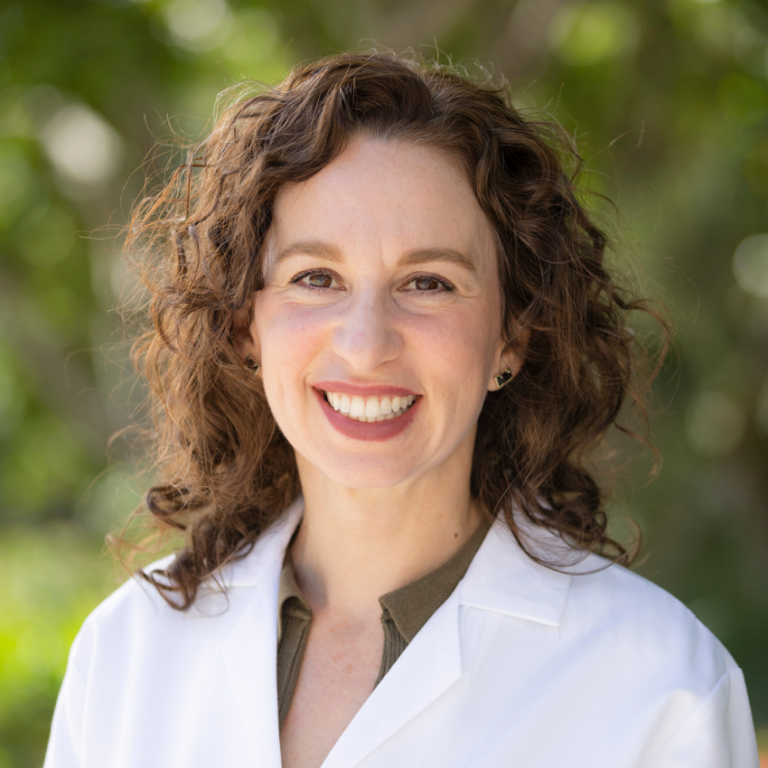
Dr. Shruti Malik, physician at SGF’s Fair Oaks, VA office shares with Today.com her experience with freezing her eggs at age 31. As a reproductive endocrinologist, Dr. Malik knew the ins and outs of the process and what to expect at the retrieval surgery, but she was not immune to the initial anxiety about actually freezing her eggs.

“The decision to look at testing my ovarian reserve to see if I should freeze my eggs was nerve wracking for me,” Malik remembered. “I was nervous about the process, testing, and the reality that my ovarian reserve could be low. It was a little bit scary.”

When should women consider egg freezing?

On average, the most optimal time to consider egg freezing is in your early- to mid-30s while your fertility potential is still near its peak. However, at SGF you can freeze your eggs between the ages of 30 and 40. Some women may need to freeze younger, while some have more time. This is dependent on medical history and ovarian reserve.

What does ovarian reserve testing show?

Women are born with all of the eggs they will ever have—a lifetime supply—generally around 1 to 2 million. As a woman ages, the number of eggs in her ovarian reserve slowly declines, with a steeper decline beginning around age 35. Also around this time, the quality of the eggs also becomes affected by a higher percentage of eggs with a chromosomal abnormality.

Ovarian reserve testing measures egg supply by assessing several reproductive hormones against your age in order to determine if your egg supply is good, normal, or poor. What you learn about your egg supply can help to determine if egg freezing is the right choice for you.

“I encourage my patients and others to be proactive about their own fertility,” says Malik. “Fertility preservation has given me flexibility in family planning. I can decide when I’d like to become pregnant without rushing into a relationship to immediately start my family. I liked being able to pursue my career and have time to find the right partner to move forward with,” adds Malik.

What is my first step if I am interested in egg freezing?  

The first step is to schedule an appointment with an SGF clinician to test your ovarian reserve. Once this is complete, we will discuss the results and the best plan of action. If it is decided that egg freezing is the right option for you, you and your physician will determine a timeline for when to start the egg-freezing cycle. On average, the entire process takes 1 month, but the most time-intensive portion lasts for only 10 to 12 days.

How can you fit the process of egg freezing into your life?

“The biggest misconception a lot of my patients have is that egg freezing is not something you can do while you’re going about your everyday life,” Malik said. “In reality, it’s minimally disruptive. On average, it’s about 2 weeks, with appointments early in the morning. It’s very easy to balance.”

Though, Malik noted women do need to take one day off from work for the egg retrieval surgery.

“While I was anxious about my results and the process, I have no regrets about my decision. I feel empowered knowing I made an investment in my future family.”

Schedule An Egg Freezing Appointment 

To learn more about Dr. Malik’s experience of freezing her eggs or to learn more about the egg freezing process, please call our New Patient Center at 1-877-411-9292 or complete our brief online form. 

Filed Under: General Tagged With: Egg freezing

May 8, 2019 by Shady Grove Fertility

Stephanie Beall, M.D., Ph.D., of SGF’s Towson, MD and Columbia, MD offices answers the most common questions patients ask about egg freezing.

MEDICAL CONTRIBUTION: STEPHANIE BEALL, M.D., PH.D.

Q: What are the success rates for egg freezing?
Dr. Beall: For women younger than 38, we recommend freezing 15 to 20 mature eggs, which is estimated to provide a 70 to 80 percent chance of at least one live birth. For women 38 to 40 years old, we recommend freezing 25 to 30 mature eggs, giving a 65 to 75 percent chance of at least one live birth.

In a recently published study, SGF assessed the performance of 1,171 egg freezing cycles for 875 women. At the time of the study, 117 of these women had returned to undergo 128 egg thaw cycles, using a total of 1,283 frozen eggs.

The results from these 128 egg thaw cycles included 51 viable pregnancies, resulting in 55 children and 8 more on the way at the time of the study (12 of the pregnancies were twins). In addition, 62 good quality blastocysts remain in storage from these cycles for future attempts. SGF is one of the only fertility centers in the U.S. with published egg freezing pregnancy data.

Q: How many eggs would you recommend I freeze if I want to have, say, 2 children?
Dr. Beall: A lot of this depends on the age in which a woman freezes her eggs and her ovarian reserve function. We recommend that women 37 years or younger who have excellent ovarian function freeze between 15 to 20 mature eggs, which is estimated to provide a 30-50 percent chance of two live births. For women over 38, or women at any age with diminished ovarian function, we recommend freezing 25 to 30 eggs. This would give a 30-40% chance of two live births.

Q: What is the technique used at SGF for freezing eggs?
Dr. Beall: The technology used for egg freezing is vitrification, known as “fast freeze” cryopreservation. While many fertility centers have adopted this technology, the skill and precision of the technicians is of utmost importance. As the largest fertility center in the county, we have many years of experience in freezing and thawing both eggs and embryos. This is an important consideration when selecting a fertility center.

Q: Is there an age restriction on when I can use my eggs?
Dr. Beall: Technically, once the eggs are placed in the liquid nitrogen, they are essentially suspended in time. For example, if a woman freezes her eggs at the age of 30 and comes back to use them in 5 years, they will be the same quality as when she froze them at age 30. At SGF, the latest a woman can come back to use her frozen eggs is 50 years of age.

Q: How do I prepare my body for egg freezing?
Dr. Beall: You are put on birth control pills to manipulate your cycle based on when you want your egg retrieval to take place. Upon selecting a retrieval week, we can work backwards to select a start date. Upon the start of your menstrual cycle, you will initiate daily injectable medications. The medications are higher doses of the natural hormones that your body produces to mature one egg. Our goal is to stimulate many eggs (that your body would do naturally) in order to freeze. During this time, you will come to SGF for monitoring appointments, which include bloodwork and ultrasound to ensure follicles are growing appropriately and to change medication dosages, if necessary. At the end of the stimulation period, you will get a trigger injection. This injection helps the eggs mature.

Q: If I live out of state, can I still freeze my eggs at SGF?
Dr. Beall: Yes. If you have had previous testing, then you would be scheduled to have a phone consult with one of our physicians. If you have not had previous testing, we would arrange for you to have testing done closer to home, scheduled in a way so that we can get results back in a timely fashion. Once you complete the phone consult, we would have you come in for an in-person appointment with the physician, financial counselor, and nurse. The next time you come in would be when you are actually cycling. All monitoring appointments can be done at a local fertility center closer to home.

Q: Are their financial programs that help make egg freezing more affordable?
Dr. Beall: Diagnostic or ovarian reserve testing, as well as a physician consultation, is largely covered by SGF’s 30+ participating insurance companies. In fact, approximately 90 percent of our elective egg-freezing patients have coverage for this part of the process. If you choose to pursue egg freezing, SGF offers several egg freezing financial programs.

To learn more about our egg freezing program, we offer monthly in-person seminars and virtual webinars. All events are complimentary and all interested parties must register to attend. View our calendar of events to sign-up for our next egg freezing event.

Schedule An Egg Freezing Appointment 

To learn if egg freezing is right for you, schedule an appointment by calling the New Patient Center at 1-877-411-9292 or complete this brief online form.


Filed Under: Treatment Tagged With: Egg freezing

March 13, 2019 by Shady Grove Fertility

Deciding whether or not to freeze your eggs is a big decision. Many women are unsure of the process, if egg freezing is right for them, and what to expect. To help alleviate some of these unknowns, Dr. Lauren Roth, SGF’s Medical Director, answers the most commonly asked questions from women just like you who are researching this opportunity.

How many eggs do I have?

“Generally, women are born with two ovaries, each containing resting eggs or follicles. Every woman is born with a set amount of eggs. At 20 weeks gestation, a woman has about 6 million eggs, the most eggs she will ever have in her lifetime. At birth, she will lose approximately half of her eggs, and by the time she reaches puberty, she has only about 200,000 left. During a menstrual cycle, one egg matures while the remaining eggs that are present that month die off. Testing is available to evaluate your ovarian reserve to measure the quantity of eggs (also called ovarian reserve) you have available.”

How do I know if egg freezing would work for me?

“A woman’s age along with simple ovarian reserve testing evaluates her fertility potential and if egg freezing is a viable option. In simple terms, we are evaluating both the quality and quantity of eggs available.

The ovarian reserve testing includes:

– A blood draw to measure a woman’s ovarian function, otherwise known as her egg quantity
– An intrauterine (internal, or transvaginal) ultrasound to measure a woman’s ovarian reserve

The combined results will provide a strong indication of your ovarian reserve. Based on that information you and your physician can discuss if egg freezing is right for you.”

How can I prepare my body for egg freezing?

“The main thing we would tell any of our patients is to maintain a healthy diet and lifestyle. Other factors that could hinder your fertility include: excessive caffeine, smoking, drugs, and alcohol. If you are a current smoker, we recommend quitting at least 3 months prior to starting a cycle.”

What are the side effects of hormone medications?

“The side effects of hormone medications are largely dependent on the patient. Some women may experience heightened symptoms similar to what is experienced during PMS, others might feel increased bloating and some discomfort related to the enlarged ovaries.”

Do you offer assistance with medication injections?

“Yes. While the injection needles are, for the most part, very small, we offer injection training classes and work with a company who offers at-home injection services.”

How many eggs (mature or immature) would you recommend freezing and is the number dependent on age?

“At Shady Grove Fertility, we only freeze mature eggs as only mature eggs can lead to a pregnancy. The number of eggs we recommend for women to freeze is dependent on her age and ovarian reserve test results. We recommend that women 37 or younger who have excellent ovarian function freeze between 15 to 20 mature eggs. For women over 38, or women at any age with diminished ovarian function, we recommend freezing 25 to 30 eggs. This provides you with multiple attempts to conceive if a cycle is unsuccessful.”

When coming back to use my frozen eggs, how many are thawed at a time? Will all of them be used at once?

“When you are ready to use your frozen eggs, either some or all of your eggs will be thawed and then fertilized using intracytoplasmic sperm injection (ICSI). ICSI is necessary as the coating that surrounds the egg is hardened when it’s frozen. Therefore, we need to select a single sperm and inject it into the egg in order for it to fertilize.”

If I come back to use my eggs at a later date, would I be go through in vitro fertilization (IVF)? What is the cost?

“No. When you freeze your eggs, you are doing the majority of the process involved with IVF upfront. Simply put, when you freeze you are essentially doing the “IV” and when you come back you do the “F,” or the fertilization process. Financial options are available for returning Shady Grove Fertility egg freezing patients when they are ready to conceive and need to use their frozen eggs.”

What are the pregnancy success rates using frozen eggs?

“Shady Grove Fertility is one of the only fertility centers in the U.S. with published egg freezing pregnancy data. In a recently published study, Shady Grove Fertility assessed the performance of 1,171 egg freezing cycles for 875 women. At the time of the study, 117 of these women had returned to undergo 128 egg thaw cycles, using a total of 1,283 frozen eggs. The results from these 128 egg thaw cycles included 51 viable pregnancies, resulting in 55 children and 8 more on the way at the time of the study (12 of the pregnancies were twins). In addition, 62 good quality blastocysts remain in storage from these warming cycles for future attempts.”

Does it matter how old I am when I decide to use my eggs?

“Yes. In general, we recommend women freeze their eggs between the ages of 30 and 40, with the ideal range being between 32 and 37. Freezing at a younger age typically produces better results. If you were to freeze your eggs at the age of 30 and use them at the age of 40, your chance of success and risk of miscarriage would be that of a 30 year old. You are “locking in” your success rates based on the age at which you froze. The nice thing about that is, as we age, our ovaries age but our uterus remains healthy until age 50 (approximately). As long as you are in good health, there should be no concerns if you come back to use your frozen eggs in your 40s.”

How can I be sure that my eggs are only used for me and are not used for other patients?

“Your eggs are your property. You know exactly how many eggs we have frozen and stored for you. They are kept completely separate from other stored eggs with many redundant quality controls and identity protocols in place for their protection and your peace of mind. Read more about our state-of-the-art embryology lab and the protocols used to ensure the safety of eggs.”


Given the advances made in egg freezing technology, Shady Grove Fertility has seen an 83% growth in their egg freezing program since 2013, and numbers of women choosing this viable option continue to rise. The popularity of egg freezing at Shady Grove Fertility is largely contributed to continuous innovation that is increasing success rates; transparent, published success rates; and a variety of affordable financial programs.

Medical contribution by Lauren Roth, M.D.

Lauren Roth, M.D., is the Medical Director of SGF, and board certified in obstetrics and gynecology and reproductive endocrinology and infertility. She has published research on a range of fertility topics including polycystic ovary syndrome (PCOS) and the impact of weight on reproductive hormones. Dr. Roth sees patients in SGF’s Rockville, Maryland office.

Editor’s Note: This post was originally published in July 2014 and has been updated for accuracy and comprehensiveness as of March 2019. 

Schedule An Egg Freezing Appointment 

To learn more about egg freezing and whether it is the right option for you, please schedule an appointment with our New Patient Center by calling 1-877-971-7755 or complete this brief online form. 

Filed Under: Treatment Tagged With: Dr. Lauren Roth, Egg freezing

February 20, 2019 by Shady Grove Fertility

If you are considering freezing your eggs, you might have also wondered: Does my health insurance cover egg freezing? While insurance varies by provider and payment, there are some elements of the egg freezing process that is often covered by health insurance.

Cost-Benefit Ratio

Elective oocyte cryopreservation, more commonly referred to as egg freezing, is most successful when women freeze enough eggs to ensure they have a reliable family building option for the future, should achieving pregnancy not work as planned. A large factor for women considering egg freezing is the cost-benefit ratio: how much will it cost and does my health insurance cover egg freezing, and how do I know it will be beneficial?

Does My Health Insurance Cover Egg Freezing?

Considered elective by the majority of insurance companies, coverage for oocyte cryopreservation for both elective freezing and for oncofertility is rarely, if ever, covered in full by insurance. With that in mind, there are parts of the egg freezing process that are often covered by the 30+ insurance companies SGF participates with, including: diagnostic or ovarian reserve testing and a physician consultation. In fact, approximately 90% of Shady Grove Fertility elective egg freezing patients have coverage for this portion of the egg freezing process.

Schedule an Appointment

To Freeze or Not to Freeze? Your Team is Here to Help

Here is a breakdown of what you will experience during this first step in the egg freezing process:

  • Diagnostic testing: The Ovarian Assessment Report provided by ReproSource includes several hormonal tests that provide insight into a woman’s current ovarian reserve (her resting eggs). Some of the hormones measured include AHM, LH, FSH and estradiol.
  • Physician consultation: During your initial consultation, your physician will discuss the results of your Ovarian Assessment Report, as well as what to expect during the egg freezing process. Your consultation will result in three main takeaways:
    • A closer look at your current fertility potential, or your ability to have a child. This discussion is based on the results of your Ovarian Assessment Report and vaginal ultrasound. Even though you are not trying to have a baby now, it will determine if egg freezing is a good option.
    • If egg freezing is a good option for you. Some women may not benefit from the process of egg freezing because their egg supply is limited, while others may want to wait a few years before freezing. Read more about age and fertility.
    • If egg freezing is a good option for you, how many cycles can you anticipate needing in order to reach the recommended number of eggs? Recommendations range from 15-20 or 20-30 mature eggs and are based on your personal egg supply, age, and medical history.
  • Meet your nurse: As a Shady Grove Fertility egg freezing patient, you will have the same physician and nurse during your treatment cycle or cycles, and if you wish to come back to Shady Grove Fertility in the future to use your eggs for pregnancy. Your nurse will help you navigate the egg freezing process: she will encourage you during a cycle and be your primary point of contact. It is important to note that your nurse and physician are your team. During your egg freezing cycle, your team works together daily to discuss your progress and results.
  • Meet your financial counselor: The final member of your team is your financial counselor. During your new patient visit, after you meet with your physician and nurse, you will meet with a member of the Shady Grove Fertility Financial Counselor team. The team is comprised of dedicated individuals who are well-trained to assist patients when selecting an appropriate financial program. You will discuss financial options available to you based on your physician’s plans for treatment, for example: how many cycles you can anticipate undergoing. In addition to this, your financial counselor will discuss financing options for egg freezing should you be interested.

The new patient visit was designed to provide women with a holistic view of the egg freezing process. Patients do not have to determine if they want to freeze at this point, but will discuss all possible options with their SGF team, which includes your physician, nurse, and financial counselor. After the bloodwork, ultrasound, and new patient consultation, patients are equipped with the appropriate information, i.e. costs, success rates, process, and expectations, to make their decision to freeze or not to freeze.
 

Schedule an Appointment

To schedule an appointment click here or call 1-877-411-9292. To learn more about the egg freezing process, join us at an upcoming egg freezing educational event.  

Filed Under: Insurance & Savings Tagged With: Egg freezing

September 24, 2018 by Shady Grove Fertility

When it comes to choosing whether or not to freeze your eggs, there are a lot of things to weigh. Will I need to use them? Will egg freezing work? Can I afford it? Does the fertility center publish their outcome data?

Ultimately, what each woman has to decide: is egg freezing worth it?

Weighing the cost of egg freezing isn’t just about comparing different centers’ egg freezing programs and outcome data but assessing whether you are able to make a fairly significant investment into protecting your future fertility potential.

Bills, Bills, Bills

The Washington Post reporter Nicole Ellis, who is considering freezing, views the decision to freeze her eggs through this lens: with all of her current expenses, her desire to buy a home, and her desire to maintain a comfortable lifestyle, can she afford to freeze her eggs?

Ellis found that the cost of egg freezing can vary significantly depending on:

  1. How many eggs you plan to freeze
  2. How many treatment cycles it may take to get the desired number of eggs
  3. The cost of medication
  4. The fertility center and any package pricing they may offer

Step 1: How many eggs do I need to freeze?
The number of eggs to freeze is largely dependent on a woman’s age at the time of freeze. SGF physicians typically recommend women 37 years or younger freeze 20 eggs, and women 38 years and older freeze 30 eggs.

Step 2: How many treatment cycles does it take to freeze my eggs?
Every woman will respond differently to treatment and produce a different number of eggs. Some women will produce 20 eggs in a single cycle, while others may take 2 or 3 cycles to produce the same amount.

Step 3: What is the cost of medication for egg freezing?
Medications can range significantly based on how well a patient is expected to respond to the medications. In general, medications cost between $3,000 and $6,000 per treatment cycle. Insurance benefits or discounts may apply.

SGF’s Assure Fertility Bundle Pricing Reduces Cost of Egg Freezing

Prices quoted in this article were from 2018 and subject to change. Connect with your SGF financial counselor to get up to date pricing.

Good news for anyone considering freezing their eggs… SGF’s Assure Fertility program offers multiple treatment cycles for one flat rate. This program was designed with egg freezing patients in mind. Sometimes, after the first or second cycle, a patient may have close to the number of desired eggs, but not quite enough. If a patient is paying per cycle, one at a time, facing a hard economic choice—Do I pay the extra money to secure my future fertility or do I risk not having enough eggs later to save money now?—can feel like a lot of pressure.

With Assure 20, the one-time flat fee is paid, guaranteeing up to 20 mature eggs frozen or four treatment cycles. For women wanting to freeze 30 eggs, Assure 30, guarantees 30 mature egg or up to five treatment cycles.

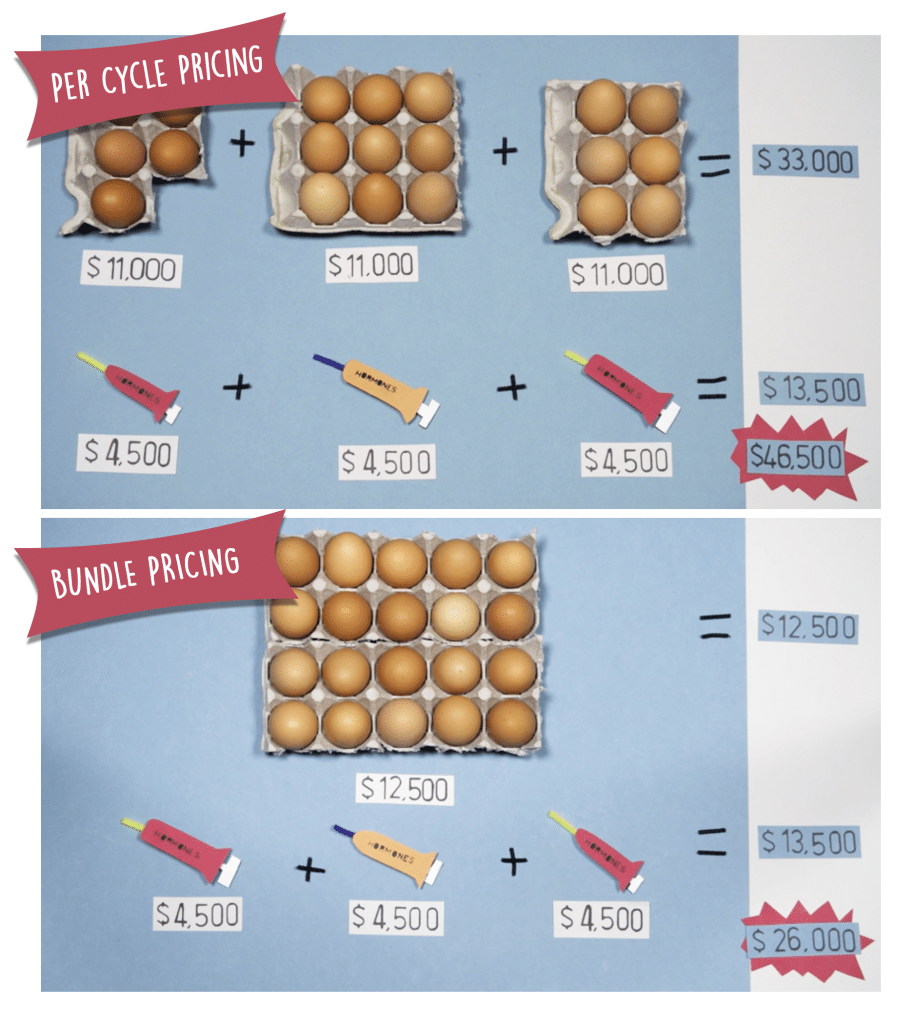
The Washington Post reports that the average cost of an egg freezing cycle in the U.S. is $11,000. At Shady Grove Fertility, the cost of a single egg freezing cycle is $7,500-9,000, depending on program selection.

Reporter Nicole Ellis, who is assessing the potential cost of freezing her own eggs, estimates that she would need three cycles to achieve 20 eggs, and that her medication would cost at $4,500 per cycle.
Ellis estimates that her total cost to freeze her eggs, using per-cycle pricing, would be $46,500. However, with Shady Grove Fertility’s Assure Fertility bundle pricing, she would save $20,500 on the overall cost of treatment and medications.

Prices quoted in this article were from 2018 and subject to change. Connect with your SGF financial counselor to get up to date pricing.

Original image credit: The Washington Post


Shady Grove Fertility encourages women considering egg freezing to come in and get their fertility tested. A physician will review your testing results and provide guidance in the decision making process to determine whether egg freezing make sense. But ultimately, the decision is yours. Take your time. Set your goals. Make a plan.

Schedule Appointment

Filed Under: Treatment Tagged With: Egg freezing

June 19, 2018 by Shady Grove Fertility

Watch Shruti Malik, M.D., from Shady Grove Fertility’s Fair Oaks, VA office, discuss the advantages of egg freezing. Dr. Malik has been through the egg freezing process herself and truly knows the benefits.

Dr. Malik said that freezing her eggs was the best decision of her life. She expanded on that sentiment by saying:

Freezing my eggs has been a great benefit both personally and professionally.

I’ve enhanced my knowledge of the egg freezing procedure with personal experience. Sharing my story at Shady Grove Fertility helps put patients at ease. From the fertility drugs to the anxiety about test results, I know how it feels to be the patient rather than the doctor.

Fertility preservation has given me flexibility in family planning. I can decide when I’d like to become pregnant without rushing into a relationship to immediately start my family. I like being able to pursue my career and have time to find the right partner to move forward with.

Just like many of you reading this, I was anxious about the egg freezing process. But now I have no regrets about my decision. Understanding my test results and my options empowered me to make an investment in my future family. Hopefully my story can do the same for you.

Schedule An Egg Freezing Appointment 

To learn more about the advantages of egg freezing or to schedule an appointment, call 1-877-411-9292.

Editor’s Note: This blog was originally published in September 2017, but was updated for accuracy in June 2018. 

Filed Under: Treatment Tagged With: Egg freezing

  • « Go to Previous Page
  • Page 1
  • Interim pages omitted …
  • Page 3
  • Page 4
  • Page 5
  • Page 6
  • Page 7
  • Interim pages omitted …
  • Page 22
  • Go to Next Page »

Company

  • About SGF
  • About US Fertility
  • Our Doctors
  • Fertility Equity
  • Careers
  • Newsroom
  • SGF College Scholarship
  • Contact Us
  • Voice Your Feedback

Treatments

  • Egg Freezing
  • Intrauterine Insemination (IUI)
  • In Vitro Fertilization (IVF)
  • Frozen Embryo Transfer (FET)
  • LGBTQIA+ Family Building
  • Shared Risk 100% Refund Program
  • All Treatments

Resources

  • Patient Portal
  • Online Bill Pay
  • Library
  • Support Groups & Events

Locations

  • California
  • Colorado
  • Delaware
  • Florida
  • Georgia
  • Maryland
  • North Carolina
  • Pennsylvania
  • Texas
  • Virginia
  • Washington, D.C.

2026 Shady Grove Fertility

  • Policies & Notices
Also of interest
  • In Vitro Fertilization IVF
  • Fertility Tests
  • Research Publications