• Skip to primary navigation
  • Skip to main content
  • Skip to footer
Shady Grove Fertility
  • Become an Egg Donor
  • Referring Physicians
  • 1-888-761-1967
  • Schedule Appointment
  • Get Started
        • Get Started
          • Causes of Infertility
          • Fertility Tests
          • When to Seek Help
          • Find a Doctor
          • Preconception and prenatal vitamins 
          • Schedule an Appointment
        • Personalized Care For
          • Single Parents
          • LGBTQIA+ Family Building
          • People with Cancer
          • Known Genetic Diseases
          • Egg Donors
  • Treatments
        • Fertility
          • Timed Intercourse
          • Ovulation Induction
          • Intrauterine Insemination (IUI)
          • In Vitro Fertilization (IVF)
          • Frozen Embryo Transfer (FET)
        • Donation & Surrogacy
          • Donor Sperm
          • Donor Egg
          • Donor Embryo
          • Gestational Carrier
          • LGBTQIA+ Family Building
          • Single Parents
          • Find a Donor
        • More Treatments
          • Center for Male Fertility
          • Egg Freezing
          • OncoFertility
          • Preimplantation Genetic Testing
          • MIGS
          • All Fertility Treatments
  • Resources
    • Resource Library
    • Events Calendar
    • Patient Stories
    • Mental Health
    • Wellness Center
  • Insurance & Savings
    • Insurance & Benefits
    • Shared Risk 100% Refund Program
    • 100% Refund for Donor Egg
    • Discounts
    • Egg Freezing Costs
    • Financing & Grants
    • Clinical Trials
  • About
    • Find a Doctor
    • About SGF
    • Our Care Team
    • Advanced Practice Providers
    • Fertility Equity
    • Philanthropy
    • Newsroom
    • Careers
    • Contact Us
    • Voice Your Feedback
  • Locations
        • Find a Location
        • California
        • Colorado
        • Delaware
        • Florida
        • Georgia
        • Maryland
        • North Carolina
        • Pennsylvania
        • Texas
        • Virginia
        • Washington, D.C.
        • Chile
        • International & Out of State
        • SGF at Walter Reed National Military Medical Center
  • Patient Hub
    • Online Bill Pay
    • Patient Forms
    • Patient Portal
  • Call your care team
  • Become an egg donor
  • Referring physicians
  • search-icon
  • Schedule appointment 1-888-761-1967

Home / Insurance & Savings

Insurance & Savings

August 20, 2025 by Andrea Mathis

Shady Grove Fertility is introducing a new medication protocol that makes the IVF and egg freezing process more affordable, more comfortable, and less complex—while still delivering excellent outcomes. Now available across all SGF locations, the Medroxyprogesterone Acetate (MPA) protocol uses oral medications and requires fewer monitoring appointments, saving patients both time and money.  

What is the MPA protocol?

The Medroxyprogesterone Acetate – or MPA protocol – is an alternative to the traditional GnRH antagonist protocol used during ovarian stimulation. Both protocols aim to prevent premature ovulation during the stimulation phase of an IVF or egg freezing cycle.  

  • Traditional GnRH antagonist protocols rely on injectable medications (GnRH antagonists) administered mid-stimulation to prevent a premature luteinizing hormone (LH) surge. Patients typically have 5-7 monitoring appointments.  
  • MPA protocols use an oral medication—Medroxyprogesterone Acetate (Provera)—instead of injections to achieve the same goal. Patients can expect 1-3 fewer monitoring appointments than the GnRH antagonist protocol.  

Who is eligible?   

MPA protocols are appropriate for patients who are: 

  • Undergoing egg freezing, or 
  • Pursuing IVF with a plan to freeze all embryos 
  • Not planning a fresh transfer in the same cycle as stimulation and egg retrieval 

Why this change benefits patients 

Adopting the MPA protocol delivers a better overall patient experience while maintaining the same high standards for clinical outcomes. 

Benefits include: 

  • Same great outcomes. Multiple studies—including high-quality randomized controlled trials—show no difference in egg quality, embryo development, or pregnancy rates compared to antagonist protocols. 
  • Lower medication costs. On average, patients may save $2,500 per cycle. 
  • Fewer injections. Patients can expect ~7 fewer injections per cycle. 
  • Fewer clinic visits. With 1–3 fewer monitoring appointments, patients save time and reduce logistical stress. 
  • Simplified schedule. All medications are taken once daily in the evening, making the protocol easier to follow. 

Backed by data 

A growing body of peer-reviewed literature and SGF’s own internal data supports the use of MPA protocols as a safe, effective alternative for freeze-all cycles. Across patient groups, outcomes have been consistent with those seen in traditional antagonist protocols. While research on lower responders is ongoing, no safety concerns have emerged in this population. 


What to expect with the MPA protocol 

  • Medication: Patients take 10 mg of oral MPA once daily in the evening, alongside standard gonadotropin injections. 
  • Trigger timing: MPA is continued until the night of the trigger injection. 
  • Monitoring: Follows standard protocols, with potential for fewer visits based on response. 
  • Flexibility: Compatible with most downregulation methods (OCPs, EPP, cold start) and trigger options (Lupron, hCG, or dual trigger). 

At SGF, we’re committed to delivering exceptional outcomes while improving the overall patient experience. The MPA protocol reflects our ongoing effort to reduce cost and complexity in fertility treatment.  

If you have questions about how the MPA protocol may benefit you or how it is implemented at your local SGF clinic, please don’t hesitate to reach out. 


Schedule Appointment

Medical contribution by Kate Devine, M.D.

Kate Devine, M.D., FACOG, is board certified in obstetrics and genecology and reproductive endocrinology and infertility. She is active in fertility research, publishing on topics ranging from fibroids to egg freezing for fertility preservation. She continues her research goals and advancing those of Shady Grove Fertility as the director of research for the practice.


Filed Under: For Patients, General, Insurance & Savings, Treatment

June 4, 2025 by Andrea Mathis

What California Senate Bill 729 means for your fertility journey 

Update (May 2025): California Senate Bill 729 (SB 729) will now take effect on January 1, 2026, instead of the originally planned July 2025 date. This delay gives patients and providers more time to prepare. SGF will continue to share updates and help you make the most of your current and future fertility coverage. 

Expanded insurance coverage for IVF and fertility treatment starts in 2026  

Big changes are coming to fertility coverage in California. As of January 1, 2026, Senate Bill 729 (SB 729) will require most small- and large-group health insurance plans to cover both the diagnosis and treatment of infertility, including in vitro fertilization (IVF). 

This law marks a major step forward for reproductive access across the state. 

Should I wait until 2026 to start fertility treatment?   

While it might be tempting to hold off until your insurance kicks in, age remains the biggest factor impacting fertility. Waiting could limit your options or affect your success rates. 

We recommend meeting with a fertility specialist now to: 

  • Understand your fertility potential 
  • Complete important diagnostic testing 
  • Create a treatment plan that works for your goals and timeline

If you’re eligible for expanded coverage in 2026, we’ll help you align your plan accordingly—but getting answers today puts you in control.  

What is Senate Bill (SB 729)? 

Senate Bill 729 is a new California law requiring many insurance plans to include comprehensive fertility care. This includes:  

  • Diagnosis and treatment of infertility (including IVF) 
  • Up to three completed egg retrievals 
  • Unlimited embryo transfers, based on clinical guidelines 

The bill also updates the definition of infertility to be more inclusive, supporting access for: 

  • LGBTQIA+ individuals 
  • Single parents 
  • Others who may have previously been excluded from fertility benefits 

Read more

How SGF supports California patients 

SGF offers a full range of services to meet your needs, including: 

  • IVF and IUI 
  • Fertility testing and diagnostics 
  • LGBTQIA+ family-building 
  • Egg, sperm, and embryo freezing 
  • Egg and sperm donation 
  • Embryo screening and genetic testing 
  • Gestational carrier services 

What if you’re not covered by SB 729? 

Not everyone will immediately benefit from the new law—some smaller plans and out-of-state employers may not be affected. Our financial educators are well-versed in the different insurance plans and can help determine if you have coverage. And if not, SGF offers several financial programs to help ease the cost of fertility treatment: 

  • Shared Risk 100% Refund for IVF or Donor Egg – includes up to 6 retrievals and unlimited frozen embryo transfers. If you don’t take home a baby, you get a full refund. 
  • Assure Fertility for Egg Freezing – includes multiple egg retrievals for a set cost. 
  • Multi-cycle discounts 
  • Income-based discounts 
  • Financing available with monthly payment options 

Ready to move forward? 

Expanded insurance benefits are on the way—and our team is here to help you make the most of them. Whether you’re just beginning or already planning treatment, we invite you to connect with one of our specialists to learn more about your options. 

Schedule Appointment
Medical contribution by Alexander Quaas, M.D., Ph.D. 

Alexander Quaas, M.D., Ph.D., is board certified in obstetrics and gynecology (OB/GYN) as well as reproductive endocrinology and infertility (REI). Dr. Quaas completed his residency in OB/GYN at Brigham and Women’s / Massachusetts General Hospital in the Harvard Integrated OB/GYN Residency Program. He completed his REI fellowship at the University of Southern California in Los Angeles.  

Filed Under: For Patients, General, Insurance & Savings

April 17, 2025 by Andrea Mathis

Navigating your insurance benefits at Shady Grove Fertility (SGF) is an important step in your fertility journey. Understanding your coverage can help minimize out-of-pocket expenses and streamline your treatment process. This guide provides an overview of how to effectively navigate your insurance benefits and highlights common insurance codes related to fertility treatments. 

Understanding your coverage

  • Initial consultation and treatment coverage: Approximately 90% of SGF patients have insurance coverage for their initial consultation, and about 70% have some coverage for infertility treatment. 
  • Review your benefits summary: Obtain a copy of your benefits summary from your employer to understand what is covered under your plan. Be aware that benefits and out-of-pocket expenses can change annually. 
  • Flexible spending accounts (FSA): Consider utilizing an FSA or Health Savings Account (HSA) to cover medical expenses not paid by insurance, such as deductibles, co-pays, and treatments not covered. 

Verifying your benefits 

  • Contact your HR department: If infertility coverage isn’t listed in your benefits summary, reach out to your Human Resources department or benefits coordinator for clarification. They can provide detailed information about your specific plan. 
  • Consult SGF Financial Educators: SGF’s Financial Educators are available to explain treatment costs and help maximize your insurance benefits before starting therapy. 

Gaining coverage

  • State fertility insurance laws: Some states have laws requiring health insurance coverage for infertility diagnosis and/or treatment. Check if your state has such mandates, as this can impact your coverage.  
  • Employer-sponsored plans: Even in states without mandates, employers may offer plans that include infertility benefits. Discuss available options with your HR department. 

Common insurance codes for fertility treatments 

Familiarizing yourself with common insurance codes can facilitate discussions with your insurance provider and help ensure accurate billing. Here are some frequently used codes: 

  • In vitro fertilization (IVF) procedures: 
    • 58970: Follicle puncture for oocyte retrieval 
    • 58974: Intrauterine embryo transfer 
    • 89250: Culture of oocyte(s)/embryo(s), less than 4 days 
    • 89254: Oocyte identification from follicular fluid 
    • 89268: Insemination of oocytes 
    • 89272: Extended culture of oocyte(s)/embryo(s), 4-7 days 
  • Artificial insemination (AI) and intrauterine insemination (IUI): 
    • 58322: Artificial insemination; intrauterine (IUI) 
    • 58323: Sperm washing for artificial insemination 
  • Assisted reproductive technology (ART) procedures: 
    • 89251: Culture of oocyte(s)/embryo(s), less than 4 days; with co-culture 
    • 89255: Preparation of embryo for transfer 
    • 89258: Cryopreservation; embryo 
    • 89261: Sperm isolation; complex prep (e.g., Percoll gradient, albumin gradient) for insemination or diagnosis 

These codes are based on the Current Procedural Terminology (CPT) system and are used for billing and insurance purposes. Discussing these codes with your provider and insurance company can help clarify coverage specifics. This list is regularly updated, and other codes could be billed for your treatment plan. Please speak with your Financial Educator for more information. This list is not a comprehensive list of all codes that may be billed but can serve as a helpful guide.  

Additional tips

  • Pre-authorization: Some insurance plans require pre-authorization for certain fertility treatments. Ensure all necessary approvals are obtained before starting treatment to avoid unexpected expenses. 
  • Keep detailed records: Maintain copies of all communications with your insurance company, including pre-authorizations, denials, and appeals. 
  • Appeals process: If a claim is denied, don’t hesitate to appeal. Provide additional documentation and work closely with your healthcare provider to support your case. 

By proactively managing your insurance benefits and understanding the associated codes, you can navigate the financial aspects of your fertility treatment more effectively. For personalized assistance, contact SGF’s Financial Educators who are ready to help you through this process. 


Schedule Appointment

Filed Under: Get Started, Insurance & Savings Tagged With: Insurance

October 22, 2024 by laurenvastine

When embarking on the journey to build your family, every step matters, and with the right planning you can make the most of the resources you already have. FSA and HSA savings accounts are designed to help cover essential medical expenses and can be used for initial fertility consultations and testing.  

Why FSA/HSA benefits are important 

FSA and HSA funds allow you to set aside pre-tax dollars for eligible medical expenses, including fertility treatments. Whether it’s your first appointment or fertility testing to help diagnose potential challenges, these funds can be used to ease the financial burden. But be aware: FSA funds often expire at the end of the year, so it’s essential to take advantage now to ensure your hard-earned savings support your goals.  

Patient tip: Reach out to your benefit plan administrator in advance to understand FSA / HSA savings application and service reimbursements

Questions to ask your insurance carrier  

Understanding your insurance benefits is key to optimizing your care. As you prepare for your initial fertility consultation, consider asking your insurance provider these critical questions: 

  • Is the initial consultation covered by my plan? 
  • Do I need a referral from my primary care physician to see a fertility specialist? 
  • Do I need authorization (reference CPT codes listed below)? 
  • Does my plan cover fertility drugs or injectable medications? 
  • Is there a maximum benefit amount for fertility treatments? This could be a dollar limit, cycle limit, or both.   
  • Does my plan cover same-sex couples or domestic partners? 

Key insurance codes for your reference 

Understanding insurance codes can help you navigate your benefits more easily. Below are some important codes that may apply to your fertility care: 

  • Testing for infertility: ICD-10 codes Z31.41, N97.9 
  • Artificial insemination (IUI): CPT codes 58322, 58323, 89261; ICD-10 code Z31.89 
  • In vitro fertilization (IVF): CPT codes 58970, 58974, ICD-10 code Z31.83 
  • Egg freezing: CPT code 58970, 89337, ICD-10 code Z31.84 

Having these codes handy may help clarify your coverage options and ensure you’re making informed decisions about your fertility care. Please note these codes update yearly and may have changed.  

Prepare for open enrollment 

As we approach open enrollment season, it’s the perfect time to review your health benefits and ensure that your insurance plan aligns with your family-building goals. Open enrollment is a limited window when you can make changes to your insurance, so being informed and proactive is essential.  

Get started today 

Your FSA and HSA funds represent more than just savings—they’re an investment in your future. Every dollar you put toward fertility testing and treatment brings you one step closer to your goal. By scheduling a consultation now and making the most of your benefits, you’re setting yourself up for success in your family-building journey. 

Take that first step today and request an appointment. Together, we’ll turn your dreams into reality. 

Schedule Appointment

Filed Under: Insurance & Savings

February 23, 2021 by Shady Grove Fertility

When single mother by choice, Dr. Deborah Brooks, first embarked on her family-building journey in 2018, she found it discriminatory that she did not qualify for the same access to fertility treatment benefits that married couples did. Until January 1, 2021, the Maryland Mandate infertility insurance law did not offer unwed women in vitro fertilization (IVF) coverage, a barrier that the University of Maryland School of Medicine assistant professor would soon take into her own hands.

“While I was looking through my insurance information, I thought it was strange that IVF would be covered if I was married — even if I was married to another female — but not if I’m single,” Dr. Brooks explained.

Maryland was the first state in the nation to enact infertility insurance legislation in 1985, but the previous Mandate’s criteria posed barriers for insurance holders to receive equal and timely treatment opportunities. Dr. Brooks’ attempts to find answers with the insurance companies and even the Maryland Attorney General’s office proved unsuccessful. Left without answers, Dr. Brooks’ confidence in creating change started to wane.

At the time, she was actively receiving treatment at Shady Grove Fertility’s Baltimore Harbor location with Howard McClamrock, M.D. Dr. Brooks had just completed her third intrauterine insemination (IUI), but despite best efforts, was not pregnant. The American Society for Reproductive Medicine (ASRM) recommends attempting three consecutive IUI cycles as first-line treatment before resorting to IVF due to the decline in clinical pregnancy rates.

Despite this recommendation, the Maryland Mandate required women to undergo six IUI cycles before moving on to IVF. It also stated that women must try and fail to conceive for 2 years before insurance coverage could be provided.

Nearly 9 months into her fertility journey, Dr. Brooks wasn’t prepared to pay for IVF out of pocket as her next line of treatment. Shortly after, Dr. Brooks joined UMD’s Women in Medicine and Science group where she vocalized her concerns about the Maryland Mandate. It was here that a committee member connected her with Michelle Daughtery Siri, executive director of the Women’s Law Center of Maryland.

“We started talking, and all of a sudden, it seemed like it was a true possibility that we could change the law,” Dr. Brooks shared.

Dr. Brooks and Siri soon connected with Maryland Senator Shelly Hettleman, D-Baltimore County, where their paths crossed with the advocacy efforts of SGF’s own care team.

Advocating for Infertility Coverage

SGF’s care team, including Stephanie Beall, M.D., Ph.D., and Loretta Trumble, CRNP, have called for change to the Maryland Mandate before. Due to their collective efforts, on May 15, 2018, Maryland Governor Hogan signed the bill that requires insurers to cover the expense of fertility preservation, sperm and egg freezing specifically, for patients prior to medical treatments that likely would permanently damage their reproductive ability, such as chemotherapy for cancer.
As advocacy efforts between Dr. Brooks, Siri and Hettleman took shape, Hettleman tapped Trumble once more to revise the Maryland Mandate.

“I’m so passionate about helping build families across all patient populations and this was a way to use my passion to advocate for increased coverage,” says Trumble. “Revising legislation wasn’t something I actively sought out, but change was needed and I’m so honored to be a part of it.”

While Trumble extended the advocacy opportunity to Dr. Beall, Dr. Brooks decided to try one more IUI cycle in July 2019 before pursuing more high-tech fertility treatment. Much to her surprise, her fourth IUI cycle led to a healthy pregnancy despite all odds.

“I was worried that getting pregnant with IUI would negate what I was saying about the importance of unwed women receiving IVF coverage,” Dr. Brooks recalls as she prepared to testify. “But it turns out that everyone loves a pregnant woman!”

On February 26, 2020, Dr. Beall and Trumble testified in favor of laxing limitations on infertility treatment insurance carrier require of their policyholders. Their testimonies were presented alongside RESOLVE: The National Infertility Association, Senator Hettleman, Siri, and Dr. Brooks, who was 7-months pregnant.

For SGF physicians, helping patients build their families extends beyond the exam room. During Dr. Beall’s testimony, she shared, “The diagnosis of infertility knows no boundaries. It affects individuals regardless of gender, race, sexual orientation or marital status.”

Dr. Beall’s testimony delivered statistics-driven points as to why the Maryland Mandate’s “waiting period” should be cut in half from 2 years to 1. “Given the anticipated age-related decline in fertility, and the increased incidence of pregnancy loss and having a child with a chromosomal abnormality, it is important not to delay fertility care for an individual or couple who have a clinical diagnosis of infertility.”

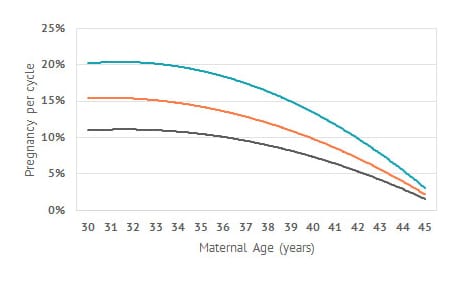
Dr. Beall continued, “The probability of pregnancy with fertility treatment also decreases progressively with increasing age. The percentage of IUI cycle starts that resulted in a clinical pregnancy was:

  • 11.6% for women under 35 years of age,
  • 8.84% for women 35-39,
  • 9.01% for women 40-41,
  • 6.25% for women 42-43, and
  • 3.45% for women older than 43 years of age.

“Thousands of Marylanders have difficulty becoming pregnant and deserve access to today’s modern technology that will assist them,” Shared Senator Hettleman in her testimony. “This bill brings our law up to date, reflecting modern patterns in both medicine and parenting.”

To round out the testimonies, Senator Hettleman shared, “Thousands of Marylanders have difficulty becoming pregnant and deserve access to today’s modern technology that will assist them. This bill brings our law up to date, reflecting modern patterns in both medicine and parenting.”

Maryland Mandate Expands IVF Coverage as of 2021

As of January 1, 2021, new revisions to the Maryland Mandate include:

  • the removal of a marriage requirement for patients seeking treatment,
  • reducing the 2-year “waiting” period to 1 year of unprotected sexual intercourse, and
  • reducing the attempts of intrauterine insemination from six attempts to three.

“I love my son, and I might want him to have a sibling someday,” shares Dr. Brooks. “It could be a very real possibility that I’ll be in my late 30s when that day comes and may need to try IVF. It’s comforting knowing that insurance benefits are available to me if I need them.”

To learn more about SGF’s financial programs to help make fertility treatment more affordable, review your state-issued benefits and SGF’s unique financial programs.

Save on Treatment

Filed Under: Insurance & Savings

December 8, 2020 by Shady Grove Fertility

Many indicators can be interpreted to determine your chances of getting pregnant. While some of these indicators require testing by a physician to evaluate, there is one that can be easily used to determine your chances of getting pregnant right now… your age.
Age is a very important indicator used to determine a woman’s chances of getting pregnant. In addition, the combination of age and the length of time trying to conceive provides insight into when to seek a fertility evaluation.
Medical contribution by Pavna Brahma, M.D.

Pavna K. Brahma, M.D., FACOG, is board certified in obstetrics and gynecology and reproductive endocrinology and infertility. She serves as SGF Atlanta’s IVF Director. Dr. Brahma sees patients at SGF’s Buckhead – Piedmont and Atlanta – Northside, Georgia offices.

Chances of getting pregnant by age

At birth, women will have their entire lifetime supply of eggs. As women age, the quality and quantity of those eggs begins to decrease. This, paired with the fact that human reproduction is not the most efficient process, makes timing key.
Many are surprised to learn that each month, on average, a woman only has a 15 to 20 percent chance of conception. For women in their 20s, their chances of getting pregnant within 1 year are 78 to 86 percent. For women 30 to 34, their chances of getting pregnant within 1 year is approximately 63 percent. For women ages 35 to 39, the chances of conception within 1 year declines to 52 percent. This rate continues to decline in a woman’s 40s, until she reaches menopause, typically between ages 48 and 55.
This is not to say that after 12 months of trying, conception magically declines, but rather that most fertile couples will have conceived, and couples who have not may likely have some form of infertility.
Woman’s Age% Conceiving in 12 Months
20 to 24 years old86%
25 to 29 years old78%
30 to 34 years old63%
35 to 39 years old52%
Figure 1: Adapted from Hendershot GE, et.al., Infertility and age: an unresolved issue. Family Planning Perspectives. Vol,14;5 (Sept./Oct 1982), p. 288 Ó The Alan Guttmacher Institute.
By accounting for age-related declines in egg quality and quantity, your reproductive endocrinologist can personalize your initial evaluation. Infertility is generally defined as the inability to conceive within 12 months for women under the age of 35, and within 6 months for those over the age of 35.

Making an informed decision: when to see a fertility specialist

When thinking about your fertility options, your age can empower you to take proactive steps in your family building. Women under the age of 35 who have been trying for a year (or over 35 that have been trying for 6 months), should talk with a reproductive endocrinologist.
Shady Grove Fertility’s team of highly renowned reproductive endocrinologists are available for consultations to review medical history and advise if you need a fertility evaluation. Talking with a fertility specialist can provide you with the answers you need and help you understand why getting pregnant is taking longer than expected.

Which fertility treatment to consider

The outcomes of fertility treatments vary based on a woman’s age. Because the chances of success begin to decrease with age, taking the proactive step of talking to a fertility specialist as soon as you suspect a problem is important.

Chances of getting pregnant with intrauterine insemination (IUI)

For many women, in vitro fertilization (IVF) will likely not be their first treatment option. In fact, half of all treatment performed at Shady Grove Fertility is a more basic form of intervention called intrauterine insemination or IUI. The goal of this treatment is to increase the number of sperm that reach the Fallopian tubes and subsequently increases the chance of fertilization. IUI provides the sperm an advantage by giving it a head start, but still requires the sperm to reach and fertilize the egg on its own.
The goal of IUI treatment is to improve the rate of conception to that of the fertile population, or roughly 15 to 20 percent per attempt. Age, along with the cause of infertility, will ultimately determine what your chances of success are per cycle of IUI.
Learn more about intrauterine insemination

Chances of getting pregnant with in vitro fertilization (IVF)

IVF is one of the most widely talked about forms of fertility treatment because of its high success rates and significant technological advances. During IVF treatment, a physician will remove one or more eggs from the ovaries, which are then fertilized by sperm inside the embryology laboratory. The embryos develop, typically for 5 or 6 days, and then one or two embryos are then transferred into the uterus where implantation occurs, and pregnancy starts.
 <3535-3738-4041-42>42
Initiated Cycles15229741033575313
Egg Retrievals (ER)1447885923488264
Embryo Transfers (ET)1296724662301162
Clinical Pregnancy rate per Embryo Transfer53.9%49%45.3%37.5%21%
Figure 3: Success rates for IVF treatment by age. Not all initiated cycles result in an embryo transfer as some cycles are canceled due to poor response to medication and others result in freezing all eggs or embryos. 2016 preliminary IVF data for Shady Grove Fertility, Rockville, MD
Learn more about in vitro fertilization

Chances of getting pregnant by donor egg treatment

Donor egg treatment is the great equalizer. Treatment with donor eggs is the only fertility treatment option where the age of the female partner does not impact the outcome. The treatment is the same process as IVF except the egg used comes from a donor. Since donors are ages 21 to 32 and thoroughly screened, donor egg treatment is the most effective fertility treatment, with a 60 percent clinical pregnancy rate per embryo transfer.
Learn more about Donor Egg

The bottom line

When trying to conceive, your age can play a big role in your chances of getting pregnant. As a result, it is important to meet with a fertility specialist in a timely manner. Starting earlier will leave more treatment options available to pursue and give you the best chances of success.
To schedule a virtual consultation with Dr. Brahma or another SGF physician, please fill out the form or call our New Patient Center
Schedule Appointment
or 1-888-761-1967

References:
Zinaman MJ, Clegg ED, Brown CC, O’Connor J, Selevan SG. Estimates of human fertility and pregnancy loss. Fertil Steril. 1996; 65(3). 503–509.

Filed Under: Insurance & Savings

  • Page 1
  • Page 2
  • Page 3
  • Interim pages omitted …
  • Page 9
  • Go to Next Page »

Company

  • About SGF
  • About US Fertility
  • Our Doctors
  • Fertility Equity
  • Careers
  • Newsroom
  • SGF College Scholarship
  • Contact Us
  • Voice Your Feedback

Treatments

  • Egg Freezing
  • Intrauterine Insemination (IUI)
  • In Vitro Fertilization (IVF)
  • Frozen Embryo Transfer (FET)
  • LGBTQIA+ Family Building
  • Shared Risk 100% Refund Program
  • All Treatments

Resources

  • Patient Portal
  • Online Bill Pay
  • Library
  • Support Groups & Events

Locations

  • California
  • Colorado
  • Delaware
  • Florida
  • Georgia
  • Maryland
  • North Carolina
  • Pennsylvania
  • Texas
  • Virginia
  • Washington, D.C.

2026 Shady Grove Fertility

  • Policies & Notices
Also of interest
  • In Vitro Fertilization IVF
  • Fertility Tests
  • Research Publications