

• Skip to primary navigation
  • Skip to main content
  • Skip to footer
Shady Grove Fertility
  • Become an Egg Donor
  • Referring Physicians
  • 1-888-761-1967
  • Schedule Appointment
  • Get Started
        • Get Started
          • Causes of Infertility
          • Fertility Tests
          • When to Seek Help
          • Find a Doctor
          • Preconception and prenatal vitamins 
          • Schedule an Appointment
        • Personalized Care For
          • Single Parents
          • LGBTQIA+ Family Building
          • People with Cancer
          • Known Genetic Diseases
          • Egg Donors
  • Treatments
        • Fertility
          • Timed Intercourse
          • Ovulation Induction
          • Intrauterine Insemination (IUI)
          • In Vitro Fertilization (IVF)
          • Frozen Embryo Transfer (FET)
        • Donation & Surrogacy
          • Donor Sperm
          • Donor Egg
          • Donor Embryo
          • Gestational Carrier
          • LGBTQIA+ Family Building
          • Single Parents
          • Find a Donor
        • More Treatments
          • Center for Male Fertility
          • Egg Freezing
          • OncoFertility
          • Preimplantation Genetic Testing
          • MIGS
          • All Fertility Treatments
  • Resources
    • Resource Library
    • Events Calendar
    • Patient Stories
    • Mental Health
    • Wellness Center
  • Insurance & Savings
    • Insurance & Benefits
    • Shared Risk 100% Refund Program
    • 100% Refund for Donor Egg
    • Discounts
    • Egg Freezing Costs
    • Financing & Grants
    • Clinical Trials
  • About
    • Find a Doctor
    • About SGF
    • Our Care Team
    • Advanced Practice Providers
    • Fertility Equity
    • Philanthropy
    • Newsroom
    • Careers
    • Contact Us
    • Voice Your Feedback
  • Locations
        • Find a Location
        • California
        • Colorado
        • Delaware
        • Florida
        • Georgia
        • Maryland
        • North Carolina
        • Pennsylvania
        • Texas
        • Virginia
        • Washington, D.C.
        • Chile
        • International & Out of State
        • SGF at Walter Reed National Military Medical Center
  • Patient Hub
    • Online Bill Pay
    • Patient Forms
    • Patient Portal
  • Call your care team
  • Become an egg donor
  • Referring physicians
  • search-icon
  • Schedule appointment 1-888-761-1967

Home / In vitro fertilization (IVF) / Page 11

In vitro fertilization (IVF)

May 7, 2012 by Shady Grove Fertility

SGF Nurse
Guiliana & Bill Rancic have announced they will be using a gestational carrier.

The term “gestational carrier” has been in the headlines lately, thanks to reality stars Giulana and Bill Rancic. After miscarriage, hurdles and a scare with breast cancer, the couple is using a gestational carrier, a woman who carries another couple’s fertilized embryo to term, to have their baby.

Contrary to what some might think, gestational carriers and surrogates are not the same, as a surrogate is someone who donates her egg and then subsequently carries the child; she is genetically linked to that baby. In the case of a gestational carrier, the woman carrying the pregnancy is in no way biologically related to the child she is carrying; the eggs and sperm are derived from the “intended parents” (or possibly an egg donor, or sperm donor), through the process of In Vitro Fertilization (IVF). The egg is fertilized in the lab, and then the embryo (or embryos) is placed into the uterus of the gestational carrier. Finding and using a gestational carrier can be complicated in some states.

“Fortunately, Maryland is one of the states which recognizes there are medical reasons why a gestational carrier may be the only way a couple can have a baby and allow gestational surrogacy. Consequently, many couples come to Shady Grove Fertility for care,” says Gilbert L. Mottla, MD, a Reproductive Endocrinologist in Shady Grove Fertility’s Annapolis office.

According to the American Society for Reproductive Medicine, 859 surrogacy and gestational carrier cycles were performed in the United States in 2010. Notably, there has been a 28% increase in gestational carrier cycles since 2007. Shady Grove Fertility has extensive experience with the gestational carrier process, excellent success rates, and offers unique financial programs. If a couple does not bring home a baby through the gestational carrier, 100% of their money is refunded (some exclusions apply).

Though Shady Grove Fertility treats couples for a variety of fertility issues, there are many medical reasons that preclude a couple from conceiving and carrying a baby to term themselves.

“Any female who has had her uterus surgically removed from cervical or uterine cancer, fibroids, severe endometriosis, or a hysterectomy or where her uterus is simply not functional may be a candidate for a gestational carrier.” said Michele Purcell, RN Shady Grove Fertility’s Donor & Gestational Carrier Program Manager. Women who suffer from heart or other health problems that may make pregnancy dangerous for the mother and baby may need gestational carriers as well.

SGF Nurse
Since 2007, the number of gestational carriers used have increased by 28%.

The good news is that as long as the ovaries are intact and functional, there is a strong possibility that the eggs may be retrieved and fertilized with the male partner’s sperm, or donor sperm, to create embryos that can then be placed into the uterus of the gestational carrier. “With In Vitro Fertilization (IVF) and a gestational carrier, a woman can still be a genetic mother while not putting herself or her baby at any dangerous health risk,” said Purcell.

“Shady Grove Fertility relies on experienced and reputable reproductive attorneys and agencies to recruit our gestational carriers,” said Purcell. “Though some couples come to us with a gestational carrier in mind, like a sister who is willing to carrier their embryo, about 75% of couples in this situation rely others to help find them a gestational carrier.”

In the case of same sex couples, intended fathers can use a gestational carrier along with a donor’s egg to complete their family. “In some recent cases here at Shady Grove Fertility, the sister of one partner donated the egg and the other partner’s sperm, linking the child genetically to both partners,” said Dr. Mottla. “The bottom line is that there are now many ways for couples to build a family.”

For more information on Shady Grove Fertility’s Gestational Carrier Program, or to schedule an appointment with one of the center’s physicians, please contact a New Patient Liaison by calling 877-971-7755.

Filed Under: General Tagged With: Donor sperm, Gestational carrier & surrogacy, In vitro fertilization (IVF)

March 6, 2012 by Shady Grove Fertility

British researchers have developed an embryo-incubating system that they say improves odds of conception by 27%. But larger fertility clinics in the U.S. are already ahead of the game.
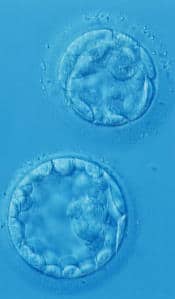
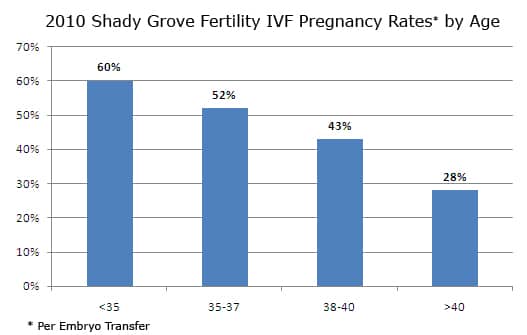
Even with top-notch doctors and top-notch laboratory conditions, pregnancy success through IVF is not a sure thing. So news that a new way of processing embryos during in vitro fertilization (IVF) has enhanced conception rates by more than a quarter would seem to be a welcome development.

At Newcastle University in England, a team of fertility experts has used a system of enclosed, interlinked incubators to more closely control the environment in which fertilization unfolds.

SGF Nurse

According to research published last week in the journal PLoS ONE, the technique at Newcastle Fertility Centre at Life, part of the Newcastle Hospitals NHS Foundation Trust, yielded a 27% increase in the clinic’s pregnancy rate compared with previous methods in which the embryos were removed from the incubators to assess their progress.

The study compared treatment outcomes over a period of three years, finding that 45% of women achieved a clinical pregnancy — in which a heartbeat is seen via ultrasound at seven weeks of pregnancy – compared with 32% and 35% in each of the preceding two years. “Growing good embryos is the key to IVF success and everyone, even those who have a very small prospect of success, deserve to have the best possible chance,” said Alison Murdoch, a professor of reproductive medicine who leads the clinical service at Newcastle Fertility Centre at Life, in a statement. “Since installing this new technology over 850 babies have now been born.”

The system is indeed innovative in the U.K., where it’s the first of its kind. Researchers reported that it’s been so successful that the same technique has been implemented in IVF clinics in the Netherlands, Canada and Thailand. So why not the U.S.? American women who rely on a boost from assisted reproduction to build their family would surely welcome anything that would improve their chances of conception.

It appears that the larger, more successful U.S. IVF clinics are already using similar methods as well as ones that are even more sophisticated in which controlled video systems provide a window into embryonic development. Incubators that resemble a waffle iron create micro-environments for embryos, which nestle in individual “wells” with little variation in pH or oxygen content.

“Having a well-controlled environment in in vitro fertilization is very important for success,” says Dr. Robert Stillman, medical director of Shady Grove Fertility Center, which has about 15 clinics in the Washington, D.C., metropolitan area.

Participants in the British study were women age 37 or younger who were in the midst of their first IVF cycle and had produced more than 10 ovarian follicles. Ovarian follicles contain an egg; women who produce 10 are considered to have responded well to hormonal stimulation. Their 27% increase in conception is great news for them, but Stillman says that Shady Grove, for example, has a 65% success rate with similar populations.

The average success rate in the U.K. is up to one-third lower than U.S rates, says Stillman, possibly due to differences in health care coverage. In the U.K. where IVF cycles are covered by insurance, women may tend to use their own eggs, which can make pregnancy odds trickier as a patient ages. In the U.S, where IVF is covered infrequently, women may rely more on donor eggs, which can increase pregnancy rates. The U.K. also has more single-embryo transfers, which can lower conception rates.

“They have the right idea,” says Stillman. “If you control the environment, you often get improvements in outcomes with IVF. But would we be able to increase our success rates by 27%? I think we are already toward the max.”

Bonnie Rochman is a reporter at TIME. Find her on Twitter at @brochman. You can also continue the discussion on TIME‘s Facebook page and on Twitter at @TIME.

Read more: http://healthland.time.com/2012/03/05/why-a-new-ivf-technique-wont-help-boost-pregnancy-rates-in-the-u-s/#ixzz1oN259100

Filed Under: General Tagged With: In vitro fertilization (IVF)

January 11, 2012 by Shady Grove Fertility

While the majority of public perception of infertility is that it’s a disease that affects women who are in their late 30s and 40s, the truth is that infertility is often age-independent. Women of any age can have fertility issues and many times younger women wait much longer to seek treatment than they should.

While age does play a major role in a woman’s ability to successfully conceive a pregnancy due to a reduction in quality and quantity of a woman’s eggs, there are many other factors that play into a woman’s inability to conceive on her own.

How Does Age Play a Role in My Ability to Conceive?

Women are born with about 1 million eggs and as a woman ages, the number of eggs within the ovary begin to rapidly decrease. By the time she starts menstruating, she may only have about 400,000 eggs left.

When a woman reaches her 20s, the chances of becoming pregnant naturally each cycle is only about 20% each month. That number declines gradually through her 20s and early 30s. Once in her mid-to-late 30s and 40s the natural pregnancy rate drops to less than 10%.
Many couples who come to Shady Grove Fertility in their late 30s and into their 40s aren’t naturally getting pregnant largely due to their age. While a woman may be ovulating normally, it may be the quality of those eggs and specifically the genetic abnormalities of the eggs that explain unsuccessful conception.

Fertility treatment success rates follow the same pattern and often, when women are over the age 40, treatment using their own eggs is often unsuccessful and donor egg becomes the only option.

But I’m in my Early 30’s, Why Am I Having Trouble Getting Pregnant?

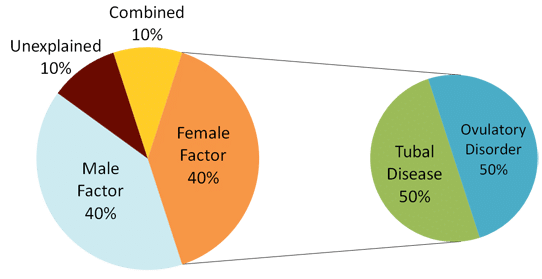
Younger women who are in their 20s and 30s who are not successfully conceiving may be facing a different set of roadblocks on their way to parenthood. This graphic below outlines the typical causes of infertility:

SGF Nurse


Two of the most common factors preventing women from conceiving are tubal problems and the inability to ovulate.

Blocked fallopian tubes won’t allow the egg and sperm to meet without intervention, but most women won’t suspect that these blockages are present. They’re virtually indiscernible by the patient but present a true physical barrier to conception.

Some potential causes of blocked fallopian tubes include:

  • congenital, structural problems present at birth
  • previous surgery in the abdominal or pelvic region
  • past non-recognized pelvic infections

If a woman isn’t ovulating, it doesn’t matter how young or healthy she is. To achieve pregnancy, a woman must ovulate. One of the “red flags” for an ovulation disorder might be irregular or absent menstrual periods, at any age. But not all women will experience the tell-tale signs of period problems.

When Should I Consider Seeing a Fertility Specialist?

Shady Grove Fertility recommends that women under the age of 35 schedule a basic fertility diagnostic evaluation with an infertility specialist after one year of unsuccessful conception with unprotected intercourse. Women 35 and older are recommended to seek evaluation after six months of trying, while women who are 40 years or older strongly consider scheduling a consultation as soon as they start planning a pregnancy. The earlier you take that first step to see a specialist, the better chance you have of conceiving a pregnancy.

SGF Nurse


What Happens Once I Decide To See A Specialist?

Each patient that decides to seek fertility treatment will begin with a basic fertility evaluation that includes the following:

  • a blood test for evaluating hormonal function
  • a sonogram to get an image of the pelvic organs, looking for any obvious structural problems
  • a hysterosalpingogram (HSG) or “tube dye test” to determine if the tubes are clear and the interior of the uterus is normal
  • a semen analysis for the male partner

This evaluation is a focused and unintimidating evaluation that can give anyone a feeling of reassurance that their fertility is intact. Or it may be the way that a couple learns not only why they haven’t gotten pregnant, but what treatment is necessary.

Once a diagnosis is determined, Shady Grove Fertility physicians will tailor a treatment protocol specifically for the individual patient. Over 50% of the treatments performed at Shady Grove Fertility are low tech, such as ovulation induction and Intrauterine Insemination (IUI), and, depending on the diagnosis, are most commonly the first methods of treatment attempted.

For example, a 28-year-old patient who has been diagnosed with an ovulatory disorder such as PCOS may begin her treatment with a couple cycles of oral medication (such as clomiphene citrate). This may be combined with either timed intercourse or IUI. This provides the patient and the physician with a good starting point in determining what the most successful method of treatment is for that individual.

If it’s determined that the patient ovulates multiple eggs per cycle on the stimulation medication then she may be transitioned to IVF so our physicians can control the odds of multiples by the transfer of a single, high-quality embryo. An additional benefit to using IVF is that extra embryos can be frozen and then used by a couple as many as years down the road to add children to their family — without an additional cycle of IVF.

So What’s the Bottom Line?

There are many options from low tech to high tech treatments with promising success rates for all diagnosis, but they are again age-dependant. The earlier you get started, the greater your chances of success.  Men and women of all ages can increase their chances for successfully having children by having greater understanding of their fertility factors and, most importantly, by not letting the fear of seeking the help from a fertility specialist stand in the way.

Whatever your questions are, we are here to help you. Don’t hesitate to call 888-761-1967 to speak with one of our friendly New Patient Liaisons who can help answer your questions as well as schedule a new patient appointment with one of our physicians.

Filed Under: General Tagged With: In vitro fertilization (IVF), Intrauterine insemination (IUI)

October 13, 2011 by Shady Grove Fertility

As a part of our 20th Anniversary celebration, we are asking patients, staff and our physicians to think of their own story with Shady Grove Fertility. Whether it is a great memory or successful fertility experience or someone still on their journey to parenthood – everyone that has walked through our doors has made an impact, and we hope that you can say the same of us.

Dr. Eric Widra, of our Washington, DC office, was eager to share his story.

I still remember my first IVF cycle as part of Shady Grove Fertility in 1996. I remember her personality and care vividly. As a young physician right out of fellowship, there is incredible anxiety over the trust patients give you. Do I know enough? Will I measure up to my mentors and colleagues? Why do they trust me with this instead of an older, more experienced doctor?

She was 35 and had been through failed IUI’s. For many reasons, the decision to move to IVF was more difficult in 1996 than it is now. It wasn’t nearly as successful, and embryo transfer decisions were more complex. But they trusted my advice and started their IVF cycle. With just 4 physicians and 3 offices, it was commonplace for us to come in for our own retrievals and transfers. I put on my best show of confidence as we went through it together, transferring 2 embryos on day 3.

Continuing to see patients and work over the next two weeks, the anticipation of their first pregnancy test grew. It was positive. Two weeks later, we saw the twins on ultrasound. I can still see myself fist-pumping the air when I got the first positive hCG.

SGF Nurse
Snooki & David Letterman Fist Pumping

So much has changed in the 15 years since my 1st IVF success, but one thing remains the same. Every afternoon, when I log into the day’s results in our electronic record, I feel the same anticipation for every pregnancy test. I’ve had many more fist-pumps and the occasional one-man wave over the years, and feel privileged to share this extraordinary journey with each of our patients.

So whether your story is fist-pump inspiring or a little more sentimental we ask you to share your story to help encourage those that are just starting out on their journey and looking for support. And for those looking for inspiration, click here to read our stories. Thank you.

Please visit JoyforGenerations.com to share your story.

Filed Under: General Tagged With: In vitro fertilization (IVF), Intrauterine insemination (IUI)

June 8, 2011 by Shady Grove Fertility

by Dr. Naveed Khan, MD

Fertility Services in Leesburg

It seems like just yesterday that we moved into our office space next to Loudon Hospital. I joined Shady Grove Fertility Center in 2005 and was pleased to be the first Reproductive Endocrinologist to bring fertility services to Loudon County and surrounding areas. Since that time, our patient base has increased dramatically and so has our staff. After an extensive search for the right space, we are comfortably moved into our new digs at 19500 Sandridge Way, Ste. 280, Leesburg, VA 20176 (Map it!).

The new, state-of-the-art office offers new patient appointments, morning monitoring and a full range fertility services in Leesburg (testing, IUI, IVF, Donor Egg). Additional exam rooms and blood draw stations were designed to help get you in and out of your morning monitoring appointments quickly.

Fertility Services in LeesburgOpen House in Leesburg

Join us on Thursday, June 9 from 12-2 for our Open House to take a tour, meet our staff, and see the new fertility services in Leesburg! Here’s a sneak peak of what the space looks like!

Filed Under: General Tagged With: In vitro fertilization (IVF)

March 22, 2011 by Shady Grove Fertility

Dr. Ricardo Yazigi

by Dr. Naveed Khan, MD

Men often ask me this question when they visit for their initial consultation.  “But I feel fine”, “There is nothing wrong with me!” or “I’ve had a child before, so I don’t need one”- these are also common responses when men are asked to have their sperm tested. And they may be correct, but it is important to check. It is sometimes surprising to couples that roughly 40% of the time, infertility lies with the male.

SGF Nurse

During basic fertility testing, men are required to submit a sperm sample for analysis. By comparison, women must undergo blood work, ultrasounds, and radiology tests. So gents, how bad can one test be?

The semen analysis is used to check for any male factor fertility issues that can contribute to a couples’ infertility.  Regardless of whether a man has previously fathered a child, the semen analysis still needs to be performed since we all age and our bodies change.  A man may not display any clinical symptoms of infertility, so measures must be taken to assure that all bases are covered. After all, we do treat patients as couples.

Some of the parameters that are checked in a semen analysis include:  volume, sperm count, motility (movement), and morphology (shape) of the sperm.  It can detect abnormalities or the existence of infection that is producing white blood cells in the semen. It can also determine the maturity of the sperm being produced.  Most men collect the semen via ejaculation into a clean sample cup which can either be obtained from any one of our office locations or at most pharmacies.  Additionally, sterile latex free condoms can also be used. Following ejaculation, the entire condom is placed into the collection container.

Prior to producing a sample, a man should ideally abstain from ejaculation 2-3 days prior to collection for the actual test, but never more than 5 days.  From the time of collection, the patient has about 60-90 minutes to get the specimen to the office for analysis. It is best not to expose the sample to extreme temperatures, which is often achieved by transporting the specimen container in close contact with the body to maintain a stable temperature.

Once a specimen is delivered for analysis to our andrology lab, results are often available for the physician within 3-5 business days. It is imperative to understand that the individual parameters of a semen analysis can vary significantly, so it is not uncommon to have more than one test performed. If the results of the analysis show abnormal levels, it may indicate the need for further testing of hormones and genetics. Sometimes it warrants a visit to a fertility urologist who specializes in assisting with male infertility.

The silver lining is that today there are very effective treatments for male factor infertility, many of which we offer at Shady Grove Fertility.  Some of these treatment options include intrauterine insemination (IUI) and in vitro fertilization with intracytoplasmic sperm injection (ICSI). ICSI is achieved by infusing a single sperm with a woman’s egg to ensure fertilization.

> Learn more about ICSI

It often comes as a shock to many men that the prevalence of male infertility is so frequent; probably because it isn’t a topic eagerly discussed amongst men, or couples even. But in keeping with our goals to treat patients as couples, it is very important to know exactly what a couple is dealing with in order to make the most effective and optimal treatment plan possible, so men – have no fear. By contributing in this small fashion, we can help both you and your partner have the family you both desire.

Filed Under: General Tagged With: In vitro fertilization (IVF), Intracytoplasmic sperm injection (ICSI), Intrauterine insemination (IUI), Semen analysis

  • « Go to Previous Page
  • Page 1
  • Interim pages omitted …
  • Page 9
  • Page 10
  • Page 11
  • Page 12
  • Go to Next Page »

Company

  • About SGF
  • About US Fertility
  • Our Doctors
  • Fertility Equity
  • Careers
  • Newsroom
  • SGF College Scholarship
  • Contact Us
  • Voice Your Feedback

Treatments

  • Egg Freezing
  • Intrauterine Insemination (IUI)
  • In Vitro Fertilization (IVF)
  • Frozen Embryo Transfer (FET)
  • LGBTQIA+ Family Building
  • Shared Risk 100% Refund Program
  • All Treatments

Resources

  • Patient Portal
  • Online Bill Pay
  • Library
  • Support Groups & Events

Locations

  • California
  • Colorado
  • Delaware
  • Florida
  • Georgia
  • Maryland
  • North Carolina
  • Pennsylvania
  • Texas
  • Virginia
  • Washington, D.C.

2026 Shady Grove Fertility

  • Policies & Notices
Also of interest
  • In Vitro Fertilization IVF
  • Fertility Tests
  • Research Publications