• Skip to primary navigation
  • Skip to main content
  • Skip to footer
Shady Grove Fertility
  • Become an Egg Donor
  • Referring Physicians
  • 1-888-761-1967
  • Schedule Appointment
  • Get Started
        • Get Started
          • Causes of Infertility
          • Fertility Tests
          • When to Seek Help
          • Find a Doctor
          • Preconception and prenatal vitamins 
          • Schedule an Appointment
        • Personalized Care For
          • Single Parents
          • LGBTQIA+ Family Building
          • People with Cancer
          • Known Genetic Diseases
          • Egg Donors
  • Treatments
        • Fertility
          • Timed Intercourse
          • Ovulation Induction
          • Intrauterine Insemination (IUI)
          • In Vitro Fertilization (IVF)
          • Frozen Embryo Transfer (FET)
        • Donation & Surrogacy
          • Donor Sperm
          • Donor Egg
          • Donor Embryo
          • Gestational Carrier
          • LGBTQIA+ Family Building
          • Single Parents
          • Find a Donor
        • More Treatments
          • Center for Male Fertility
          • Egg Freezing
          • OncoFertility
          • Preimplantation Genetic Testing
          • MIGS
          • All Fertility Treatments
  • Resources
    • Resource Library
    • Events Calendar
    • Patient Stories
    • Mental Health
    • Wellness Center
  • Insurance & Savings
    • Insurance & Benefits
    • Shared Risk 100% Refund Program
    • 100% Refund for Donor Egg
    • Discounts
    • Egg Freezing Costs
    • Financing & Grants
    • Clinical Trials
  • About
    • Find a Doctor
    • About SGF
    • Our Care Team
    • Advanced Practice Providers
    • Fertility Equity
    • Philanthropy
    • Newsroom
    • Careers
    • Contact Us
    • Voice Your Feedback
  • Locations
        • Find a Location
        • California
        • Colorado
        • Delaware
        • Florida
        • Georgia
        • Maryland
        • North Carolina
        • Pennsylvania
        • Texas
        • Virginia
        • Washington, D.C.
        • Chile
        • International & Out of State
        • SGF at Walter Reed National Military Medical Center
  • Patient Hub
    • Online Bill Pay
    • Patient Forms
    • Patient Portal
  • Call your care team
  • Become an egg donor
  • Referring physicians
  • search-icon
  • Schedule appointment 1-888-761-1967

Home / In vitro fertilization (IVF) / Page 10

In vitro fertilization (IVF)

August 21, 2012 by Shady Grove Fertility

Dr. Ricardo Yazigi

by Dr. Naveed Khan, MD

The best time to see a fertility specialist is when you are concerned you have an infertility problem. Traditionally, infertility is defined as not being able to conceive over the course of a year in a woman who has regular menstrual cycles. So if you have been trying to conceive for several months and been unsuccessful, it is advised to consult a fertility specialist. The thought of being infertile is very stressful for most couples and sometimes basic testing or simply speaking to a fertility specialist can be very reassuring.

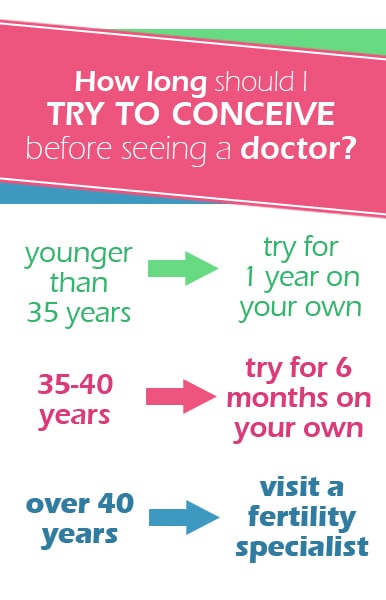
A basic infertility evaluation is usually advised after attempting conception for 1 year in women less than 35 years old and after 6 months in women older than 35 years of age. This is due to the natural decline in female fertility that occurs with aging. Also, success in treatment is best achieved when a woman is younger. However, if a woman is not having regular cycles, one does not need to wait a year, or even 6 months, she should go in sooner to get evaluated since she may be having ovulatory issues.

Visiting a Fertility Specialist

SGF Nurse


Either a general ob/gyn or a fertility specialist, also known as a reproductive endocrinologist, can initiate a fertility evaluation. A reproductive endocrinologist is a doctor trained in ob/gyn with an additional 3 years training devoted solely to the diagnosis and treatment of all types of infertility related issues. A fertility specialist is able to quickly assess the potential fertility problem and then streamline the fertility evaluation to be completed within the first 10 days of the start of a woman’s menstrual cycle. Timing of the fertility tests is very important and reproductive endocrinologist offices are geared toward making appointments quickly in order to accommodate the special needs of a fertility patient.

In most cases, once the evaluation is completed, the fertility specialist can explain all the fertility issues in detail to a couple whether it is endometriosis, polycystic ovary syndrome, ovarian reserve issues, or even male factor.  After the diagnosis is made, the fertility specialist can recommend treatments that can address the diagnosed fertility issue. Treatments may include use of medicines, such as clomiphene citrate or gonadotropins, and procedures, such as intrauterine insemination (IUI), or advanced reproductive technologies such as IVF.

The driving goal for everyone is that our patient conceives a healthy child in a reasonable period of time. Feeling concerned about your fertility is normal, and will likely only become more stressful as the months go by.  If you are not getting pregnant, an appointment with a fertility specialist is a good place to start.

Wishing you the best.

To schedule a New Patient Appointment with Shady Grove Fertility please call 1-877-971-7755 or click here.
Filed Under: General Tagged With: In vitro fertilization (IVF), Intrauterine insemination (IUI)

August 7, 2012 by Shady Grove Fertility

SGF Nurse

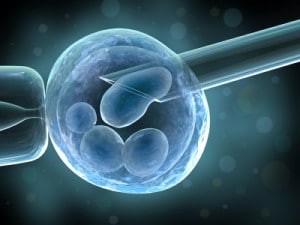
A couple weeks ago we celebrated the birthday of the first baby born through successful IVF treatment. Today we take a look back to appreciate all the advances IVF treatment has had in the last 34 years.  From the first success in a town in Great Britain, IVF has resulted in 5 million births worldwide!

Improvements in IVF Treatment

Stimulating Medications and Trigger Injections

Pharmaceutical companies are continually working to improve medications for fertility and IVF treatment. Over time, medications have been developed to stimulate the ovaries to induce the maturation of more than one egg.  Additionally, trigger injections to improve timing and final egg maturation have been developed, in addition to other medications as Lupron and Ganirelix.  These medications have proven invaluable in the overall improvement of the success of an IVF cycle.
In the early days of IVF, intramuscular injections were administered at fertility center offices.  Today, many patients may administer subcutaneous injections to themselves at home.

> Learn more about Understanding Fertility Medication.

Finding More Diagnoses than Blocked Tubes

While the early IVF cases were for women with tubal issues, other diagnoses were excluded.  Today, endometriosis, male factor, advanced reproductive age, ovulatory dysfunctions, and unexplained infertility can be overcome with the help of IVF.

Improved Culture Media

The first IVF cases were done with 4 and 5 day transfers, without the assistance of sequential media (the stuff in the petri dish) that could nourish the embryo over these important few days. Today, patients typically have a Day 5 transfer, with culture media designed to assist the early embryos in their growth and development.

Surgical Technique

In early IVF treatment, it was common to transfer the embryo into the fallopian tubes; however, nowadays, most embryo transfers are directly into the uterus.

Attention to Lab Factors

ICSI, or intra-cytoplasmic sperm injection, is done for those ‘severe male factor’ cases with either limited sperm, or sperm of poor morphology or motility.  In ICSI, a single normal sperm is injected into the egg itself, to promote fertilization.  This technique was pioneered and developed in the early 1990s.

Another advancement that recently has helped improved IVF treatment is vitrification, the new technique to freeze eggs and embryos has extended the success and use of IVF cycles.  This improved ‘fast freeze technique’ is now standard in most clinics, though only in the last several years. See Shady Grove Fertility’s success rates with vitrification.

Pre-Screening

AFC and AMH -These newer ovarian reserve tests give informative data to help with protocol selection and patient counseling.

PGD – Pre-genetic screening or disease testing can help identify embryos that carry a genetic disease, or aneuploidy.  This can help in transferring unaffected embryos. Read our Genetic Screening Q&A.

Support

Psychological support groups exist to help address questions, needs, and concerns as one goes through infertility.  Support groups are an inestimable source of comfort and help, and assist those who go through fertility treatment along their journey. Shady Grove Fertility offers support groups in several locations (view calendar).

Resolve is a national nonprofit group that supports those individuals and families on their fertility journey.

CAM (complementary and alternative medicine, or integrative medicine) is a class of treatment modalities (acupuncture, massage, yoga, herbal supplements, vitamins, among others) to assist in fertility treatment successes.

> Learn more about Complementary Medicine at Pulling Down the Moon.

IVF Treatment – 34 Years Later

The last thirty-four years has seen the development and fine-tuning of many different medications, techniques and support to help the 1 in 8 couples who will experience infertility in their lifetime.  These advancements have occurred because caring, focused and knowledgeable people have striven to improve the experience and success of infertility treatments.

To schedule a New Patient Appointment with Shady Grove Fertility please call 1-877-971-7755 or click here.

Filed Under: Treatment Tagged With: In vitro fertilization (IVF), Intracytoplasmic sperm injection (ICSI), Medication

July 31, 2012 by Shady Grove Fertility

Dr. Ricardo Yazigi

by Dr. Naveed Khan, MD

The air in the office is filled with sadness.  Two of our patients had miscarriages this morning.  The first patient had conceived after her first cycle of IVF.  The baby started off growing a little slowly and by today stopped growing altogether.  The second lovely patient had conceived twins after multiple failed IVF cycles and this was her last attempt.  Unexpectedly, both the fetuses stopped developing – everything had looked perfect 2 weeks ago.


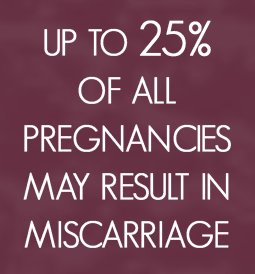
Unfortunately, spontaneous miscarriage is a common complication in early pregnancy.  Miscarriages occur in up to 20% of clinical pregnancies, which are pregnancies where a sac is seen inside the uterus.  If one includes biochemical pregnancies, which are very early miscarriages found by positive hormone levels but before any structures are seen inside the uterus, 25% of all pregnancies are lost.  Generally, the frequency of miscarriages decreases with increasing gestational age.

Why Does Miscarriage Happen?

The natural question to ask and wonder is “Why did this happen?”  Frequently, there is no exact explanation as to why pregnancy loss occurs.  Most often the miscarriage did not result from anything that the couple did or did not do.  The few risk factors for miscarriage that a person can control are smoking, alcohol consumption, cocaine use, morbid obesity, high levels of caffeine intake and possibly the use of non-steroidal anti-inflammatory drugs if used around the time of conception.  There are many other risk factors that can increase the risk of miscarriage that can’t be controlled such as advanced maternal age, previous history of miscarriage, Celiac disease, anatomic issues, trauma, and genetic or developmental abnormalities of the fetus.

> Recurrent Pregnancy Loss can often be helped with genetic screening. Learn More.

Unfortunately, there are no medical treatments that can prevent a first trimester pregnancy loss.  Early in pregnancy one can follow the blood levels of the pregnancy hormone BhCG to see if the hormone levels are rising appropriately.  Later in pregnancy, one can check a vaginal ultrasound for reassurance that the fetus is growing adequately.  Fortunately, after a single miscarriage there is a greater than 80% chance that the next pregnancy will not result in a miscarriage and will go on to delivery.

> Learn more about pregnancy loss from the America Pregnancy Association.
> Request an New Patient Appointment with Shady Grove Fertility.

Filed Under: Diagnosing Infertility Tagged With: Dr. Naveed Khan, In vitro fertilization (IVF), Miscarriage

July 25, 2012 by Shady Grove Fertility

SGF Nurse

Birthdays are celebrations—small or grand, a time to reflect back on the year behind, and the year ahead.  Fertility patients may approach birthdays wondering ‘is age affecting my fertility?’ or wishing to celebrate in the future with their own child.
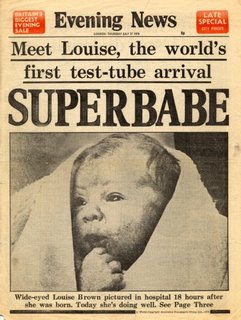
July 25th marks a very special birthday, the birth of Louise Brown, the world’s first IVF baby in Bristol, England. The advances in the field of reproductive medicine and IVF have come a long way since her birth 34 years ago.

Some Historical Perspective

Like many infertility patients, John and Lesley Brown struggled with trying to conceive for nine years.  Suffering from fallopian tube damage, Lesley was referred to Gynecologist Dr. Patrick Steptoe in 1976.
Dr. Steptoe was working with college professor Robert Edwards, a physiologist at Cambridge University.  For the previous ten years, they were working on human conception.  Advances were made when they discovered a way to fertilize the human egg outside of the body.  Setbacks were encountered when transferring the embryo back to the woman’s body.  The Edwards-Steptoe team let the embryos divide in the lab for 4 or 5 days.  By 1977, the 80 or so pregnancies resulting from this procedure only lasted for a few weeks.

With Lesley and John Brown, laparoscopy surgery retrieved one mature egg from her ovary.  This egg was combined with John’s sperm, and fertilization occurred.  The resulting embryo was transferred back to Lesley 2 ½ days later, and pregnancy occurred.  Sonograms over time revealed the pregnancy to be proceeding normally.  Near her due date, Dr. Steptoe delivered Louise via C-section.

From the very beginning, some themes of the current infertility journey were identified:  the deep longing for a child, and the relentless pursuit of the science and technology to make this dream happen.  So many hours and individuals were involved in this earliest IVF process many years ago, to culminate in the live birth of long-awaited first IVF baby, Louise.  Since that time, over 5 million children have been born through the IVF technique. In 2010, Robert Edwards was awarded the Nobel Prize  in Physiology or Medicine for the development of in vitro fertilization.  Thank you to all the early pioneers whose focus and dedication led to these developments.

Today, Louise is married with a child of her own. Happy 34th birthday, Louise!

Visit NBCNews.com for breaking news, world news, and news about the economy

Filed Under: Get Started Tagged With: In vitro fertilization (IVF)

June 21, 2012 by Shady Grove Fertility

Elizabeth Zapp, RN with Shady Grove Fertility shares quick facts about having a frozen embryo transfer, or FET. In recent years FETs have become increasingly popular with infertility patients. Currently, SGF performs about 1,200 frozen embryo transfers each year with comparable success rates to fresh IVF cycles.

> To learn more about having a frozen embryo transfer, click here.
> Call 1-877-971-7755 to schedule your new patient appointment or click here.

Filed Under: General Tagged With: In vitro fertilization (IVF)

June 12, 2012 by Shady Grove Fertility

SGF Nurse

by Dr. Howard McClamrock

Back to Basics

Recently some colleagues and I from Shady Grove Fertility’s Baltimore offices held a seminar on the topic of Understanding Fertility. The seminar was well attended and there were some great questions and discussions afterward. During a one-on-one discussion following the presentation, an attendee commented that she didn’t realize she could “come to Shady Grove Fertility” for anything other than IVF (in vitro fertilization). She was at the beginning stages of considering treatment and she wanted to know options but didn’t feel she was ready for more advanced fertility options at this point.

It was interesting and a really poignant comment because one of the reasons we did this seminar and named it simply “Understanding Fertility” is because we realize sometimes there can be mixed messages regarding what we do (and don’t do) at SGF.

> Join us for our “Getting Started” webcast on June 26, 2012.

Fertility is a big topic, there is a lot of jargon and acronyms specific to the industry. Sometimes those of us practicing the discipline need a reminder that patients seeking our assistance in the beginning stages of their journey largely have a limited understanding of the processes and terminology. We tend to speak about diagnosis, success rates and protocols, ovarian function and FSH levels. Our patients however, are thinking in terms of negative pregnancy tests, irregular cycles and the anxiety associated with a failure to conceive. They need to start at the beginning, and that is exactly what we do at Shady Grove Fertility.

Understanding Fertility

SGF Nurse

There are some specific indicators and conditions that are obvious barriers to conception and raise a red flag to patients and referring physicians. Voluntary sterilization, hysterectomy or prior exposures to chemotherapy to treat various forms of cancer are more obvious conditions which most people realize require the input of a specialist. The more subtle indicators (or sometimes no indicator other than not becoming pregnant) can cause patients reason to pause and wonder if they should see a specialist or take another path such as just giving it more time or seeking help from their primary care or gynecological physician.

To help clarify things, I’d like to offer the following tips:

– Nationally recognized standards state that infertility is defined for women under the age of 35 as 12 months of unprotected intercourse without conception. For women over 35 it is defined as 6 months of unprotected intercourse without conception. If you stopped taking birth control a few years ago but haven’t been actively “trying” you should also consider speaking to your doctor just to be sure everything is okay.

– There are many OB/GYN offices and primary care doctors who are able to assist with the beginning testing or even preliminary treatment for those having difficulty becoming pregnant. Depending on your insurance plan you many need to start with your gyn or primary care physician before being referred to a specialist.

– There are also many insurance plans which don’t require a referral to see a specialist so you should check into your plan specifically in order to understand the requirements. At SGF we never require a referral, we just work within the parameters of what insurance requires.

– SGF is a full service fertility center. We are able to help patients from the very beginning. We perform diagnostic testing, non invasive techniques such as timed intercourse, low tech treatments such as non medicated (or lightly medicated) insemination all the way through to the more invasive processes such as in vitro fertilization or donor egg treatment cycles.

– Many people are surprised to learn that SGF does just as many non invasive insemination cycles as we do IVF cycles. Our expertise is in treating patients using the right treatment with the best success rates at the least expense.

Fertility is all we do at Shady Grove Fertility. We have 29 board certified specialists completely dedicated to the field of reproductive endocrinology. Our experience, expertise and team approach ensure that we are providing the absolute best advice, care and outcomes available, no matter where you are in your fertility journey.

Call 1-877-971-7755 to schedule your new patient appointment or click here.

Filed Under: General Tagged With: Donor egg, In vitro fertilization (IVF)

  • « Go to Previous Page
  • Page 1
  • Interim pages omitted …
  • Page 8
  • Page 9
  • Page 10
  • Page 11
  • Page 12
  • Go to Next Page »

Company

  • About SGF
  • About US Fertility
  • Our Doctors
  • Fertility Equity
  • Careers
  • Newsroom
  • SGF College Scholarship
  • Contact Us
  • Voice Your Feedback

Treatments

  • Egg Freezing
  • Intrauterine Insemination (IUI)
  • In Vitro Fertilization (IVF)
  • Frozen Embryo Transfer (FET)
  • LGBTQIA+ Family Building
  • Shared Risk 100% Refund Program
  • All Treatments

Resources

  • Patient Portal
  • Online Bill Pay
  • Library
  • Support Groups & Events

Locations

  • California
  • Colorado
  • Delaware
  • Florida
  • Georgia
  • Maryland
  • North Carolina
  • Pennsylvania
  • Texas
  • Virginia
  • Washington, D.C.

2026 Shady Grove Fertility

  • Policies & Notices
Also of interest
  • In Vitro Fertilization IVF
  • Fertility Tests
  • Research Publications