
• Skip to primary navigation
  • Skip to main content
  • Skip to footer
Shady Grove Fertility
  • Become an Egg Donor
  • Referring Physicians
  • 1-888-761-1967
  • Schedule Appointment
  • Get Started
        • Get Started
          • Causes of Infertility
          • Fertility Tests
          • When to Seek Help
          • Find a Doctor
          • Preconception and prenatal vitamins 
          • Schedule an Appointment
        • Personalized Care For
          • Single Parents
          • LGBTQIA+ Family Building
          • People with Cancer
          • Known Genetic Diseases
          • Egg Donors
  • Treatments
        • Fertility
          • Timed Intercourse
          • Ovulation Induction
          • Intrauterine Insemination (IUI)
          • In Vitro Fertilization (IVF)
          • Frozen Embryo Transfer (FET)
        • Donation & Surrogacy
          • Donor Sperm
          • Donor Egg
          • Donor Embryo
          • Gestational Carrier
          • LGBTQIA+ Family Building
          • Single Parents
          • Find a Donor
        • More Treatments
          • Center for Male Fertility
          • Egg Freezing
          • OncoFertility
          • Preimplantation Genetic Testing
          • MIGS
          • All Fertility Treatments
  • Resources
    • Resource Library
    • Events Calendar
    • Patient Stories
    • Mental Health
    • Wellness Center
  • Insurance & Savings
    • Insurance & Benefits
    • Shared Risk 100% Refund Program
    • 100% Refund for Donor Egg
    • Discounts
    • Egg Freezing Costs
    • Financing & Grants
    • Clinical Trials
  • About
    • Find a Doctor
    • About SGF
    • Our Care Team
    • Advanced Practice Providers
    • Fertility Equity
    • Philanthropy
    • Newsroom
    • Careers
    • Contact Us
    • Voice Your Feedback
  • Locations
        • Find a Location
        • California
        • Colorado
        • Delaware
        • Florida
        • Georgia
        • Maryland
        • North Carolina
        • Pennsylvania
        • Texas
        • Virginia
        • Washington, D.C.
        • Chile
        • International & Out of State
        • SGF at Walter Reed National Military Medical Center
  • Patient Hub
    • Online Bill Pay
    • Patient Forms
    • Patient Portal
  • Call your care team
  • Become an egg donor
  • Referring physicians
  • search-icon
  • Schedule appointment 1-888-761-1967

Home / Egg freezing / Page 9

Egg freezing

November 2, 2016 by Shady Grove Fertility

Is it possible to slow down or stop the biological clock through egg freezing, and what are the financial details of it? Dr. Kate Devine, Co-Director of Research and practicing reproductive endocrinologist in SGF’s Washington D.C. K Street office answers these two important questions and much more on Fox 5 Good Day DC.

Can You Really Stop Your Biological Clock?
Age and Reproduction in Women

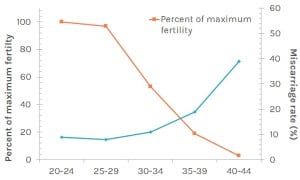
40 is not the new 20 when it comes to reproduction. In fact, while the optimal age to have a baby can vary person to person, on average, female fertility potential begins to decrease for women in their mid- to late-30s. As women age, both the quality and quantity of eggs will decrease, which ultimately increases the rate of miscarriage and chromosomal abnormalities, ultimately making it more challenging to have a baby.

Fortunately, while you can’t stop your biological clock, with egg freezing you are actually able to freeze eggs in time. Once eggs are retrieved, egg quality and egg quantity are preserved at the time of freezing and they remain at that same quality in storage with the same fertility potential until you come back to use them, should you need it.

The Benefit of a Backup Plan

Egg freezing isn’t for everyone, but for women who may benefit from this treatment we recommend women freeze in their 30s, somewhere between 30 and just beyond 35.

According to Dr. Devine, the benefits of egg freezing are more than just easing concern over reproductive aging, “In the time period after freezing her eggs, the woman is now feeling better about the probability of being able to have a child or multiple children in the future. She goes about her life and she feels more at ease about her reproductive potential and reproductive future. She can pursue her career, and she can make a good decision about who is that right person to start her family if that’s what’s on the agenda for her.”

How does it work when women return to use their thawed eggs?

Freezing does not seem to impact reproductive outcomes, and once thawed, the eggs are as good as if they were used at the time of freezing. Devine reassures, “There is an abundance of really high quality data at this point that suggests that these eggs perform very, very well.” Regarding surviving the thaw, “about 10 percent of eggs won’t survive thaw. However, if the eggs are vitrified at an experienced center — and I can’t emphasize enough how important it is for a woman to make sure she’s freezing her eggs at the right place — the eggs do seem to perform as well as if they had been used for IVF at the time they were originally frozen. With current technology the freezing does not seem to impact greatly the reproductive outcomes from the eggs,” Devine adds.

As for women who choose Shady Grove Fertility, the good news is that we have years of experience thawing both eggs and embryos. While the egg freezing technology has been around for several years, not as many fertility centers have experience thawing eggs, so we encourage women to choose wisely.

As stated by Dr. Devine, we encourage women to view egg freezing as a “backup plan.” We now have enough data to support egg freezing as a reliable option for women, and it’s best to be informed about your fertility. Even after freezing her eggs, in most circumstances it makes sense for a woman to try to get pregnant ‘the old fashioned way’ once she’s ready to have a baby.  The difference is that she will do so with the peace of mind that if that doesn’t work out, her ‘younger’ eggs are ready and waiting.

How much does it cost to freeze eggs?

Like most fertility centers, SGF offers financing plans for the egg freezing treatment cycles. However, we have also developed several financial programs, such as the Egg Freezing Discount Program and Assure Fertility, to help more women access egg freezing if they are interested. The cost of each cycle and program includes monitoring appointments, cryopreservation of the eggs, and the first year of storage.

The Importance of Discussing Your Fertility and Egg Freezing

Anchor Holly Morris concluded the conversation saying, “I don’t think that women who are career oriented are thinking that they are not going to be able to have their kids later because they are fit and they feel young. Is it possible to have this conversation come from your OB/GYN when you are going yearly younger?”

Dr. Devine recommends women who are in their 20s ask their OB/GYN about their fertility, which can be tested through a blood test and ultrasound. For women who are in their 30s who know they want to have a baby one day, she recommends seeing a reproductive endocrinologist to discuss the possibility of egg freezing.chedule an Egg Freezing Appointment

Schedule An Egg Freezing Appointment

To learn more about egg freezing and to ask Dr. Kate Devine questions, register for the upcoming egg freezing seminar in Washington D.C. on Tuesday, November 29. Or call 1-877-411-9292 to schedule an appointment with Dr. Devine or any of SGF’s 33 other reproductive endocrinologists.

Filed Under: Treatment Tagged With: Egg freezing

October 27, 2016 by Shady Grove Fertility

Receiving a cancer diagnosis at any age is excruciating, but for young women in their 20s and 30s there are additional concerns that need to be addressed in a timely manner. While a young woman’s oncologist will move swiftly to initiate a treatment protocol to rid her of cancer as much as possible, it is essential that young women during their reproductive years explore the option known as oncofertility, where a patient undergoes an egg freezing process prior to beginning cancer treatment. Chemotherapy and radiation treatments are often used to eradicate cancer; however, treatments also have the potential to damage a woman’s eggs, making it challenging to have a baby if and when she wants children. Last week Self spoke to two Shady Grove Fertility patients about their cancer treatment and the egg freezing procedure that preserved their ability to bear their own children once cancer-free.

Eileen’s Story: How a 21-Year-Old College Student Took Action

Eileen Fauteaux was a junior at Virginia Tech in November 2015 when she was diagnosed with Ewing’s sarcoma, a type of bone cancer that affects children and young adults. “After I found out it was Ewing’s sarcoma and I needed chemotherapy, the first appointment I made was with a fertility doctor,” Fauteaux told Self. Naveed Khan, M.D., and the staff at Shady Grove Fertility’s Leesburg, VA office worked swiftly to begin the egg freezing process prior to Eileen’s cancer treatment. “For oncofertility patients it’s essential to not delay the egg freezing process so patients like Eileen can begin treatment to remove the cancer,” said Dr. Khan.

Ultimately, Dr. Khan was able to retrieve 27 mature and immature eggs that have been cryopreserved for later use if Eileen needs to use them. One unplanned side effect of the hormone shots Eileen administered every day was that by the time she underwent chemotherapy, Eileen was comfortable giving herself shots and it had prepared her for what was to come to eradicate the cancer.

Recently Eileen returned to Virginia Tech to complete her studies. She’s hopeful for the future and comforted knowing that when the time is right, and if needed, she has the eggs to build her family. “Who knows if I’ll even need to use the eggs in the future—maybe I’ll be perfectly fine and fertile—but knowing I still have the opportunity to have children is a big sigh of relief.”

Kelly’s Story: PCOS Led Her to a Doctor, but Freezing Her Eggs Later Led to Hope

For Kelly Collevechio, a patient of Isaac Sasson, M.D., Ph.D., at Shady Grove Fertility’s Chesterbrook, PA office, a diagnosis of PCOS in her teens led her to consult her OB/GYN after 6 months of trying to conceive without success when she was 26 in 2013. Kelly’s doctor referred her to Shady Grove Fertility where she underwent a hysterosalpingogram (HSG), a test where dye is injected into the uterus. The test revealed a hydrosalpinx, a blockage in the Fallopian tube, and required surgery to remove. Kelly was required to undergo an MRI before surgery revealing a mass in her right ovary that turned out to be malignant.

Dr. Sasson and Kelly’s oncologist worked together to devise a treatment plan. “During a second surgery, doctors removed Collevechio’s right ovary and both of her Fallopian tubes, leaving her uterus and left ovary behind. After removing her right ovary, they still recommended chemotherapy, but her medical team decided it would be OK to delay chemotherapy until she could freeze her eggs.” Stimulating her left ovary, 14 eggs were retrieved. Seven embryos in the blastocyst stage were created using her husband Jim’s sperm, and then frozen, waiting to be thawed once Kelly’s cancer treatment was complete. “Working as a team with Kelly’s oncologist was not only the best way to proceed with treatment, but provided her with much needed peace of mind while going through a stressful and confusing ordeal,” said Dr. Sasson.

After being declared cancer-free in Spring 2014, the Collevechio’s were told to wait before beginning fertility treatment. Kelly says that during the following months she focused on her health and feeling good about herself again. In February 2015 she and Jim were finally ready to return to Dr. Sasson and the team at SGF for a frozen embryo transfer. Given the option to transfer one or two embryos, the couple chose to transfer two. Kelly told Self, “I don’t have blinders on—there’s always a chance the cancer could come back. The doctor said, ‘As long as you’re OK with having twins,’ and I said, ‘Let’s do it!’” Now a year old, James Thomas and Brielle Marie are the light of their parents’ lives. Kelly describes them as a “handful,” but a very worthy one.

Fertility Preservation Prior to Cancer Treatment

When a patient with a recent cancer diagnosis comes to Shady Grove Fertility, a specially trained team guides them through the entire treatment process. This team helps to navigate patients through each step, from finding ways to afford treatment to the actual medical procedure. Due to the time-sensitive nature of treatment, women with cancer can expect an expedited treatment plan and to see a physician for consultation as soon as possible—usually within a few days of calling our office.

Schedule an Appointment

SCHEDULE AN APPOINTMENT
If you or a friend or loved one has been diagnosed with cancer and are interested in learning more about fertility preservation before cancer treatment, we encourage you to contact our New Patient Center at 1-877-971-7755 to schedule an appointment.

Filed Under: Treatment Tagged With: Egg freezing

October 19, 2016 by Shady Grove Fertility

Mic Money (part of .Mic), a news outlet tailored to millennials, turned to Shady Grove Fertility last week to create its self-proclaimed “don’t get screwed guide to paying for a fertility back-up plan.” Shady Grove Fertility Egg Freezing Program Director, Michele Purcell, MHA, RN, was interviewed by D.C.-based Mic Money writer, Anna Bahney for the article, How much does it cost to freeze eggs? Your must-read guide to this popular fertility move.

In the article, Bahney hits all of the hot spots for women who are considering egg freezing. According to Bahney, “Managing a ticking biological clock while also staying on top of your education, building your career, and searching for the right partner—or not—can be overwhelming.”

In this guide, Bahney not only covers the various medical and decision-making steps along the egg freezing journey from a patient need-to-know perspective, but she also covers the costs associated with each step of the egg freezing process.

The key takeaways if you’re wondering how much it costs to freeze your eggs:

  1. Age is important: a 30 year old woman has a 20 percent chance of having a baby each month. And by the time she is 40 that percentage decreases significantly. The sweet spot to freeze is in your early- to mid-30s. As stated by Purcell in the article, “Unfortunately, your body doesn’t give you a heads up and say, ‘Hey your ovaries are going to start deteriorating!'”
  2. The consultation with a physician is important: understanding your current fertility is a major factor when it comes to egg freezing. Basic diagnostic testing is often covered by insurance and results provide your physician with insight into your current fertility, which will inform if you should freeze your eggs now and how many cycles you may need.
  3. How many eggs and how many cycles you will need is important to consider: for the average 37 year old with a good ovarian reserve (egg supply), we recommend freezing 20 mature eggs. Discuss how many cycles you may need with your physician, it could be one or it could be five, but it’s all dependent on your ovarian reserve.
  4. Get a cost breakdown: make sure you understand everything from a cost perspective, from the diagnostic testing, medications, storage, and when you come back to use your eggs to have a baby.
  5. Do your research: anyone can freeze an egg, but can they thaw an egg? Make sure the fertility center or clinic you pursue has thaw data and, even better, patients who have had children from frozen eggs. This technology is sensitive and at SGF, we have had thousands of egg thaw cycles from couples pursuing fertility treatment, frozen eggs from women who have donated their eggs, as well as elective egg freezing patients. In fact, this past February SGF physicians published the largest study of its kind regarding thaw data and pregnancy outcomes of frozen eggs in the esteemed fertility journal, Fertility and Sterility.

Schedule an Appointment

If you are considering freezing your eggs but still have questions, we recommend starting with diagnostic testing and a physician consultation to get your questions answered. Read the full article on Mic.com or call 1-877-411-9292 to schedule an egg freezing consultation. 

Filed Under: Treatment Tagged With: Egg freezing

September 9, 2016 by Shady Grove Fertility

Recently, Dr. Shruti Malik of our Fair Oaks and Woodbridge, VA offices joined the Glow App to answer egg freezing questions from a personal and physician perspective.

Fertility technology proved itself astounding with the invention of egg freezing, which originated in the  ‘80s and has, since, come a long way. Egg freezing serves as an extremely useful option to preserve fertility and eventually build a family—nearly eradicating the factor of age as part of the fertility equation.

By using a technique called vitrification to flash-freeze eggs, Shady Grove Fertility’s Egg Freezing Program essentially ensures the quality of the existing egg by minimizing the ice crystals in the egg that would have otherwise resulted from the slow-freeze process. Due to the complex nature of the ovum, egg freezing requires extensive experience and precision to ensure the procedure’s success.

In a recent online expert Q&A, Dr. Shruti Malik delves into the most pressing egg freezing questions.

Common Egg Freezing Questions

Q: What does your ovarian reserve need to be to do the procedure
A: While there is no specific cutoff, it’s best to have an FSH (follicle-stimulating hormone) level over 10, AMH anti-Müllerian hormone) level over 1, and antral follicle count over 10. Learn more about FSH and AMH.

Q: How long do the frozen eggs remain viable?
A: : Indefinitely! So whenever you’re ready to use them, they’ll be there.

Q: How long does the procedure take? Will I have to take time off from work?
A:  Usually, it takes about 10 to 12 days for the actual cycle. You will only need to take off the day of the egg retrieval, since you will be sedated via IV medications.

Q: I’m considering this, but am undecided between the fast freeze and slow freeze. Thoughts?
A: I would say to definitely go with rapid freezing, otherwise known as vitrification. The switch from slow freeze to vitrification is a large part of why egg freezing is so much more successful in recent years.

Q: What is the most common reason for freezing your eggs?
A: A lot of women are doing it electively to preserve their egg quality and fertility options for the future. Many women may not be ready for a family at this time but since fertility diminishes as we age, it’s harder to conceive later in life. Some women also freeze their eggs before starting cancer treatment such as chemotherapy or radiation, because some treatments can hurt the eggs a woman has and cause infertility.

Q: Who is the right type of person for egg freezing? What are some of the characteristics that your egg freezing patients share?
A: The ideal age for egg freezing is 30 to 38. But if you’re thinking of it, I would consider making an appointment for fertility testing and meet with a doctor to discuss your options. Ninety percent of our patients have insurance to cover those first steps. I’ve also had young and healthy patients with lower than expected fertility opt to freeze their eggs and preserved their chance to have a family later.

A word about egg freezing from Dr. Malik:

Schedule An Egg Freezing Appointment

Call 1-877-411-9292 to learn more about egg freezing or to schedule an egg freezing appointment. Learn more at one of our upcoming events.

Medical contribution from Shady Grove Fertility physician, Dr. Shruti Malik. A little about Dr. Malik:

Dr. Malik is board certified in reproductive endocrinology and infertility. She has expertise in the diagnosis and treatment of infertility, including polycystic ovary syndrome, male factor infertility, and ovarian aging. She is also accomplished in the areas of fertility preservation and elective egg freezing.

Filed Under: Treatment Tagged With: Egg freezing

August 11, 2016 by Shady Grove Fertility

Taking the step to freeze your eggs is as much a financial decision as it is an emotional one. While many women are interested in egg freezing, they often hear about the expense associated with it and the unknowns—will it work, how do I know it’s for me—and wonder if it’s worth the cost? These questions and concerns about the cost of egg freezing are valid and it is for these very reasons we have taken measures to make egg freezing more financially accessible.

The three main steps of egg freezing include: the initial testing and physician consultation, freezing your eggs, and finally returning to use your frozen eggs to have a baby. Each step has a unique program associated with it in order to help more women take advantage of this new, fertility-extending technology.

Is Egg Freezing Covered by Insurance?

The first step towards egg freezing is to determine if it’s right for you, right now. Through simple ovarian reserve testing, which measures your current fertility, you can quickly have the answers you are looking for.

Once ovarian reserve testing is complete, you return to discuss results with your Shady Grove Fertility physician. Luckily, the majority of the over 30 insurance companies we participate with provide coverage for ovarian reserve testing and consultation. In fact, approximately 90 percent of Shady Grove Fertility elective egg freezing patients have coverage. The cost for patients paying out of pocket without coverage is $325.

The Cost of Egg Freezing

If you decided to pursue freezing your eggs, there are various programs to consider based on how many eggs you desire to freeze and how many cycles may be required to reach that quantity of eggs.

Over the past few years, Shady Grove Fertility has developed several financial programs that meet the various needs of our patients. Typically, we recommend women ages 37 and younger freeze 15 to 20 mature eggs and women 38 to 40 freeze 25 to 30 mature eggs. Our Fee for Service/Per Cycle financial option is a pay as you go option that includes the cost of egg freezing monitoring appointments, egg retrieval, cryopreservation, and the first year of storage for $7,500. There are no eligibility requirements for this option.

Assure Fertility is one of the only flat-fee programs that guarantees either a certain number of eggs or cycles, whichever comes first. Depending on your age, ovarian reserve testing, and the number of kids you would like to have with your frozen eggs, you can estimate the number of eggs you should freeze to give you the best chances of taking home one or more babies. Shady Grove Fertility’s Assure Fertility financial program provides women wishing to freeze more eggs the best opportunity to freeze enough eggs at a set cost. Learn more about Assure 20 and Assure 30.

In addition to the cost of the egg freezing cycle, medication costs range from $4,000 to $8,000 per cycle.

Coming Back to Use Frozen Eggs

Once you freeze your eggs, they maintain the same “age” as they did when you froze them. For example, if you freeze at 36 and return at 41, your frozen eggs are the same quality as the age at which you froze. Women who freeze 15 to 20 mature eggs when they are 37 or younger have roughly an 80 percent chance of taking home a baby, compared to a 40 percent chance of taking home a baby if you freeze at 41.

This year, Shady Grove Fertility introduced Shared Risk 100% Refund Program for Returning Egg Freezing Patients. Patients pay a flat fee for unlimited egg thaws and frozen embryo transfers (FETs) from the eggs that they’ve previously frozen.

The program ensures that if you don’t deliver a baby after using all of your available frozen eggs, or if you withdraw out of the program at any time, you receive a full refund.

The requirements to enter this system are simple: your eggs must be frozen at Shady Grove Fertility, you must have a minimum of 10 mature eggs, thaw cycles must be complete by the age of 51, and you must meet the age requirements and have favorable ovarian reserve at the time of egg freezing.

Schedule An Egg Freezing Consultation 

To learn more about our egg freezing guarantee call 1-877-411-9292 to speak with one of our New Patient Liaisons or register for one of our upcoming patient educational events.

Filed Under: Treatment Tagged With: Egg freezing

August 4, 2016 by Shady Grove Fertility

There are many common misconceptions surrounding egg freezing. Here is the truth behind eight common egg freezing myths.

Egg Freezing Myth 1: It’s a New Procedure with Little Information about Success Rates

This year, Shady Grove Fertility published the largest study of its kind detailing pregnancy rates using frozen eggs in the U.S. Through December 2014, Shady Grove Fertility physicians performed 1,171 egg freezing cycles for 875 women who intended to use their eggs for future use. As of January 2015, 117 of these women returned to undergo 128 cycles using their frozen eggs.

At the time of the study, there were 51 pregnancies, resulting in 55 children, with eight children on the way. These results have confirmed that IVF cycles with frozen eggs produce similar pregnancy rates as IVF cycles with fresh eggs.

Egg Freezing Myth 2: You Can Only Have One Child

Through the same study, Shady Grove Fertility’s physician research team was able to provide an estimate of the probability that egg freezing could produce one, two, or three children—with the results dependent on the age a woman freezes and how many mature eggs she has frozen.

For women younger than 38, 15 to 20 frozen mature eggs provided an estimated 70 to 80 percent chance of a least one child and 70 to 80 percent chance of having two children. For women 38 to 40 years old, 25 to 30 frozen mature eggs offers a 65 to 75 percent chance of at least one child and 65 to 75 percent chance of having two children. Your physician can individualize these recommendations according to your specific family building goals.

Egg Freezing Myth 3: You Should Freeze Your Eggs at 40

Age is the primary condition that affects a woman’s fertility. Women are born with all of the eggs she will ever have, and over time they diminish in quality and quantity. While women can freeze their eggs at Shady Grove Fertility up to age 40, to have the best chance at freezing enough high quality eggs, we recommend  women freeze their eggs in their early- to mid-30s.

Egg Freezing Myth 4: Egg Freezing Causes Early Menopause

No, egg freezing does not cause early menopause. Every month a woman’s body prepares several eggs that may develop, typically with just one that is mature enough to produce a pregnancy. During the egg freezing process, we harvest that entire set of eggs, which in turn does not impair your future fertility. Egg freezing has no impact on menopause, which is a genetically predetermined issue.

Egg Freezing Myth 5: It’s Only for Single Women

Women choose to freeze their eggs for a variety of reasons. Many face illnesses like endometriosis or cancer, which can impair fertility; while others want more time to find the right partner or situation. Others select egg freezing even with a partner because they have decided to wait to have a family.

Egg Freezing Myth 6: The Ability to Freeze Your Eggs is for the Rich and Famous

At Shady Grove Fertility, making access to quality care more affordable is a priority. Therefore, in 2013, Shady Grove Fertility introduced a popular financial option for egg freezing: Assure Fertility. Assure Fertility includes up to four rounds of treatment or 20 high quality eggs to freeze for one fixed cost. We also offer an elective egg freezing guarantee, which is a unique money-back guarantee that gives women the opportunity to pay a fixed cost to use their frozen eggs to have a baby. Women who enroll in the program will receive a full refund if they don’t take home a baby. Monthly payment options are available through Fertility Finance.

Egg Freezing Myth 7: I’m Healthy, I Should Be Fine

For some women, freezing their eggs gives them peace of mind in a season of life incongruous to starting a family. Basic fertility testing can assess your ovarian reserve, or your current fertility. A clearer picture of your ovarian function may lead you to opt for elective fertility preservation.

Shady Grove Fertility physician, Shruti Malik, M.D., of the Fair Oaks and Woodbridge, VA offices, chose to freeze her eggs after getting tested with her girlfriends. Although they were all the same age, one of her friends unexpectedly had a low ovarian reserve, convincing Dr. Malik that egg freezing could help prevent any unexpected surprises when she is ready to start a family.

Egg Freezing Myth 8: I’ll Miss Too Much Work

While an egg freezing cycle may take 4 to 6 weeks to complete, there are only certain appointments that may impact your daily schedule and occur during our regular office hours: your initial fertility testing appointment, physician consultation, and regular monitoring appointments during the medicated portion of your cycle, and finally the egg retrieval.

The very good news is that many of these appointments are available beginning at 7:00 a.m. and we have several office locations throughout Washington, D.C., Northern Virginia, Maryland, and Pennsylvania to best fit your needs.

The egg retrieval is the only time when we recommend taking time off from school or work. Most women are able to return to regular activities within a day or two.

Schedule An Egg Freezing Appointment

To learn more about Shady Grove Fertility’s egg freezing program, call 1-877-411-9292 to speak with one of our New Patient Liaisons or register for one of our upcoming patient educational events.

Filed Under: Treatment Tagged With: Egg freezing

  • « Go to Previous Page
  • Page 1
  • Interim pages omitted …
  • Page 7
  • Page 8
  • Page 9
  • Page 10
  • Page 11
  • Interim pages omitted …
  • Page 22
  • Go to Next Page »

Company

  • About SGF
  • About US Fertility
  • Our Doctors
  • Fertility Equity
  • Careers
  • Newsroom
  • SGF College Scholarship
  • Contact Us
  • Voice Your Feedback

Treatments

  • Egg Freezing
  • Intrauterine Insemination (IUI)
  • In Vitro Fertilization (IVF)
  • Frozen Embryo Transfer (FET)
  • LGBTQIA+ Family Building
  • Shared Risk 100% Refund Program
  • All Treatments

Resources

  • Patient Portal
  • Online Bill Pay
  • Library
  • Support Groups & Events

Locations

  • California
  • Colorado
  • Delaware
  • Florida
  • Georgia
  • Maryland
  • North Carolina
  • Pennsylvania
  • Texas
  • Virginia
  • Washington, D.C.

2026 Shady Grove Fertility

  • Policies & Notices
Also of interest
  • In Vitro Fertilization IVF
  • Fertility Tests
  • Research Publications