• Skip to primary navigation
  • Skip to main content
  • Skip to footer
Shady Grove Fertility
  • Become an Egg Donor
  • Referring Physicians
  • 1-888-761-1967
  • Schedule Appointment
  • Get Started
        • Get Started
          • Causes of Infertility
          • Fertility Tests
          • When to Seek Help
          • Find a Doctor
          • Preconception and prenatal vitamins 
          • Schedule an Appointment
        • Personalized Care For
          • Single Parents
          • LGBTQIA+ Family Building
          • People with Cancer
          • Known Genetic Diseases
          • Egg Donors
  • Treatments
        • Fertility
          • Timed Intercourse
          • Ovulation Induction
          • Intrauterine Insemination (IUI)
          • In Vitro Fertilization (IVF)
          • Frozen Embryo Transfer (FET)
        • Donation & Surrogacy
          • Donor Sperm
          • Donor Egg
          • Donor Embryo
          • Gestational Carrier
          • LGBTQIA+ Family Building
          • Single Parents
          • Find a Donor
        • More Treatments
          • Center for Male Fertility
          • Egg Freezing
          • OncoFertility
          • Preimplantation Genetic Testing
          • MIGS
          • All Fertility Treatments
  • Resources
    • Resource Library
    • Events Calendar
    • Patient Stories
    • Mental Health
    • Wellness Center
  • Insurance & Savings
    • Insurance & Benefits
    • Shared Risk 100% Refund Program
    • 100% Refund for Donor Egg
    • Discounts
    • Egg Freezing Costs
    • Financing & Grants
    • Clinical Trials
  • About
    • Find a Doctor
    • About SGF
    • Our Care Team
    • Advanced Practice Providers
    • Fertility Equity
    • Philanthropy
    • Newsroom
    • Careers
    • Contact Us
    • Voice Your Feedback
  • Locations
        • Find a Location
        • California
        • Colorado
        • Delaware
        • Florida
        • Georgia
        • Maryland
        • North Carolina
        • Pennsylvania
        • Texas
        • Virginia
        • Washington, D.C.
        • Chile
        • International & Out of State
        • SGF at Walter Reed National Military Medical Center
  • Patient Hub
    • Online Bill Pay
    • Patient Forms
    • Patient Portal
  • Call your care team
  • Become an egg donor
  • Referring physicians
  • search-icon
  • Schedule appointment 1-888-761-1967

Home / Causes of infertility / Page 3

Causes of infertility

June 20, 2017 by Shady Grove Fertility

Most patients in a fertility expert’s office are there because they have problems getting pregnant. For some, the problem isn’t so much getting pregnant as staying pregnant. Embryologists and reproductive specialists are well-versed in diagnosing and treating the causes of recurrent miscarriage.

“Depending on your criteria for recurrent miscarriage,” says Dr. Jeff McKeeby of Shady Grove Fertility’s Annapolis, MD office, “I would estimate that at least 3 percent of couples are going through this experience. Because we’re following our patients from such an early point in their pregnancy, it’s likely that we see a greater percentage of miscarriage than in the general population.”

Until recently, miscarriage was referred to as “recurrent” if a woman experienced pregnancy loss three times or more. Now, partly due to advanced knowledge among reproductive medicine practitioners, women are typically advised to be seen for recurrent miscarriage (also called recurrent pregnancy loss, or RPL) after only two such events.

The term “miscarriage” is generally used to describe loss of a pregnancy up to 20 weeks gestation, most often in the initial 12 weeks or first trimester. Such spontaneous losses usually occur either because the embryo or fetus is not developing normally and/or other processes, such as failure of implantation of the pregnancy within the wall of the uterus.

“About half the time, recurrent pregnancy loss is unexplained,” McKeeby says regarding the diagnosis of miscarriage causes.

Finding the cause of recurrent miscarriage

Dr. McKeeby says that the causes with which his patients present initially are somewhat dependent on the referring practice. “There are some causes that are generally accepted, and there are some that are believed may be causes but are hard to prove,” he explains. The most agreed-upon causes of recurrent loss are:

  • chromosomal abnormalities in the parents
  • autoimmune conditions, such as having anti-phospholipid antibodies
  • anatomic abnormalities such as uterine malformations, for example, uterine septum
  • cervical incompetence (a factor in miscarriages occurring in second trimester or later)

More debatable causes include:

  • endocrine disorders, like polycystic ovary syndrome (PCOS) or luteal phase deficiency
  • autoimmune problems besides anti-phospholipid antibodies
  • sperm quality problems
  • infections
  • stress and environmental factors

Maternal age should be considered in the list of potential causes simply because statistically, women in their 40s and older are documented as a group that experiences miscarriages more often.

“Most miscarriages, regardless of whether they recur or not, are due to chromosomal abnormalities, and the vast majority of those are due to either random chance (in the embryonic development process) or advancing maternal age,” McKeeby states.

Watch: SGF’s New On-Demand Webinar, Getting Pregnant with Endometriosis

Treating recurrent miscarriage

The cause of any individual miscarriage may be hard to determine in many cases, but women who’ve experienced such loss can do more than simply shrug their shoulders and hope for the best the next time.

“Many of these problems can indeed be treated either prior to or very early in subsequent pregnancies,” assures Dr. McKeeby.

For example, if testing on the woman has indicated an antiphospholipid antibody syndrome, injections of a drug called Lovenox (a low molecular-weight heparin, or blood thinner) could be started at the first signs of pregnancy. If an anatomical condition existed, surgical correction could be performed prior to getting pregnant again.

McKeeby says, that while miscarriage is common, it’s still recommended for a patient or her OB to wait until a second loss before seeking possible causes. It’s appropriate to avoid over-testing and possibly rendering false test results, which can lead to unnecessary treatment.

“We recommend a fertility evaluation after a second miscarriage,” he says, “because after two losses, your chances of another miscarriage are about 25 percent. After three losses, the chance is 30 percent. So since we’re not talking about a significant difference between those numbers, it makes sense to start looking for things that may be correctable before a subsequent conception.”

Prepregnancy Genetic Screening (PGS) 

One situation that requires a higher-tech approach to answering the needs of women with recurrent pregnancy loss is in the case of what is called “balanced translocation,” a term referring to parents in which their chromosomes have missing or incorrectly located pieces. Men and women with such genetic occurrences almost never have any resulting conditions or symptoms that would clue them in on their chromosomal structure. Usually, they learn about it after having a simple blood test called a karyotype — a picture of how one’s chromosomes are arranged.

“In these cases, the risk of recurrence is somewhere between 2 and 10 percent, depending on random chance and on the gender of the parent who has the balanced translocation.” Dr. McKeeby explains that prepregnancy genetic testing, can provide the solution that these patients need to have a healthy pregnancy and baby. A more advanced option is genetic testing of embryos known as preimplantation genetic diagnosis (PGD). PGD is a cellular biopsy and DNA analysis of an embryo created through in vitro fertilization, or IVF. In fact, the two main reasons for utilizing PGD is recurrent pregnancy loss and recurrent IVF failure.

“The most important thing in genetic testing is to perform a karyotype on the pregnancy that is lost,” McKeeby says, “not only on the parents.”

Diagnosing recurrent miscarriage

As disheartening as it is to experience even one miscarriage, and certainly more than that, the best news is that most patients are able to achieve a successful pregnancy. Chance of success is almost greater than risk of failure.
“If you find something that’s significant and you treat it,” explains McKeeby, “or you don’t find anything wrong, you have about a 70 to 75 percent chance of a successful pregnancy after that. Even if you’ve had four or five miscarriages, your odds with either a treated condition or no cause found are still over 65 percent for successful subsequent pregnancies.”

Another role of a reproductive endocrinologist is reassuring patients—referred to as a “tender loving care” approach—that their chances for having a healthy baby are very good. Recurrent miscarriage patients in the Shady Grove Fertility practice receive the attention from staff and access to treatment and technology to feel confident that they will go on to have a healthy pregnancy.

Getting pregnant after miscarriage

Dr. McKeeby stresses that women who read about the details of miscarriage, and its diagnosis and treatment, should not be concerned about a specific cause until the evaluation is complete. While women in their 40s do have higher chances of miscarriage, even they should not approach conception feeling initially worried. Younger women, in particular, have less statistical cause for concern. All women who are hoping to conceive should focus on important lifestyle factors— nutrition, folic acid intake, weight control and maintaining optimal health—that can have a greater impact on their pregnancy chances.

“Patients should feel reassured overall that it’s far more likely they’ll have a successful pregnancy and healthy baby.”

Medical Contribution by: Jeffrey McKeeby, M.D., of Shady Grove Fertility’s Annapolis, MD office

Schedule an Appointment

To learn more about recurrent miscarriage or to schedule an appointment, please call our New Patient Center at 1-877-971-7755 or click here to complete this brief online form. 

Editors Note: This post was originally published in October 2014 and has been updated for accuracy and comprehensiveness as of June 2017.
Filed Under: Diagnosing Infertility Tagged With: Causes of infertility

November 30, 2016 by Shady Grove Fertility

When you’ve already had a successful pregnancy, it seems hard to believe that you may have difficulty getting pregnant again. But in the United States, nearly half of all cases of infertility are classified as secondary infertility. Secondary infertility is defined as the inability to become pregnant —despite engaging in unprotected intercourse—following the birth of one or more biological children who were born without the aid of fertility treatment or medications.

Causes of Secondary Infertility

Maternal Age
One of the leading causes of secondary infertility is the female partner’s age. As a woman gets older, the quality and quantity of her eggs decreases. While she may have had her first child without a problem, she could encounter a change in egg quality or quantity if she tries to conceive again several years later. While every individual woman is different, Shady Grove Fertility provides age-based recommendations for when you should see a fertility specialist if you are having difficulty conceiving.

Internal Complications
In some women, there may have been complications from their previous pregnancy and/or delivery that could have affected the uterus and the ability of an embryo to implant and grow. If an infection occurred and went untreated, adhesions may have developed within the uterus or around the Fallopian tubes.

Irregular or absent menstrual cycles can often reveal an underlying ovulation disorder, even if previous conception occurred.

Recurrent miscarriage, also known as recurrent pregnancy loss, is defined as two or more consecutive, spontaneous pregnancy losses. It is often unknown why miscarriages occur, even when a previous pregnancy has been successful.

Male Factor Infertility
As with women, male aging can have an effect on reproductive health, potentially affecting sperm quality and quantity. But while these changes may be due to age, they could also be due to new medications or lifestyle changes like weight gain or a new smoking habit (which can also affect female fertility). Learn how you can improve sperm quality.

Weight Gain
For both men and women, weight gain can have a significant impact on the ability to conceive, sometimes leading to ovulatory dysfunction in women or reduced sperm quality in men. However, weight loss can reverse these conditions. In many men and women with a body mass index (BMI) that is above normal, diet, exercise, and lifestyle changes have been shown to make a vast difference in fertility potential. Studies have shown that for women, losing as little as 5 to 10 percent of their body weight can improve the chances of pregnancy occurring.

Available Treatment Options

If you have had a successful pregnancy before and are now trying to conceive without success, we recommend making an appointment to see a fertility specialist.

After your physician establishes a diagnosis, he or she will discuss with you the recommended treatment approach. As with other types of infertility, many patients with secondary infertility are able to start with low-tech treatment like intrauterine insemination (IUI). In some instances though, secondary infertility may need to ultimately be treated with in vitro fertilization (IVF) or donor egg treatment.

Support System for Secondary Infertility 

“It can be shocking and surprising for women who were once able to become pregnant and have a child easily to find that when they want a second one they cannot. Learning to accept this and the feelings of guilt that may follow can be the first step in addressing the problem and working towards a resolution,” says Patricia Sachs, LCSW-C.

Many women who experience secondary infertility can feel surprised, alone, and not know how to share their feelings with their friends and family. You may experience unwelcomed reactions from your friends and family who may not understand why you’re so upset because you already have a child. It can be very difficult to make sense of these challenges and to stop feeling so distant from everyone around you. You are not alone though and there are support groups and resources available. Shady Grove Fertility has free support groups that meet regularly in the Mid-Atlantic region.

The most important thing to remember when you are experiencing secondary infertility is that you are not alone and that it can happen to anyone. A fertility specialist will be able to provide you with an accurate diagnosis and then create an individualized treatment plan to help you conceive.


Schedule an Appointment


Editors Note: This post was originally published in February 2015 and has been updated for accuracy and comprehensiveness as of November 20, 2016.

References:
Chandra, A., Ph.D., Copen, Casey E., Ph.D., & Stephen, Elizabeth Hervey, Ph.D. Infertility and Impaired Fecundity in the United States, 1982-2010: Data from the National Survey of Family Growth. National Health Statistics Report. August 2013. doi: http://www.cdc.gov/nchs/data/nhsr/nhsr067.pdf

Medical Contribution by: Dr. Shrui Malik of Shady Grove Fertility’s Fair Oaks and Woodbridge, VA offices.

For more information about secondary infertility or to schedule an appointment with a Shady Grove Fertility physician, please contact the New Patient Center at 877-971-7755.

Filed Under: Diagnosing Infertility Tagged With: Causes of infertility, Secondary infertility

August 10, 2016 by Shady Grove Fertility

Paulette Brown, M.D.


One in four pregnancies results in a miscarriage. Dr. Paulette Browne, from the Shady Grove Fertility Fair Oaks, VA office, recently hosted a live,“Miscarriage, The Silent Fear” on the popular fertility app, Glow, to answer questions about the causes of miscarriage and what steps to take if you have experienced a miscarriage. Read the top five questions and answers about miscarriage.

  1. What are the most common causes of miscarriage?  Miscarriage can be caused by a variety of identifiable reasons including but not limited to hormonal issues, infection, or physical problems within the mother. These spontaneous “failures” as they may seem are hard to predict but can be explained scientifically. An anatomic miscarriage is one in which the uterus is partitioned by a septum or fibroid, which is a fluid-filled tube. These anomalies are derived from problems within the anatomy of the mother, and can be present from birth or acquired over time. Hormonal causes could be disease in the thyroid in which the thyroid hormone is not produced properly, impeding normal fetus development. The miscarriage may be immunologic, meaning failures within the immune system prohibit a successful pregnancy. Examples of this could be an anti-phospholipid antibody syndrome or thrombophilia, a blood clotting issue that prevents blood and nutrients from reaching the embryo or fetus.A chromosomal abnormality may also be the cause of miscarriage, in which the embryo either has too many or too few chromosomes.
  2. Can PCOS increase the likelihood of having a miscarriage?  Polycystic ovary syndrome (PCOS) has been proven to increase the rate of miscarriage in spontaneous conceptions, likely for hormonal reasons. By using fertility medicine to time your body’s natural processes better and straighten out your hormones, you can help reduce the probability of miscarriage. There is an over-the-counter supplement called Myoinsitol that assists with hormone regulation. You should always speak with your physician prior to beginning any supplement.
  3. “I had a miscarriage and haven’t been able to conceive again. What are the chances of getting pregnant and having a successful pregnancy?” Depending on how long you have been trying, your chances will vary. If it has been 6 to 12 months of trying with no avail, you should consider seeing a fertility specialist and having a fertility work-up. Your chances of a successful pregnancy are based on many factors that we can evaluate. If you have had two or more consecutive miscarriages, you may also want to have a work-up to evaluate recurrent pregnancy loss. About 60 pregnancy of women who have had two miscarriages go on to conceive successfully. SCHEDULE A CONSULT
  4. Does having one miscarriage make it more likely that you will have another? Having one miscarriage does not necessarily increase your risk of another as most are due to chromosomal abnormalities within the embryo, which is random based on the particular egg. However, if the problem is anatomic or based on a chromosomal problem in the parents, then the risk is still there.
  5. What are the chances of miscarriage at the point of pregnancy in which the baby is moving and measured on time? Once the pregnancy has reached the second trimester, the risk of miscarriage is significantly lowered. Once a heartbeat is seen via ultrasound, the risk comes down to about 7 percent.
Schedule an Appointment
  1. Does having one miscarriage make it more likely that you will have another? Having one miscarriage does not necessarily increase your risk of another as most are due to chromosomal abnormalities within the embryo, which is random based on the particular egg. However, if the problem is anatomic or based on a chromosomal problem in the parents, then the risk is still there.
  2. What are the chances of miscarriage at the point of pregnancy in which the baby is moving and measured on time? Once the pregnancy has reached the second trimester, the risk of miscarriage is significantly lowered. Once a heartbeat is seen via ultrasound, the risk comes down to about 7 percent.

Miscarriage at any stage of pregnancy can be devastating—and often a loss a woman or couple suffers alone. Read about how to overcome the emotional aspect of miscarriage.

Schedule an Appointment

If you have experienced two or more miscarriages, we recommend a consult to see a fertility specialist. To learn more, or to schedule an appointment, please call 1-877-971-7755.

To participate in the weekly Glow Q&A sessions, download the Glow app. See the full transcript from this Q&A.
 

Filed Under: Diagnosing Infertility Tagged With: Causes of infertility

March 9, 2016 by Shady Grove Fertility

Polycystic ovary syndrome (PCOS) is a common cause of female infertility. In fact, one in eight women have PCOS but only 50 percent know it. About.com asked some of the top reproductive endocrinologists across the nation to answer the most common PCOS questions they receive from patients. Representing Shady Grove Fertility, Isaac Sasson, M.D., of SGF’s Chesterbrook, Bala Cynwyd, and Chadds Ford, PA offices, was selected to participate.

According to Dr. Sasson, these are among the most common PCOS questions he receives:

What’s in those follicles and should I be worried there are so many?
Answer: A follicle is a fluid-filled sac that contains one egg and the cells that prepare the embryo for early embryo development. In women with PCOS, the ovary does not produce all of the hormones in the necessary sequence for an egg to fully mature. The follicles may start to grow and then stop, or simply not grow at all. Because of the imbalance of sex hormones, and with the eggs inside the follicles not growing, the follicles (mistakenly called cysts) stay small through the entire cycle. “Without follicular growth, ovulation does not occur and the ovary does not produce the critical hormone progesterone, which is important in maturing the uterine lining. This can result in an irregular menstrual cycle or, in some cases, no cycle at all, which is an early indicator of PCOS,” says Sasson.

What is the real challenge with PCOS?
Answer: The real challenge with PCOS is getting the eggs to grow. We often use medications such as clomiphene citrate (Clomid or Serophene) for women with PCOS to help one or two follicles grow in size and induce ovulation. There should not be a concern about the number of follicles a woman   produces from these medications. “From a fertility perspective, having too many follicles is a fantastic problem to have,” commented Sasson. “This ultimately means there will be more eggs to work with,” he adds.

What happens after the follicles grow?
Answer: Once the follicles have grown, Dr. Sasson recommends starting with timed intercourse or intrauterine insemination (IUI). The typical success rates for IUI are about 15 to 25 percent per cycle, with higher chances among younger women. While many patients have success with more basic, “lower-tech” methods, a patient may require several treatment cycles to achieve a pregnancy. If still unsuccessful, moving on to another treatment option such as injectable medication or in vitro fertilization (IVF) may be necessary to achieve a pregnancy.

About.com also asked other reproductive endocrinologists about blood clots passed with periods, worry and difficulty concentrating, metformin, carb cravings, and more.

PCOS is very common and many patients with PCOS go on to have children either with or without the help of treatment. If you have PCOS and are trying to conceive and have had 3 to 4 rounds of Clomid, we recommend seeing a specialist.  To get more of your PCOS questions answered or to schedule an appointment with one of our 34 reproductive endocrinologists, please call our New Patient Center at 1-877-971-7755 or click to schedule an appointment.

Filed Under: Diagnosing Infertility Tagged With: Causes of infertility

February 24, 2016 by Shady Grove Fertility

Written by Andrea Reh, M.D

PCOS Questions from Patients Answered by Dr. Andrea Reh

Polycystic ovary syndrome (PCOS) is the most common ovulatory disorder that’s caused by hormonal imbalances that prevent ovulation—the body’s process of producing and releasing an egg from the ovary.  Even though it is a common disorder, there are many PCOS questions from women who think they have PCOS, or women who may have already been diagnosed. For answers to some of the concerns or common PCOS questions, Dr. Andrea Reh shares some insight:


What exactly is PCOS?

A key indicator of PCOS is an abnormal menstrual cycle. The cycles can be irregular, which is defined as occurring greater than 5 weeks apart or absent altogether. However, not every woman with irregular or absent menstrual cycles will have PCOS. It’s important that your physician rules out other causes of irregular menstrual cycles first, before giving the diagnosis of PCOS.

Aside from irregular menstrual cycles, other symptoms of PCOS might include high androgens—male hormones such as testosterone. Signs of high androgens can manifest as acne and/or excess facial or body hair. Some women with PCOS may be obese and some might not. There is no one size fits all for PCOS.

What are the causes of PCOS?

Another common PCOS question is “What are the causes?” The cause of PCOS is not entirely understood. There is a genetic component to this condition as women are more likely to develop the condition if her mother or sister has it. It is also known that PCOS is associated with abnormal insulin metabolism, such that women with PCOS have a higher risk of developing diabetes. The dysfunction in the body’s ability to process sugars can disrupt anovulation (lack of ovulation)—increasing the amount of male hormones and leading to obesity.

How do you know if you have PCOS?

A woman’s menstrual cycle is the best indicator to diagnosing PCOS. If you have irregular or absent menstrual cycles, then a physician would first test for other causes of irregular menstrual cycles by checking thyroid and prolactin levels and another common condition known as late onset congenital (present at birth) adrenal hyperplasia. A physician will then look at a ultrasound (sonogram) or physical symptoms such as acne or hair growth to make the diagnosis. There are, however, other conditions that may look similar on an ultrasound to PCOS, so there is no one single test that can confirm or exclude the diagnosis.

What is the treatment for PCOS?

Treatment for PCOS depends on whether you are trying to conceive. If you are trying to get pregnant, the first step is optimizing your health. If you are overweight, weight loss and dietary control is recommended to get to a normal body weight. For patients who are obese, weight loss may restore menstrual cycles and allow for ovulation to occur.

For patients with diabetes or pre-diabetes (borderline diabetes), getting your blood sugar under control is the first priority. This can help reduce PCOS and optimize your health before pregnancy. Adjunctive medications such as Metformin or glucophage can be helpful for glucose control and weight loss, and may restore ovulation for some patients.

Once these factors have been optimized, if cycles do not resume, then the next step would be to proceed with fertility medications to induce ovulation. Medications such as letrozole or clomiphine citrate (Clomid, Serophene) are pills taken for 5 days at the beginning of a cycle. Patients are then monitored closely to see if they are responding to the medications, which will allow physicians to estimate when they will ovulate. For most patients, oral medications are all that is needed to induce ovulation. However, if these do not work, then your physician may recommend moving on to daily subcutaneous (under the skin) injections to induce ovulation under close supervision.

It may take time to determine the right medication, but with the proper medication and monitoring, it will be possible to induce ovulation. Once we’re able to induce ovulation, you’ll have timed intercourse at home or undergo an intrauterine insemination (IUI) at the office. Assuming there are no other factors for the couple’s infertility, once ovulation is induced, most women are able to get pregnant within 3 to 6 cycles of treatment.

In vitro fertilization (IVF) is also an effective treatment for PCOS, but is usually only considered for those patients who have had failed attempts of these consecutive approaches, or if IVF is indicated for other unrelated reasons.

To learn more about diagnosing and treatment options for women and to learn more about the common PCOS questions, please speak with one of our New Patient Liaisons at 1-877-971-7755 or click to schedule an appointment.

Filed Under: Diagnosing Infertility Tagged With: Causes of infertility

September 3, 2015 by Shady Grove Fertility

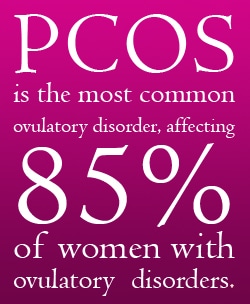
Polycystic ovary syndrome, or PCOS, is one of the most common ovulatory disorders, accounting for 85 percent of ovulatory disorder cases. While the exact causes of PCOS remain unclear, what is known are the effects PCOS can have on your body and a woman’s fertility. Women with PCOS create a higher than normal level of androgens.  Androgens are normally present in both sexes, but typically considered “male hormones.”  Elevated levels in women will impact the development of eggs and interfere with ovulation. For this reason, women with PCOS will not ovulate with regularity, if at all.

While a cure for PCOS does not currently exist, a woman can manage the symptoms through medication and, if conception does not occur on her own, it often can be achieved through fertility treatment. Many patients are surprised to learn even the most basic treatment options like clomiphene citrate (Clomid) with timed intercourse or intrauterine insemination (IUI) can help couples become pregnant.

To help spread the word about polcystic ovary syndrome—a condition that, according to the World Health Organization is believed to impact 116 million women worldwide—this month is dedicated to raising awareness, educating the public, and conquering PCOS by sharing personal stories.

  • Check out the PCOS Foundation for events and more
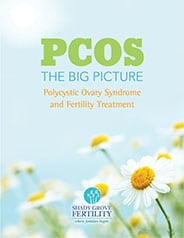
Read Shady Grove Fertility’s PCOS eBook

To help with this effort, SGF created an eBook to inform and help educate men and women, covering topics such as common symptoms, how PCOS is diagnosed, the impact it has on fertility, treatment options, and the success rates associated with fertility treatment. In addition, the eBook concludes with three inspiring patient stories of triumph and success.

The other important aspect of PCOS Awareness Month is advocacy. Whether it’s by sharing your individual fertility story or supporting other women struggling with PCOS, this month gives all of us a platform to join the conversation. Share your experiences with our online community on our Facebook page or share your story directly with us to empower and uplift other women struggling with PCOS or any other type of infertility.

If you would like to learn more about polycystic ovary syndrome or to schedule an appointment, please speak with one of our New Patient Liaisons at 877-971-7755.

Filed Under: Diagnosing Infertility Tagged With: Causes of infertility

  • « Go to Previous Page
  • Page 1
  • Page 2
  • Page 3
  • Page 4
  • Go to Next Page »

Company

  • About SGF
  • About US Fertility
  • Our Doctors
  • Fertility Equity
  • Careers
  • Newsroom
  • SGF College Scholarship
  • Contact Us
  • Voice Your Feedback

Treatments

  • Egg Freezing
  • Intrauterine Insemination (IUI)
  • In Vitro Fertilization (IVF)
  • Frozen Embryo Transfer (FET)
  • LGBTQIA+ Family Building
  • Shared Risk 100% Refund Program
  • All Treatments

Resources

  • Patient Portal
  • Online Bill Pay
  • Library
  • Support Groups & Events

Locations

  • California
  • Colorado
  • Delaware
  • Florida
  • Georgia
  • Maryland
  • North Carolina
  • Pennsylvania
  • Texas
  • Virginia
  • Washington, D.C.

2026 Shady Grove Fertility

  • Policies & Notices
Also of interest
  • In Vitro Fertilization IVF
  • Fertility Tests
  • Research Publications