
• Skip to primary navigation
  • Skip to main content
  • Skip to footer
Shady Grove Fertility
  • Become an Egg Donor
  • Referring Physicians
  • 1-888-761-1967
  • Schedule Appointment
  • Get Started
        • Get Started
          • Causes of Infertility
          • Fertility Tests
          • When to Seek Help
          • Find a Doctor
          • Preconception and prenatal vitamins 
          • Schedule an Appointment
        • Personalized Care For
          • Single Parents
          • LGBTQIA+ Family Building
          • People with Cancer
          • Known Genetic Diseases
          • Egg Donors
  • Treatments
        • Fertility
          • Timed Intercourse
          • Ovulation Induction
          • Intrauterine Insemination (IUI)
          • In Vitro Fertilization (IVF)
          • Frozen Embryo Transfer (FET)
        • Donation & Surrogacy
          • Donor Sperm
          • Donor Egg
          • Donor Embryo
          • Gestational Carrier
          • LGBTQIA+ Family Building
          • Single Parents
          • Find a Donor
        • More Treatments
          • Center for Male Fertility
          • Egg Freezing
          • OncoFertility
          • Preimplantation Genetic Testing
          • MIGS
          • All Fertility Treatments
  • Resources
    • Resource Library
    • Events Calendar
    • Patient Stories
    • Mental Health
    • Wellness Center
  • Insurance & Savings
    • Insurance & Benefits
    • Shared Risk 100% Refund Program
    • 100% Refund for Donor Egg
    • Discounts
    • Egg Freezing Costs
    • Financing & Grants
    • Clinical Trials
  • About
    • Find a Doctor
    • About SGF
    • Our Care Team
    • Advanced Practice Providers
    • Fertility Equity
    • Philanthropy
    • Newsroom
    • Careers
    • Contact Us
    • Voice Your Feedback
  • Locations
        • Find a Location
        • California
        • Colorado
        • Delaware
        • Florida
        • Georgia
        • Maryland
        • North Carolina
        • Pennsylvania
        • Texas
        • Virginia
        • Washington, D.C.
        • Chile
        • International & Out of State
        • SGF at Walter Reed National Military Medical Center
  • Patient Hub
    • Online Bill Pay
    • Patient Forms
    • Patient Portal
  • Call your care team
  • Become an egg donor
  • Referring physicians
  • search-icon
  • Schedule appointment 1-888-761-1967

Home / Diagnosing Infertility / Page 10

Diagnosing Infertility

December 17, 2015 by Shady Grove Fertility

When asked about their fertility journey Stephen and Jenn Yunis say, almost simultaneously, “It’s been a crazy ride.” In June 2013, the Yunis’ participated in a Washington Post Magazine article titled, “For Men, Infertility Often Becomes a Private Heartache,” about the hidden struggles couples face when dealing with male factor infertility.

The Post Magazine recounted Stephen and Jenn’s story from the very beginning: from pen pals, to boyfriend and girlfriend, to marriage and building a life together, to making room for children. The Post describes how “month after month, Jenn bought ovulation predictor kits, downloaded fertility predictor apps, and made sure they had sex on the right days. They watched as one home pregnancy test after another turned up negative. Meanwhile, their friends started having children and posting ebullient pregnancy photos on Facebook.”

After 2 years of trying the Yunis’ sought out the experts at Shady Grove Fertility, and under the care of Jeanne E. O’Brien, M.D. in Rockville, MD, they began the next phase of their story. Stephen describes the first questions posed as “womanly things.” He certainly did not expect to learn that they fell under the “unexplained infertility” category and then eventually to the “male factor infertility” category.

Male Factor Infertility Is Often Not Talked About

For men, who generally keep the conversation light with their male counterparts, dealing with male infertility is especially challenging. Stephen described the difficulty talking about it with his friends saying, “they think it’s hilarious. Most of them are just kidding. But it’s like, ‘You don’t have any idea.’”

After four unsuccessful tries with intrauterine insemination (IUI), Stephen and Jenn moved on to in vitro fertilization (IVF) in the Spring of 2013.

Sharing Their Story of Male Factor Infertility

Looking back, the Yunis’ still marvel at the impact sharing their story made. People started sharing their own fertility struggles with them. Stephen, who like so many men hadn’t been able to discuss his condition with friends and coworkers was suddenly a source of support, some apologizing for insensitive remarks. When one of his coworkers underwent fertility treatment, Stephen was a shoulder to lean on and a much-needed sounding board.

“A simple semen analysis can provide insight to the overall quality of a male’s sperm. While men might be hesitant, the analysis is a fast and simple test. The results can point physicians towards more targeted treatment, and identify infertility issue early,” advises Dr. O’Brien.

Overcoming Male Factor Infertility

Today, with their son Noah Samuel in full throes of toddler-hood, Stephen and Jenn feel a greater appreciation for the little moments after all the years of trying and failing. Jenn recalled a time over the summer when she and Noah were playing with chalk on their front steps. She says she took a moment to sit back, realizing she had spent years wondering if she and Stephen would ever have those experiences.

Shady Grove Fertility broadened its array of male factor infertility services with the addition of an in-house reproductive urologist, Paul R. Shin, M.D., in November 2015. With the addition of Dr. Shin, patients now have easier, more convenient access to a suite of male infertility services from a highly regarded board certified urologist and male fertility specialist—services that previously required a referral to a urologist outside of the practice. Male factor infertility accounts for 40 percent of all infertility cases.

Our team of dedicated New Patient Liaisons is available to answer your questions regarding male and female infertility. Call 877-971-7755 or click to schedule an appointment.

Filed Under: Diagnosing Infertility

October 8, 2015 by Shady Grove Fertility


Many patients will learn pretty quickly that effectively communicating with their medical team is an important part of their treatment success. With ever-changing treatment protocols that are continually being optimized to provide for the best outcome, a firm grasp of some frequently used medical terminology can clear up some confusion and help you feel more empowered and confident, and hopefully eliminate miscommunication with your team.

Commonly Confused Medical Terminology

Follicle vs Egg vs Embryo: While all three of these terms mean very different things, they do all represent the evolution of the follicle—the starting point of all eggs and embryos—which is likely why many people confuse them. Here is a break down in the differences between these three terms:

  • Follicle: A fluid-filled sac in the ovary that contains a single egg released at ovulation. You cannot have an egg without first having a follicle. As the follicle grows through the month so does the egg inside. When undergoing treatment, such as intrauterine insemination (IUI) or in vitro fertilization (IVF), you medical team will closely monitor the number and size of follicles growing within your ovaries. The goal, especially with IVF, is to grow several multiple follicles as opposed to the single follicle or two that would be developed in a natural, or no stimulation, cycle or IUI cycle. It is important to note that while most follicles contain eggs, it is not uncommon for some follicles to be empty or for the egg to not be mature enough to fertilize.
  • Egg: The egg grown within a follicle is a single cell with the female’s genetic material. Once ovulation occurs, the egg is released into the Fallopian tube. If sperm is introduced at this point, it may result in fertilization. For patients undergoing IVF treatment, eggs are developed during the stimulation phase and retrieved prior to ovulation during a procedure called an egg retrieval. At the conclusion of the procedure your medical team will inform you as to the number of eggs retrieved and the number that are mature. Other accurate terms for an egg include oocyte, ovum, and gamete.
  • Embryo: Once a mature egg is fertilized with the sperm it becomes an embryo. An embryo is the earliest stages of fetal development. In an IVF cycle, an embryologist monitors the developing embryo in an environment that mimics the Fallopian tubes; on the 5th day of development the physician will transfer the embryo into the mother’s uterus.

Semen vs Sperm: The terms semen and sperm are very closely related and often mistakenly interchanged. The distinction between the two, however, is very important, especially when evaluating couples with male factor infertility. Here are the key distinctions between semen and sperm:

  • Semen: Semen is the fluid that is ejaculated at the point of orgasm. The ejaculate consists of secretions from the seminal vesicles, prostate gland, as well as sperm from the testicle. Semen provides nourishment and protection for the sperm and a medium in which the sperm can travel to the woman’s vagina. Semen may also refer to the entire ejaculate, including the sperm used in the fertilization of the female partner’s egg. Whether initiating a semen analysis for diagnostic purposes or undergoing treatment, the male partner will need to provide a semen sample to the SGF clinical team. It is important to note that not all semen contains sperm.
  • Sperm: Sperm are the male reproductive cells, also known as gametes. Medically referred to as spermatozoa, sperm are mobile cells that fertilize eggs. The sperm that fertilizes an egg provides the genetic information from the male partner and determines an embryo’s gender. The sperm-rich fluid that the testicle contributes to semen is actually only about 5% of the overall volume that is normally ejaculated.

Embryo Transfer vs Implantation: Patients undergoing IVF treatment with their own eggs or those of a donor will have an embryo transfer. This step is often incorrectly referred to as “having the embryo implanted into the uterus.” The mix up is easy to make as implantation is a natural phenomenon that occurs a few days after the embryo transfer. Here are the differences between these two steps in the treatment process:

  • Embryo Transfer: During IVF treatment, after fertilization has occurred in the embryology laboratory and the embryo has developed for about 5 days, the embryo transfer occurs. During this procedure the physician will use a thin, flexible catheter and the guidance of an ultrasound to place the embryo into the uterus.
  • Implantation: Generally, 4 to 5 days after the physician transfer the embryo into the uterus implantation occurs. This is the natural process where the growing embryo embeds itself into tissue so it can establish contact with the mother’s blood supply for nourishment. Implantation usually occurs in the lining of the uterus; however, in an ectopic pregnancy it may occur elsewhere in the body such as the Fallopian tubes. This process is naturally occurring as there is no medical intervention that can reliably be used to force implantation to take place.

Intrauterine Insemination (IUI) vs In Vitro Fertilization (IVF): IUI and IVF are two of the most common forms of fertility treatment, with many of the same phases and end goal. Similarities with both treatments include:

  • Development of an egg(s)
  • Introduction of sperm in the hopes that fertilization of the egg will occur
  • Once fertilization has taken place the fertilized egg will then grow and develop into an embryo
  • The embryo will find itself in the uterus where implantation—the act of the embryo embedding itself into the uterine lining—will occur and mark the start of a viable pregnancy

The difference between these two treatments is that, in an IUI, each step occurs within the body while in IVF some of the steps, specifically the fertilization and embryo development, occur outside of the body in an embryology laboratory. The names of each treatment explains it all:

  • Intrauterine insemination = insemination in the uterus
  • In vitro fertilization = fertilization outside the body (in vitro means “in an artificial environment outside a living organism”)

Medical Terminology Commonly Used Interchangeably among Physicians and Nurses

Some patients may notice that they’re not the only ones who seem to use terms interchangeably, making communication a little confusing. In most cases, for medical professionals, it is because there are sometimes a couple of different ways to say the same thing, which understandably may lead to confusion for patients. To help clarify here are a few different terms you may hear your physician or nurse use that essentially mean the same thing.

Day 3 Fertility Testing vs Baseline Tests: Day 3 testing, which can actually be completed between days 2 and 4 of your cycle, and baseline testing both look at the female partner’s hormone levels at the start of her menstrual cycle. The results of these tests can help the physician determine the patient’s ovarian reserve (number of eggs).

Sonogram vs Ultrasound: Both sonogram and ultrasound refer to the same test. Diagnostic sonograms or ultrasounds use high-frequency sound waves to create an image of internal body parts. During fertility treatment, ultrasound testing is very common and your physician may utilize during:

  • Diagnostic testing
  • Treatment cycle monitoring
  • Egg retrieval
  • Embryo transfer
  • Obstetric ultrasounds to confirm pregnancy

Water Sonogram vs Saline Sonogram vs Sonohysterogram: These three tests all describe the same thing, a procedure that uses an ultrasound to detect masses in your uterus that may be blocking your Fallopian tubes or abnormalities of the uterus. Your physician will often use this test if he or she suspects a uterine abnormality, which can after receiving abnormal results from an hysterosalpingogram (HSG) or following recurrent pregnancy loss , which could indicate an anatomical abnormality in the uterus.

Whether you’re new to fertility treatment or not, clear lines of communication with your medical team will help keep you from feeling overwhelmed by the process. If ever you’re not sure about what medical terminology means, don’t hesitate to ask your clinical team for clarification. They are here to guide you through your treatment each step of the way.

If you would like to schedule an appointment with a fertility specialist, please speak with one of our New Patient Liaisons at 877-971-7755.

Filed Under: Diagnosing Infertility

October 1, 2015 by Shady Grove Fertility

Naveed Khan, M.D.

Polycystic ovary syndrome (PCOS) is one of the most common causes of female infertility affecting up to 10 percent of reproductive-age women. PCOS is caused by an imbalance in the male and female sex hormones that can prevent ovulation. Typically, the ovaries make very small amounts of male sex hormones called androgens. In women with PCOS, the ovaries start making more androgens, which can prevent ovulation and cause cysts to develop in the ovaries.

Some women with PCOS also experience weight gain and difficulty losing weight. Elevated levels of insulin due to resistance of the ovaries can be an underlying factor for the hormonal imbalance resulting in weight gain. Research on the impact of weight and fertility, especially in those with PCOS, has continued to develop and ultimately reinforce one of the common recommendations made by the physicians at Shady Grove Fertility: exercise. Shady Grove Fertility physician Naveed Khan, M.D., of Shady Grove Fertility’s Leesburg, VA office states, “Exercise and a healthy diet can improve a woman’s response to fertility medications and increase her chances of becoming pregnant. Research has shown that losing just 5 percent of body weight can help a woman achieve a regular menstrual cycle and ovulate on her own.”

New Study Confirms Lifestyle Changes Improve Pregnancy Rates in Women with PCOS

Most recently, Endocrine Society conducted a study with the objective to compare preconception interventions and their impact on fertility in women with PCOS. The participants in the study were between the ages of 18 and 40 and were either overweight or obese. As part of the study, the women were assigned to one of the following control groups: Group A was instructed to take birth control pills, Group B was instructed to partake in active lifestyle modifications, and Group C was instructed to do a combination of the two prior to attempting conception. After the intervention, the participants underwent four cycles of ovulation induction with medication.

Of the 49 women assigned to only birth control pills prior to conception, five delivered babies. Of the 50 women in the lifestyle intervention group, 13 delivered babies. Of the 50 women in the combination group, 12 delivered babies. The results showed that women who made active lifestyle adjustments during preconception were more likely to ovulate and deliver a baby.

Dr. Khan concluded that, “Whether you are trying to conceive or not, early diagnosis and treatment for PCOS is important. Not only will PCOS affect your ability to conceive, but it can also increase the risk for other health complications including high cholesterol, blood pressure, heart attack, and stroke.”

Fertility Treatment Options for Women with PCOS

While diet and exercise are important first steps to treating PCOS, there are other treatment options available. Since women with PCOS do not ovulate regularly, physicians often prescribe oral medication such as clomiphene citrate (Clomid, Serophene) to help induce ovulation. Clomid with timed intercourse or intrauterine insemination (IUI) is generally the first step in treatment. If patients are not successful or responsive to Clomid, the next fairly basic option is the use of gonadotropins to induce the recruitment, maturation, and ovulation of eggs. Many PCOS patients will be successful with a more basic treatment such as timed intercourse or IUI. Those who are not can move to in vitro fertilization (IVF) and increase their chances for success.

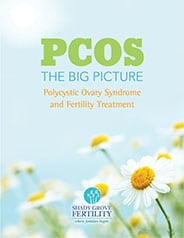
If you would like to learn more about PCOS check out our ebook “PCOS: The Big Picture.” To schedule an appointment, please speak with one of our New Patient Liaisons at 877-971-7755.

Filed Under: Diagnosing Infertility

September 25, 2015 by Shady Grove Fertility

Supermodel Tyra Banks and wife of John Legend, supermodel Chrissy Teigen, get candid with viewers on their new talk show Fablife where they discussed the question that is so often asked of women: When are you starting a family? This question can be especially hurtful to women who are struggling with fertility issues and they urge their viewers to refrain from asking such questions of women and snapping to quick judgments.

Infertility Does Not Discriminate

Teigen, age 29, commented on how intrusive it can feel when someone wants to know the answer to this question and went on further to share that she and her husband wanted children years ago, but it hasn’t quite happened yet. Banks, age 41, has also experienced her own insecurities of being asked when she plans to start a family.

For Teigan and Banks, their ages are relevant, as Banks represents what’s commonly seen in women trying to conceive at a later age—a steep decline in fertility for women after age 35. For Teigan, her relatively young age demonstrates that infertility does not discriminate and, even for women and men who are otherwise in their prime and healthy, from a reproductive standpoint, the story may be different.

At Shady Grove Fertility, we provide the necessary resources and support to help patients in their journey.  Shady Grove Fertility’s online patient community is a platform for men and women who are going through similar experiences. This community offers a place where people across the world can turn towards others for advice, encouragement, and to share their journey.

Infertility can be isolating, but with our evolving online community you are not alone. Join the online patient community.

If you have questions about fertility or are ready to schedule an appointment at Shady Grove Fertility, please speak with one of our New Patient Liaisons at 877.971.7755.

Filed Under: Diagnosing Infertility

September 3, 2015 by Shady Grove Fertility

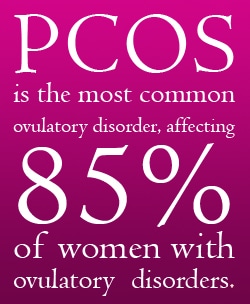
Polycystic ovary syndrome, or PCOS, is one of the most common ovulatory disorders, accounting for 85 percent of ovulatory disorder cases. While the exact causes of PCOS remain unclear, what is known are the effects PCOS can have on your body and a woman’s fertility. Women with PCOS create a higher than normal level of androgens.  Androgens are normally present in both sexes, but typically considered “male hormones.”  Elevated levels in women will impact the development of eggs and interfere with ovulation. For this reason, women with PCOS will not ovulate with regularity, if at all.

While a cure for PCOS does not currently exist, a woman can manage the symptoms through medication and, if conception does not occur on her own, it often can be achieved through fertility treatment. Many patients are surprised to learn even the most basic treatment options like clomiphene citrate (Clomid) with timed intercourse or intrauterine insemination (IUI) can help couples become pregnant.

To help spread the word about polcystic ovary syndrome—a condition that, according to the World Health Organization is believed to impact 116 million women worldwide—this month is dedicated to raising awareness, educating the public, and conquering PCOS by sharing personal stories.

  • Check out the PCOS Foundation for events and more
Read Shady Grove Fertility’s PCOS eBook

To help with this effort, SGF created an eBook to inform and help educate men and women, covering topics such as common symptoms, how PCOS is diagnosed, the impact it has on fertility, treatment options, and the success rates associated with fertility treatment. In addition, the eBook concludes with three inspiring patient stories of triumph and success.

The other important aspect of PCOS Awareness Month is advocacy. Whether it’s by sharing your individual fertility story or supporting other women struggling with PCOS, this month gives all of us a platform to join the conversation. Share your experiences with our online community on our Facebook page or share your story directly with us to empower and uplift other women struggling with PCOS or any other type of infertility.

If you would like to learn more about polycystic ovary syndrome or to schedule an appointment, please speak with one of our New Patient Liaisons at 877-971-7755.

Filed Under: Diagnosing Infertility Tagged With: Causes of infertility

August 5, 2015 by Shady Grove Fertility

In light of Mark Zuckerberg, Chairman and Chief Executive Officer of Facebook, and wife, Priscilla Chan, opening up about their struggles with miscarriage, there has been a very positive increase in conversation around the all-too-often hushed topic of miscarriage. Author of the TIME magazine article, “Men Are the Forgotten Grievers in Miscarriage” Sarah Elizabeth Richards, had it right when she said, “Even more astonishing: It was a man sharing his emotions.”

In Zuckerberg’s public post on Facebook announcing the exciting news that he and Chan are expecting a baby girl, he opened up about the three miscarriages they had experienced, and how they grieved:

zuckerberg

You feel so hopeful when you learn you’re going to have a child. You start imagining who they’ll become and dreaming of hopes for their future. You start making plans, and then they’re gone. It’s a lonely experience. Most people don’t discuss miscarriages because you worry your problems will distance you or reflect upon you—as if you’re defective or did something to cause this. So you struggle on your own.

The Reality of Miscarriages and Grieving

Up to one in four of all pregnancies end in miscarriage. While there’s been an increase in openness focused on women’s suffering, according to Sharon Covington, MSW, LCSW-C, director of psychological support services at Shady Grove Fertility, “Men are the forgotten grievers.” Women often get the attention. They have the physical loss and, often times, women are more open about grieving and showing their emotions.

On the other hand, typically, men don’t express their emotions as openly, even though studies have found that men also suffer from anxiety and depression as a result of miscarriage. Even though men don’t express loss in the same way, according to the article, “Not only is their own mental health at risk, their isolation can hurt their partners’ well-being and destroy their relationships.”

Hopefully, as more articles like this and as more men like Zuckerberg come forward and open up about their struggles, miscarriage will become less of a solitary struggle. “In today’s open and connected world, discussing these issues doesn’t distance us; it brings us together. It creates understanding and tolerance, and it gives us hope,” remarked Zuckerberg.

Video: Shady Grove Fertility’s Dr. Khan Discusses Why Miscarriages Occur

Support Resources Are Available

Shady Grove Fertility offers co-ed support groups for infertility and pregnancy loss where men can feel comfortable attending with their partners. If you or someone you know has struggled with miscarriage, we have several upcoming support groups available. View the SGF Support Group Schedule.

To learn more about what causes miscarriage or to discuss infertility treatment options that may be effective after recurrent miscarriage, schedule a new patient appointment by calling our new patient center 877-971-7755.

Filed Under: Diagnosing Infertility Tagged With: Causes of infertility

  • « Go to Previous Page
  • Page 1
  • Interim pages omitted …
  • Page 8
  • Page 9
  • Page 10
  • Page 11
  • Page 12
  • Interim pages omitted …
  • Page 21
  • Go to Next Page »

Company

  • About SGF
  • About US Fertility
  • Our Doctors
  • Fertility Equity
  • Careers
  • Newsroom
  • SGF College Scholarship
  • Contact Us
  • Voice Your Feedback

Treatments

  • Egg Freezing
  • Intrauterine Insemination (IUI)
  • In Vitro Fertilization (IVF)
  • Frozen Embryo Transfer (FET)
  • LGBTQIA+ Family Building
  • Shared Risk 100% Refund Program
  • All Treatments

Resources

  • Patient Portal
  • Online Bill Pay
  • Library
  • Support Groups & Events

Locations

  • California
  • Colorado
  • Delaware
  • Florida
  • Georgia
  • Maryland
  • North Carolina
  • Pennsylvania
  • Texas
  • Virginia
  • Washington, D.C.

2026 Shady Grove Fertility

  • Policies & Notices
Also of interest
  • In Vitro Fertilization IVF
  • Fertility Tests
  • Research Publications