• Skip to primary navigation
  • Skip to main content
  • Skip to footer
Shady Grove Fertility
  • Become an Egg Donor
  • Referring Physicians
  • 1-888-761-1967
  • Schedule Appointment
  • Get Started
        • Get Started
          • Causes of Infertility
          • Fertility Tests
          • When to Seek Help
          • Find a Doctor
          • Preconception and prenatal vitamins 
          • Schedule an Appointment
        • Personalized Care For
          • Single Parents
          • LGBTQIA+ Family Building
          • People with Cancer
          • Known Genetic Diseases
          • Egg Donors
  • Treatments
        • Fertility
          • Timed Intercourse
          • Ovulation Induction
          • Intrauterine Insemination (IUI)
          • In Vitro Fertilization (IVF)
          • Frozen Embryo Transfer (FET)
        • Donation & Surrogacy
          • Donor Sperm
          • Donor Egg
          • Donor Embryo
          • Gestational Carrier
          • LGBTQIA+ Family Building
          • Single Parents
          • Find a Donor
        • More Treatments
          • Center for Male Fertility
          • Egg Freezing
          • OncoFertility
          • Preimplantation Genetic Testing
          • MIGS
          • All Fertility Treatments
  • Resources
    • Resource Library
    • Events Calendar
    • Patient Stories
    • Mental Health
    • Wellness Center
  • Insurance & Savings
    • Insurance & Benefits
    • Shared Risk 100% Refund Program
    • 100% Refund for Donor Egg
    • Discounts
    • Egg Freezing Costs
    • Financing & Grants
    • Clinical Trials
  • About
    • Find a Doctor
    • About SGF
    • Our Care Team
    • Advanced Practice Providers
    • Fertility Equity
    • Philanthropy
    • Newsroom
    • Careers
    • Contact Us
    • Voice Your Feedback
  • Locations
        • Find a Location
        • California
        • Colorado
        • Delaware
        • Florida
        • Georgia
        • Maryland
        • North Carolina
        • Pennsylvania
        • Texas
        • Virginia
        • Washington, D.C.
        • Chile
        • International & Out of State
        • SGF at Walter Reed National Military Medical Center
  • Patient Hub
    • Online Bill Pay
    • Patient Forms
    • Patient Portal
  • Call your care team
  • Become an egg donor
  • Referring physicians
  • search-icon
  • Schedule appointment 1-888-761-1967

Home / About SGF / Page 2

About SGF

March 26, 2020 by Shady Grove Fertility

Gone are the days when a house call from a physician meant he or she shows up at the door. Using modern technology, SGF patients now have maximum flexibility and can continue progressing toward their goal of building a family, all while limiting travel, inconvenience, and delay.

You asked for it, and SGF is happy to announce … in light of recent events, we are pleased to offer new and current patients uninterrupted access to board certified fertility specialists through virtual physician consults, thereby reducing stress and increasing access to care for new and current patients.

We know there’s nothing convenient about struggling to conceive. On top of that, we’re living in uncertain times. Many in the infertility community are feeling anxious, fearful, frustrated … we understand, which is why we’re more excited than ever to help minimize any interruptions in access to fertility care during this pandemic and beyond.

“One the hallmarks of SGF over its 29 year history has always been to improve access to care. We’re pleased to be able to offer patients the ability to consult with their physician and continue their care in a virtual setting,” shared Eric A. Widra, M.D., SGF Medical Director.

Already receiving rave reviews from patients, SGF’s telemedicine program provides local and long distant patients the ability to privately connect with an SGF physician via smart phone, tablet, laptop, or desktop. Our HIPAA compliant virtual consults make it easier for all types of patients to more readily navigate the steps to help build their family and use this time to progress toward their goals. Virtual consults also reduce time away from work and other commitments, reduce travel time and expense, and increase convenience as both partners can attend virtually from any location.
Through the use of a secured online portal, patients and physicians will share private access to medical records, informed consent documents, patient instructions, educational videos, and much more.

“During these uncertain times, now more than ever, patients need our support and to regain a sense of control. By connecting virtually with their physician, we can put time back on our side and take advantage of this easy to use platform to communicate with patients and help them make progress toward their dream of building a family,” added Dr. Widra.

Schedule A Virtual Consult

Filed Under: About SGF

January 2, 2020 by Shady Grove Fertility

Jordan and Josh of Uniontown, PA, knew it wouldn’t be easy to start a family of their own. At the young age of 26, Jordan was diagnosed with premature ovarian failure (POF), also known as primary ovarian insufficiency (POI)—a condition in which ovulation and menses end before the age of 40. Women who develop this have a severely diminished or depleted egg supply in their ovaries.

“Prior to my diagnosis, it was always my biggest dream to have children,” says Jordan. “When I initially learned I would need an egg donor, I was absolutely devastated. Years went by and I saw various doctors, but none of them seemed inclined to help me or give me any hope. After I married my husband, Josh, we got more serious about starting a family, and decided to go straight to the best. We sought out treatment with Dr. Jason Bromer at Shady Grove Fertility.”

“SGF offers truly compassionate, personalized care. We understand the intimate nature of fertility treatment and try to exhibit compassion and empathy at every turn. When it comes to premature ovarian failure, donor egg treatment is the only effective infertility treatment,” said Jason Bromer, M.D., who sees patients in SGF’s Frederick and Hagerstown, MD, locations.

Donor egg treatment is intended for women who are unable to use their own eggs for conception but can still carry a child. Through an egg donor, an individual or couple at SGF can select a fully medically, genetically, and psychologically prescreened egg donor who best suits their family and is ready to cycle and donate, without the wait. While SGF’s donor registry de-identifies the donors, the donor registry provides prospective recipients (the intended parents) with a wealth of information about the donor, including, in many cases, adult photos.

SGF is one of only a few centers in the nation that selects and prescreens its own egg donors prior to making them available on their donor registry. Much more commonly, fertility centers rely on an agency to select donors, which adds significant costs, passed on to the intended parents. “While neither recipients nor donors are given any identifying information about one another, at SGF the recipients are given a wealth of information about the donor, such as medical and family history, education, physical characteristics, in order to aid in the selection process,” says Michele Purcell, MHA, RN, Director, Specialty Programs at SGF.

Once Dr. Bromer explained the donor egg process, Jordan and Josh said they felt encouraged to move forward with their treatment plan and the support of the SGF team. They were thrilled to find out that their first cycle was a success.

“I sobbed with happiness; I could barely believe it. We had our miracle baby girl, and plan on using another of our three remaining embryos to give her a sibling in the future. She is the light of our lives, our greatest gift from God, and our reason for existing,” said Jordan.

Jordan reflected on her experience and how having a child via donor egg treatment was the best decision she has ever made.

“If I could go back in time years earlier, hopeless and beside myself with sadness, I would tell myself that there’s nothing to be sad about because the greatest joy you’ve ever known is just ahead. I would tell myself to hang in there and have faith. I would never trade our story for another. Our little girl is perfect in every way, and I am SO happy that we had this beautiful chapter in our lives. I am grateful every single day, and never take it for granted,” adds Jordan.

Thousands of SGF patients have become parents thanks to the generosity of egg donors, whom are compensated generously by SGF for their time, effort, and commitment, not for their actual oocytes/eggs. SGF compensates its donors at various points throughout the prescreening and donation process.

“As I was contemplating donating my eggs, friends and family reminded me to never underestimate the impact that I could have on someone else’s life. Funny, as now, I feel like my life has also been forever changed. By giving something so precious away to someone in need, I felt immeasurable, indescribable joy in return,” adds one former SGF egg donor.

Under SGF’s stringent screening requirements, any woman between the ages of 21-32 who meets certain criteria and has knowledge of her family history may be considered for egg donation. A short online application with a prompt reply identifies if a candidate is pre-qualified to become an egg donor at SGF. Once pre-qualified, all egg donor candidates must complete a comprehensive personal and family medical history questionnaire. “We take our screening process very seriously and are intentionally selective in order to try and protect the health of the baby and the intended mother,” adds Purcell.

SGF, a pioneer in offering an IVF treatment financial guarantee for donor egg, makes treatment affordable through their exclusive Shared Donor Egg Program and Shared Risk 100% Refund Program for Donor Egg Treatment. The Shared Risk 100% Refund Program offers patients up to six donor egg cycles and any subsequent frozen embryo transfers (FETs) for one flat fee. In the event the attempts are unsuccessful, the patient may be eligible for a 100% refund. SGF’s Donor Egg Program provides patients with a highly effective treatment to overcome infertility, with a 60% clinical pregnancy rate per embryo transfer.

To learn more about SGF’s Donor Egg Treatment Program, information seekers and/or current SGF patients may attend a free patient seminar in SGF’s newest Manhattan, NY office on Thursday, January 23, 2020. Dr. Anate Brauer, board certified reproductive endocrinologist, will provide an in-depth look into donor egg treatment at SGF. Attendees can ask questions one-on-one with Dr. Brauer following the seminar, and all attendees will be entered into a raffle to win $1,000 off their donor egg treatment cycle.

Schedule an Appointment

To learn more or to schedule an appointment with an SGF physician, please speak with one of our New Patient Liaisons at 877-971-7755 or fill out this brief form.

For international patients, to learn more about SGF’s International Donor Egg Treatment Program or for help choosing an egg donor, please reach us by phone at 0208 003 0827 or email Amanda Segal, International Patient Liaison, at Amanda.Segal@sgfertility.com.

Watch SGF’s International Donor Egg On-Demand Webinar, hosted by Joseph Doyle, M.D. and International Patient Liaison, Amanda Segal. Attendees will learn about SGF’s internally renowned Donor Egg Treatment Program, which offers concierge-level coordination of care, high success rates, and innovative financial options. Viewers will also learn more about our donor egg registry, the donor recruitment process, and tips for selecting an egg donor, in addition to receiving temporary access to the database.

Filed Under: About SGF Tagged With: Donor egg, International donor egg, Shared donor egg

November 29, 2019 by Shady Grove Fertility

My husband and I are backed by nearly 20 years of friendship. We’ve loved each other since high school. So naturally when we fell in love, children were discussed. After marriage and establishing a well-known local business; we started trying for a family. But it wasn’t working. So, we temporarily gave up and continued fulfilling our lives in different ways. It wasn’t until 5 years later when I was 36 that I started to get a stirring from the inside that I could no longer ignore. I knew I had to make a decision, and so I picked up the phone and called Shady Grove Fertility.

It has taken me awhile to write this, because every time I think I have formulated the appropriate words, I get teary eyed and seemingly come up short. You see, there aren’t enough gracious words in our language to articulate how appreciative my husband and I are for Dr. Sasson and his team of exceptional nurses at the Chesterbrook office. Chris and I know that in comparison to many other couples, we are fortunate. But we all have specific journeys, and ours did not come without some unique hurdles.

The team at Shady Grove Fertility did an exceptional job of helping us navigate these hurdles, in order to make the best decisions specifically for us. Even when an issue arose that was completely unexpected, and very rare — Dr. Sasson (and Lisa!) advocated for us, remained fair and encouraged us to continue. Had we chosen not to listen to his sound advice, I would not be 26 weeks pregnant right now.

This process is not for the weak, and it certainly defines one’s future character, as you will be forever changed…but when looking back, I would absolutely do it all again. As it turns out; the appointments, the hormones, the blood work (shout out to Peggy!), the waiting… my gosh, the waiting… is ALL worth it; and now, it all seems like the tiniest blurb on a large-scale radar. Take it from this lifelong needle phobic — if I can do this, ANYONE can.

Gather all your strength, everyone in your tribe, and just put one foot in front of the other — make the call to Shady Grove Fertility. Because who wants 25 years to pass, and be left wondering “what if…”  I surely didn’t, and I’m forever grateful that we took that shot.

Schedule an Appointment

To learn more or to schedule an appointment with an SGF physician, please call our New Patient Center at 1-877-971-7755 or complete this brief online form.

Filed Under: About SGF

November 15, 2019 by Shady Grove Fertility

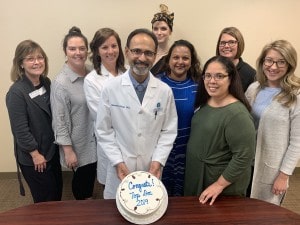
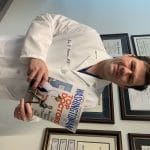
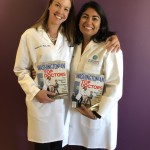
Shady Grove Fertility is proud to report that 14 of the practice’s physicians from the D.C. metro region have been named Washingtonian’s Top Docs in the field of infertility. This recognition is voted on by physician peers in various fields of medicine. As leaders in reproductive medicine, SGF physicians are committed to providing exceptional fertility care at a practice that is at the forefront of fertility technology and innovation.

Washingtonian surveyed nearly 13,000 physicians in the Washington, D.C., Maryland, and Virginia area to nominate colleagues in each of the 39 specialties to determine the Washington region’s “Top Doctors.” This list is referred to as “the region’s very best,” as chosen by their peers and is intended to help readers find the best medical care in their communities.

This year, the 14 SGF physicians selected as Washingtonian’s Top Docs are reproductive endocrinologists, Eric Widra, M.D., Michael Levy, M.D., Arthur Sagoskin, M.D., Anitha Nair, M.D., Andrea Reh, M.D., Kimberly Moon, M.D., Naveed Khan, M.D., Paulette Browne, M.D., Eric Levens, M.D., Jeanne O’Brien, M.D., Frank Chang, M.D., Joseph Doyle, M.D., and reproductive urologists, Paul Shin, M.D., and Cori Tanrikut, M.D.

“I am honored and humbled to be recognized by such a reputable community of physicians,” said Joseph Doyle, M.D., of SGF’s Rockville, MD location.

SGF was also recognized in 2019 by Posh Seven Magazine’s Best of Suburbia Survey for “Best Fertility Specialist” and Washington Family’s “Best for Families: Best Fertility Clinic.” 

By providing uncompromising service, creating better access to care with affordable financial options, and delivering truly personalized care, SGF reached another significant milestone in 2019 and is celebrating 85,000 babies born since the center first opened its doors in 1991.

Schedule an Appointment

To learn more or to schedule an appointment with an SGF physician, please call our New Patient Center at 1-888-761-1967 or submit this brief form.

Filed Under: About SGF

October 18, 2019 by Shady Grove Fertility

Physician-scientists from Shady Grove Fertility presented new information that helps to improve treatment outcomes for the one in eight couples who face infertility at this year’s premier education and research meeting for reproductive medicine. Held from October 12 to 16, 2019, in Philadelphia, PA, the theme of this year’s Scientific Congress of the American Society for Reproductive Medicine was “Celebrating 75 Years of History and Innovation.” The program featured scientific, postgraduate, and video presentations as well as plenary lectures addressing the most pressing clinical and basic-science issues in reproductive medicine. The meeting drew nearly 10,000 attendees from 94 countries to share their clinical research and study findings from the past year.

For the past 28 years, the physicians at SGF have placed a high value on conducting clinical research and remain a leader in the field. It is one of only a few private practice fertility centers in the country to employ a full-time dedicated research team who perform under the direction of Director of Research, Kate Devine, M.D., board certified reproductive endocrinologist who sees patients in SGF’s Washington, D.C., K Street location.

Kate Devine, M.D.

 “This conference offers physicians in our field from around the world a unique opportunity to collaborate and learn from each other,” explained Dr. Devine. “With a common goal of improving treatment outcomes for patients across the globe, SGF is able to share its findings so that others can benefit. Learning from each another’s research stirs innovation and helps us sow seeds that turn into new ideas for next year’s research endeavors,” Devine added.

Among the findings SGF presented this year, two of the most notable included a new study that evaluated the optimal oral medication type (letrozole compared to clomiphene citrate, or clomid) and dose in controlled ovarian hyperstimulation/intrauterine insemination (COH / IUI) cycles to increase clinical pregnancy rates (CPR) while lowering risk of multiple gestation, i.e., twins or triplets.

The data suggested that in ovulatory women, a starting dose of 50mg of clomid provides a greater chance of a singleton gestation than a higher starting dose. Simply put, more medication doesn’t always mean better success rates, and a higher dose increases a woman’s risk of multiples.

The data also showed, in the overall population, clinical pregnancy rates were comparable between patients who received letrozole and women given clomid. However, in women who are anovulatory (do not ovulate) specifically, there was a lower chance of a multiple pregnancy when given letrozole compared to clomid. In women who are ovulatory, neither medication showed a higher risk of multiples or a higher clinical pregnancy rate than the other.

“To maximize clinical pregnancy rates while minimizing the chance of multiples in oral ovulation induction/intrauterine insemination cycles, medication and dose should be chosen carefully. Our research sheds an important light on this popular treatment approach, making it safer for women by lowering their chances of high-risk, multiple gestation pregnancies while optimizing pregnancy rates,” said Devine.

This retrospective study evaluated 8,911 patients who underwent 15,453 oral ovulation induction-IUI (OI-IUI) cycles from 2004-2018 at SGF.

In the second, highly notable study, SGF’s physician scientists showed women with endometriosis achieve equal success rates when using euploid blastocysts during frozen embryo transfers compared to couples with other diagnoses—a significant finding as this challenges decades of fertility myth that suggested women with endometriosis don’t have the same success using fertility treatments.

Conducted in partnership with the National Institutes of Health’s (NIH) National Institute of Child Health and Human Development (NICHD), SGF’s research gives hope to the nearly 10% of women who have endometriosis.

“We wanted to understand whether endometriosis, which may decrease a couple’s chances of conceiving naturally, also decreases their chances of having a baby from IVF, as many believe. Furthermore, we wanted to understand ‘why’. Was it that these women didn’t have the same rate of genetically normal embryos? Or that they have impaired endometrial receptivity preventing them from achieving or keeping a pregnancy?” explained Dr. Devine.

This retrospective study looked at 472 frozen embryo transfers in SGF patients using chromosomally normal blastocysts (as shown by preimplantation genetic testing for aneuploidy [PGT-A]). Three subsets of patients were included: women with surgically proven endometriosis, patients with isolated male factor infertility, and non-infertile patients electing genetic testing for a single gene disorder. The male factor infertility and single gene groups of patients were selected for comparison, as they typically yield strong pregnancy and delivery rates using IVF and because neither egg nor uterine infertility factors were likely to be present.

The results from the study showed that women with endometriosis had statistically similar rates of pregnancy and live birth compared to the other groups. Further, when patients with endometriosis were compared to each control group, there was no difference in the number and frequency of chromosomally normal blastocysts with PGT-A.

“We are excited to see that even though women with endometriosis may have impaired fertility, their diagnosis is not limiting them in their success with IVF treatment,” explained Devine.

“Patients can be reassured that their chances of a live birth are good when a euploid blastocyst is available. I’m encouraged for women and what this means for how we treat endometriosis. Along with advancements that we continue to make across the board, this study should encourage women with endometriosis that it’s very possible to build their family with the right treatment and timely care,” added Devine.

To learn more about ongoing research being conducted at SGF, visit https://www.shadygrovefertility.com/research

Schedule an Appointment

To learn more about these studies, or to schedule an appointment with one of our physicians, please call our New Patient Center at 888-971-7755 or complete this brief online form.

Filed Under: About SGF

October 18, 2019 by Shady Grove Fertility

One of the only private fertility centers in the nation to employ a full-time, dedicated research team, Shady Grove Fertility presented new research during this year’s premier education and research meeting for reproductive medicine, the American Society for Reproductive Medicine’s 2019 Scientific Congress and Expo in Philadelphia, PA. The research evaluated the optimal oral medication type (letrozole compared to clomiphene citrate, or clomid) and dose in controlled ovarian hyperstimulation/intrauterine insemination (COH / IUI) cycles to increase clinical pregnancy rates (CPR) while lowering risk of multiple gestation, i.e., twins or triplets.

The data suggested that in ovulatory women, a starting dose of 50mg of clomid provides a greater chance of a singleton gestation than a higher starting dose. Simply put, more medication doesn’t always mean better success rates, and a higher dose increases a woman’s risk of multiples.

Further, in the overall population, clinical pregnancy rates were comparable between patients who received letrozole and women given clomid. However, in women who are anovulatory (do not ovulate) specifically, there was a lower chance of a multiple pregnancy when given letrozole compared to clomid. In women who are ovulatory, neither medication showed a higher risk of multiples or a higher clinical pregnancy rate than the other.

Kate Devine, M.D.

 “To maximize clinical pregnancy rates while minimizing the chance of multiples in oral ovulation induction/intrauterine insemination cycles, medication and dose should be chosen carefully. Our research sheds an important light on this popular treatment approach, making it safer for women by lowering their chances of high-risk, multiple gestation pregnancies while optimizing pregnancy rates,” said Kate Devine, M.D., Director of Research at SGF and board certified reproductive endocrinologist, who sees patients in SGF’s Washington, D.C., K Street location.

This retrospective study evaluated 8,911 patients who underwent 15,453 oral ovulation induction-IUI (OI-IUI) cycles from 2004-2018 at SGF.

SGF believes in a stepped-care approach to treatment starting with the least invasive treatments first and then only moving on to more advanced treatment options if necessary. In fact, nearly 50 percent of treatments at SGF are considered low-tech and less invasive.

“Our practice is committed to providing personalized fertility care to each and every patient, always balancing chances of success with the simplicity and safety of the procedure,” adds Devine. “By practicing only evidence-based medicine through years of research, we’ve been able to improve treatment options available and improve the success rates we’re able to offer.”

For the past 28 years, the physicians at SGF have placed a high value on conducting clinical research, which is why they employ a full-time dedicated research staff under the direction of Dr. Devine. The practice remains at the forefront of reproductive medicine by constantly improving protocols and methodologies and seeking better, safer, and more efficient ways of helping patients overcome infertility.

“It is one of the core values of our practice to constantly refine treatment protocols and understand treatment outcomes so that we can help more people achieve the goal of a successful pregnancy,” says Devine.

To learn more about ongoing research being conducted at SGF, visit https://www.shadygrovefertility.com/research.

Looking for More Information on Low-Tech Treatment Options?

Watch our Low-Tech On-Demand Webinar

During SGF’s on-demand event, viewers will learn more about who is a good candidate for low-tech treatment, how ovulation induction (OI) and intrauterine insemination (IUI) work, and the success rates associated with these treatment options. Many of our patients find peace of mind in knowing that they have simple and affordable options to consider.

Register today to participate in this informative, free on-demand webinar and watch now or at your own convenience.

Schedule an Appointment

To learn more about this study, or to schedule an appointment with one of our physicians, please call our New Patient Center at 888-971-7755 or complete this brief online form.

Filed Under: About SGF

  • « Go to Previous Page
  • Page 1
  • Page 2
  • Page 3
  • Page 4
  • Interim pages omitted …
  • Page 16
  • Go to Next Page »

Company

  • About SGF
  • About US Fertility
  • Our Doctors
  • Fertility Equity
  • Careers
  • Newsroom
  • SGF College Scholarship
  • Contact Us
  • Voice Your Feedback

Treatments

  • Egg Freezing
  • Intrauterine Insemination (IUI)
  • In Vitro Fertilization (IVF)
  • Frozen Embryo Transfer (FET)
  • LGBTQIA+ Family Building
  • Shared Risk 100% Refund Program
  • All Treatments

Resources

  • Patient Portal
  • Online Bill Pay
  • Library
  • Support Groups & Events

Locations

  • California
  • Colorado
  • Delaware
  • Florida
  • Georgia
  • Maryland
  • North Carolina
  • Pennsylvania
  • Texas
  • Virginia
  • Washington, D.C.

2026 Shady Grove Fertility

  • Policies & Notices
Also of interest
  • In Vitro Fertilization IVF
  • Fertility Tests
  • Research Publications