• Skip to primary navigation
  • Skip to main content
  • Skip to footer
Shady Grove Fertility
  • Become an Egg Donor
  • Referring Physicians
  • 1-888-761-1967
  • Schedule Appointment
  • Get Started
        • Get Started
          • Causes of Infertility
          • Fertility Tests
          • When to Seek Help
          • Find a Doctor
          • Preconception and prenatal vitamins 
          • Schedule an Appointment
        • Personalized Care For
          • Single Parents
          • LGBTQIA+ Family Building
          • People with Cancer
          • Known Genetic Diseases
          • Egg Donors
  • Treatments
        • Fertility
          • Timed Intercourse
          • Ovulation Induction
          • Intrauterine Insemination (IUI)
          • In Vitro Fertilization (IVF)
          • Frozen Embryo Transfer (FET)
        • Donation & Surrogacy
          • Donor Sperm
          • Donor Egg
          • Donor Embryo
          • Gestational Carrier
          • LGBTQIA+ Family Building
          • Single Parents
          • Find a Donor
        • More Treatments
          • Center for Male Fertility
          • Egg Freezing
          • OncoFertility
          • Preimplantation Genetic Testing
          • MIGS
          • All Fertility Treatments
  • Resources
    • Resource Library
    • Events Calendar
    • Patient Stories
    • Mental Health
    • Wellness Center
  • Insurance & Savings
    • Insurance & Benefits
    • Shared Risk 100% Refund Program
    • 100% Refund for Donor Egg
    • Discounts
    • Egg Freezing Costs
    • Financing & Grants
    • Clinical Trials
  • About
    • Find a Doctor
    • About SGF
    • Our Care Team
    • Advanced Practice Providers
    • Fertility Equity
    • Philanthropy
    • Newsroom
    • Careers
    • Contact Us
    • Voice Your Feedback
  • Locations
        • Find a Location
        • California
        • Colorado
        • Delaware
        • Florida
        • Georgia
        • Maryland
        • North Carolina
        • Pennsylvania
        • Texas
        • Virginia
        • Washington, D.C.
        • Chile
        • International & Out of State
        • SGF at Walter Reed National Military Medical Center
  • Patient Hub
    • Online Bill Pay
    • Patient Forms
    • Patient Portal
  • Call your care team
  • Become an egg donor
  • Referring physicians
  • search-icon
  • Schedule appointment 1-888-761-1967

Home / General / Page 24

General

June 24, 2015 by Shady Grove Fertility

Medical contribution by Jason G. Bromer, MD, of Shady Grove Fertility’s Frederick, MD, office

Every year, most women find themselves back at their OB/GYN’s office for their annual gynecological exam. Prior to the visit with the doctor, you may fill out a questionnaire or a nurse may ask a barrage of personal questions, from your history with sexually-transmitted diseases (STDs) to the frequency you may drink and smoke. With the best intentions you will answer each of these questions, but sometimes, little white lies find their way into the answers given. For women trying to conceive, these little white lies may have a larger impact than realized. Read our top 5 little white lies that can make identifying a potential fertility problem harder.

Q: Are you a smoker? If yes, how much do you smoke?
A: Only when I drink or am really stressed, and only one or two cigarettes at a time.

Most people know that smoking can have an effect on their health. However, many don’t realize this includes their reproductive health. Compared to non-smokers, many smokers can experience up to a 54 percent higher chance that conception will take one year or longer. This delay in conception correlates with the daily quantity of cigarettes smoked. Smoking can also increase the rate of follicular depletion and reduce the levels of estrogen in the body.

Fertility treatment is also greatly impacted when the female partner smokes. Studies cite the following as side effects from smoking:

  • decreased response to ovarian stimulation medications
  • decreased number of eggs available for retrieval
  • increased number of cancelled cycles

Smoking doesn’t only impact a woman’s fertility either. Smoking cigarettes can cause a decrease in the three main factors that determine a man’s sperm quality: sperm count, morphology (sperm shape), and motility (how sperm move). Studies have shown that damage is not necessarily permanent and may vary by the quantity and length of smoking history. A man’s fertility rate can completely return to normal within one year of quitting smoking.

Q: How many alcoholic beverages do you consume in one week?
A: I only have one or two glasses of wine with dinner.

Alcohol can impact a couple’s ability to conceive more than one might think. Studies have shown that women who consume a moderate amount of alcohol (up to 6 drinks per week) can experience a decrease in conception rates.

Like smoking, alcohol intake also impacts a man’s fertility. Men who consume more than 6 drinks per week are found to have a 14 percent lower chance of conceiving. Men who consume large quantities of alcoholic drinks (6 or more drinks) may have lowered testosterone levels and reduced sperm quality and quantity. Reducing the amount of alcohol consumed can quickly reverse the side effects caused to sperm.

Q: Have you ever been treated for an STD?
A: No…not that I can remember.

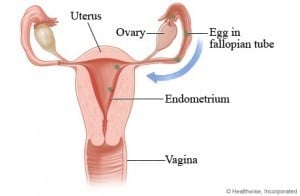
Sexually transmitted diseases (STDs)—even those that are successfully treated—can affect a woman’s fertility. STDs, especially chlamydia and gonorrhea, can cause inflammation and scar tissue that damage the fallopian tubes. Any damage to the fallopian tubes can make pregnancy much more difficult to achieve or prevent it all together. Patients with a history of STDs are also found to experience an increase in their risk of ectopic pregnancy—a pregnancy where the fertilized egg is stuck in the fallopian tube and must be removed.

A history of STDs does not necessarily mean that you will have infertility, but it’s worth getting checked out. There are simple tests, such as a hysterosalpingogram (HSG), that can evaluate the health of the fallopian tubes.

Q: Are your periods painful?
A: They aren’t anything I can’t handle.

Pain that is above and beyond the normal cramps associated with your period can be a sign of a endometriosis. With endometriosis, the uterine lining, called the endometrium, attaches and grows outside the uterus in the abdominal cavity. This endometrial tissue bleeds and causes inflammation and scarring which may block the fallopian tubes or interfere with their function. Endometriosis can also cause cysts in the ovaries that affect their ability to release eggs. With the right treatment, women with endometriosis have a good chance of getting pregnant.

Q: Are you still using contraception?
A: Sometimes…when we can remember.

Depending on your age, if conception hasn’t occurred within one year after stopping the use of any form of contraception, there could be a problem. Even if patients are not actively trying, the time passed still counts. Any change in contraception, from stopping birth control pills or the use of condoms during intercourse, should be discussed with your physician.

It is recommended that women under the age of 35 who have not conceived within one year, and women 35 and older who have not conceived within 6 months, speak with a fertility specialist. These recommendations do not mean that you will not conceive on your own, but it can be useful to get a check up and discuss if there might be any factors that may be impacting you or your partner’s fertility.

Living a healthy lifestyle is important when planning to conceive. If any of these little white lies sound familiar, work with your medical provider to make sure there aren’t any red flags you might be missing regarding your fertility. If you have been trying to conceive without success for over one year, schedule an appointment to get the answers you need and make sure you aren’t missing anything.

For more information or to schedule an appointment with one of our physicians, please speak with one of our friendly New Patient Liaisons by calling 888-971-7755.

Filed Under: General

June 23, 2015 by Shady Grove Fertility

Shruti Malik, M.D.

By Shruti Malik, M.D., of Shady Grove Fertility’s Fair Oaks and Woodbridge, VA, offices

Weight can often be a sensitive topic, but it’s important to address, as it can have a significant impact on your overall health, as well as your ability to get pregnant. Your body mass index (BMI)—the percentage of your body fat based on height and weight—is a measurement that allows physicians to determine if you are underweight, overweight, obese, or extremely obese. Whether under or overweight, your health can be adversely affected: being overweight can increase the likelihood of diabetes, heart disease, and hypertension, as well as several other medical conditions. Being underweight can also have a significant effect on your health, increasing the possibility of nutritional deficiencies, a decline in energy efficiency, anemia, and osteoporosis.

  • Calculate Your Body Mass Index

For Women: The Impact of Weight on Fertility

From a fertility standpoint, it’s important to have a healthy BMI, as being under or overweight can affect a woman’s ability to conceive. Depending on age, a woman’s chance of conceiving is approximately 15 percent each month, but in order for conception to occur, a woman needs to produce an egg and release that egg—a process known as ovulation.

Ovulation is critical for pregnancy to occur, but many women who are under or overweight do not ovulate or they may not ovulate on a predictable basis, which can contribute to ovulatory dysfunction. Women who are underweight may not be getting adequate nutrition or may have hypothalamic amenorrhea that keeps them from ovulating on a predictable basis as well. Studies have shown though that in patients whose infertility is specifically due to weight, correction of the underlying disorder can lead to pregnancy in up to 70 percent of women [1]. The ideal BMI for women trying to conceive is between 19 and 24.

  • The Most Common Cause of Female Infertility: Problems with Ovulation

It’s important to maintain a healthy weight not only when you are trying to conceive but during your pregnancy as well. There are many complications that can result when women are under or overweight during pregnancy, but by maintaining a healthy weight and lifestyle, a woman can lower her risk of miscarriage, gestational diabetes, and other pregnancy complications.

For Men: The Impact of Weight on Fertility

Just like with women who have fertility complications related to BMI, men can experience similar difficulties. If men are overweight, it can affect sperm count and sperm motility (how sperm move). When the male hormones are increased (a result of an increased BMI with a heavier weight), it can impair the man’s ability to make sperm on a regular basis. The natural balance of testosterone and estrogen can be affected, which then may affect the ability to produce sperm. Men who are obese can also experience warming of the scrotum. If the scrotal temperature increases by 1 or 2 percent, it can impact sperm production or survival.

If men are able to achieve a healthier BMI, though, it can greatly improve their sperm production. Men produce millions of new sperm every day, making it highly beneficial to men who want to alter their lifestyle habits. Sperm takes about 74 days to mature, which means that men who lose weight or make positive lifestyle changes only need to wait about 3 months before seeing improvements in sperm quality—and an increase in their chances of reproductive success.

  • Sperm Quality Checklist: Simple Lifestyle Changes to Improve Sperm Count and Fertility

The Effect of BMI and Weight on Fertility Treatment

For women who need fertility treatment, BMI is strongly connected to treatment success. For women who are overweight, they may have:

  • a diminished response to fertility medications
  • difficulty monitoring ovarian response
  • a higher risk of complications from surgical procedures
  • a higher probably of producing immature eggs during in vitro fertilization (IVF) cycles, which leads to a lower chance of becoming pregnant

How to Modify Your Weight to Improve Your Chance of Pregnancy

I encourage all of my patients to achieve a healthy diet and exercise regimen in order to lose weight. Even weight loss of 5 to 10 percent can affect a woman’s ability to resume regular ovulation when her infertility is associated with weight alone. In women who are significantly underweight and have associated disorders, reaching a more healthy body weight can help ovulation resume as well.
Try to find exercise regimens you will continue with—running or walking outside or a type of sport you enjoy. If you can perform your exercise regimen with your significant other or a friend, it will make it even easier to stick to this new routine.

I also tell my patients to try to limit their known ‘vices.’ If you know you eat a lot of processed foods, or drink a lot of soda, or eat out a lot, try to limit it. Make small changes in your lifestyle that you will be able to continue with. And make sure that your diet is healthy—no binge or excessive dieting, which can put an undue amount of stress on your body, making it more difficult to conceive and to have a healthy pregnancy.

Look for resources in your community to help you have the greatest chance of success: seek out nutritionists, dietitians, and other health and wellness specialists who can help you achieve a healthy BMI.

  • Pulling Down the Moon Offers Nutrition Services

References:

  1. Bates GW, Bates SR, Whitworth NS: Reproductive failure in women who practice weight control. Fertil Steril 37:373. 1982.

If you would like to learn more about the effect of weight on fertility or are ready to schedule an appointment, please speak with one of our New Patient Liaisons at 877-971-7755.

Filed Under: General

May 20, 2015 by Shady Grove Fertility

By Stephen J. Greenhouse, M.D.

Despite what you might have heard, vitamin deficiency alone is very rarely the reason for infertility in the United States. Likewise, there’s no one vitamin that has been proven to be effective in improving fertility. However, taking a combination of several key vitamins in adequate amounts before getting pregnant can maximize the health of the pregnancy and the baby. Doing so will give mother and baby both the best start at a healthy life.

Many women don’t have their first prenatal appointment with their doctor or start thinking about prenatal vitamins until they are already 8 weeks pregnant. By this time, the most critical organs in the fetus, such as the heart, the brain, and the spinal cord have already been developed. Therefore, in order for vitamins to have maximum impact, we tell our patients, if you are of reproductive age and having unprotected intercourse, you should take a daily prenatal supplement that includes a range of vitamins.

Vitamins for a Healthy Pregnancy

Folic acid.Folic acid is one of the best preventive care measures ever discovered. Folic acid is a B vitamin that can significantly reduce the risk of a fetus developing neural tube defects in early pregnancy. Neural tube defects are defects with the brain, spine, or spinal cord. These defects can cause Spina Bifida and are the second most common birth defect among women in the United States. The good news is that women who take folic acid supplements have an 80 percent reduction in neural tube defects. Folic acid can also reduce the risk of heart-related birth defects. Even though you may think you eat a healthy diet, you actually cannot get enough folic acid from your diet alone to achieve this reduction in risk. Women who could become pregnant should take 400 mcg (0.4 mg) of folic acid through a prenatal vitamin.

Other B vitamins. Both vitamins B6 and B12 are important for healthy red blood cell development. Certain forms of anemia are related to vitamin B deficiencies. However, most prenatal supplements have enough of the B vitamins to overcome the risk of deficiencies.

Iron. Iron-deficiency is the most common cause of anemia in women. Taking a prenatal supplement that includes iron not only helps protect the fetus from birth defects, but can minimize a woman’s risk of anemia. Prenatal supplements with iron can be especially important for vegetarian moms-to-be .

Calcium. Having enough calcium in your body is not only important for strong bones, it also reduces the risk of high blood pressure during pregnancy and pre-term, or early, labor.

Iodine. While it is uncommon in the United States because we consume table salt—the most common source of iodine—iodine deficiency can cause birth defects and an increased risk of miscarriage and stillbirth. Iodine is included in most prenatal supplements.

Vitamin D. Vitamin D is important for calcium absorption and bone growth. Recent data also shows it may play a role in immune system function and that low levels may be linked to other diseases, such as certain cancers. Studies on fertility show that women who are vitamin D deficient have lower implantation rates and that, when vitamin D levels are boosted to normal range, implantation rates improve. About 80 percent of women may have some vitamin D insufficiency. While there is controversy about the ideal level of supplementation, at Shady Grove Fertility, we recommend that women take a vitamin D supplement if their level is below 30 ng/mL. Ask your doctor to check your vitamin D level because many multivitamins and prenatal vitamins do not have enough vitamin D to help women with a deficiency.

Vitamins A & E. Vitamin A is important for visual function and fetal growth. Vitamin E is an antioxidant that protects the body from damage from free radicals. However, these vitamins are fat-soluble, which means that they are stored in the body for very long periods of time. In high doses, they can cause birth defects.

Omega 3 fatty acids. While you don’t necessarily need to take omega 3 supplements prior to pregnancy, they have multiple health benefits and are important in fetal brain development. Omega 3 fatty acids are found in foods such as fish, walnuts, flax seed, and vegetable oil. Be careful that your omega 3 supplement does not contain mercury. High doses of mercury can be toxic to the fetus, which is another reason pregnant women should limit the amount and kinds of fish they eat. In general, larger fish, such as swordfish, contain more mercury than smaller fish, such as tuna and salmon.

Herbs and Probiotics

Many women looking to enhance their fertility may turn to herbs, such as angus castus, chasteberry, or evening primrose oil, because they have heard about their benefits in restoring hormone imbalance. At SGF, we do not recommend that women trying to get pregnant take herbs because we cannot guarantee their safety. The Food and Drug Administration (FDA) does not regulate the vitamin industry, which includes herbs, so it is common for herbs to not contain the ingredients that they claim to have. Just because a product’s label states that it is a fertility enhancer, doesn’t mean that it is.

Herbs and their role in fertility have not been well studied. Be careful because some of these supplements, taken in high doses, can cause liver toxicity, birth defects, and bleeding. Tell your doctor about everything you are taking.

Despite what you may have read, probiotics in the digestive system do not travel to the vagina and make it more welcoming to the sperm. Probiotics can be helpful for some digestive conditions, such as inflammatory bowel disease, but have not been proven to lower the acidity of the vagina.

Antioxidants for Men

There is limited data on what improves sperm quality or function. Sperm cells are one of the few cells in the body that don’t have a mechanism to fight damage from free radicals. Therefore, people speculate that if a man takes antioxidants, such as vitamin C, that he can improve sperm quality. Well, no data exists to prove this reasoning. It won’t hurt a man who is trying to conceive with his partner to take a multivitamin with these antioxidants, but be aware that, in high doses, these vitamins can build up and become toxic.

What You Can Do

Are you taking a prenatal vitamin? Again, if you’re a woman of reproductive age, you should be taking a prenatal vitamin daily. And before trying herbs to enhance fertility, beware. It’s best to have a conversation with your doctor. By consulting with your doctor, you can be sure you are maximizing your chances for a healthy pregnancy and a healthy baby.

If you would like to learn more about Shady Grove Fertility or are ready to schedule an appointment, please speak with one of our New Patient Liaisons at 877-971-7755.

Filed Under: General

March 20, 2015 by Shady Grove Fertility

At Shady Grove Fertility, we have recognized a growing demand in the Washington, D.C., metro region for increased access to patient care.

New State-of-the-Art Monitoring Suite

Dr. Anitha S. Nair

Shady Grove Fertility has expanded its K Street location, featuring a new monitoring suite. This monitoring suite is equipped with state-of-the-art technology and more exam rooms and blood draw stations to help patients move through appointments with greater ease.
Now Open 7 Days a Week

In addition to this remodeled space, the K Street office will have extended hours and will soon be open 7 days a week, including for weekend monitoring beginning in April 2015. Weekend monitoring is very important for patients in order to stay on track with their cycle. Expanding locations for weekend monitoring is very helpful to patients located throughout the Mid-Atlantic region. The following SGF offices have weekend monitoring hours:

  • Annandale, VA
  • Annapolis, MD
  • Chesterbrook, PA
  • Rockville, MD
  • Towson, MD
  • Washington, D.C. – K Street (as of April 2015)

New Offices & Fertility Specialists

Dr. Kimberly S. Moon

The K Street expansion represents one of the many ways in which Shady Grove Fertility has provided patients with greater access to care than ever before, including the December opening of an office in Hagerstown, Maryland, and hiring three new reproductive endocrinologists over the course of the past year. Sunita Kulshrestha, M.D., practices in Shady Grove Fertility’s Philadelphia area offices; Shruti Malik, M.D., practices in the Fair Oaks, Virginia, office; and Kate Devine, M.D., practices in the K Street location in Washington, D.C.

“It’s important for Shady Grove Fertility as a practice to adapt and evolve with the needs of our patients. Our growth initiatives are examples of this evolution, increasing convenience and comfort for our patient community,” said Eric A. Widra, M.D., Medical Director of Shady Grove Fertility.

Appointments are now being scheduled for K Street’s expanded hours. To schedule a new patient appointment, please call 888-761-1967.

Filed Under: General Tagged With: Dr. Kate Devine, Dr. Shruti Malik, Dr. Sunita Kulshrestha

March 19, 2015 by Shady Grove Fertility

Medical contribution by Shruti Malik M.D.

Shruti Malik, M.D., of Shady Grove Fertility’s Fair Oaks, VA office.

For patients who are undergoing infertility treatment, the decision to change to a new treatment can spur anxiety, confusion, and uncertainty. How do you know when it’s time? Is this a decision your physician will make or will you work together to arrive at the best course of action? What are your options?

At Shady Grove Fertility, while it depends upon your diagnosis, we believe in a stepped approach to care, starting our patients with the simplest, most affordable treatment options first. Your physician will only recommend transitioning to a more advanced treatment if it is absolutely necessary—and you and your physician will make this choice together.

Moving to a Fertility Specialist

One of the most important transitions you can make is deciding to move from your OB/GYN to a fertility specialist. Fertility specialists typically have more experience diagnosing and treating infertility.

When you first visit your fertility specialist, you will undergo the basic infertility work-up for both partners. This diagnostic testing can provide key insights into your fertility. The female partner will have bloodwork performed, as well as an ultrasound. The bloodwork will measure for key hormones in determining ovarian function. The ultrasound will help to determine if the uterine cavity is normal. A woman will also need a hysterosalpingogram (HSG), which provides a view of the uterus and the tubes to ensure that there aren’t any blockages. The male partner will undergo a semen analysis to determine the sperm’s potential to fertilize the egg. Once the initial fertility work-up is complete and your physician also reviews your medical history, he or she will be able to determine a diagnosis and the course of treatment.

As mentioned earlier, many patients will begin with the simplest (or low-tech) treatment options first, but there are those who will move straight to in vitro fertilization (IVF). While there are many different factors that could lead to that treatment decision, one example of this is couples who have unexplained infertility. Studies concluded that intrauterine insemination (IUI) (a form of low-tech treatment) did not increase a couple’s chances of conception in comparison to when they were not undergoing treatment.[i] The patient would decide how they want to proceed though, knowing this information as well as their own personal diagnostics.


First-Line Therapies: Low-Tech Infertility Treatment

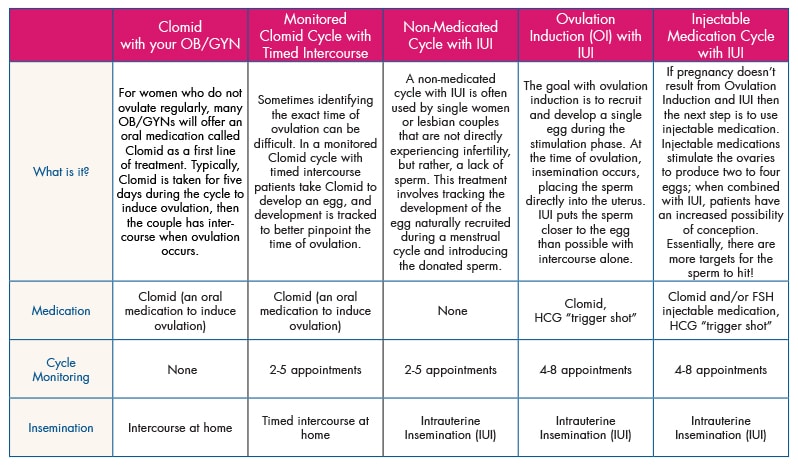
Physicians typically divide infertility treatments into low-tech treatments and advanced treatments. Low-tech infertility treatment options are what are known as “first-line therapies.” These options aim to develop one to four eggs, with fertilization occurring within the woman’s body rather than the laboratory setting.

Five low-tech treatment options used by patients are:

  • Clomiphene citrate (clomiphene, Clomid, Serophene) with your OB/GYN
    • Clomid (an oral medication that helps treat irregular or absent ovulation) is often the first-line therapy for many women, usually while under the care of their OB/GYN. While it can definitely prove successful for some women, how do you determine if you’ve taken Clomid for too long? The data for Clomid shows that after three to four cycles, the success rates drop off dramatically, even if the woman is ovulating.[ii] If she is over 35 or the couple’s infertility is unexplained, the data show that they should move on even sooner. It has actually been shown that it is more cost effective to switch to advanced treatments, rather than continue with Clomid after three to four cycles.
  • Monitored Clomid cycle with timed intercourse
    • If you started Clomid with your OB/GYN and have since transitioned to a fertility specialist, your physician may decide to continue with Clomid along with monitoring with bloodwork and ultrasound. You would come to the office for two to five monitoring appointments, in order to better pinpoint when ovulation may be occurring.
  • Non-medicated cycle with IUI
    • This treatment can be used by couples who do not want to use Clomid or other medications, or who may have mild male factory infertility present. IUI places the sperm in the upper portion of the uterus, and thus, closer to the egg. IUI is also often used by single women or same sex couples who are using donor sperm.
  • Ovulation induction (OI) with IUI
    • In ovulation induction with IUI, Clomid is used to induce ovulation. IUI with Clomid can be useful because Clomid can have an effect on cervical mucus by making it thicker and harder for sperm to penetrate. The IUI bypasses this issue by directly placing the sperm in the upper portion of the uterus.
  • Injectible medication cycle with IUI
    • An injectible medication cycle can be used for women who may have diminished ovarian reserve or certain hormonal disorders, rendering Clomid relatively ineffective.

If a treatment cycle does not result in a pregnancy, you will meet with your physician to review your cycle and discuss how to proceed. Your physician will provide information about the success rates and other available data so that you can make the most informed decision about a possible treatment transition.

Deciding to Transition to IVF

For the majority of patients, success rates for IUI will drop off after three unsuccessful cycles. If a couple is young and they want to try a fourth cycle of IUI, a physician will likely support this decision, depending on the individual diagnosis. But for couples in which the woman is over the age of 35, there is a correlation between the decline in success rates and advanced age. This is usually when your physician will advocate switching treatments to IVF.

IVF is the most successful treatment a couple can do using their own eggs and sperm. It is also one of the few treatment options in which success rates have increased over time due to technological advances. In 2013 at Shady Grove Fertility, women under 35 had a 48 percent live birth rate per embryo transfer and women 35 to 37 had a 43 percent live birth rate per embryo transfer.[iii]

Additionally, many women undergoing IVF will have remaining high-quality embryos to freeze for future frozen embryo transfers (FET), providing patients with many chances for success or the ability to return for additional children later on.

When Donor Egg Treatment is Necessary

Women who are unable to use their own eggs for conception, but can still carry a child in their uterus, may need donor egg treatment. A physician may recommend donor egg treatment for women who have decreased ovarian function, premature ovarian failure, or genetic abnormalities. The majority of women who undergo donor egg treatment, though, have usually tried other infertility treatments that were unsuccessful.

Donor egg treatment offers the highest pregnancy and delivery rates of any fertility treatment, as the donated eggs come from women between the ages of 21 and 32, which coincides with a woman’s peak fertility. In 2013, donor egg recipients at Shady Grove Fertility had a 58 percent clinical pregnancy rate per embryo transfer and a 49 percent live birth rate per embryo transfer. [iv]

Knowing Your Options

Low-tech infertility treatment, IVF, and donor egg treatment represent the full course of care options available for infertility treatment. It is unlikely that most patients will need all of these options, but it is important to be aware that they exist and to let them guide you in your decisions about treatment transitions. If you are considering another form of treatment, consider how many cycles you have attempted, your age, and the guidance from your medical team based on their data-driven decisions. Consider the statistics, but also do what feels right for you and your family.

For more information about infertility treatment or to schedule an appointment with one of our physicians, please speak with our New Patient Center at 888-761-1967.

References:

[i] Reindollar, R, Regan M, Neumann P, Levine B, Thornton K, Alper M, and Goldman M. A randomized clinical trial to evaluate optimal treatment for unexplained infertility: the fast track and standard treatment (FASTT) trial. Fertility and Sterility [serial online]. 2009. Available at: http://www.fertstert.org/article/S0015-0282%2809%2900866-8/abstract. (Accessed: 18 March 2015).
[ii] Use of clomiphene citrate in infertile women: a committee opinion. Fertility and Sterility. Vol. 100, No. 2, August 2013. http://dx.doi.org/10.1016/j.fertnstert.2013.05.033. (Accessed: 18 March 2015)
[iii] In Vitro Fertilization (IVF) Success Rates. August 2014. Shady Grove Fertility Center Laboratories in Rockville, MD., Towson, MD, and Chesterbrook, PA. Available at: https://www.shadygrovefertility.com/ivf_success (Accessed: 18 March 2015).
[iv] Donor Egg Success Rates. August 2014. Shady Grove Fertility Center Laboratories in Rockville, MD., Towson, MD, and Chesterbrook, PA. Available at: https://www.shadygrovefertility.com/donor-egg-success (Accessed: 18 March 2015).

Filed Under: General

February 4, 2015 by Shady Grove Fertility

What is Three-Parent IVF? Three-parent in vitro fertilization (IVF) is a fertility technique that is intended to help women who are carriers of mitochondrial disease. Mitochondria are the energy-producing structures outside of a cell’s nucleus, and defects in them can result in degenerative diseases including muscular dystrophy, problems with the heart, kidneys, severe muscle weakness, epilepsy, and mental retardation. To prevent transmission of mitochondrial disease to a woman’s child, scientists have proposed three-parent IVF. According to Dr. Eric Levens of Shady Grove Fertility’s Annandale, VA office, “Three-parent IVF involves taking the nucleus of one egg and inserting it into another egg that had its nucleus removed, but still contains the mitochondrial DNA. This is followed by fertilization with sperm.” The resulting embryo will have nucleus DNA from its parents, but the mitochondrial DNA from the donor.

Where is Three-Parent IVF Practiced? The United Kingdom will be the first country in the world to allow this technique if the proposed law is passed by the House of Lords, now that the House of Commons passed the law, 382 to 128. In the United States, the Food and Drug Administration held a meeting last year to discuss three-parent IVF, but scientists said it was too soon to use this technique in humans.

How Many People will this Law Affect? According to ABC News, “Experts estimate only about a dozen British women would be considered for these techniques every year…clinics that offer the techniques will have to apply for a special license and any children born afterward will be closely monitored for potential health problems.” It has been estimated that the first baby born from three-parent IVF could be born within the next three years.

Why is Three-Parent IVF Controversial? Three-parent IVF represents ethical concerns for many that have yet to be answered. Questions are raised regarding parentage: will parents tell their child that a third parent was involved? Can the mitochondrial DNA from the third parent affect the child? A Wellcome Trust fact sheet states that “Nuclear DNA is not altered, and so mitochondrial donation will not affect the child’s appearance, personality or any other features that make a person unique…” On the opposing side though, the California-based Center for Genetics and Society sent an open letter to UK lawmakers stating that “the techniques will in fact put women and children at risk for severe complications…and set a policy precedent that experimentation on future generations is an acceptable biomedical/fertility development.”

Even if UK lawmakers officially pass this legislation, it will be several years before the full medical and ethical considerations of three-parent IVF can be determined.

For more information about fertility technology and treatment or to schedule an appointment, please contact a New Patient Liaison at 877-971-7755.

Filed Under: General Tagged With: In vitro fertilization (IVF)

  • « Go to Previous Page
  • Page 1
  • Interim pages omitted …
  • Page 22
  • Page 23
  • Page 24
  • Page 25
  • Page 26
  • Interim pages omitted …
  • Page 46
  • Go to Next Page »

Company

  • About SGF
  • About US Fertility
  • Our Doctors
  • Fertility Equity
  • Careers
  • Newsroom
  • SGF College Scholarship
  • Contact Us
  • Voice Your Feedback

Treatments

  • Egg Freezing
  • Intrauterine Insemination (IUI)
  • In Vitro Fertilization (IVF)
  • Frozen Embryo Transfer (FET)
  • LGBTQIA+ Family Building
  • Shared Risk 100% Refund Program
  • All Treatments

Resources

  • Patient Portal
  • Online Bill Pay
  • Library
  • Support Groups & Events

Locations

  • California
  • Colorado
  • Delaware
  • Florida
  • Georgia
  • Maryland
  • North Carolina
  • Pennsylvania
  • Texas
  • Virginia
  • Washington, D.C.

2026 Shady Grove Fertility

  • Policies & Notices