
• Skip to primary navigation
  • Skip to main content
  • Skip to footer
Shady Grove Fertility
  • Become an Egg Donor
  • Referring Physicians
  • 1-888-761-1967
  • Schedule Appointment
  • Get Started
        • Get Started
          • Causes of Infertility
          • Fertility Tests
          • When to Seek Help
          • Find a Doctor
          • Preconception and prenatal vitamins 
          • Schedule an Appointment
        • Personalized Care For
          • Single Parents
          • LGBTQIA+ Family Building
          • People with Cancer
          • Known Genetic Diseases
          • Egg Donors
  • Treatments
        • Fertility
          • Timed Intercourse
          • Ovulation Induction
          • Intrauterine Insemination (IUI)
          • In Vitro Fertilization (IVF)
          • Frozen Embryo Transfer (FET)
        • Donation & Surrogacy
          • Donor Sperm
          • Donor Egg
          • Donor Embryo
          • Gestational Carrier
          • LGBTQIA+ Family Building
          • Single Parents
          • Find a Donor
        • More Treatments
          • Center for Male Fertility
          • Egg Freezing
          • OncoFertility
          • Preimplantation Genetic Testing
          • MIGS
          • All Fertility Treatments
  • Resources
    • Resource Library
    • Events Calendar
    • Patient Stories
    • Mental Health
    • Wellness Center
  • Insurance & Savings
    • Insurance & Benefits
    • Shared Risk 100% Refund Program
    • 100% Refund for Donor Egg
    • Discounts
    • Egg Freezing Costs
    • Financing & Grants
    • Clinical Trials
  • About
    • Find a Doctor
    • About SGF
    • Our Care Team
    • Advanced Practice Providers
    • Fertility Equity
    • Philanthropy
    • Newsroom
    • Careers
    • Contact Us
    • Voice Your Feedback
  • Locations
        • Find a Location
        • California
        • Colorado
        • Delaware
        • Florida
        • Georgia
        • Maryland
        • North Carolina
        • Pennsylvania
        • Texas
        • Virginia
        • Washington, D.C.
        • Chile
        • International & Out of State
        • SGF at Walter Reed National Military Medical Center
  • Patient Hub
    • Online Bill Pay
    • Patient Forms
    • Patient Portal
  • Call your care team
  • Become an egg donor
  • Referring physicians
  • search-icon
  • Schedule appointment 1-888-761-1967

Home / Advanced maternal age

Advanced maternal age

March 3, 2016 by Shady Grove Fertility

Dr. Shannon M. Clark, high-risk-pregnancy expert, founder of babiesafter35.com and contributor to the Washington Post article.


Even though 5 years seems like a short amount of time, a woman’s fertility after 35 is Typically, a pregnancy is considered high risk when a woman is over the age of 35 or of “advanced maternal age.” Shannon M. Clark, M.D., an obstetrician/gynecologist (OB/GYN) and high-risk-pregnancy expert, never imagined she would have fertility problems of her own. In the recent Washington Post article, “I’m a high-risk-pregnancy expert. So why didn’t I worry about my own fertility?” the 42-year-old physician describes her struggle to get pregnant after countless failed fertility treatments. Despite the number of women who successfully have children and start their family later in life, Clark reveals the hidden reality of how difficult it can be for women of advanced maternal age to conceive.

According to Clark and the Centers for Disease Control and Prevention (CDC): “the average age of first-time mothers in the United States rose from 24.9 in 2000 to 26.3 in 2014. While this is partially a result of a decline in births to teenage mothers, it’s also because the share of first births to women age 35 and over rose by 23 percent.”

“I was used to achieving my goals. Why would I fail at this?”

As a practicing OB/GYN, Clark describes her constant interactions with patients who are older mothers and older first-time mothers, who, despite being of “advanced maternal age,” are still having successful pregnancies.

“Like many of my patients, I was healthy, educated, had traveled the world, and was finally ready to settle down and pursue the next phase of my life,” recalls Dr. Clark. Not unlike many women, Clark claims to have been in denial after seeing so many women have successful pregnancies later in life both naturally and through fertility treatments, “I should have known better, and perhaps somewhere deep inside, I did. I just assumed I’d be one of them. I was used to achieving my goals. Why would I fail at this?” But after 2 years of trying multiple fertility treatment options, she realized that 40 was not the new 30 when it came to fertility.

Fertility after 35 Treatment Options

Forty percent of infertility is considered female infertility (the other 60 percent is from male factor , unknown, and combined male and female), and a large contributing factor of female infertility is the age of a woman’s eggs. Advanced age impacts both the quantity and quality of a woman’s eggs, which naturally decreases and declines with time. As eggs age, they also become more resistant to fertilization, resulting in lower pregnancy rates, and tend to have more frequent chromosomal abnormalities, such as Down syndrome, which makes miscarriages more likely.

While in vitro fertilization (IVF) and donor egg treatment are reliable and successful options, earlier diagnosis and treatment is better. No matter why pregnancy is delayed for women, their biological clock affects how many quality eggs are released in a woman’s ovaries, and the changes accelerate significantly around the age of 35. Clark encourages women who are waiting until later to attempt pregnancy to be mindful that there is no guarantee, even with advanced fertility treatments and despite promising success rates.

Egg Freezing Captures a Woman’s Current Fertility

Fertility after 35 is an even more complex situation for women who might not be in a relationship or ready to conceive (either naturally or through advanced fertility treatment). Women trying to beat the biological clock are limited with their options—either freeze eggs or wait. Luckily, more women are considering egg freezing as a proactive option. While menopause and premature ovarian failure can affect a woman’s supply, egg freezing helps ensure the possibility that women have a backup plan and can use their own eggs and have biological children when the timing is right.

At Shady Grove Fertility we know many women feel the pressure to beat their biological clock. Our Egg Freezing Program has demonstrated success in thawing frozen eggs, with strong survival, fertilization, and embryonic development, creating a reliable option for women who are concerned about the biological clock.

Clark leaves readers with this advice:

A child is a miracle. No one knows better than I just how true that statement is. Yet I urge women delaying childbearing for any reason to look beyond the headlines about maternal age. Yes, there are many women who get pregnant naturally later in life, and yes, there are many options for becoming pregnant through fertility treatments. But women need to be mindful that there is no guarantee. I never thought I would be a statistic, and I caution women on my path never to assume that their journey toward a family will be seamless. If having children is in your master plan, please consider your options early.

To learn more about fertility after 35 or egg freezing benefits, or for more information about Shady Grove Fertility’s exclusive egg freezing financial programs, call 1-877-411-9292 to speak with one of our New Patient Center Liaisons, fill out this form to schedule an appointment, or register for one of our upcoming patient educational events.

Filed Under: Diagnosing Infertility Tagged With: Advanced maternal age

June 24, 2015 by Shady Grove Fertility

Whether you love them or hate them, when celebrities like Kim Kardashian share their experiences with infertility, it decreases the social stigma and increases the conversation about fertility treatment. Stephen J. Greenhouse, M.D., of Shady Grove Fertility’s Fair Oaks, VA, office joins FOX 5 to discuss why some couples struggle to conceive.

 The Struggle to Conceive: Age-Related Infertility

While women in their 30s and 40s may feel in the prime of their lives, biologically speaking, they have already passed their peak fertility years. For a woman, age is the number one predictor of her ability to conceive. “At the age of 35, the chances of getting pregnant per month is about 15 percent,” explains Dr. Greenhouse. As you age, the natural rate of conception, without any other fertility issues, continues to decline.

The Struggle to Conceive: Secondary Infertility

For couples who have already had a child, it may be hard to understand why baby number two or three is taking longer to conceive. This is known as secondary infertility, which may be caused by any number of underlying issues. For some, the years that have passed since their first child may have led to age-related infertility. For others, there could have always been some degree of infertility that has worsened with time, or there may have been complications with the earlier pregnancy that could be delaying conception.

Be Proactive: Egg Freezing

Women who are in their 30s have a unique opportunity that previous generations did not—egg freezing. Egg freezing allows women who don’t anticipate starting a family in the next several years to freeze their eggs and, in a sense, “lock in” their current fertility potential. “A woman in her late 20s, early 30s, or mid 30s—who isn’t trying to get pregnant at this time—may want to come in and have a discussion with a fertility specialist to discuss her options,” says Dr. Greenhouse. Taking a proactive approach to family building now may save someone the experience of not being able to conceive later.

When Should I Seek Help?

We all know the couples that say, “I’m trying but not really trying,” and for some, that stage may last for years.  The reality is, if you are having unprotected intercourse and have not conceived, you may be experiencing infertility. For women under the age of 35, we recommend you see a fertility specialist after 1 year of unprotected intercourse. For women 35 to 39, we recommend you see a fertility specialist after 6 months, and for women 40 and over, if you have been trying to conceive for just 2 to 3 months, we recommend you see a fertility specialist promptly.

  • 5 Sure Signs You Need to See a Reproductive Specialist Now

Take the First Step – And That Doesn’t Always Mean Treatment

If you are struggling to conceive, don’t hesitate to start the conversation. Whether you start to ask questions of your OB/GYN or you call upon the advice of a fertility specialist, like those at Shady Grove Fertility, getting your questions and concerns addressed is the first step. If you fall into the time frames for infertility indicated above, we recommend you schedule a consultation and fertility work-up with a fertility specialist. Finding out the cause of your infertility is the first step to overcoming it.

  • Watch Fox 5: Why Some Couples Struggle to Conceive

If you are struggling to conceive and would like to schedule an appointment, please speak with one of our New Patient Liaisons at 877-971-7755.

Filed Under: Diagnosing Infertility Tagged With: Advanced maternal age, Secondary infertility

May 7, 2015 by Shady Grove Fertility

Medical contribution by Stephanie Beall, M.D., Ph.D.

Stephanie Beall, M.D., Ph.D.

Many people have heard of in vitro fertilization (IVF), a commonly used fertility treatment. Some people erroneously assume that IVF is the only form of fertility treatment, without realizing that most patients do not begin their treatment journey with this approach. Most patients actually start with a low-tech treatment option, such as timed intercourse or intrauterine insemination (IUI). Regardless of where you start your journey, if it involves IVF, let the information in this fact sheet be your guide.

What is IVF?

In the simplest terms, IVF is a procedure in which a physician will remove one or more eggs from the ovaries that are then fertilized by sperm inside the embryology lab. IVF is the most successful treatment a couple can do using their own eggs and sperm (or donor sperm). IVF has become mainstream, widely accepted, and continues to grow, due to significant technological advances.

  • Read Shady Grove Fertility’s IVF Success Rates
  • Understanding Success Rates

Who Needs IVF?

There are many types of diagnoses that may lead to patients undergoing IVF. Here are some of the most common indications for IVF treatment:

  • Fallopian tube damage/tubal factor: In order to treat significant tubal damage, surgical repair or IVF (which bypasses the fallopian tubes) are the available treatment options. Your physician and your individual medical history can help determine the best course of action for your diagnosis.
  • Male factor infertility: In nearly 40 percent of infertility cases, the diagnosis is male factor infertility. The cause of male factor is often unknown, but some problems have been identified, including sperm production disorders, abnormalities of the reproductive tract, difficulty with erections or ejaculation, endocrine and immune disorders. Intracytoplasmic sperm injection (ICSI) has made significant strides for patients with male factor infertility. Learn more below.
  • Endometriosis: Endometriosis may be effectively treated with either surgery or IVF depending on the severity of endometriosis and other factors that could impact the chance of pregnancy.
  • Age-related infertility: As a woman ages, her ovarian reserve (egg supply) will decrease, with egg quality also negatively impacted. In many cases, this reduced ovarian function can be overcome through the use of IVF.
  • Unexplained infertility: Approximately 10 percent of couples will have no identifiable cause of infertility after completing a comprehensive evaluation. IVF is often successful, even if more conservative low-tech treatments have previously failed.
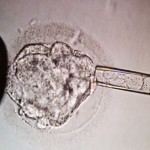
Embryo biopsy

Genetic abnormalities: For patients who are at risk for passing to their children a genetic disorder, preimplantation genetic diagnosis (PGD)—in which a few cells are removed from an embryo and tested for genetic disorders—can provide information about which embryo(s) the physician should transfer back to the female partner. IVF has created the ability to perform PGD, as fertilization of the embryos occurs in the lab. Additionally, for patients who experience recurrent pregnancy loss or have repeated unsuccessful IVF cycles, preconception genetic screening (PGS) provides the opportunity to discover if the underlying cause may exist on the genetic level.

What is the Timeline for an Average IVF Cycle?

In a normal ovulation cycle, one egg matures per month. The goal of an IVF cycle is to have many mature eggs available, as this will increase the chances of success with treatment. In order for there to be more than one egg available, stimulation of the ovaries needs to occur.

Part I: Stimulation of the Ovaries

In the stimulation phase of an IVF cycle, a patient will use injectible medications for approximately 8 to 14 days to stimulate the ovaries to produce eggs. Follicle-stimulating hormone (FSH) and luteinizing hormone (LH), both produced naturally within the body, comprise the medications. During the stimulation phase, patients will come into the office roughly 7 to 8 times for morning monitoring. Monitoring allows the physician to track the progress of the cycle and adjust medication dosages as needed. During a monitoring appointment, the patient will undergo an ultrasound and bloodwork:

  • The transvaginal ultrasound measures the growth of the egg-containing follicles and the thickness of the uterine lining, both of which should be increasing throughout the stimulation phase.
  • A nurse or clinical assistant will draw blood at each appointment to measure estrogen and progesterone levels. This level is another indicator of the growth and maturation of the eggs, and it rises as the follicles grow.

On the afternoon of a monitoring appointment, the patient can expect a phone call from her nurse with updates, including any changes in medication dosing and to coordinate the next monitoring appointment.
The Trigger Shot
The trigger shot is the final step in the stimulation phase of treatment. Depending on the patient’s individual protocol, she will either have a human chorionic gonadotropin (hCG) or Lupron trigger shot. This shot helps the developing eggs to complete the maturation process and sets ovulation in motion. Timing is very important here, as the physician must perform the egg retrieval prior to the expected time of ovulation.

Part II: Egg Retrieval

Eggs under the microscope.

A physician will perform your egg retrieval procedure at one of Shady Grove Fertility’s ambulatory surgery centers (ASC) in Rockville, MD, Towson, MD, or Chesterbrook, PA. On the morning of your egg retrieval, a physician will meet with you before the procedure to review your protocol. You will also meet with an anesthetist, who will review your medical history and will administer the IV fluid you will receive prior to the start of the procedure to induce sleep.

  • Obtaining the sperm: If patients are using a fresh sperm sample, a lab technician will come to accept the sample. If you are using a frozen sperm sample or donor sperm collected at a previous date, the technician will verify those details with you. Our andrology lab will clean and prepare the sperm, so that the healthiest sperm are brought together with the eggs for fertilization (after the physician performs the egg retrieval).
  • Obtaining the eggs: The egg retrieval itself takes about 20 to 30 minutes. During the procedure, the physician will guide a needle into each ovary to remove the egg-containing fluid in each follicle. The physician utilizes an ultrasound during the procedure to see where to guide the needle. Recovery will take about 30 minutes and patients are able to walk out on their own, though someone will need to drive them home since they had been under anesthesia.
  • What to Expect the Day of Your Egg Retrieval (Video)

Part III: Fertilization

After the egg retrieval, the embryologist will sort and prepare the eggs and sperm. There are two ways that fertilization can take place: conventional insemination or ICSI. The physician and patient will discuss which method to use based on sperm quality; this is traditionally planned in advance. In some cases, the embryologist may see that semen parameters for conventional insemination are not being met, so she/he will recommend the switch to ICSI to produce the greatest chance of success. Your clinical team will let you know if they recommend an unanticipated ICSI procedure.

  • Conventional insemination: For conventional insemination, the embryologist takes the prepared sperm sample and isolates the healthiest sperm. He/she will then incubate this sperm with the eggs in a Petri dish. This gives the egg and sperm the opportunity to find one another and fertilize.
ICSI
  • ICSI: There are many reasons why an embryologist might use ICSI, but the predominant cause is severe male factor infertility. ICSI provides patients the ability to isolate one healthy sperm for insemination. During ICSI, the egg and sperm don’t find one another as in conventional insemination; instead, an embryologist injects a single healthy sperm into the cytoplasm, or center, of each egg. ICSI has become one of the most incredible advances in fertility treatment, as it makes fertilization possible in even the most severe male factor infertility cases.
  • Part IV: Embryo Development

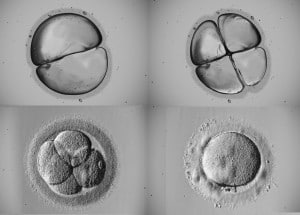
    Embryo development

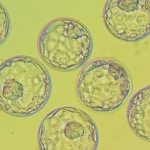
    Embryo development begins after fertilization. An embryologist examines each developing embryo every morning for the following 5 to 6 days. The goal is to see progressive development, with a four-cell embryo on day 2 and an eight-cell embryo on day 3. After the eight-cell stage, rapid cell division continues and the embryo enters into what is called the blastocyst stage at day 5 or 6. It is your physician’s goal to transfer the highest-quality embryo or embryos to give patients the greatest chance of reproductive success.

    • Why SGF recommends elective single embryo transfer (eSET)

    Part V: Embryo Transfer

    Blastocysts

    The embryo transfer is a simple procedure that only takes about 5 minutes to complete. There is no anesthesia or recovery time needed. When your nurse schedules your transfer, she will notify you and provide instructions on when to arrive and how to prepare. You need to have a full bladder for the procedure. It’s important to drink the specific amount of liquid recommended 30 to 40 minutes ahead of time.

    You will review your cycle with the physician and the number of embryos recommended for transfer. The embryologist will load the transfer catheter in the embryology lab with the embryo; upon entering the patient’s room, the embryologist will again confirm the patient’s last name and the number of embryos in the catheter. The physician will insert the catheter into the uterus and push the embryo through with a small amount of fluid. An external abdominal ultrasound provides visual guidance to the physician throughout the procedure via a monitor.

    Once the physician transfers the embryo, he/she will slowly remove the catheter. Since the embryo is invisible to the naked eye, the embryologist will then examine the catheter under a microscope in the lab to ensure that the embryo was released. The nurse will give you instructions for the following two weeks until it’s time for the beta pregnancy test.

    • Navigating the two week wait (TWW)

    Part VI: The Beta Pregnancy Test

    Two weeks after the embryo transfer, a nurse or clinical assistant will perform a blood pregnancy test. This test is frequently called a “beta” because it measures the beta chain portion of the hCG hormone emitted by the developing embryo.

    Though many patients are tempted to take an at-home pregnancy test, we caution against it, as these tests can render false positives or negatives. There is nothing inherently wrong with at-home pregnancy tests, but in the instance of IVF, the blood test is more accurate and reliable. Earlier, we spoke about the trigger shot, which can either be Lupron or hCG. If you have an hCG trigger shot, it may remain in the blood and show up on an at-home pregnancy test, possibly rendering a false positive. The urine test cannot discern the difference between the hCG in the trigger shot or the hCG seen elevated during a pregnancy. It’s better to wait the two weeks (though we definitely know how hard it is) and have the beta pregnancy test.

    Affording IVF Treatment with the Shared Risk 100% Refund Guarantee Program
    Our Shared Risk 100% Refund Guarantee Program financially insures you against the risk of not being successful. In this program, you elect to pay a flat fee that covers up to six cycles of IVF treatment. If you do not take home a baby as a result of those cycles (and the transfer of any frozen embryos), 100 percent of the fee is refunded, preserving your resources for other family building options (some exclusions may apply).

    • 100% Shared Risk Refund Guarantee for IVF and Donor Egg [Video]
    • Read Sara and Kevin’s Patient Journey

    At Shady Grove Fertility, we understand the financial considerations that go into the decision to begin—or continue—fertility treatment. As part of our efforts to make treatment more affordable, we participate with more than 30 insurance providers. While many patients have some form of insurance coverage for treatment, or live in a location that has coverage provided by mandate, we recognize that there are many without sufficient coverage or insurance benefits. With that in mind, SGF developed additional financial programs to help ease the cost of treatment.

    If you would like to learn more about IVF or to schedule an appointment, please speak with one of our New Patient Liaisons at 877-971-7755.

    Filed Under: Diagnosing Infertility Tagged With: Advanced maternal age, Endometriosis, Unexplained infertility

    April 26, 2013 by Shady Grove Fertility

    SGF Nurse

    Donor egg treatment has revolutionized the field of reproductive medicine – allowing women that have either postponed family building or have poor egg quality to still carry their own child. Egg donation has been around since the mid-1980s, but due to high cost and long waits for egg donors, not many men and women were able to take advantage of this new treatment option.

    Society of Advanced Reproductive Technology (SART) collects and shares data from fertility centers across the country.* Since 2004, the number of donor egg treatment cycles has increased by 28% nationwide – making up roughly 10 to 11% of all advanced reproductive cycles in the United States.

    • *SART specifically looks at IVF, donor egg, gestational carrier and other advanced treatment options. SART does not track data on IUI, timed intercourse and other low-tech treatment options.

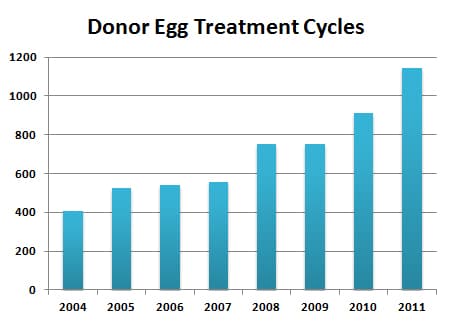
    At Shady Grove Fertility, there have been even patients accessing donor egg treatment. In 2004, SGF completed approximately 400 donor egg cycles. In 2011, the number significantly increased to over 1,100 – nearly tripling. Today, donor egg treatment makes up approximately 17% of advanced reproductive treatment cycles at Shady Grove Fertility. And most importantly, with the help of donor egg treatment, over 500 patients were able to take home a baby last year.

    SGF Nurse

    • Call 1.877.971.7755 or click here to request info about Shady Grove Fertility’s Donor Egg Program.

    Increasing Access to Donor Egg Treatment

    Always on the forefront of meeting patient needs, Shady Grove Fertility developed an exclusive donor egg treatment and financial option that increases the availability of donors, reduces the cost of treatment, and even guarantees a baby or a 100% refund.

    The Shared Donor Egg Program was created to reduce the cost of treatment by sharing the donor with one or two other recipients. When combined with the Shared Risk 100% Refund Guarantee Program, the program becomes even more appealing. For approximately the same cost of traditional donor egg treatment, using these programs, you could receive 6 treatment cycles with a 100% refund if you are not successful.

    Greater Selection for Egg Donors

    Once patients decide that they want to move forward with donor egg treatment, and they realize that they have financial options, the next step is finding the right donor. Some patients have a dream list of certain characteristics they are looking for; others want a donor that is similar to themselves or family members – no matter what the criteria for your donor selection, variety of selection is key.

    At Shady Grover Fertility, the donor database features women who have undergone a thorough medical, genetic, and psychological screening. Every day, there are at least 70 to 80 egg donors from different backgrounds and ethnicities available for immediate donation.

    At many fertility centers across the country and internationally, you may be paired with an egg donor. At Shady Grove Fertility, you pick your donor.

    The combination of financial options and exceptional medical care have helped make Shady Grove Fertility the largest and one of the most successful donor egg programs in the United States with patients traveling from across the country and internationally to access donor egg treatment.

    If you are having trouble conceiving on your own, it may be time to see a fertility specialist. Please call us at 877-971-7755 or request an appointment online.

    Filed Under: Treatment Tagged With: Advanced maternal age, Donor egg, Shared Risk 100% IVF Refund Program

    Company

    • About SGF
    • About US Fertility
    • Our Doctors
    • Fertility Equity
    • Careers
    • Newsroom
    • SGF College Scholarship
    • Contact Us
    • Voice Your Feedback

    Treatments

    • Egg Freezing
    • Intrauterine Insemination (IUI)
    • In Vitro Fertilization (IVF)
    • Frozen Embryo Transfer (FET)
    • LGBTQIA+ Family Building
    • Shared Risk 100% Refund Program
    • All Treatments

    Resources

    • Patient Portal
    • Online Bill Pay
    • Library
    • Support Groups & Events

    Locations

    • California
    • Colorado
    • Delaware
    • Florida
    • Georgia
    • Maryland
    • North Carolina
    • Pennsylvania
    • Texas
    • Virginia
    • Washington, D.C.

    2026 Shady Grove Fertility

    • Policies & Notices
    Also of interest
    • In Vitro Fertilization IVF
    • Fertility Tests
    • Research Publications