• Skip to primary navigation
  • Skip to main content
  • Skip to footer
Shady Grove Fertility
  • Become an Egg Donor
  • Referring Physicians
  • 1-888-761-1967
  • Schedule Appointment
  • Get Started
        • Get Started
          • Causes of Infertility
          • Fertility Tests
          • When to Seek Help
          • Find a Doctor
          • Preconception and prenatal vitamins 
          • Schedule an Appointment
        • Personalized Care For
          • Single Parents
          • LGBTQIA+ Family Building
          • People with Cancer
          • Known Genetic Diseases
          • Egg Donors
  • Treatments
        • Fertility
          • Timed Intercourse
          • Ovulation Induction
          • Intrauterine Insemination (IUI)
          • In Vitro Fertilization (IVF)
          • Frozen Embryo Transfer (FET)
        • Donation & Surrogacy
          • Donor Sperm
          • Donor Egg
          • Donor Embryo
          • Gestational Carrier
          • LGBTQIA+ Family Building
          • Single Parents
          • Find a Donor
        • More Treatments
          • Center for Male Fertility
          • Egg Freezing
          • OncoFertility
          • Preimplantation Genetic Testing
          • MIGS
          • All Fertility Treatments
  • Resources
    • Resource Library
    • Events Calendar
    • Patient Stories
    • Mental Health
    • Wellness Center
  • Insurance & Savings
    • Insurance & Benefits
    • Shared Risk 100% Refund Program
    • 100% Refund for Donor Egg
    • Discounts
    • Egg Freezing Costs
    • Financing & Grants
    • Clinical Trials
  • About
    • Find a Doctor
    • About SGF
    • Our Care Team
    • Advanced Practice Providers
    • Fertility Equity
    • Philanthropy
    • Newsroom
    • Careers
    • Contact Us
    • Voice Your Feedback
  • Locations
        • Find a Location
        • California
        • Colorado
        • Delaware
        • Florida
        • Georgia
        • Maryland
        • North Carolina
        • Pennsylvania
        • Texas
        • Virginia
        • Washington, D.C.
        • Chile
        • International & Out of State
        • SGF at Walter Reed National Military Medical Center
  • Patient Hub
    • Online Bill Pay
    • Patient Forms
    • Patient Portal
  • Call your care team
  • Become an egg donor
  • Referring physicians
  • search-icon
  • Schedule appointment 1-888-761-1967

Home / Egg freezing / Page 19

Egg freezing

May 20, 2014 by Shady Grove Fertility

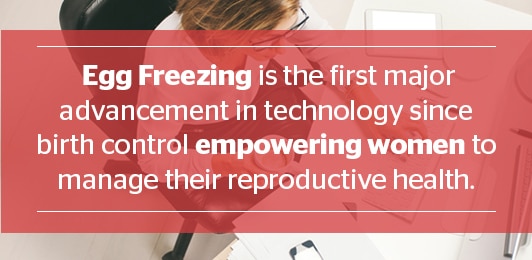
Oocyte cryopreservation, more commonly known as egg freezing, is an increasingly popular topic of discussion in the media and among women of the reproductive age. Why? Perhaps it is because egg freezing is the first major advancement in medicine since the birth control pill to potentially empower women to take more control of reproductive health. Egg freezing preserves a woman’s current fertility increasing the chances of achieving pregnancy at a later age. At Shady Grove Fertility, we are excited to be among the first to offer this cutting edge technology.

As the leading fertility center in the country, we are encouraged by our freeze, thaw, and pregnancy data using frozen eggs and frozen embryo transfers (FETs). Based on historical success rates, we believe egg freezing is a viable option for women who choose to freeze their eggs and come back later for pregnancy. While we are optimistic about this new option, it is important for women considering egg freezing to understand that like all medical treatment, nothing is 100% guaranteed. According to Shady Grove Fertility Medical Director, Eric A. Widra, M.D.:

“Successfully freezing and thawing eggs has been a long sought goal in reproductive medicine. To see it come to fruition for donor egg and elective fertility preservation programs is one of the most exciting developments in our field of medicine. This technology holds the unprecedented promise of increasing reproductive freedom and family planning options for women. However, like any new technology, we should be careful not to overstate its potential. While the number of women freezing their eggs is rapidly growing, the number of pregnancies and children born after thawing the eggs is still very small. 

This is an exciting opportunity for women and their doctors. We are extremely proud and enthusiastic about our preservation program. But the message that you can freeze your eggs now and be certain of a family later implies an insurance policy that is guaranteed to pay out – time will tell if that is true.”

Egg freezing is medical breakthrough designed to extend fertility potential for women who think they may not be in a position to currently conceive. The perfect age to freeze is difficult to define, and it becomes a personal decision for each woman based on her circumstances and goals. However, from a purely clinical perspective, the best time to freeze eggs to optimize pregnancy rates if they are used later, is in the early to mid 30’s when fertility is still near its peak. We evaluate women who are interested in freezing by measuring their ovarian reserve – the quantity of eggs available in the ovaries. We do this by combining the results of a blood test to evaluate reproductive hormonal values with an ultrasound which shows the number resting follicles/eggs in the ovaries. The results will provide a strong indication of your ovarian reserve, and based on that information you and your physician can decide if egg freezing is right for you.

Take the Next Steps

  1. To schedule fertility testing call 1-877-411-9292
  2. Learn About Egg Freezing Financial Options
This Week in Egg Freezing – Recent Articles

  • Religious Issues of Egg Freezing for the Single Orthodox Jewish Woman
  • Pregnancy After 35 by Shape Magazine
  • More Women Delaying First Pregnancy-CDC

Filed Under: Treatment Tagged With: Egg freezing

April 22, 2014 by Shady Grove Fertility

On April 17, 2014, Emma Rosenburg of Bloomberg Businessweek provided an in-depth overview of egg freezing: Who are the women freezing their eggs, what are the benefits, and why has there been such an increase?

“Not since the birth control pill has a medical technology had such potential to change family and career planning.” Oocyte cryopreservation, more commonly known as egg freezing, is an increasingly popular option empowering women to balance both career and family. The cover of Bloomberg Businessweek called it “A new fertility procedure gives women more choices in the quest to have it all.” Read the full article.

The Quest to Have it All 

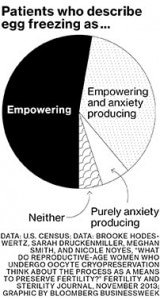
Women freeze for various reasons. The decision for Emily, a 35 year old who works in investor relations at a Wall Street reinsurance firm, was prompted by a recent breakup and hectic work schedule: “I do what to have children eventually, but I’m traveling all the time, and dating in New York is hard. I don’t want to marry someone just so I can get pregnant.” No longer feeling guilty dedicating the majority of her time to work and being able to date without the feeling of desperation to have a baby ASAP, Emily described her experience as empowering.  According to the study, the majority of women felt empowered by freezing.

Women are taught ‘that you create your career, and everything else falls into place’ however many have quickly learned it isn’t that easy. Several women were interviewed for the article, each with prestige and the hopes of having a family in the future. One woman explained her situation and the decision to freeze as this

“I didn’t intentionally delay having children nor plan to get a divorce. My life and my fertility veered off course. Freezing my eggs bought me time and the possibility to have a child in the future. It’s not a sure thing, but a gamble I am willing to take.” Brigette Adams, age 39, Marketing Executive

Bloomberg Businessweek discusses how the stress for women choosing career over family, or family over career, is not uncommon. Since the 1970s, the number of women having babies between the ages of 35 and 39 has increased 150 percent, according to the Center for Disease Control and Prevention’s National Vital Statistics Report. With the increase of age, having children becomes more challenging. Fertility potential or ovarian reserve is dependent on the quality and quantity of a woman’s eggs. Typically, a woman’s fertility is still near its peak until the age of 35 decreasing to nearly zero by the age of 40. More women are working and have advanced degrees and positions in the work force – but don’t have more time to have children. Egg freezing affords women the opportunity to achieve career and family dreams, without sacrificing either – the quest to have it all.

Next Steps

  1. Talk with an Egg Freezing Patient Liaison: 1-877-411-9292
  2. Schedule an appointment
  3. Learn About Egg Freezing Financial Options

Filed Under: Treatment Tagged With: Egg freezing

April 15, 2014 by Shady Grove Fertility

Ladies, did you know that the amount time left on your biological clock is mainly determined by the quantity of high quality eggs in your ovaries, otherwise known as your ovarian reserve? Your ovarian reserve is mainly based on your age.

You are born with the most eggs you will ever have—about 1,000,000 to 2,000,000 immature eggs, or follicles, in your ovaries. As adolescent reaches puberty and starts to menstruate, only about 400,000 follicles remain. With each menstrual cycle only one egg matures and about 1,000 die off. By the time you reach menopause (typically between the ages of 48 and 55), often no follicles remain and, if they do, they are unable to reach maturation due to hormonal changes. Learn More about Egg Freezing

Pausing the Clock

As you may have heard before, egg freezing essentially pauses the biological clock. By freezing eggs at higher quality, when ovarian reserve is strong, you can come back and use them when otherwise your eggs may no longer yield a pregnancy.

For women who want to freeze, it is a balance. On average, the most optimal time to freeze is the early- to mid-30s—when there are enough eggs of high quality. While it is still possible to freeze after the mid-30s, it may take more freeze cycles to retrieve enough mature eggs for future pregnancy. 

Over the past few years, as awareness of this option has increased, at Shady Grove Fertility we have observed that increasingly more and younger women are freezing. For example, in 2012, the average age of a woman freezing her eggs at Shady Grove Fertility was 38. Today, the average age is 36, and we are continuing to see a downward trend.

Learn How Much Time You Have: Ovarian Reserve Testing

Ovarian reserve testing is currently available at Shady Grove Fertility to women who are interested in or considering freezing their eggs. Testing your ovarian reserve provides information about how many eggs you have at a point in time as well as examines the quality of eggs. Two tests determine a woman’s ovarian reserve:

  1. A vaginal ultrasound is the best way to accurately assess and count the number of antral—or resting—follicles in each ovary. These sacs contain immature eggs that may potentially develop in the future. Counting the number of follicles is called an antral follicle count (AFC), which is performed via an ultrasound. This test, along with the female age, are the best tools for estimating ovarian reserve and the expected response to ovarian stimulation and the success of an egg freezing cycle.
  2. A blood testtaken on day 3 of the menstrual cycle provides a measurement of different hormones including: a woman’s follicle stimulating hormone (FSH), estradiol (E2), luteinizing hormone (LH), and anti-Müllerian hormone (AMH) level. Each of these hormones plays a vital role in the development, growth, and function of a woman’s ovaries, the quality of her existing follicles, and the potential for egg development.

$325=Results and No More Guessing

By testing the ovarian reserve, a woman can more easily identify if egg freezing is right for her. This option is readily available for women living in the Washington DC metro area, Northern Virginia, Maryland and Pennsylvania at one of the 24 Shady Grove Fertility locations. To have your ovarian reserve tested:

  • You will need to schedule a 1-hour visit at one of the 24 Shady Grove Fertility locations on day 3 of your menstrual cycle (coordinated with a nurse).
  • You will discuss test results with a Shady Grove Fertility physician during a second 1-hour visit.
  • Ultrasound and blood test results provide detailed insight into your current ovarian reserve and if egg freezing is a viable option for you.
  • Cost: 90% of patients with insurance have full or partial coverage for diagnostic testing and the initial consult. If not, the cost is $325.

Find Your Answers

  1. Talk with an Egg Freezing Patient Liaison: 1-877-411-9292
  2. Schedule an appointment
  3. Learn About the Cost of Freezing Eggs

Filed Under: Treatment Tagged With: Egg freezing

April 11, 2014 by Shady Grove Fertility

We offered the opportunity for women to ask Shady Grove Fertility physicians their questions about egg freezing. It was great to see that so many women are already educated about egg freezing, but for women considering egg freezing what it boils down to is this: Is egg freezing right for them and are they a good candidate? The good news, it is possible for women to gain insight to their current fertility potential through ovarian reserve testing which empowers them to make the decision if egg freezing is right for them.

The following questions were asked by women about egg freezing:

1. How do I know if I should freeze my eggs?

A woman’s age along with simple ovarian reserve testing evaluates her fertility potential and if egg freezing is a viable option for her. Testing includes a blood draw and intrauterine ultrasound which measures a woman’s ovarian function (her egg quality and quantity). Test results are reviewed with a Shady Grove Fertility Physician equipping women to make the decision if egg freezing is right for her. Request info about egg freezing.

2. Is 39 too late for good quality eggs?

39 is not too late. Generally speaking, Shady Grove Fertility recommends egg freezing up to the age of 40 as the quality and quantity of your eggs may still be strong. For you to make a better decision, ovarian testing (including an ultrasound and a blood test) provides insight to how many eggs you have and the quality of your eggs. These test results would help you determine if egg freezing is a good option for you.

3. What is the cut-off age for egg freezing, or is it based on testing hormone levels, etc?

Both age and ovarian reserve testing are taken into consideration when determining if egg freezing is a good option. Female fertility begins declining in the early 20s but conception rates remain high into a woman’s early 30s. In the mid-30s, the decline accelerates reaching nearly zero pregnancy potential by age 45.

A woman in her early 30s may have poor hormone levels while a woman in her early 40s has great hormone levels. Therefore, even a women ages 40 or 41 may benefit from egg freezing.

4. How many eggs will I need for multiple attempts at future pregnancy?

20 mature eggs provide women with multiple attempts at achieving a pregnancy, and ideally having more than one child. Why 20 eggs? Similar to the fact that it takes couples 5 to 6 months to achieve a pregnancy, not every egg will result in a pregnancy. Frozen eggs are thawed in batches, generally between six – eight at a time, in order to develop a high quality embryo with strong pregnancy potential. Of course, the age you freeze as well as ovarian reserve function, plays into success rates, just as it does for fresh IVF cycles or natural conceptions. Depending on how many eggs from each batch fertilize, you could have multiple attempts at pregnancy with each batch.

5. How many eggs (mature or immature) would you recommend freezing and is the number dependent on age?

At Shady Grove Fertility, we only freeze mature eggs as only mature eggs can lead to a pregnancy. It is recommended to freeze 20 mature eggs – this is the same for women at every age. The benefit of freezing younger is the number of mature eggs retrieved per cycle may be greater and the quality of each egg may be stronger, therefore, needing less cycles to achieve the goal of 20 mature eggs. Some women with good ovarian reserve undergo one cycle retrieving 13-15 mature eggs and are satisfied with that outcome decide not to pursue a second cycle. Again, 20 is the number we recommend to achieve multiple attempts at pregnancy.

6. I’m single, are there financial options available to help ease the financial burden?

Shady Grove Fertility strives to provide competitive pricing, allowing more affordable options. A woman’s fertility potential, which is mostly determined by testing her ovarian reserve function, is evaluated prior to making the decision to freeze. This test, along with an overview of her test results with a Shady Grove Fertility physician, costs just $325. Some women will have partial to full insurance coverage.

If you decide to pursue egg freezing, Shady Grove Fertility offers two programs to make moving forward with treatment more attainable. The first option, Assure Fertility, provides the option to pay one flat fee for multiple cycles (up to four) or until a woman reached the desired number of 20 eggs. The second option is a sliding scale reducing the cost with each cycle.

While we do not offer an in-house installment plan for egg freezing, we do work with an independent financial program (Fertility Finance) which offers medical loans for treatments such as egg freezing. We understand that financially egg freezing can be an expensive procedure for women, but by providing options it is our hope women can find a program that works well for them. Learn more about the egg freezing financial programs.

Next Steps Toward Preserving Your Fertility

  1. Schedule your ovarian testing and consultation by filling out this form or by calling 877-411-9292.
  2. Attend SGF’s Live DC Wine and Freeze Seminar: Register Here
  3. Talk to someone who has frozen her eggs by emailing askmelanie@shadygrovefertility.com

Filed Under: Treatment Tagged With: Egg freezing

March 22, 2014 by Shady Grove Fertility

The ticking of the biological clock is a familiar phrase to every woman, and it looms large for some because of what it represents: the decreasing ability to achieve a pregnancy as we move into our middle 30s and 40s. This decline is natural. It is the normal byproduct of fluctuating reproductive hormone levels, which are central to the development of both egg quantity and quality. These changes are often subtle, misleading women to believe their chances of achieving a pregnancy are the same at every age. The very good news for women is that freezing eggs – also known oocyte cryopreservation – is a viable option to stop the biological clock and preserve fertility potential at the age the eggs were frozen.

Is There a Perfect Age to Extend the Biological Clock?

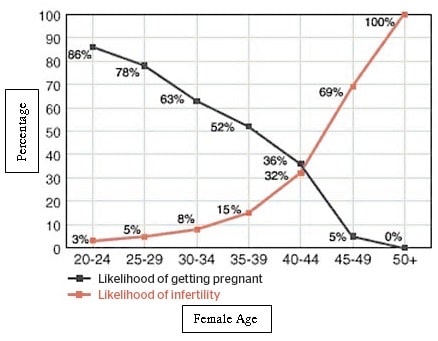
As the chart below indicates, women have a higher chance of conceiving naturally and giving birth to a healthy baby when they attempt to get pregnant before 35. After 35 years, the proportion of women who experience infertility continues to increase, due to diminishing fertility potential. By the age of 40, only two in five of those who wish to have a baby will be able to do so naturally.

Therefore, the best age to freeze eggs is the time when fertility is still relatively high but before it begins to decline more rapidly, as it does in the later 30s and 40s.

At Shady Grove Fertility, women who freeze eggs in their early to mid 30s can generally expect a higher number of quality eggs than those who freeze at an older age. As medical technology improves and women become more educated about the reproductive processes that drive fertility, they are freezing eggs earlier. At Shady Grove Fertility, for example, the average age of women seeking treatment decreased from 38 to 36 in the last two years.

The chart below shows chances of getting pregnant by age. The chart is only a guide. It shows average figures for women in the best of health.

Freezing Eggs – How Many Eggs Should I Freeze?

Ideally, freezing 15-20 eggs is recommended because it would optimize the chances of achieving one or two pregnancies later on. Pregnancy success rates with frozen eggs are directly correlated to the age at which the eggs were frozen. Frozen eggs mimic nature’s natural patterns, meaning the frozen eggs of a 34-year-old are more likely to fertilize, implant, and result in a baby than those of a woman in her 40s. This means fewer eggs will be required to achieve a pregnancy. At Shady Grove Fertility, we will freeze eggs for women up to the age of 40, depending on the ovarian reserve testing results.

Ovarian reserve is a term used when discussing the ability of the ovary to produce good quality eggs. Ovarian reserve testing is performed on the third day of the menstrual cycle and consists of blood tests to evaluate reproductive hormone levels and an ultrasound to see how many follicles (sacs containing eggs) exist in the ovaries. The tests are simple, painless, and can be completed in one office visit. Read more about the testing required for egg freezing.

What Are the Chances of Having a Baby When Using Frozen Eggs?

Technology advances have nearly eliminated the differences in IVF success rates using fresh and frozen eggs. This means a 40-year-old woman using her own eggs, which were frozen when she was 35, can expect a comparable chance of delivering a baby as a 35-year-old woman going through IVF using fresh eggs.

Interestingly, the quality and quantity of a woman’s eggs are more sensitive to time than her uterus, which is why pregnancy can be attempted up until age 51. According to Shady Grove Fertility’s Gilbert Mottla, M.D., “the uterus is a muscle and is essentially ageless when compared to egg cells. Uterine muscle cells are renewed as are other cells in the body and benefit from good nutrition and lifestyle.”

Freezing eggs creates an option for women who don’t see motherhood in their near future and are concerned with the decline of their fertility, whether related to age or other known factors such as premature ovarian failure, early menopause, or upcoming cancer treatment. For some, freezing eggs is seen as “plan B” and the hope is that they are able to get pregnant naturally. Therefore, not all women will use their frozen eggs.

Take Steps Toward Preserving Your Fertility

  1. Read as much as you can about the procedure.
  2. Talk to a trusted friend or family member.
  3. Read our FAQ’s.
  4. Recognize you are not alone – more and more women are choosing to freezing their eggs.
  5. Talk to someone who has frozen her eggs by emailing askmelanie@shadygrovefertility.com.
  6. Attend SGF’s online seminar about Egg Freezing. Register here.
  7. Schedule your ovarian testing and consultation by filling out this form or by calling (877) 411-9292.

If you are are considering freezing your eggs, it may be time schedule an appointment at Shady Grove Fertility, please speak with one of our New Patient Liaisons at 877-411-9292

Filed Under: Treatment Tagged With: Egg freezing

January 28, 2014 by Shady Grove Fertility

Sarah Elizabeth Richards, author of “Motherhood Rescheduled: The New Frontier of Egg Freezing and the Women Who Tried It.”


Do all eggs lead to a pregnancy? Just how many should you freeze to have a successful pregnancy in the future? Sarah Richards, author of “Motherhood Rescheduled: The New Frontier of Egg Freezing and the Women Who Tried It” dealt with these questions, back when the technology and treatment was new, and there weren’t solid answers to be found – leaving her uneasy about how prepare for the unknown.

At 36 years old, Sarah felt uncertain the nine eggs she had frozen would be enough to yield a child in the future. Weighing on Sarah’s mind were all these ‘what ifs’. What if she conceived without the frozen eggs? What if she couldn’t conceive even with the help of IVF? What if she wanted more than one child, would nine eggs be enough?

  • Read Sarah’s Blog on NYTimes.com: ‘Freezing Eggs, and Hoarding My Fertility’

The questions that Sarah faced aren’t uncommon. In fact, at Shady Grove Fertility, the number of women pursuing egg freezing treatment has doubled year of year since 2011 – the majority of these women are looking for the same answers. This is why, after extensive review of treatment results, Shady Grove Fertility has complied data to help determine how many eggs would be needed to yield a successful singleton pregnancy.

Similar to the fact that an average couple takes five to six months to achieve a pregnancy, not every egg will result in a pregnancy.  Understanding that concept, and reviewing our data with egg thaws, we have learned that the optimum number of eggs to freeze is 15 to 20 mature eggs.  With Shady Grove Fertility’s Assure Fertility Program, qualified women have the opportunity to save up to 20 eggs with 4 egg freezing treatments for one flat fee. Read More

Frozen egg technology has steadily improved, and pregnancy rates are keeping pace. A recent ASRM report, which examined nearly 1,000 published papers, showed frozen eggs are yielding successful pregnancies and healthy babies comparable to in vitro fertilization (IVF) using fresh eggs.

  • Sign up for our Egg Freezing 101 Webcast on Thursday, January 30th

With the continued growth in egg freezing, data has become more reliable providing physicians and patients’ assurance that egg freezing is a reliable fertility option.

To learn more about freezing eggs or to schedule an appointment at Shady Grove Fertility, please speak with one of our New Patient Liaisons at 877-971-7755.

Filed Under: Treatment Tagged With: Egg freezing

  • « Go to Previous Page
  • Page 1
  • Interim pages omitted …
  • Page 17
  • Page 18
  • Page 19
  • Page 20
  • Page 21
  • Page 22
  • Go to Next Page »

Company

  • About SGF
  • About US Fertility
  • Our Doctors
  • Fertility Equity
  • Careers
  • Newsroom
  • SGF College Scholarship
  • Contact Us
  • Voice Your Feedback

Treatments

  • Egg Freezing
  • Intrauterine Insemination (IUI)
  • In Vitro Fertilization (IVF)
  • Frozen Embryo Transfer (FET)
  • LGBTQIA+ Family Building
  • Shared Risk 100% Refund Program
  • All Treatments

Resources

  • Patient Portal
  • Online Bill Pay
  • Library
  • Support Groups & Events

Locations

  • California
  • Colorado
  • Delaware
  • Florida
  • Georgia
  • Maryland
  • North Carolina
  • Pennsylvania
  • Texas
  • Virginia
  • Washington, D.C.

2026 Shady Grove Fertility

  • Policies & Notices
Also of interest
  • In Vitro Fertilization IVF
  • Fertility Tests
  • Research Publications