• Skip to primary navigation
  • Skip to main content
  • Skip to footer
Shady Grove Fertility
  • Become an Egg Donor
  • Referring Physicians
  • 1-888-761-1967
  • Schedule Appointment
  • Get Started
        • Get Started
          • Causes of Infertility
          • Fertility Tests
          • When to Seek Help
          • Find a Doctor
          • Preconception and prenatal vitamins 
          • Schedule an Appointment
        • Personalized Care For
          • Single Parents
          • LGBTQIA+ Family Building
          • People with Cancer
          • Known Genetic Diseases
          • Egg Donors
  • Treatments
        • Fertility
          • Timed Intercourse
          • Ovulation Induction
          • Intrauterine Insemination (IUI)
          • In Vitro Fertilization (IVF)
          • Frozen Embryo Transfer (FET)
        • Donation & Surrogacy
          • Donor Sperm
          • Donor Egg
          • Donor Embryo
          • Gestational Carrier
          • LGBTQIA+ Family Building
          • Single Parents
          • Find a Donor
        • More Treatments
          • Center for Male Fertility
          • Egg Freezing
          • OncoFertility
          • Preimplantation Genetic Testing
          • MIGS
          • All Fertility Treatments
  • Resources
    • Resource Library
    • Events Calendar
    • Patient Stories
    • Mental Health
    • Wellness Center
  • Insurance & Savings
    • Insurance & Benefits
    • Shared Risk 100% Refund Program
    • 100% Refund for Donor Egg
    • Discounts
    • Egg Freezing Costs
    • Financing & Grants
    • Clinical Trials
  • About
    • Find a Doctor
    • About SGF
    • Our Care Team
    • Advanced Practice Providers
    • Fertility Equity
    • Philanthropy
    • Newsroom
    • Careers
    • Contact Us
    • Voice Your Feedback
  • Locations
        • Find a Location
        • California
        • Colorado
        • Delaware
        • Florida
        • Georgia
        • Maryland
        • North Carolina
        • Pennsylvania
        • Texas
        • Virginia
        • Washington, D.C.
        • Chile
        • International & Out of State
        • SGF at Walter Reed National Military Medical Center
  • Patient Hub
    • Online Bill Pay
    • Patient Forms
    • Patient Portal
  • Call your care team
  • Become an egg donor
  • Referring physicians
  • search-icon
  • Schedule appointment 1-888-761-1967

Home / Egg freezing / Page 21

Egg freezing

September 24, 2013 by Shady Grove Fertility

1. Frozen Embryo Transfers (FETs) Can Extend the Pregnancy Potential from One Fresh IVF Cycle
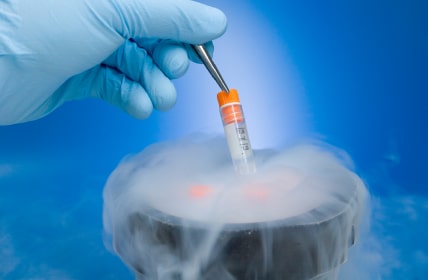
Cryopreservation of samples

Patients that have unused, high-quality blastocyst stage embryos from a fresh (or stimulated) IVF cycle have the option of freezing the embryos for use in subsequent cycles. These cycles are known as Frozen Embryo Transfers or more commonly referred to as FET cycles. A FET cycle involves thawing a previously frozen embryo and transferring it into the woman’s uterus.

2. Success Rates from Frozen Embryo Transfer are nearly identical to that of a Fresh IVF Cycle.

Recent advances in embryo freezing technology, primarily using the vitrication or “fast-freeze” process, have vastly improved the success rates of FET cycles over the past several years. Neither patients nor physicians want to undergo unnecessary treatment, so only high-quality bastocyst stage embryos are selected to freeze, which contributes to the significant improvement in the success rates. Frozen embryo cycles completed with the vitrification freezing technique have pregnancy rates nearly identical to that experienced with a fresh in vitro fertilization (IVF) cycle.

3. FET Cycles are Much Easier to Undergo than Fresh IVF Cycles

Patients starting a frozen embryo transfer cycle will instantly notice the differences between this cycle and a previous fresh IVF cycle.

Less time commitment – Since there is no stimulation of the ovaries to produce eggs in a FET cycle and there is a fraction of the appointments. In fact, there are only three appointments associated with a FET cycle.

  1. Baseline Check – At the first appointment, there is an intravaginal ultrasound to measure the uterine lining at the start of the cycle.
  2. Lining Check – A few days prior to the scheduled transfer the uterine lining is checked again. At this appointment, the physician is looking for a thick “fluffy” lining, the perfect place for an embryo to implant and develop into a pregnancy.
  3. Transfer – On the day of the transfer the frozen embryos are thawed at one of our three IVF Laboratories. The transfer does not require sedation or medication. It is the same procedure a patient would have with a fresh IVF cycle.

More predictable – FET cycles are easily planned out and rarely deviate from the original protocol.

  1. Changes based on stimulation – Most of the changes with a fresh IVF cycle center around the stimulation phase. Is there over or under stimulation of the ovaries? Should medications be adjusted? Can the cycle proceed with the current progression of egg development? Since stimulation is not required in a FET cycle the cycles, timing is very predictable and easily planned from start to finish.
  2. Consistent medication regiment – Unlike with the changing dosing associated with stimulated IVF cycles the medication dosing is usually the same throughout a FET cycle. Medication, usually estrogen and progesterone in oil, is used to help prepare and thicken the uterine lining prior to the embryo transfer.

4. FET Cycles are a Fraction of the Cost of a Fresh IVF Cycle

Arguably, one of the best benefits of a FET cycles is the cost. FETs are all around a less invasive option and require far fewer appointments making the cost of treatment more affordable. FET cycle fees are about a third of the cost of a stimulated IVF cycle, and the medications are as little as 10% of the cost of a stimulated IVF cycle. Often time’s patients with insurance coverage for fertility treatment will also have some level of coverage from medications.

Shady Grove Fertility has several financial programs to help reduce the cost of FET cycles even further, including Shared Risk 100% Refund and Multi-Cycle Treatment Discount; both programs include the costs associated with a FET cycle in the program fee.

SGF has also has the Shared Risk 100% Refund Guarantee for FETs. This program offers the same piece of mind thousands of patients have had with the traditional Shared Risk 100% Refund for IVF or Donor Egg Program – a baby born or a 100% refund (some exclusions apply). Patients with remaining embryos from a previous treatment cycle, that meet the eligibility criteria; now have the option to guarantee their success with subsequent FET cycles.

Current patients should contact their financial counselor to learn more about this program.

5. Frozen Embryos Don’t Expire

Whether waiting a few months before starting the next cycle or a couple years between baby number one and number two, you can feel confident that the embryos will remain as strong as the day they were frozen. With vitrification, frozen embryos and eggs are suspended in time allowing patient to take the time they need between cycles. No aging occurs while eggs or embryos are in a vitrified state and are believed to remain the same quality indefinitely. With that said, it is not suggested that patients in their late 30’s or 40’s wait too long. Should later FET cycles not be successful, patients will need to complete another stimulated cycle to obtain additional eggs. While the previously retrieved and frozen eggs are not aging, those still in the ovaries that are yet to be retrieved are.  It is important to note, Shady Grove Fertility’s cut off age for treatment is 50 years and 11 months.

If you would like to schedule an appointment with a fertility specialist, please speak with one of our New Patient Liaisons at 877-971-7755.

Filed Under: Treatment Tagged With: Egg freezing

August 19, 2013 by Shady Grove Fertility

Prior to egg banking, in the race against a ticking reproductive clock, women are almost always certain to lose: By puberty women have lost nearly 70% of their eggs, by the age of 30 another 20% have been lost and by the time a women hits 40, she only has about 3% of her eggs remaining. So in a society where more women are postponing having children, what options are available?

  • Read the complete Washingtonian article: “Beat the Clock”

Egg Banking

While previously reserved for women experiencing medical conditions which could cause sterility, egg banking is now a viable option for women who are looking to preserve their fertility for future use. In fact, fertility centers across the region have seen a large increase in women inquiring about egg freezing and proceeding to treatment. In 2012 at Shady Grove Fertility, there were 131 cryopreservation cycles for women banking their own eggs – up nearly 200% since 2010.

Is Egg Banking (egg freezing) Safe for Your Future Children?

The American Society for Reproductive Medicine (ASRM) recently lifted the “experimental” label on ooctye cryopreservation, thanks to the advances in the freezing process. According to ASRM, over 1,000 births have been reported from egg freezing using the advanced process (vitrification), and show no increased risk of birth defects compared to those that conceived naturally.

When is the Right Time to Freeze Your Eggs?

The August 2013 edition of the Washingtonian reports more women are turning to egg banking to preserve their future fertility.

There is no “right time”. Depending on your age and reproductive system, it might be recommended to go through two or more rounds of egg freezing. Why? Because, different women respond differently to the medication. Typically, it is recommended to bank approximately 20 eggs – leaving room for any that might not survive the thaw or fertilization process or if it desired to have multiple children.

Women come to the decision in many ways. For Jennifer, “I had a great life and a wonderful boyfriend, but a part of me was very sad that I wasn’t in a place where I was ready to have children.”

Or Melanie – an employee at Shady Grove Fertility – who froze her eggs after she divorced. She was 35 at the time and had two friends who had to rely on donor eggs to get pregnant during their second marriages.

Age of course plays a factor in success. According to FertilityPreservation.org, a woman who freezes ten eggs at the age of 32 has a 24.3% of delivering a child, compared to a 17.2% chance if she waited until the age of 38.

The reproductive resources must be balanced with the financial ones. Often times women in their early 30s either aren’t prepared to make the decision to freeze their eggs or don’t have the financial resources to do so. On the flip side, women who are closer to 40 may have more savings to fund treatment, but may not produce the same quality eggs.

  • Baltimore Style “Motherhood on Ice”

Using Your Frozen Eggs

The good news, according to Shady Grove Fertility’s Dr. Gilbert Mottla, “The uterus is a muscle, it doesn’t have the same shelf life as an egg. Meaning a woman can carry a child well past menopause.”

Anne, who decided to freeze her eggs at the age of 40, came back at three years later to try to conceive. At 15 weeks pregnant, it was time to test for genetic disorders. Because the eggs used to conceive were chronologically 40 years old, she had a 1 in 90 chance of testing positive, compared to 1 in 50 if she had conceived with eggs that were 43 years old.

  • Read the complete Washingtonian article: “Beat the Clock”

Deciding to freeze ones eggs to preserve future fertility is a personal choice in which a women must balance her financial and reproductive resources, as well as manage her expectations of what the next several years might bring her in life.

If you are interested in learning more about preserving your fertility through egg banking, please request more information, or speak with one of our New Patient Liaisons at 877-971-7755.

Filed Under: Treatment Tagged With: Egg freezing

June 4, 2013 by Shady Grove Fertility

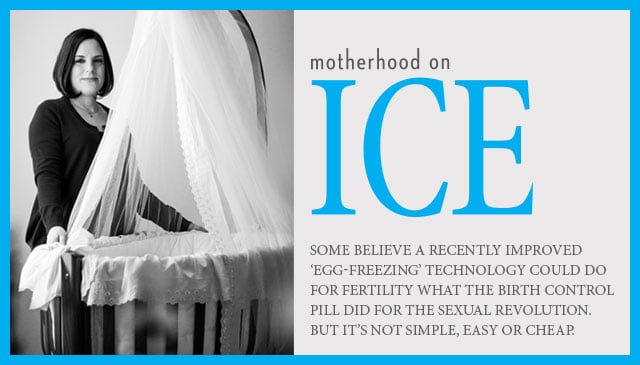
Preserving a woman’s fertility via egg freezing has been making recent headlines across the country. With newer technologies which have helped improve treatment and increased social awareness of not only the biological clock but an option to hit pause, egg freezing has become a viable option for women that want to delay motherhood.

  • Read the complete article: “Motherhood on Ice”
Baltimore Style discusses the next frontier in fertility – “Motherhood on Ice”


The Baltimore Style‘s June 2013 edition tells the stories of Kathleen – a nurse who hit 40 and still hadn’t found the perfect guy – and other women who have chosen to freeze their eggs as a means to postpone parenthood. When one of Kathleen’s friends went through IVF treatment, she encouraged Kathleen to look into egg freezing. After doing her research and meeting with Shady Grove Fertility’s Dr. Ricardo Yazigi, Kathleen proceeded with fertility preservation – eventually going through two rounds of treatment to retrieve 26 eggs to freeze for future use.

  • Have you considered egg freezing? Join SGF for a focus group on Thursday, June 6 in Washington, DC.
  • Shady Grove Fertility Opens New Regional IVF & Fertility Center in Towson, MD

“What we are doing is freezing time. Women can freeze their eggs in their early 30s, and then com in, up to their late 40s, and have a child of their own,” explains Dr. Yazigi.

According to the Centers for Disease Control and Prevention, about 1 in 5 women in the United States have their first child after the age of 35. Whether the reasons are financial, they haven’t met the right partner, or careers came first, women are also understanding that their fertility and chances of carrying a healthy pregnancy to term do decrease with age.

What is the answer to postponing pregnancy and decreasing fertility? Egg freezing. As technology improves so will success rates and a woman’s access to care.

  • Read the complete article: “Motherhood on Ice”

If you are interested in learning more about preserving your fertility through egg freezing, please request more information, or speak with one of our New Patient Liaisons at 877-971-7755.
Filed Under: Treatment Tagged With: Egg freezing

May 8, 2013 by Shady Grove Fertility

SGF Nurse

by Dr. Joseph Doyle

Egg freezing as a means to preserve fertility is once again in the headlines. While for many egg freezing seems like new technology, fertility preservation and oocyte freezing have been of principal interest for many years now, with substantial investment in research and technology development.  Developing treatment, like egg freezing, takes considerable time to transition from research to a clinical opportunity offered to patients – and importantly so.

  • Read from the Wall Street Journal “Why I Froze My Eggs (And You Should, Too)”

An incredible amount of time and energy from laboratories and clinics across the globe were necessary to satisfy the requisite scrutiny of, and finally endorsement by, the greater medical community. Clinicians now turn to it as an intervention for those interested in preserving their fertility for medical and social reasons, the American Society of Reproductive Medicine lifted the experimental designation, and we have many conversations about it when we interact with other physicians and audiences. It is amazing how quickly the interest spread.

What is particularly refreshing is how a clinical opportunity can weave into the social fabric. Ms. Richards’ article in the Wall Street Journal offers a welcome introduction of the topic to the broader media, providing a social interpretation of a topic that was previously so singularly medical. I thought of the patients I have seen for fertility preservation, and how the discussions ultimately gravitate towards technicalities of the process, allowing substance to be applied to more abstract concepts. This article is a 10,000-foot view of the experience, covering many of the facets individuals recount having repeatedly mulled over by the time I get together with them.  Ms. Richards was able to articulate how the institution of medicine intersects with the individual. Empowering, provocative, and individually illuminating, it is an article worthy of its prominence in the Wall Street Journal, and I look forward to reading the book.

  • Learn more about Egg Freezing at Shady Grove Fertility

There will always be naysayers with the introduction of any substantial shift in medicine, regardless of the field, but particularly so for those that receive so much social attention. However, there is no question that egg freezing is an incredible opportunity, and the success with current methods of fertility preservation will have an impact as prominent as IVF did for the infertile couple, and molecular genetics has had in preventing heritable disorders.

On social issues so fully obvious to us, Ms. Richards gives perspective on the individual front.  Fortunately, on the medical front, we have accumulated the data and expertise to allow this shift in the discussion.

If you are interested in learning more about egg freezing, please call Shady Grove Fertility to schedule a consultation at 1-877-971-7755 or click here.

Filed Under: Treatment Tagged With: Egg freezing

February 13, 2013 by Shady Grove Fertility

Dr. Ricardo Yazigi

by Dr. Anitha Nair

With Valentine’s Day around the corner, so are the images and messages of love and relationships. Although most can appreciate the love of friends and family, for others it can be a reminder that they have not yet fulfilled their dreams for a committed relationship or children.

Women are constantly reminded of their biological clock and that with each passing year reproductive aging occurs more rapidly. After 35, the chance of conceiving becomes more difficult and miscarriage rates start to increase. Many women may need to delay childbearing for education, professional, financial or social reasons. In the past, there was nothing to do but wait and hope that things would change; but today, women have the option to take charge of their future fertility with egg freezing.

Egg Freezing

SGF Nurse
Egg Freezing is becoming more and more common for women delaying parenthood.

It is becoming increasingly common for women to consider freezing their eggs. This process is called oocyte vitrification, and is a way for women to essentially stop the biologic clock. Once an egg is frozen, the genetic characteristic of that egg and its ability to form a healthy pregnancy will stay frozen in time. The egg will remain the age of the patient at the time of her egg harvest procedure. Pregnancy success rates are based on qualities of the egg not the uterus at time of conception. This means that a woman can benefit from the better fertility of a younger egg, even if she waits several years to use those eggs to become pregnant.

  • WATCH: Dr. Anitha Nair discusses Fertility Preservation options in this webcast. 
  • Read Dr. Anitha Nair’s biography.

Although egg freezing is a newer technology, several years of study have gone into this process and the American Society of Reproductive Medicine no longer considers this to be an experimental procedure. At Shady Grove Fertility (Center for Fertility Preservation), we have already seen good success with egg freezing. As more patients come back to use their eggs we will be able to accrue more data, but current success rates are similar to success rates seen with traditional in vitro fertilization. To date, there is also no evidence to indicate concern about increased risk for genetic abnormalities with the use of frozen eggs.

The Egg Freezing Process

SGF Nurse
Egg Freezing is essentially the first 1/2 of an IVF cycle, including hormone injections, monitoring and an egg retrieval. After the eggs are retrieved they will be frozen for use at a later time.


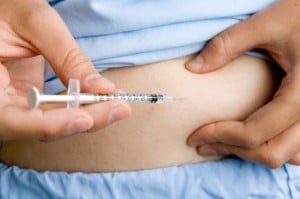
Egg freezing or oocyte vitrification is a process that requires some commitment. Patients must undergo the first half of an in vitro fertilization cycle. This means self–administering hormone injections for about 10 days, office visits to monitor the growth the eggs, and finally an outpatient surgical procedure (under sedation) to harvest the eggs. The procedure is performed vaginally and is completed in less than 30 minutes. Patients are often able to wake-up and recover in about 30 minutes after the procedure. Most patients will describe strong menses symptoms like cramping immediately post procedure, but almost everyone is able to go to work the very next day.

For each patient, we aim to retrieve 15-20 mature eggs to be frozen and stored for later use. For many women to obtain this number of eggs, they may need more than 1 cycle of treatment. We recommend this high number of eggs to be banked because about 85% of the eggs will survive the thaw process and about 50-70% will go on to fertilize.

When a patient is ready to use her eggs, they are thawed, inseminated using a partners sperm or donor sperm and then fertilized embryos are grown in our IVF lab. The patient will take medications to prepare the lining of her uterus and the embryos will be transferred back to uterus, through the vagina, with a painless procedure called an embryo transfer. Two weeks later a pregnancy test is done.

Who Should Consider Egg Freezing

The ideal candidate for fertility preservation with oocyte vitrification is someone between the ages of 32-38, who is certain that her childbearing will be delayed. Patients are asked to do some initial blood tests and a pelvic ultrasound to confirm that they would be good candidates. Women over 38 may be treated, pending their test results.

Fertility preservation should only be used as part of a long term management strategy for fertility. Obviously, nothing can take the place of being pregnant now. However, for a woman who knows that she would look back in regret at not giving herself the best possibility of having a child, this is a great comfort. If you are interested in egg freezing, I would highly recommend you seek a consultation with a fertility specialist.

If you would like to discuss your egg freezing options or to schedule an appointment with Dr. Anitha Nair or another Shady Grove Fertility physicians, please speak with one of our New Patient Liaisons at 877-971-7755.
Filed Under: Treatment Tagged With: Egg freezing

October 22, 2012 by Shady Grove Fertility

ASRM Lifts Experimental Label on Egg Freezing

Egg freezing was once considered an experimental technique by the American Society for Reproductive Medicine (ASRM). Today, ASRM has lifted the experimental label. This follows after research on nearly 1,000 cases shows not only similar success rates to IVF procedures using frozen eggs compared to fresh eggs, but also no increase in chromosomal abnormalities, birth defects or developmental deficits in children born using cryopreserved or frozen eggs.

  • Read the ASRM Press Release “Mature oocyte cryopreservation: a guideline”

What Makes Something Experimental?

“I think anything that is new until it is proven probably deserves an experimental tag because we need to show we can produce consistently good results. It takes time to accrue that data,” explains Shady Grove Fertility physician, Gilbert L. Mottla, MD.
Dr. Mottla goes on to say, “We are very pleased that over the years we have shown high success rates and pregnancy rates from thawed eggs. This has become a very mainstream endeavor and we are pleased that the ASRM has validated that effort.”

Why Was Egg Freezing Considered Experimental and Embryo Freezing Not?

Robert J. Stillman, MD, Shady Grove Fertility’s Medical Director explains, “Due to their structure, eggs are much more sensitive and less resilient to the effects of freezing compared to embryos” With older freezing techniques, it was difficult for eggs to survive the freezing process. Now, with vitrification, both eggs and embryos are able to be frozen and thawed with a much higher rate of success.

  • NPR: Read Jennifer’s experience freezing her eggs at Shady Grove Fertility

Shady Grove Fertility & Egg Freezing

SGF Nurse
1997: Michael Tucker has first successful birth of child from a frozen egg.

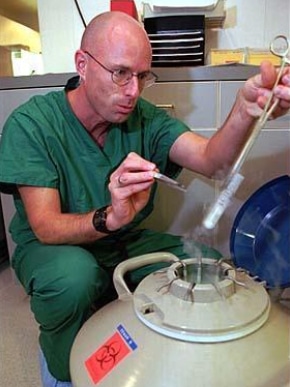
In 1997, SGF’s Lab Director, Michael Tucker, was the first to freeze an egg and deliver a baby in the United States. Since then there has been efforts to improve the freezing and thawing process and the big breakthrough came a few years ago with vitrification.
Shady Grove Fertility began vitrifying embryos and eggs in 2009. As a result, success rates for frozen embryo transfers has increased to a level that is now equal with fresh IVF cycles. “Our experience over the last several years of egg freezing, along with the few other centers nationwide doing vitrification finding similar results, helped lead the ASRM committee to lift the experimental label,” comments Dr. Stillman.
So whether you are considering donor egg from a frozen egg bank or freezing your own eggs to preserve your fertility for later due to cancer or advancing age, patients can have more options. They can be more confident moving forward with egg freezing now that vitrification is a proven technology that has been tested and vetted at Shady Grove Fertility and across other centers nationwide.

  • CNN: Egg freezing no longer ‘experimental’

To learn more about Shady Grove Fertility’s Center for Fertility Preservation and egg freezing call 1-877-411-9292.

Filed Under: Treatment Tagged With: Egg freezing

  • « Go to Previous Page
  • Page 1
  • Interim pages omitted …
  • Page 19
  • Page 20
  • Page 21
  • Page 22
  • Go to Next Page »

Company

  • About SGF
  • About US Fertility
  • Our Doctors
  • Fertility Equity
  • Careers
  • Newsroom
  • SGF College Scholarship
  • Contact Us
  • Voice Your Feedback

Treatments

  • Egg Freezing
  • Intrauterine Insemination (IUI)
  • In Vitro Fertilization (IVF)
  • Frozen Embryo Transfer (FET)
  • LGBTQIA+ Family Building
  • Shared Risk 100% Refund Program
  • All Treatments

Resources

  • Patient Portal
  • Online Bill Pay
  • Library
  • Support Groups & Events

Locations

  • California
  • Colorado
  • Delaware
  • Florida
  • Georgia
  • Maryland
  • North Carolina
  • Pennsylvania
  • Texas
  • Virginia
  • Washington, D.C.

2026 Shady Grove Fertility

  • Policies & Notices
Also of interest
  • In Vitro Fertilization IVF
  • Fertility Tests
  • Research Publications