
• Skip to primary navigation
  • Skip to main content
  • Skip to footer
Shady Grove Fertility
  • Become an Egg Donor
  • Referring Physicians
  • 1-888-761-1967
  • Schedule Appointment
  • Get Started
        • Get Started
          • Causes of Infertility
          • Fertility Tests
          • When to Seek Help
          • Find a Doctor
          • Preconception and prenatal vitamins 
          • Schedule an Appointment
        • Personalized Care For
          • Single Parents
          • LGBTQIA+ Family Building
          • People with Cancer
          • Known Genetic Diseases
          • Egg Donors
  • Treatments
        • Fertility
          • Timed Intercourse
          • Ovulation Induction
          • Intrauterine Insemination (IUI)
          • In Vitro Fertilization (IVF)
          • Frozen Embryo Transfer (FET)
        • Donation & Surrogacy
          • Donor Sperm
          • Donor Egg
          • Donor Embryo
          • Gestational Carrier
          • LGBTQIA+ Family Building
          • Single Parents
          • Find a Donor
        • More Treatments
          • Center for Male Fertility
          • Egg Freezing
          • OncoFertility
          • Preimplantation Genetic Testing
          • MIGS
          • All Fertility Treatments
  • Resources
    • Resource Library
    • Events Calendar
    • Patient Stories
    • Mental Health
    • Wellness Center
  • Insurance & Savings
    • Insurance & Benefits
    • Shared Risk 100% Refund Program
    • 100% Refund for Donor Egg
    • Discounts
    • Egg Freezing Costs
    • Financing & Grants
    • Clinical Trials
  • About
    • Find a Doctor
    • About SGF
    • Our Care Team
    • Advanced Practice Providers
    • Fertility Equity
    • Philanthropy
    • Newsroom
    • Careers
    • Contact Us
    • Voice Your Feedback
  • Locations
        • Find a Location
        • California
        • Colorado
        • Delaware
        • Florida
        • Georgia
        • Maryland
        • North Carolina
        • Pennsylvania
        • Texas
        • Virginia
        • Washington, D.C.
        • Chile
        • International & Out of State
        • SGF at Walter Reed National Military Medical Center
  • Patient Hub
    • Online Bill Pay
    • Patient Forms
    • Patient Portal
  • Call your care team
  • Become an egg donor
  • Referring physicians
  • search-icon
  • Schedule appointment 1-888-761-1967

Home / Insurance & Savings / Page 7

Insurance & Savings

October 1, 2014 by Shady Grove Fertility

Nobody wants to let money come between them and their dreams, especially when it comes to having a baby. But the truth is, money is important, we work hard for our money and it provides a certain sense of security. If we spend all of our money having a baby, how will we pay for raising the baby? And what if we spend all of our money and still don’t get a baby? These are legitimate questions and here are a few tips that helped me take money worries out of the equation when choosing to pursue my fertility treatment.

Don’t Jump to Conclusions.

Don’t assume your insurance does not cover treatment. At Shady Grove Fertility, approximately 70% of patients have some coverage for infertility treatment. Plus, insurance coverage changes regularly, check with your provider annually. If nothing else, most pre-testing is covered and every little bit helps.

Here’s a list of insurance companies currently working with Shady Grove Fertility.

Adventist Healthnet
Aetna
Anthem
CareFirst BC/BS of Maryland
CareFirst Blue Choice
CareFirst National Capital Area
Choice Care Network
CHP/Informed
CIGNA
Coventry Health Care National Network/First Health
Great West Healthcare
Health Keepers
Kaiser
MDIPA/Optimum Choice
MAMSI Life & Health
Multiplan
OneNet PPO
Parent Steps
Private Healthcare Systems
Tricare
United Healthcare
United Resource Network

Treatment Varies

Don’t always assume you need expensive treatments like IVF or Donor Egg. Nearly half of fertility patients are successful with IUI which is much more affordable. Talk to your doctor about all of your options.

Let the Tax Man Help-ith

By putting the maximum amount allowed by you and your partner into a Flexible Spending Account (FSA), you can save up to 40% of your medical expenses by paying with pre-tax dollars. Ask your employer’s human resource department about how you can sign up now and put money away (up to $5,000 per household) into a FSA. Those new convenient debit cards save you lots of paperwork too!

Take Advantage of Existing Programs

Shared Risk 100% Refund is a wildly popular program that takes the guesswork out of paying for treatment. Taking advantage of Shared Risk was like taking a vacation at an all-inclusive resort for me. I could leave the doctors office each visit without taking out my wallet! Plus it gave me peace of mind that I would be refunded 100% of my money if I decided not proceed with treatment or treatment did not work.

The Shared Help Program is designed to help make fertility testing and treatment more affordable by offering discounts to patients who have no insurance coverage and limited income. To put it in context, it’s like applying for financial aide for college. Since launching the program in 2009, over 75% of all applicants have been approved for treatment discounts, including 85% of couples who have applied so far in 2010. Shared Help provides patients, whose income is $95,000 or less, with a discount off the cost of most fertility services provided by SGFC.

It’s like a Car Payment

That’s what I told myself when my insurance did not cover my IVF treatments so I opted to use Fertility Financing. My car was about to be paid off and was still in good shape, and I could easily drive it for a few more years while I paid my fertility loan payment.

The bottom line is, there is more than one way to skin a cat (although I don’t endorse skinning cats). Call Shady Grove Fertility at 877-761-1967 to speak with one of their patient liaisons who can help you make an appointment to meet with a doctor and a financial coordinator before making any decisions.

Filed Under: Insurance & Savings

October 1, 2014 by Shady Grove Fertility

When many couples find out that they need fertility treatment help start or add to a family, one of the first questions that they may ask is whether they can afford it. For the longest time, fertility treatments were seen as “for the wealthy” because of the high out of pocket expense and limited insurance coverage. But thanks to technology, increase of insurance benefits and many new financial options, patients of Shady Grove Fertility Center have a myriad of choices when it comes to affording fertility.

From the moment a patient walks into Shady Grove Fertility, they are assigned a financial navigator to help them research which financial options may be appropriate for them. This is just one of many “full service” financial benefits that Shady Grove Fertility provides to compliment the highly successful clinical services that the center offers.

“We are here to help take away the headaches,” said SGFC Financial Services Director Janice Koch. “Our helpful counselors assist the patient by calling on their insurance benefits, provide accurate information about their coverage, and work with them to research financial options that work best for them.”

The Country’s Largest Clinic, One Patient at a Time

Shady Grove Fertility is the largest IVF program in the United States. For some patients, that’s an attractive point; for some, it feels daunting. Amanda Segal, SGFC Patient Services Coordinator who has been with Shady Grove for 16 years, says that size definitely has something to do with affordability.

“Our size is actually a cost-savings factor in the big picture,” said Segal. “With the number of experts we have on board comes the ability to provide the absolute best services out there. Our success rates are solidly superb, which means patients are more likely to need fewer treatment cycles to have a baby.”

She also cites the widely scattered Shady Grove locations as cost-efficient for patients who are worried about the current economy and managing busy working schedules. “As a group, we’re big. But when patients go to their physician’s offices, they feel cared for — individually.”

Insurance Coverage? Do your Homework!

When patients first schedule an appointment to visit Shady Grove Fertility, many are surprised to learn that several types of insurance are accepted for treatment. While some insurance benefits are more comprehensive then others, SGFC financial team says it is important for the patient to research their benefits and know what is covered and what they are going have to pay out-of-pocket.

“We have teams of specialists who are knowledgeable with each insurance plan,” said Koch. “Our team members don’t actually work for the insurance company, rather they specialize in knowing the ins and outs of one payer rather than all payers.”

“By dealing with the same insurance company on a daily basis” Koch added, “our teams can ensure that what the patient is being told about their insurance benefits is accurate.”

Shady Grove Fertility currently participates with over 20 insurance plans. Recently, there’s been a big push by infertility patient advocates for legislating insurance coverage, with some minor victories scattered across the country. However, even in those states where mandates to cover have been created, there are some exclusions so not everyone will be covered.

“The first thing I tell patients is not listen to word-of-mouth reports about which insurance provides coverage or not,” says Segal “Don’t even take what you read in your human resource department booklet as the final word. Go straight to the insurance company and find out if anything is covered. Even if it’s only medications or some diagnostic procedures, get everything from them that they cover.”

Start Low-Tech

Shady Grove Fertility Center’s philosophy has always been to tailor our patients’ treatments to their specific diagnosis and circumstances. We balance the goals of achieving the best possible chance of success with using the simplest and most cost effective approach.

Approximately one quarter of the pregnancies conceived by patients at SGFC are achieved with either ovulation induction (OI) or superovulation, coupled with intrauterine insemination (IUI). In 2007 we performed approximately 4,775 IUI cycles, which is 30% more than the number of IVF cycles performed during the same period.

The number of couples that we have been able to help with our IUI program has increased significantly over the last five years. In many cases, patients will have insurance coverage for this for this relatively low tech fertility treatment.

Sharing the Financial Risk

In 1993, Shady Grove Fertility founded the IVF Shared Risk 100% Refund Program. In this unique program, the patient elects to pay a flat fee, which covers the cost of up to six completed IVF cycles. Should the patient not take home a baby as a result of those six cycles, 100% of the fee is refunded, thus preserving their resources for other family building options. This program, therefore, reduces the amount of money they have ‘at risk’ for six cycles and fixes their costs. Sharing the risk with also establishes a trust in SGFC success rates and our reasonable confidence in the outcome.

“This is a great program for piece of mind; it is a fixed cost that may be fully refunded at any time,” said Koch.

“With the Shared Risk program, you get six no-obligation attempts with a 100 percent refund guarantee,” said Segal. “The bottom line is that infertility treatment is expensive, but Shared Risk has become such a household name now that most patients have heard of it already. I educate them on the details of how it can help. My message is always that if you’re self-pay, Shared Risk is the way to go.”

New Option Makes Donor Egg More Affordable

In 2007, Shady Grove Fertility developed the Shared Donor Egg Program to offer patients more affordable options to donor egg and enable them to have immediate access to the treatment they need. SGFC is the only center, worldwide, to offer such a unique and innovative option to patients who require IVF with donor eggs. This program offers financial benefit by reducing the cost of egg donation while still resulting in a better than 50% delivery rate per embryo transfer.

“The success rates are proving to be incredibly favorable when a donor’s eggs are shared by more than one couple — you want to talk affordability?” Segal said.

Shared Donor means that more than one couple can be matched with one egg donor. The cycles of each couple are synchronized and the eggs that are retrieved from that donor are shared between the recipients. In an average donor egg cycle, 21 eggs are retrieved. 60% (13) of those eggs are fertilized and 60% (8) of the fertilized eggs produce good quality embryos. Our goal is to transfer one or two good quality embryos to the recipient.

There are several variations within the Shared Egg Donor Program which offers patients the ability to truly customize a plan that works for them, from a medical, emotional, and financial perspective. One fee-for-service option allows patients to realize a savings of up to 50% over the cost of a traditional donor egg treatment cycle.

Another all-inclusive Shared Risk Donor Egg option gives patients the opportunity up to six cycles, if necessary, with a 100% money back guarantee if baby is not delivered. Patients pay a flat fee equal to one traditional donor egg cycle that includes the treatment, donor fee, and medications for all six cycles.

Additional Resources

Patients who either don’t have comprehensive insurance coverage or don’t qualify to participate in the Shared Risk program have additional options that can be explored.

Another resource for affording fertility is The Cade Foundation, a non-profit organization focused on helping families struggling with and overcoming infertility. Each year their Family Building Grant provides up to $10,000 to needy infertile families to assist with costs associated with fertility treatment or adoption.

Shady Grove Fertility Center is proud to sponsor the Cade Foundation’s Race for the Family held every July in Columbia, Maryland. For more information on the Cade Foundation, please log-on to their website: http://www.cadefoundation.org/.

For patients who want to preserve their fertility while undergoing cancer treatments, Shady Grove Fertility is a partner of Fertile Hope.

Fertile Hope is the national nonprofit group that provides support to patients with cancer seeking fertility treatment. In addition to providing awareness, education, research and emotional support, Fertile Hope also provides financial assistance for patients whose medical treatments threaten their reproductive function. Shady Grove Fertility is the exclusive provider for Fertile Hope in the DC/Baltimore metro areas, and offers signification financial discounts for patients that qualify.

For more information on any of the financial options or resources available at Shady Grove Fertility, please contact Amanda Segal at 888-483-0500.

Filed Under: Insurance & Savings

October 1, 2014 by Shady Grove Fertility

Nikol Flowers feels lucky. She’s a few weeks pregnant for the first time, and all it took was one IVF cycle — well, that and a whole lot of perseverance and coordinated effort between her and the whole treatment team at Shady Grove Fertility in Annapolis.

As is the case for all Shady Grove Fertility patients, her team included a financial counselor at the ready.

“We started trying to get pregnant in July, and I had a blocked fallopian tube and PCOS,” recounts Nikol, who is 37. Her husband is 47, and neither have had children. Because of her pre-existing conditions and age, the couple only tried to conceive on their own for a couple of months before seeing a fertility specialist.

Even though they knew enough about infertility to not wait longer for treatment, Nikol and her husband learned that sometimes things can work almost ‘too’ right.

The first attempt, an intrauterine insemination (or IUI), did not result in pregnancy. A later try at IUI wound up steering the couple into unplanned territory.

“My body produced too many eggs to safely do an IUI,” says Nikol, “so Dr. (Jeff) McKeebyrecommended IVF at that point. It all happened so fast, I just learned as I went.”
Even with the best fertility experts and facilities, nature will try to take its own course. Fortunately, most patients have a number of options for Plan B or even Plan C. As always with fertility treatment, the key is timing — nobody wants to completely cancel a successful super ovulation cycle. But there’s the firm reality of affording these unforeseen changes in plan.

Nikol had already been advised by her assigned financial counselor, Darlene Sine, from the very first appointment, that her current insurance plan covered no infertility treatment, but that the upgraded plan would handle 50 percent of her infertility costs. Because of her company’s policy, upgrading her insurance would mean that she would have to delay treatment until January 2009.

“I just didn’t want to wait,” she says. “I’ll be 38 in January. We‘d already had gone through a bunch of tests and had made our decision to try IVF. I just wanted to move forward instead of putting it off.”

Nikol recalls how steadying it felt to know where she stood financially from the very beginning. “Our financial counselor had all the details on that first day, and it was great. You understand what you’re dealing with. You don’t make these big emotional decisions and then find out later that your insurance won’t cover it. The decision was ours and we knew up front.”

As is often the case, Nikol’s EPO insurance deems all infertility treatment as elective surgery, a fact she finds ridiculous. “It’s not like this is a ‘fun’ thing to choose,” she says.

Adding more stress to the situation was the fact that her insurer denied coverage to the medication she needed for her IVF cycle. Her financial counselor and her pharmacist pursued medication reimbursement tirelessly, but the insurer continued to deny coverage. In the end, Shady Grove Fertility helped her obtain the medication she needed for her cycle.

In deciding how important having a baby was, Nikol and her husband took a number of steps to afford their fertility treatment. They cut back on dining out, canceled a planned trip to Key West, and sold an extra vehicle to finance their IVF cycle.

It took only one cycle for Nikol to conceive and she’s excited to be pregnant. “I’m tired, but other than that, no problems. I’m feeling great!”

To survive the experience emotionally, and with your marriage intact, Nikol recommends talking to others who are going through the same thing. “Your friends and family might get a little tired of hearing you talk about the injections and appointments, even though they support you wholeheartedly. Another woman who is going through the same thing is going to want to talk about it just as much as you do.”

On surviving financially and regarding the lifestyle changes she and her husband made to afford getting to this point, Nikol clearly kept a long-range perspective. “We said, hey, we have the rest of our lives together, and we can do these things — like taking vacations — some other time.”

She even credits the little things, like playing board games at home with friends instead of going out and spending money, with enabling them to get this close to having a baby. Besides, she adds with a laugh, it’s good training for when the baby’s arrived. “We think IVF is expensive, but our friends with kids have said ‘that’s nothing compared to how much kids cost for 18 years!’”

Read more about insurance benefits and financial options at Shady Grove Fertility Center.

Filed Under: Insurance & Savings

October 1, 2014 by Shady Grove Fertility

If you are planning to undergo fertility treatment in the next year, you’re probably already thinking about what it will cost and whether your insurance will cover the bill. If you have an employer who provides coverage for fertility treatment, you’ll want to make sure you make the right choices during open enrollment to maximize the possible benefits you could receive.

If it turns out that none of your employer’s plans cover infertility or the benefit they provide isn’t enough to cover your needs, you’ll want to get more information about financial programs that can help make paying for treatment more affordable.

Delphinia Bellinger has been a financial counselor at Shady Grove Fertility’s Frederick office for the past 15 years. Throughout the year, she fields hundreds of phone calls from patients about their insurance coverage and what options they have when insurance doesn’t pay the bill. She is committed to helping patients afford their treatment with the least amount of stress possible. “We know our patients have enough stress already dealing with infertility,” says Bellinger, “so we do everything we can to alleviate the financial stresses that often times come along with fertility treatment.”

Read Bellinger’s top tips for navigating open enrollment:

Tip 1: Notify SGF as soon as your coverage changes
It is important to notify your financial counselor as soon as your insurance information changes to prevent delays in treatment.  It takes time to verify benefits – sometimes several weeks – and we do not want your treatment to be delayed. Please note that the earliest insurance plan changes can be verifed for 2016 is the beginning of January, once your insurance provider has updated its system.

Tip 2: Consider the time required for authorizations
Insurance plans frequently require providers to obtain referrals and prior authorizations on behalf of patients before they can start any course of testing or treatment. These authorizations in some cases can take up to a month to receive and can delay treatment start dates for patients. If you wish to start a treatment cycle in the first few weeks of January with your insurance benefits, our financial team will need to obtain the necessary prior authorizations before you can begin to cycle. Please keep in mind that we must work with – and through – your insurance plan to obtain benefits and authorizations, and there may be delays on their part in processing insurance changes and registering new enrollees.

Tip 3: Get help from your HR department. Benefits are employer-driven
Employers purchase specific benefits and services for their employees. To find out the benefits available to you, request a copy of your benefits summary from your employer. Even if you have the same plan, benefits and out-of-pocket expenses may change from year to year.

“The first step is to obtain a ‘Benefits Summary’ for each insurance plan that is offered from the HR department,” says Bellinger. This document is a quick reference of everything covered by the plan and may list the benefits, deductibles and co-pays related to an infertility diagnosis. Sometimes, however, it does not.

“If infertility isn’t listed on the Benefits Summary or there isn’t enough detail to answer all your questions, you’ll need to contact your HR department or your employer’s benefits coordinator,” says Bellinger. “Calling the insurance company directly usually does not help.” That’s because your employer is the one that chooses the details of the plans they will offer. The customer service team at the insurance company often doesn’t have access to those details until members are subscribed.

Bellinger adds, “HR personnel should have access to all the details of the plans or be able to find out and get back to you.”

Tip 4: Pick the plan that’s best for your family.
We know that picking the right plan can be tough. Shady Grove Fertility has experienced financial counselors at each office who are available to help. “If you are confused about the jargon being used on the policy or need clarification about how a financial program works, please call us,” says Bellinger. “We can’t decide which plan you should join, but we are happy to answer any questions that might make the selection process easier.”

Some patients ask us to help them choose their plan, but unfortunately we can’t. Choosing an insurance plan is a personal choice in which all aspects of your personal and family health needs should be considered. We encourage you to check with your provider or Human Resources team as to what coverage is given under each plan available through your employer.

Tip 5: Ask the right questions
Insurance policies are full of jargon and fine print, but those details can make a big difference in the coverage you receive. For example, some policies will pay to treat underlying medical conditions that cause infertility, but won’t pay for fertility treatments like IUI or IVF. “You have to ask for a number of specifics,” says Bellinger, “so, it’s best to have a checklist handy when you talk with HR.”
The main questions you’ll want to ask are:

  • Are the initial consultation and diagnostic testing covered?
  • Is Intrauterine Insemination (IUI) – also called Artificial Insemination – covered?
  • Is In Vitro Fertilization (IVF) covered?
  • Is there any coverage for the medications associated with these treatments (sometimes referred to as “injectables”)?
  • Are pre-existing conditions excluded? If so, what qualifies as pre-existing?
  • Do we have to meet any special medical criteria to use the benefit?
  • Is there a maximum benefit amount? Is it a dollar amount or a number of cycles? Is it annual or lifetime? What counts toward the max – diagnostic testing, medications, or just treatments?
  • Are there deductibles, co-pays and/or co-insurance?
  • Do we need a referral in order to see a fertility specialist?
  • Do we need prior authorization for consultation, testing, or treatment?

Tip 6: Be aware that your existing plan may change
Even if your insurance company stays the same, your employer may purchase different benefits affecting your plan for the coming year. Because of rising costs, companies are frequently increasing deductibles and requiring more co-insurance from employees. It’s always a good idea to re-check your benefits even if you think you want to stay on the same plan.

Tip 7: Use an FSA account
To help cover your expenses, it may be beneficial to enroll in a flexible spending account (FSA) if your employer provides one. FSAs are funded with pre-tax money deducted from your paycheck and can be used to pay for medical expenses not paid for by insurance, such as deductibles, co-pays, treatment, and medications. Most companies ask you to set up FSAs during their open enrollment period.

If you decide to enroll, you must satisfy any FSA eligibility requirements and administrative guidelines set up by your employer. It’s important to know health FSAs are monitored by the IRS and are subject to several rules and regulations. One particular rule that impacts patients using an FSA for their treatment is the stipulation that funds cannot be used towards a deposit or when paying for services in advance. When planning the amount of money to add to your FSA, keep in mind that most FSAs are use-it-or-lose-it. Money left in the account at the end of the year often times will not be refunded or rolled over into another account. Participants should be conservative when choosing how much to save in their FSA. For all of these guidelines, please refer to IRS publication 969.

Tip 8: Check out In-Network benefits vs. Out-Of-Network benefits
It’s important to find out if the plans being offered by your employer are accepted by Shady Grove Fertility. You can see a list of the plans we accept here.

Even if none of the plans being offered by your employer are accepted by Shady Grove Fertility, you can still use your benefits if you have an out-of-network option on the plan. Most plans will list benefits for in-network and out-of-network on the Benefits Summary. There may be different rules for using benefits out-of-network and there is usually a higher cost associated with treatment for the patient.
 

Financial Programs that Can Help

For those who don’t have insurance coverage for treatment, Shady Grove Fertility offers a number of unique financial programs that have helped thousands of patients. In 2013 alone, over 3,200 patients used a Shady Grove Fertility financial program.
These programs include:

  • Shared Risk 100% Refund Plan: This program provides up to six IVF or donor egg treatment cycles and subsequent frozen embryo cycles. If you do not take a baby home from the hospital, you will receive a 100% refund (some exclusions apply).
  • Shared Help Discount Program: This program provides a discount on fees for couples making $95,000 or less per year. This discount can be applied to most of the other financial plans.
  • Multi-Cycle Discount Program: This plan provides a 40% discount off the cost of two IVF cycles and subsequent frozen embryo transfer (FET) cycles for one flat fee paid in advance.
  • Shared Donor Egg: This program allows donor egg recipients to share the eggs provided by a single donor and also share the costs of treatment.
  • Military Discount: Active military and reservists receive a 25% discount off self-pay rates for services provided by Shady Grove Fertility.

Additional programs include:

  • Fertility Finance
  • Discounted Global Fee Program
  • Discounted Medication Programs
  • Grants from the Cade Foundation

It doesn’t happen often, but occasionally patients are better off using one of Shady Grove Fertility’s financial programs rather than using their insurance benefits. “One example might be if you have a low lifetime max, like $5,000, and medication costs contribute to the max,” says Bellinger. “In that case, it might be better to do the Shared Risk program and use your insurance coverage for medications.”

Knowing your infertility diagnosis will help you to plan for treatment in the coming year. Schedule your appointment today to get your basic infertility work-up started and to work one-on-one with a financial counselor.

For more information or to schedule an appointment with one of our physicians, please speak with one of our friendly New Patient Liaisons by calling 888-761-1967.

Have more questions? Contact us today!

Filed Under: Insurance & Savings

September 12, 2014 by Shady Grove Fertility

The Washington Post, NPR and Kaiser Health News explored if sharing the risk can help tame the cost of infertility treatment. “Infertility treatment is a numbers game in some respects: How many treatments will it take to conceive a child? And how much can you afford?”

While some insurance companies are providing more fertility treatment coverage, many patients don’t have sufficient benefits to cover the cost. This article looks at how patients are managing the cost of fertility treatment whether it be through self-pay financial programs, specifically looking at Shady Grove Fertility’s Shared Risk 100% Refund Guarantee for IVF or Donor Egg, or through new options like Glow First.

  • Read the NPR Story
  • Liz & Geoff enrolled in Shared Risk to conceive. Ready their story.

Shared Risk 100% Refund Guarantee for IVF or Donor Egg

First introduced by Shady Grove Fertility in 1993, Shared Risk offers patients undergoing IVF or donor egg treatment a simple guarantee: take home a baby or 100% of your money. When Shared Risk was first introduced many patients thought it was too good to be true but after nearly two decades of success – and over 8,000 new families – the program continues to grow and provide men and women with a financial safety net when considering fertility treatment. In fact, about 82 percent of Shared Risk participants will go on to take home a baby.

The Shared Risk 100% Refund Guarantee Includes:

  • Up to 6 cycles of IVF or donor egg Treatment for a flat fee
  • Embryo cryopreservation
  • Unlimited frozen embryo transfers resulting from the fresh IVF or donor egg cycles
  • Cycle Monitoring: This is defined as bloodwork and ultrasounds completed during the stimulated IVF cycle.  

Glow First

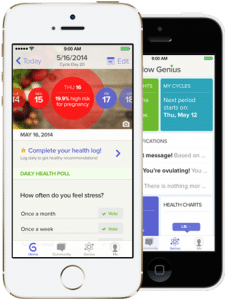
Another other the article reviewed was Glow, a new and innovative app that launched in August 2013. Offers patients two things: first, it is a free mobile application available for iOS users (iPhone, iPad, etc) offering women the ability to track and provide them with insights about their reproductive health. By having women track their ovulation, Glow will be able to inform women and their partners of their fertility window and their changes of conception.

Secondly, along with the app, users can apply to take part in Glow First, a not-for-profit fund for couples just starting their fertility journey. Participants contribute $50 per month over the course of ten months. This money goes into a pool what will be divided equally amongst any participants who did not achieve a natural pregnancy after ten months while using the Glow app. The first group that began contributing in October 2013 has just ended. Roughly 50 people participated, according to the company. The payout to those who didn’t become pregnant was $1,800.

Read the NPR Story

If you are ready to schedule an appointment at Shady Grove Fertility, please speak with one of our New Patient Liaisons at 877-971-7755.
 

Filed Under: Insurance & Savings Tagged With: Donor egg, In vitro fertilization (IVF), Shared Risk 100% IVF Refund Program

July 22, 2014 by Shady Grove Fertility

It’s that time of year – the Heart to Heart Video Contest! Parents who conceived with a little help from Ferring Reproductive Health may enter to win up to $10,000 towards an education fund for their child.

Five finalists will have their videos posted on HeartToHeartContest.com and the public will choose the winner.

About the 2013 Heart to Heart Video Contest Winner – The Dodge Family
With nearly 2,000 votes a very happy Aren and Jeff Dodge won the grand prize for the the 2013 Heart to Heart Video contest, putting away thousands of dollars for their daughter’s educational fund. Watch their winning video entry!

Who can enter the Heart to Heart Video Contest

If you conceived with the help of BRAVELLE® (urofollitropin for injection, purified), MENOPUR® (menotropins for injection), and/or REPRONEX® (menotropins for injection, USP), you may enter to win the Heart to Heart Video Contest.

How to Enter

  • All entries must be submitted by August 31, 2014
  • Put together a short, creative video essay (details below) about your journey to parenthood
  • Complete the online contest application and upload the following:
    — Digital photo of the entrant and child(ren); or entrant, partner, and child(ren); or entire family*
    — Video essay
    — Completed Medical Confirmation and Physician Information Release Form signed by your fertility doctor

Tips for Your Video

  • Provide some needed inspiration to others hoping to build or grow their families. Share the story of your journey to parenthood and offer words of support for others by encouraging them to “have heart, share hope” through the difficult experience of infertility
  • Length should not exceed 3 minutes
  • Videos must be uploaded as one of the following formats: .mov, .mp4, mpeg4, .avi, .wmv, .flv, .3gpp, .webm
  • Drugs may not be mentioned by brand name: please refer only to
    “Ferring fertility product(s)”
  • Avoid mentioning the physician, practice, pharmacy, or other third-party organizations

Heart to Heart Video Contest Prizes

  • Grand Prize—$10,000 educational fund (as a 529 or similar savings plan) for your child
  • 4 runners-up will each win a $4,000 educational fund (as a 529 or similar savings plan)

Submit your video online.

Filed Under: Insurance & Savings

  • « Go to Previous Page
  • Page 1
  • Interim pages omitted …
  • Page 5
  • Page 6
  • Page 7
  • Page 8
  • Page 9
  • Go to Next Page »

Company

  • About SGF
  • About US Fertility
  • Our Doctors
  • Fertility Equity
  • Careers
  • Newsroom
  • SGF College Scholarship
  • Contact Us
  • Voice Your Feedback

Treatments

  • Egg Freezing
  • Intrauterine Insemination (IUI)
  • In Vitro Fertilization (IVF)
  • Frozen Embryo Transfer (FET)
  • LGBTQIA+ Family Building
  • Shared Risk 100% Refund Program
  • All Treatments

Resources

  • Patient Portal
  • Online Bill Pay
  • Library
  • Support Groups & Events

Locations

  • California
  • Colorado
  • Delaware
  • Florida
  • Georgia
  • Maryland
  • North Carolina
  • Pennsylvania
  • Texas
  • Virginia
  • Washington, D.C.

2026 Shady Grove Fertility

  • Policies & Notices
Also of interest
  • In Vitro Fertilization IVF
  • Fertility Tests
  • Research Publications