
• Skip to primary navigation
  • Skip to main content
  • Skip to footer
Shady Grove Fertility
  • Become an Egg Donor
  • Referring Physicians
  • 1-888-761-1967
  • Schedule Appointment
  • Get Started
        • Get Started
          • Causes of Infertility
          • Fertility Tests
          • When to Seek Help
          • Find a Doctor
          • Preconception and prenatal vitamins 
          • Schedule an Appointment
        • Personalized Care For
          • Single Parents
          • LGBTQIA+ Family Building
          • People with Cancer
          • Known Genetic Diseases
          • Egg Donors
  • Treatments
        • Fertility
          • Timed Intercourse
          • Ovulation Induction
          • Intrauterine Insemination (IUI)
          • In Vitro Fertilization (IVF)
          • Frozen Embryo Transfer (FET)
        • Donation & Surrogacy
          • Donor Sperm
          • Donor Egg
          • Donor Embryo
          • Gestational Carrier
          • LGBTQIA+ Family Building
          • Single Parents
          • Find a Donor
        • More Treatments
          • Center for Male Fertility
          • Egg Freezing
          • OncoFertility
          • Preimplantation Genetic Testing
          • MIGS
          • All Fertility Treatments
  • Resources
    • Resource Library
    • Events Calendar
    • Patient Stories
    • Mental Health
    • Wellness Center
  • Insurance & Savings
    • Insurance & Benefits
    • Shared Risk 100% Refund Program
    • 100% Refund for Donor Egg
    • Discounts
    • Egg Freezing Costs
    • Financing & Grants
    • Clinical Trials
  • About
    • Find a Doctor
    • About SGF
    • Our Care Team
    • Advanced Practice Providers
    • Fertility Equity
    • Philanthropy
    • Newsroom
    • Careers
    • Contact Us
    • Voice Your Feedback
  • Locations
        • Find a Location
        • California
        • Colorado
        • Delaware
        • Florida
        • Georgia
        • Maryland
        • North Carolina
        • Pennsylvania
        • Texas
        • Virginia
        • Washington, D.C.
        • Chile
        • International & Out of State
        • SGF at Walter Reed National Military Medical Center
  • Patient Hub
    • Online Bill Pay
    • Patient Forms
    • Patient Portal
  • Call your care team
  • Become an egg donor
  • Referring physicians
  • search-icon
  • Schedule appointment 1-888-761-1967

Home / Insurance & Savings / Page 5

Insurance & Savings

May 4, 2015 by Shady Grove Fertility

Shady Grove Fertility first introduced the Shared Risk program in 1993 with a simple guarantee: receive up to 6 in vitro fertilization (IVF) cycles for a fixed cost with the goal of welcoming home a baby, or receive a 100% refund. You may withdraw from the program at any time during treatment and receive a refund. (Note: Some exclusions may apply, please talk with your financial counselor to learn more.) In 2015 alone, over 1,300 couples enrolled in the Shared Risk program.

Today, about 82 percent of our Shared Risk 100% Refund Program participants will go on to take home a baby.

We actually created our Shared Risk 100% Refund Program for IVF in response to a patient’s tearful frustration. She told us that, after having paid for an unsuccessful IVF cycle elsewhere, another failed attempt would financially devastate her and her husband and preclude them from then adopting a baby. They could not risk gambling their adoption money on the possibility of another unsuccessful IVF cycle. Therefore, they were not going to try again using the traditional fee-for-service option despite good odds of success. Our response was to develop an innovative refund option for qualifying patients.

Over the years, many patients have thought the program was too good to be true, but with 10,000 new families and counting, the program continues to grow and provide men and women with a financial safety net when considering fertility treatment.

Am I eligible for the Shared Risk 100% Refund Program?
The Shared Risk 100% Refund Program is available for patients either through our autologous program, meaning the female partner will be using her own eggs, or our Donor Egg Program, for those women using donor eggs. Each of these treatment options has its own set of eligibility criteria. We estimate that nearly 70 percent of patients in our practice who are using their own eggs would meet the qualifications for the Shared Risk 100% Refund Program.

If you are an international or out-of-state patient, you may also participate in these programs. Depending on your situation, we can make arrangements to coordinate your care with your local physician or fertility center. Typically, we only require patients to come to our centers at a few critical points during your cycle.

What fees are covered in the Shared Risk 100% Refund Program?
The Shared Risk 100% Refund Program includes:

  • All medical and laboratory services for up to 6 complete IVF cycles — from the start of medications through the first blood pregnancy test — are included. This includes assisted hatching of embryos and ICSI, if clinically needed.
  • If using an egg donor, the costs of monitoring, completed at SGF, and egg retrieval are also included.
  • Cryopreservation of viable embryos not transferred during any fresh Shared Risk cycle as well as the costs of FETs, until you have a baby or choose to withdraw from the program. 

Shared Risk costs do not cover consultations, diagnostic testing, outside services, medications, urologic male sperm retrieval procedure, or costs associated with complications or non-IVF care.

What is ICSI?
Your doctor may recommend ICSI as part of your IVF procedure to treat many causes of infertility, especially when there is a problem with the sperm, such as low motility (movement) or a low sperm count.

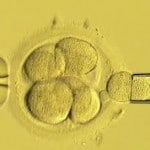
ICSI is especially useful in cases where the sperm cannot penetrate the egg, or if the sperm are abnormally shaped. It is a process in which an embryologist (a specialist in egg fertilization) injects a single sperm into the cytoplasm (center) of each egg. ICSI is commonly used in cases of male factor infertility and/or diminished egg quality.

What is pre-implantation genetic testing for aneuploidies (PGT-A)?
Previously known as preimplantation genetic screening (PGS), PGT-A is a state-of-the-art procedure used in conjunction with IVF that looks for chromosomal abnormalities which may lead to miscarriage or genetic disorders. Embryos found to be chromosomally abnormal can interfere with embryo implantation, result in pregnancy loss, or in the birth of a child with physical problems, a developmental delay, or a developmental disability.

PGT-A improves the likelihood of a successful pregnancy and birth for two distinctly different groups of patients: couples with infertility related to recurrent miscarriage or previously unsuccessful IVF cycles and couples who are at risk for chromosomally abnormal embryos. Your physician may recommend PGT-A when there is a possibility, indicated by your medical history or advanced maternal age, that your embryos could be affected by a chromosomal abnormality.

Shared Risk 100% Refund Program for Frozen Embryo Transfers (FETs)

The Shared Risk 100% Refund Program for Frozen Embryo Transfers is open to couples with remaining frozen embryos from a previous fresh treatment cycle. Many of the patients who participate in this program will have frozen embryos as a result of a previous fresh IVF cycle covered by their insurance, that was paid out-of-pocket, or from a completed Shared Risk 100% Refund Program.

For a flat fee, this program, similar to the Shared Risk 100% Refund Program for IVF or Donor Egg, allows approved patients unlimited FET treatment cycles while in the program, for as many frozen embryos as that patient may have available at the time she enters the program.

In terms of program completion, a patient has the following possible outcomes: she will have a successful pregnancy and delivery; she will withdraw from the program at any time and receive a full refund; or she will use all of the embryos that are available without conceiving and receive a full refund as well.

Shared Risk 100% Refund Program vs. the Multi-Cycle Discount Program

Some patients contemplating the Shared Risk 100% Refund Program may also consider our Multi-Cycle Discount Program for IVF. In Shady Grove Fertility’s Multi-Cycle Discount Program, the patient pays one flat fee that includes all cycle monitoring, up to two fresh in vitro fertilization (IVF) cycles, cryopreservation, the first year of embryo storage, and unlimited FETs.

There are two main differences between these two programs. The first difference is when SGF considers the cycle complete. In the Multi-Cycle Discount Program, SGF considers the cycle complete when the patient reaches the egg retrieval. In our Multi-Cycle Discount Program, if no embryos result (due to a lack of fertilization), the patient will not get the opportunity to repeat the cycle; whereas in the Shared Risk 100% Refund Program, we consider the cycle complete at the point of embryo transfer. Should a patient have her eggs retrieved and have nothing to transfer (as a result of poor or no fertilization), she will get to repeat the cycle again.

The second difference is the guarantee. The Multi-Cycle Discount Program may make sense for patients who do not meet the qualifications for the Shared Risk 100% Refund Program; however, it is important to understand that the Multi-Cycle Discount Program does not offer a guarantee of outcome in the form of taking home a baby or a 100 percent refund.

If you have questions regarding the Shared Risk 100% Refund Program or would like to schedule a new patient appointment, please call our New Patient Center at  877-971-7755 or click to schedule an appointment.

Editors Note: This post was originally published in September 2015 and has been updated for accuracy and comprehensiveness as of May 2016.

Filed Under: Insurance & Savings Tagged With: In vitro fertilization (IVF)

April 17, 2015 by Shady Grove Fertility

The Australian Broadcasting Corporation (ABC), Australia’s national news network, recently featured the growth and development of egg freezing in the United States. Shady Grove Fertility was interviewed for this piece, which was published as a radio interview and an online news article.

Source: ABC News, Lisa Millar

In the article “Human egg freezing trend grows in US as success rates improve,” reporter Lisa Millar interviewed Shady Grove Fertility’s Joseph Doyle, M.D.; James Graham, Director of Laboratory Services; and Radell Peischler, egg freezing patient, to gain a greater perspective about what patients can expect in regard to cost, success rates, and current trends.

One of the many reasons egg freezing has grown significantly at Shady Grove Fertility are the unique financial programs Assure 20 and Assure 30. These programs represent some of the only financial programs available to women in the United States who are interested in egg freezing, enabling more women to access this option.

Another reason that egg freezing has begun to gain mainstream acceptance is that success rates have become more widely discussed and promising. According to Dr. Joseph Doyle:

If you electively freeze your eggs and you’re less than 38 years of age, we’re seeing about half of the women who thaw 10 eggs who go home with a baby from that group. That’s really powerful data.

Laboratory Director James Graham also explained that egg freezing can act as an insurance policy for many women:

A vast majority probably won’t come back because they’re 35, they’ll end up getting married, and they will get pregnant on their own. We may never see them again. But a lot of it is like buying an insurance policy. If you don’t want to use it, that’s fine but it’s good to know you have it.

The opening statement of the radio interview captured the essence of what has changed in regards to acceptance of egg freezing:  “It was once spoken of in hushed tones. But the number of women freezing their eggs continues to rise.” As more women decide to freeze their eggs, and as publications continue to focus on egg freezing—both locally and internationally—acceptance will become more widespread.

To learn more about egg freezing, attend one of our upcoming live events, schedule an egg freezing appointment, or call 1-877-411-9292 to talk with one of our new patient liaisons. 

Filed Under: Insurance & Savings

February 2, 2015 by Shady Grove Fertility

SGF Accepts Insurance from 30+ Providers

Approximately 70% of patients have some coverage for infertility treatment and 90% have coverage for their initial consultation. Jump to Financial Programs.

Below is a list of insurance providers accepted by Shady Grove Fertility:

  • Adventist Healthnet
  • Aetna*
  • Amerihealth HMO*
  • Anthem
  • Berkshire Health Plan
  • Capital BC/BS
  • Carefirst BC/BS of Maryland
  • Carefirst Blue Choice*
  • Carefirst National Capital Area
  • Choice Care Network
  • CHP/Informed
  • Cigna
  • Coventry Healthcare National Network (Formerly First Health)
  • GreatWest Healthcare
  • Health America*
  • Highmark BC/BS
  • Highmark BC/BS Premier
  • Health Keepers
  • Independence BC/BS
  • Kaiser*
  • Keystone Health Plan East*
  • Keystone Health Plan Central*
  • MAMSI Life & Health*
  • MDIPA/Optimum Choice*
  • MultiPlan Network
  • OneNet PPO (Formerly Alliance PPO)
  • Parent Steps
  • Private Healthcare Systems
  • Tricare
  • United Healthcare
  • United Resource Network

* This insurance carrier requires authorization and/or referral prior to prescreening.
If your insurance plan is not listed call us to see if we have added new insurance companies.

We would encourage you to determine the extent of your fertility benefit before you initiate treatment. You may have out of network benefits that will allow you to be seen by our physicians.

  • FAQs: Insurance Coverage for Fertility Treatment

Financial Programs

At Shady Grove Fertility, we understand the financial considerations that go into the decision to begin–or continue–fertility treatment. While many patients have some form of insurance coverage for treatment, or live in a location that has coverage provided by mandate, we recognize that there are many without sufficient coverage or insurance benefits. With that in mind, SGF developed our unique financial programs to help ease the cost of fertility treatment.

1. Shared Risk 100% Refund Guarantee Program for IVF or Donor Egg

The Shared Risk 100% Refund Guarantee Program was created to help lessen patient concerns about cost in situations where multiple treatment cycles may be needed. When patients choose this plan, they may attempt up to six in vitro fertilization (IVF) or donor egg cycles for a flat fee – including any subsequent frozen embryo transfers (FETs) that may result. If the patient’s attempts are unsuccessful or they withdraw from the program, 100% of the fee is refunded.

  • Learn if you may qualify for this program. 

2. Shared Risk 100% Refund Guarantee Program for Frozen Embryo Transfers

For those patients eligible for the Shared Risk 100% Refund Guarantee for Frozen Embryo Transfers, they will pay a flat fee and then receive unlimited frozen embryo transfer (FET) cycles while in the program, for as many frozen embryos as that patient may have available at the time they enter the program. Just like the original Shared Risk 100% Refund Guarantee Program, the Shared Risk Program for FETs offers patients the peace of mind knowing they will either conceive or receive a full refund. 

  • Learn if you may qualify for this program.

 3. IVF Multi-Cycle Discount Program

The IVF Multi-Cycle Discount Program is designed for patients with no insurance coverage whose doctor recommends IVF treatment using their own eggs. This includes patients of any age and/or those who may not be eligible for the Shared Risk 100% Refund Program. In this program, the patient pays one flat fee which includes all cycle monitoring, up to 2 fresh IVF cycles, cryopreservation, the first year of embryo storage, and any subsequent FETs. By prepaying for multiple IVF treatment cycles, this option provides a 40% discount off the cost of two IVF cycles and subsequent FET cycles.

  • Learn if you may qualify for this program.

4. Shared Donor Egg Program

The Shared Donor Egg Program was created to increase the accessibility of donor egg treatment. This highly successful treatment option can be expensive since insurance does not provide coverage. This program can reduce the cost of treatment by up to 50% and, when paired with the Shared Risk 100% Refund Program, it can offer a 6-cycle 100% refund guarantee for the same cost as a traditional donor egg cycle.

In this program, two or three recipient couples are matched with one egg donor, thus “sharing” the cycle and reducing the overall cost per couple. The pregnancy rates for patients in this program are equal to the pregnancy rates of patients undergoing a traditional non-shared donor egg cycle. There is no waiting list to receive donated eggs.

  • Learn more about this program.

5. Shared Help Program
The Shared Help Program can assist patients whose annual household income is $95,000 or less by discounting the cost of most fertility services provided by SGF. The percentage discount is based on annual household income, which is confirmed by two years of tax returns. Services provided at one of our offices are eligible for discounts; all outside services and insurance fees such as co-pays, deductibles, and co-insurance are not eligible for discounts. Roughly 87% of applicants are approved for this program.

  • Learn if you may qualify for this program.

6. Military Discount Program

Current and new patients who are active military or military reserves are eligible for a 25% discount off of qualifying self-pay rates, as part of our Military Discount Program. Discounts do not apply when the fees are paid to an outside service, and therefore, are not in our control. To obtain the military discount, present your U.S. military identification at the time of your initial consultation.

  • Learn what services are eligible for this discount.

No matter what your financial situation may be, Shady Grove Fertility has a financial option to help reduce the cost of treatment. To learn more about your financial options, contact our New Patient Center at 1-877-971-7755. For current patients, please contact your dedicated financial counselor.

Filed Under: Insurance & Savings Tagged With: Affording care

November 4, 2014 by Shady Grove Fertility

The Heart to Heart Fertility Video Contest, hosted by Ferring, helps to spread awareness about infertility while rewarding one family with an educational fund for their child. Ferring runs this annual contest for couples who have struggled with infertility and used Ferring fertility products to help them conceive. Contest entrants submit a short video depicting their infertility journey and voters choose the grand prize winner, who will receive a $10,000 educational fund. Each runner up will also receive a $4,000 educational fund.

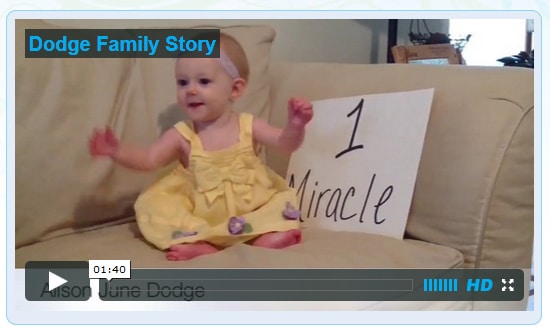
Last year’s grand prize winners were Shady Grove Fertility patients Aren and Jeff Dodge. This year there are five finalists, including Shady Grove Fertility patients Jenni and Brandon Corbin! Jenni and Brandon recently gave birth to their son after two IVF cycles and a difficult infertility journey.

You can vote for your favorite contestant once a day, every day now through November 16, 2014. The video with the most votes will win the grand prize.

Vote for your favorite video today at https://hearttoheartcontest.com/.

Watch Aren and Jeff Dodge’s 2013 winning video entry.

Want to share your personal story? http://shadygrovefertility.com/share-your-story

If you would like to discuss your fertility options or to schedule an appointment at Shady Grove Fertility, please speak with one of our New Patient Liaison at 877-971-7755.

Filed Under: Insurance & Savings

October 1, 2014 by Shady Grove Fertility

With election season in full swing, it seems we’re being reminded of our differences of opinion on a daily basis. However, as patients and professionals who deal with infertility, we all agree that helping everyone get the fertility treatment they need is a top priority.

Shady Grove Fertility is always looking for ways to make treatment more affordable and accessible to all families. “We feel frustrated, as providers, when we are sitting across from a patient with infertility that we know we could help, but they can’t afford it,” says Dr. Gilbert Mottla of Shady Grove Fertility’s Annapolis office. “That’s why we developed financial programs that help thousands of families every year and why we advocate for legislation that helps patients access treatment.”

Currently, Shady Grove Fertility is actively supporting a bill that would provide a tax credit for the out-of-pocket costs associated with fertility treatment. The Family Act of 2011 would provide a credit for the costs associated with In Vitro Fertilization (IVF) and fertility preservation for those with cancer. Experts estimate if the Family Act was passed that 30% more people would be able to afford needed fertility treatment.

“As a practice, we are committed to supporting the Family Act, but we know the real power lies with our patients,” says Dr. Mottla. “We want them to learn how this legislation will benefit them and future patients so they will feel motivated to get involved.”

An Alternative to Adoption

The Family Act is the brainchild of RESOLVE: The National Infertility Association, a non-profit organization whose mission is to improve the lives of people living with infertility through advocacy and improved access to care. RESOLVE is best known for their work on expanding insurance coverage for fertility treatment through advocating for state mandates.

While that remains a priority for the group, Barbara Collura, Executive Director of RESOLVE, explains that they wanted to find other avenues to expand access to care for patients. “We looked at the Adoption Tax Credit that has been in place since 1997. The Adoption Tax Credit allows people who adopt to write-off the expenses they incur in the adoption process. That seemed like a good model to us,” says Collura.

After conferring with colleagues on the Hill, it was determined that a similar law that would provide a tax credit for fertility treatment expenses would probably be able to garner broad, bipartisan support. “We got a lot of feedback saying that this was something that we could get done,” says Collura. “It still took a lot of negotiating and compromise to get the details of the bill right, but we think we have created something that a majority of lawmakers can support.”

So, in May of last year, the appropriately named Family Act of 2011 (S965/HR3522) was introduced in the Senate by Senator Kirsten Gillibrand of New York and in the House of Representatives by Congressman John Lewis of Georgia. The bill is also co-sponsored by Rosa L. DeLauro (CT), William Keating (MA), and Richard E. Neal (MA).

Focusing on IVF and Fertility Preservation

The Family Act mimics the details of the Adoption Tax Credit in terms of dollar limits and cost sharing with the patient. Collura explains, “We would have gone further in terms of the amount available for write-off, but we knew that we couldn’t make the bill so expensive that it would cause opposition. We also knew that if we mirrored the Adoption Tax Credit, it would be less of a burden on the IRS to learn and implement new rules. That’s one less hurdle for the bill to overcome.”

The main provisions of the Family Act are:

  • Covers the out-of-pocket costs associated with In Vitro Fertilization (IVF) including diagnostic tests, laboratory charges, professional charges, and medications.
  • Covers the out-of-pocket costs for fertility preservation procedures if the man or woman is diagnosed with cancer, and the cancer treatment or disease itself may result in infertility.
  • Has a cost sharing provision allowing 50% of all applicable medical expenses to be covered up to a lifetime maximum of $13,360. That means you would need to have out-of-pocket costs totaling $26,720 to claim the entire credit in your lifetime.
  • If you do not owe taxes in a particular year, do not owe enough taxes to use the whole credit, or do not reach the max amount in one tax year, it carries over to the next year for a max of five years after the first year you use the credit.
  • The Family Act is available to couples filing jointly with adjusted gross incomes of less than $222,520, but the credit is smaller for those earning between $182,500 and $222,520.

Shady Grove Fertility’s Support

Shady Grove Fertility has a long history of advocating for fertility patients. In fact, we proudly accepted RESOLVE’s Hope Award for advocacy 3 years ago. “Because we are in Washington, DC, we have the privilege of being able to contribute a medical perspective on legislation” says Dr. Mottla. “Fertility issues are sometimes misunderstood, so we take pride in being able to help lawmakers understand why our patients need their support.”

To provide their perspective on the Family Act, the doctors and staff at Shady Grove Fertility took part in RESOLVE’s Advocacy Day. “A group of us went to Capitol Hill for the day and lobbied our Senators and Representatives to support this bill,” says Dr. Mottla. “We also worked with RESOLVE to get more sponsors added to the bill.”

In addition, Shady Grove Fertility is hosting a Town Hall Meeting on the Family Act to provide information about the bill and spread awareness of its impact to the general public. All of Shady Grove Fertility’s current and past patients will be invited, along with members of Congress, the local media, RESOLVE and our physicians. The town hall meeting will be at our Rockville Maryland office on Tuesday October 30th 2012 at 7:00pm.

“We see firsthand how devastating infertility can be for our patients. We never want to see them denied access to the treatment they need or have them drop out of treatment before they reach their goal because of the financial burden,” says Dr. Mottla. “So, whatever we can do to help this bill pass – raise awareness with our patients, call our congressional representatives, testify before legislators – we are willing to do it.”

What You Can Do

RESOLVE has set up a webpage that provides everything you need to contact your representativesin a variety of ways. However, Collura says that a phone call gets the most attention. “We know that calls from constituents are a big deal to lawmakers, so we urge everyone to take a few moments to call your elected officials. You probably won’t talk directly to them, but you will connect with their legislative assistants. Legislative assistants are key to getting your message delivered directly to your Representative or Senator.”

A personalized letter is also a great way to convey your support. “We have a form letter available on our site, but we know that personal stories work best,” says Collura. “If couples share what they’ve gone through with infertility and attach a photo of themselves or of the child they had because of treatment, that would make a great impact.”

You can find all the information you might need to support this bill on the RESOLVE website, including addresses, phone numbers and sample letters. Click hereto get more details on taking action.

Act Now!

In late November, after the presidential election, members of Congress will return to Capitol Hill to complete their legislative work for the year. During this session, both the Adoption Tax Credit and the Family Act will be considered in the course of debating and passing other bills. “When the Family Act comes across their desks in November, we want legislators to know what it’s about and how it affects their constituents. That’s why now is the perfect time for our patients to get involved and contact their elected officials in Congress” said Dr. Mottla.

For more information or to schedule an appointment with one of our physicians, please speak with one of our friendly New Patient Liaisons by calling 888-761-1967.

Filed Under: Insurance & Savings

October 1, 2014 by Shady Grove Fertility

Nikol Flowers feels lucky. She’s a few weeks pregnant for the first time, and all it took was one IVF cycle — well, that and a whole lot of perseverance and coordinated effort between her and the whole treatment team at Shady Grove Fertility in Annapolis.

As is the case for all Shady Grove Fertility patients, her team included a financial counselor at the ready.

“We started trying to get pregnant in July, and I had a blocked fallopian tube and PCOS,” recounts Nikol, who is 37. Her husband is 47, and neither have had children. Because of her pre-existing conditions and age, the couple only tried to conceive on their own for a couple of months before seeing a fertility specialist.

Even though they knew enough about infertility to not wait longer for treatment, Nikol and her husband learned that sometimes things can work almost ‘too’ right.

The first attempt, an intrauterine insemination (or IUI), did not result in pregnancy. A later try at IUI wound up steering the couple into unplanned territory.

“My body produced too many eggs to safely do an IUI,” says Nikol, “so Dr. (Jeff) McKeeby recommended IVF at that point. It all happened so fast, I just learned as I went.”

Even with the best fertility experts and facilities, nature will try to take its own course. Fortunately, most patients have a number of options for Plan B or even Plan C. As always with fertility treatment, the key is timing — nobody wants to completely cancel a successful super ovulation cycle. But there’s the firm reality of affording these unforeseen changes in plan.

Nikol had already been advised by her assigned financial counselor, Darlene Sine, from the very first appointment, that her current insurance plan covered no infertility treatment, but that the upgraded plan would handle 50 percent of her infertility costs. Because of her company’s policy, upgrading her insurance would mean that she would have to delay treatment until January 2009.

“I just didn’t want to wait,” she says. “I’ll be 38 in January. We‘d already had gone through a bunch of tests and had made our decision to try IVF. I just wanted to move forward instead of putting it off.”

Nikol recalls how steadying it felt to know where she stood financially from the very beginning. “Our financial counselor had all the details on that first day, and it was great. You understand what you’re dealing with. You don’t make these big emotional decisions and then find out later that your insurance won’t cover it. The decision was ours and we knew up front.”

As is often the case, Nikol’s EPO insurance deems all infertility treatment as elective surgery, a fact she finds ridiculous. “It’s not like this is a ‘fun’ thing to choose,” she says.

Adding more stress to the situation was the fact that her insurer denied coverage to the medication she needed for her IVF cycle. Her financial counselor and her pharmacist pursued medication reimbursement tirelessly, but the insurer continued to deny coverage. In the end, Shady Grove Fertility helped her obtain the medication she needed for her cycle.

In deciding how important having a baby was, Nikol and her husband took a number of steps to afford their fertility treatment. They cut back on dining out, canceled a planned trip to Key West, and sold an extra vehicle to finance their IVF cycle.

It took only one cycle for Nikol to conceive and she’s excited to be pregnant. “I’m tired, but other than that, no problems. I’m feeling great!”

To survive the experience emotionally, and with your marriage intact, Nikol recommends talking to others who are going through the same thing. “Your friends and family might get a little tired of hearing you talk about the injections and appointments, even though they support you wholeheartedly. Another woman who is going through the same thing is going to want to talk about it just as much as you do.”

On surviving financially and regarding the lifestyle changes she and her husband made to afford getting to this point, Nikol clearly kept a long-range perspective. “We said, hey, we have the rest of our lives together, and we can do these things — like taking vacations — some other time.”

She even credits the little things, like playing board games at home with friends instead of going out and spending money, with enabling them to get this close to having a baby. Besides, she adds with a laugh, it’s good training for when the baby’s arrived. “We think IVF is expensive, but our friends with kids have said ‘that’s nothing compared to how much kids cost for 18 years!’”

Filed Under: Insurance & Savings

  • « Go to Previous Page
  • Page 1
  • Interim pages omitted …
  • Page 3
  • Page 4
  • Page 5
  • Page 6
  • Page 7
  • Interim pages omitted …
  • Page 9
  • Go to Next Page »

Company

  • About SGF
  • About US Fertility
  • Our Doctors
  • Fertility Equity
  • Careers
  • Newsroom
  • SGF College Scholarship
  • Contact Us
  • Voice Your Feedback

Treatments

  • Egg Freezing
  • Intrauterine Insemination (IUI)
  • In Vitro Fertilization (IVF)
  • Frozen Embryo Transfer (FET)
  • LGBTQIA+ Family Building
  • Shared Risk 100% Refund Program
  • All Treatments

Resources

  • Patient Portal
  • Online Bill Pay
  • Library
  • Support Groups & Events

Locations

  • California
  • Colorado
  • Delaware
  • Florida
  • Georgia
  • Maryland
  • North Carolina
  • Pennsylvania
  • Texas
  • Virginia
  • Washington, D.C.

2026 Shady Grove Fertility

  • Policies & Notices
Also of interest
  • In Vitro Fertilization IVF
  • Fertility Tests
  • Research Publications