• Skip to primary navigation
  • Skip to main content
  • Skip to footer
Shady Grove Fertility
  • Become an Egg Donor
  • Referring Physicians
  • 1-888-761-1967
  • Schedule Appointment
  • Get Started
        • Get Started
          • Causes of Infertility
          • Fertility Tests
          • When to Seek Help
          • Find a Doctor
          • Preconception and prenatal vitamins 
          • Schedule an Appointment
        • Personalized Care For
          • Single Parents
          • LGBTQIA+ Family Building
          • People with Cancer
          • Known Genetic Diseases
          • Egg Donors
  • Treatments
        • Fertility
          • Timed Intercourse
          • Ovulation Induction
          • Intrauterine Insemination (IUI)
          • In Vitro Fertilization (IVF)
          • Frozen Embryo Transfer (FET)
        • Donation & Surrogacy
          • Donor Sperm
          • Donor Egg
          • Donor Embryo
          • Gestational Carrier
          • LGBTQIA+ Family Building
          • Single Parents
          • Find a Donor
        • More Treatments
          • Center for Male Fertility
          • Egg Freezing
          • OncoFertility
          • Preimplantation Genetic Testing
          • MIGS
          • All Fertility Treatments
  • Resources
    • Resource Library
    • Events Calendar
    • Patient Stories
    • Mental Health
    • Wellness Center
  • Insurance & Savings
    • Insurance & Benefits
    • Shared Risk 100% Refund Program
    • 100% Refund for Donor Egg
    • Discounts
    • Egg Freezing Costs
    • Financing & Grants
    • Clinical Trials
  • About
    • Find a Doctor
    • About SGF
    • Our Care Team
    • Advanced Practice Providers
    • Fertility Equity
    • Philanthropy
    • Newsroom
    • Careers
    • Contact Us
    • Voice Your Feedback
  • Locations
        • Find a Location
        • California
        • Colorado
        • Delaware
        • Florida
        • Georgia
        • Maryland
        • North Carolina
        • Pennsylvania
        • Texas
        • Virginia
        • Washington, D.C.
        • Chile
        • International & Out of State
        • SGF at Walter Reed National Military Medical Center
  • Patient Hub
    • Online Bill Pay
    • Patient Forms
    • Patient Portal
  • Call your care team
  • Become an egg donor
  • Referring physicians
  • search-icon
  • Schedule appointment 1-888-761-1967

Home / About SGF / Page 5

About SGF

October 17, 2018 by Shady Grove Fertility

SGF presented a new study last week during the American Society for Reproductive Medicine’s (ASRM’s) 2018 Scientific Congress in Denver, CO, that demonstrated patients using fewer intramuscular progesterone injections during a frozen embryo transfer (FET) cycle resulted in equivalent live birth rates.

Why did SGF conduct this study? 

Patients who undergo in vitro fertilization (IVF) with a medicated frozen embryo transfer are required to take daily progesterone replacement to enable an embryo to implant and to allow the pregnancy to continue. One current standard protocol for a frozen embryo transfer is progesterone via daily intramuscular injection. While effective, these injections can be associated with increased discomfort and anxiety for patients. The purpose of this study was to investigate whether patients could achieve similar live birth rates from an FET, with few or even zero intramuscular progesterone injections.

What did the findings show? 

The study was a large randomized controlled trial that evaluated progesterone replacement for a frozen blastocyst transfer, by investigating patient-friendlier alternative to daily intramuscular progesterone.

Unfortunately, removing the progesterone injections altogether and administering only vaginal progesterone resulted in much lower birth rates and higher pregnancy loss rates,” says Dr. Kate Devine, Director of Research at Shady Grove Fertility and first author on this study. “The great news is that patients in the study who were assigned to a protocol using fewer injections were just as likely to have a baby as those who were assigned to take an intramuscular injection every day.”

What does this mean for patients undergoing a frozen embryo transfer (FET) cycle? 

The findings showed that while vaginal progesterone alone was inadequate to sustain pregnancies resulting from a programmed FET cycle, vaginal progesterone plus an intramuscular progesterone injection once every 3 days demonstrated equivalent live birth rates to daily intramuscular progesterone injection.

“We are so excited to finally have definitive randomized controlled trial data clearly demonstrating that intramuscular progesterone injections can be reduced by two-thirds while still providing our patients optimal chances of having a baby from FET. We hope and believe this effective treatment alternative will improve our patients’ quality of life while maintaining excellent outcomes, not only at SGF, but around the world,” says Jeffrey McKeeby, M.D., SGF physician and senior author on this study.

Why Research?

We view research as a way of “giving back” to our field as it gives us tremendous insights into the best fertility practices. Our commitment to continual improvement keeps us among the forefront, innovating and refining, which ultimately provides better outcomes—not just the treatment of our patients but of those across the country.

“Research remains one of the key pillars at SGF. It is, after all, the only way we can understand how to provide better treatment, improved care, and more successful results,” says Kevin S. Richter, Ph.D., Research Scientist for Shady Grove Fertility.

Schedule an Appointment

To learn more about this study, or to schedule an appointment with one of our physicians, call our New Patient Center at 888-971-7755 or complete a brief online form.
Filed Under: About SGF Tagged With: Research program

June 11, 2018 by Shady Grove Fertility

Advocacy Day is an annual event hosted by RESOLVE, The National Fertility Association and sponsored by Shady Grove Fertility. It’s a day where the infertility community comes together in Washington, D.C. to support legislative initiatives that will assist the 1 in 8 couples who experience infertility. It’s a chance to make the voice of the infertility community heard. 2018’s Advocacy Day had over 200 advocates from 30 different states including over 30 Shady Grove Fertility physicians, staff, and patients.

Increasing Access to Infertility Treatment for All on Advocacy Day

During the morning training session, many RESOLVE board members spoke and gave an overview on how to advocate most effectively. The mission of the day was for the advocates to properly explain the issues and represent those who face infertility. Attendees heard from American Society for Reproductive Medicine (ASRM) Chairman, Christos Coutifaris, MD, about an exciting announcement involving a brand new bill, sponsored by Connecticut Congresswoman Rosa DeLauro and New Jersey Senator Cory Booker that was being introduced that day. The bill will:

  • Require that health plans offered on the group and individual markets—in addition to the Federal Employees Health Benefit Program, TRICARE, and the VA—provide coverage for infertility treatment.
  • Ensure that these health plans also cover fertility preservation services for individuals who need to undergo a medically necessary procedure that may cause infertility, such as chemotherapy.

The announcement was met with roaring applause from the room of advocates. Adoption of the bill would be a huge step forward for countless American families.

Supporting Our Veterans

The first bill on the Advocacy Day agenda was the Women Veterans and Families Health Services Act (S 700 & HR 1681). This bill provides veterans wounded in the line of duty with access to reproductive treatments and adoption assistance permanently. The original bill, which was passed after the efforts of 2016 Advocacy Day, provides IVF coverage until September 2019, but we believe it’s time to make the coverage permanent. Lauren and Kevin Jaye, patients of Dr. Jason Bromer of SGF’s Frederick, MD and Hagerstown, MD offices, were in attendance advocating for infertility benefits at the office of Maryland Senator Chris Van Hollen. Kevin is a veteran who was severely injured by an IED during his service in Iraq and required 30+ surgeries, all of which were covered by the VA. However, the only treatment not covered, despite his injury occurring while he was serving his country, was the IVF treatment that the couple would require in order to have a baby. The Jayes went on to have a baby with the help of Dr. Bromer, but made their story known by advocating for coverage for all veterans injured during service.

Making Adoption Affordable

Adoption can be expensive, and over 100,000 children are waiting to be moved into permanent homes. The Adoption Tax Credit has been around since 1997, but the importance of it staying intact during the likely upcoming tax reform is imperative to helping the 100,000+ children be adopted. This credit helps encourage adoption and eases the financial burden that adoptive families sometimes face. However, the tax credit helps only those who can use it depending on their income level and if they qualify for adoption expenses.

In addition to ensuring the credit stays intact, the goal is to advance the Adoption Tax Credit Refundability Act (S 937 & HR 2476) to encourage adoptions. The adoption tax credit needs to be made refundable so that low- to moderate-income families can afford to adopt children.

Continuing Medical Research Funding

Reproductive disorders such as polycystic ovary syndrome (PCOS) and endometriosis represent a large portion of female factor infertility. Research related to these conditions as well as other infertility disorders is vital to helping Americans build their families. Sustained support for the National Institutes of Health (NIH), and specifically the National Institute of Child Health and Human Services (NICHD), where most of the research related to reproductive health and infertility is supported, will be needed in the next year to continue the important work in progress.

Recognizing Infertility as a Disease

Infertility is recognized as a disease by the World Health Organization (WHO) and the American Medical Association (AMA). However, the United States lags behind most developed countries in access to treatments for infertility.

At the meetings with Congressional representatives on Advocacy Day, Dr. Stephen Greenhouse of SGF’s Fair Oaks and Haymarket, VA offices explained, “Currently, many insurance plans cover the cost of infertility diagnosis, but provide no coverage for infertility treatment. This would be unheard of for other recognized diseases such as diabetes or heart disease.”

Not being able to afford care may also lead a couple to seek more aggressive fertility treatment options that may lead to premature deliveries and higher long-term care costs for the Federal government. “Wider access to infertility insurance coverage can provide safer and more cost-effective treatment options to be considered up front,” added Dr. Greenhouse.

A 2017 national survey of employer-sponsored health plans found that 44 percent of employers with at least 500 employees did not cover infertility services. The new Access to Infertility Treatment and Care Act bill is a great step forward in the right direction in making infertility coverage available to all.

Dr. Gilbert Mottla of our Annapolis, MD offices, perfectly summed up the power of Advocacy Day by saying, “Whenever I visit Capitol Hill I feel the strength of our democracy and get just a bit of a chill walking between buildings in front of our Supreme Court and Library of Congress.” At Shady Grove Fertility we enjoy being able to support our patients by speaking up and making our voices heard. Having a family is a basic human right and SGF continues to make parenthood possible for couples all over the world.

Schedule an Appointment

To learn more about Advocacy Day or to schedule an appointment, please contact our New Patient Center at 1-877-971-7755 or complete our brief online form. 

Filed Under: About SGF

June 1, 2018 by Shady Grove Fertility

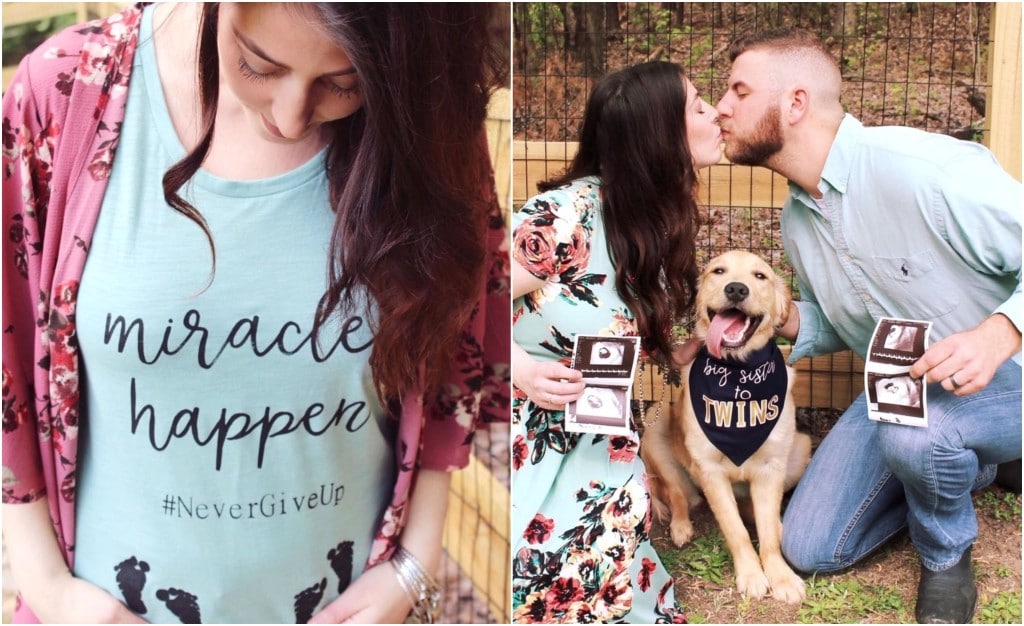
Ashley and Sam were in no rush to start a family when they wed in their early 20s, but when they were ready to started trying, it was not nearly as easy as they had expected. Watch this inspirational segment on Fox 5 Atlanta and read their full story below.

Their Story, as Told by Ashley:

Sam and I met at a country concert! Gary Allen to be exact. I was a senior in high school at the time and he was a freshman in college. Never did I think I would meet my soulmate at such a young age and end up marrying the man, but God had plans for us to meet that night and I’m so thankful he did! We dated for a couple of years before we got engaged and then married on April 27, 2013. We just celebrated our 5-year wedding anniversary in April.

We decided to enjoy newlywed life just the two of us before trying to bring a baby into the world. We had a lot of friends and family who had kids, so we thought it would happen fast like it did for all of them. After a year, we were so excited to start trying for a family, but months went by with no positive pregnancy test. We started thinking, “what’s wrong with us?” We were really confused as to why it wasn’t happening like it happened for everyone else. I ended up going to my regular OB/GYN at the time and that’s when I was diagnosed with polycystic ovary syndrome (PCOS) at the age of 22. When we got the news from the doctor that it could take a while to get pregnant, we honestly let it go in one ear and out the other. We were so young and naive to the news. As months went by after the diagnosis and still no pregnancy, we knew there was a problem and we needed help medically at that point.

Coming to Shady Grove Fertility

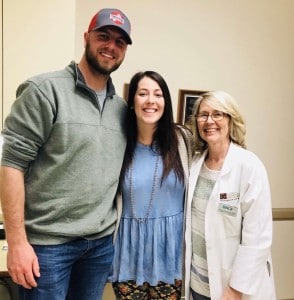
It was overwhelming to be so young sitting in a waiting room full of people who looked way older than us, but it made me realize in that moment that we were not alone. Infertility is a real disease that does not discriminate because of your age. Meeting Dr. Namnoum for the first time was like a breath of fresh air and for once, it felt like a baby was in sight. She was so kind, informative, and optimistic, reminding us to stay positive because she believed we would get pregnant.

Starting Treatment

Since we didn’t know any friends or family who went through in vitro fertilization (IVF), Sam and I had to be each other’s support system. We were open with our families and close friends about our struggle and they were compassionate and supportive, which helped us during the process. Dr. Namnoum and her nurse, Dawn, were there for us every step of the way – for every doctor’s appointment leading up to the egg retrieval and the transfers. The IVF calendars were actually super helpful and kept me on track, so I didn’t miss a medicine or protocol.

The 2-Week Wait

The 2-week wait can be so hard and your mind can wonder, so my biggest piece of advice would be to stay positive and have faith in the journey. Relax on the couch and watch a funny movie or read a good book that keeps your mind occupied!

The Best Call Ever

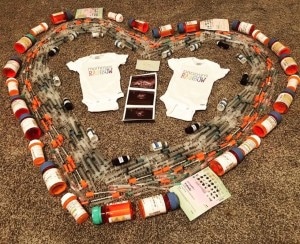
Getting the call that we were finally pregnant with our rainbow baby after our 5th IVF transfer was so surreal. Sam and I were ecstatic! After all the medicines, doctor’s appointments, and blood draws, it was so rewarding after fighting such a difficult battle.

Our first ultrasound was a dream come true. After losing our first baby on our first transfer, we never got to experience a good first ultrasound. As much as I had my doubts and fears with our second pregnancy, I just kept believing and praying that God would walk before us and calm our fears, and he did. We had peace from our transfer all the way to our first ultrasound. Even though I was extremely nervous for our ultrasound, it was worth every heartbreak to see and hear our baby’s heartbeat.

Graduating from Shady Grove Fertility was an answered prayer. Finding out we were expecting identical twins was the icing on the cake. It was a reminder that God finishes everything he starts in our journey and he will keep his promises. As ecstatic as we were to start our new journey with our OB/GYN, we were so sad to leave Dr. Namnoum and her team who helped us along the way. Honestly, there will never be another doctor or nurse who means as much to us as they do. They helped us achieve our dreams of parenthood and for that, we are forever grateful. They made us feel like we were their only patients. Looking back on the years we spent with them, they were angels sent from above to help us navigate the rocky road of infertility. I truly appreciate the close relationships that were formed during my time at SGF. They helped mold me into the person I am today and the mom I will be to my twin girls. 

Advice for Future Patients

You have to remain positive and hopeful that your miracle is coming even when you experience heartbreak or devastation. What helped me the most was having my husband support me and encourage me on the hard days. He constantly reminded me that we would get pregnant and to not give up. My faith in God was what got me through the hardest days when I would see another pregnancy announcement on social media or feel defeated in my journey. He gave me the strength to get through the hardest 4 years of my life. I’m so passionate now about infertility and helping others be encouraged during their journey to parenthood. Also, blogging and connecting on social media helped me meet other women who were experiencing my same, silent struggle. It made me feel like I wasn’t the only one going through it. I loved hearing success stories and happy endings and I pray our story encourages a couple who feels like they are ready to give up. We serve a God who turns impossible situations into possible situations and if he did it for us, he can do it for you.

Schedule an Appointment

 To learn more or to schedule an appointment, please speak with one of our New Patient Liaisons at 1-877-971-7755 or fill out this brief form.

Filed Under: About SGF

May 17, 2018 by Shady Grove Fertility

Egg donors have made parenthood possible for thousands of individuals who are unable to use their own eggs or their partner’s eggs to conceive. In fact, more than 5,000 SGF patients have become parents thanks to the generosity of those women who donated their eggs. Egg donors are compensated for their time, effort, and commitment, not for their actual oocytes/eggs. Compensation for egg donors is paid at various points throughout the prescreening and donation process.

Most recently, SGF has made three significant beneficial changes to the donor program.

Refer a Friend – New Compensation

SGF is now compensating women $100 upfront for any friend/family member who applies with SGF as an egg donor and is accepted to begin the donation screening process. While the refer-a-friend program at SGF has always been in place, the compensation has now changed, making it even more advantageous for donors to refer someone to our program. More great news, there is no limit to how many friends and family members’ one can refer. Each time someone applies and is accepted as a donor, SGF will send that person $100.

Body Mass Index (BMI)

New recruitment guidelines will now allow for donors to be accepted into the SGF donor program with a BMI of less than 30 (previously 28). A potential donor’s BMI is important in this process because it can impact the ease of the egg retrieval and how medications are metabolized. SGF’s program does allow for women to be temporarily deferred and re-apply when their BMI is within accepted range.

Earlier Egg Donor Compensation

SGF has adjusted the donor compensation structure allowing for compensation earlier in the process; upon completion of accepted profiles vs later in the process. The total compensation for a completed cycle is $7,000 for first-time donors (and more for additional cycles), and this amount is paid out in phases as donors progress through each portion of the screening and donation process. Women are first compensated once they complete their initial application, and profile, and are invited to begin screening. Additional compensation is then paid out during the screening process, with the final compensation being received on the day of the egg retrieval.

Egg Donation, Coupled with Egg Freezing

 SGF understands the desire many women face when it comes to preserving her own fertility. As such, SGF has two program options that allow women to not only donate their eggs, but to also invest in her own fertility preservation.

Egg Freezing Treatment Cycle – once the donor undergoes three donations with SGF she can undergo her own egg freezing cycle at a discounted amount.
Egg Freezing Cycle = $2,000, plus the cost of medications and monthly egg storage.
Split Egg Donation – women may opt to undergo a combined egg donation/egg freezing cycle, in the same treatment cycle. Through this program, the egg donor can donate ½ of her eggs, and freeze the other ½ for her own use. Through this program, there are no out of pocket costs, with the exception of a monthly storage fee. In lieu of compensation for her time and effort, the woman is able to freeze ½ of her oocytes, which includes cycle medications.

“The egg donation process at Shady Grove Fertility is anonymous despite its compassionate and intimate nature. Neither recipients nor donors are given any identifying information about one another. While the recipient is granted access to a select amount of information about the donor, the donor receives no information about the recipient. However, each walks away from the experience with a different outlook. One, forever grateful and the other empowered by the ability to help create a family in such a unique and gratifying way,” says Michele Purcell, MHA, RN, Director, Donor Program.

“As a woman, I feel like bringing a child into this world is one of the most powerful things we possess. If that possibility was taken away from me and if I needed an egg donor myself, I would hope that someone else would donate for me,” adds one former SGF egg donor.

“For me, egg donation is a privilege and I consider myself lucky to be able to give in such a profound way. The first time I donated, I remember vividly how emotionally good I felt. Pure, simple goodness in the knowledge that I created hope where previously there had been none,” echoes another SGF egg donor.

Any woman between the ages of 21-32 who is healthy and has a healthy family history may be considered for egg donation. All egg donor candidates must complete a medical history and genetic questionnaire. The screening process for donors is extensive and selective, by design, in order to help ensure a healthy baby and pregnancy for the intended parents.

Apply Today To Become An Egg Donor At SGF 
Complete Your Egg Donor Profile

Filed Under: About SGF

April 17, 2018 by Shady Grove Fertility

SGF’s Drs. Gilbert Mottla, from the SGF Annapolis, MD office and Stephanie Beall, from the SGF Columbia and Towson offices, testified to the Maryland Senate and House of Delegates on behalf of patients with cancer and played a vital role in helping to pass new legislation in the state of Maryland for fertility preservation coverage for patients facing cancer treatment.

This bill will require companies to cover sperm and egg freezing for those people with a cancer diagnosis who want to preserve their fertility. Maryland was the first state in the nation to enact infertility insurance legislation and, with the Governor’s signature, would be one of only a few states that also covers fertility preservation prior to cancer treatment.

“I feel very proud that I was part of the effort to change policy. Our collaborative efforts will hopefully soon allow patients who are faced with a cancer diagnosis to preserve their fertility without having to incur the costs associated. It’s our hope that one day soon, Maryland residents won’t have to choose between an important cancer treatment and their future chance to start a family,” says Dr. Mottla.

Fertility Preservation at SGF

SGF has a specially trained team devoted specifically to people with cancer. We work directly with a patient’s oncology team to ensure they expedite fertility preservation so that cancer treatment is not delayed. Known as the SGF Oncofertility Team, this team helps guide each patient through every step of the treatment process. Due to the time sensitivity with treatment, patients can expect an expedited treatment plan and to see a physician for consultation almost immediately.

Get Involved in Making Change for Fertility Preservation Coverage

Over the last 26 years, SGF physicians and staff have advocated for a variety of legislation, both on the state and federal level that would help to ease the cost burden and increase access to fertility treatment options. Dr. Mottla has played an active role in advocating for improving infertility policy by testifying in front of both state and national legislators, with his most recent support for our nation’s injured veterans. His commitment to helping expand coverage for wounded veterans paid off when Congressional support was given to provide in vitro fertilization (IVF) services through the U.S. Department of Veterans Affairs.

Advocates for this bill encourage residents of Maryland to send this letter to Governor Hogan and call him at (410) 974-3901 to ask that he sign SB 271/HB 908 into law.

Next month, SGF physicians and staff will continue to advocate on Capitol Hill at the 2018 Advocacy Day to raise awareness among members of Congress about the prevalence of infertility in this country and the need for increased insurance coverage and benefits that allow for more family building resources.

Schedule an Appointment

To learn more about how SGF advocates for fertility preservation coverage or to schedule an appointment, please contact the New Patient Center at 1-877-971-7755 or complete this brief online form. 

Filed Under: About SGF

March 19, 2018 by Shady Grove Fertility

Medical Contribution by SGF Medical Director, Dr. Eric Widra

In light of recent and extremely unfortunate and unusual news about two egg and embryo tank failures at a center in San Francisco and one in Cleveland, several media outlets turned to SGF Medical Director, Dr. Eric Widra for perspective. With Shady Grove Fertility being the largest fertility center in the nation, Dr. Widra was asked to respond to the news and discuss our own laboratory protocols to help put these incidents in better context.

“These should be very rare events that occur at all based on the type of technologies we use to store this material,” said Dr. Widra on Baltimore’s WBAL.

Dr. Widra likened the risk of major tank failure to that of being struck by lightning, as noted by Today.com

SGF’s Laboratory Protocols

Dr. Widra explained the safeguards employed with Shady Grove Fertility’s tanks are connected to alarms that should prevent the potentially tragic mishaps, “If the alarm senses a change in temperature or the communication doesn’t occur, multiple laboratory personnel’s phones go off to tell them that something is going on with whatever tank it is,” adds Widra.

Dr. Widra said the FDA visits and asks questions about tank monitoring at least once a month at Shady Grove Fertility. “The standards for maintaining this equipment are rather simple and transparent and subject to regulatory oversight,” says Widra.

In the interview with Washington Bureau, Widra commented that “SGF already answers to the Centers for Disease Control (CDC), Food and Drug Administration (FDA), state tissue banks, and professional societies to ensure the safety of our laboratories.”

Dr. Widra addressed the patient community in a message on the homepage of the SGF website to reassure everyone that the safety of our patients and the material they entrust to our care are our highest priorities and that our laboratory protocols ensure the safety of the frozen gametes stored and used at our practice.

Quality Standards of Laboratory Care

At Shady Grove Fertility, we take all appropriate preventive safety precautions for frozen embryos and eggs to preserve and protect them so that they are available to you when you decide to start or grow your family.

Shady Grove Fertility has been a part of many nationwide protocol changes to better ensure the safety of all of the frozen eggs and embryos stored and used here. Should a known, highly-damaging event be predicted to take place, we have partners further in-land who would safely house all of our patients’ eggs and embryos should it be needed. Luckily, this hasn’t happened in our 26 year history. Our first route of protection would be at one of our four laboratories located in Towson, MD; Rockville, MD; Chesterbrook PA; or Fairfax, VA.

Read More About The Quality Standards And Laboratory Protocols
Schedule an Appointment

To schedule a new patient appointment with a physician, please contact the New Patient Center at 1-877-971-7755 or complete our brief online form. 

Filed Under: About SGF

  • « Go to Previous Page
  • Page 1
  • Interim pages omitted …
  • Page 3
  • Page 4
  • Page 5
  • Page 6
  • Page 7
  • Interim pages omitted …
  • Page 16
  • Go to Next Page »

Company

  • About SGF
  • About US Fertility
  • Our Doctors
  • Fertility Equity
  • Careers
  • Newsroom
  • SGF College Scholarship
  • Contact Us
  • Voice Your Feedback

Treatments

  • Egg Freezing
  • Intrauterine Insemination (IUI)
  • In Vitro Fertilization (IVF)
  • Frozen Embryo Transfer (FET)
  • LGBTQIA+ Family Building
  • Shared Risk 100% Refund Program
  • All Treatments

Resources

  • Patient Portal
  • Online Bill Pay
  • Library
  • Support Groups & Events

Locations

  • California
  • Colorado
  • Delaware
  • Florida
  • Georgia
  • Maryland
  • North Carolina
  • Pennsylvania
  • Texas
  • Virginia
  • Washington, D.C.

2026 Shady Grove Fertility

  • Policies & Notices
Also of interest
  • In Vitro Fertilization IVF
  • Fertility Tests
  • Research Publications