
• Skip to primary navigation
  • Skip to main content
  • Skip to footer
Shady Grove Fertility
  • Become an Egg Donor
  • Referring Physicians
  • 1-888-761-1967
  • Schedule Appointment
  • Get Started
        • Get Started
          • Causes of Infertility
          • Fertility Tests
          • When to Seek Help
          • Find a Doctor
          • Preconception and prenatal vitamins 
          • Schedule an Appointment
        • Personalized Care For
          • Single Parents
          • LGBTQIA+ Family Building
          • People with Cancer
          • Known Genetic Diseases
          • Egg Donors
  • Treatments
        • Fertility
          • Timed Intercourse
          • Ovulation Induction
          • Intrauterine Insemination (IUI)
          • In Vitro Fertilization (IVF)
          • Frozen Embryo Transfer (FET)
        • Donation & Surrogacy
          • Donor Sperm
          • Donor Egg
          • Donor Embryo
          • Gestational Carrier
          • LGBTQIA+ Family Building
          • Single Parents
          • Find a Donor
        • More Treatments
          • Center for Male Fertility
          • Egg Freezing
          • OncoFertility
          • Preimplantation Genetic Testing
          • MIGS
          • All Fertility Treatments
  • Resources
    • Resource Library
    • Events Calendar
    • Patient Stories
    • Mental Health
    • Wellness Center
  • Insurance & Savings
    • Insurance & Benefits
    • Shared Risk 100% Refund Program
    • 100% Refund for Donor Egg
    • Discounts
    • Egg Freezing Costs
    • Financing & Grants
    • Clinical Trials
  • About
    • Find a Doctor
    • About SGF
    • Our Care Team
    • Advanced Practice Providers
    • Fertility Equity
    • Philanthropy
    • Newsroom
    • Careers
    • Contact Us
    • Voice Your Feedback
  • Locations
        • Find a Location
        • California
        • Colorado
        • Delaware
        • Florida
        • Georgia
        • Maryland
        • North Carolina
        • Pennsylvania
        • Texas
        • Virginia
        • Washington, D.C.
        • Chile
        • International & Out of State
        • SGF at Walter Reed National Military Medical Center
  • Patient Hub
    • Online Bill Pay
    • Patient Forms
    • Patient Portal
  • Call your care team
  • Become an egg donor
  • Referring physicians
  • search-icon
  • Schedule appointment 1-888-761-1967

Home / Intrauterine insemination (IUI) / Page 2

Intrauterine insemination (IUI)

February 26, 2014 by Shady Grove Fertility

Jessica experienced infertility at 25.

The majority of 25 year olds are worrying about what to wear to the bar on the weekend, or what date kind of date night they should have, or even who they would want to hang out with. My story, on the other hand, was a little different – I was a newlywed with severe baby fever.

My friends just thought I was obsessed with getting pregnant and if I relaxed, had a glass of wine, I would get pregnant. What they didn’t understand was that I was struggling with infertility at 25. My husband knew much more about my menstrual cycle than any man should know. TTC, OPKs, CM, BBT, HPTs, and BFN were all in my vocabulary and used on a daily basis. If you are new to the realm of conception let me translate:

  • TTC = trying to conceive
  • OPK = ovulation predictor kit
  • CM = cervical mucus
  • BBT = basil body temperature
  • HPT = home pregnancy test
  • BFN = big fat negative

I became so focused on getting pregnant that I changed my diet, had weekly acupuncture appointments, practiced yoga for fertility, and when my fertility app said that I’m fertile, I believed it. I didn’t understand why my period would be two to three weeks late and why my ovulation predictor kits would never smile at me. I talked to my OB/GYN and she suspected PCOS (Polycystic Ovarian Syndrome). After I left my OB/GYN, I made the decision to come to Shady Grove Fertility to get checked out.

After meeting with Dr. Michael Levy and getting my protocol to do an IUI, I finally felt like I had answers. When I started pre-screening and was in the waiting room, I noticed one thing: I was one of the youngest amongst the crowd. I felt judged. The patients and their spouses would watch me sign in then pick a chair to sit in. They would look up from their magazines or books and just peek at me from above their glasses. I felt like there were tons of eyes just staring at me and wondering what I’m doing in the waiting room if I’m so young. I wanted to stand up and scream “Infertility Does Not Discriminate!” We went through three Clomid timed-intercourse cycles with the OB/GYN, and three FSH injectable IUI cycles before I finally got pregnant and delivered a healthy baby boy.

  • Understanding Your Fertility

Once I started working at Shady Grove Fertility, I quickly figured out that I was not the youngest patient. I have seen patients as young as 18 who have struggled with infertility. I can honestly say, after going through infertility at 25, it has opened my mind about other peoples’ struggles. Every person has their own story and their own journey that they’re going through. All we can do is be supportive and lend an ear.

If you are having trouble trying to conceive, it may be time schedule an appointment at Shady Grove Fertility, please speak with one of our New Patient Liaisons at 877-971-7755.
Filed Under: Inspiration Tagged With: Intrauterine insemination (IUI)

September 3, 2013 by Shady Grove Fertility

In February 2009, at age 32, my fertility journey began. My husband and I had been trying to conceive for over a year with no results. So I went in to see my OBGYN. He did some tests which all came back normal and gave me a prescription for Clomid to see if it would help. Needless to say after three months of Clomid and still nothing, I was on my way to Shady Grove Fertility.

I never thought my weight would be an issue…

My beginning weight was 225 in May 2010. I never really thought my weight would be that much of an issue, since I had seen so many people much heavier than me get pregnant with no problems at all.

After meeting with Dr. Simon Kiperzstok, our plan was to try IUI first. Our first cycle in June 2010 was canceled due to a cyst and in July we had our first failed IUI. Dr. Kiperzstok decided our best bet for success would be IVF so we pushed forward.

In September we started our first IVF cycle, which ended with a pregnancy, but unfortunately I miscarried at seven weeks. As you can imagine I was devastated and like most people I am a stress eater and I put on some pounds. We tried IVF for the second time in February 2011 with negative results.

After more testing it was determined I had poor ovarian response/reserve. I wasn’t responding to the medication like most people would. I only had one more IVF attempt covered under my insurance, but four more IUI’s, so we decided to continue with stimulation cycles doing IUI instead of IVF, if my follicle count was low. Well all the IUI’s were failures. I was only producing one to three mature follicles with each cycle.

My hopes of becoming a mother was quickly slipping away. The emotional toll the failed attempts took contributed to the 25 pounds I packed on in a year. With only one IVF attempt left, Dr. Kiperzstok advised me I needed to lose the weight to increase my chances of a successful cycle. So I took a break from stimulation for a few months to try to get the weight off.

Tools for Success – Low Calorie Diet

I have always struggled with losing weight and a friend of mine was having a lot of success with a low calorie diet. I began the diet weighing 252 lbs and in the first week I had lost 5 lbs. I couldn’t believe it! I liked that I saw instant results and that kept me motivated to stick with it. I was also going to the gym one to two times each week doing 30-40 minutes of cardio and a little strength training here and there. After 45 days I was down 30 pounds and ready to start my cycles again.

In July 2012, I started stimulation medication again and to my surprise I produced five mature follicles – the most in over a year! I was excited but also incredibly scared. This would be our last attempt at IVF. The team retrieved five eggs, four of which fertilized. On day 3 we transferred three embryos.

Two weeks later, to my surprise I had a positive pregnancy test. I couldn’t believe it, my prayers had finally been answered. On March 27, 2013, I gave birth to my beautiful daughter, Maybree!

I have already started back on my diet to get rid of the pregnancy weight and hopefully much more this time. Already down 9 lbs!

Dr. Simon Kipersztok sees patients at the Shady Grove Fertility office in Waldorf, MD. If you have been trying to conceive without success and would like to schedule a new patient consultation, please call 1.877.971.7755.

Filed Under: General Tagged With: In vitro fertilization (IVF), Intrauterine insemination (IUI)

April 23, 2013 by Shady Grove Fertility

Every year in the United States, thousands and thousands of men and women pursue fertility treatment as a means to grow their family. In fact, in 2011 – the most recent data available – there were over 150,000 IVF and donor egg treatment cycles performed throughout the country!

Increased Fertility Awareness

SGF Nurse
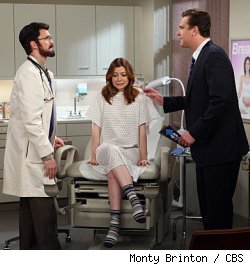
On “How I Met Your Mother”, Lily and Marshall seek help from a fertility specialist.

From celebrities speaking out and prime-time shows featuring characters coping with infertility, the conversation about infertility has broken into the foreground – taking away the taboo which used to be associated with IVF and “test-tube babies”. As infertility awareness increases, more people are accessing the care they need.  Since 2004, the number of reported IVF and donor egg cycles has increased by 29% – for a total of over 1,000,000 IVF and donor egg cycles performed in the United States.

  • Fertility Facts: How common is infertility?

Who is an Infertility Patient?

SGF Nurse

Men and women, straight and gay, single or married, there is no one identity for someone who needs fertility treatment. One in eight women and their partners will experience infertility – odds are you or someone you are close to will need assistance when it comes to conception.

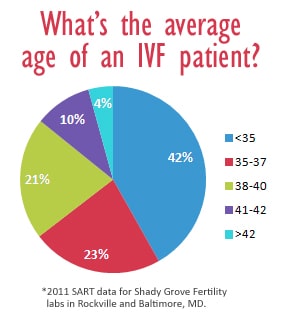
At Shady Grove Fertility – which is very similar to the national data – the average age of an IVF patient is 35. Some have been trying to conceive for several years, while others may have been previously diagnosed with endometriosis or another condition which they knew would make it challenging to conceive on their own.

In addition to over 5,000 IVF cycles, Shady Grove Fertility performs over 1,000 donor egg cycles annually. The age of donor recipients is not tracked through SART since the age does not impact the success rates when using a donated egg.

SGF Nurse

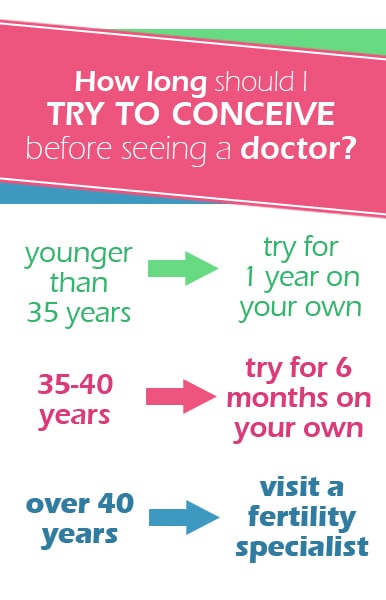
If you aren’t sure if you should see a fertility specialist use this simple guideline:

  • Under 35 years of age and you have been trying on your own for a year or longer
  • 35-40 years of age and been trying to 6 months on your own
  • 40 years of age or older, it is recommended to see a fertility specialist immediately

Or try the Fertility 5 assessment from RESOLVE.

  • Read: Understanding Fertility – Back to Basics

What is SART?

SART, the Society of Assisted Reproductive Technology, collects data from more than 85% of fertility centers in the United States. The goal is to set and help maintain the standards for reproductive medicine in an effort to better serve our members and our patients.

  • FAQ on SART Data

It is important to note that low-tech fertility treatment, such as, cycles using Clomid or intrauterine insemination (IUI), is not tracked by SART. At Shady Grove Fertility, low-tech treatment accounts for approximately half of fertility treatment performed on an annual basis.

If you are interested in building a family through fertility treatment, please schedule an appointment, or speak with one of our New Patient Liaisons at 877-971-7755.
Filed Under: About SGF Tagged With: Donor egg, In vitro fertilization (IVF), Intrauterine insemination (IUI)

December 5, 2012 by Shady Grove Fertility

Many patients put off calling their local fertility center because of the assumption that it will cost thousands of dollars or that they will need advanced medical care to treat their infertility. However, along with your OB/GYN, a fertility specialist is just another resource to help you achieve a pregnancy, often time utilizing low tech treatment options. Isaac E. Sasson, MD, PhD (Chesterbrook, PA) tells patients to “think of it as simply gathering information. You are going to learn about yourself and about all the ways we can help.”

When to Call a Fertility Specialist

SGF Nurse

Talking to a trusted medical professional, such as your gynecologist, should always be your first step. Oftentimes, your gynecologist can offer an introduction to your fertility window – the 6 days leading to ovulation – and how often you should have intercourse for the best chances of conception.
If you are under 35, it is recommended to try on your own for up to a year prior to seeing a specialist. Over 35, the time frame reduces to 6 months. And over 40, it is recommended to see a fertility specialist immediately.

What to Expect at a Fertility Specialist

At Shady Grove Fertility Center, after the initial consultation, all patients undergo initial fertility testing to test for male factor infertility, uterine and tubal anatomy, and ovarian function.
The test results, in combination with your medical history, will help determine the treatment plan your physician and you decide to pursue.

Some of the most common causes of infertility, including ovulation dysfunction, male factor, and unexplained infertility, are often recommended to start with low tech treatment options, such as oral medication or intrauterine insemination (IUI). Read more about diagnosis and treatment options.

Half of all of the treatment cycles performed at Shady Grove Fertility are IUIs. “In 2012 to date, nearly 1,000 patients became pregnant using low tech treatments,” says Dr. Isaac Sasson.

Oral Medications to Treat Infertility

Many female patients may start taking oral medications to stimulate ovulation, such as Clomid, while still under the care of their OB/GYN. Along with timed intercourse, many patients will find success – usually within the first 3 cycles.

The advantage of taking oral medications while under the care of a fertility specialist, is that the patient’s cycle will be closely monitored to check the size and number of follicles present. This can help reduce the risk of multiples.

Intrauterine Insemination

Low Tech Treatment Option for Infertility

Intrauterine Insemination, or an IUI, is a very common low-tech treatment option for patients experiencing infertility. Similar to the oral medication protocol, the female partner will take medication to help her develop several mature eggs. At the time of ovulation, she will be inseminated with a sample of her partner’s sperm. Couples may also be directed to have intercourse in the same time frame.

“For most women, the insemination is no more uncomfortable or complicated than a regular visit to the ob/gyn,” says Dr. Sasson. “Furthermore, the couple can still be sexually active up until the time of the insemination to increase their chances.”

Read “Josie & Kevin’s Successful IUI Story”

Affordable Treatment Options

Low tech treatment options for infertility, such as oral medication and IUI, are the most affordable treatment options available. Additionally, these treatments are more likely to be covered by insurance.

For patients without insurance coverage, Shady Grove Fertility offers several discount programs to help make fertility treatment more affordable.

For more information or to schedule an appointment with one of our physicians, please speak with one of our New Patient Liaisons by calling 877-971-7755.

Filed Under: Treatment Tagged With: Intrauterine insemination (IUI)

October 12, 2012 by Shady Grove Fertility

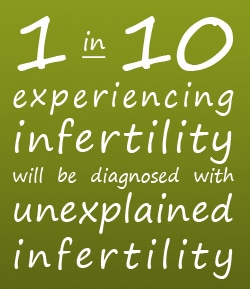
Fertility Fact: 1 in 10 couples experiencing infertility will be diagnosed with unexplained infertility.

What is Unexplained Infertility?

SGF Nurse

When a patient first visits a fertility center, they will have to go through basic fertility testing to deduce the cause of their infertility. The initial fertility workup at Shady Grove Fertility for the female partner is designed to check the health of the ovaries, and see if the fallopian tubes and uterus are normal.  For the male partner, the semen analysis will show if the sperm are normal in number and function. If all the tests come back inconclusive, a diagnosis of unexplained infertility is made. This diagnosis often comes with a mixed bag of emotions because while the specific cause of infertility hasn’t been identified, the fact remains that you are having trouble conceiving.  This leaves patients wondering, so what’s next?

Treating Unexplained Infertility

Most often, because tests did not come back with many clues, patients will start with low-tech treatment options, such as a combination of ovulation inducing medication and intrauterine insemination (IUI).  Depending on how the patient responds to that treatment and other factors, such as age, they may continue with an IUI treatment plan or move on to in vitro fertilization (IVF), which typically yields higher pregnancy rates.  Rockville physician, Dr. Joseph Doyle shares that, “The goal of low-tech treatment options in couples with unexplained infertility is to boost their pregnancy rates back to normal levels.  Fortunately, if this approach isn’t successful, IVF is very effective, with pregnancy rates up to 50%.”

If you have questions regarding unexplained infertility or would like to schedule a consultation with a Shady Grove Fertility physician, please call 1-877-971-7755 or click here.

Filed Under: Diagnosing Infertility Tagged With: In vitro fertilization (IVF), Intrauterine insemination (IUI), Semen analysis

August 21, 2012 by Shady Grove Fertility

Dr. Ricardo Yazigi

by Dr. Naveed Khan, MD

The best time to see a fertility specialist is when you are concerned you have an infertility problem. Traditionally, infertility is defined as not being able to conceive over the course of a year in a woman who has regular menstrual cycles. So if you have been trying to conceive for several months and been unsuccessful, it is advised to consult a fertility specialist. The thought of being infertile is very stressful for most couples and sometimes basic testing or simply speaking to a fertility specialist can be very reassuring.

A basic infertility evaluation is usually advised after attempting conception for 1 year in women less than 35 years old and after 6 months in women older than 35 years of age. This is due to the natural decline in female fertility that occurs with aging. Also, success in treatment is best achieved when a woman is younger. However, if a woman is not having regular cycles, one does not need to wait a year, or even 6 months, she should go in sooner to get evaluated since she may be having ovulatory issues.

Visiting a Fertility Specialist

SGF Nurse


Either a general ob/gyn or a fertility specialist, also known as a reproductive endocrinologist, can initiate a fertility evaluation. A reproductive endocrinologist is a doctor trained in ob/gyn with an additional 3 years training devoted solely to the diagnosis and treatment of all types of infertility related issues. A fertility specialist is able to quickly assess the potential fertility problem and then streamline the fertility evaluation to be completed within the first 10 days of the start of a woman’s menstrual cycle. Timing of the fertility tests is very important and reproductive endocrinologist offices are geared toward making appointments quickly in order to accommodate the special needs of a fertility patient.

In most cases, once the evaluation is completed, the fertility specialist can explain all the fertility issues in detail to a couple whether it is endometriosis, polycystic ovary syndrome, ovarian reserve issues, or even male factor.  After the diagnosis is made, the fertility specialist can recommend treatments that can address the diagnosed fertility issue. Treatments may include use of medicines, such as clomiphene citrate or gonadotropins, and procedures, such as intrauterine insemination (IUI), or advanced reproductive technologies such as IVF.

The driving goal for everyone is that our patient conceives a healthy child in a reasonable period of time. Feeling concerned about your fertility is normal, and will likely only become more stressful as the months go by.  If you are not getting pregnant, an appointment with a fertility specialist is a good place to start.

Wishing you the best.

To schedule a New Patient Appointment with Shady Grove Fertility please call 1-877-971-7755 or click here.

Filed Under: General Tagged With: In vitro fertilization (IVF), Intrauterine insemination (IUI)

  • « Go to Previous Page
  • Page 1
  • Page 2
  • Page 3
  • Go to Next Page »

Company

  • About SGF
  • About US Fertility
  • Our Doctors
  • Fertility Equity
  • Careers
  • Newsroom
  • SGF College Scholarship
  • Contact Us
  • Voice Your Feedback

Treatments

  • Egg Freezing
  • Intrauterine Insemination (IUI)
  • In Vitro Fertilization (IVF)
  • Frozen Embryo Transfer (FET)
  • LGBTQIA+ Family Building
  • Shared Risk 100% Refund Program
  • All Treatments

Resources

  • Patient Portal
  • Online Bill Pay
  • Library
  • Support Groups & Events

Locations

  • California
  • Colorado
  • Delaware
  • Florida
  • Georgia
  • Maryland
  • North Carolina
  • Pennsylvania
  • Texas
  • Virginia
  • Washington, D.C.

2026 Shady Grove Fertility

  • Policies & Notices
Also of interest
  • In Vitro Fertilization IVF
  • Fertility Tests
  • Research Publications