• Skip to primary navigation
  • Skip to main content
  • Skip to footer
Shady Grove Fertility
  • Become an Egg Donor
  • Referring Physicians
  • 1-888-761-1967
  • Schedule Appointment
  • Get Started
        • Get Started
          • Causes of Infertility
          • Fertility Tests
          • When to Seek Help
          • Find a Doctor
          • Preconception and prenatal vitamins 
          • Schedule an Appointment
        • Personalized Care For
          • Single Parents
          • LGBTQIA+ Family Building
          • People with Cancer
          • Known Genetic Diseases
          • Egg Donors
  • Treatments
        • Fertility
          • Timed Intercourse
          • Ovulation Induction
          • Intrauterine Insemination (IUI)
          • In Vitro Fertilization (IVF)
          • Frozen Embryo Transfer (FET)
        • Donation & Surrogacy
          • Donor Sperm
          • Donor Egg
          • Donor Embryo
          • Gestational Carrier
          • LGBTQIA+ Family Building
          • Single Parents
          • Find a Donor
        • More Treatments
          • Center for Male Fertility
          • Egg Freezing
          • OncoFertility
          • Preimplantation Genetic Testing
          • MIGS
          • All Fertility Treatments
  • Resources
    • Resource Library
    • Events Calendar
    • Patient Stories
    • Mental Health
    • Wellness Center
  • Insurance & Savings
    • Insurance & Benefits
    • Shared Risk 100% Refund Program
    • 100% Refund for Donor Egg
    • Discounts
    • Egg Freezing Costs
    • Financing & Grants
    • Clinical Trials
  • About
    • Find a Doctor
    • About SGF
    • Our Care Team
    • Advanced Practice Providers
    • Fertility Equity
    • Philanthropy
    • Newsroom
    • Careers
    • Contact Us
    • Voice Your Feedback
  • Locations
        • Find a Location
        • California
        • Colorado
        • Delaware
        • Florida
        • Georgia
        • Maryland
        • North Carolina
        • Pennsylvania
        • Texas
        • Virginia
        • Washington, D.C.
        • Chile
        • International & Out of State
        • SGF at Walter Reed National Military Medical Center
  • Patient Hub
    • Online Bill Pay
    • Patient Forms
    • Patient Portal
  • Call your care team
  • Become an egg donor
  • Referring physicians
  • search-icon
  • Schedule appointment 1-888-761-1967

Home / Fibroids

Fibroids

February 15, 2024 by Shady Grove Fertility

Fibroids are usually noncancerous, smooth muscle tumors, primarily found in or around the uterus. They are extremely common, and by the age of 50 over 70% of women have them. They are even more common in Black women, with estimates that 8 in 10 Black women may be affected by uterine fibroids.  

“There is often confusion about the differences between ovarian cysts and fibroids,” shares Dr. Janet Bruno-Gaston, an SGF Houston fertility specialist. “It’s important to know that fibroids are usually noncancerous masses in or on the uterine wall, while ovarian cysts are fluid-filled sacs that develop within the ovary.”  

What causes fibroids?  

While the cause of uterine fibroids remains unknown, researchers believe their development is multi-factorial.  A genetic mutation in a single smooth muscle cell can lead to the development of these tumors, while exposure to estrogen and progesterone throughout a woman’s reproductive life can facilitate their growth. Due to the lack of hormonal exposure, fibroids often shrink during menopause, helping alleviate most of the associated clinical symptoms.  

What are symptoms of fibroids?  

Symptoms from uterine fibroids can vary widely depending on the number, size, and location of the fibroids. If the fibroids are small, you may not have any symptoms at all. In fact, you may not know that you have fibroids until you go through fertility testing. Common symptoms indicating fibroids include: 

  • Abnormal or excessive bleeding, especially during periods 
  • Pelvic pressure or pain  
  • Constipation or urinary frequency based on mass effect and position of fibroids on bowel or bladder 

“Some fibroids may not result in any symptoms, however, there may be abnormal uterine bleeding when there are fibroids located near the lining of the uterus,” shares Dr. Bruno-Gaston. “Other women may experience cramping and pelvic pain with sexual intercourse.”  

Large fibroids positioned around your bladder or bowel can cause pelvic pressure resulting in urinary frequency and urgency or changes in bowel habits. 

How are fibroids identified? 

Fibroids can be identified on clinical exam or pelvic imaging. Your provider may suspect uterine fibroids based on the clinical symptoms you are experiencing. On the pelvic exam, your physician can assess the shape and size of your uterus and that may be adequate to make the diagnosis. Pelvic imaging may be used to confirm the diagnosis and better characterize the size and location of the fibroids. Your physician may perform a pelvic ultrasound, hysterosonogram, or hysterosalpingogram to identify the fibroids. These techniques use a variety of methods to help your physician learn more about your symptoms and the impact of your fibroids.  

How do fibroids affect fertility?  

Fibroids can impact fertility in many ways. Fibroids can directly distort the uterine cavity, leading to changes in endometrial development and receptivity. They can also block the fallopian tubes and restrict sperm access to the egg after ovulation. Additionally, fibroids can disrupt normal blood flow throughout the uterus and trigger the immune system leading to local inflammation. These changes can decrease the chance of fertilization, implantation, and successful early pregnancy development.   

How are fibroids managed?  

Fibroids can be managed with medications, surgery, or a combination of both. When deciding the best treatment approach, your provider will consider the severity of your clinical symptoms, fibroid size or location, and your desire for future family planning. Medical management may involve oral pills or injections to stabilize your uterine lining or decrease the size or growth of your fibroids. For large fibroids or those directly impacting the uterine cavity, surgery may offer better outcomes. Your physician may take a vaginal approach with hysteroscopy, where a telescope-like device is advanced through the vagina into your uterine cavity. For larger fibroids in the wall or outside of the uterus, an abdominal approach with laparoscopy or laparotomy may be recommended. There is also emerging evidence for interventional radiology techniques including uterine fibroid embolization or high-intensity focused ultrasound to interrupt blood flow or ablate fibroids. Patients interested in future childbearing should consult a fertility specialist to review these options carefully to help determine the next best steps for managing their fibroids.   

To schedule a New Patient Appointment with Shady Grove Fertility please call 1-877-971-7755 or click here. 
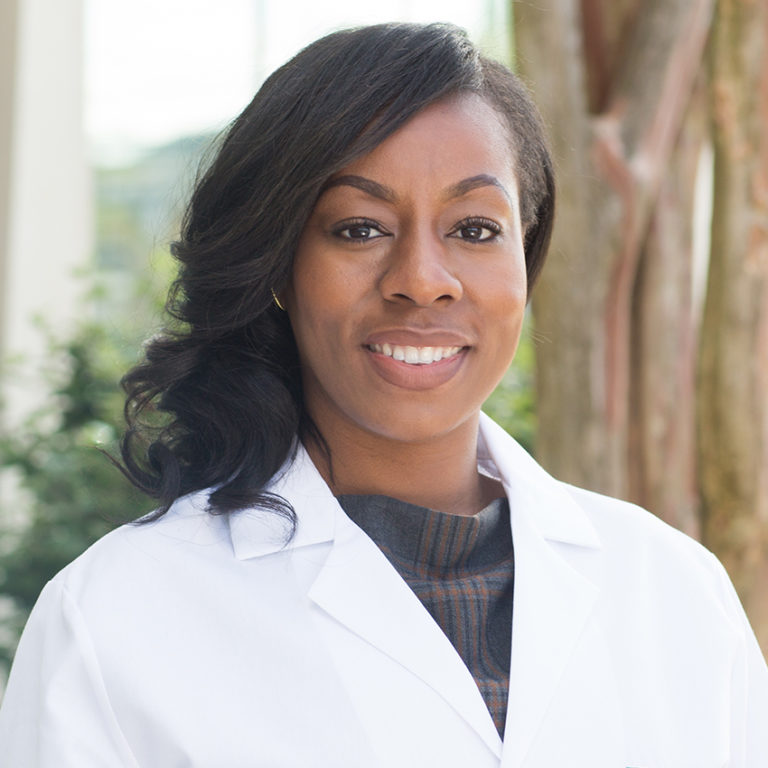
Medical contribution by Janet Bruno-Gaston, M.D., MSCI

Janet Bruno-Gaston, M.D., MSCI, is board certified in obstetrics and gynecology and in reproductive endocrinology and infertility (REI). Dr. Bruno-Gaston received her medical degree from Morehouse School of Medicine, where she was recognized as a Community Health Honors Scholar for her work with health care disparities.  
Schedule an Appointment

Filed Under: Diagnosing Infertility Tagged With: Fibroids

February 7, 2013 by Shady Grove Fertility

Jason G. Bromer, MD was interviewed by Fertility Authority on advances in surgery for fertility treatment. From advances in tubal ligation reversal to the impact of robotic surgery on fibroid treatment, Dr. Bromer talks surgery for fertility treatment in 3 short videos.

Dr. Jason Bromer Talks Surgery for Fertility Treatment

Dr. Jason Bromer - Advances in Tubal Ligation ReversalDr. Jason Bromer - Robotic Surgery for Fertility TreatmentDr. Jason Bromer - Robotic Surgery for Fibroid Treatment
What are the advances in tubal ligation reversal? How is robotic surgery being used to fertility treatment? How are these advances impacting fibroid treatment?

Dr. Jason Bromer is a fertility specialist at Shady Grove Fertility Center’s Frederick, MD office. Dr. Bromer is also available for new patient consultations in Hagerstown, MD and Harrisburg, PA.

If you would like to schedule an appointment with Dr. Jason Bromer or another Shady Grove Fertility physicians, please speak with one of our New Patient Liaisons at 877-971-7755.

Filed Under: Diagnosing Infertility Tagged With: Dr. Jason Bromer, Fibroids

January 25, 2013 by Shady Grove Fertility

Fertility Facts: Hysteroscopy helps your physician determine causes of uterine bleeding and assess the shape of the uterine cavity. If bleeding results from a mass or abnormality in the shape – most commonly fibroids and polyps – this procedure can be used to both diagnose and treat the problem.

What is a hysteroscopy?

Hysteroscopy is a surgical procedure that allows your physician to look inside your uterus to investigate the source of abnormal uterine bleeding, or a cause of infertility or miscarriages. The procedure is done using a hysteroscope, which is a narrow fiberoptic camera that is inserted into the uterine cavity.

Typically scheduled in the week after your period has stopped, a hysteroscopy generally has a short recovery times and minimal post-procedure discomfort compared to other, more invasive procedures.

The length of the procedure is dependent on what is identified during the procedure.  Just looking to see if any abnormalities are present can be done in 10 minutes.  Removing a large fibroid can take over an hour.

An abnormality is found during the hysteroscopy. What next?

If an abnormal condition is found during hysteroscopy, such as fibroids or polyps, it may be corrected in the same procedure.  Typically, studies (such as ultrasounds) are done leading up to the hysteroscopy, leading to suspicion of a particular cause.  Visual confirmation during the procedure can be followed by immediate treatment.  Abnormalities that can be identified during hysteroscopy include:

  • Fibroids and polyps — In certain circumstances, these non-cancerous growths in the uterine cavity can be removed during hysteroscopy.
  • Adhesions —Uterine adhesions (also known as Asherman’s Syndrome) are bands of scar tissue that form in the uterus and can interfere with an embryo’s implantation.  Adhesions can be removed during hysteroscopy.
  • Septum— A uterine septum is an anatomic abnormality, where dense fibrous tissue divides the uterine cavity.  Hysteroscopy can help determine whether you have a uterine septum and in some cases the septum may be removed during this procedure.
  • Abnormal bleeding— Endometrial ablation may be performed when there is heavy or lengthy menstrual flow or bleeding between periods.  Endometrial ablation destroys the uterine lining in order to treat the bleeding, and this treatment is only used in women who are certain they have completed family building.

What can you expect after a hysteroscopy?

Cramping and slight vaginal bleeding is common for one to two days after the hysteroscopy. Some patients also experience shoulder pain and may feel faint or sick as a result of anesthesia.  Generally, people should be back on their feet the next day, ready to return to work or school.  However, if you experience fever, severe abdominal pain, or heavy vaginal bleeding or discharge, please contact your medical team.

If you are experiencing abnormal uterine bleeding or suspect fibroids, please schedule an appointment with one of our physicians or speak with one of our New Patient Liaisons by calling 877-971-7755.

Filed Under: Diagnosing Infertility Tagged With: Fibroids

December 28, 2012 by Shady Grove Fertility

Fertility Fact: Laparoscopy can help diagnose infertility.

What is a laparoscopy?

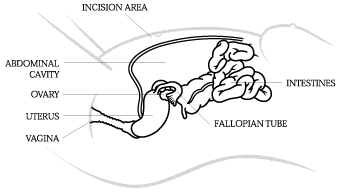
Laparoscopy is a surgical procedure a fertility specialist uses to look at your uterus, ovaries, fallopian tubes, and other pelvic organs. It can be used to identify fibroids, scar tissue, endometriosis, and/or blocked tubes, all of which can cause infertility. Often times, if a problem, such as a fibroid, is found during the procedure it can be corrected at the same time.

How is a laparoscopy performed?

SGF Nurse

While under sedation, the abdomen is filled with air to allow the different pelvic structures to be seen clearly. A fiberoptic camera, called a laparoscope, is inserted through the belly button to these organs to be seen. One to three other 1 centimeter incisions are made in your lower abdomen to introduce instruments to allow any surgical repair needed. Oftentimes, this just requires a small blunt probe to move or lift the organs to see hidden areas. Also, a dye may be injected through your cervix into your uterus and fallopian tubes to see if they are open or blocked. This is an alternative test to the hysterosalpingogram (or HSG), which also determines if the fallopian tubes are open.

  • Dispelling the HSG Myths

How long does the laparoscopy take?

Depending on what is found during the procedure, it may take anywhere from 30 minutes to 2 hours. You will stay in a recovery room for a few hours after to wake up from the anesthesia. You should plan to have someone take you home after the procedure and stay with you for the next 24 hours.

What is the recovery time for a laparoscopy?

Some patients will feel sore and tired following the procedure, while others are ready to return to work the next day. “The beauty of laparoscopy is that we can do many of the same procedures that used to require an abdominal incision, with a much shorter recovery,” says Dr. Joseph Doyle. When pain is a bother, it is often in the shoulder blades or under their diaphragm (a result of the air irritating some of the nerves in the abdomen). You make take pain medication and moving around will help the pain resolve. All pain should go away in a day or two, but it is recommended to take a couple days off from work to allow for healing.

  • Did you know that once upon a time laparoscopies were needed for all egg retrievals prior to the advancements of retrieving the eggs transvaginally? Read more advances that helped advance fertility treatment over two decades.

If you are having trouble conceiving or for more information or to schedule an appointment with one of our physicians, please speak with one of our New Patient Liaisons by calling 877-971-7755.

Filed Under: Diagnosing Infertility Tagged With: Endometriosis, Fibroids

Company

  • About SGF
  • About US Fertility
  • Our Doctors
  • Fertility Equity
  • Careers
  • Newsroom
  • SGF College Scholarship
  • Contact Us
  • Voice Your Feedback

Treatments

  • Egg Freezing
  • Intrauterine Insemination (IUI)
  • In Vitro Fertilization (IVF)
  • Frozen Embryo Transfer (FET)
  • LGBTQIA+ Family Building
  • Shared Risk 100% Refund Program
  • All Treatments

Resources

  • Patient Portal
  • Online Bill Pay
  • Library
  • Support Groups & Events

Locations

  • California
  • Colorado
  • Delaware
  • Florida
  • Georgia
  • Maryland
  • North Carolina
  • Pennsylvania
  • Texas
  • Virginia
  • Washington, D.C.

2026 Shady Grove Fertility

  • Policies & Notices
Also of interest
  • In Vitro Fertilization IVF
  • Fertility Tests
  • Research Publications