
• Skip to primary navigation
  • Skip to main content
  • Skip to footer
Shady Grove Fertility
  • Become an Egg Donor
  • Referring Physicians
  • 1-888-761-1967
  • Schedule Appointment
  • Get Started
        • Get Started
          • Causes of Infertility
          • Fertility Tests
          • When to Seek Help
          • Find a Doctor
          • Preconception and prenatal vitamins 
          • Schedule an Appointment
        • Personalized Care For
          • Single Parents
          • LGBTQIA+ Family Building
          • People with Cancer
          • Known Genetic Diseases
          • Egg Donors
  • Treatments
        • Fertility
          • Timed Intercourse
          • Ovulation Induction
          • Intrauterine Insemination (IUI)
          • In Vitro Fertilization (IVF)
          • Frozen Embryo Transfer (FET)
        • Donation & Surrogacy
          • Donor Sperm
          • Donor Egg
          • Donor Embryo
          • Gestational Carrier
          • LGBTQIA+ Family Building
          • Single Parents
          • Find a Donor
        • More Treatments
          • Center for Male Fertility
          • Egg Freezing
          • OncoFertility
          • Preimplantation Genetic Testing
          • MIGS
          • All Fertility Treatments
  • Resources
    • Resource Library
    • Events Calendar
    • Patient Stories
    • Mental Health
    • Wellness Center
  • Insurance & Savings
    • Insurance & Benefits
    • Shared Risk 100% Refund Program
    • 100% Refund for Donor Egg
    • Discounts
    • Egg Freezing Costs
    • Financing & Grants
    • Clinical Trials
  • About
    • Find a Doctor
    • About SGF
    • Our Care Team
    • Advanced Practice Providers
    • Fertility Equity
    • Philanthropy
    • Newsroom
    • Careers
    • Contact Us
    • Voice Your Feedback
  • Locations
        • Find a Location
        • California
        • Colorado
        • Delaware
        • Florida
        • Georgia
        • Maryland
        • North Carolina
        • Pennsylvania
        • Texas
        • Virginia
        • Washington, D.C.
        • Chile
        • International & Out of State
        • SGF at Walter Reed National Military Medical Center
  • Patient Hub
    • Online Bill Pay
    • Patient Forms
    • Patient Portal
  • Call your care team
  • Become an egg donor
  • Referring physicians
  • search-icon
  • Schedule appointment 1-888-761-1967

Home / Emotional support / Page 10

Emotional support

November 17, 2015 by Shady Grove Fertility

Why is infertility stressful?

Most couples are used to planning their lives. They believe if they work hard at something, they can achieve it. So when they find it’s difficult to get pregnant, it can easily lead to a feeling of being out of control, which, for most people, is inherently stressful. To further compound the issue, infertility tests and treatments can be physically, emotionally, and financially demanding—one of the many reasons people experience high levels of stress and sometimes discontinue treatment.  Infertility can also cause strain on relationships, which can also be stressful.

In order to better cope with the stress of infertility, we offer these suggestions:

Recognize and validate the emotional aspects of infertility.

  • Take extra good care of yourself.
  • Exercise regularly to release physical and emotional tension.
  • Find ways to manage your emotions through journaling.
  • Participate in activities that you find enjoyable to take your mind off of treatment.
  • Be proactive—find the support you need.

Dr. Eric Levens from SGF’s Annandale, VA, office comments “It’s easy for us as clinicians to measure ovarian profile and sperm function, but it’s very hard to assess the impact stress may be having on your quality of your life.” It’s important for patients to understand the resources that are available to them and be proactive in seeking the type of support they need.

Take advantage of a wide array of support services.

Shady Grove Fertility offers patients a wide range of resources including support groups, online support communities, and educational articles on the topic of stress management. At Shady Grove Fertility, we provide psychological support services where individuals or couples can meet with a counselor before and during treatment to prepare for what to expect and to discuss coping strategies to better manage the stress and anxiety associated specifically with fertility treatments.

Consider complementary therapy to help reduce stress.

Many physicians recommend meditation and relaxation techniques to help reduce stress. Pulling Down the Moon, a Shady Grove Fertility partner, is a resource available to patients that takes a holistic approach to helping couples through the often stressful journey of preconception. Some of the many services they offer to patients include nutritional counseling, yoga, massage, and acupuncture.

  • For more information about Pulling Down the Moon’s services, please call 301-610-7755 or visit PullingDownTheMoon.com.

And remember, there is no one “right” approach to managing stress. Find a solution that works best for you and your needs.

If you would like to learn more about our individual or couple’s psychological support services offered through Shady Grove Fertility, please call Sharon Covington at 301-279-9030.

To schedule a new patient consultation at Shady Grove Fertility, please call 877-971-7755 or schedule an appointment online.

 

Filed Under: Your Care Team Tagged With: Emotional support

August 26, 2015 by Shady Grove Fertility

By Carol Toll, LCSW-C
Infertility is a life event that creates high levels of stress that may impact important areas of your life. Feelings about self, intimate relationships, friends, family, work, and financial decisions may be affected by infertility. Before you know it, fertility issues have become your world, taxing your emotional and material resources while evading your control.

What to do? Develop a support plan. A support plan is a personal game plan or “roadmap” that you create to help move from feeling powerless and isolated to in charge and connected. Changing how you perceive yourself and your situation paired with experiencing the understanding of others can go a long way to easing the challenges of fertility treatment.

Set the Stage for Support

Work individually or with your partner and start a support plan by assessing your current situation. Set aside a quiet time to take stock of your current feelings, treatment plan, and expectations, including both emotional and practical considerations. Make a list of “Things I Wish I Could Change.”

Next, decide that you are in control. Feeling out of control is especially distressing in infertility, where a major life goal is at stake. Determining what you can still influence or act on may bring back a sense of power. While it is true that predicting the outcome of treatment is not possible, you can decide how to think about it and what you choose to do during a treatment cycle. Rewrite your “Things I Wish I Could Change” list using empowering language. Rename it “Things I Will Change.”

Put power into your vocabulary. Reframe your situation by starting to speak about decisions, choices, and opportunities. Become informed and participate, rather than helpless and powerless. Label actions and thoughts in more positive terms. Make plans to begin doing the items on your “Things I Will Change List.”

Create Your Support Plan

Find a Support Group
Energized by your newly empowered outlook, explore support opportunities and choose to become an active participant in a support group or activity. Knowing you are not alone and that others share your concerns is gratifying. Sharing treatment tips and coping ideas lead to feeling in control and a sense of belonging. Support groups also help patients persevere in treatment giving every opportunity to achieve a positive outcome.

  • Shady Grove Fertility offers free monthly support groups on a variety of topics throughout the region. Check out upcoming support groups and other events.
  • RESOLVE, the national infertility association, offers:
    • Opportunities to participate in peer-led as well as professionally led support groups. Click here to see the RESOLVE support groups by state
    • Online support communities
    • Patient education about stress and infertility

Participate in a Support Activity

  • Join Shady Grove Fertility Facebook Group of more than 18,000 followers and discover a new community of support.
  • Investigate online support resources geared to your fertility interests.
  • Find a cycle buddy to share your treatment experience with.
  • Start or continue with appropriate exercise, yoga, acupuncture, or other pleasurable activities unrelated to fertility to feel better emotionally and physically during or between treatments. Learn more about these services offered at Pulling Down the Moon.
  • Consult with a mental health professional with expertise in fertility issues if you need more individual/couple support.

Follow-up on Your Support Plan

Give yourself a pat on the back for taking initiative and becoming actively involved in developing a support plan that ultimately leads to creating a support network from which you can draw strength from. As your needs change, adapt your plan to current challenges. Keep your “Things I Will Change List” up to date. You may even find you have become a leader and an inspiration for others who are in need of support. After all, you are now in charge.

Carol Toll, LCSW-C, has over 20 years of experience working with individuals, couples, and groups with fertility issues. She is a licensed clinical social worker in Maryland and Virginia and sees patients in Shady Grove Fertility’s Rockville and Columbia offices.

Shady Grove Fertility’s team of dedicated New Patient Liaisons are available to answer your questions and schedule a consultation with a physician. Call 877-971-7755 or click to schedule an appointment. 

Filed Under: Emotional Support Tagged With: Carol Toll, Emotional support

February 24, 2015 by Shady Grove Fertility

Contribution from Laura S. Covington, MSW, LCSW-C.
Laura is on the Counseling Support Staff at Shady Grove Fertility. Our mental health professionals are at the forefront of the field with extensive training and knowledge about all aspects of infertility counseling, offering individual, couple and group therapies.

How do I stay intimately connected with my partner?

Infertility and the accompanying decision-making about treatment is a stressful process, and can cause you to question many things, including your sense of self, values, and relationships with others.  Just as we all have unique fingerprints; no two people will experience infertility in exactly the same way nor express their individual needs and emotions alike. Thus, for couples, it can be helpful to find commonalities in the experience to help decrease the feelings of isolation that are often associated with infertility. While infertility can be a time of crisis and stress, it also presents an opportunity to build areas of communication and closeness in a relationship that might otherwise be neglected. But how do you work on intimacy when you are experiencing the isolation infertility sometimes creates? It takes a conscious effort and thoughtful process, but there is hope for couples trying to achieve intimacy during infertility.

Under most circumstances, creating a family generally requires a certain level of closeness between two partners. However, when you experience infertility, the process of conceiving a child can suddenly become more mechanical than intimate, more intrusive than romantic.  When recreation becomes procreation, sex can feel like a chore, rather than a fun way to increase the connection with your partner. The associated pressure to conceive, paired with the many emotional and physical implications of infertility and fertility treatment, can also make sex feel more like work than pleasure.

What does intimacy really mean?

Intimacy creates a sense of closeness, togetherness, and an emotional connection. We often associate intimacy with sex, and while sex can be a way to achieve intimacy, it is not the only way and does not always accomplish this. Men and women often express and receive intimacy in different ways. Many women tend to focus on love, affection, and feelings around ‘intimate’ moments, while many men tend to focus on physical closeness and sex (Hatfield & Rapson, 1994). For couples, intimacy can encompass many different actions and moments, built over time through work and open discussion.

Whether through words or actions, intimacy involves a level of love, appreciation, and communication between partners. Sex, love, and intimacy are three different terms, and each can be expressed in different ways. There is an old saying that “women need to feel loved in order to have sex and men need to have sex in order to feel loved.” While this may have some truth to it, it brings up a larger issue of how people connect. This goes beyond gender and becomes about personality.

The 5 Love Languages

Infertility can drain your resources (physically, emotionally, or financially), making it much more difficult to engage in intimate moments. In The Five Love Languages, Gary Chapman (1995) highlights five different ways we express and receive love. This helps demonstrate that we all have different needs. Chapman states that the five expressions of love are words of affirmation, quality time, receiving gifts, acts of service, and physical touch. Understanding these “languages” can assist in awareness about how to communicate love to a partner’s needs, in an effort to achieve a stronger sense of intimacy, as well as identifying what your own needs are.  The following are some suggestions for different expressions of love during infertility:

  1. Words of affirmation: This love language uses words to show appreciation and support. Take the time to think about why it is you love your partner. What brought you two together? Write a note of admiration and leave it out for your partner. Or set aside time to talk about these things, making sure you both think about this prior to sitting together. Concentrate on the positive and express aspects of appreciation in your partner. We often focus so much on criticism, and for every one piece of criticism, it takes five positives to counteract it (Gottman & Silver, 2004).
  2. Quality time: This love language focuses on giving your undivided attention to your partner. Put the electronic devices away. Take time away from the discussion of baby-making fertility treatment and focus on you as a couple. Make a date. What is it that you love to do? Is there something that your partner has wanted to try? Maybe there is something you both love to do together that you haven’t done in awhile.
  3. Receiving gifts: Love can also be expressed through gift-giving. This love language is about taking the time to express a random gesture to your partner. Buy flowers to give your partner “just because,” or maybe buy tickets to something your partner would enjoy going to.
  4. Acts of service: This love language is expressed through actions. What action might help your partner? Cleaning up the kitchen without being asked? Running an errand for your partner? Drawing your partner a bubble bath?
  5. Physical touch: The last love language is about the most obvious intimate interaction. Try giving a hug or a gentle kiss. Have these physical moments outside the times for ‘baby-making.’ Being sexually intimate is not just about intercourse, but pleasing your partner through closeness and touch.

Remember, however, that the experience of infertility is highly stressful and demanding, and that you just may not feel much like love-making when your body is being constantly poked and prodded. This may go a long way towards taking some pressure off of you and your partner while trying to stay intimate and connected in other ways.

To figure out your and your partner’s love language, you can go to
http://www.5lovelanguages.com/ or even download the app for your phone that gives weekly challenges.

If you would like to learn more about Shady Grove Fertility’s support groups or to schedule an appointment, please speak with one of our New Patient Liaisons at 877-971-7755.

References:

Chapman, G. (1995). The Five Love Languages: How to Express Heartfelt Commitment to Your Mate. Chicago: Northfield Publishing.

Gottman, J. & Silver, N. (1999). The Seven Principles for Making Marriages Work. New York: Three Rivers Press.

Hatfield, E., & Rapson, R. L. (1994). Love and intimacy. Encyclopedia of Mental Health, 2 (pp. 583-592.) New York: Academic Press.

Filed Under: Your Care Team Tagged With: Emotional support

September 16, 2014 by Shady Grove Fertility

As always, at SGF our goal is to do what is best for the patient. With that in mind, back in 2008, we realized something was missing – a place for our patients; current, past and perspective, to share their experiences. We turned to Facebook in hopes of creating a ‘safe place’ for patients to discuss and learn more about infertility, share experiences, and seek advice. Over the years, our patients have exceeded our expectations and have transformed the SGF Facebook Page into an interactive, patient-driven community of over 15,000 members.

Supportive Community

Infertility is very personal. It is often described as a journey that can be challenging at times, and gratifying at others. It requires support, hope, motivation, determination, and at times, encouragement from others to take the next step or remain positive when it seems a positive outlook is impossible.

“The Facebook Page – or our Facebook Community – offers a  safe place for patients to seek advice and share experiences with others who have walked the same path, overcoming the isolation felt by many patients.”
–Michael J. Levy, M.D.

Through positive stories and testimonials about overcoming infertility, past patients encourage other women to keep the end goal in mind – a baby – which is exactly what has happened for Kristen:

“Prior to my first cycle, it was comforting to be able to talk to other women who were walking the same path and see the success stories. I’ll be undergoing my second cycle late this fall (we became pregnant on the first attempt, but lost him at 21 weeks and five days due to an issue with my cervix) and have received so much support from women I’ve connected with through the SGF Facebook page. I’m hopeful and optimistic that I’ll be one of the women sharing a photo of my Shady Grove Fertility miracle, soon.” – Kristen, SGF patient and FB Community Member

Dynamic Education

The online community offers men and women the opportunity to learn from a reliable medical resource  about diagnosis, treatment, informational events, latest technologies, or general infertility awareness.

In addition to the education we are able to provide, members of the Facebook Community are able to provide a two-sided conversation with other community members.  As a result patients  have the ability to learn from each other about their experiences and seek help when making crucial decisions. While it is imperative to listen to your physician and nurse, we understand how important it is to hear from others who have had to make similar decisions. For example, often times, women seek advice from others regarding how many embryos to put back. This was the case for anonymous SGF sister:

“I’ve had two previous and unsuccessful IUIs, does anyone have advice on what to expect using IVF?” – Anonymous SGF patient and Community Member
Post by Shady Grove Fertility Center.

What is the benefit?

From Facebook, to friends, to motherhood. Read Sandi and Andrea’s story.

We know that the women who come to Shady Grove Fertility are strong and brave openly discussing their experiences no matter how trying their journey may be.


  • Sandi was so open with her situation, and through her openness, she not only found a life-long friend through Facebook, but a friend who later volunteered to be her gestational carrier! Read their story.
  • A place for all patients – current, past and perspective – to celebrate infertility milestones: pregnancies, tranferversaries, and birthdays.
    “After 6 infertility treatments (4 IUIs and 2 IVFs) I was ready to give up but Dr. McKeeby wouldn’t let me. He gave me hope. Lucky #7 gave us our miracle. Thank you Dr. McKeeby and the entire Shady Grove Fertility Family!” – Jena Lynn Lentz, SGF Patient and Community Member
  • You are braver than you believe!

    Encouragement. Everyone needs positive encouragement every once in awhile. Facebook community favorites are quotes about hope, faith, and never giving up.

  • Tameenah used Facebook as a support group while struggling with weightless in order to conceive.  In addition to utilizing My Fitness Pal, she relied on the SGF Facebook page – where “SGF Sisters” would post their steps in the infertility journey and cheer each other on. Read Tamenah’s Story.

  • Join the Shady Grove Fertility Facebook Community

    If you are ready to schedule an appointment at Shady Grove Fertility, please call 1-877-971-7755 to talk with one of our New Patient Liaisons. 

    Filed Under: General Tagged With: Emotional support

    July 18, 2013 by Shady Grove Fertility

    From IUI to IVF and donor egg treatment, the experience of each individual patient can significantly vary. There are however, a few common threads that pull every patient together; one such thread is the dreaded “two week wait”.

    What is the Two Week Wait?

    The two week wait is the period of time between a pregnancy attempt and the beta hCG blood test – the test that determines whether or not you’re pregnant. It takes about two weeks from the time a fertilized egg implants in the uterine wall to start emitting enough of the hCG hormone (human chorionic gonadotropin) to be detected by a blood test.

    Can I Take a Home Pregnancy Test Before My Beta?

    Home pregnancy tests are generally not recommended as they can render false results – either false negative or a false positive. A false positive result may be due to the fact that in many of our treatments, hCG, the same hormone that measures pregnancy, is given to “trigger” ovulation in many of our patients. Taking a home pregnancy test too early can result in a positive pregnancy test due to trace amounts of hCG injection still in the bloodstream from the “trigger” shot, even if implantation has not occurred. Home urine pregnancy tests are less sensitive than a blood hormone test, and can render a false reading despite the start of a pregnancy due to an undetectable amount of hCG.

    On average, two weeks after your IUI or embryo transfer you will come back to our Center for your pregnancy test. This test is done by blood draw and measures the hCG levels produced by a developing embryo. The most reliable pregnancy test available is the hCG blood test performed in your local Shady Grove Fertility office

    What Levels of hCG Will Determine If I’m Pregnant?

    On Shady Grove Fertility’s Facebook community and other online forums, patients frequently talk numbers when referring to their beta results- for example, 250, or 893, or 2,334. These patients are referring to the levels of hCG hormone found in the blood.  A positive pregnancy or beta test is determined if the level of hormone is found to be above 5 mIu/ml, as long as the test is not done too early following an HCG trigger injection. A blood hCG number over 100 is a good first beta result, although many ongoing pregnancies start out with a beta hCG level below that number. Higher numbers are not indicators of a multiple pregnancy; only the ultrasound can determine if you are pregnant with multiples.

    How Many Beta Tests Do I Need?

    Additional beta tests are typically performed every 48-72 hours after the first positive test to confirm hCG levels are continuing to rise. We look for the level of hCG to rise about 60% or more in each of the additional tests. If the number continues to increase, physicians become more confident that there is likely a viable pregnancy, as the rising levels means the embryo is continuing to grow. After your second or third hCG beta blood test, you may have a series of ultrasounds (1 or 2) to verify the presence of a sac and ultimately fetal cardiac activity, a heartbeat.

    Can I Continue My Normal Day-To-Day Activities During the Two Week Wait?

    We tell all of our patients to be cautious during their first five days after their treatment. We recommend that you refrain from strenuous physical activities as well as sexual activities during this time, unless otherwise instructed by your physician or nurse, as they may cause uterine contractions that might impair the implantation process. For some patients, there is also a greater risk of ovarian issues since the ovaries are still slightly enlarged from stimulation.

    After the first few days, you can to start light aerobic activities such as yoga, moderate walking, swimming and lightweight training on a stair master or elliptical machine. The goal is to increase your heart rate, without creating additional impact on your body which can happen with activities such as jogging, aerobics or using a treadmill.

    What Can I Expect Next?

    If your beta levels come back positive, you are now considered to be 4 weeks pregnant. Most patients will come in for ultrasounds usually between 6-7 weeks gestation to verify fetal cardiac activity. At about 8 weeks gestation you, will be referred back to your OBGYN to continue your prenatal care.

    If you aren’t successful, your physician and care team will advise you to stop your medications. You will have the opportunity to talk with your physician to review the past cycle and make a decision together about your next steps. While your physician will determine the timing of a new cycle, it is not always necessary to take time off between cycles unless otherwise directed. Many patients are able to begin another cycle the following month.

    Getting Through the Two Week Wait – Advice from Doctors, Nurses, and Patients

    • Shady Grove Fertility Nurse Sonia“My best piece of advice: STAY OFF the INTERNET. Check with your nurse to see what sites are reliable and appropriate, but otherwise going to the chat rooms and boards will do nothing but cause additional stress. I always tell the patients ‘If you feel like you are about to start surfing the web… call your nurse first, we will talk you off the ledge.’” – SGF Nurse Sonia Parker


    • “For my third IUI, I took a vacation from work for the two weeks. Every time I tried to throw myself into work, I couldn’t give it 100% which caused more stress. So I saved up chores to do: cleaned and organized at home (labeled drawers, washed all the curtains, cleaned the windows… stuff I only did every few months, I saved it up for the two weeks), visited local family and friends, went to the library, actually made dinner using new recipes, caught up on my recorded shows, organized photos, did a scrapbook of my pets, and a million other little things I rarely had time for. And yep, I got pregnant. Apparently, taking a break from work was good for me!” – Former Patient KarlynShady Grove Fertility Dr. Stephen Greenhouse
    • “Try to continue your normal routine. This may help decrease the anxiety of the two week wait and don’t forget to do something special just for yourself.” – Dr. Stephen Greenhouse, SGF Physician in Fair Oaks, VA
    • “Almost nothing helped! But, if there was one thing, it was simply remembering how lucky we were to have the opportunity to get pregnant at all. I have to say, when we took two home tests and my partner told me we were pregnant was the most incredible moment of my life. I will never forget it. We now have a nearly five-month old. He’s beautiful, and totally worth the (three years and) two-week wait agony. Good luck to everyone waiting!” – Former Patient Kylie
    • “For my husband and I to get through the two week wait, we went on dates to restaurants we had never been to, we had a big dinner party with a bunch of our friends one night and on another night I went out with my high school girlfriends. For me, it was a really good distraction and it was helpful to surround ourselves with such happy, positive energy during the wait. It also took our minds off of it because we were looking forward to something a little bit closer than the pregnancy test and it also gave us something else to talk about.” SGF Employee and Former Patient, Tori
    • Dr. Anithia Nair of Shady Grove Fertility“I always tell patients to channel positive thoughts and karma for themselves instead of being anxious about the test result. When you are feeling worried, I always suggest diverting your thoughts to a mental checklist of all the people that love you and want the treatment to work (including me on the list of course)! It’s always best to force your thoughts away from the worry that can come with the two week wait.” – Dr. Anitha Nair, SGF Physician in Washington, DC
    • “Book a little vacation for afterward so you’d have something to look forward no matter what happened.” – Former Patient Emily
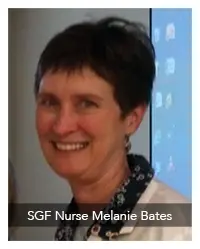
    • Melanie Bates, RN“I let my patients know that it may be a hard time for them, given we have been in contact nearly every day towards the end of their cycle. I encourage them to call if they need to talk or have questions. I also encourage them to do something nice for themselves – plan a date day with their partner, a day trip or a weekend get-away. I encourage them to have some time where they are not to discuss or think about their cycle (though this is definitely hard!). I let them know I will call as soon as I have the Beta results, and that the time the results come in varies, so not to worry as to what time they receive the call.” SGF Nurse Melanie Bates
    • “Remember that it is normal to have absolutely no signs of pregnancy during the two week wait.  So many women say to me I feel like I am going to get my period I can’t be pregnant and then we do the Beta and its positive! Remember “Dr. Google” did not go to medical school! Everything you read on the internet is not true and be particularly wary of information obtained in chat rooms and on blogs. Unless these sites are monitored by medical professionals to make sure the information people are writing is correct, the possibility of misinformation exists. Remember that the information written in a post might have been true for that person’s situation, but it does not mean it is true to your case. Don’t beat yourself up mentally. If you are maintaining a healthy lifestyle and following the instructions that your MD and the nurses gave you-, you are doing everything you can to make your outcome a positive one!” – SGF Nurse Chris Bishop
    • “Patients find it helpful to establish a routine prior to the start of their cycle. If you take go to a dinner and movie every Wednesday night, continue with that routine throughout your two week wait.” – Dr. Isaac Sasson, SGF Physician in Chesterbrook, PA
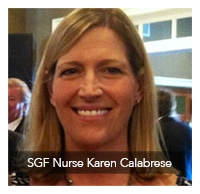
    • Karen Calabrese, RN“Remind yourself that you are going to succeed; it is just figuring out how to get there.” SGF Nurse Karen Calabrese

    If you are having trouble conceiving and would like to speak with one of our New Patient Liaisons by calling 877-971-7755 or schedule an appointment.
     

    Filed Under: Your Care Team Tagged With: Emotional support

    October 5, 2000 by melaniedouez

    November 28, 2022 @ 5:00 pm – 6:30 pm

    *Offered to patients in Maryland, Washington, D.C., and Virginia*

    Infertility can be a lonely experience and research has shown that support groups can be a highly effective way to cope with the stress and distress of treatment. This virtual group focuses on all types of infertility issues and will help individuals and couples:

    • Identify and practice ways to cope with infertility
    • Share new information
    • Understand about the unique losses of infertility/pregnancy loss
    • Improve communication with your partner and others
    • Process decision-making about treatment
    • Provide support to one another
    • Decrease the isolation of infertility

    The group meets virtually and is FREE for all participants.

    Registration is required at least 48 hours before the group event. You must be a current SGF patient and provide the office you go to and your doctors name. You will be asked to join an email distribution list for the group. An email will be sent to you with a consent form that must be filled before you can attend the virtual group. When you fill out the consent and return it to the group leader via email, you will then receive an invitation with a link to the video meeting. Please note that the group may be canceled if there are too few people registered. The group leader will contact you by phone or email if the group will not be held as scheduled.  We can only have a maximum of 20 participants per group so if the group is at maximum capacity, you will be asked if you would like to be on a waiting list to join if a spot opens up.

    For more information, please email Carol Miller.

    • Google Calendar
    • iCalendar
    • Outlook 365
    • Outlook Live

    Filed Under: Emotional Support Tagged With: Emotional support

    • « Go to Previous Page
    • Page 1
    • Interim pages omitted …
    • Page 8
    • Page 9
    • Page 10
    • Page 11
    • Page 12
    • Go to Next Page »

    Company

    • About SGF
    • About US Fertility
    • Our Doctors
    • Fertility Equity
    • Careers
    • Newsroom
    • SGF College Scholarship
    • Contact Us
    • Voice Your Feedback

    Treatments

    • Egg Freezing
    • Intrauterine Insemination (IUI)
    • In Vitro Fertilization (IVF)
    • Frozen Embryo Transfer (FET)
    • LGBTQIA+ Family Building
    • Shared Risk 100% Refund Program
    • All Treatments

    Resources

    • Patient Portal
    • Online Bill Pay
    • Library
    • Support Groups & Events

    Locations

    • California
    • Colorado
    • Delaware
    • Florida
    • Georgia
    • Maryland
    • North Carolina
    • Pennsylvania
    • Texas
    • Virginia
    • Washington, D.C.

    2026 Shady Grove Fertility

    • Policies & Notices
    Also of interest
    • In Vitro Fertilization IVF
    • Fertility Tests
    • Research Publications