
• Skip to primary navigation
  • Skip to main content
  • Skip to footer
Shady Grove Fertility
  • Become an Egg Donor
  • Referring Physicians
  • 1-888-761-1967
  • Schedule Appointment
  • Get Started
        • Get Started
          • Causes of Infertility
          • Fertility Tests
          • When to Seek Help
          • Find a Doctor
          • Preconception and prenatal vitamins 
          • Schedule an Appointment
        • Personalized Care For
          • Single Parents
          • LGBTQIA+ Family Building
          • People with Cancer
          • Known Genetic Diseases
          • Egg Donors
  • Treatments
        • Fertility
          • Timed Intercourse
          • Ovulation Induction
          • Intrauterine Insemination (IUI)
          • In Vitro Fertilization (IVF)
          • Frozen Embryo Transfer (FET)
        • Donation & Surrogacy
          • Donor Sperm
          • Donor Egg
          • Donor Embryo
          • Gestational Carrier
          • LGBTQIA+ Family Building
          • Single Parents
          • Find a Donor
        • More Treatments
          • Center for Male Fertility
          • Egg Freezing
          • OncoFertility
          • Preimplantation Genetic Testing
          • MIGS
          • All Fertility Treatments
  • Resources
    • Resource Library
    • Events Calendar
    • Patient Stories
    • Mental Health
    • Wellness Center
  • Insurance & Savings
    • Insurance & Benefits
    • Shared Risk 100% Refund Program
    • 100% Refund for Donor Egg
    • Discounts
    • Egg Freezing Costs
    • Financing & Grants
    • Clinical Trials
  • About
    • Find a Doctor
    • About SGF
    • Our Care Team
    • Advanced Practice Providers
    • Fertility Equity
    • Philanthropy
    • Newsroom
    • Careers
    • Contact Us
    • Voice Your Feedback
  • Locations
        • Find a Location
        • California
        • Colorado
        • Delaware
        • Florida
        • Georgia
        • Maryland
        • North Carolina
        • Pennsylvania
        • Texas
        • Virginia
        • Washington, D.C.
        • Chile
        • International & Out of State
        • SGF at Walter Reed National Military Medical Center
  • Patient Hub
    • Online Bill Pay
    • Patient Forms
    • Patient Portal
  • Call your care team
  • Become an egg donor
  • Referring physicians
  • search-icon
  • Schedule appointment 1-888-761-1967

Home / Egg freezing / Page 16

Egg freezing

February 5, 2015 by Shady Grove Fertility

In October 2014, interest and awareness about egg freezing greatly increased due to the announcement made by Apple and Facebook that they would provide coverage for female employees. As a result, news channels like NBC4 have aimed to provide information to the public about this option through interviews and articles.

On Friday, January 23rd, NBC4 hosted an engaging Q&A on their Facebook page with Dr. Joseph Doyle of Shady Grove Fertility’s Rockville, MD office. Many of the questions asked touched on areas that Shady Grove Fertility hasn’t traditionally covered before and provided a wealth of interesting egg freezing information.

Here are the top questions about egg freezing asked by Facebook users:

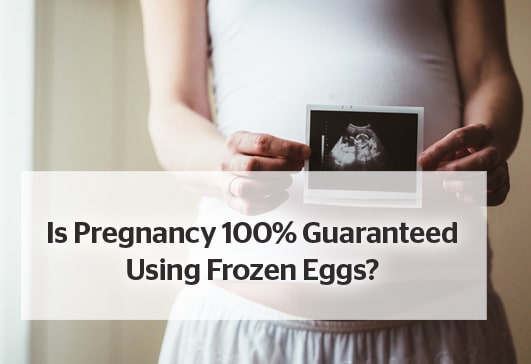
1. “Is pregnancy 100% guaranteed?” 

Answer: The chances of conception using frozen eggs is dependent on the age at which the woman froze, as well as her ovarian function. The range of pregnancy rates is 20-50%, with the average being 45.8%. For example, if you are 38 or younger using frozen eggs, the pregnancy rate is 50%. An important point to consider when looking at conception rates is that the average fertile couple only has a 20% chance of conception each month.

2. “If at a later time you choose to dispose of the eggs (get pregnant on your own or decide not to use stored eggs), what are your options?”

Answer: Great question. Should you get pregnant naturally or simply decide that you no longer need your eggs, there are a couple of options. Your options are that you can donate them to research or another individual (we would assist you with either of these options) or you can ‘discard’ them, which most people are comfortable with because it is not an embryo (the eggs have not been fertilized when you freeze them). Ultimately, they are your eggs so you can decide what you prefer to do with them.

3. “How do I know my eggs will result in a pregnancy?”

Answer:  Having 20 eggs allows multiple attempts at pregnancy. Women 37 years or younger, who are able to freeze 20 eggs, can expect an 80% cumulative delivery rate using those eggs, i.e. have a baby.

4. “How long do the eggs remain viable? 

Answer: Technically, once the eggs are placed in the liquid nitrogen, they are essentially suspended in time. For example, if you freeze at the age of 30 and come back to use them in 5 years, they will be the same quality as when you froze them at 30.

5. “I plotzed when they said you could hold off on pregnancy until 50! Is that true?”

Answer: As always, the best way for couple to try to have a baby is naturally. In the event a couple cannot achieve pregnancy on their own, using frozen eggs acts as their backup plan and therefore, many women will come back several years after freezing. That being said, the absolute latest we recommend that women try for a pregnancy using their frozen eggs is by a woman’s 51st birthday, however, the vast majority of women do it far earlier than that.

Read the conversation on Facebook

If you would like to learn more about egg freezing at Shady Grove Fertility, please fill out this form or call 1-877-411-9292.

Filed Under: Treatment Tagged With: Egg freezing

January 29, 2015 by Shady Grove Fertility

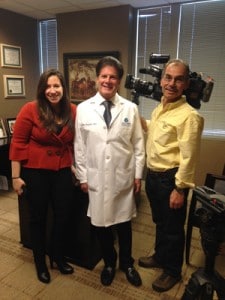
NBC4’s two-part special report ran from January 22-23, 2015. This holistic overview of egg freezing covered the scientific advancements that have led to increased success rates; interviews with Michele Purcell, RN, the Shady Grove Fertility Egg Freezing Program Director; and interviews with Arthur W. Sagoskin, M.D. of Shady Grove Fertility’s Rockville, MD office and Radell Peischler, a patient who blogs about her egg freezing experience.

Increased Success Rates

Sagoskin NBC4 Interview2-300The science of egg freezing–known as cryopreservation–has been in use for over 30 years, but the success rates were often low due to laboratory technologies. As mentioned by NBC4’s Doreen Gentzler, though, the introduction of vitrification, or flash-freeze, technology in 2009 helped to mainstream egg freezing by increasing the medical viability of the process.

“While fertility centers have been trying to freeze eggs for a number of years, older technology was not reliable. In 2009, Shady Grove Fertility began using vitrification, the process of preserving eggs through a flash-freeze method. This technology has been found to yield a 55 percent pregnancy rate for women under 38 at the time of freezing,” said Dr. Sagoskin.

Age is The Most Important Indicator of Success

Michele Purcell, RN explained that success rates will only continue to grow as women become more educated about egg freezing. “Success rates are based on the age of the woman at the time she freezes her eggs. Currently, the average age for egg freezing patients is 37.5. Since a woman’s egg quality decreases with age, the success rates are not always as high in older patients. With increased education, women can freeze their eggs younger, yielding higher pregnancy rates,” said Michele.

Former Patient Advocates for Awareness

Radell and the NBC4 News Team

Increased education and awareness about egg freezing is the goal for Radell Peischler, a Shady Grove Fertility patient who recently froze her eggs. Radell is a 34 year old entrepreneur living in the D.C. area. She just so happens to be single, and after a few years of contemplation, she decided to freeze her eggs. For Radell, “It [egg freezing] gives me a little bit more peace. It’s not the perfect solution for everyone, but for me, I feel excited that I did it and I took that risk for myself,” said Peischler. Radell has taken to blogging about her experience to advocate for women to empower themselves and to help other women find their own answers. In addition to spreading awareness via interviews with NBC4, Peischler blogged her way through the egg freezing process and some may already know that she is a guest blogger for Shady Grove Fertility. Most recently, Radell published the blog, ‘The First Step to Egg Freezing.’

More Information About Egg Freezing at Shady Grove Fertility 

The Egg Freezing Program at Shady Grove Fertility has seen interest double each year beginning in 2010, largely due to greater cultural awareness, increasing success rates, and having the only financial program in the country specifically for egg freezing patients. For women who are interested in receiving more information about egg freezing, monthly seminars and webcasts are hosted throughout the Mid-Atlantic region.

For more information, please call 1-877-411-9292 or fill out this brief form.

Filed Under: Treatment Tagged With: Egg freezing

January 22, 2015 by Shady Grove Fertility

Radell is a 34 year old entrepreneur living in the Washington, D.C. area. She happens to be single, and after a few years of contemplation, decided to freeze her eggs at Shady Grove Fertility. Following her decision to freeze and completing her egg freezing cycle, she had the desire to spread awareness about egg freezing by sharing insight and advice for women who are considering this option. Over the next few months, Radell will be writing blogs describing this experience from her point of view. 

Part 1: Am I Even Fertile?
Why I took it one baby step at a time.

As you might recall from my first blog, Top Five Reasons I Decided to Freeze My Eggs, the process of finding my way to egg freezing took quite some time. In fact, when it was all said and done, from the first time I had heard about egg freezing to the actual time I made the decision to freeze was about four years. A lot went into making my decision, and the first thing I had to do, was allow myself the time to discover if this was really for me. I think it is also important to consider that over the years, I had learned from older friends and colleagues two important things: that fertility issues are not something you want to learn about when you want to start your family and that I knew there was a possibility that I might not even be fertile. Now I know this takes the sexiness out of things, but let’s just keep it real.

So there I was: it was April, I was approaching my 34th birthday, no longer in a relationship, and I was – stuck. I was about 75% sure I wanted to freeze my eggs and aware that it was possible that I might not even be fertile. I was also about to travel internationally for a few months, so before I left, I wanted to just see if it was possible for me to freeze my eggs. I wanted to dip my toe in before diving in. Was this even possible?

“Let’s do it.”

Soon enough, I would learn that the Ovarian Reserve Test was the exact thing to do just that. I reached out to my nurse, okay, my sister, at Shady Grove Fertility, and shyly said, “So what is the first thing to do just to know if I even have any eggs to freeze?” “Easy,” she said, “Just let me know when your first day of your period begins and I will schedule you a visit.” This was all she told me.  It seemed just a little too easy. I wanted to ask so many questions, but I fought hard, swallowed, and said, “Okay, Let’s do it.”

I learned that this test was the Ovarian Reserve Test which Shady Grove Fertility physicians use to help determine what the outcome will be for a woman if she decides to freeze her eggs, helping women to decide if egg freezing is right for them. So that piece of information was very useful.

“Just 30 minutes, and I was out.”

When it was time for my first Ovarian Reserve Test, I was a bit of a nervous nelly. Even though the process was fairly easy and the teams worked together fast and efficiently, unsettled me had a few questions rolling around in my brain such as, “What does my ovarian reserve look like? Will I find out something I really don’t want to know?” I had to deal with these questions, plus a pelvic ultrasound during my period (which was not the most pleasant experience; it wasn’t painful, just a little awkward for me.) Though I was uncomfortable, I had to keep reminding myself to trust them; they are the professionals, after all! After 30 minutes it was all done and I was out.

Then I just had to wait to meet my Shady Grove Fertility doctor for my results.

Stay tuned for Radell’s next blog by joining the Shady Grove Fertility Egg Freezing email list. For more information, please call 1-877-411-9292 or fill out this brief form.

Filed Under: Treatment Tagged With: Egg freezing

December 4, 2014 by Shady Grove Fertility

The average age of women at first birth has risen over the past four decades. First birth rates for women aged 40 to 44 increased more than four-fold from 1985 to 2012, and first birth rates for women aged 35 to 39 rose in nearly all U.S. states from 2000 to 2012.  – Centers for Disease Control and Prevention

Read the full article on WTOP.com

While the data shows the age of women giving birth to their first child has increased, our biology (aka the biological clock) has not changed. These facts give rise to several questions, including: why is the age increasing and what does this mean for women and pregnancy?

Career development is one factor among many others that contributes to the increased age of first time mothers. According to Shelley Correll, a sociology professor and director of the Clayman Institute for Gender Research at Stanford University, “The time that’s most important in work, for getting your career established, often coincides with normal fertility time for women.”

For other women, life situations and circumstances can play a major role as to how egg freezing can offer them a unique type of insurance. For example, Shady Grove Fertility patients Tiffany and Mel found themselves in an unexpected divorce, but were determined to not give up on the dream of having children.

Dr. Eric Levens, of Shady Grove Fertility’s Annandale, VA office, comments on the increasing popularity of egg freezing. Coupled with the newer techniques which allow doctors to freeze eggs at a greater efficiency – egg freezing is now a reliable option for women looking to extend their fertility potential.

Read the full WTOP article.

If you would like to learn more about the Egg Freezing Program at Shady Grove Fertility, call 1-877-411-9292 or schedule an appointment today by filling out this brief form.

Filed Under: Treatment Tagged With: Egg freezing

November 25, 2014 by Shady Grove Fertility

The Washington Post came to Shady Grove Fertility in hopes of learning more about the revolutionary option of egg freezing for women. Lavanya Ramanathan, Style writer for the Post, sought to learn about who is freezing their eggs, how they came to that decision, and what can this new technology really offer in way of hope for future family building.

At the recent Egg Freezing Conference hosted by Shady Grove Fertility in Washington, D.C., women considering egg freezing shared what factors were influencing their decision to freeze their eggs:

Planning for the future
At 28, Ann Morgan may be [a potential egg freezing patient]. It’s not concern about conceiving a baby, but about having a second and a third, that has brought her and her husband to the conference. Morgan wants to go to graduate school, but that choice means that they’ll need to plan how to space out their children.1

Taking action on advice
A 34-year-old woman who asks to be identified only as Jea says that a friend who is struggling to conceive cornered her and urged her to consider egg freezing. “Knowing what we’re going through now,” she says her friend told her, “I would have done it when I was your age.”1

Moving on after a divorce
Shady Grove Fertility patient Tiffany Angelo, an anesthesiologist local from Bethesda, found herself in an unexpected situation when she and her husband divorced. After allowing time to grieve, she turned to egg freezing as a way to take control of her future motherhood.

While many of the centers now offering women egg freezing have performed thousands of successful IVF (in vitro fertilization) cycles, egg freezing has historically been reserved for young egg donors and women facing cancer treatments. Today, promising pregnancy rates using frozen eggs, albeit from a relatively small pool of women, leads many physicians to encourage women to consider egg freezing if they are unsure about their future family building.

As a doctor, Angelo knows that her investment offers no guaranteed return. But she would recommend freezing in a heartbeat to a younger woman on the fence not only about freezing but about having children.

“Imagine a world where the clock doesn’t tick for women,” Angelo says. “You could technically have children at any age. It’s such a wonderful gift to women, to take the pressure off them.” 1

If you would like to learn more about the Egg Freezing Program at Shady Grove Fertility, call 1-877-411-9292 or schedule an appointment today by filling out this brief form.

1 Ramanathan, Lavanya. “Egg freezing’s popularity is bomming, but it’s a choice that offers no guarantees.” Washington Post 25 Nov. 2014

Filed Under: Treatment Tagged With: Egg freezing

November 19, 2014 by Shady Grove Fertility

“Finding a work-life balance has more and more women turning to a different kind of banking.”  Watch the interview.

Interest in egg freezing has been on the rise for the past few years, but in the last month, it has exploded due to the announcement by Facebook and Apple that they would provide egg freezing benefits for their employees. To meet this rising demand for information and education, Shady Grove Fertility recently held its inaugural Egg Freezing Conference. In conjunction with the conference, Sarah Simmons of Fox 5 Health Watch interviewed Joseph Doyle, M.D. of Shady Grove Fertility’s Rockville office. Sarah asked Dr. Doyle several questions about egg freezing, many of which were similar to questions that arose at the conference. The below Q&A session provides an in-depth look at questions patients have begun to ask about egg freezing:

What is the actual egg freezing process? 

When a woman begins the egg freezing process, her physician will first put her on birth control pills to create a baseline for follicle (or undeveloped eggs) development. Following this step, the patient will begin taking injectible medications for approximately 12 days. These medications essentially help stimulate the follicles that would otherwise naturally die off. During this time the patient has several ‘monitoring’ appointments at a Shady Grove Fertility location to monitor follicle growth and development.

When an appropriate number of ovarian follicles have responded and are determined to contain mature eggs, a final trigger injection will be given to help with the final maturation and release of the eggs for retrieval.  36 hours after the trigger injection, the patient would go to a local Shady Grove Fertility lab (Rockville, MD, Towson, MD and Harrisburg, PA) for the egg retrieval. The egg retrieval is painless as it is done transvaginally and while the patient is under twilight sedation (a light anesthesia). Because it is a minor surgical procedure, you will need a ride home on the day of the retrieval and it is advised to rest the day. Many women are able to return to work the next day.  You will receive a call the day after your egg retrieval to let you know the number of mature eggs that were able to be frozen. Medial contribution provided by Shruit Malik, M.D.

What is a thaw/thaw rate?

Thaw refers to the initial step in the use of frozen eggs when it is time to fertilize them to form embryos.  Though it is a carefully performed process when it comes to frozen eggs, it can simplistically be thought of like thawing something that has been frozen in the freezer.  Frozen eggs are warmed to body temperature, at which point they can be combined with sperm, resulting in the production of an embryo.  Thaw data represents how successful a fertility center is at using frozen eggs for fertilization and pregnancy. This is valuable information when selecting a center; if they do not have thaw data, they would not be a good candidate for your elective egg freezing procedure. -Medical contribution provided by Joseph Doyle, M.D.

How and where are the frozen eggs stored? Are there preventative measures in place for the stored eggs in the event of a natural disaster, power failure, etc.?

After undergoing the vitrification or flash-freeze process, both eggs and embryos are stored in liquid nitrogen tanks in the liquid phase.  The tanks are stored in our labs which are secured in an alarmed area that is monitored remotely; 24 hours a day and every day of the year. The tanks are measured and topped off weekly as part of our quality control.  While the tanks only require liquid nitrogen and therefore no electricity, the monitoring system does require electricity, so our lab is on a backup generator in case of a power failure.

If there is a warning for a major tornado near any of our three labs (D.C., Baltimore and Philadelphia), we can move the tanks to one of our other labs. For something more serious and unprecedented, we could drive inland to one of our affiliate practices like FCI in Chicago.

Are the procedures any different for same-sex couples?

The procedure for a same-sex female couple is the same procedure as it would be for heterosexual couples. The only difference is in how the eggs can be used in the future; the couple may opt to return and have the other partner carry the pregnancy, (the woman who did not have the egg freezing cycle).

Can I switch between financial programs Assure20 and Assure30?

Assure20 and Assure30 are the only financial programs for egg freezing offered at any center in the nation. If a patient chooses to enroll in one of these guarantee programs – Assure20 or Assure30, they are essentially locked in to that program. However if a patient chooses the single cycle, they are able to move forward in the multi-cycle discount program for subsequent cycles.

What happens to my eggs if I ultimately do not need to use them?

Patients that opt not to use their eggs in the future can elect to: Donate their eggs to research, discard them, or potentially donate them to another patient.

DC News FOX 5 DC WTTG
If you would like to learn more about the Egg Freezing Program at Shady Grove Fertility and whether it’s the best option for you, call 1-877-411-9292 or schedule an appointment today by filling out this brief form.

Filed Under: Treatment Tagged With: Egg freezing

  • « Go to Previous Page
  • Page 1
  • Interim pages omitted …
  • Page 14
  • Page 15
  • Page 16
  • Page 17
  • Page 18
  • Interim pages omitted …
  • Page 22
  • Go to Next Page »

Company

  • About SGF
  • About US Fertility
  • Our Doctors
  • Fertility Equity
  • Careers
  • Newsroom
  • SGF College Scholarship
  • Contact Us
  • Voice Your Feedback

Treatments

  • Egg Freezing
  • Intrauterine Insemination (IUI)
  • In Vitro Fertilization (IVF)
  • Frozen Embryo Transfer (FET)
  • LGBTQIA+ Family Building
  • Shared Risk 100% Refund Program
  • All Treatments

Resources

  • Patient Portal
  • Online Bill Pay
  • Library
  • Support Groups & Events

Locations

  • California
  • Colorado
  • Delaware
  • Florida
  • Georgia
  • Maryland
  • North Carolina
  • Pennsylvania
  • Texas
  • Virginia
  • Washington, D.C.

2026 Shady Grove Fertility

  • Policies & Notices
Also of interest
  • In Vitro Fertilization IVF
  • Fertility Tests
  • Research Publications