• Skip to primary navigation
  • Skip to main content
  • Skip to footer
Shady Grove Fertility
  • Become an Egg Donor
  • Referring Physicians
  • 1-888-761-1967
  • Schedule Appointment
  • Get Started
        • Get Started
          • Causes of Infertility
          • Fertility Tests
          • When to Seek Help
          • Find a Doctor
          • Preconception and prenatal vitamins 
          • Schedule an Appointment
        • Personalized Care For
          • Single Parents
          • LGBTQIA+ Family Building
          • People with Cancer
          • Known Genetic Diseases
          • Egg Donors
  • Treatments
        • Fertility
          • Timed Intercourse
          • Ovulation Induction
          • Intrauterine Insemination (IUI)
          • In Vitro Fertilization (IVF)
          • Frozen Embryo Transfer (FET)
        • Donation & Surrogacy
          • Donor Sperm
          • Donor Egg
          • Donor Embryo
          • Gestational Carrier
          • LGBTQIA+ Family Building
          • Single Parents
          • Find a Donor
        • More Treatments
          • Center for Male Fertility
          • Egg Freezing
          • OncoFertility
          • Preimplantation Genetic Testing
          • MIGS
          • All Fertility Treatments
  • Resources
    • Resource Library
    • Events Calendar
    • Patient Stories
    • Mental Health
    • Wellness Center
  • Insurance & Savings
    • Insurance & Benefits
    • Shared Risk 100% Refund Program
    • 100% Refund for Donor Egg
    • Discounts
    • Egg Freezing Costs
    • Financing & Grants
    • Clinical Trials
  • About
    • Find a Doctor
    • About SGF
    • Our Care Team
    • Advanced Practice Providers
    • Fertility Equity
    • Philanthropy
    • Newsroom
    • Careers
    • Contact Us
    • Voice Your Feedback
  • Locations
        • Find a Location
        • California
        • Colorado
        • Delaware
        • Florida
        • Georgia
        • Maryland
        • North Carolina
        • Pennsylvania
        • Texas
        • Virginia
        • Washington, D.C.
        • Chile
        • International & Out of State
        • SGF at Walter Reed National Military Medical Center
  • Patient Hub
    • Online Bill Pay
    • Patient Forms
    • Patient Portal
  • Call your care team
  • Become an egg donor
  • Referring physicians
  • search-icon
  • Schedule appointment 1-888-761-1967

Home / Your Care Team / Page 16

Your Care Team

January 25, 2016 by Shady Grove Fertility

Written by: Sharon N. Covington, MSW, LCSW-C, BCD
Director, Psychological Support Services
Director, Psychological Support Services

Infertility is an inherently stressful experience, yet one of the stresses often not talked about in regard to infertility and your relationship is the conflict that can occur in a relationship during fertility treatment. Whether in a heterosexual or same sex relationship, couples often find that they feel and deal very differently from their partner regarding their emotional response to fertility treatment. This is not surprising as you each bring your own unique personality and life experiences into the relationship that will impact how you deal with your feelings. Understanding and being respectful of these personality differences, rather than qualify them as being “better or worse” than your own, is important.

Tips for Diminishing Conflict: Infertility and Your Relationship

Here are some techniques I have found to be very helpful over the years of working with couples in fertility treatment to assist in diminishing conflict and increasing closeness during fertility treatment:

  1. “You learn more from listening then you do from talking.”  This was something my father said to me as I was growing up and, as a therapist (and a wife), I have found it to be important words to live by. In the midst of a disagreement, you can believe that the more talking you do, the greater chance you will have to be able convince your partner of your point. The reality is seldom the case! It can be helpful to practice “active listening” techniques whereby one speaks and the other listens, and then reflects back what you hear your partner saying. Following up with a question, such as “Have I got that right?” or “Is there anything else?” can also be helpful.The point is that taking the time to truly listen to what your partner is saying may help bridge the gap and increase empathy. One of our most basic human needs is to feel truly understood and when you feel your partner “gets” you—what it is you are thinking and feeling—even though not necessarily agreeing with you, empathy is established.
  2. Apply the “20 Minute Rule.” An extension of #1 and a time-honored technique for communicating during infertility, it can be helpful to put boundaries around talking about a problem or worry. The rule is that a couple agrees to talk about infertility for 20 minutes every day—but only 20 minutes! A time is set during the day to talk (and literally setting a timer can be helpful) and you each get 10 minutes to talk about what you want while your partner listens, and then you switch positions. At the end of 20 minutes, the discussion is put on a shelf until the next day and the conversation moves on to other things. Couples find this technique extremely helpful, especially if one partner feels that if they start to talk it will never stop, while the other fears they will never talk.
  3. When at odds in decision-making, agree to switch and take on each other’s position for a week. It is quite common for couples to find they feel differently about what to do next in treatment, even finding themselves in polar opposite positions. When I am working with a couple and we are at an impasse in regards to a decision they are trying to make about treatment or family-building alternatives, I will have them physically switch places in the room. Then I will ask them to take on the persona of their partner and state exactly what it is their partner believes and feels about the issue. The partner listens, without commenting, and then confirms or corrects whether the other has got it right.Before they leave the session, the couples is given an assignment to continue this role, immersing themselves in learning all they can about their partner’s position. For example, if “A” wants to pursue adoption while “B” wants to use donor gametes, A will spend the week learning more about donor and B about adoption by reading, searching the internet, speaking to others, etc. Afterwards, you talk about what you have learned and how it has felt to go through this process. This technique often helps to shift things and open up the logjam.
  4. “A feeling shared is a feeling diminished”….except when its not! This is something I have frequently said to my clients in encouraging them to release difficult feelings they are holding in. While therapy is a process about getting feelings out so they can be understood and dealt with, constantly talking about the same thing over and over again with no change is not moving through it. As Einstein said, “Continuing to do the same thing over and over again and expecting different results is the definition of insanity.” So if you find your interactions sounding like a broken record, something isn’t working and changes need to be made. This may be a good time to seek out help from a mental health professional who is trained in fertility counseling to help you cope with infertility and your relationship.While conflict is a normal part of all relationships, how you handle it and the ways you find to work it through will have a profound effect on couple stability. In fact, being able to work though conflict by using some of these techniques will have a long-lasting effect on intimacy and closeness. Hence, conflict can create opportunities for closeness in a relationship rather than threatening it with emotional distance.

Sharon Covington, MSW, LCSW-C – Director:

Director of Psychological Support Services, Mrs. Covington is a licensed clinical social worker in Maryland and a Board Certified Diplomate in Clinical Social Work with over 40 years of experience as a psychotherapist. An internationally recognized leader on the psychological aspects of reproductive health, Mrs. Covington is an Assistant Clinical Professor at Georgetown University School of Medicine, Department of Obstetrics and Gynecology, and Associate Investigator in the Intramural Research Program on Reproductive and Adult Endocrinology at the National Institutes of Health. She recently edited and authored Fertility Counseling: Clinical guide and Case Studies, and is the co-author and editor of the classic text Infertility Counseling: A Comprehensive handbook of Clinicians.

If you would like to find more support for coping with infertility and your relationship or would like to learn more about our individual or couple’s psychological support services offered through Shady Grove Fertility, call 301-279-9030 or sign up for a support group.
To schedule a new patient consultation at Shady Grove Fertility, please call 877-971-7755 or schedule an appointment.  online.
Filed Under: Your Care Team Tagged With: Emotional support

December 16, 2015 by Shady Grove Fertility

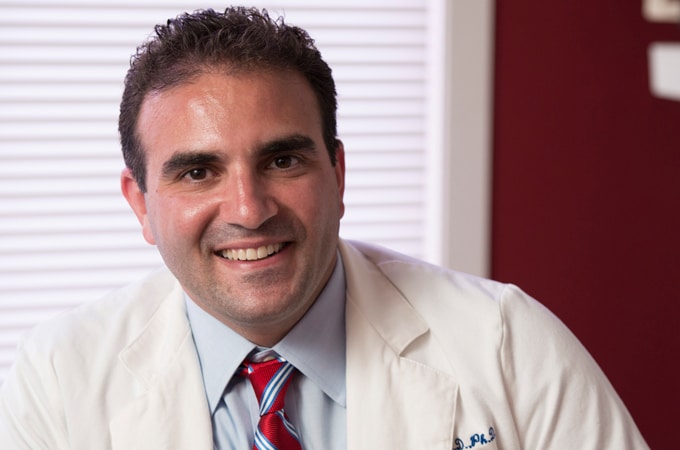
This month, Isaac E. Sasson, M.D., Ph.D., of our PA offices (Chesterbrook, Bala Cynwyd, and Chadds Ford) has been named one of the “Top Doctors” in Reproductive Medicine for the second consecutive year in the Main Line Today Top Doctor issue for the Main Line region of Philadelphia. The Top Doctor issue of Main Line magazine is driven through peer-nominations and for Dr. Sasson, being nominated is a great honor: “I am honored to be selected by my peers and listed alongside such highly regarded physicians. I strive to provide the best care for my patients, and am very grateful for this recognition,” said Dr. Sasson.

Main Line Today’s compiles its “Top Doctors” listing based on peer balloting. Voting is open to the medical community throughout Pennsylvania, and only physicians in the Main Line area and surrounding suburbs are eligible to be included.

“Main Line Today’s recognition of Dr. Sasson is a testament to his compassion, commitment to excellence, and the many patients who have trusted him with their care,” said Eric A. Widra, M.D., Medical Director of Shady Grove Fertility.

We have five Pennsylvania offices, including Reading, Harrisburg, Bala Cynwyd, Chadds Ford (new patient consults only), and a full-service, state-of-the-art center and laboratory in Chesterbrook. Our newest office is the Chadds Ford location which was added to provide greater access for patients to receive care. In addition to expanded services, we also offer several financial programs, including the Shared Risk 100% Refund Program, to provide our Pennsylvania patients with more options to afford treatment.

To schedule a new patient appointment with Dr. Sasson or any of the 34 reproductive endocrinologists at Shady Grove Fertility, please call our New Patient Center at 877-971-7755 or click to schedule an appointment.

Filed Under: Your Care Team

November 19, 2015 by Shady Grove Fertility

by Tara Simpson, Psy.D., Licensed Psychologist
Shady Grove Fertility Counseling Staff

Infertility is often one of the hardest obstacles most people have faced in their lives or relationship to date. The negative emotions, stress, and an overwhelming feeling of loss of control can often prevent those needing treatment to seek out or to continue with the very treatment they may need to overcome this obstacle. Here are five myths about seeking infertility counseling and five ways counseling may help you stay emotionally well throughout this process. 

Infertility Counseling Myth #1: I already talk about my fertility struggles too much and that doesn’t seem to help.  

While we can believe that we are repeatedly sharing our story of struggle, such as what treatment we are doing, shots we are taking, and/or the results of the latest tests, we often aren’t as candid with others about our true thoughts and feelings about these struggles. Therefore, while it feels like we are sharing a lot of facts, we aren’t actually processing the feelings (such as sadness, anger, and/or fear) that we may have about the process or outcomes of fertility treatment. Infertility counseling can be a safe and neutral place to discuss feelings and thoughts.

Infertility Counseling Myth #2: If I start really talking about my feelings and crying, I am afraid I will feel worse or my tears will never stop.

Contrary to what some believe, talking about how we feel doesn’t make us feel worse. We usually already feel really lousy; however, talking about how we feel allows us time to share as well as gain perspective. Infertility counseling can often provide new coping tools for how to deal with these feelings.

Infertility Counseling Myth #3: I should be able to handle this—I just need to relax and “get over it.”

But why should you be able to handle this? Infertility isn’t something that we are taught to expect. Fertility treatment is a very stressful process that impacts us as an individual and couple. It isn’t just something we are struggling with in the current moment but also something that threatens our dreams for the future. It can also cause us to focus on the past with the “what if?” and “if only” thought processes. Infertility counseling can help you stay focused on the present so that you can feel more in control, while at the same time accept the current state of flux that your life is in.

Infertility Counseling Myth #4: Other people have worse problems than me.  

Sure. Some do. But this may be one of the toughest things you have had to face and it is difficult for you. Just because someone has seemingly worse things going on shouldn’t invalidate the stress and distress that you have. It can be helpful to be grateful for what we have in comparison to others who are burdened by more. However, it doesn’t help us to make ourselves feel worse simply because we judge our situation to be “less important.” The reality of infertility is that it can be stressful and it is essential to take care of yourself at this time.

Infertility Counseling Myth #5: The only thing that will make me happy is to get pregnant.

Well, absolutely. But we can learn to manage our emotions while we are on the journey. The purpose of talking to a qualified mental health professional who specializes in fertility issues is to help you cope with the process of fertility treatment. Our counselors will help you articulate the things you are worried about as well as help you make a plan for how you will endure while you are attempting to achieve that goal.

If you would like to learn more about our individual or couple’s psychological support services offered through Shady Grove Fertility or to sign up for a support group, please call  301-279-9030.

To schedule a new patient consultation at Shady Grove Fertility, please call 877-971-7755 or schedule an appointment online.

Filed Under: Your Care Team Tagged With: Emotional support

November 17, 2015 by Shady Grove Fertility

Why is infertility stressful?

Most couples are used to planning their lives. They believe if they work hard at something, they can achieve it. So when they find it’s difficult to get pregnant, it can easily lead to a feeling of being out of control, which, for most people, is inherently stressful. To further compound the issue, infertility tests and treatments can be physically, emotionally, and financially demanding—one of the many reasons people experience high levels of stress and sometimes discontinue treatment.  Infertility can also cause strain on relationships, which can also be stressful.

In order to better cope with the stress of infertility, we offer these suggestions:

Recognize and validate the emotional aspects of infertility.

  • Take extra good care of yourself.
  • Exercise regularly to release physical and emotional tension.
  • Find ways to manage your emotions through journaling.
  • Participate in activities that you find enjoyable to take your mind off of treatment.
  • Be proactive—find the support you need.

Dr. Eric Levens from SGF’s Annandale, VA, office comments “It’s easy for us as clinicians to measure ovarian profile and sperm function, but it’s very hard to assess the impact stress may be having on your quality of your life.” It’s important for patients to understand the resources that are available to them and be proactive in seeking the type of support they need.

Take advantage of a wide array of support services.

Shady Grove Fertility offers patients a wide range of resources including support groups, online support communities, and educational articles on the topic of stress management. At Shady Grove Fertility, we provide psychological support services where individuals or couples can meet with a counselor before and during treatment to prepare for what to expect and to discuss coping strategies to better manage the stress and anxiety associated specifically with fertility treatments.

Consider complementary therapy to help reduce stress.

Many physicians recommend meditation and relaxation techniques to help reduce stress. Pulling Down the Moon, a Shady Grove Fertility partner, is a resource available to patients that takes a holistic approach to helping couples through the often stressful journey of preconception. Some of the many services they offer to patients include nutritional counseling, yoga, massage, and acupuncture.

  • For more information about Pulling Down the Moon’s services, please call 301-610-7755 or visit PullingDownTheMoon.com.

And remember, there is no one “right” approach to managing stress. Find a solution that works best for you and your needs.

If you would like to learn more about our individual or couple’s psychological support services offered through Shady Grove Fertility, please call Sharon Covington at 301-279-9030.

To schedule a new patient consultation at Shady Grove Fertility, please call 877-971-7755 or schedule an appointment online.
 

Filed Under: Your Care Team Tagged With: Emotional support

October 14, 2015 by Shady Grove Fertility

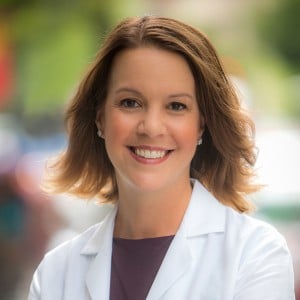
Dr. Andrea Reh – Shady Grove Fertility, Fredericksburg, VA

Shady Grove Fertility is proud to welcome Andrea E. Reh, M.D., to our physician team. This fall, Dr. Reh will be the first physician at Shady Grove Fertility’s Fredericksburg, VA, office—our newest location in the greater Washington, D.C., area.

Dr. Reh graduated magna cum laude from Cornell University with a bachelor of arts in biology. She then earned her medical degree at Georgetown University in Washington, D.C., where she graduated with Alpha Omega Alpha honors. Dr. Reh completed her internship and residency in obstetrics and gynecology at the New York Presbyterian Hospital Weill Cornell Medical Center in New York City. As a board certified reproductive endocrinologist, with Shady Grove Fertility, Dr. Reh is able to provide her patients with the most cutting-edge fertility treatment options as well as financial programs to increase access to care.

Dr. Reh sat down with us to talk about why she became a reproductive endocrinologist, her inspirations, and even what she likes to do in her free time.

How would you describe your personality?
I would say that I am passionate and energetic extrovert who approaches challenges with the meticulous tenacity of your textbook “Type A.” My friends and patients have described me as compassionate, disarming, and “down-to-earth.”

Why did you become a reproductive endocrinology?
I have always liked science and wanted to become a doctor ever since my first experiences as a candy striper and a home health aide. I went into obstetrics and gynecology because I was fascinated by the incredible physical and emotional journey women endure to have a family. The transition to reproductive endocrinology came about as a desire to help those couples whose journey was especially difficult.

Who inspires you?
I find inspiration from many sources. As a doctor, I am motivated by my patients and colleagues to never stop learning, listening, and caring. As a professional, I respect Sheryl Sandberg and Tina Fey for their leadership, tenacity, and wit. Having a family has enriched my life in unimaginable ways, and has served as a greater inspiration for me to help my patients share in the joy of a family of their own.

Describe a time where you were inspired by a patient.
As a doctor, there are the patients you help and they are thankful because you helped them, and that’s naturally very rewarding. But, there are also lots of patients who, despite your best efforts, you haven’t yet been able to help them achieve their dreams, and yet somehow they stick with you and you walk that road together. The longer I am a doctor, the more I appreciate that my greatest inspiration from patients comes from these powerful connections that arise from the toughest of times.

What are your hobbies and why do you enjoy them?
After a stressful day, there’s nothing I love more than to go out for a good run with some awesome music. I love to go skiing for a great family getaway, to be surrounded by nature, and for the sheer exhilaration of it too. While I used to be an avid rower and tennis player, admittedly those hobbies have taken a backseat recently. I love the adventure of travel and the ability to experience different cultures firsthand, which is one of the reasons I enjoy living in such a diverse city as Washington, D.C.

What makes you the most excited about joining the SGF team?
I am really excited and humbled to become a member of the Shady Grove Fertility team. There is a palpable sense of camaraderie, passion, and integrity. As a former rower, I would say that I’m proud to be in the boat that is leading our field, where everyone is pulling in the same direction to ultimately do what is right for the patient.

What is your approach to helping patients who are struggling?
Infertility is one of the most stressful experiences a patient or couple can experience. A couple’s marriage, sexual experiences, emotional reserves, and sense of personhood are strained, exacerbated by hormones and costly treatments. Despite these obstacles, I believe there is much hope. I am here to guide my patients with compassion through this difficult process, provide them with accurate information, and enable them to have their best chance for success.

Dr. Andrea Reh is currently available for new patient appointments in our Frederickburg, VA, office. To schedule your appointment, call 1-877-971-7755 or click here.

Filed Under: Your Care Team

October 13, 2015 by Shady Grove Fertility

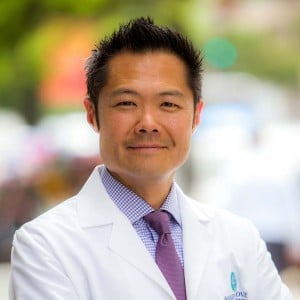
Dr. Paul Shin, board certified urologist

Shady Grove Fertility is proud to welcome Paul R. Shin M.D., as Shady Grove Fertility’s first full-time board certified urologist. With the addition of Dr. Shin to the medical team, Shady Grove Fertility now offers a broader array of in-house male fertility services. Dr Shin will be seeing patients in our Rockville, Washington- K Street, Frederick, Fair Oaks, and Woodbridge offices.

Dr. Shin received his medical degree from the University of Virginia School of Medicine in Charlottesville, VA. He completed his residency in urology at the University of Virginia before completing his fellowship in male infertility at the Cleveland Clinic Foundation’s Glickman Urological Institute.

Dr. Shin has held many leadership positions in the male infertility and urology community, including serving an Executive Board Member for the Society for the Study of Male Reproduction (SSMR) from 2011 to 2013 and Program Chair for the 2012 SSMR meeting. He served on the Strategic Planning Committee for the American Society of Andrology meeting in 2014. Dr. Shin has served on the Urology Care Foundation’s Reproductive and Sexual Health Committee since 2014, and is currently a Society for Male Reproduction and Urology (SMRU) Board Member (Member-at-Large). He has been a member of the Continuing Medical Education Committee of the American Society for Reproductive Medicine since 2014.

Dr. Shin has received many honors through the years, including the American Society for Reproductive Medicine Traveling Fellowship Award in 2001 and was named a Washingtonian’s Top Doc in 2007, 2009, 2011, 2013, and 2015.

Dr.Shin recently sat down with us to talk about his inspirations and what lead him to join the Shady Grove Fertility team.

Why did you become a urologist?
As a third year medical student at the University of Virginia, my first exposure to urology was a clinical rotation. I found an excellent mentor in Dr. William Steers. Urology seemed like an ideal mix of surgery, longitudinal patient care, and lifestyle. During my residency, I was attracted to the subspecialty of infertility and microsurgery. The surgical challenge of operating under a microscope was something I found myself suited for. Most of all, seeing the emotional impact of my intervention as we helped infertile couples attain their dreams was incredibly powerful.

What do you find most inspiring about being a male fertility specialist?
A common condition I diagnose and treat is called azoospermia, or the lack of any sperm in the ejaculate. I vividly remember several patients where I walked them through the entire process, from diagnosis, to planning, to treatment, and ultimately to pregnancy. The emotional rollercoaster ride and the ultimate payoff of our team efforts to defy the odds and start their families is what I enjoy most.

Why did you want to join Shady Grove Fertility ?
The collaborative spirit at SGF is incredible. Everyone has an element of pride in their work that separates us from other places. Hopefully, the skill and care I can offer to our male patients will further enhance our abilities to help couples build their families.

Who inspires you?
I draw a lot of personal strength and peace from my family. I don’t have a particular celebrity or athlete whom I look up to. Rather, I am inspired to come to work each day by my colleagues at Shady Grove Fertility. The uncompromising drive to do the best for each couple trying to build their family is at the central core of what we do, and every day I am professionally rejuvenated. Ironically, this focus on each patient has been the driving force behind our success and growth yet remains as the central pillar of our practice philosophy. This collaborative environment makes it very easy to go to work in the morning.

What are your hobbies and why do you enjoy them?
My family and I love the outdoors. Whether it is skiing powder out west, rock climbing, or camping, we like to get out and enjoy being outside. We are also fairly serious age-group triathletes participating in a number of triathlons, road races, and long-distance bicycle races each year as part of our triathlon team. So, “date night” is an 80 mile bike ride on a Sunday morning. That being said, I also immensely enjoy cooking, food, and wine. I love hosting and feeding friends.

What is something about you that would surprise most people?
I spent part of my childhood living in Nigeria. The first time I lived there, in 1982, I caught typhoid fever. Yay!

How would you describe your personality?
Multifaceted and inquisitive. I enjoy meeting a variety of people and finding connections with them. The diversity of our lives makes every story unique and it is fascinating to me to learn about the fabric of a couple’s relationship as we help them through this very difficult time.

What’s on your bucket list?
Helicopter skiing in the Canadian Rockies, visiting Korea (I was born and raised in the U.S.), finishing an Ironman distance triathlon, and learning how to bake the perfect baguette.

What is your approach to helping patients who are struggling?
I try to insert myself into their situation and understand their fears and concerns. Sometimes the fears that patients have about infertility and its associated treatment extend beyond simply getting pregnant. Questions like, “Will we go broke doing a fertility treatment?” and “How do my partner and I make it through the crisis of infertility?” are all things I try to help patients and couples with.

Dr. Paul Shin is currently available for new patient appointments in our Rockville, Washington- K Street, Frederick, Fair Oaks, and Woodbridge offices. To schedule your appointment, call 1-877-971-7755 or click here.

Filed Under: Your Care Team

  • « Go to Previous Page
  • Page 1
  • Interim pages omitted …
  • Page 14
  • Page 15
  • Page 16
  • Page 17
  • Page 18
  • Interim pages omitted …
  • Page 22
  • Go to Next Page »

Company

  • About SGF
  • About US Fertility
  • Our Doctors
  • Fertility Equity
  • Careers
  • Newsroom
  • SGF College Scholarship
  • Contact Us
  • Voice Your Feedback

Treatments

  • Egg Freezing
  • Intrauterine Insemination (IUI)
  • In Vitro Fertilization (IVF)
  • Frozen Embryo Transfer (FET)
  • LGBTQIA+ Family Building
  • Shared Risk 100% Refund Program
  • All Treatments

Resources

  • Patient Portal
  • Online Bill Pay
  • Library
  • Support Groups & Events

Locations

  • California
  • Colorado
  • Delaware
  • Florida
  • Georgia
  • Maryland
  • North Carolina
  • Pennsylvania
  • Texas
  • Virginia
  • Washington, D.C.

2026 Shady Grove Fertility

  • Policies & Notices
Also of interest
  • In Vitro Fertilization IVF
  • Fertility Tests
  • Research Publications