• Skip to primary navigation
  • Skip to main content
  • Skip to footer
Shady Grove Fertility
  • Become an Egg Donor
  • Referring Physicians
  • 1-888-761-1967
  • Schedule Appointment
  • Get Started
        • Get Started
          • Causes of Infertility
          • Fertility Tests
          • When to Seek Help
          • Find a Doctor
          • Preconception and prenatal vitamins 
          • Schedule an Appointment
        • Personalized Care For
          • Single Parents
          • LGBTQIA+ Family Building
          • People with Cancer
          • Known Genetic Diseases
          • Egg Donors
  • Treatments
        • Fertility
          • Timed Intercourse
          • Ovulation Induction
          • Intrauterine Insemination (IUI)
          • In Vitro Fertilization (IVF)
          • Frozen Embryo Transfer (FET)
        • Donation & Surrogacy
          • Donor Sperm
          • Donor Egg
          • Donor Embryo
          • Gestational Carrier
          • LGBTQIA+ Family Building
          • Single Parents
          • Find a Donor
        • More Treatments
          • Center for Male Fertility
          • Egg Freezing
          • OncoFertility
          • Preimplantation Genetic Testing
          • MIGS
          • All Fertility Treatments
  • Resources
    • Resource Library
    • Events Calendar
    • Patient Stories
    • Mental Health
    • Wellness Center
  • Insurance & Savings
    • Insurance & Benefits
    • Shared Risk 100% Refund Program
    • 100% Refund for Donor Egg
    • Discounts
    • Egg Freezing Costs
    • Financing & Grants
    • Clinical Trials
  • About
    • Find a Doctor
    • About SGF
    • Our Care Team
    • Advanced Practice Providers
    • Fertility Equity
    • Philanthropy
    • Newsroom
    • Careers
    • Contact Us
    • Voice Your Feedback
  • Locations
        • Find a Location
        • California
        • Colorado
        • Delaware
        • Florida
        • Georgia
        • Maryland
        • North Carolina
        • Pennsylvania
        • Texas
        • Virginia
        • Washington, D.C.
        • Chile
        • International & Out of State
        • SGF at Walter Reed National Military Medical Center
  • Patient Hub
    • Online Bill Pay
    • Patient Forms
    • Patient Portal
  • Call your care team
  • Become an egg donor
  • Referring physicians
  • search-icon
  • Schedule appointment 1-888-761-1967

Home / General / Page 38

General

October 26, 2012 by Shady Grove Fertility

Fertility Fact: Women who are underweight or have very low body fat are at risk of irregular or completely absent menstrual cycles which would impact their chances of pregnancy.

How does being underweight impact my fertility?

SGF Nurse

We have all heard stories of gymnast and other female athletes who lose so much body fat from intense training that they stop having their periods. This is because the body attempts to conserve energy by stopping certain functions, like having periods, when our body fat is reduced below a certain point. This is referred to as hypothalamic amenorrhea, a condition in which menstruation is interrupted for months at a time due to an disruption in part of the brain called the hypothalamus. The hypothalamus helps control hormones which play a crucial role in ovulation, pregnancy, and your general health (particularly bone health).

Eating disorders and extreme exercise are possible causes of hypothalamic amenorrhea. Extreme emotional stress can also cause periods to stop for this reason. It is important to take care of your body and maintain a healthy BMI (between 18.5-24.9). Having a very low BMI can have as much of a negative impact on your fertility as having a very high BMI. To check your BMI, click here.

Treatment Options

Eating disorders and extreme exercise are potential causes for hypothalamic amenorrhea, so if this applies, the first step is addressing these underlying causes. Even a small amount of weight gain may be sufficient to tip the body’s thermostat back into resuming normal functions, like ovulating naturally. For other patients, it may be necessary to be treated through traditional fertility methods, including supplementing the missing hormones to induce ovulation.

It is important to know that there are other causes of hypothalamic amenorrhea, and anytime your period is absent for multiple months without an explanation, you should check in with your physician. According to Shady Grove Fertility physician Dr. Joseph Doyle, “It’s not just a matter of addressing fertility concerns, but also protecting your overall health. Your body is sending you a signal when you stop having periods without any reason to explain it.”

If you have are experiencing irregular or absent periods and unable to conceive, you may need to speak with a fertility specialist. Please call 1-877-971-7755 or click here to learn more.

And sometimes in a culture obsessed with body image, it is nice to have a reason to indulge in a little Halloween candy.

Filed Under: General Tagged With: Menstrual cycle

September 24, 2012 by Shady Grove Fertility

SGF Nurse
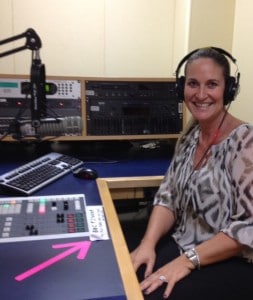
Amanda on site of BBC News discussing International Donor Egg.


Amanda Segal, International Donor Egg Patient Liaison at Shady Grove Fertility, was interviewed by BBC to discuss the benefits of traveling to the United States for donor egg treatment.

> Listen to BBC: Global Fertility, discussing International Donor Egg

This 17 minute podcast, discusses Global Fertility – donor egg and donor sperm. Amanda discusses the 100% money-back option Shady Grove Fertility provides patients as well as the technological advances in frozen donor egg which is making the procedures easier for not only the recipient but the donor as well.

Amanda getting ready for her BBC interview.


Also discussed is donor sperm which is being shipped internationally to patients as well as international surrogacy.

> Learn more about Shady Grove Fertility’s Shared Risk 100% Refund Program for IVF and Donor Egg.
> Learn about Shady Grove Fertility’s new frozen donor egg option.

If you are interested in learning more about Shady Grove Fertility’s International Donor Egg program, please call our New Patient Center at 1-877-971-7755 or visit us online.

Filed Under: General Tagged With: Donor sperm

August 22, 2012 by Shady Grove Fertility

SGF Nurse

by Dr. Isaac E. Sasson, MD, PhD

For patients faced with the frustrations of getting pregnant, the first visit to a fertility specialist can be daunting. For some, the fear stems from being assigned a diagnosis; and for others, it is the fear of the unknown or confronting the uncommon possibility of never being able to deliver a baby. And nearly every single patient, they will have to learn the our fertility vocabulary.

Starting with the initial fertility evaluation, which consists of a comprehensive review of the couple’s medical, reproductive, and family histories, patients are exposed to new terminology. Patients need to collect 4 pieces of data during their fertility work-up.

  1. An ultrasound of the ovaries is performed on the third day of the menstrual cycle to determine the antral follicle count (AFC).
  2. At this time, blood work is performed to evaluate critical reproductive hormones: follicle stimulating hormone (FSH), estradiol, and anti-mullerian hormone (AMH).
  3. The fallopian tubes will be tested with the X-ray based test known as a hysterosalpingogram (HSG) to see if their are any blockages in the tubes.
  4. A semen analysis is performed on a specimen provided by the male partner.

Do you know what all those words mean?

Fertility Vocabulary

SGF Nurse

Oocyte is the medical term for eggs.

Granulosa Cells line the ovarian follicle and nurse the growth of the oocyte.

The Follicle is the fluid filled sac in the ovary that contains the oocyte and is lined by granulosa cells. During a menstrual cycle, follicles grow from 20mm in response to hormones made by the pituitary gland in the brain.

Antral Follicles are ovarian follicles that measure between 2-10mm at the start of the menstrual cycle. These follicles represent the pool of oocytes that are available for recruitment, growth, and ovulation in a given month.

Antral Follicle Count (AFC) is the number of antral follicles counted on day 3 of the menstrual cycle. The AFC is a measure of ovarian reserve.

Ovarian Reserve is the size of the remaining egg supply.

Dominant Follicle, also known as the lead follicle, is usually identifiable around day 10 of the menstrual cycle. This follicle started the menstrual cycle as an antral follicle and grows more quickly then its neighbors, thereby selecting itself as the follicle that contains the oocyte that will be ovulated.

Follicle Stimulating Hormone (FSH) is a protein made by the pituitary gland at the base of the brain. It stimulates the antral follicles in the ovary to grow and prepares the oocyte for ovulation. When measured on day 3 of the menstrual cycle, it serves as a marker of ovarian reserve.

Anti-Mullerian Hormone (AMH) has many biological functions. The fertility specialist uses AMH levels as a measure of ovarian reserve. In the ovary, AMH is made by the granulosa cells of primary follicles, pre-antral follicles.

The Hysterosalpingogram (HSG) is an x-ray based dye test used to evaluate the shape of the uterine cavity and to determine if the fallopian tubes are open to capture the ovulated oocyte and transport the embryo to the uterus.

The Sonohysterogram (SHG) is an ultrasound-based test used to evaluate the uterine cavity. During this study, a small volume of saline is instilled into the uterus while an ultrasound is performed. This allows the fertility specialist to determine if fibroids or polyps (both benign) are protruding into the uterine cavity potentially disrupting embryo implantation.

The Endometrial Stripe (EMS) is measured by transvaginal ultrasound. This is the part of the uterus that grows during a cycle, bleeds during a period, and when pregnant, is the site of embryo implantation. The endometrial stripe is thin (about 4mm) at the start of the menstrual cycle and grows to more than 8mm in response to estrogen made by ovarian follicle. When adequately grown, your fertility specialist may describe the EMS as trilaminar, as it appears as three layers on the ultrasound.

I hope you find this fertility vocabulary list helpful and while it is your medical team’s responsibility to prepare and educate you on diagnosis and treatment options, learning your fertility vocabulary will help improve communication throughout your fertility journey.

Starting this fall, Dr. Isaac Sasson is available for new patient appointments in the Philadelphia area. To schedule a New Patient Appointment with Shady Grove Fertility please call 1-877-971-7755 or click here.

Filed Under: General

August 21, 2012 by Shady Grove Fertility

Dr. Ricardo Yazigi

by Dr. Naveed Khan, MD

The best time to see a fertility specialist is when you are concerned you have an infertility problem. Traditionally, infertility is defined as not being able to conceive over the course of a year in a woman who has regular menstrual cycles. So if you have been trying to conceive for several months and been unsuccessful, it is advised to consult a fertility specialist. The thought of being infertile is very stressful for most couples and sometimes basic testing or simply speaking to a fertility specialist can be very reassuring.

A basic infertility evaluation is usually advised after attempting conception for 1 year in women less than 35 years old and after 6 months in women older than 35 years of age. This is due to the natural decline in female fertility that occurs with aging. Also, success in treatment is best achieved when a woman is younger. However, if a woman is not having regular cycles, one does not need to wait a year, or even 6 months, she should go in sooner to get evaluated since she may be having ovulatory issues.

Visiting a Fertility Specialist

SGF Nurse


Either a general ob/gyn or a fertility specialist, also known as a reproductive endocrinologist, can initiate a fertility evaluation. A reproductive endocrinologist is a doctor trained in ob/gyn with an additional 3 years training devoted solely to the diagnosis and treatment of all types of infertility related issues. A fertility specialist is able to quickly assess the potential fertility problem and then streamline the fertility evaluation to be completed within the first 10 days of the start of a woman’s menstrual cycle. Timing of the fertility tests is very important and reproductive endocrinologist offices are geared toward making appointments quickly in order to accommodate the special needs of a fertility patient.

In most cases, once the evaluation is completed, the fertility specialist can explain all the fertility issues in detail to a couple whether it is endometriosis, polycystic ovary syndrome, ovarian reserve issues, or even male factor.  After the diagnosis is made, the fertility specialist can recommend treatments that can address the diagnosed fertility issue. Treatments may include use of medicines, such as clomiphene citrate or gonadotropins, and procedures, such as intrauterine insemination (IUI), or advanced reproductive technologies such as IVF.

The driving goal for everyone is that our patient conceives a healthy child in a reasonable period of time. Feeling concerned about your fertility is normal, and will likely only become more stressful as the months go by.  If you are not getting pregnant, an appointment with a fertility specialist is a good place to start.

Wishing you the best.

To schedule a New Patient Appointment with Shady Grove Fertility please call 1-877-971-7755 or click here.

Filed Under: General Tagged With: In vitro fertilization (IVF), Intrauterine insemination (IUI)

August 13, 2012 by Shady Grove Fertility

SGF Nurse

by Dr. Barbara Osborn, MD

How much exercise is OK while I’m trying to get pregnant?
This is a common and logical question our patients ask. Based on the existing literature, however, stating the link between exercise and fertility is a difficult to say with certainty.

Some facts have been well established.
1. Intense physical activity, such as that of competitive female athletes, can disturb the menstrual cycle, but moderate activity has little effect on the cycle.
2. Obesity is associated with decreased fertility. Weight loss in obese women can improve their fertility. Weight loss can also improve menstrual regularity in obese women with PCOS.

SGF Nurse

What about women with normal cycles?
There are two large studies looking at women who were about to start trying to conceive. Both used questionnaires to ask women about their level and duration of physical activity or exercise before they started trying to conceive.

One of these studies was published in May 2012 looking at 3,628 women in Denmark who were planning for conception. In normal weight women, vigorous activity (running, fast cycling, aerobics or gymnastics) was associated with decreased fertility. Moderate activity (brisk walking, leisurely cycling, gardening or golfing) was associated with modestly improved fertility. In overweight and obese women, however, both moderate and vigorous exercises were associated with improved fertility.

A similar study of 3,887 women was conducted in Norway (published 2009). These women were mostly normal weight (mean BMI 22.7). This study also found that women with the highest frequency, duration and intensity of physical activity were less likely to conceive. When looking just at duration of activity, both short (< 15 min/day) and long duration (> 60 min/day) were associated with decreased fertility, but those with moderate duration (16-60 min) had improved fertility.

Unfortunately, neither study asked the women what their activity was like while they were actually trying to conceive, only what it was before they started. These studies do suggest that exercise in moderation is best for normal weight women trying to conceive, but that overweight women might improve their odds with more vigorous exercise.

Exercise and Fertility – What is recommended for women in fertility treatment?
A small study performed in Turkey was published in 2009. This looked at 131 women about to start their first IVF cycle and evaluated activity both before and during the cycle. Although women were advised to just continue their normal activity, they had a tendency to decrease their physical activity during treatment. While 15 women met criteria for “high” activity before the IVF cycle, none of the women had high activity during the treatment cycle itself. There were 68 women who had low activity during the cycle and 63 with moderate activity. The mean BMI in both groups was 24.7. Moderate activity during treatment was associated with a significantly higher live birth rate (47.6%) than low physical activity (19.4%). Interestingly, the amount of activity the patients were doing before they started treatment had no correlation with live birth rate.

In summary, we have very little data on which to state a link between exercise and fertility. From the available studies, however, it seems that moderate activity such as walking and leisurely cycling seems to make the most sense for women trying to conceive naturally or through fertility treatment.

At Shady Grove Fertility, once a patient has had her IUI or embryo transfer, we suggest that she treat her body as if she is pregnant, recommending gentle to moderate exercise.

To schedule a New Patient Appointment with Shady Grove Fertility please call 1-877-971-7755   or click here.

Filed Under: General

August 10, 2012 by Shady Grove Fertility

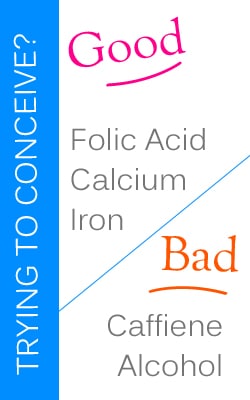
Fertility Fact: There is no magic regiment or fertility diet that will increase the likelihood of egg meeting sperm.  That said there are ways to prep both the female and male body for healthy conception.

Folic Acid

Taking folic acid, or folate, as part of your pre-natal vitamin, has shown to reduce neural defects in unborn children. It is recommended to take a minimum of 400 mcg per day.

Calcium

Calcium is an important part of a women’s healthy diet to improve bone health. Pregnancy can do a number on the female body, and having a good supply of calcium will be necessary while your body is working hard to help your child grow. For women that are lactose intolerant or don’t take in enough calcium throughout the day, can check their pre-natal vitamin label to see if it is included or take a separate supplement.

Iron

When eating for two, a women needs to avoid anemia – which is particularly common in vegetarian moms-to-be. Check your pre-natal or pre-conception vitamin to see if iron is included.
> Read more about pre-natal vitamins.

Caffeine

It is recommended to reduce or limit caffeine intake to one beverage a day while trying to conceive. There have also been studies to show that consuming over 200mg of caffeine per day resulted in twice the miscarriage rate than women that consumed no caffeine. Which is why, at Shady Grove Fertility, we recommend that safest amount of caffeine is zero. Read more about caffeine during pregnancy.

Alcohol

SGF Nurse

As with most things, there are contradicting studies as to the impact of alcohol on fertility. SGF recommends limited alcohol consumption during while attempting to conceive. And once you are in your two-week wait or achieved pregnancy, it is recommend to completely remove alcohol from your diet.
> Read Dr. Eric Leven’s lifestyle advice for couples with infertility.
Every few months you might read in the news the next great fertility food or fertility diet that will magically help you conceive. While there is no harm in adding in certain foods to your diet just in case it might work, don’t go overboard! Taking too much of anything – including the healthy vitamins that are recommended – is a bad thing. So no need to double up on your vitamins, it won’t have double the impact on your health. And most importantly, talk to your medical team about a healthy fertility diet and lifestyle.

Note: The recipes we share on our “Recipe for Fertility” aren’t designed to improve your fertility rather are posted as good healthy food options while TTC and pregnancy.

To schedule a New Patient Appointment with Shady Grove Fertility please call 1-877-971-7755 or click here.

Filed Under: General

  • « Go to Previous Page
  • Page 1
  • Interim pages omitted …
  • Page 36
  • Page 37
  • Page 38
  • Page 39
  • Page 40
  • Interim pages omitted …
  • Page 46
  • Go to Next Page »

Company

  • About SGF
  • About US Fertility
  • Our Doctors
  • Fertility Equity
  • Careers
  • Newsroom
  • SGF College Scholarship
  • Contact Us
  • Voice Your Feedback

Treatments

  • Egg Freezing
  • Intrauterine Insemination (IUI)
  • In Vitro Fertilization (IVF)
  • Frozen Embryo Transfer (FET)
  • LGBTQIA+ Family Building
  • Shared Risk 100% Refund Program
  • All Treatments

Resources

  • Patient Portal
  • Online Bill Pay
  • Library
  • Support Groups & Events

Locations

  • California
  • Colorado
  • Delaware
  • Florida
  • Georgia
  • Maryland
  • North Carolina
  • Pennsylvania
  • Texas
  • Virginia
  • Washington, D.C.

2026 Shady Grove Fertility

  • Policies & Notices
Also of interest
  • In Vitro Fertilization IVF
  • Fertility Tests
  • Research Publications