• Skip to primary navigation
  • Skip to main content
  • Skip to footer
Shady Grove Fertility
  • Become an Egg Donor
  • Referring Physicians
  • 1-888-761-1967
  • Schedule Appointment
  • Get Started
        • Get Started
          • Causes of Infertility
          • Fertility Tests
          • When to Seek Help
          • Find a Doctor
          • Preconception and prenatal vitamins 
          • Schedule an Appointment
        • Personalized Care For
          • Single Parents
          • LGBTQIA+ Family Building
          • People with Cancer
          • Known Genetic Diseases
          • Egg Donors
  • Treatments
        • Fertility
          • Timed Intercourse
          • Ovulation Induction
          • Intrauterine Insemination (IUI)
          • In Vitro Fertilization (IVF)
          • Frozen Embryo Transfer (FET)
        • Donation & Surrogacy
          • Donor Sperm
          • Donor Egg
          • Donor Embryo
          • Gestational Carrier
          • LGBTQIA+ Family Building
          • Single Parents
          • Find a Donor
        • More Treatments
          • Center for Male Fertility
          • Egg Freezing
          • OncoFertility
          • Preimplantation Genetic Testing
          • MIGS
          • All Fertility Treatments
  • Resources
    • Resource Library
    • Events Calendar
    • Patient Stories
    • Mental Health
    • Wellness Center
  • Insurance & Savings
    • Insurance & Benefits
    • Shared Risk 100% Refund Program
    • 100% Refund for Donor Egg
    • Discounts
    • Egg Freezing Costs
    • Financing & Grants
    • Clinical Trials
  • About
    • Find a Doctor
    • About SGF
    • Our Care Team
    • Advanced Practice Providers
    • Fertility Equity
    • Philanthropy
    • Newsroom
    • Careers
    • Contact Us
    • Voice Your Feedback
  • Locations
        • Find a Location
        • California
        • Colorado
        • Delaware
        • Florida
        • Georgia
        • Maryland
        • North Carolina
        • Pennsylvania
        • Texas
        • Virginia
        • Washington, D.C.
        • Chile
        • International & Out of State
        • SGF at Walter Reed National Military Medical Center
  • Patient Hub
    • Online Bill Pay
    • Patient Forms
    • Patient Portal
  • Call your care team
  • Become an egg donor
  • Referring physicians
  • search-icon
  • Schedule appointment 1-888-761-1967

Home / About SGF / Page 12

About SGF

October 22, 2015 by Shady Grove Fertility

New Study Shows Improved Pregnancy Rates with Treatment Protocol Changes in Cases of High Progesterone Levels

A retrospective study conducted by physicians at Shady Grove Fertility revealed that a recent change in treatment protocol resulted in higher pregnancy rates. This study of more than 4,000 Assisted Reproductive Technology (ART) cycles showed that frozen embryo transfers (FET) of embryos derived from IVF cycles where progesterone levels were elevated were as successful as FET of embryos derived from IVF cycles with normal progesterone levels.  This stands in contrast to previous work done at Shady Grove fertility that showed that progesterone elevation had a significant negative effect on pregnancy rates when embryo(s) were transferred in the same cycle that the progesterone elevation occurred.

What’s the take home message? — The negative impact of high progesterone elevation on IVF outcomes derives from its impact on the endometrium, not on the embryo. By delaying transfer of high quality embryos until a time where the uterus is not impacted by high progesterone levels, outcomes are improved.

Why Progesterone Levels Increase

Throughout the stimulation phase of IVF treatment, medications are given to patients to encourage several follicles in the ovaries to develop in the hopes of retrieving multiple eggs for fertilization. Progesterone levels can rise in response to medications given during this stimulation phase treatment – sometimes to a level that’s higher than ideal.

At Shady Grove Fertility, our teams of fertility specialists monitor progesterone levels closely throughout the stimulation phase of IVF treatment. This study found that among patients whose progesterone levels were elevated during their IVF cycle, those who waited to have a frozen embryo transfer after their progesterone level had returned to normal had better success than patients who continued with a fresh transfer while progesterone levels were still elevated.

Timing is Key to Success

To achieve the best chances of pregnancy during an IVF cycle with a fresh transfer, there are several elements that have to be timed exactly right.

In cases where progesterone hormone levels are too high, the delicate synchronization of the embryo and the uterine lining (a.k.a. endometrium) is disturbed. This study suggests that increased levels of progesterone can result in ‘advancement’ of the uterine lining, such that the uterus is no longer optimally receptive when the embryo is ready to implant.

However, in an FET cycle, some of these crucial timing factors are eliminated. The patient and medical team can focus on preparing the uterine lining and will thaw the embryos when the patient’s lining is most likely to allow for implantation.

Improving the Standard of Care for Patients

Armed with data from this study, patients and physicians can feel confident that when progesterone is elevated, chances of having a baby will be improved by forgoing  fresh transfer of high quality embryos in favor of transferring them in a later FET cycle. Taking a 1 to 2 month break between cycles allows the progesterone levels to return to a normal level and can increase pregnancy rates as much as 50 percent. While the delay in treatment can be viewed as a setback, this option gives patients and their embryos the best chance of success.

About the American Society for Reproductive Medicine (ASRM) Annual Meeting

ASRM 2015 is the premier National education and research meeting for the field of Reproductive Endocrinology and Infertility. Plenary lectures will address state-of-the-art issues in reproductive medicine and science.

The outlook for patients with infertility continues to brighten year after year, thanks to the thousands of professionals who dedicate their lives to improving outcomes for fertility treatment.  The range of ASRM’s expertise and influence draws from doctors, nurses, and researchers to business experts, pharmaceutical companies, advocacy organizations, and, of course, patients themselves. Shady Grove Fertility continues to play a leading role in clinical research and practice policy at the national level.

 If you would like to schedule an appointment with a fertility specialist, please speak with one of our New Patient Liaisons at 877-971-7755.

Filed Under: About SGF Tagged With: Research program

October 20, 2015 by Shady Grove Fertility

New Study Provides Better Predictions for Intrauterine Insemination (IUI) Pregnancy Rates Based on the Number of Moving Sperm

Intrauterine insemination (IUI) is one of the most basic forms of fertility treatment and has provided many women and men who have struggled to conceive with the ability to build their families. Compared with more intensive treatments such as in vitro fertilization (IVF), IUI comes at a lower financial cost but, in general, is associated with lower pregnancy rates. Couples with infertility, in whom tubal and severe male factor have been excluded, generally face the decision of whether to start with IUI or IVF.  While some factors, such as female age, have been known to influence IUI outcomes, clinicians have  had few tools at their disposal to tailor counseling regarding chances of success with IUI. Shady Grove Fertility has recently completed a study to help couples decide whether IUI is the right initial fertility treatment for them and will present key findings at the American Society for Reproductive Medicine (ASRM) Annual Meeting (Baltimore, MD, October 17–21, 2015).

Sperm Count Predicts IUI Pregnancy Rates

In addition to maternal age, sperm count has been known to have an impact on pregnancy rates with IUI treatment; however, precise predictions based on sperm count were not possible, as limited data were available.

Based on a retrospective study of over 47,500 IUI cycles, Shady Grove Fertility has developed a model to predict IUI success based on total motile sperm count in the sample used for IUI.

Before an IUI cycle, most patients will have a sperm wash to prepare the sample for insemination. At this time, the total motile sperm collected are counted. The sperm count can range from nearly zero to tens of millions. It seems obvious that the higher the sperm count, the higher the chances of pregnancy—but just how high, or low, are the chances?

For the average couple in this study who underwent IUI with a post-wash total motile sperm count of at least 9 million, the chances of a clinical pregnancy with one IUI cycle using “washed sperm” was 16.9 percent. If the count was above 9 million the same chances of success were observed.  In other words, it didn’t matter if the sample used for insemination had 9 million, 10 million, or 20 million moving sperm, success rates didn’t increase further.

However, for patients with sperm counts on the lower end of the spectrum, success rates steadily fell as the sperm count decreases from 9 million.

Total Motile Sperm Count (millions)Number of Insemination CyclesNumber of Clinical PregnanciesClinical Pregnancy per Cycle
<0.2512332.40%
0.25-0.4918052.80%
0.50-0.99355174.80%
1.00-1.99904626.90%
2.00-3.99246324910.10%
4.00-4.99146516611.30%
5.00-5.99149918612.40%
6.00-6.99167623013.70%
7.00-8.99325747914.70%
9.00-9.99162127416.90%
> 10.0034010564916.60%

Determining Total Motile Sperm Count

At Shady Grove Fertility, a semen analysis is part of any couple’s initial fertility work-up. This helps determine if male factor infertility may be playing a role in the couple’s inability to conceive, as well as providing insight into which treatment option may provide the best chance of pregnancy. When considering expected total motile sperm count for an IUI, two important variables need to be accounted for: 1) total motile sperm count from the baseline semen analysis, and 2) the impact that sperm washing (a procedure in which a sperm sample is concentrated that is necessary for IUI) will have on that number.

What This Means for Patients

Based on the largest study of its kind, physicians can now counsel patients about their potential success rates with IUI and whether it is the right treatment option for them. When a semen analysis shows a borderline or low sperm count, patients can undergo a diagnostic semen wash to give a more accurate expectation of total motile sperm count expected to be obtained for IUI treatment, and thereby obtain a refined understanding of their chances of success. Another SGF study being presented at the 2015 ASRM meeting looked at factors that may be able to predict post-wash total motile sperm count and found that baseline sperm morphology is likely the most important predictor.

Together, these studies demonstrated that post-wash total motile sperm count can provide valuable decision making information to couples deciding between IUI and IVF treatment.

With more accurate, individualized expectations, patients can make informed decisions about treatment, which was the Shady Grove Fertility Research team’s primary goal in conducting this study

About the American Society for Reproductive Medicine (ASRM) Annual Meeting

ASRM 2015 is the premier National education and research meeting for the field of Reproductive Endocrinology and Infertility. Plenary lectures will address state-of-the-art issues in reproductive medicine and science.

The outlook for patients with infertility continues to brighten year after year, thanks to the thousands of professionals who dedicate their lives to improving outcomes for fertility treatment.  The range of their expertise and influence draws from doctors, nurses, and researchers to business experts, pharmaceutical companies, advocacy organizations, and, of course, patients themselves. Shady Grove Fertility continues to play a leading role in clinical research and leadership in practice policy at the national level.

If you would like to schedule an appointment with a fertility specialist, please speak with one of our New Patient Liaisons at 877-971-7755.
Filed Under: About SGF Tagged With: Research program

August 12, 2015 by Shady Grove Fertility

New Fertility Center in Chadds Ford, PA

Shady Grove Fertility is expanding to Delaware County starting in August 2015, with a new fertility center in Chadds Ford, PA. This new location will be an extension of our Chesterbrook, PA, office with Isaac E. Sasson, M.D., Ph.D., meeting with patients. We are pleased to offer the local community better access to fertility care and our unique financial programs.

Shady Grove Fertility – Chadds Ford, PA
6 Dickinson Drive, Suite 311
Chadds Ford, PA 19317

As a satellite location, Dr. Sasson will see new patients and follow-up visits at this site. All other appointments, such as monitoring and testing, will be done at one of our other conveniently located offices in Bala Cynwyd or Chesterbrook.

Additional Shady Grove Fertility Locations in PA

  • Bala Cynwyd, PA
  • Chesterbrook, PA
  • Harrisburg, PA
  • Reading, PA

To learn more about our fertility center in Chadds Ford or to schedule a new patient appointment, please call 1-877-971-7755 or click here.

Filed Under: About SGF

June 24, 2015 by Shady Grove Fertility

Mark Segal, CEO of Shady Grove Fertility

We are honored to announce that our very own Mark Segal, chief executive officer of Shady Grove Fertility, received the EY Entrepreneur Of The Year® 2015 Award in the Health category for the Greater Washington area. This award recognizes outstanding entrepreneurs who demonstrate excellence and extraordinary success in areas such as innovation, financial performance, and personal commitment to their businesses and communities. Segal was selected by an independent panel of judges and the award was presented at a special gala event at The Ritz-Carlton, Tysons Corner, on Thursday, June 18, 2015.

Mark Segal joined Shady Grove Fertility in 1996 at a time when the practice was in Rockville, Maryland, and only had two physicians: Michael J. Levy, M.D., and Arthur W. Sagoskin, M.D.  Segal said he fell in love with the practice, and the vision and passion the physicians had—to create an integrated, personalized experience for patients. The three shared a deep commitment to helping couples become pregnant by focusing on creating innovative ways to increase accessibility and affordability to care.

Their vision became a reality over time, with Segal leading practice growth and inspiring innovation across the organization. Today, Shady Grove Fertility is the largest fertility center in the nation, with more than 37,000 babies born since its inception. This unprecedented success has been vital for families by increasing patients’ access to physicians across the Mid-Atlantic region. The practice’s growth can be largely attributed to the unique combination of exceptional business acumen and physician leadership, along with a collective desire to always do what was best for the patient.

“As a physician group, we have always been focused on providing outstanding patient care to steadily grow the practice. It was Mark who had the tremendous ambition and vision to lead the way in terms of the incredible growth that we have experienced,” said Dr. Levy, President and Director of IVF at Shady Grove Fertility.

Segal says, “[From a legacy standpoint,] it’s a great feeling to know that we’ve impacted the lives of so many families and couples. Knowing that we have continued to do that, and continued to grow from a small Rockville medical practice and have impacted so many patients on such a large scale, it’s been tremendous.”

Please join us in congratulating Mark Segal on this remarkable achievement.

If you would like to learn more about Shady Grove Fertility or are ready to schedule an appointment, please speak with one of our New Patient Liaisons at 877-971-7755.
Filed Under: About SGF

June 16, 2015 by Shady Grove Fertility

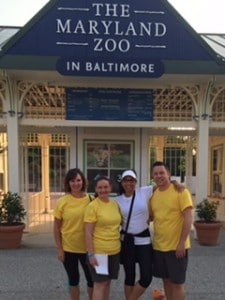
On Saturday, June 13, 2015, Shady Grove Fertility hosted the Cade Foundation’s 10th Annual Maryland Race for the Family, raising over $65,000 to provide family building grants that will help families afford the costs of fertility treatment or domestic adoption. The Tinina Q. Cade Foundation is a non-profit organization that serves the needs of families battling infertility through education, outreach, and grants.

The Race for the Family Reaches New Heights in 2015

In the past decade, through events like the Race for the Family, SGF and the Cade Foundation have raised over $650,000 for the infertility community. The Cade Foundation has given over 55 family building grants.

“I was thrilled and humbled by the number of families who came out to the event to OVERCOME infertility,” said Camille Hammond, chief executive officer, Tinina Q. Cade Foundation. “Shady Grove Fertility has been a strong partner to the Cade Foundation and a strong resource for families struggling with—but OVERCOMING—infertility.”

Over 650 people registered for the 2015 Maryland Race for the Family, which was held—for the first time ever—at The Maryland Zoo in Baltimore, Maryland. In addition to the 5k run and 5k walk, there was a 1 mile Family Fun Run and a playground with activities for children.

The 2015 treatment raffle prize is awarded.

By partnering with the Cade Foundation, SGF is able to give back to the patient community, via fundraising efforts and the raffle to win $10,000 towards fertility treatment at one of our 22 locations. A SGF patient from our Baltimore Harbor office won this year’s raffle.

“The Maryland Race for the Family is a great opportunity to come together with patients and staff to support the infertility community and raise funds to help families in need,” said Frank E. Chang, M.D., of Shady Grove Fertility’s Rockville, MD, office.

If you would like to learn more about Shady Grove Fertility or are ready to schedule an appointment, please speak with one of our New Patient Liaisons at 877-971-7755.

Filed Under: About SGF Tagged With: Cade Foundation, Philanthropy

May 28, 2015 by Shady Grove Fertility

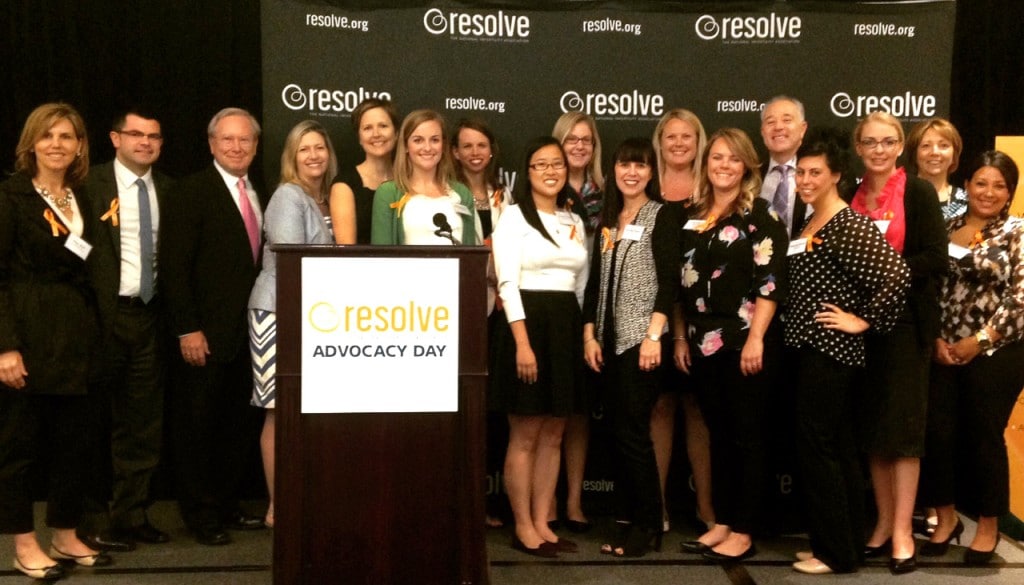
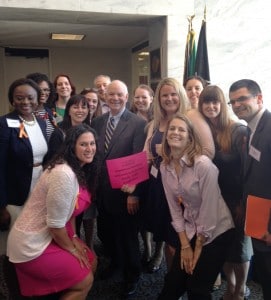
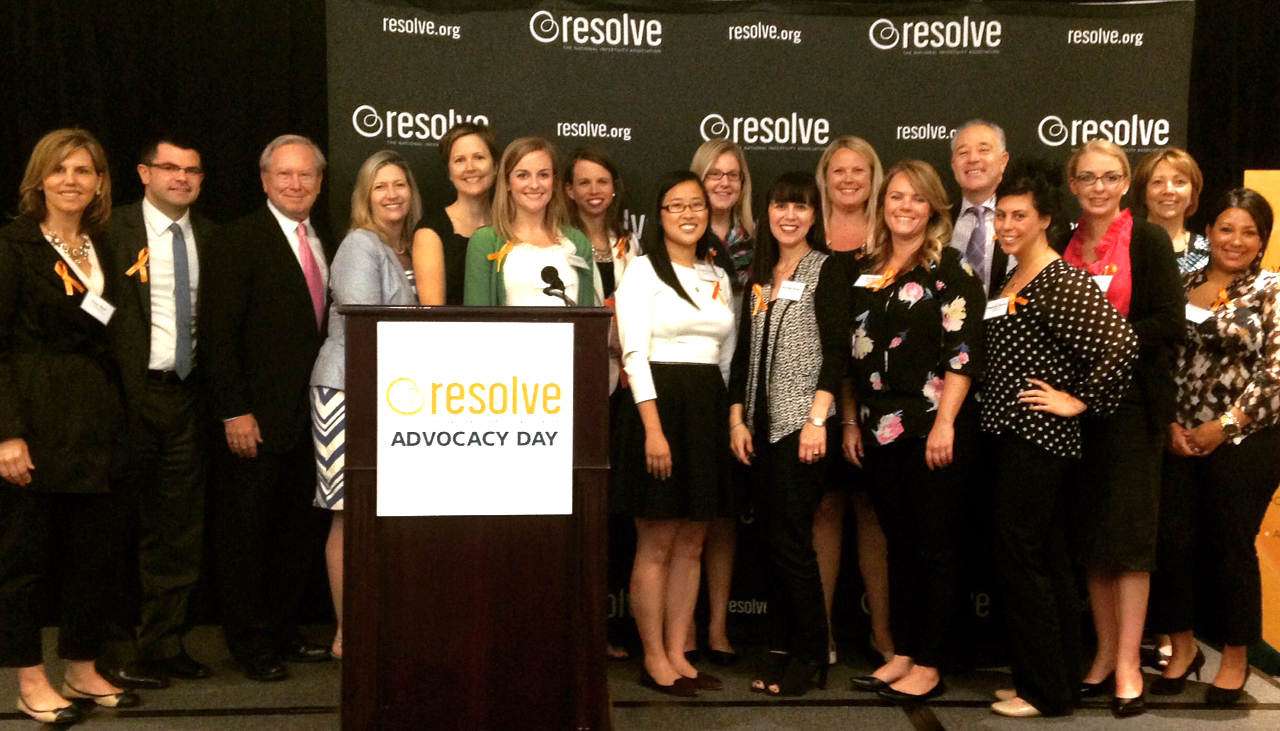
On May 14, 2015, 17 Shady Grove Fertility physicians, staff, and patients convened with over 170 advocates from 27 states and Washington D.C., including advocates from California, Washington, and Alaska, to support legislative initiatives to assist the 1 in 8 couples who experience infertility at Advocacy Day.

Day on the Hill – Advocacy Day 2015

The day began with an in-depth training session provided by RESOLVE to prepare the infertility advocates for the long day ahead, lobbying on Capitol Hill. As advocates, it was our responsibility to properly explain and represent those who face unexpected difficulties as they embark on the path to parenthood and how the bills presented would enable more people to have access to treatment and ultimately have the family of their dreams.

“Infertility is often misunderstood, or at best, poorly understood by those who have not experienced it. On Advocacy Day, patients, volunteers, and professionals have the opportunity to educate legislators from all 50 states that infertility is in fact a disease affecting both women and men. The trained advocates educate legislators and their staffs about infertility legislation before Congress, provide additional and personal insight, and ask for support to pass various bills,” said Gilbert L. Mottla, M.D., of Shady Grove Fertility’s Annapolis, MD, office.

Making a Change with National Partners

A Visionary Partner of RESOLVE: The National Infertility Association and a sponsor of Advocacy Day, SGF asked members of Congress to support three important issues this year that affect the infertility community: The Women Veterans and Families Health Services Act of 2015, the National Public Health Action Plan for the Detection, Prevention and Management of Infertility, and the Adoption Tax Credit Refundability Act of 2015.

Senator Ben Cardin of Maryland was particularly interested in the Women Veterans and Families Health Services Act of 2015 which would provide veterans wounded in the line of duty with access to assisted reproductive technologies (ART) and adoption assistance as well as expand fertility treatment options to spouses. Making spouses eligible for treatment would allow the VA to provide comprehensive care for both veterans and their families. While SGF provides a Military Discount Program for service members, TRICARE or the Veterans Administration does not cover in vitro fertilization (IVF). This bill seeks to change that by expanding available treatment and care.
The National Public Health Action Plan for the Detection, Prevention and Management of Infertility— drafted by the Centers for Disease Control and Prevention (CDC) and released in June 2014—identified a number of scientific and programmatic steps for the CDC, non-governmental organizations, healthcare providers, and others, to implement to help increase infertility awareness. This action plan was first introduced by RESOLVE during Advocacy Day 2011. Shady Grove Fertility and other advocates urged Congress to support the Plan, which will need funding.

Finally, advocates sought support for the Adoption Tax Credit Refundability Act of 2015. While this tax credit has existed since 1997, refundability provisions are not currently in place. Establishing those provisions would provide lower-income families with the ability to adopt and support a child from foster care.

To get involved and stay in touch, join the Shady Grove Fertility or RESOLVE mailing list. You can also get involved by attending and fundraising at the upcoming Walk of Hope.

To schedule an appointment with Shady Grove Fertility, call
877-971-7755 or fill out this form. 

Filed Under: About SGF Tagged With: Philanthropy

  • « Go to Previous Page
  • Page 1
  • Interim pages omitted …
  • Page 10
  • Page 11
  • Page 12
  • Page 13
  • Page 14
  • Interim pages omitted …
  • Page 16
  • Go to Next Page »

Company

  • About SGF
  • About US Fertility
  • Our Doctors
  • Fertility Equity
  • Careers
  • Newsroom
  • SGF College Scholarship
  • Contact Us
  • Voice Your Feedback

Treatments

  • Egg Freezing
  • Intrauterine Insemination (IUI)
  • In Vitro Fertilization (IVF)
  • Frozen Embryo Transfer (FET)
  • LGBTQIA+ Family Building
  • Shared Risk 100% Refund Program
  • All Treatments

Resources

  • Patient Portal
  • Online Bill Pay
  • Library
  • Support Groups & Events

Locations

  • California
  • Colorado
  • Delaware
  • Florida
  • Georgia
  • Maryland
  • North Carolina
  • Pennsylvania
  • Texas
  • Virginia
  • Washington, D.C.

2026 Shady Grove Fertility

  • Policies & Notices
Also of interest
  • In Vitro Fertilization IVF
  • Fertility Tests
  • Research Publications