• Skip to primary navigation
  • Skip to main content
  • Skip to footer
Shady Grove Fertility
  • Become an Egg Donor
  • Referring Physicians
  • 1-888-761-1967
  • Schedule Appointment
  • Get Started
        • Get Started
          • Causes of Infertility
          • Fertility Tests
          • When to Seek Help
          • Find a Doctor
          • Preconception and prenatal vitamins 
          • Schedule an Appointment
        • Personalized Care For
          • Single Parents
          • LGBTQIA+ Family Building
          • People with Cancer
          • Known Genetic Diseases
          • Egg Donors
  • Treatments
        • Fertility
          • Timed Intercourse
          • Ovulation Induction
          • Intrauterine Insemination (IUI)
          • In Vitro Fertilization (IVF)
          • Frozen Embryo Transfer (FET)
        • Donation & Surrogacy
          • Donor Sperm
          • Donor Egg
          • Donor Embryo
          • Gestational Carrier
          • LGBTQIA+ Family Building
          • Single Parents
          • Find a Donor
        • More Treatments
          • Center for Male Fertility
          • Egg Freezing
          • OncoFertility
          • Preimplantation Genetic Testing
          • MIGS
          • All Fertility Treatments
  • Resources
    • Resource Library
    • Events Calendar
    • Patient Stories
    • Mental Health
    • Wellness Center
  • Insurance & Savings
    • Insurance & Benefits
    • Shared Risk 100% Refund Program
    • 100% Refund for Donor Egg
    • Discounts
    • Egg Freezing Costs
    • Financing & Grants
    • Clinical Trials
  • About
    • Find a Doctor
    • About SGF
    • Our Care Team
    • Advanced Practice Providers
    • Fertility Equity
    • Philanthropy
    • Newsroom
    • Careers
    • Contact Us
    • Voice Your Feedback
  • Locations
        • Find a Location
        • California
        • Colorado
        • Delaware
        • Florida
        • Georgia
        • Maryland
        • North Carolina
        • Pennsylvania
        • Texas
        • Virginia
        • Washington, D.C.
        • Chile
        • International & Out of State
        • SGF at Walter Reed National Military Medical Center
  • Patient Hub
    • Online Bill Pay
    • Patient Forms
    • Patient Portal
  • Call your care team
  • Become an egg donor
  • Referring physicians
  • search-icon
  • Schedule appointment 1-888-761-1967

Home / Cancer / Page 2

Cancer

October 1, 2014 by Shady Grove Fertility

Most of us have arrived at a point in our lives where we feel confident that we can handle the challenges that life throws our way. At 38-years-old Michele Halvorsen, who works as a research neurobiologist for the University of Maryland, was moving forward with her hard-earned career in early 2007 when at her annual exam her gynecologist suggested she have a baseline mammogram. With no family history of breast cancer she decided to put off the exam for six months.

“There was no reason for the referral other than that I had ‘dense’ tissue in my breast,” Michele recalls. “There was no discernible lump, and I have no family history of breast cancer. So I waited until the appointment fit into my schedule.”
By that September, she’d been diagnosed with cancer. But getting hit with the news didn’t diminish the single, childless scientist’s poise.

“My brain wasn’t wrapped around the fact that I had cancer,” she explained. “The area the doctors initially found was small, that I told the surgeon that I planned to keep my breasts. I just wanted the cancer out so I could get back to work from this small interruption.”

But in November 2007, a lumpectomy showed more cancerous tissue than her oncology team had expected. Michele changed her mind and opted for a double-mastectomy and avoided both chemotherapy and radiation.

“Since their initial testing hadn’t provided dependable results, my ‘science brain’ told me that I’d better not take chances.” The mastectomy allowed her to forgo taking Tamoxifen, a form of chemotherapy that is commonly prescribed for breast cancer treatment. Among its side effects: inducing menopause, which may be temporary or permanent.

She also took a test to determine if she carried the mutated BRCA gene, a dominant gene that’s presence means a 50% chance of passing on to offspring, plus a 45% risk of developing ovarian cancer, and an 89% risk of breast cancer. Michele was given the results after her mastectomy. They were positive for mutation. Her oncologist’s recommendation to her was a prophylactic oophorectomy – removal of both ovaries.

“That’s when I thought, ‘But I want to have a baby’,” Michele says.

She hadn’t had any luck meeting the guy she expected would traditionally show up, and now she had to make a fast decision. A weekend conference sponsored by FORCE (Facing Our Risk of Cancer Empowered) gave Michele the information and tools she needed to proceed with a plan to both fight her disease and preserve her fertility.

Following her surgery and the reconstructive phase, Michele began to wonder what she should do about her ovaries and a baby. “It took some time to give thought to and get okay with having a baby on my own,” she recalls. By now, though, she was nearing 40 and knew that, again, decisiveness mattered.

Michele started looking at donor sperm options. A colleague who’d had two children with the help of Shady Grove Fertility highly recommended Michele consult with Dr. Gilbert Mottla and his team in theAnnapolis office. Since her insurance would provide no coverage for fertility treatment, finances were an issue for her.

Michele credits the Shady Grove Fertility financial staff for doing all of the legwork to connect her toFertile Hope, the non-profit that assists cancer patients with fertility-focused needs, including providing monetary funding for treatment. The decision was made to attempt Intrauterine Insemination with specifically prescribed injectible ovulation-enhancing medication.

Michele’s first IUI was canceled because her ovaries produced six viable eggs. She recalls the phone call with Dr. Mottla on the day before insemination was to occur, a day that typically includes an injection of hCG to trigger the follicles to release the eggs.

“He said I should cancel the cycle because it was too risky; if all six eggs were fertilized, I’d have a litter,” she explains. “But I countered that statistically because each had only a 12 percent chance of fertilization. I asked to have some time to think – Dr. Mottla said I had 1 hour, I called back in 10 minutes.” Michele laughs today when she tells the story about how she pretty soon pondered what life with more than one baby might be like, especially after her recent health ordeal. The cycle was canceled.

Her second cycle went according to plan, resulting in the release of one viable egg. Two weeks following the insemination, an anxious Michele was in Chicago during the winter holidays when she was given the go-ahead by Shady Grove Fertility nursing staff to take a home pregnancy test – but with cautionary advice to realize even the best home tests can render false results.

“I was SO pregnant,” Michele says now.

Her son was born in September 2009 after a pregnancy that included some long-lasting nausea but no other adverse events. She describes it as “an awesome experience, both as a mom and a scientist, to feel this baby go through waking and sleeping cycles inside of me.” In spite of the joy, Michele’s thoughts immediately turned to her ovaries.

“Ovarian cancer is very hard to detect, and I knew that I had this high risk for it looming over me,” she said. But she also found herself wondering why she waited so long in the first place to become a mother. “I remember thinking when he was still tiny, ‘I could have another one right now’. As he’s gotten older, though, I’m thinking ‘Okay, one is good…’” she laughs.

Just a week prior to this interview in September 2010, Michele underwent a voluntary prophylactic full hysterectomy. Her decision was once again based on her being there for her son.

“I’m a mom now, and I need to put him first, even above taking the chances at having another child.”

If it hadn’t been for her heightened health risk, Michele says she would gladly have returned to Shady Grove Fertility to try for a second child. “It’s funny, because I remember thinking ‘No one here is ever in a bad mood!’ They were always just fantastic to me, from the medical to the financial staff. They helped me during a very uncertain time. I hope my story and the success that I had with Shady Grove Fertility is encouraging for other women or couples who may have the same obstacle to overcome as I did.”


Filed Under: Inspiration Tagged With: Cancer

July 10, 2014 by Shady Grove Fertility

Dr. Eric Levens discussing Infertility Post Cancer with WUSA9’s Andrea Roane

Andrea Roane with WUSA9 (CBS) discusses the impact of infertility post cancer. “Only 7 percent of fertile women who go on to conceive successfully following a breast cancer and cancer treatment.” Both women and men diagnosed with cancer prior to building their family, should consider their options to prevent infertility post cancer treatment.

Eric D. Levens, M.D. from Shady Grove Fertility’s Annandale, VA office discusses why cancer and cancer treatment can impact fertility and the options available. “Cancer treatments can effect fertility in many ways, one of the principle ways is through chemotherapy.” Dr. Levens continues, “Chemotherapy diminishes or reducing the ovarian potential, destroys the eggs, and the support cells for the eggs. And as a result, fertility is lost.”

So what can women diagnosed with cancer do to prevent infertility post cancer?

With an increase in awareness on the impacts of cancer treatment on a woman’s fertility, and new field is developing – oncofertility. Oncofertility is the partnership of cancer and infertility treatments between a patient’s oncologist and reproductive endocrinologist. When a patient is diagnosed with cancer there are many questions arise and “the discussion of fertility needs to happen before [cancer] treatment starts,” explains Dr. Levens.

Today, the primary preventative measure to protect a woman’s fertility is through egg freezing. If she is able to freeze her eggs prior to her cancer treatment, she can return to use those eggs through in vitro fertilization – or IVF.

For male fertility preservation, sperm freezing is available through Fairfax Cryobank. Please contact Markos Meleku at 703-968-3969 for more information.

Watch Dr. Eric Levens on WUSA9: Infertility Post Cancer

  • Learn more about treating cancer & infertility.

If you have questions regarding infertility treatment or would like to schedule a new patient appointment, please call our New Patient Center at 877-971-7755 or click to schedule an appointment.

Filed Under: Get Started Tagged With: Cancer

April 18, 2012 by Shady Grove Fertility

Dr. Bromer Joins the Frederick Team

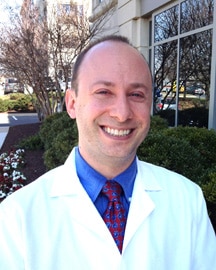
This week marks the beginning to a new chapter at Shady Grove Fertility’s Frederick, Maryland office. Jason G. Bromer, MD joins Melissa A. Esposito, MD in seeing new patients as well as meeting with current patients as they come in for morning monitoring.
> Call 1.877.971.7755 or Click Here to Schedule Your New Patient Consult with Dr. Jason Bromer

First Class Fertility Education & Experience

SGF Nurse

Dr. Bromer is a board certified reproductive endocrinologist, who joins us from the Reproductive Science Center of New Jersey.  Dr. Bromer received his medical degree from George Washington University School of Medicine, graduating with distinction, and then moved on to Georgetown University to complete his residency in Obstetrics and Gynecology, and finally on to Yale University to his fellowship in Reproductive Endocrinology and Infertility.

Dr. Bromer always knew he would become a doctor, growing up he volunteered with sick children and always had a desire to help those in need, saying “It never occurred to me that I would do anything else.” He has been inspired to keep the highest standards of being a physician from his mentors in his residency and fellowship training, “I strive to be the kind of doctors that they are.”

Part of keeping to these standards is staying at the cutting-edge of research. Dr. Bromer has a particular interest in fertility preservation for patients with cancer, pregnancy implantation, and researching methods of embryo selection for in vitro fertilization.  His work has been presented in meetings across the globe, and published in over 40 research papers and book chapters.

Between being the newest addition to the Shady Grove Fertility family, and being a member of the American Society of Reproductive Medicine, the Society for Reproductive Endocrinology and Infertility, and the International Society for Fertility Preservation, he is also a fellow of the American College of Obstetricians and Gynecologists and a Diplomat of the American Board of Obstetrics and Gynecology.

When Dr. Bromer is just Jason

SGF Nurse

Somewhere in all his free time, he manages to enjoy a few recreational activities such as snowboarding with his wife, going for walks with his young son, reading, watching movies, and playing with all the new Apple gadgets.

When asked what would surprise people the most about you? Dr. Jason Bromer had this to say, “I am probably the shortest person to ever make the all-state high school soccer team as a goalkeeper!”

Dr. Bromer is just as excited to start with Shady Grove Fertility, as Shady Grove Fertility is happy to have him on our team. He says, “I love the fact that at the heart of this busy, innovative practice, the #1 priority is always providing exceptional patient care, and never compromising our values in doing the right thing.”

Please welcome Dr. Jason Bromer!

Filed Under: General Tagged With: Cancer

October 18, 2011 by Shady Grove Fertility

SGF Nurse

Miriam Falco – CNN Medical Managing Editor
October 18, 2011
Source: CNN

E! News anchor Giuliana Rancic’s efforts to conceive have been the main theme of her reality show “Giuliana and Bill.” On Monday she revealed she has to postpone her next round of IVF after her new fertility expert insisted she get screened for breast cancer, even though she is only 36 years old.

Rancic said, on the Today Show, that her doctor told her “I don’t care if you’re 26, 36. I won’t get you pregnant if there is a small risk you have cancer. If you get pregnant it can accelerate the cancer. The hormones accelerate the cancer.”

> Watch Giuliana’s announcement on the Today Show.

Her doctor may have been taking the step as a precaution.

“There’s no evidence for a link between breast cancer and infertility treatment,” says Dr. Eric Widra, who chairs the Society for Assisted Reproductive Technology. A 2005 study looked at a possibility but the study authors concluded a link to breast or ovarian cancer had not been found.

Dr. George Sledge, co-director of breast cancer treatment at Indiana University’s Simon Cancer Center, says there are no good data to show that IVF accelerates breast cancer. “Not having a child and infertility in itself increases the risk for breast cancer,” he says. Sledge isn’t familiar with Rancic’s medical history, but he says the younger you are when you have your first child, the less likely you are to have breast cancer.

“Breast cancer at 36 is rare, and it’s fortunate for her that it was detected early,” says Widra, a physician at Shady Grove Fertility in Washington, D.C. However, he doesn’t agree with Rancic’s doctor that women in their 20s or 30s should get a mammogram before starting IVF. The American Society for Reproductive Medicine recommends the same guidelines as the American College of Obstetrics and Gynecology, he says: Begin screening at the age of 40, unless there’s family history.

> Schedule Appointment with Shady Grove Fertility

But it appears things can vary from clinic to clinic. Dr. Andrew Toledo, a fertility specialist at Reproductive Biology Associates in Atlanta, says in his clinic, “We want a baseline mammogram [for our patients] between 35 and 40, unless they have a family history.”

Rancic had previously undergone two rounds of IVF. The second did result in a pregnancy, which ended in a miscarriage. She says she plans to try to get pregnant again after having surgery this week and undergoing six weeks of radiation treatment.

Sledge, who is the past president of the American Society of Clinical Oncologists, says the use of estrogen in general in women who’ve had breast cancer makes doctors nervous because some cancers are fueled by hormones.

But Widra says women who have successfully completed their cancer treatment can try to get pregnant again, typically five years after they have been disease-free. Widra, who is not familiar with Rancic’s specific case, points out that even after surgery and radiation, breast cancer patients may need to undergo even more treatments, like taking the drug tamoxifen, which can reduce the risk of breast cancer coming back by blocking the activity of estrogen in the breast if the breast cancer is fueled by estrogen – not all cancers are.

When a woman tries to get pregnant after undergoing breast cancer, her treatment needs to be individualized, says Dr. Mitch Rosen, director of the Fertility Preservation Center at the University of California-San Francisco. He says he sees many patients facing this question and he says it’s incredibly important that women receive good counseling. “It depends on your cancer, your age, what kind of cancer you have,” he says. If a woman has the type of tumor that is fueled by estrogen, tamoxifen (or other hormone-disrupting drugs) need to be taken for five years.

> Learn more about Fertility Preservation at Shady Grove Fertility.

If a cancer patient is 22, Rosen says he would recommend she wait the full five years before trying to get pregnant. If she’s 38, for example, getting pregnant gets harder with age – then, he says, he would probably recommend taking the hormone-blocking medication for tw0 years, taking a break to get pregnant, and then resuming the drug for three more years.

> Watch SGF patient, Heather, diagnosed with Endometrial Cancer during treatment.

If a patient has a type of cancer that is not dependent on hormones to grow, then surgery and radiation are usually followed by chemotherapy to kill any lingering cancer cells.

In those cases, Rosen says he recommends that his patients wait at least six months, better a whole year, before trying IVF again, just to reduce the possibility of birth defects caused by the cancer treatment.

Patients need to talk to their doctor and be made aware of the risks and options, so they can be comfortable with their decision on when and whether they should undergo IVF again.

View the article at: http://thechart.blogs.cnn.com/2011/10/18/no-proved-ivf-cancer-link-doctors-say/?hpt=hp_t2

Filed Under: General Tagged With: Cancer

October 10, 2011 by Shady Grove Fertility

A medical mystery for a young Virginia couple trying to have a baby. When they couldn’t get pregnant, doctors told them not worry, but instinct told them there was something more serious going on.

Watch and listen as Dr. Greenhouse and patient, Heather, discuss her struggling with infertility and endometrial cancer.

View more videos at: http://nbcwashington.com.

Filed Under: General Tagged With: Cancer

January 4, 2011 by Shady Grove Fertility

Dr. Ricardo Yazigi

by Dr. Ricardo Yazigi, MD

Clomiphene (Clomid, Serophene) is a medication commonly used for the treatment of infertility. Although its use is widespread, its effectiveness is often limited when it is not properly utilized.

Indications

Clomiphene is a pill, taken orally, for 5 to 7 days to induce ovulation. Therefore, the best indication for the use of clomiphene is for women who do not ovulate on their own. Typically those women do not have menstrual periods or do have them but very seldom or irregularly.

Clomiphene is also appropriately used in conjunction with artificial insemination (AI), also called intrauterine insemination (IUI). Most of the time, this combined treatment is offered to women who have unexplained infertility or endometriosis. In these instances, clomiphene may be capable of facilitating the maturation of more than one egg, most of the time two. Therefore, there is roughly a 5% chance of a multiple pregnancy with the use of this medication. When multiple pregnancies occur, it will most often be twins – triplets are extremely rare.

Side Effects

Clomiphene may have short-term as well as long-term side effects. Hot flashes and mood swings are the most common side effects. Long-term side effects are multiple pregnancy, and more rarely ovarian hyperstimulation syndrome (OHHS) and ovarian cancer. OHHS can occur in the rare situation in which the ovary may have a large number of mature follicles, which can produce some swelling and inflammation of the ovary with resulting abdominal discomfort as well as other laboratory abnormalities. The occurrence of ovarian cancer is quite debatable. The standard practice at present is to restrict the use of fertility drugs to less than twelve cycles as the chances of ovarian cancer are thought to increase after that. When a pregnancy is achieved and a baby is delivered, however, the chances of ovarian cancer drop to the levels observed in the general population, suggesting that a term delivery has a protective effect on ovarian cancer. Because of the aforementioned risks of cancer, fertility specialists restrict the number of treatment cycle with clomiphene to the minimum necessary, in order to leave room for more advanced treatments if necessary.

Success Rates

Many women conceive with clomiphene. However, if you haven’t gotten pregnant after taking this medication within 3-6 months, it may be time to move on to more aggressive treatment. Generally, three rounds will be enough to determine whether more aggressive treatments are in order.

Filed Under: General Tagged With: Cancer, Intrauterine insemination (IUI), Unexplained infertility

  • « Go to Previous Page
  • Page 1
  • Page 2

Company

  • About SGF
  • About US Fertility
  • Our Doctors
  • Fertility Equity
  • Careers
  • Newsroom
  • SGF College Scholarship
  • Contact Us
  • Voice Your Feedback

Treatments

  • Egg Freezing
  • Intrauterine Insemination (IUI)
  • In Vitro Fertilization (IVF)
  • Frozen Embryo Transfer (FET)
  • LGBTQIA+ Family Building
  • Shared Risk 100% Refund Program
  • All Treatments

Resources

  • Patient Portal
  • Online Bill Pay
  • Library
  • Support Groups & Events

Locations

  • California
  • Colorado
  • Delaware
  • Florida
  • Georgia
  • Maryland
  • North Carolina
  • Pennsylvania
  • Texas
  • Virginia
  • Washington, D.C.

2026 Shady Grove Fertility

  • Policies & Notices
Also of interest
  • In Vitro Fertilization IVF
  • Fertility Tests
  • Research Publications