
• Skip to primary navigation
  • Skip to main content
  • Skip to footer
Shady Grove Fertility
  • Become an Egg Donor
  • Referring Physicians
  • 1-888-761-1967
  • Schedule Appointment
  • Get Started
        • Get Started
          • Causes of Infertility
          • Fertility Tests
          • When to Seek Help
          • Find a Doctor
          • Preconception and prenatal vitamins 
          • Schedule an Appointment
        • Personalized Care For
          • Single Parents
          • LGBTQIA+ Family Building
          • People with Cancer
          • Known Genetic Diseases
          • Egg Donors
  • Treatments
        • Fertility
          • Timed Intercourse
          • Ovulation Induction
          • Intrauterine Insemination (IUI)
          • In Vitro Fertilization (IVF)
          • Frozen Embryo Transfer (FET)
        • Donation & Surrogacy
          • Donor Sperm
          • Donor Egg
          • Donor Embryo
          • Gestational Carrier
          • LGBTQIA+ Family Building
          • Single Parents
          • Find a Donor
        • More Treatments
          • Center for Male Fertility
          • Egg Freezing
          • OncoFertility
          • Preimplantation Genetic Testing
          • MIGS
          • All Fertility Treatments
  • Resources
    • Resource Library
    • Events Calendar
    • Patient Stories
    • Mental Health
    • Wellness Center
  • Insurance & Savings
    • Insurance & Benefits
    • Shared Risk 100% Refund Program
    • 100% Refund for Donor Egg
    • Discounts
    • Egg Freezing Costs
    • Financing & Grants
    • Clinical Trials
  • About
    • Find a Doctor
    • About SGF
    • Our Care Team
    • Advanced Practice Providers
    • Fertility Equity
    • Philanthropy
    • Newsroom
    • Careers
    • Contact Us
    • Voice Your Feedback
  • Locations
        • Find a Location
        • California
        • Colorado
        • Delaware
        • Florida
        • Georgia
        • Maryland
        • North Carolina
        • Pennsylvania
        • Texas
        • Virginia
        • Washington, D.C.
        • Chile
        • International & Out of State
        • SGF at Walter Reed National Military Medical Center
  • Patient Hub
    • Online Bill Pay
    • Patient Forms
    • Patient Portal
  • Call your care team
  • Become an egg donor
  • Referring physicians
  • search-icon
  • Schedule appointment 1-888-761-1967

Home / Treatment / Page 45

Treatment

February 13, 2013 by Shady Grove Fertility

Dr. Ricardo Yazigi

by Dr. Anitha Nair

With Valentine’s Day around the corner, so are the images and messages of love and relationships. Although most can appreciate the love of friends and family, for others it can be a reminder that they have not yet fulfilled their dreams for a committed relationship or children.

Women are constantly reminded of their biological clock and that with each passing year reproductive aging occurs more rapidly. After 35, the chance of conceiving becomes more difficult and miscarriage rates start to increase. Many women may need to delay childbearing for education, professional, financial or social reasons. In the past, there was nothing to do but wait and hope that things would change; but today, women have the option to take charge of their future fertility with egg freezing.

Egg Freezing

SGF Nurse
Egg Freezing is becoming more and more common for women delaying parenthood.

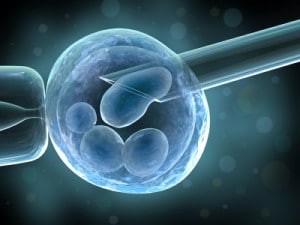
It is becoming increasingly common for women to consider freezing their eggs. This process is called oocyte vitrification, and is a way for women to essentially stop the biologic clock. Once an egg is frozen, the genetic characteristic of that egg and its ability to form a healthy pregnancy will stay frozen in time. The egg will remain the age of the patient at the time of her egg harvest procedure. Pregnancy success rates are based on qualities of the egg not the uterus at time of conception. This means that a woman can benefit from the better fertility of a younger egg, even if she waits several years to use those eggs to become pregnant.

  • WATCH: Dr. Anitha Nair discusses Fertility Preservation options in this webcast. 
  • Read Dr. Anitha Nair’s biography.

Although egg freezing is a newer technology, several years of study have gone into this process and the American Society of Reproductive Medicine no longer considers this to be an experimental procedure. At Shady Grove Fertility (Center for Fertility Preservation), we have already seen good success with egg freezing. As more patients come back to use their eggs we will be able to accrue more data, but current success rates are similar to success rates seen with traditional in vitro fertilization. To date, there is also no evidence to indicate concern about increased risk for genetic abnormalities with the use of frozen eggs.

The Egg Freezing Process
SGF Nurse
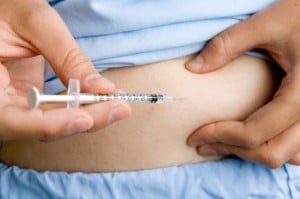
Egg Freezing is essentially the first 1/2 of an IVF cycle, including hormone injections, monitoring and an egg retrieval. After the eggs are retrieved they will be frozen for use at a later time.


Egg freezing or oocyte vitrification is a process that requires some commitment. Patients must undergo the first half of an in vitro fertilization cycle. This means self–administering hormone injections for about 10 days, office visits to monitor the growth the eggs, and finally an outpatient surgical procedure (under sedation) to harvest the eggs. The procedure is performed vaginally and is completed in less than 30 minutes. Patients are often able to wake-up and recover in about 30 minutes after the procedure. Most patients will describe strong menses symptoms like cramping immediately post procedure, but almost everyone is able to go to work the very next day.

For each patient, we aim to retrieve 15-20 mature eggs to be frozen and stored for later use. For many women to obtain this number of eggs, they may need more than 1 cycle of treatment. We recommend this high number of eggs to be banked because about 85% of the eggs will survive the thaw process and about 50-70% will go on to fertilize.

When a patient is ready to use her eggs, they are thawed, inseminated using a partners sperm or donor sperm and then fertilized embryos are grown in our IVF lab. The patient will take medications to prepare the lining of her uterus and the embryos will be transferred back to uterus, through the vagina, with a painless procedure called an embryo transfer. Two weeks later a pregnancy test is done.

Who Should Consider Egg Freezing

The ideal candidate for fertility preservation with oocyte vitrification is someone between the ages of 32-38, who is certain that her childbearing will be delayed. Patients are asked to do some initial blood tests and a pelvic ultrasound to confirm that they would be good candidates. Women over 38 may be treated, pending their test results.

Fertility preservation should only be used as part of a long term management strategy for fertility. Obviously, nothing can take the place of being pregnant now. However, for a woman who knows that she would look back in regret at not giving herself the best possibility of having a child, this is a great comfort. If you are interested in egg freezing, I would highly recommend you seek a consultation with a fertility specialist.

If you would like to discuss your egg freezing options or to schedule an appointment with Dr. Anitha Nair or another Shady Grove Fertility physicians, please speak with one of our New Patient Liaisons at 877-971-7755.
Filed Under: Treatment Tagged With: Egg freezing

January 31, 2013 by Shady Grove Fertility

Embryo Cryopreservation

Embryo cryopreservation occurs in the course of a fresh IVF treatment cycle. In the case that there are embryos left over after the embryo transfer, patients have the choice to freeze their embryos. These embryos can be used at a later time through.

Read the 7 Most Commons Questions about Frozen Embryo Transfer.

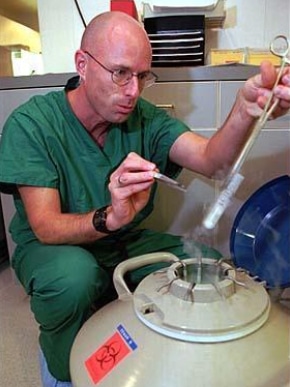
During the first part of the video you can see as an embryologist preps the embryo for cryopreservation using cryo-protectant, exchanging intercellular water molecules with CPAs (cryo-protectant agents).  Then the embryo is frozen via a fast-freeze process known as vitrification.

If you are ready to consult with a fertility specialist or would like to learn more about the fertility treatment options available – such as cryopreservation – please click here to schedule an appointment with one of the Shady Grove Fertility physicians, please speak with one of our New Patient Liaisons at 877-971-7755.
Filed Under: Treatment

December 5, 2012 by Shady Grove Fertility

Many patients put off calling their local fertility center because of the assumption that it will cost thousands of dollars or that they will need advanced medical care to treat their infertility. However, along with your OB/GYN, a fertility specialist is just another resource to help you achieve a pregnancy, often time utilizing low tech treatment options. Isaac E. Sasson, MD, PhD (Chesterbrook, PA) tells patients to “think of it as simply gathering information. You are going to learn about yourself and about all the ways we can help.”

When to Call a Fertility Specialist

SGF Nurse

Talking to a trusted medical professional, such as your gynecologist, should always be your first step. Oftentimes, your gynecologist can offer an introduction to your fertility window – the 6 days leading to ovulation – and how often you should have intercourse for the best chances of conception.
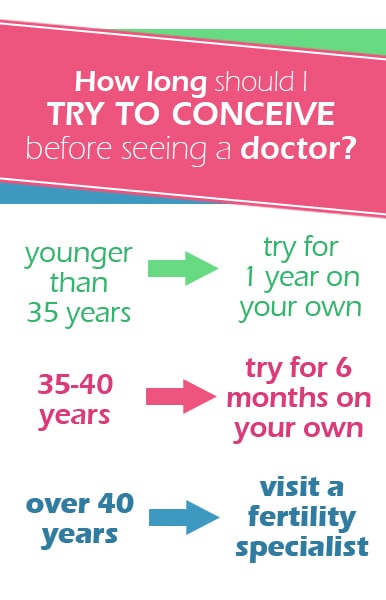
If you are under 35, it is recommended to try on your own for up to a year prior to seeing a specialist. Over 35, the time frame reduces to 6 months. And over 40, it is recommended to see a fertility specialist immediately.

What to Expect at a Fertility Specialist

At Shady Grove Fertility Center, after the initial consultation, all patients undergo initial fertility testing to test for male factor infertility, uterine and tubal anatomy, and ovarian function.
The test results, in combination with your medical history, will help determine the treatment plan your physician and you decide to pursue.

Some of the most common causes of infertility, including ovulation dysfunction, male factor, and unexplained infertility, are often recommended to start with low tech treatment options, such as oral medication or intrauterine insemination (IUI). Read more about diagnosis and treatment options.

Half of all of the treatment cycles performed at Shady Grove Fertility are IUIs. “In 2012 to date, nearly 1,000 patients became pregnant using low tech treatments,” says Dr. Isaac Sasson.

Oral Medications to Treat Infertility

Many female patients may start taking oral medications to stimulate ovulation, such as Clomid, while still under the care of their OB/GYN. Along with timed intercourse, many patients will find success – usually within the first 3 cycles.

The advantage of taking oral medications while under the care of a fertility specialist, is that the patient’s cycle will be closely monitored to check the size and number of follicles present. This can help reduce the risk of multiples.

Intrauterine Insemination

Low Tech Treatment Option for Infertility

Intrauterine Insemination, or an IUI, is a very common low-tech treatment option for patients experiencing infertility. Similar to the oral medication protocol, the female partner will take medication to help her develop several mature eggs. At the time of ovulation, she will be inseminated with a sample of her partner’s sperm. Couples may also be directed to have intercourse in the same time frame.

“For most women, the insemination is no more uncomfortable or complicated than a regular visit to the ob/gyn,” says Dr. Sasson. “Furthermore, the couple can still be sexually active up until the time of the insemination to increase their chances.”

Read “Josie & Kevin’s Successful IUI Story”

Affordable Treatment Options

Low tech treatment options for infertility, such as oral medication and IUI, are the most affordable treatment options available. Additionally, these treatments are more likely to be covered by insurance.

For patients without insurance coverage, Shady Grove Fertility offers several discount programs to help make fertility treatment more affordable.

For more information or to schedule an appointment with one of our physicians, please speak with one of our New Patient Liaisons by calling 877-971-7755.

Filed Under: Treatment Tagged With: Intrauterine insemination (IUI)

October 22, 2012 by Shady Grove Fertility

ASRM Lifts Experimental Label on Egg Freezing

Egg freezing was once considered an experimental technique by the American Society for Reproductive Medicine (ASRM). Today, ASRM has lifted the experimental label. This follows after research on nearly 1,000 cases shows not only similar success rates to IVF procedures using frozen eggs compared to fresh eggs, but also no increase in chromosomal abnormalities, birth defects or developmental deficits in children born using cryopreserved or frozen eggs.

  • Read the ASRM Press Release “Mature oocyte cryopreservation: a guideline”

What Makes Something Experimental?

“I think anything that is new until it is proven probably deserves an experimental tag because we need to show we can produce consistently good results. It takes time to accrue that data,” explains Shady Grove Fertility physician, Gilbert L. Mottla, MD.
Dr. Mottla goes on to say, “We are very pleased that over the years we have shown high success rates and pregnancy rates from thawed eggs. This has become a very mainstream endeavor and we are pleased that the ASRM has validated that effort.”

Why Was Egg Freezing Considered Experimental and Embryo Freezing Not?

Robert J. Stillman, MD, Shady Grove Fertility’s Medical Director explains, “Due to their structure, eggs are much more sensitive and less resilient to the effects of freezing compared to embryos” With older freezing techniques, it was difficult for eggs to survive the freezing process. Now, with vitrification, both eggs and embryos are able to be frozen and thawed with a much higher rate of success.

  • NPR: Read Jennifer’s experience freezing her eggs at Shady Grove Fertility

Shady Grove Fertility & Egg Freezing

SGF Nurse
1997: Michael Tucker has first successful birth of child from a frozen egg.

In 1997, SGF’s Lab Director, Michael Tucker, was the first to freeze an egg and deliver a baby in the United States. Since then there has been efforts to improve the freezing and thawing process and the big breakthrough came a few years ago with vitrification.
Shady Grove Fertility began vitrifying embryos and eggs in 2009. As a result, success rates for frozen embryo transfers has increased to a level that is now equal with fresh IVF cycles. “Our experience over the last several years of egg freezing, along with the few other centers nationwide doing vitrification finding similar results, helped lead the ASRM committee to lift the experimental label,” comments Dr. Stillman.
So whether you are considering donor egg from a frozen egg bank or freezing your own eggs to preserve your fertility for later due to cancer or advancing age, patients can have more options. They can be more confident moving forward with egg freezing now that vitrification is a proven technology that has been tested and vetted at Shady Grove Fertility and across other centers nationwide.

  • CNN: Egg freezing no longer ‘experimental’

To learn more about Shady Grove Fertility’s Center for Fertility Preservation and egg freezing call 1-877-411-9292.

Filed Under: Treatment Tagged With: Egg freezing

August 17, 2012 by Shady Grove Fertility

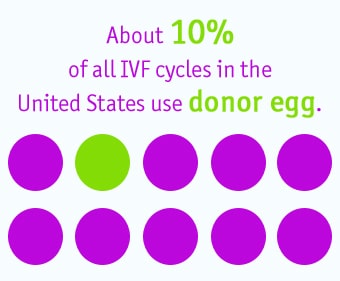
Fertility Fact: About 10% of all IVF Cycles in the United States are Donor Egg

SGF Nurse

According to the Society of Advanced Reproductive Technology (SART), in 2010 – the most recent national data available – 10.6% of all reported cycles were donor egg. To think of it in actual numbers, that is 15,504 out of the 146,693 IVF cycles performed in 2010 were donor egg!

When we look back over the last several years, the proportion of donor egg to IVF cycles has not changed.  Each year since 2003, the percentage of donor egg cycles has steady right around 10.5% of cycles. In 2007, the highest number was reported with just over 11% of IVF cycles used donated eggs.

  • How common is infertility?

In 2010, about 15%  of Shady Grove Fertility’s IVF cycles used donor egg. SGF is proud to have the largest donor egg program in the country, providing approximately 6% of all the donor egg cycles nationally.

In addition to being the largest program, Shady Grove Fertility is also one of the most selective. Only about 3% of all donor applicants make it through to the donation process, leaving only the most qualified women in our donor egg database.

View our fresh donor database.

View our new frozen donor database.

To schedule a New Patient Appointment with Shady Grove Fertility please call 1-877-971-7755 or click here.

Filed Under: Treatment Tagged With: Donor egg

August 7, 2012 by Shady Grove Fertility

SGF Nurse

A couple weeks ago we celebrated the birthday of the first baby born through successful IVF treatment. Today we take a look back to appreciate all the advances IVF treatment has had in the last 34 years.  From the first success in a town in Great Britain, IVF has resulted in 5 million births worldwide!

Improvements in IVF Treatment

Stimulating Medications and Trigger Injections

Pharmaceutical companies are continually working to improve medications for fertility and IVF treatment. Over time, medications have been developed to stimulate the ovaries to induce the maturation of more than one egg.  Additionally, trigger injections to improve timing and final egg maturation have been developed, in addition to other medications as Lupron and Ganirelix.  These medications have proven invaluable in the overall improvement of the success of an IVF cycle.
In the early days of IVF, intramuscular injections were administered at fertility center offices.  Today, many patients may administer subcutaneous injections to themselves at home.

> Learn more about Understanding Fertility Medication.

Finding More Diagnoses than Blocked Tubes

While the early IVF cases were for women with tubal issues, other diagnoses were excluded.  Today, endometriosis, male factor, advanced reproductive age, ovulatory dysfunctions, and unexplained infertility can be overcome with the help of IVF.

Improved Culture Media

The first IVF cases were done with 4 and 5 day transfers, without the assistance of sequential media (the stuff in the petri dish) that could nourish the embryo over these important few days. Today, patients typically have a Day 5 transfer, with culture media designed to assist the early embryos in their growth and development.

Surgical Technique

In early IVF treatment, it was common to transfer the embryo into the fallopian tubes; however, nowadays, most embryo transfers are directly into the uterus.

Attention to Lab Factors

ICSI, or intra-cytoplasmic sperm injection, is done for those ‘severe male factor’ cases with either limited sperm, or sperm of poor morphology or motility.  In ICSI, a single normal sperm is injected into the egg itself, to promote fertilization.  This technique was pioneered and developed in the early 1990s.

Another advancement that recently has helped improved IVF treatment is vitrification, the new technique to freeze eggs and embryos has extended the success and use of IVF cycles.  This improved ‘fast freeze technique’ is now standard in most clinics, though only in the last several years. See Shady Grove Fertility’s success rates with vitrification.

Pre-Screening

AFC and AMH -These newer ovarian reserve tests give informative data to help with protocol selection and patient counseling.

PGD – Pre-genetic screening or disease testing can help identify embryos that carry a genetic disease, or aneuploidy.  This can help in transferring unaffected embryos. Read our Genetic Screening Q&A.

Support

Psychological support groups exist to help address questions, needs, and concerns as one goes through infertility.  Support groups are an inestimable source of comfort and help, and assist those who go through fertility treatment along their journey. Shady Grove Fertility offers support groups in several locations (view calendar).

Resolve is a national nonprofit group that supports those individuals and families on their fertility journey.

CAM (complementary and alternative medicine, or integrative medicine) is a class of treatment modalities (acupuncture, massage, yoga, herbal supplements, vitamins, among others) to assist in fertility treatment successes.

> Learn more about Complementary Medicine at Pulling Down the Moon.

IVF Treatment – 34 Years Later

The last thirty-four years has seen the development and fine-tuning of many different medications, techniques and support to help the 1 in 8 couples who will experience infertility in their lifetime.  These advancements have occurred because caring, focused and knowledgeable people have striven to improve the experience and success of infertility treatments.

To schedule a New Patient Appointment with Shady Grove Fertility please call 1-877-971-7755 or click here.

Filed Under: Treatment Tagged With: In vitro fertilization (IVF), Intracytoplasmic sperm injection (ICSI), Medication

  • « Go to Previous Page
  • Page 1
  • Interim pages omitted …
  • Page 43
  • Page 44
  • Page 45
  • Page 46
  • Go to Next Page »

Company

  • About SGF
  • About US Fertility
  • Our Doctors
  • Fertility Equity
  • Careers
  • Newsroom
  • SGF College Scholarship
  • Contact Us
  • Voice Your Feedback

Treatments

  • Egg Freezing
  • Intrauterine Insemination (IUI)
  • In Vitro Fertilization (IVF)
  • Frozen Embryo Transfer (FET)
  • LGBTQIA+ Family Building
  • Shared Risk 100% Refund Program
  • All Treatments

Resources

  • Patient Portal
  • Online Bill Pay
  • Library
  • Support Groups & Events

Locations

  • California
  • Colorado
  • Delaware
  • Florida
  • Georgia
  • Maryland
  • North Carolina
  • Pennsylvania
  • Texas
  • Virginia
  • Washington, D.C.

2026 Shady Grove Fertility

  • Policies & Notices
Also of interest
  • In Vitro Fertilization IVF
  • Fertility Tests
  • Research Publications