• Skip to primary navigation
  • Skip to main content
  • Skip to footer
Shady Grove Fertility
  • Become an Egg Donor
  • Referring Physicians
  • 1-888-761-1967
  • Schedule Appointment
  • Get Started
        • Get Started
          • Causes of Infertility
          • Fertility Tests
          • When to Seek Help
          • Find a Doctor
          • Preconception and prenatal vitamins 
          • Schedule an Appointment
        • Personalized Care For
          • Single Parents
          • LGBTQIA+ Family Building
          • People with Cancer
          • Known Genetic Diseases
          • Egg Donors
  • Treatments
        • Fertility
          • Timed Intercourse
          • Ovulation Induction
          • Intrauterine Insemination (IUI)
          • In Vitro Fertilization (IVF)
          • Frozen Embryo Transfer (FET)
        • Donation & Surrogacy
          • Donor Sperm
          • Donor Egg
          • Donor Embryo
          • Gestational Carrier
          • LGBTQIA+ Family Building
          • Single Parents
          • Find a Donor
        • More Treatments
          • Center for Male Fertility
          • Egg Freezing
          • OncoFertility
          • Preimplantation Genetic Testing
          • MIGS
          • All Fertility Treatments
  • Resources
    • Resource Library
    • Events Calendar
    • Patient Stories
    • Mental Health
    • Wellness Center
  • Insurance & Savings
    • Insurance & Benefits
    • Shared Risk 100% Refund Program
    • 100% Refund for Donor Egg
    • Discounts
    • Egg Freezing Costs
    • Financing & Grants
    • Clinical Trials
  • About
    • Find a Doctor
    • About SGF
    • Our Care Team
    • Advanced Practice Providers
    • Fertility Equity
    • Philanthropy
    • Newsroom
    • Careers
    • Contact Us
    • Voice Your Feedback
  • Locations
        • Find a Location
        • California
        • Colorado
        • Delaware
        • Florida
        • Georgia
        • Maryland
        • North Carolina
        • Pennsylvania
        • Texas
        • Virginia
        • Washington, D.C.
        • Chile
        • International & Out of State
        • SGF at Walter Reed National Military Medical Center
  • Patient Hub
    • Online Bill Pay
    • Patient Forms
    • Patient Portal
  • Call your care team
  • Become an egg donor
  • Referring physicians
  • search-icon
  • Schedule appointment 1-888-761-1967

Home / Frozen embryo transfer (FET) / Page 2

Frozen embryo transfer (FET)

April 28, 2015 by Shady Grove Fertility

Medical contribution by: Stephen J. Greenhouse, M.D.
When choosing a fertility center, it’s important to research the many different options available to you. Finding a center relatively close to your home; a center that values patient care; and a center that has reproductive endocrinologists with extensive experience, are all very important components of the decision-making process. But the most important factor to research often comes down to the center’s infertility success rates. By learning a few simple points, you’ll be able to determine what infertility success rates really mean, without needing an advanced degree in statistics.

Reporting Infertility Success Ratesgraphs and charts

In 1992, Congress passed the Fertility Clinic Success Rate and Certificate Act—endorsed by the American Society for Reproductive Medicine (ASRM) and the Society for Assisted Reproductive Technology (SART)—which requires clinics to collect and make public the results of assisted reproductive technology (ART) treatments including in vitro fertilization (IVF), frozen embryo transfer (FET), and donor egg treatment. On SART’s website, you can view infertility success rates for individual fertility centers and also view the national data summary, which depicts the national average, based upon data from every fertility center in the country.

  • View Shady Grove Fertility’s Infertility Success Rates

Learn the Appropriate Lingo

Before viewing infertility success rate data, it’s helpful to learn the terminology associated with reporting assisted reproductive technology.

Initiated cycle: An initiated cycle refers to the start of medications with the intent to proceed with in vitro fertilization (IVF) treatment.

  • Example: The center had 4,900 initiated cycles in 2013.
  • Explanation: As patients can go through multiple cycle attempts within 1 year, it’s worth remembering that the number here does not mean 4,900 individual patients. It is merely the amount of IVF cycles that a center initiated and may or may not have continued forward.

Cancellation: Unfortunately, some cycles will have to be cancelled before an egg retrieval can occur. This is usually due to a poor response to medication. It’s in the best interest of the patient to cancel the cycle rather than continue to egg retrieval if a positive outcome is unlikely. Age can also be a factor that affects how well a woman’s body responds to the medicinal stimulation.

Eggs after retrieval.

Retrieval: An egg retrieval is the actual attempt to obtain eggs from the ovarian follicles. In order to get to the stage of embryo transfer (in which a physician places a fertilized embryo into the woman’s uterus), a successful retrieval must occur.

  • Example: The center had 4,900 initiated cycles, but only performed 4,400 egg retrievals.
  • Explanation: The missing egg retrievals are due to cycle cancellation.

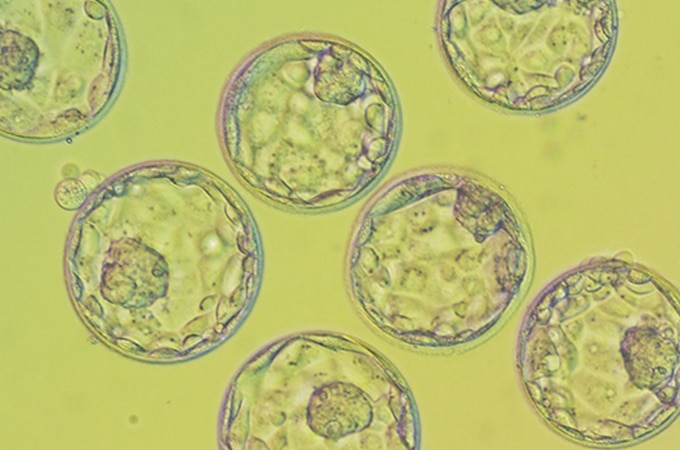
Transfer: An embryo transfer is the placement of one or more embryos back into the uterus. Transfer can only occur after fertilization between the retrieved eggs and sperm has taken place in the lab and the embryo is given 5 days to develop, ideally into a blastocyst.

  • Example: The center performed 4,400 egg retrievals but only performed 3,900 embryo transfers.
  • Explanation: Why is there a discrepancy here? Unfortunately, some embryos do not develop to the point of transfer. The physician and embryologist want the highest quality embryos for transfer, and if they’re not developing properly in the lab, they are unlikely to properly develop in utero. Another reason a transfer may not occur is due to genetic testing. Genetic testing affords couples the ability to ensure that they do not pass certain diseases and disorders onto their offspring. Thus, sometimes genetic testing reveals that an embryo is abnormal, and therefore the physician would not schedule a transfer. Finally, egg and embryo freezing would also mean that a transfer would not take place. Women who electively freeze their eggs may return one day, but for now the intention is to preserve their eggs for the future, not for immediate transfer. For other women, the physician may perform a freeze-all cycle, in which the patient elects to freeze all of the embryos, rather than transfer. Among other reasons, this most commonly occurs if a woman’s progesterone levels are too high leading up to transfer, which has been shown to increase the potential for miscarriage. By freezing the embryos and then waiting to transfer when progesterone levels have returned to a normal level, women are afforded the best possible chance to conceive.
  • Extending Your Fertility Treatment: Frozen Embryo Transfers (FETs)

Clinical pregnancy: A clinical pregnancy refers to the identification of a pregnancy sac in the uterus—not just a positive pregnancy test.

  • Example: Out of 3,900 embryo transfers, the center had 1,800 clinical pregnancies in 2013.
  • Explanation: That seems like a very significant drop, and probably rather alarming to patients new to fertility treatment. It’s important to think about the natural rate of fertility each month: women under the age of 35—who are trying to conceive on their own—only have a 15 percent chance of conceiving each month, which declines each month after 4 to 5 months of trying. After trying for 2 years, the chance of conception each month drops to approximately 1 percent. Not every egg will become a pregnancy, and that statistic holds true for fertility treatment as well. While the physicians and embryologists do everything in their power to help patients build their families, there is an element of ‘nature’ at play here, not just science. It’s important to also remember the 15 percent chance of naturally conceiving each month when you view success rates. Even the best centers only show success rates that range from 40 to 60 percent. So while at first glance, that may not seem very high, it really is impressive when you think about the natural rate of conception being only 15 percent in any given month.
  • Understanding Infertility Success Rates Infographic

Miscarriage: Unfortunately, miscarriages are common for both women going through fertility treatment and women who conceive without assistance. In fact, it is estimated that 1 in 4 pregnancies result in a miscarriage, sometimes even before the woman realizes she is pregnant. Given the occurrence of miscarriages, it’s important to look at a fertility center’s ongoing pregnancy/live birth delivery rate.

Ongoing pregnancy/live birth rate: The ongoing pregnancy/live birth rate represents the number of patients who have delivered a baby or are still pregnant. This number will always be lower than the clinical pregnancy rate due to the possibility of miscarriage. The ongoing pregnancy/live birth delivery rate is the most important number to Shady Grove Fertility, as we define success in the same way you do—taking home a baby.

How do fertility centers calculate infertility success rates?

Success rates can vary for many reasons. The age of the female partner (as mentioned earlier) is the most important factor when women are using their own eggs. As women age, success rates decline, particularly over the age of 35. This decline is partially due to a woman’s reduced chance of getting pregnant through ART (and without ART) as she gets older, but it is also due to the higher risk of miscarriage associated with increasing age, especially over 40. Evidence of age’s effect on pregnancy rates is undeniable, especially when viewing donor egg treatment success rates: the eggs that a donor recipient uses are from a woman who donated her eggs in her 20s to early 30s, leading to much higher success rates.

  • When Should You See a Fertility Specialist?

Success rates can also vary based on the number of embryos transferred. Transferring more embryos at one time does not increase the chance of live birth significantly, but it can increase the risk of a multiple pregnancy. At Shady Grove Fertility, we advocate for single embryo transfer (eSET) in good prognosis patients, because the risks associated with multiple pregnancy (twins, triplets, etc.) are too great on the health of the mother and the babies. The ideal fertility center maintains high success rates while transferring the fewest amount of embryos. At Shady Grove Fertility, we have been successful at reducing multiple pregnancies over time, due to our practice of eSET.

  • To eSET or Not to eSET?

As SART says on their website, “It is important to note that patient characteristics vary among programs; therefore, success rates should not be used to compare treatment centers.” Additionally, success rates are important, but they can vary greatly between individuals, with many patients requiring several treatment cycles to have a baby.

When researching a center, it is important for one to evaluate a combination of outcomes—delivery/live birth rate per initiated cycle, implantation rate, rate of multiples, and the average number of embryos transferred. The time it can take to become pregnant is a major concern for couples who are struggling with infertility. Thus, it’s important to view a center’s ongoing pregnancy/live birth rate in comparison to the initiated cycle rate. If a center has a high ongoing pregnancy/live birth rate, it’s an important indicator of how effectively a center can help you to conceive. Before deciding on a treatment center, we recommend that you schedule a consult with a physician so that he/she can help you interpret the success rates as they apply to your medical profile and history.
If you would like to learn more about infertility success rates or would like to schedule an appointment, please speak with one of our New Patient Liaisons at 877-971-7755.

Filed Under: Treatment Tagged With: Donor egg, Elective single embryo transfer (eSET), Frozen embryo transfer (FET)

December 11, 2014 by Shady Grove Fertility

Medical Contribution by Naveed Khan, M.D.

Dr. Naveed Khan of SGF’s Leesburg, VA office.

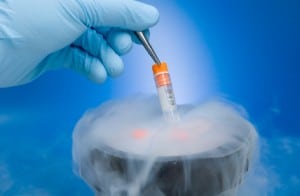
In the past decade, one of the greatest advancements in fertility treatment has been vitrification. Vitrification is a flash-freeze technology used for freezing eggs and embryos for the purpose of using them at a later date. While cryopreservation had existed to fulfill the same purpose for many years, the process frequently resulted in the formation of ice crystals in the eggs and embryos, often rendering them unusable. Vitrification’s flash-freeze technology, though, has remarkably advanced the freezing process and corrected earlier flaws. “One of the largest benefits of using vitrification has been increasing the success rates when using frozen embryo transfers (FET), as vitrification has doubled the ongoing pregnancy rate per embryo transfer in the past five years,” says Dr. Naveed Khan of Shady Grove Fertility’s Leesburg, Virginia office.

In order to undergo a frozen embryo transfer though, you must first perform a fresh in vitro fertilization (IVF) cycle. Oftentimes, there may be additional unused embryos from a  fresh cycle. This is where vitrification can be used to preserve the embryos for a later date and a patient can eventually return for a frozen embryo transfer cycle.

Who will utilize a frozen embryo transfer (FET)?

A frozen embryo transfer (FET) can be performed by any patient who has frozen leftover embryos from a fresh autologous IVF or donor egg cycle. The use of frozen embryos may come immediately following an unsuccessful fresh cycle, or, for patients who were successful with their fresh cycle, a FET can be used at a later date to have additional children.

What are the benefits of FET in comparison to performing another fresh (stimulated) cycle?

FET is often a good choice over completing another fresh IVF cycle when a patient has frozen embryos to use, as they have a lower cost (see the financial programs section below) and there is no need to have an egg retrieval. “Additionally, the date of the frozen embryo transfer is much more predictable than that of a fresh cycle, as you do not have to wait for the embryos to develop and mature. A FET cycle works much better in terms of planning around the transfer itself,” explains Dr. Khan.

What are the success rates for IVF with FET compared to that of a fresh cycle?

The success rates for FETs have doubled in the past five years, with an ongoing pregnancy per embryo transfer rate equal to – or sometimes even greater than – that of fresh transfers. In 2013, women under 35 had a 51% ongoing pregnancy rate per frozen embryo transfer. In comparison in 2013, women under 35 had a 48% ongoing pregnancy rate per fresh embryo transfer. FET cycles had a slightly higher success rate than fresh cycles, which can happen due to the presence of more balanced hormones and the fact that only high-quality blastocyst-stage embryos are being used for FETs.

How long does a FET cycle take?

A patient will contact our office with her desire to begin a frozen cycle. Her records will be reviewed to ensure that her prescreening is up-to-date. This can include – but is not limited to – infectious disease bloodwork, pap smear, an updated mock embryo transfer (to accurately measure and map your uterine contours), consents, and an injection review.

Prior to the frozen cycle beginning, most patients will be on a cycle/month of oral contraceptives. Soon after, the patient will come in for their first monitoring appointment, which is a baseline evaluation before the medications are started. Patients will then begin sequential injections of estrogen to build the uterine lining. Mid-cycle, the patient will have to have a ‘lining check,’ to ensure that the uterine lining has thickened. Patients will then be instructed to add in progesterone. A frozen embryo transfer date will be confirmed and then the patient will return for her actual frozen transfer. Approximately two weeks after the transfer, the patient will have a blood pregnancy test (known as the beta hCG).

What types of medications are required for FETs?

“Unlike in a fresh IVF cycle, medications to stimulate the ovaries are not needed for a FET,” says Dr. Khan. “Instead, supplemental estrogen and progesterone are the chief medicinal components of a FET cycle.” Estrogen will be given in the form of an injection every three days to build the uterine lining. Progesterone will be administered in the form of an injection every day as instructed after the mid-cycle ‘lining check,’ to ensure that the uterine lining has thickened, increasing the chances of implantation for the embryo. The estrogen and progesterone supplements will continue to be taken through the point of the patient’s beta hCG, with the progesterone continuing for up to eight weeks after the hCG. Once the pregnancy is confirmed though, the progesterone is taken as a vaginal suppository instead of an injection.

What financial programs are available for FETs?

For patients who have frozen embryos available for transfer, they may be eligible for the Shady Grove Fertility Shared Risk 100% Refund Program for FET. Once a patient is approved for this program, they will pay a flat-fee and then receive unlimited FET cycles while in the program, for as many frozen embryos as that patient may have. They can only use embryos that were vitrified at Shady Grove Fertility though, not embryos from other locations. In terms of program completion, a patient has the following possible outcomes: they will have a successful pregnancy and delivery; they will withdraw from the program at any time and receive a full refund; or they will use all of the embryos that are available without conceiving and then receive a full refund as well (some exclusions apply).

What are additional benefits of FET cycles?

While FETs have been beneficial in increasing the chances of conception per egg retrieval (when including fresh and frozen embryo transfers), they have also helped to change the treatment process in other areas of reproductive medicine.

On a large scale, FETs have helped to widen the practice of elective single embryo transfer (eSET), resulting in safer singleton pregnancies. In the past, multiple embryos were often transferred because technology was not as strong and IVF was not as successful. “Advances in technology and the embryo culture environment have resulted in the ability for embryos to develop to the blastocyst stage, two days longer than in the past. As a result, embryologists can now more accurately identify which embryos have the highest quality, making possible the selection of a single embryo that is a likely candidate for success, which has significantly decreased the risk of a multiple pregnancy,” Dr. Khan states. “In conjunction with this, vitrification allows additional embryos to be safely preserved. So even in the event that an eSET cycle is unsuccessful, patients may have additional embryos available for future FETs and do not have to feel the need to transfer multiple embryos initially.”

Another lesser known benefit of FETs is the ability to freeze all of the embryos for a later transfer. This is commonly seen when patients are choosing to genetically test the embryos or when an increased progesterone level is found in the patient. SGF’s research team has extensively studied rising progesterone levels and their effect on the chances of a successful pregnancy. Studies have shown that women who have higher progesterone levels at the time of their ‘trigger shot’ before the egg retrieval have a decreased chance of implantation and pregnancy. Dr. Khan says, “As a result, women who are found to have these prematurely rising progesterone levels now have the option to freeze all of their embryos. This allows the progesterone to return to more normal levels, providing the embryo with the best possible environment for implantation.” This two-step process of freezing the embryos following the fresh IVF cycle and then transferring during a FET cycle will allow a patient to have the best chance for a successful pregnancy. While this option only impacts a small percentage of our IVF patients, it depicts yet another way in which this newer technology has helped to improve our patients’ chances of conception.

Frozen Embryo Transfers are Changing the Face of Fertility Treatment

Since the advent of vitrification technology, FET cycles have represented one of the most revolutionary changes in fertility treatment. These cycles provide patients with additional options, whether it’s because they have an unsuccessful cycle or because they want to come back in a few years to further grow their family. FET cycles can also be beneficial because they are easier to plan around and an additional egg retrieval will not be needed. Additionally, FETs have helped to increase the ability for patients to have singleton pregnancies through eSET or to provide the ‘freeze-all’ option for patients. In all of these instances, FETs represent a way to extend fertility treatment. Freezing or suspending these embryos in time preserves them at their current quality, providing patients with an optimal chance for future success.

For more information or to schedule an appointment with one of our physicians, please speak with one of our New Patient Liaisons by calling 888-761-1967.

Filed Under: Treatment Tagged With: Elective single embryo transfer (eSET), Frozen embryo transfer (FET)

  • « Go to Previous Page
  • Page 1
  • Page 2

Company

  • About SGF
  • About US Fertility
  • Our Doctors
  • Fertility Equity
  • Careers
  • Newsroom
  • SGF College Scholarship
  • Contact Us
  • Voice Your Feedback

Treatments

  • Egg Freezing
  • Intrauterine Insemination (IUI)
  • In Vitro Fertilization (IVF)
  • Frozen Embryo Transfer (FET)
  • LGBTQIA+ Family Building
  • Shared Risk 100% Refund Program
  • All Treatments

Resources

  • Patient Portal
  • Online Bill Pay
  • Library
  • Support Groups & Events

Locations

  • California
  • Colorado
  • Delaware
  • Florida
  • Georgia
  • Maryland
  • North Carolina
  • Pennsylvania
  • Texas
  • Virginia
  • Washington, D.C.

2026 Shady Grove Fertility

  • Policies & Notices
Also of interest
  • In Vitro Fertilization IVF
  • Fertility Tests
  • Research Publications