
Video
Egg Freezing: What to know about preserving your fertility
10/07/2025
Thinking about freezing your eggs? Here’s a clear, practical guide.
In the video, Dr. Desireé McCarthy-Keith explains the egg freezing process and who benefits from fertility preservation. If you’re weighing options, this article distills the essentials — how egg freezing works, when it helps most, what to expect, and the questions to ask next.
Who typically considers egg freezing?
People commonly consider egg freezing for reasons such as:
- Wanting to delay childbearing for personal, career, or partnership reasons.
- A family history of early ovarian insufficiency.
- Medical reasons (e.g., upcoming cancer treatment that could harm fertility).
- Wanting to preserve options after a first child.
SGF recommends individualized counseling and ovarian reserve testing as part of deciding whether egg freezing is right for you.
How the process works — simplified
- Consult + baseline testing: You’ll meet with a clinician and do ovarian reserve labs (AMH, FSH) and an ultrasound.
- Ovarian stimulation: Daily injectable hormones over ~10–12 days grow multiple follicles.
- Monitoring: Frequent clinic visits for bloodwork and ultrasound to time the trigger shot.
- Egg retrieval: A minimally invasive outpatient procedure (under sedation) collects mature eggs.
- Vitrification & storage: Retrieved eggs are rapidly frozen (vitrified) and stored until you decide to use them.
This two-week cycle is similar to an IVF egg retrieval but without immediate fertilization.
Success rates & what affects them
The single most important factor influencing success is age at the time of freezing — younger eggs generally give higher chances of a live birth later. National registries and clinical reviews show outcomes vary by age and the number of eggs banked; centers (including SGF) publish data and tools to help estimate likely outcomes. Use metrics like your current ovarian reserve and how many eggs you can realistically collect to estimate future chances.
Costs & practical considerations
Costs vary by clinic and package: single-cycle pricing, multi-cycle plans, annual storage fees, and the later cost of IVF/thaw/transfer when you use the eggs. SGF offers single and multi-cycle options, financing, and resources to help you plan. When cost is a major factor, ask about typical yield (eggs per cycle) for people in your age group and whether multi-cycle packages improve your odds.
Using your eggs later
When you’re ready, eggs are thawed, fertilized (usually via ICSI), and embryos transferred via IVF. Survival and fertilization rates are high with modern vitrification, but success still depends on the age at freezing and the number of eggs available. Discuss realistic expectations with your fertility team and consider tools (like SART calculators) to estimate outcomes.
Ready to learn more or schedule a consult? SGF’s egg freezing resources and appointment scheduling are available online. A clinician can review your test results, estimate likely egg yield, and outline a personalized plan.
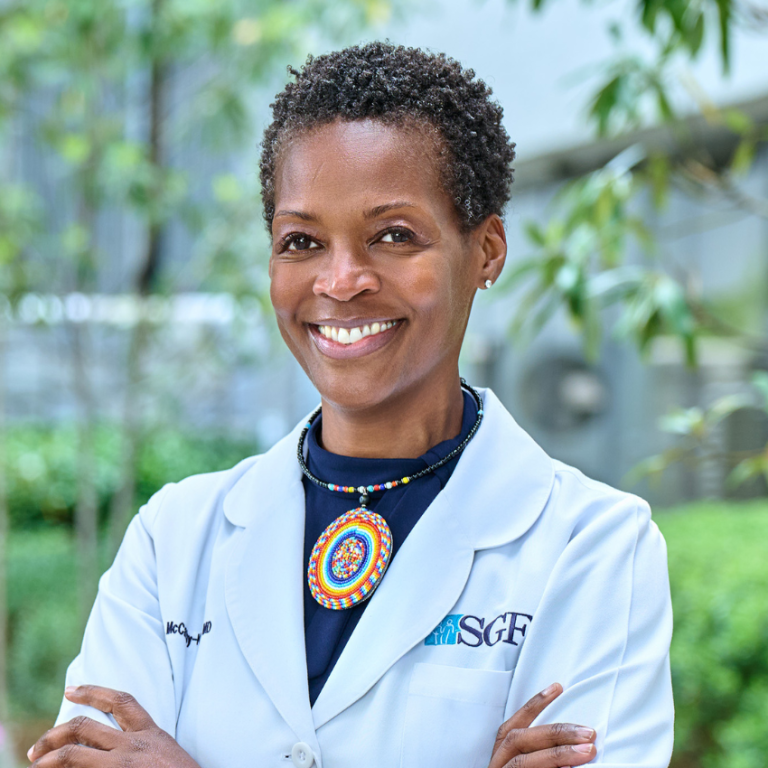
Medical contribution by Desireé McCarthy-Keith, M.D., MPH
Dr. McCarthy-Keith is board certified in obstetrics and gynecology and reproductive endocrinology and infertility. She is the Medical Director of SGF Atlanta. She sees patients at SGF’s Atlanta – Northside office.
More about egg freezing



Article
5 Reasons to Freeze Your Eggs

Patient Story
Laura
