
Hysterosalpingogram (HSG) is a test that uses x-rays to examine both the uterine cavity and the fallopian tubes.
Why Fallopian Tubes Matter
The fallopian tubes are responsible capturing an egg after it is released from the ovary (ovulation), serving as a meeting point for sperm and eggs. Sperm fertilize the egg creating and embryo and the fallopian tube will transport the embryo towards the uterine cavity where the embryo will subsequently implant and develop.
The hysterosalpingogram, or HSG, will detect blockages in the fallopian tubes and abnormalities of the uterine cavity such as polyps, fibroids, and scar tissue that may prevent proper implantation and growth of the embryo. It will also detect congenital uterine malformations that result from incomplete or abnormal development of the uterus before birth.
Having a Hysterosalpingogram
The HSG is usually done in a radiology facility. After being greeted, you will be asked for a small urine sample to run a pregnancy test and to read and sign a consent form.
The best time to do the test is between the 5th and 12th day after the menstrual cycle started to avoid doing the test during menses or after the eggs is released (ovulation) thus avoiding doing the test during early pregnancy.
Your health care provider may or may not have recommend that you take over-the-counter pain relievers such as ibuprofen an hour before the procedure. In some cases, your provider may recommend that antibiotics be taken an hour before the procedure as well.
Hysterosalpingogram Procedure (HSG Procedure)
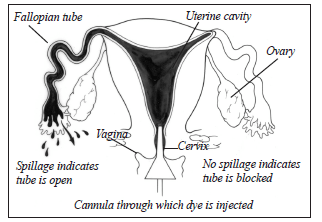
During the HSG, a speculum will be inserted into the vagina (similar to a pap smear), the cervix will be cleaned using a swab with disinfectant and then a thin plastic tube (catheter) will be inserted into the cervix that will lead to your uterus and fallopian tubes. A special clear solution that shows up on x-rays (commonly known as a dye) will be injected through the plastic tube. The dye should fill the uterus and fallopian tubes and spill out of each fallopian tube while images are being saved. The actual procedure will take not more than 3-5 minutes and a preliminary verbal report will be shared with you. The final report will be reported to your physician.
While most women experience no pain during a HSG, some women feel some cramping, especially when the dye is injected. Women who have a blocked fallopian tube may feel more intense pain. Over-the-counter pain medicines such as ibuprofen, 2 -3 tablets taken 30-60 minutes before the procedure can help relieve this pain or discomfort but is often not necessary. Patients experiencing unusual pain, especially fever after the procedure, require immediate attention. A small amount of bleeding after the procedure is uncommon and should not last more than a few hours.
If one or both the fallopian tubes are abnormal, the doctors performing the procedure will advise you to take antibiotics for 3-5 days and will be happy to give you a prescription.
Shady Grove Fertility is able to perform HSGs in both of our certified radiologic facilities in Towson, MD and Rockville, MD.
If you have questions about your fertility options or are ready to schedule an appointment with Dr. Eugene Katz or another physician at Shady Grove Fertility, please speak with one of our New Patient Liaisons at 877-971-7755.